Search results for: “wound care”

  • Christine Smith iHuman Case Study and Best Guide 2025

    Christine Smith iHuman Case Study

    Christine Smith is a 52-year-old female presenting with increased urination, excessive thirst, and blurred vision that has been progressively worsening over the past 3 weeks.

    In this comprehensive guide, we’ll walk you through how to approach her case, from initial history-taking through physical examination to the final diagnosis of diabetes mellitus type 2 with complications. You’ll learn the key clinical reasoning steps, what the iHuman grading rubric expects, and a complete step-by-step solution to help you confidently navigate this endocrine case simulation.

    Christine Smith iHuman
    Christine Smith iHuman Case Study Guide

    Christine Smith Ihuman Case Overview (Doorway Information)

    Patient Overview: Christine Smith is a 52-year-old African American female presenting with a chief complaint of “increased urination, thirst, and blurred vision” that has been occurring over the past 3 weeks. She describes experiencing polyuria, polydipsia, and intermittent blurred vision, particularly when reading. The patient also reports fatigue and unintentional weight loss of approximately 15 pounds over the past month despite maintaining her usual appetite.

    Key Background Information:

    • Age/Gender: 52-year-old female
    • Chief Complaint: Increased urination, excessive thirst, and blurred vision
    • Duration: 3 weeks of progressive symptoms
    • Symptom Characteristics: Polyuria, polydipsia, blurred vision, fatigue, weight loss
    • Associated Symptoms: Frequent infections, slow-healing wounds
    • Significant History: Hypertension, obesity (BMI 34), family history of diabetes
    • Current Medications: Lisinopril 10mg daily, Hydrochlorothiazide 25mg daily
    • Occupation: Office manager with sedentary lifestyle
    • Lifestyle: Limited physical activity, high-carbohydrate diet, high stress levels

    The patient appears alert but fatigued, currently experiencing mild symptoms at presentation, with elevated vital signs. Her presentation is classic for new-onset diabetes mellitus, making this an excellent case for learning systematic endocrine assessment and diabetes management skills.

    Christine Smith (52 y/o female) – Endocrine Assessment

    • CC: Increased urination, excessive thirst, and blurred vision
    • MSAP: Progressive polyuria, polydipsia, and visual changes over 3 weeks with associated fatigue and weight loss
    • Associated symptoms: Frequent infections, delayed wound healing
    • History: HTN, obesity, family history of diabetes, sedentary lifestyle
    • High-stress occupation

    History Questions:

    − How can I help you today?

    − Any other symptoms we should discuss?

    − Do you have any allergies?

    − Are you taking any OTC or herbal medications?

    − Any new or recent changes in medications?

    − How often are you urinating during the day and night?

    − How much water are you drinking daily?

    − Have you noticed any changes in your vision?

    − How severe (scale 1−10) is your fatigue?

    − Have you experienced any weight changes recently?

    − Do you have any wounds that are healing slowly?

    − Have you had any recent infections?

    − Do you experience any abdominal pain or nausea? − Do you have unusual sensations in your hands or feet?

    − Does anyone in your family have diabetes?

    − Do you drink alcohol? If so, what do you drink and how many drinks per day?

    − Do you have any of the following problems: fatigue, difficulty sleeping, unintentional weight loss or gain, fevers, night sweats?

    − Do you experience: headaches, dizziness, fainting episodes?

    − Do you have any of the following: heat or cold intolerance, increased sweating, tremors?

    − Do you have any of the following: nausea, vomiting, constipation, diarrhea, changes in appetite? − How is your overall health?

    − Tell me about your work.

    − Tell me about your daily diet and exercise habits.

    Physical Exam:

    • Vitals: pulse, BP, respirations, temperature, weight
    • Examine skin
    • HEENT examination
    • Neck: thyroid examination
    • Chest wall & lungs:
      • Visual inspection of anterior & posterior chest
      • Palpate anterior & posterior chest
      • Auscultate lungs
    • Heart:
      • Palpate for PMI (Point of Maximal Impact)
      • Auscultate heart
    • Abdomen:
      • Visual inspection
      • Palpate abdomen
    • Extremities:
      • Visual inspection of extremities
      • Neurological assessment
      • Foot examination

    Assessment note: C.S. is a 52 y/o African American female presenting with 3−week h/o progressive polyuria, polydipsia, and blurred vision associated with fatigue and 15-pound weight loss. On physical exam she appears fatigued with stable vital signs except for elevated glucose. PMH risk factors include: obesity (BMI 34), hypertension, family history of diabetes, and sedentary lifestyle.

    Laboratory Results: Random glucose: 345 mg/dl, HbA1c: 11.2%, Urine: glucose 3+, ketones negative Diagnosis: Diabetes Mellitus Type 2, newly diagnosed

    Plan:

    • Determine immediate management needs based on glucose levels and symptoms
    • Initiate metformin 500 mg BID with gradual titration
    • Diabetes education and lifestyle counseling
    • Ophthalmology referral for diabetic retinopathy screening
    • Continue current antihypertensive medications
    • Encourage lifestyle modifications:
      • Dietary consultation for carbohydrate counting
      • Gradual increase in physical activity
      • Blood glucose monitoring education
    • f/u in 1−2 weeks

    Christine Smith SOAP Note

    Patient: Christine Smith

    Subjective Data

    CC: 52-year-old female presents with “increased urination, excessive thirst, and blurred vision”

    HPI: 52-year-old female presents today with complaints of progressive polyuria, polydipsia, and intermittent blurred vision that has been occurring for the past 3 weeks. The patient describes urinating every 1-2 hours throughout the day and waking up 4-5 times per night to urinate. She reports drinking 4-5 liters of water daily but still feeling thirsty. The patient states that her vision becomes blurry, especially when reading, and she has been experiencing significant fatigue. The patient reports unintentional weight loss of 15 pounds over the past month despite maintaining her usual appetite. She also mentions having frequent yeast infections and that a small cut on her finger has been slow to heal. The patient has a family history of diabetes and reports a sedentary lifestyle with a high-carbohydrate diet.

    Medications: Lisinopril 10mg daily, Hydrochlorothiazide 25mg daily

    Allergies: (medication, environmental, food) The patient denies any medication, environmental or food allergies

    PMH: Hypertension and obesity. Denies other chronic medical conditions.

    LNMP/OB History (if indicated): G3P3, last menstrual period 2 weeks ago, regular cycles.

    PSH: Denies any surgical procedures.

    Sexual History (if indicated): Deferred for this exam.

    Hospitalizations: None.

    Health Maintenance: Reports going to primary care provider annually for routine check-ups and blood pressure monitoring.

    Immunizations: Immunizations are up to date. Completed all childhood vaccines.

    Family History: Maternal history of diabetes type 2. Paternal history of hypertension and stroke. Sister diagnosed with diabetes at age 45.

    Substances (Tobacco, alcohol, illicit drugs, caffeine): The patient denies tobacco use and illicit drug use. Reports occasional alcohol consumption (1-2 drinks on weekends). Reports moderate caffeine intake with 2-3 cups of coffee daily.

    Home environment: The patient lives with her husband and teenage daughter and reports a safe home environment.

    Employment type: Currently an office manager with long sedentary work hours. Reports work is “moderately stressful.”

    Diet: High-carbohydrate diet with frequent processed foods, limited vegetables, and irregular meal timing.

    Sleep: Sleep disrupted by frequent urination at night, otherwise adequate sleep quality.

    Exercise: Sedentary lifestyle with minimal physical activity due to work demands and fatigue.

    Safety: Reports feeling safe at home. Denies history of physical or verbal abuse.

    Objective Data

    ROS: (Perform an appropriate ROS based on the C/C and HPI; documented in i-Human assignment; performed in final focused exam)

    General: Reports decreased energy and fatigue over the past 3 weeks. Denies fever, chills, but confirms unintentional weight loss of 15 pounds. Eye contact is appropriate with clear speech. Reports feeling “tired all the time” and difficulty concentrating at work.

    Skin, Hair and Nails: Reports slow healing of minor cuts and frequent yeast infections. Denies new rashes or lesions but mentions dry skin.

    HEENT: Reports blurred vision, especially with reading. Denies headaches, double vision, or eye pain. Denies ear problems, sinus issues, or sore throat. Denies difficulty swallowing or jaw pain.

    NECK: Denies pain or stiffness of the neck. Denies swollen glands or neck masses.

    Thorax and Lungs: Denies shortness of breath, chest pain, or cough. Reports no history of lung disease or respiratory problems.

    Cardiovascular: Reports history of hypertension managed with medications. Denies chest pain, palpitations, or syncope. Reports no leg swelling or decreased exercise tolerance.

    Peripheral Vascular: Denies leg cramps, coldness in extremities, or varicose veins.

    Abdomen: Denies nausea, vomiting, constipation, or diarrhea. Reports normal bowel movements and no abdominal pain.

    Genitourinary: Reports frequent urination and increased thirst. Mentions recurrent yeast infections over the past month.

    Metabolic/Hematologic: Reports significant fatigue, increased thirst, and frequent urination. Confirms unintentional weight loss despite normal appetite.

    Psychiatric: Denies depression, anxiety, or mood changes. Reports some irritability due to fatigue and sleep disruption from frequent urination.

    Musculoskeletal: Denies joint pain or muscle weakness. Reports feeling generally weak due to fatigue.

    Neurologic: Denies numbness, tingling, headaches, or dizziness. No history of seizures or syncope.

    Vital Signs:

    Temperature: 98.2°F, Pulse: 78, BP: 138/86, Respirations: 16 SpO2: 98%, Weight: 185 lbs, Height: 5’4″, BMI: 34

    Assessment

    General: Obese middle-aged female, appears stated age, alert, and oriented x 4. Appears fatigued but no acute distress noted.

    Skin, Hair and Nails: Skin is warm and dry with normal texture. No acute lesions noted. Small healing cut on right index finger noted. Capillary refill less than 3 seconds.

    HEENT: The head is normocephalic and atraumatic. Eyes: pupils equal, round, reactive to light. No acute eye findings. Ears: normal appearing external ears, clear canals. Mouth: oral mucosa appears dry, no lesions noted.

    NECK: No lesions or masses noted. Full range of motion. Thyroid non-palpable, moves with swallowing.

    Thorax and Lungs: Thorax symmetric, no deformities. Lung fields clear to auscultation bilaterally. No wheezing, crackles, or abnormal sounds noted.

    Cardiovascular: Regular rate and rhythm, normal S1 and S2 without murmur, gallop, or rub. PMI non-displaced. No peripheral edema noted.

    Peripheral Vascular: Extremities warm and dry. Pulses 2+ bilaterally in radial and dorsalis pedis. No peripheral edema or varicosities noted.

    Abdomen: Abdomen soft, non-tender to palpation. Bowel sounds normoactive in all 4 quadrants. No masses or organomegaly noted.

    Genitourinary: Deferred for this exam.

    Psychiatric: Affect appropriate, speech clear. Appears tired but cooperative throughout examination.

    Musculoskeletal: No obvious deformities. Gait steady, posture normal. Strength 5/5 in all extremities.

    Neurologic: Alert, oriented to person, place, time, and situation. Cranial nerves grossly intact. Deep tendon reflexes 2+ bilaterally.

    Differential Diagnoses

    Diabetes Mellitus Type 2: The patient presents with classic symptoms of diabetes including polyuria, polydipsia, blurred vision, fatigue, and unintentional weight loss. Risk factors include obesity, family history, sedentary lifestyle, and age. This is the most likely diagnosis given the symptom constellation and risk factors.

    Diabetes Mellitus Type 1: While less likely at age 52, adult-onset Type 1 diabetes can occur. The patient’s symptoms are consistent, but her age, obesity, and gradual onset make Type 2 more probable. Further testing including autoantibodies would help differentiate.

    Diabetes Insipidus: Could explain the polyuria and polydipsia but would not account for blurred vision, weight loss, or glucose-related symptoms. This is a less likely diagnosis given the clinical presentation.

    Hyperthyroidism: Could cause weight loss, fatigue, and increased urination, but typically presents with heat intolerance, tremors, and palpitations which this patient denies. The visual symptoms are not typical for hyperthyroidism.

    Urinary Tract Infection: Could cause frequent urination but would not explain the polydipsia, blurred vision, or weight loss. The absence of dysuria makes this less likely.

    Most Likely Diagnosis: Diabetes Mellitus Type 2 evidenced by classic triad of polyuria, polydipsia, and polyphagia with associated blurred vision, fatigue, and unintentional weight loss. Laboratory findings show significantly elevated glucose (345 mg/dl) and HbA1c (11.2%), confirming the diagnosis.

    Plan

    Health Promotion: (appropriate screening, disease prevention, and health promotion according to the patient’s age, gender, and identified risk factors…not diagnosis specific)

    Diabetes Management – Initiate comprehensive diabetes education including blood glucose monitoring, carbohydrate counting, and recognition of hyperglycemic symptoms.

    Weight Management – Referral to nutritionist for structured meal planning and gradual weight reduction goals.

    Blood Pressure Monitoring – Continue current antihypertensive therapy and monitor for diabetes-related hypertension complications.

    Screening

    Diabetic Complications Screening – Annual ophthalmology exams, nephropathy screening with microalbumin, neuropathy assessment

    Cardiovascular Risk Assessment – Lipid panel, ECG, assessment for coronary artery disease risk

    Cancer Screening – Age-appropriate screening including mammogram, cervical cancer screening, colonoscopy

    Immunizations

    Seasonal Flu vaccine

    Covid-19 vaccine

    Pneumococcal vaccine (recommended for diabetic patients)

    Christine Smith iHuman
    Christine Smith SOAP Note

    Complete Step-by-Step Guide to Writing the Christine Smith iHuman Case Study

    Completing the Christine Smith iHuman case requires a systematic approach that mirrors real clinical practice. This comprehensive guide will walk you through each section of the simulation, providing specific strategies and key points to ensure you achieve the required 70% score.

    Step 1: Pre-Case Preparation and Initial Approach

    Before diving into the case, take a moment to review the doorway information and formulate your initial clinical approach.

    Key Information to Note:

    • 52-year-old female with “increased urination, excessive thirst, and blurred vision”
    • 3-week duration of progressive symptoms
    • Consider immediate endocrine risk factors: age, obesity, family history

    Initial Clinical Mindset: Approach this case with diabetes mellitus as your primary consideration. The age, symptoms (classic triad), and risk factors immediately suggest new-onset diabetes, making this a high-priority assessment requiring systematic evaluation.

    Step 2: Conducting the History of Present Illness (HPI)

    The HPI is crucial for establishing the foundation of your diagnosis. Use the OLDCARTS method systematically:

    Onset: Ask about when symptoms started and progression

    • Key points to elicit: Started 3 weeks ago, gradually worsening

    Location: Determine systemic nature of symptoms

    • Target response: Polyuria, polydipsia, visual changes

    Duration: How long do symptoms persist

    • Important detail: Constant throughout day and night

    Character: Detailed description of each symptom

    • Critical descriptors: “Excessive urination,” “constant thirst,” “blurry vision”

    Aggravating factors: What makes symptoms worse

    • Essential findings: High-carbohydrate meals, stress

    Relieving factors: What provides temporary relief

    • Key response: Nothing provides consistent relief

    Timing/Treatment: Pattern and any attempted treatments

    • Important pattern: Progressive worsening, no treatments tried

    Severity: Impact on daily activities

    • Typical response: Significantly affecting work and sleep

    Associated Symptoms:

    • Ask specifically about: weight loss, fatigue, infections, wound healing
    • Key findings: 15-pound weight loss, severe fatigue, slow-healing wounds

    Step 3: Review of Systems (ROS)

    Conduct a thorough but focused ROS, paying special attention to endocrine and related systems:

    Endocrine:

    • Classic diabetes symptoms (already covered in HPI)
    • Heat/cold intolerance, sweating patterns
    • Energy levels, sleep patterns

    Neurologic:

    • Numbness, tingling (peripheral neuropathy)
    • Vision changes, headaches
    • Cognitive changes, concentration issues

    Genitourinary:

    • Urination patterns, infections
    • Sexual dysfunction

    General:

    • Weight changes, appetite changes
    • Fatigue patterns, mood changes

    Step 4: Past Medical History, Social History, and Family History

    Past Medical History:

    • Hypertension (managed with ACE inhibitor and diuretic)
    • Obesity (BMI 34)
    • Previous pregnancies and gestational diabetes screening
    • Previous hospitalizations, surgeries

    Family History:

    • Critical finding: Strong family history of diabetes
    • Maternal diabetes type 2
    • Sister diagnosed with diabetes at age 45

    Social History:

    • Occupation: Office manager with sedentary work
    • Diet habits: High-carbohydrate, processed foods
    • Exercise: Minimal physical activity
    • Stress levels: Moderate work-related stress
    • Alcohol: Occasional social drinking

    Step 5: Physical Examination Strategy

    Perform a comprehensive endocrine-focused physical exam:

    Vital Signs:

    • Expected findings: Mild hypertension, normal other vitals
    • Note: Weight documentation important for BMI calculation

    Endocrine Examination:

    • General appearance: Note fatigue, dehydration signs
    • Skin: Check for infections, slow-healing wounds
    • Eyes: Fundoscopic exam if trained, visual acuity
    • Thyroid: Palpation for enlargement

    Additional Key Exams:

    • Neurologic: Check for peripheral neuropathy signs
    • Foot Examination: Inspect for diabetic foot complications
    • Cardiovascular: Assess for diabetes-related complications
    • Abdominal: Check for hepatomegaly or other masses

    Step 6: Developing Differential Diagnoses

    Propose at least 3-4 appropriate differentials with rationales:

    Primary Consideration: Diabetes Mellitus Type 2

    • Supporting evidence: Classic triad of symptoms, risk factors, age

    Secondary Considerations:

    • Diabetes Mellitus Type 1
      • Rationale to consider: New-onset diabetes with weight loss
      • Rationale against: Age, obesity, gradual onset
    • Hyperthyroidism
      • Rationale to consider: Weight loss, fatigue, frequent urination
      • Rationale against: No heat intolerance, tremors, or palpitations
    • Diabetes Insipidus
      • Rationale to consider: Polyuria and polydipsia
      • Rationale against: No explanation for visual changes or weight loss

    Step 7: Diagnostic Test Interpretation

    Interpret provided test results to support your diagnosis:

    Expected Key Findings:

    • Random Glucose: >200 mg/dl (345 mg/dl in this case)
    • HbA1c: >6.5% (11.2% indicates poor control over 2-3 months)
    • Urine: Glucose positive, ketones negative (distinguishes from DKA)
    • Basic metabolic panel: Normal electrolytes

    Clinical Correlation: Use test results to confirm diabetes diagnosis and rule out diabetic ketoacidosis.

    Step 8: Final Diagnosis and Most Significant Active Problem (MSAP)

    Primary Diagnosis: Diabetes Mellitus Type 2, newly diagnosed

    Justification:

    • Classic symptom triad (polyuria, polydipsia, polyphagia)
    • Associated symptoms (blurred vision, weight loss, fatigue)
    • Multiple risk factors (obesity, family history, sedentary lifestyle)
    • Laboratory confirmation with elevated glucose and HbA1c

    MSAP Selection: Choose “Diabetes Mellitus Type 2” as your Most Significant Active Problem, as this represents the primary condition requiring immediate management and long-term care.

    Step 9: Comprehensive Management Plan

    Develop a multi-faceted treatment approach:

    Immediate Management:

    • Blood glucose stabilization
    • Diabetes education initiation
    • Symptom monitoring

    Pharmacological Interventions:

    • Metformin: First-line therapy, start 500mg BID
    • Continue Lisinopril: ACE inhibitor beneficial in diabetes
    • Continue HCTZ: May need adjustment based on glucose control

    Lifestyle Modifications:

    • Dietary counseling: Carbohydrate counting, portion control
    • Exercise prescription: Gradual increase in physical activity
    • Weight management: Structured weight loss program
    • Blood glucose monitoring: Self-monitoring education

    Screening and Prevention:

    • Ophthalmology referral: Diabetic retinopathy screening
    • Podiatry consultation: Foot care education
    • Lipid panel: Cardiovascular risk assessment
    • Nephropathy screening: Microalbumin testing

    Follow-up Plan:

    • Return visit in 1-2 weeks to assess glucose control
    • HbA1c recheck in 3 months
    • Regular monitoring for diabetes complications

    Step 10: Documentation and Submission Tips

    Writing Your Summary:

    • Create a concise 350-word summary explaining your clinical reasoning
    • Include how you arrived at the problem list
    • Cite specific assessment findings and lab correlations
    • Use professional medical terminology

    Key Documentation Elements:

    • Assessment Statement: Brief patient summary with key findings
    • Clinical Reasoning: Explain diagnostic thought process
    • Evidence Correlation: Link physical findings to test results
    • Management Rationale: Justify treatment choices

    Final Submission Checklist:

    • ✓ Complete history with OLDCARTS method
    • ✓ Comprehensive endocrine physical exam
    • ✓ Appropriate differential diagnoses with rationales
    • ✓ Correct final diagnosis and MSAP
    • ✓ Evidence-based management plan
    • ✓ Professional documentation with proper citations

    Christine Smith iHuman Case Summary

    Grading Criteria:

    The Christine Smith iHuman case will evaluate you across several critical domains to ensure comprehensive endocrine assessment skills. Here’s what you need to focus on to maximize your score:

    (1) History Taking (Major Points):

    You must ask targeted questions about the classic diabetes symptom triad to get full credit. Essential questions include: urination patterns (frequency, volume), fluid intake (amount, frequency), vision changes (timing, severity), weight changes (amount, timeline), and associated symptoms (fatigue, infections). Don’t miss asking about: diabetes risk factors (family history, weight history, exercise habits), previous glucose testing, and impact on daily activities. The rubric specifically rewards students who ask about symptom onset and progression patterns.

    (2) Physical Examination (High Weight):

    Focus your exam on endocrine and related systems. Must-do components: vital signs (including weight for BMI), skin examination for infections/wounds, basic neurologic assessment for neuropathy, cardiovascular examination, and foot inspection. Pro tip: The rubric awards points for checking visual acuity and examining for signs of dehydration – many students forget these key endocrine exam elements.

    (3) Differential Diagnosis (Critical for Scoring):

    You need to propose at least 3 appropriate differentials with brief rationales. Expected differentials include: diabetes mellitus type 2, diabetes mellitus type 1, hyperthyroidism, and diabetes insipidus. Scoring secret: The rubric rewards students who can distinguish between Type 1 and Type 2 diabetes based on age, onset pattern, and risk factors.

    (4) Final Diagnosis & MSAP:

    You must correctly identify diabetes mellitus type 2 as your Most Significant Active Problem (MSAP). Justification is key – cite the classic triad, risk factors, and laboratory confirmation as supporting evidence.

    (5) Management Plan (Heavily Weighted):

    The rubric expects comprehensive management including: immediate glucose control, medication initiation (metformin), lifestyle modifications, diabetes education, and screening for complications. High-scoring responses mention: the importance of diabetes education, ophthalmology referral, and long-term complication prevention strategies.

    (6) Patient Communication:

    Demonstrate empathy and clear explanation of the condition. Bonus points for: discussing lifestyle modifications specifically (diet changes, exercise recommendations, blood glucose monitoring) and explaining the chronic nature of diabetes management.

    Example of a High-Scoring Clinical Summary

    Here’s how a top-performing student might document this case:

    Patient Summary – Christine Smith

    Situation: 52-year-old female presenting with 3-week history of classic diabetic symptoms including polyuria, polydipsia, and blurred vision.

    Background: Significant diabetes risk factors including obesity (BMI 34), strong family history of diabetes, sedentary lifestyle, and high-carbohydrate diet. Currently managed hypertension with ACE inhibitor and diuretic.

    Assessment: Physical examination notable for fatigue and mild dehydration signs. Laboratory findings demonstrate significantly elevated glucose (345 mg/dl) and HbA1c (11.2%), confirming diabetes diagnosis. Primary Diagnosis: Diabetes Mellitus Type 2, newly diagnosed.

    Recommendation:

    • Initiate metformin 500mg BID for glucose control
    • Comprehensive diabetes education including blood glucose monitoring
    • Lifestyle modifications: dietary consultation, exercise prescription, weight management
    • Ophthalmology referral for diabetic retinopathy screening
    • Continue current antihypertensive therapy
    • Follow-up in 1-2 weeks to assess initial glucose control and medication tolerance

    Patient Education Provided: Explained diabetes pathophysiology, importance of medication compliance, blood glucose monitoring techniques, dietary modifications, and clear instructions for recognizing hyperglycemic symptoms requiring immediate medical attention.

    Christine Smith iHuman
    Christine Smith iHuman Case Summary

    Conclusion

    By following this comprehensive approach to the Christine Smith case, you’ll demonstrate the clinical reasoning skills that iHuman evaluates. Remember, success in endocrine cases requires systematic thinking: gather detailed history about classic symptoms, perform focused but thorough physical examination, consider appropriate differentials, and develop evidence-based management plans. The key is treating each iHuman simulation as you would a real patient encounter – be thorough, think critically, and always prioritize patient education and long-term management. With this guide, you’re well-prepared to excel in this challenging but rewarding case simulation.

    Frequently Asked Questions

    What is the correct diagnosis for Christine Smith’s symptoms?

    Christine Smith’s primary diagnosis is diabetes mellitus type 2, newly diagnosed. The key distinguishing features that point to diabetes include the classic triad of polyuria, polydipsia, and polyphagia, along with associated symptoms like blurred vision, fatigue, and unintentional weight loss. Students often struggle between Type 1 and Type 2 diabetes, but remember that Type 2 is more common in adults over 45, especially those with obesity and family history, whereas Type 1 typically presents at a younger age with more acute onset and requires insulin immediately.

    What are the critical physical exam components I need to perform to score well?

    Essential physical exam elements include measuring vital signs (including accurate weight for BMI calculation), comprehensive skin examination for infections or slow-healing wounds, basic neurologic assessment for early neuropathy signs, cardiovascular examination, and detailed foot inspection. Many students miss points by skipping the foot examination and neurologic assessment, which are crucial for establishing baseline function in newly diagnosed diabetics. Don’t forget to assess visual acuity and check for signs of dehydration such as dry mucous membranes.

    How do I pass the Christine Smith case and meet the 70% requirement?

    You must score a cumulative 70% on the iHuman assessments to successfully complete the required lab component. To achieve this score, focus on thorough history-taking using systematic questioning about the classic diabetes triad (polyuria, polydipsia, polyphagia), complete all recommended physical exam components with attention to diabetes-related complications, propose appropriate differential diagnoses (including both Type 1 and Type 2 diabetes), and develop a comprehensive management plan that includes both immediate glucose control and long-term diabetes management. The key is being systematic and demonstrating understanding of diabetes as a chronic condition requiring ongoing management.

    What management interventions should I include in my treatment plan?

    The comprehensive management plan should address both immediate glucose stabilization and long-term diabetes management. Include laboratory confirmation with glucose and HbA1c testing, initiate first-line therapy with metformin, provide comprehensive diabetes education including blood glucose monitoring and carbohydrate counting, arrange ophthalmology referral for retinopathy screening, and establish a structured follow-up plan. Students often forget to address the importance of diabetes education and screening for complications, which are critical components for comprehensive diabetes care and can significantly impact your overall score. Also include lifestyle modifications such as dietary counseling, exercise prescription, and weight management strategies.

  • Nursing SWOT Analysis Example and Best Guide

    Nursing SWOT Analysis Example for Effective Strategic Planning

    A SWOT analysis is a widely recognized framework used to evaluate strategic positioning in various professional fields, including healthcare. In nursing, this method provides a structured approach to evaluating internal and external factors that impact both individual practice and broader organizational objectives. By examining strengths, weaknesses, opportunities, and threats, healthcare professionals can better understand how to align resources with patient care needs and institutional expectations.

    Within the nursing profession, SWOT analyses are used to support professional development, team coordination, and long-term planning. For instance, nurse managers might employ a SWOT framework to assess staffing patterns, while a nursing student could use it to identify areas for academic and clinical improvement. In both cases, the tool provides a snapshot of where one stands and what strategies might enhance future performance.

    This article explores the practical application of SWOT analyses in nursing contexts. It introduces the concept, breaks down its key components, and provides examples that show how the analysis can help nurses address weaknesses, leverage strengths, and ultimately improve patient outcomes and the quality of nursing care.

    Nursing SWOT Analysis
    Nursing SWOT Matrix

    Understanding SWOT Analyses in Nursing

    What is a SWOT Analysis?

    A SWOT analysis is a structured strategic planning tool used to systematically assess four interrelated elements: Strengths, Weaknesses, Opportunities, and Threats. The model provides a framework for evaluating both internal factors (such as competencies, resources, and organizational culture) and external factors (including policy shifts, technological changes, and socio-demographic trends). Originally designed for business contexts, the SWOT framework has been successfully adapted for application in complex environments like the healthcare sector, where decision-making is multifaceted and directly impacts patient outcomes.

    In nursing practice, a SWOT analysis serves as a guide for reflecting on current performance and formulating future actions. At the individual level, nurses and nursing students may use a personal SWOT analysis to examine their clinical abilities, communication styles, ethical awareness, and adaptability to shifting demands in patient care. For instance, a new nurse might recognize strong interpersonal relationships and empathy as strengths, while identifying a lack of familiarity with electronic health records as a weakness. Opportunities could involve mentorship programs or nursing education workshops, whereas potential threats might include job insecurity due to policy changes or evolving licensure requirements.

    At the institutional level, nursing departments and healthcare organizations utilize SWOT analyses to align strategic plans with available resources and evolving community needs. A hospital unit experiencing high staff turnover might use the SWOT method to uncover underlying issues—such as inadequate onboarding processes or unclear role expectations—that threaten teamwork and compromise the quality of care. Meanwhile, a well-trained nursing staff and access to evidence-based practice tools might be flagged as critical strengths.

    A typical internal and external SWOT analysis template is formatted as a four-quadrant matrix, enabling users to categorize data efficiently. For example:

    • Strengths: Skilled team, strong collaboration, effective patient communication.
    • Weaknesses: Gaps in staff training, delayed documentation, time constraints.
    • Opportunities: Access to new technologies, interprofessional education, telehealth expansion.
    • Threats: Regulatory changes, staff burnout, rising patient acuity levels.

    This type of analysis process helps ensure that strategic decisions are grounded in a holistic understanding of both internal capabilities and external realities.

    Importance of SWOT Analysis in Nursing

    The application of a SWOT analysis in the nursing profession supports data-informed decision-making, enhances professional practice, and strengthens the capacity of nurses to deliver quality care in diverse healthcare settings. As nurses operate at the intersection of direct patient interaction and broader systemic processes, they must be able to evaluate not only their own performance but also the institutional conditions that shape care delivery.

    At the individual level, using a SWOT analysis fosters professional development by encouraging nurses to assess their knowledge and skills, evaluate their readiness for new responsibilities, and reflect on their long-term career goals. For example, a nurse preparing for a leadership position might identify experience in interdepartmental coordination as a strength, while noting limited exposure to budgeting as a weakness. With this insight, they can pursue targeted training or shadow a nurse manager to address weaknesses and build competence in areas critical for administrative roles.

    For nursing teams, especially in specialized units like critical care, a comprehensive SWOT analysis can guide training needs analysis, evaluate clinical outcomes, and identify workflow inefficiencies. Consider a situation where the team’s strengths include a high level of certification and strong interdisciplinary collaboration, yet their weaknesses might involve inconsistent handoff procedures or delays in medication administration. Recognizing these areas can lead to targeted improvements, such as implementing standardized communication protocols or additional nursing education sessions focused on pharmacologic safety.

    In academic environments, nursing students can benefit from the reflective process offered by a SWOT analysis to monitor their academic progress and clinical exposure. Early engagement with this tool can help them prioritize areas for improvement, such as pharmacology or documentation, and make informed choices about electives or externships that align with their career goals in community health, critical care, or other specialties.

    On a broader scale, healthcare providers and administrators use the SWOT framework to evaluate the health of their service models. In a community health clinic, for instance, healthcare professionals may use a SWOT analysis to explore how current health policy changes affect service delivery, or how emerging technologies like mobile health apps might present new opportunities and threats to traditional care models. In such settings, recognizing external influences—such as social determinants of health or funding limitations—can shape how resources are allocated to improve patient care across diverse populations.

    Importantly, a SWOT analysis can help not just identify weaknesses, but actively address weaknesses through strategic planning and accountability. By embracing this tool as part of a broader strategic analysis, healthcare organizations create the conditions necessary for innovation, sustainable staffing, and the advancement of best practices in nursing.

    Whether the goal is to support professional growth, adapt to internal and external factors, or improve care through coordinated planning, the SWOT analysis remains an indispensable tool in the evolving landscape of the healthcare industry.

    SWOT Analysis Template for Nurses

    A SWOT analysis template provides a structured approach for evaluating the internal and external landscape of a nursing professional, nursing team, or healthcare organization. This tool typically takes the form of a four-quadrant matrix, with each quadrant dedicated to one of the core elements: Strengths, Weaknesses, Opportunities, and Threats. These categories are further divided into two main dimensions—internal factors (Strengths and Weaknesses) and external factors (Opportunities and Threats).

    Using a SWOT analysis in nursing helps visualize critical areas that influence success or present challenges in patient care, education, or organizational outcomes. It encourages logical thinking, supports data analysis, and aligns well with reflective and strategic practices in the nursing profession.

    Components of the SWOT Analysis Template

    Each quadrant in the internal and external SWOT analysis template focuses on a distinct aspect of performance or strategy. Here’s a breakdown of what each component includes:

    1. Strengths (Internal Factors)

    This quadrant highlights what the nurse, team, or department does well. These could be attributes, competencies, or resources that enhance performance. In the context of nursing practice, strengths may include:

    • Strong clinical assessment skills
    • Supportive team dynamics
    • Certification in specialized areas (e.g., critical care, oncology)
    • Access to up-to-date medical equipment
    • High patient satisfaction scores

    For example, a nurse practitioner might identify their advanced training in chronic disease management as a key strength that improves care delivery in primary care settings.

    2. Weaknesses (Internal Factors)

    This quadrant identifies limitations, gaps, or areas for growth. Strengths and weaknesses are often assessed together to offer a balanced view of current capacity. Common nursing-related weaknesses may include:

    • Limited experience in certain clinical areas
    • Poor documentation habits
    • Inconsistent adherence to protocols
    • Staffing shortages or burnout
    • Inadequate orientation for new hires

    Recognizing a weakness, such as difficulty managing time during a busy shift, allows nurses or nurse managers to plan for mentorship, training, or workflow revisions.

    3. Opportunities (External Factors)

    This section outlines external circumstances that could be leveraged for growth or improvement. In healthcare organizations, this often involves examining shifts in the healthcare system that present new directions. Examples include:

    • Access to government-funded nursing education programs
    • Emerging evidence-based practices
    • Advances in telehealth
    • Expansion of community-based health services
    • Policy support for nurse-led initiatives

    A nursing student may identify an opportunity such as an internship at a teaching hospital, which can expand clinical exposure and inform their future nursing career.

    4. Threats (External Factors)

    Opportunities and threats are external in nature and often beyond direct control. This quadrant captures factors that pose risks to performance or sustainability. Common threats in nursing care environments include:

    • Changes in national health policy
    • Increasing nurse-to-patient ratios
    • Rising workplace violence incidents
    • Legal or regulatory changes impacting scope of practice
    • Declining funding for nursing workforce development

    Identifying potential threats early on allows healthcare professionals and teams to mitigate risks and proactively adapt through contingency planning or team-wide interventions.

    How to Use the SWOT Template in Nursing

    The utility of a SWOT analysis template in nursing lies in its flexibility—it can be used for personal and professional development, nursing department strategy sessions, or unit-based quality improvement initiatives.

    Step 1: Define the Objective

    Start by clarifying the purpose of the analysis. Are you a nursing professional exploring areas for improvement in your skill set? Is your nursing team looking to redesign shift workflows? Is your healthcare team planning a new outreach initiative for community health? Having a clear goal helps focus the analysis.

    Step 2: Gather Input

    Conduct the analysis collaboratively where applicable. Health professionals, team leaders, educators, and patients may offer insights into the work environment, communication, or care needs. Collect performance metrics, survey data, or conduct team discussions to fill in the four quadrants.

    Step 3: Fill the Template

    Use the four-quadrant format to list findings. This stage is not about fixing problems yet—it’s about honest assessment. For example:

    StrengthsWeaknesses
    Strong mentorship cultureHigh staff turnover
    Consistent patient outcomesDelays in charting/documentation
    OpportunitiesThreats
    Access to trauma trainingBudget cuts in the next fiscal year
    Expansion into rural clinicsIncreased competition for hiring

    Step 4: Analyze Relationships Between Quadrants

    This is where strategic analysis begins. For example:

    • Can any strengths be used to reduce weaknesses?
    • Can you act on opportunities using existing resources?
    • How might threats undermine your strengths, and what plans can reduce that risk?

    In this way, the SWOT analysis can help align specific goals—like improving patient care or adapting to a new policy—with real strategies.

    Step 5: Plan Actions and Follow Up

    The final step is implementation. Prioritize the findings from your SWOT. Develop a roadmap based on the key takeaways—for example, initiating time-saving protocols, scheduling in-service training, or lobbying for more nursing staff through leadership channels.

    Conducting a Nursing SWOT Analysis

    Conducting a SWOT analysis in nursing is a reflective and systematic process that allows both individual nurses and healthcare teams to evaluate current capabilities and formulate actionable strategies. The process goes beyond simply listing factors in four quadrants—it involves deep insight into both internal factors (strengths and weaknesses) and external factors (opportunities and threats) that influence nursing practice, care delivery, and organizational outcomes.

    When effectively carried out, a comprehensive SWOT analysis can enhance the quality of patient care, inform leadership decisions, and support professional development across various nursing roles—from nursing students to nurse managers.

    Identifying Strengths and Weaknesses in Nursing

    The first step in conducting a SWOT analysis is to assess internal factors—specifically, your strengths and weaknesses. These are elements within the control of the nurse, nursing staff, or nursing department. Acknowledging both positive attributes and limitations is essential for balanced self-evaluation and goal-setting.

    Strengths in Nursing

    Strengths are assets that enhance nursing effectiveness and support team or organizational goals. These may include:

    • Strong patient advocacy skills
    • Team-oriented mindset and collaboration
    • Proficiency with electronic health records (EHRs)
    • Specialized certifications (e.g., in critical care or wound management)
    • Cultural competence and effective communication in diverse settings

    For example, a nursing professional working in a multicultural community health clinic may highlight their bilingual communication skills and cultural awareness as vital strengths in improving access and trust among patients.

    Weaknesses in Nursing

    Weaknesses are areas in need of improvement that may hinder performance or reduce efficiency. Common weaknesses include:

    • Difficulty prioritizing tasks during high-acuity shifts
    • Gaps in pharmacological knowledge or technology use
    • Inconsistent adherence to documentation protocols
    • Limited leadership or delegation experience
    • Emotional exhaustion or susceptibility to burnout

    A new nurse, for instance, might struggle with time management during a fast-paced shift, affecting timely assessments or medication administration. By identifying such issues, nurses can seek mentorship, use scheduling tools, or participate in targeted workshops that address weaknesses.

    This process can be supported through formal evaluations, peer feedback, self-reflection, or a training needs analysis. The goal is to foster personal and professional growth while enhancing safety and accountability in care provision.

    Recognizing Opportunities and Threats in Healthcare

    The second part of a SWOT analysis focuses on external factors—those that exist outside the individual or team’s immediate control but have a significant impact on outcomes. Understanding opportunities and threats enables nurses and administrators to anticipate change, adapt strategies, and mitigate risk.

    Opportunities in Healthcare

    Opportunities represent emerging possibilities that can enhance nursing care, education, or organizational performance. These may include:

    • Funding for continuing education or certifications
    • Access to simulation labs or clinical fellowships
    • Expansion of telehealth services or digital charting systems
    • Interdisciplinary training programs within the healthcare team
    • Public health campaigns promoting nurse-led community initiatives

    For example, a nursing student may identify a new hospital externship program as an opportunity to build clinical skills and network with healthcare professionals, shaping their future nursing career. Similarly, an experienced nurse might take advantage of leadership courses that support a transition into management.

    Threats in Healthcare

    Threats are challenges that may negatively impact nursing staff, service delivery, or patient outcomes. They can arise from regulatory, economic, technological, or sociopolitical environments. Common threats include:

    • Increased patient-to-nurse ratios or budgetary constraints
    • Policy changes affecting scope of practice or documentation standards
    • High turnover among health workers, contributing to workload pressure
    • Misinformation or health illiteracy among patient populations
    • Cybersecurity threats affecting access to patient records

    In one scenario, a healthcare organization may face reduced funding for inpatient units, posing a serious threat to staffing levels, especially in critical care areas. Conducting a SWOT analysis helps leaders foresee such issues and develop preemptive plans, such as rotating staff or restructuring unit workflows.

    Putting It into Practice

    When conducting a SWOT analysis, nurses and teams should move beyond identification and toward integration. The process should involve:

    1. Data collection: Use performance metrics, patient feedback, staff surveys, or audits.
    2. Collaborative input: Engage colleagues, educators, or leaders for a holistic view.
    3. SWOT mapping: Use a template to clearly organize the four categories.
    4. Strategic prioritization: Focus on elements most relevant to your strategic plan or unit goals.

    Here’s a simplified example for a nurse working in a cardiac unit:

    StrengthsWeaknesses
    ACLS-certified, quick responderStruggles with time documentation
    Strong rapport with patientsLimited familiarity with new EMR
    OpportunitiesThreats
    Grant-funded EHR training courseRising patient load after policy shift

    By analyzing this grid, the nurse could plan to enroll in EHR training to turn a weakness into a strength, and proactively speak with their nurse manager about workflow improvements before the anticipated patient increase becomes overwhelming.

    Nursing SWOT Analysis
    Nursing SWOT Analysis Example

    Example of a SWOT Analysis in Nursing

    Let’s begin with a general example that could apply to a hospital-based nursing team in a busy critical care unit. This team is seeking to improve workflow and enhance patient outcomes following an internal audit that revealed delays in medication administration and inconsistent documentation.

    General Nursing SWOT Example:

    StrengthsWeaknesses
    – Highly trained and certified staff (CCRN, ACLS)
    – Strong interdisciplinary collaboration
    – High patient satisfaction scores
    – Delayed documentation in electronic health records
    – Inconsistent handoff communication
    – Limited time for in-service training
    OpportunitiesThreats
    – Access to hospital-funded time management workshops
    – Availability of digital tools to streamline charting
    – New quality improvement grants from the hospital board
    – Increased patient load due to hospital mergers
    – Budget cuts affecting training programs
    – High turnover in support roles (e.g., transport staff)

    Analysis Aims:
    This comprehensive SWOT analysis allows the team to focus on targeted strategies, such as using their strong teamwork to streamline handoff procedures and allocating protected time for documentation training. Recognizing internal and external factors also enables the unit to proactively apply for grants to sustain their quality care initiatives.

    Case Study: SWOT Analysis for Nursing Students

    A nursing student preparing to transition from the academic environment into a clinical role can use a personal SWOT analysis to reflect on readiness, identify training needs, and plan for professional growth.

    Student Case Profile:

    Sarah is a final-year student in a Bachelor of Science in Nursing (BSN) program. She has completed rotations in community health, pediatrics, and adult medical-surgical units. As graduation approaches, Sarah wants to assess her capabilities and determine how best to enter the workforce.

    SWOT Analysis – Nursing Student:

    StrengthsWeaknesses
    – Strong academic performance
    – Excellent written communication
    – Confident in patient education
    – Passionate about evidence-based practice
    – Limited exposure to high-acuity units
    – Nervous during bedside procedures
    – Difficulty delegating tasks during simulations
    OpportunitiesThreats
    – Access to a post-graduation residency program
    – Networking through university’s alumni mentors
    – Scholarships for graduate studies in nursing education
    – Competitive job market in urban hospitals
    – Fear of burnout from understaffed facilities
    – Limited clinical hours due to curriculum restructuring

    Strategic Plan:
    Using this SWOT, Sarah can focus her professional development on building confidence in technical skills—perhaps through extra practice sessions or seeking preceptorships in high-acuity settings. She may also begin planning to specialize in nursing education, aligning with her long-term interests and capitalizing on available scholarships.

    This kind of reflective analysis enhances knowledge and skills, prepares students for areas of improvement, and encourages informed decision-making for long-term nursing careers.

    Application of SWOT Analysis for Nurse Managers

    In the context of leadership, nurse managers are responsible for aligning nursing staff performance with organizational objectives. A SWOT analysis for nurses at the management level helps evaluate operational processes, staffing needs, and team readiness while identifying external factors that may affect the work environment or care provision.

    Nurse Manager Case Example:

    A nurse manager in a surgical unit is preparing an annual department review. The goal is to improve throughput, ensure best practices in postoperative care, and address recent staff feedback about morale and burnout.

    SWOT Analysis – Nurse Manager:

    StrengthsWeaknesses
    – Strong unit cohesion and low absenteeism
    – Experienced senior staff
    – Support from upper-level leadership for innovation
    – Limited formal leadership training for charge nurses
    – Inconsistent mentoring for new hires
    – Lack of unit-specific performance benchmarks
    OpportunitiesThreats
    – Departmental budget allocation for leadership development
    – Availability of project management tools
    – Collaboration with nurse educators on in-service topics
    – Shrinking hospital reimbursement rates
    – Rising patient acuity
    – Risk of turnover due to burnout and overtime

    Action Plan:
    The SWOT analysis is a tool that helps this nurse manager prioritize leadership training and implement a formal mentoring program to strengthen onboarding. By using their existing strengths—such as cohesive staffing—and aligning with organizational funding opportunities, they can address identified weaknesses and threats while reinforcing a positive and effective work environment.

    Best Practices for Using a SWOT Analysis in Nursing

    A SWOT analysis can help nurses make informed decisions when it is conducted systematically and interpreted through a critical, goal-oriented lens. Here are essential best practices:

    1. Set a Clear Objective

    Whether the goal is to improve shift efficiency, enhance quality of care, or develop a nursing education curriculum, it’s important to define the purpose of the analysis. This keeps the process focused and ensures relevance to the current strategic plan or clinical environment.

    2. Engage Stakeholders

    Involving multiple perspectives—from nursing staff and administrators to allied health professionals and even patients—enhances the depth and accuracy of the analysis. For example, in a nursing department, feedback from front-line workers might reveal challenges that leadership is unaware of, such as workflow bottlenecks or inadequate staffing during peak hours.

    3. Base the Analysis on Objective Data

    Use performance reports, audit findings, satisfaction surveys, and outcomes data to support each entry in the SWOT matrix. This ensures the analysis is grounded in reality, not perception. For instance, data analysis of medication error rates may highlight a weakness in administration protocols that requires immediate attention.

    4. Keep the Template Dynamic

    The internal and external SWOT analysis template should be revisited regularly. Conditions in the healthcare industry shift rapidly—new technologies, changing policies, or emerging public health threats can quickly alter the landscape. A flexible, ongoing SWOT approach allows the nursing team to remain adaptive and forward-thinking.

    5. Link SWOT to Strategic Planning

    Each quadrant of the SWOT matrix should connect to a broader objective. For example, a hospital that identifies burnout as a threat and strong mentorship as a strength can develop a strategy that leverages experienced nurses to support newer staff—thus addressing both internal factors and external factors in a targeted way.

    Improving Care through Strategic Analysis

    The ultimate aim of conducting a SWOT analysis in healthcare is to inform decisions that improve nursing, refine workflows, and enhance the quality of care delivered. This process is known as strategic analysis—using insights from the SWOT framework to develop and prioritize actionable goals.

    Consider the following scenario:
    A nursing workforce in a busy emergency department identifies “efficient triage” as a strength, but “delayed follow-up care” as a weakness. The opportunity lies in implementing a digital tracking system for follow-ups, while the threat is an expected increase in patient visits due to a neighboring clinic closure.

    By aligning this SWOT with broader departmental objectives, the unit can:

    • Reinforce triage procedures through peer coaching
    • Develop a protocol for follow-up appointment scheduling
    • Request funding for the new tracking system
    • Cross-train float nurses to manage increased volume

    This shows how strategic analysis turns insights into focused interventions that improve care and reduce fragmentation.

    Another example could involve nurse practitioners working in rural community health settings. By identifying transportation as a threat to care access and mobile clinics as an opportunity, they may advocate for a mobile health van, backed by grant proposals aligned with community health initiatives.

    Implementing the SWOT Analysis Findings

    After completing the SWOT analysis and deriving strategic insights, the most critical step is implementation. Without execution, even the most accurate and thoughtful analysis loses its value. Effective implementation requires careful planning, communication, and follow-up.

    Step 1: Prioritize Key Issues

    Not all entries in a SWOT matrix require immediate action. Focus on the most urgent or high-impact items. For instance, addressing a high turnover rate among nursing staff may take precedence over less urgent matters like updating lounge facilities.

    Step 2: Develop an Action Plan

    Create a detailed plan that includes:

    • Specific goals (e.g., “Reduce documentation errors by 40% in six months”)
    • Assigned responsibilities
    • Timelines and deadlines
    • Metrics for evaluation

    Each action should be tied back to one or more elements of the SWOT matrix. For example, if a weakness is “poor interdepartmental communication,” the action plan might include implementing a daily team huddle to promote information sharing.

    Step 3: Communicate the Plan

    Engage the healthcare team in open communication about the findings and strategies. Transparency ensures buy-in and allows for feedback that may improve the plan. This is especially important in diverse teams where each role contributes to care for patients.

    Step 4: Monitor and Adjust

    Evaluate the effectiveness of the action plan through follow-up audits, performance metrics, or feedback surveys. If outcomes are not improving, revisit the SWOT and make adjustments. This iterative approach ensures that improvements in care delivery and teamwork are sustained over time.

    Conclusion: The Value of SWOT Analysis in Nursing Education

    The SWOT analysis remains one of the most adaptable and strategic tools in the landscape of modern nursing. As outlined in this guide, it plays a pivotal role in helping nurses, students, and healthcare leaders evaluate performance, identify critical gaps, and enhance the quality of care across diverse settings. By breaking down an individual’s or organization’s context into strengths, weaknesses, opportunities, and threats, the framework provides a structured path toward continuous improvement and well-informed decision-making.

    This approach aligns closely with the broader goals of professional development and strategic planning in nursing. Whether used to refine a nursing student’s self-assessment or guide a nurse manager’s leadership strategy, the SWOT framework equips practitioners with a clear understanding of both internal and external factors that shape practice. It fosters self-awareness, encourages data-driven planning, and supports initiatives aimed at delivering quality care and meeting evolving patient care needs.

    In the context of nursing education, the tool also serves as a reflective exercise, helping students and new nurses transition from theory to real-world application. By using a SWOT analysis early in their careers, they develop habits of critical thinking, adaptability, and accountability—core attributes that define successful healthcare professionals.

    Ultimately, the SWOT analysis is more than just a planning method; it is a mindset that promotes excellence, growth, and responsiveness in an increasingly complex healthcare system. When used consistently and thoughtfully, it empowers the nursing workforce to deliver safe, effective, and compassionate care while advancing the broader mission of healthcare excellence.

    Frequently Asked Questions

    What is a SWOT analysis for nursing?

    A SWOT analysis for nursing is a structured planning tool used to evaluate a nurse’s or nursing organization’s Strengths, Weaknesses, Opportunities, and Threats. It helps identify internal capabilities and limitations, as well as external challenges and opportunities that can influence nursing performance, professional development, and patient care.

    What are some strengths and weaknesses in nursing?

    • Strengths may include strong communication skills, clinical expertise, adaptability, empathy, and teamwork.
    • Weaknesses might involve poor time management, limited experience in certain specialties, high stress levels, or insufficient documentation skills.

    What are the 5 points of SWOT analysis?


    While the core SWOT analysis has four points—Strengths, Weaknesses, Opportunities, and Threats—a fifth point is sometimes added as an action or strategy step. This involves developing a plan based on the findings to improve performance or guide strategic decision-making.

    What are the threats in nursing SWOT analysis?


    Common threats in nursing SWOT analysis include staffing shortages, increased patient loads, burnout, policy changes, evolving healthcare regulations, workplace violence, and technological disruptions that outpace training. These are external factors that may hinder safe and effective care delivery.

  • Benjamin Cavill iHuman Case Study and Best Guide 2025

    Benjamin Cavill iHuman Case Study and Best Guide 2025

    Benjamin Cavill iHuman Case Study

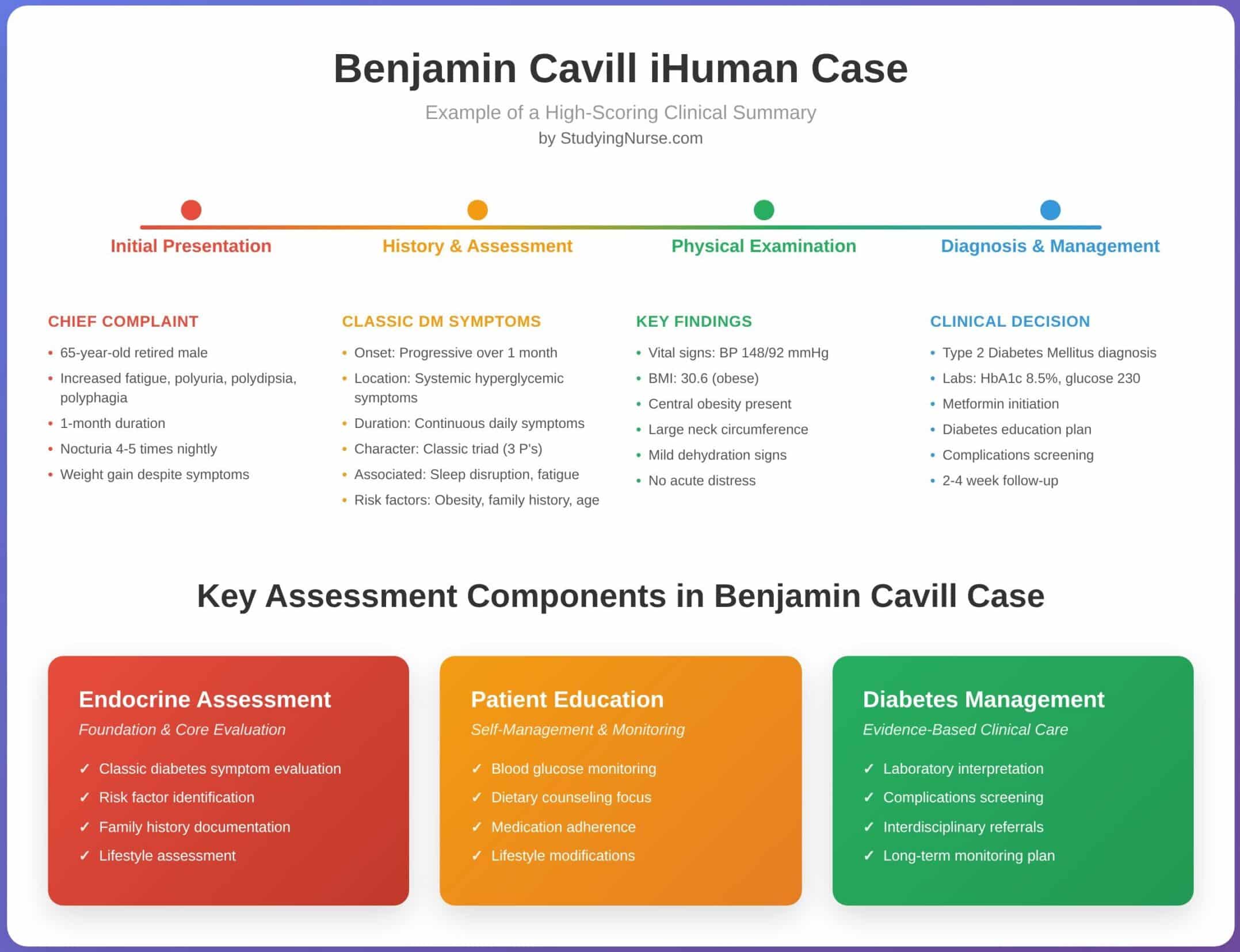
    Benjamin Cavill is a 65-year-old retired white male presenting with a chief complaint of increased fatigue, polyuria, nocturia, polydipsia, polyphagia, and weight gain that has been progressively worsening over the past month. He reports feeling “extremely tired lately” and describes difficulty sleeping due to frequent nighttime urination, requiring him to get up 4-5 times per night. His presentation includes classic symptoms of hyperglycemia with laboratory findings showing elevated non-fasting blood glucose of 230 mg/dL and HbA1c of 8.5%, along with glucosuria and proteinuria.

    In this comprehensive guide, we’ll walk you through how to approach his case, from initial endocrine assessment through systematic physical examination to the final nursing diagnoses of risk for unstable blood glucose and deficient knowledge related to diabetes management. You’ll learn the key clinical reasoning steps for Type 2 diabetes mellitus care, what the iHuman grading rubric expects, and a complete step-by-step solution to help you confidently navigate this essential endocrine nursing simulation involving diabetes mellitus assessment and management.

    Benjamin Cavill iHuman
    Benjamin Cavill iHuman Case Study Guide

    Benjamin Cavill iHuman Case Overview (Doorway Information)

    Patient Overview: Benjamin Cavill is a 65-year-old retired white male presenting with a one-month history of progressive fatigue, polyuria, nocturia, polydipsia, polyphagia, and unexplained weight gain. He demonstrates classic signs of uncontrolled Type 2 diabetes mellitus with significantly elevated blood glucose levels and multiple hyperglycemic symptoms. Benjamin requires immediate endocrine assessment and diabetes management due to his symptomatic hyperglycemia and potential for diabetic complications.

    Key Background Information:

    • Age/Gender: 65-year-old retired white male
    • Height/Weight: 5’10” (178 cm), 215 lbs (97.7 kg), BMI 30.6
    • Primary Condition: Type 2 Diabetes Mellitus (newly diagnosed)
    • Chief Concern: Fatigue, polyuria, nocturia, polydipsia, and polyphagia
    • Duration: Progressive symptoms over 1 month
    • Associated Conditions: Hypertension, benign prostatic hyperplasia (BPH), obesity
    • Significant History: Family history of diabetes (sister with T2DM), sedentary lifestyle since retirement
    • Current Status: Alert and oriented x4, stable vital signs, appears fatigued but cooperative
    • Risk Factors: Age >65, obesity (BMI 30.6), sedentary lifestyle, family history of diabetes, hypertension
    • Physical Findings: Central adiposity, large neck circumference, elevated blood pressure

    The patient appears tired but hemodynamically stable, requiring comprehensive endocrine assessment and diabetes education. His presentation with typical symptoms of hyperglycemia including the classic triad of polyuria, polydipsia, and polyphagia, combined with significant laboratory abnormalities, suggests urgent need for diabetes management initiation with focus on glucose control, patient education, and complication prevention.

    Benjamin Cavill (65 y/o male) – Endocrine Assessment

    • CC: Increased fatigue, polyuria, nocturia, polydipsia, polyphagia, and weight gain
    • MSAP: Type 2 Diabetes Mellitus with hyperglycemia – requiring immediate glucose management and diabetes education
    • Associated symptoms: Sleep disruption due to nocturia, decreased energy, increased appetite
    • History: Hypertension, BPH, family history of diabetes, sedentary lifestyle since retirement
    • High-risk factors: Age >65, obesity, family history, hypertension, sedentary lifestyle

    History Questions

    • How are you feeling today, Mr. Cavill?
    • Can you tell me what brought you here today?
    • When did you first notice feeling more tired than usual?
    • Can you describe your energy levels over the past month?
    • Tell me about your urination patterns – have you noticed any changes?
    • How often are you getting up at night to urinate?
    • Have you noticed increased thirst lately?
    • Can you describe your appetite – any changes?
    • Have you noticed any weight changes recently?
    • Are you taking any medications regularly?
    • Do you have any family history of diabetes or other medical conditions?
    • Can you tell me about your diet and eating habits?
    • How much physical activity do you get in a typical week?
    • Have you noticed any blurred vision or vision changes?
    • Do you have any numbness or tingling in your hands or feet?
    • Have you experienced any infections that were slow to heal?
    • Tell me about your work history and current activity level.
    • Do you smoke or use tobacco products?
    • How much alcohol do you consume, if any?
    • Have you had any recent illnesses or infections?
    • Do you feel dizzy when you stand up quickly?
    • Have you noticed any skin changes or slow-healing wounds?
    • Are you experiencing any abdominal pain or discomfort?
    • How has your sleep been affected by these symptoms?

    Physical Exam Vitals: Temperature 98.6°F, Heart Rate 82 bpm, Blood Pressure 148/92 mmHg, Oxygen Saturation 97% – elevated blood pressure consistent with hypertension, other vitals stable

    General appearance: Alert 65-year-old male appearing his stated age, oriented to person, place, time, and situation (A&O x4), appears fatigued but cooperative, central obesity noted

    Endocrine Assessment:

    • Integumentary: Skin warm and dry, delayed healing noted on small abrasion on right shin, no obvious lesions or rashes
    • Energy Level: Reports significant fatigue with minimal exertion, describes feeling “wiped out” most days
    • Hydration Status: Mucous membranes slightly dry, reports constant thirst despite increased fluid intake
    • Weight Assessment: BMI 30.6 indicating obesity, central adiposity with large waist circumference

    Cardiovascular Assessment:

    • Regular rate and rhythm, may have compensatory changes due to fluid shifts
    • Blood pressure elevated at 148/92 mmHg consistent with hypertension
    • Peripheral pulses palpable, assessment for diabetic vascular changes
    • No peripheral edema noted

    Genitourinary Assessment:

    • Reports polyuria with large volume urination
    • Nocturia requiring 4-5 bathroom trips per night
    • History of BPH, PSA within normal limits
    • Denies dysuria or hematuria

    Neurological Assessment:

    • Alert and oriented to person, place, time, and situation (A&O x4)
    • No focal neurological deficits observed
    • Assessment for early diabetic neuropathy needed
    • Reports occasional “pins and needles” sensation in feet

    Respiratory Assessment:

    • Clear lung sounds bilaterally
    • No respiratory distress at rest
    • Adequate oxygen saturation

    Assessment Note

    B.C. is a 65-year-old retired white male with a one-month history of progressive fatigue, polyuria, nocturia, polydipsia, polyphagia, and weight gain, presenting with classic symptoms of uncontrolled diabetes mellitus. Physical examination notable for central obesity (BMI 30.6), elevated blood pressure (148/92), and stable vital signs with evidence of mild dehydration. His presentation with the classic triad of hyperglycemic symptoms, combined with significant laboratory abnormalities including non-fasting glucose of 230 mg/dL and HbA1c of 8.5%, confirms the diagnosis of Type 2 diabetes mellitus requiring immediate management.

    Diagnostic Testing: Complete metabolic panel, lipid profile, thyroid function tests, urinalysis with microscopy, microalbumin, diabetic retinal screening, electrocardiogram, chest X-ray

    Primary Nursing Diagnoses:

    • Risk for Unstable Blood Glucose Related to New Diagnosis of Type 2 Diabetes Mellitus
    • Deficient Knowledge Related to Diabetes Management and Self-Care
    • Risk for Infection Related to Hyperglycemia and Compromised Immune Function

    Plan:

    • Initiate diabetes management with metformin and lifestyle modifications
    • Comprehensive diabetes education including glucose monitoring and dietary counseling
    • Blood pressure management and cardiovascular risk assessment
    • Diabetic complications screening and prevention strategies
    • Patient education on hyperglycemia and hypoglycemia recognition and management

    Benjamin Cavill SOAP Note

    Patient: Benjamin Cavill

    Subjective Data

    CC: Increased fatigue, polyuria, nocturia, polydipsia, polyphagia, and weight gain

    HPI: 65-year-old retired white male presents with a one-month history of progressive fatigue and classic hyperglycemic symptoms. Patient reports extreme tiredness that interferes with daily activities, describing feeling “completely drained” even after adequate sleep. He experiences polyuria with large-volume urination every 2-3 hours during the day and nocturia requiring 4-5 bathroom trips nightly, significantly disrupting sleep. Patient describes constant thirst despite drinking large amounts of water and other fluids. Appetite has increased significantly with frequent snacking and larger meal portions, yet he reports a 5-pound weight gain over the past month. Patient denies previous diabetes diagnosis but reports sister diagnosed with Type 2 diabetes three years ago.

    Medications: Multivitamin daily, Saw Palmetto 320mg daily for BPH symptoms, occasionally ibuprofen for headaches

    Allergies: NKDA (No Known Drug Allergies)

    PMH: Hypertension (not currently treated), benign prostatic hyperplasia with normal PSA levels, no previous hospitalizations, appendectomy 20 years ago

    LNMP/OB History: Not applicable

    PSH: Appendectomy 20 years ago, no other surgical procedures

    Sexual History: Deferred for this exam

    Hospitalizations: None reported

    Health Maintenance: Reports irregular primary care visits, last physical exam 3 years ago, overdue for routine screenings

    Immunizations: Reports childhood vaccinations complete, annual flu vaccine, COVID-19 vaccination series complete

    Family History: Sister diagnosed with Type 2 diabetes at age 62, father deceased from heart attack at age 70, mother deceased from stroke at age 75, no known history of kidney disease or diabetic complications

    Substances: Denies tobacco use (never smoker), occasional alcohol consumption (1-2 beers on weekends), denies illicit drug use, moderate caffeine intake (2-3 cups coffee daily)

    Home environment: Lives with wife in single-story home, reports safe environment, adequate financial resources for healthcare

    Employment type: Recently retired from office management position, describes work as primarily sedentary with high stress levels

    Diet: Reports poor dietary habits since retirement with increased fast food consumption, irregular meal timing, frequent snacking on processed foods, and large portion sizes

    Sleep: Previously slept 7-8 hours nightly, now disrupted by nocturia with frequent awakenings, reports feeling unrefreshed upon waking

    Exercise: Previously inactive lifestyle, minimal physical activity since retirement, reports fatigue limiting any exercise attempts

    Safety: Reports feeling safe at home, denies history of physical or verbal abuse, uses seatbelt consistently

    Objective Data

    ROS: (Perform an appropriate ROS based on the C/C and HPI; documented in i-Human assignment; performed in final focused exam)

    General: Reports overall decline in energy and well-being over past month, denies fever, chills, or night sweats. Weight gain of 5 pounds despite feeling more tired. Alert and cooperative with appropriate eye contact and clear speech.

    Skin, Hair and Nails: Denies rashes or lesions, reports slower healing of minor cuts, no changes in hair or nail growth patterns noted

    HEENT: Denies headaches, vision changes, or blurred vision. Denies ear problems, nasal congestion, or sore throat. Reports dry mouth sensation, especially at night

    NECK: Denies neck pain, stiffness, or swollen glands. Large neck circumference noted on examination

    Thorax and Lungs: Denies shortness of breath, cough, or wheezing. No history of lung disease or respiratory problems

    Cardiovascular: Reports no chest pain, palpitations, or syncope. Known history of hypertension, currently untreated. Denies lower extremity edema or exercise intolerance beyond fatigue

    Peripheral Vascular: Denies leg cramps, coldness, or skin color changes. No history of blood clots or vascular disease

    Abdomen: Denies nausea, vomiting, abdominal pain, or changes in bowel habits. Reports increased appetite with frequent hunger

    Genitourinary: Reports significant polyuria and nocturia as described in HPI. History of BPH with normal PSA. Denies dysuria, hematuria, or incontinence

    Metabolic/Hematologic: Reports fatigue, increased thirst, and increased urination. Denies heat or cold intolerance, excessive sweating, or history of anemia

    Psychiatric: Denies depression, anxiety, or mood changes. Reports frustration with sleep disruption and fatigue. No history of mental health disorders

    Musculoskeletal: Denies joint pain, muscle weakness, or mobility limitations. Reports occasional tingling in feet

    Neurologic: Denies headaches, dizziness, seizures, or focal weakness. Reports mild paresthesias in feet, no history of stroke or neurologic disorders

    Vital Signs: Temperature: 98.6°F, Pulse: 82 bpm, BP: 148/92 mmHg, Respirations: 18, SpO2: 97%

    Assessment

    General: Overweight 65-year-old male appearing his stated age, alert and oriented x4, appears fatigued but cooperative. Central obesity with BMI 30.6, no acute distress noted.

    Skin, Hair and Nails: Skin warm and dry with normal color. Small healing abrasion on right shin with delayed healing noted. Capillary refill <3 seconds. No obvious lesions or diabetic skin changes.

    HEENT: Head normocephalic and atraumatic. Eyes: pupils equal, round, reactive to light and accommodation. No obvious retinal changes on gross examination, formal diabetic retinal screening recommended. External ears normal. Nose and throat unremarkable. Mucous membranes slightly dry, consistent with mild dehydration.

    NECK: Supple with full range of motion. Large neck circumference measuring 18 inches. No lymphadenopathy, thyromegaly, or jugular venous distention.

    Thorax and Lungs: Chest symmetric with normal respiratory effort. Lungs clear to auscultation bilaterally, no adventitious sounds. Normal tactile fremitus and resonance to percussion.

    Cardiovascular: Regular rate and rhythm. Heart rate 82 bpm, blood pressure elevated at 148/92 mmHg. Normal S1 and S2, no murmurs, gallops, or rubs. Point of maximal impulse non-displaced. Peripheral pulses 2+ bilaterally.

    Peripheral Vascular: Extremities warm with adequate perfusion. No peripheral edema, varicosities, or ulcerations. Peripheral pulses intact, no bruits auscultated.

    Abdomen: Central adiposity with waist circumference 42 inches. Soft, non-tender, no masses or organomegaly palpated. Bowel sounds normoactive in all quadrants. No bruits auscultated.

    Genitourinary: Deferred detailed examination. Reports symptoms consistent with hyperglycemic polyuria and nocturia.

    Psychiatric: Appropriate affect and mood. Clear and coherent speech. Cooperative and engaged during interview. No signs of depression or anxiety noted.

    Musculoskeletal: Normal gait and posture. Full range of motion in all extremities. Muscle strength 5/5 throughout. No joint swelling or deformity.

    Neurologic: Alert and oriented to person, place, time, and situation. Cranial nerves grossly intact. Sensation intact to light touch, reports mild tingling in bilateral feet. Deep tendon reflexes 2+ and symmetric. No focal neurological deficits.

    Differential Diagnoses

    Type 2 Diabetes Mellitus: The patient presents with classic symptoms of hyperglycemia including polyuria, polydipsia, polyphagia, and fatigue for one month duration. Risk factors include age >65, obesity (BMI 30.6), family history of diabetes, sedentary lifestyle, and hypertension. Laboratory findings with non-fasting glucose of 230 mg/dL and HbA1c of 8.5% confirm the diagnosis per American Diabetes Association criteria.

    Type 1 Diabetes Mellitus: Less likely given patient’s age and gradual onset of symptoms over one month. Type 1 diabetes typically presents with more acute onset, often with weight loss and ketoacidosis. The patient’s obesity and family history are more consistent with Type 2 diabetes.

    Diabetes Insipidus: Could explain polyuria and polydipsia but would not account for polyphagia, weight gain, or elevated blood glucose. Patients with diabetes insipidus typically have normal blood glucose and different urinalysis findings.

    Hyperthyroidism: May cause increased appetite, weight changes, and fatigue, but typically associated with weight loss rather than weight gain. Would expect additional symptoms such as heat intolerance, palpitations, and anxiety, which are not present.

    Most Likely Diagnosis: Type 2 Diabetes Mellitus evidenced by classic hyperglycemic symptoms (polyuria, polydipsia, polyphagia), obesity, family history, sedentary lifestyle, and confirmed by laboratory findings of non-fasting glucose 230 mg/dL and HbA1c 8.5%. Patient also meets criteria for metabolic syndrome with central obesity and hypertension.

    Plan

    Health Promotion

    Diabetes Education – Comprehensive instruction on Type 2 diabetes pathophysiology, blood glucose monitoring, and lifestyle management strategies

    Nutritional Counseling – Medical nutrition therapy with registered dietitian focusing on carbohydrate counting and portion control

    Physical Activity – Gradual exercise progression starting with 150 minutes of moderate-intensity aerobic activity per week

    Weight Management – Target weight loss of 5-10% of body weight through dietary modification and increased physical activity

    Monitoring

    Glycemic Control – Home glucose monitoring 2-4 times daily, HbA1c every 3 months until target <7% achieved

    Blood Pressure – Regular monitoring with target <140/90 mmHg for diabetic patients

    Lipid Profile – Annual screening and management per guidelines

    Diabetic Complications – Annual diabetic retinal exam, microalbumin screening, foot examination

    Interventions

    Pharmacological Management – Initiate metformin 500mg twice daily with meals, titrate based on tolerance and glucose control

    Blood Pressure Control – Consider ACE inhibitor or ARB for hypertension management and renal protection

    Aspirin Therapy – Low-dose aspirin 81mg daily for cardiovascular protection if no contraindications

    Statin Therapy – Consider moderate-intensity statin therapy based on lipid profile and cardiovascular risk assessment

    Long-term Management

    Endocrinology Referral – Consider specialist consultation for complex diabetes management

    Diabetic Complications Screening – Establish relationships with ophthalmology, podiatry, and nephrology as indicated

    Patient Support – Connect with diabetes educator and support groups for ongoing education and motivation

    Emergency Planning – Education on hypoglycemia and hyperglycemia recognition and management

    Benjamin Cavill iHuman
    Benjamin Cavill SOAP Note

    Complete Step-by-Step Guide to Writing the Benjamin Cavill iHuman Case Study

    Completing the Benjamin Cavill iHuman case requires a systematic approach focused on endocrine nursing care and Type 2 diabetes mellitus management. This comprehensive guide will walk you through each section of the simulation, providing specific strategies and key points to ensure you achieve the required 70% score.

    Step 1: Pre-Case Preparation and Initial Approach

    Before diving into the case, review the doorway information and formulate your initial clinical approach.

    Key Information to Note:

    • 65-year-old retired male with classic hyperglycemic symptoms
    • One-month duration of progressive symptoms
    • Consider immediate diabetes risk factors: age, obesity, family history

    Initial Clinical Mindset: Approach this case focusing on endocrine nursing care with emphasis on Type 2 diabetes mellitus assessment. The priority concerns include immediate glucose management, patient education, and diabetic complications screening.

    Step 2: Conducting the History of Present Illness (HPI)

    The HPI is crucial for understanding the patient’s current endocrine state and identifying classic diabetes symptoms.

    Key Areas to Assess:

    • Symptom Progression: Timeline of fatigue, polyuria, polydipsia, and polyphagia development
    • Sleep Patterns: Impact of nocturia on sleep quality and daytime functioning
    • Dietary Assessment: Changes in appetite, food intake, and eating patterns
    • Weight Changes: Recent weight gain despite increased appetite
    • Associated Symptoms: Vision changes, slow healing, infections

    Critical Questions:

    • Assessment of classic diabetes symptoms using detailed symptom analysis
    • Evaluation of family history and personal risk factors
    • Determination of lifestyle factors contributing to diabetes development
    • Assessment of current functional status and quality of life impact

    Step 3: Review of Systems (ROS)

    Conduct a focused ROS paying attention to diabetes complications and related symptoms:

    Endocrine:

    • Polyuria, polydipsia, polyphagia, fatigue, weight changes
    • Heat/cold intolerance, excessive sweating
    • Previous thyroid or adrenal disorders

    Cardiovascular:

    • Chest pain, palpitations, exercise intolerance
    • Hypertension, family history of cardiovascular disease
    • Peripheral circulation and vascular symptoms

    Neurological:

    • Numbness, tingling, especially in hands and feet
    • Vision changes, blurred vision
    • Headaches, dizziness, cognitive changes

    Step 4: Medical and Social History Assessment

    Medical History:

    • Previous diabetes screening results and risk factor assessment
    • Hypertension management and current blood pressure control
    • BPH history and impact on urinary symptoms
    • Previous hospitalizations or emergency department visits

    Social History:

    • Retirement lifestyle changes and activity level
    • Dietary habits and eating patterns
    • Alcohol consumption and tobacco use history
    • Support system and health insurance coverage

    Step 5: Physical Examination Strategy

    Perform a comprehensive endocrine-focused physical exam:

    Endocrine Examination:

    • Assessment of body habitus including BMI calculation and waist circumference
    • Evaluation of skin for diabetic changes, acanthosis nigricans, or slow-healing wounds
    • Assessment for signs of diabetic complications

    Cardiovascular Assessment:

    • Blood pressure measurement and assessment for hypertension
    • Heart rate, rhythm, and assessment for diabetic cardiovascular changes
    • Peripheral pulse examination and vascular assessment

    Neurological Assessment:

    • Assessment for early diabetic neuropathy including sensation testing
    • Evaluation of deep tendon reflexes and motor function
    • Screening for diabetic retinopathy risk factors

    Step 6: Developing Nursing Diagnoses

    Propose appropriate nursing diagnoses with rationales:

    Priority Diagnoses:

    • Risk for Unstable Blood Glucose Related to New Diagnosis of Type 2 Diabetes Mellitus
    • Deficient Knowledge Related to Diabetes Management and Self-Care
    • Risk for Infection Related to Hyperglycemia and Compromised Immune Function

    Supporting Evidence:

    • Classic hyperglycemic symptoms with elevated blood glucose
    • Newly diagnosed diabetes requiring extensive patient education
    • Hyperglycemia’s impact on immune system function
    • Need for lifestyle modifications and medication management

    Step 7: Diabetes Management and Intervention Plan

    Acute Diabetes Management:

    • Blood glucose monitoring and target range establishment
    • Initiation of metformin therapy with monitoring for response and side effects
    • Patient education on hyperglycemia and hypoglycemia recognition

    Lifestyle Interventions:

    • Medical nutrition therapy and carbohydrate counting education
    • Physical activity recommendations and exercise progression
    • Weight management strategies and realistic goal setting

    Step 8: Discharge Planning and Follow-up Care

    Diabetes Continuity of Care:

    • Regular monitoring of HbA1c and glucose control
    • Coordination with endocrinology and diabetes educator for ongoing management
    • Establishment of diabetic complications screening schedule

    Patient and Family Education:

    • Recognition of hyperglycemia and hypoglycemia symptoms and management
    • Proper blood glucose monitoring technique and record keeping
    • Importance of medication adherence and lifestyle modifications

    Step 9: Interdisciplinary Collaboration

    Team Coordination:

    • Collaboration with endocrinologist for complex diabetes management
    • Registered dietitian consultation for medical nutrition therapy
    • Diabetes educator referral for comprehensive diabetes self-management education
    • Ophthalmology referral for diabetic retinal screening

    Step 10: Documentation and Submission Tips

    Writing Your Summary:

    • Focus on systematic endocrine assessment and clinical reasoning for diabetes nursing diagnoses
    • Include cardiovascular risk assessment rationale and complication prevention strategies
    • Demonstrate understanding of diabetes education and lifestyle modification interventions
    • Use professional endocrine nursing terminology and evidence-based practice principles

    Key Documentation Elements:

    • Comprehensive symptom assessment and diabetes risk factor evaluation
    • Laboratory interpretation and diabetes diagnostic criteria application
    • Patient education plan and self-management goal establishment
    • Discharge planning with community resource coordination

    Final Submission Checklist:

    • ✓ Complete endocrine assessment with diabetes symptom evaluation
    • ✓ Appropriate nursing diagnoses with clear rationales related to diabetes management
    • ✓ Evidence-based interventions for glucose control and patient education
    • ✓ Comprehensive discharge planning with follow-up coordination
    • ✓ Professional documentation using endocrine nursing terminology

    Benjamin Cavill iHuman Case Summary Grading Criteria

    The Benjamin Cavill iHuman case will evaluate you across several critical domains to ensure comprehensive endocrine nursing care skills. Here’s what you need to focus on to maximize your score:

    (1) Endocrine Assessment Skills (Major Points):

    You must demonstrate thorough assessment of Type 2 diabetes mellitus including symptom evaluation, risk factor identification, and physical signs of hyperglycemia. Essential components include: systematic evaluation of polyuria, polydipsia, polyphagia, and fatigue patterns, comprehensive diabetes risk factor assessment including family history and lifestyle factors, nutritional assessment for diabetes management planning, and cardiovascular risk evaluation. The rubric specifically rewards students who conduct comprehensive endocrine evaluations using evidence-based assessment techniques.

    (2) Nursing Diagnosis (High Weight):

    Focus on appropriate nursing diagnoses for patients with newly diagnosed Type 2 diabetes mellitus. Must-include diagnoses: Risk for Unstable Blood Glucose Related to New Diagnosis of Type 2 Diabetes Mellitus, Deficient Knowledge Related to Diabetes Management and Self-Care, Risk for Infection Related to Hyperglycemia. Pro tip: The rubric awards points for accurate problem identification and appropriate prioritization based on glucose control and patient safety.

    (3) Laboratory Interpretation and Diabetes Diagnostic Criteria (Critical for Scoring):

    You need to demonstrate understanding of diabetes diagnostic criteria and laboratory interpretation. Expected components include: interpretation of HbA1c of 8.5% and non-fasting glucose of 230 mg/dL, application of American Diabetes Association diagnostic criteria, evaluation of additional laboratory findings including glucosuria and proteinuria, and assessment of metabolic syndrome components.

    (4) Patient Education and Self-Management (Heavily Weighted):

    You must address diabetes education and self-management needs. Key components include: blood glucose monitoring education and target range establishment, dietary counseling and carbohydrate counting instruction, medication adherence and side effect monitoring, and hypoglycemia and hyperglycemia recognition and management.

    (5) Diabetes Complications Screening and Prevention (Heavily Weighted):

    The rubric expects comprehensive understanding of diabetes complications screening including: diabetic retinal examination scheduling, microalbumin screening for nephropathy, foot examination and neuropathy assessment, and cardiovascular risk factor management.

    (6) Interdisciplinary Collaboration and Referrals (Essential Component):

    Demonstrate appropriate coordination with diabetes care team. Bonus points for: endocrinology referral for complex diabetes management, registered dietitian consultation for medical nutrition therapy, diabetes educator referral for comprehensive self-management education, and ophthalmology referral for diabetic retinal screening.

    Benjamin Cavill iHuman
    Benjamin Cavill iHuman Case Summary

    Example of a High-Scoring Clinical Summary

    Here’s how a top-performing student might document this case:

    Patient Summary – Benjamin Cavill

    Situation: 65-year-old retired male with one-month history of progressive hyperglycemic symptoms presenting with newly diagnosed Type 2 diabetes mellitus requiring immediate glucose management and comprehensive diabetes education.

    Background: Classic presentation with polyuria, polydipsia, polyphagia, and fatigue. Significant risk factors include age >65, obesity (BMI 30.6), family history of diabetes, sedentary lifestyle since retirement, and untreated hypertension. No previous diabetes diagnosis or screening.

    Assessment: Alert, oriented male demonstrating clinical signs of uncontrolled diabetes including hyperglycemic symptoms and laboratory confirmation with HbA1c 8.5% and non-fasting glucose 230 mg/dL. Stable vital signs but requires immediate diabetes management initiation.

    Primary Nursing Diagnoses:

    • Risk for Unstable Blood Glucose Related to New Diagnosis of Type 2 Diabetes Mellitus
    • Deficient Knowledge Related to Diabetes Management and Self-Care
    • Risk for Infection Related to Hyperglycemia and Compromised Immune Function

    Recommendation:

    • Initiate metformin therapy with glucose monitoring and titration based on response
    • Implement comprehensive diabetes self-management education including blood glucose monitoring and dietary counseling
    • Provide lifestyle modification counseling for weight management and physical activity progression
    • Coordinate diabetic complications screening including retinal examination and microalbumin testing
    • Monitor for hyperglycemia and hypoglycemia with clear management protocols

    Patient and Family Education Provided: Explained Type 2 diabetes pathophysiology and the importance of glucose control, discussed lifestyle modifications including dietary changes and physical activity recommendations, taught blood glucose monitoring technique and target ranges, reviewed hypoglycemia and hyperglycemia recognition and management, provided information on diabetes complications prevention and screening schedules.

    Conclusion

    By following this comprehensive approach to the Benjamin Cavill case, you’ll demonstrate the endocrine nursing care skills that iHuman evaluates. Remember, success in diabetes cases requires understanding the underlying pathophysiology: conduct thorough endocrine assessments including symptom evaluation and risk factor identification, develop appropriate nursing diagnoses focused on glucose control and patient education, implement evidence-based diabetes management and lifestyle interventions, and coordinate comprehensive care with diabetes specialists and educators. The key is treating each iHuman simulation as you would a real patient with newly diagnosed diabetes – prioritize glucose control, focus on patient education, emphasize lifestyle modifications, and always consider diabetic complications prevention. With this guide, you’re well-prepared to excel in this essential endocrine nursing care simulation.

    Frequently Asked Questions

    What are the priority nursing diagnoses for Benjamin Cavill?

    The primary nursing diagnoses for Benjamin Cavill include Risk for Unstable Blood Glucose Related to New Diagnosis of Type 2 Diabetes Mellitus (priority), Deficient Knowledge Related to Diabetes Management and Self-Care, and Risk for Infection Related to Hyperglycemia and Compromised Immune Function. Students often struggle with prioritization, but remember that glucose control is crucial while addressing the patient’s extensive learning needs that directly impact diabetes self-management and long-term outcomes.

    What are the critical assessment components I need to perform?

    Essential assessment elements include comprehensive evaluation of classic diabetes symptoms including polyuria, polydipsia, polyphagia, and fatigue patterns, detailed diabetes risk factor assessment including family history and lifestyle factors, nutritional assessment focusing on current dietary habits and eating patterns, and cardiovascular assessment for diabetes-related complications. Many students miss points by inadequately assessing the patient’s understanding of diabetes or failing to evaluate the impact of symptoms on daily functioning and quality of life.

    How do I address the diabetes management and education needs effectively?

    Focus on comprehensive diabetes management planning including blood glucose monitoring education and target range establishment, medical nutrition therapy and carbohydrate counting instruction, medication adherence and side effect monitoring, and lifestyle modification counseling for weight management and physical activity. The key is demonstrating understanding of both immediate glucose control needs and long-term diabetes self-management education requirements.

    What diabetes education interventions should I include?

    The comprehensive diabetes education plan should include blood glucose monitoring technique and record keeping, recognition and management of hypoglycemia and hyperglycemia, dietary counseling with carbohydrate counting and portion control, medication adherence and side effect monitoring, and lifestyle modifications including physical activity and weight management strategies. Students often forget to address the importance of diabetic complications prevention and screening schedules, which are critical components for comprehensive diabetes care and can impact overall scoring.

  • Objective Data Nursing Examples: How to Differentiate Subjective vs Objective Data

    Objective Data Nursing Examples: How to Differentiate Subjective vs Objective Data

    Objective Data Nursing Example

    In nursing practice, the ability to distinguish between different types of patient data is essential for accurate assessment and decision-making. Nurses routinely work with subjective and objective data during the assessment phase of the nursing process, and understanding how to interpret this information is foundational to providing effective, evidence-based patient care. Accurate data collection informs nursing diagnoses, shapes nursing care plans, and ultimately supports better clinical outcomes.

    Objective data in nursing refers to measurable, observable findings that are collected during physical assessments, such as vital signs, laboratory results, or diagnostic imaging. These data are not influenced by a patient’s opinions or emotions. In contrast, subjective data originates from the patient’s own experience, including pain, nausea, or fatigue—symptoms that cannot be verified through external observation but offer critical insight into the patient’s condition. Both subjective and objective nursing data are necessary, and each plays a distinct role in the formulation of care.

    This article examines objective data nursing examples in detail, while also clarifying the difference between subjective and objective data. By addressing how data is collected, how it contributes to nursing diagnoses, and how nurses can combine subjective and objective data during the nursing assessment, this resource aims to support nursing students and professionals in developing clinical competence. Special attention is given to common data types, real-world examples, and best practices for distinguishing between what is objective information and what is subjective—an essential skill in both education and practice.

    Objective Data Nursing Examples
    Types of Objective Data

    What is Objective Data?

    Definition and Characteristics

    Objective data in nursing refers to measurable, observable information that is gathered through the nurse’s senses, medical instruments, or diagnostic procedures. Unlike subjective data, which is based on what the patient tells the nurse—such as feelings, perceptions, or symptoms—objective data is not influenced by personal interpretation or opinion. It is factual, verifiable, and consistent across observers, making it a cornerstone of accurate nursing assessment and clinical reasoning.

    In nursing practice, objective data is collected during the assessment phase of the nursing process and forms the basis for evidence-based decision-making. Because objective data is measurable, it plays a central role in supporting or refuting potential nursing diagnoses. This type of data allows nurses to monitor changes over time, detect clinical deterioration, or confirm the effects of nursing interventions. Importantly, objective data is considered legally and ethically defensible because it relies on standardized tools and techniques rather than personal interpretation.

    Key characteristics of objective nursing data include:

    • Measurability: It can be quantified using instruments or scales (e.g., thermometer, sphygmomanometer).
    • Consistency: Different healthcare professionals can verify the same findings.
    • Observability: It is directly observed through physical senses or tools, not reported by the patient.
    • Recordability: It can be accurately documented in medical records.

    Types of Objective Data

    There are multiple types of objective data in nursing, collected through various assessment methods. These include but are not limited to the following:

    1. Vital Signs

    Examples of objective data in this category include body temperature, pulse rate, respiratory rate, and blood pressure. For instance, a blood pressure reading of 142/90 mmHg is objective—it can be verified by another nurse using the same equipment.

    Unlike the subjective report of “feeling dizzy,” which is based on the patient’s experience, a heart rate of 110 beats per minute is objective data that can guide nursing diagnoses such as “Decreased Cardiac Output.”

    2. Physical Examination Findings

    Nurses gather objective data through inspection, palpation, percussion, and auscultation during a physical examination. For example, noticing a reddened area on a patient’s sacrum or hearing crackles in the lungs are objective and observable findings.

    These observations contrast with subjective nursing data, such as when the patient reports feeling pain at the site—an example of subjective data.

    3. Laboratory and Diagnostic Results

    Laboratory tests (e.g., white blood cell count, blood glucose level) and imaging studies (e.g., X-ray showing lung consolidation) provide critical objective information. These results are immune to bias and offer concrete support for nursing assessments and patient care planning.

    4. Behavioral Observations

    While behavior may seem subjective, certain aspects—like inability to maintain eye contact, refusal to eat, or repetitive movements—are documentable and thus qualify as objective data, especially when observed consistently and recorded factually.

    5. Wound Assessment Data

    Nurses may observe and document the size, color, odor, and discharge of a wound. For example, noting “a 3 cm open ulcer with yellow drainage on the right heel” is a precise objective nursing data point used to evaluate wound healing and infection risk.

    Subjective vs Objective Data in Nursing

    Understanding Subjective vs Objective

    In nursing practice, recognizing the difference between subjective and objective data is essential for accurate clinical reasoning and the development of safe, effective, and individualized nursing care plans. Both types of assessment data are collected during the assessment phase of the nursing process, and together they provide a holistic understanding of the patient’s condition. Each serves a unique role in informing nursing diagnoses, guiding interventions, and evaluating the effectiveness of care.

    Subjective data refers to information that originates from the patient’s personal account of their symptoms, feelings, and perceptions. It reflects the subjective experience of the patient and is shaped by individual interpretation. This type of data cannot be measured or verified independently by the nurse. It is gathered through patient interviews or conversations and often includes descriptions of pain, discomfort, emotions, or other symptoms that only the patient can experience. For example, a patient may report, “I have a sharp pain in my lower back,” or “I feel nauseous and dizzy.” These statements are examples of subjective data in nursing and provide context for understanding the patient’s internal condition.

    Importantly, subjective data helps the nurse to understand how the illness or health condition is affecting the patient from their point of view. It may also uncover emotional or psychological distress that is not immediately visible. This type of data is crucial for understanding patient priorities, fears, or needs—factors that significantly influence nursing care decisions. Because subjective data provides valuable insight into the patient’s perspective, it is carefully documented, often using the patient’s exact words, and serves as an essential component of subjective and objective nursing data.

    On the other hand, objective data—often referred to as objective nursing data—includes factual, observable, and measurable information that can be obtained through physical examination, direct observation, or clinical instruments. This includes vital signs such as temperature, pulse, respiratory rate, and blood pressure. For example, recording a temperature of 38.9°C or noting that the patient’s blood pressure is 150/90 mmHg represents objective data in nursing. These findings are not influenced by opinion or personal perception and can be verified by another clinician using the same tools under similar conditions.

    Additionally, objective data provides clinical evidence to support or rule out possible nursing diagnoses. Other examples of objective data include lab results (e.g., elevated white blood cell count), imaging studies (e.g., an X-ray revealing a fractured rib), or the physical observation of symptoms (e.g., swelling, rashes, pallor, or abnormal lung sounds during auscultation). These data points are critical for identifying physiological changes, tracking the progression of illness, and evaluating the effectiveness of interventions. In this way, objective data is factual, measurable, and central to evidence-based nursing practice.

    Understanding the difference between subjective vs objective data also requires clarity about the source of the information. Subjective nursing data comes directly from the patient and reflects what the patient tells the nurse about their health. In contrast, objective information is collected by the nurse or other healthcare providers using validated techniques and clinical tools. Both are equally important. The nursing process demands that nursing professionals collect subjective as well as objective data, because data gathered from both perspectives is necessary for forming a complete clinical picture.

    Finally, differentiating between subjective vs objective nursing data ensures more precise documentation, supports collaborative care among interdisciplinary teams, and meets legal and ethical standards of care. It also forms a core competency expected of every nursing student and practicing nurse. By learning to understand the difference between these two types of data, nurses are better equipped to perform thorough assessments, deliver individualized nursing care, and uphold the standards of safe and ethical nursing practice.

    Subjective vs Objective Data in Nursing
    Subjective Vs Objective Data

    Importance of Differentiating Between Them

    Understanding the difference between subjective vs objective nursing data is not just a theoretical exercise—it has practical and ethical implications in clinical settings. Differentiating between these two data types helps nurses ensure that assessment data is complete, balanced, and clinically useful. Failure to correctly categorize or gather this information can lead to incomplete or inaccurate nursing assessments, which may result in misinformed nursing diagnoses and unsafe nursing care plans.

    For example, a patient may report chest tightness (subjective data) while the nurse notes elevated blood pressure and diaphoresis (objective data). By combining subjective and objective data, the nurse can identify the signs and symptoms of a potentially emergent condition, such as myocardial infarction. Without clearly distinguishing and integrating both data types, the seriousness of the condition might be underestimated.

    This differentiation also supports professional communication and legal documentation. Objective data is factual and can be referenced by all members of the care team, while subjective nursing data adds contextual detail that cannot be replaced by instruments alone. In legal or regulatory reviews, such as those conducted by state boards of nursing, accurately documenting the data collected, clearly indicating what is subjective or objective, is considered best practice.

    Moreover, understanding the importance of subjective and objective information helps nurses prioritize care. While subjective data may reveal emotional or psychological distress, objective data offers measurable benchmarks for clinical deterioration or improvement. In holistic nursing care, both must be considered to ensure patient-centered outcomes.

    Ultimately, nursing professionals must know the difference between subjective and objective data in order to deliver care that is comprehensive, ethical, and evidence-based. This is especially important for nursing students, who must demonstrate clinical judgment and data interpretation skills throughout their education and into practice.

    Examples of Objective Data in Nursing

    Objective Data Examples from Patient Assessments

    In nursing practice, collecting accurate and measurable objective data during the assessment phase of the nursing process is essential to forming evidence-based nursing diagnoses and ensuring high-quality patient care. This type of data is gathered through clinical observation, diagnostic tools, and physical measurements, and it represents the patient’s physiological status in a factual and reproducible manner. Objective nursing data is particularly important because it offers a standardized way to monitor patient conditions, detect clinical deterioration, and evaluate treatment outcomes over time.

    One of the most common and critical examples of objective data in nursing is the measurement of vital signs. These include temperature, pulse, respiratory rate, oxygen saturation, and blood pressure. For instance, documenting a patient’s blood pressure as 138/88 mmHg, or a respiratory rate of 22 breaths per minute, provides objective information that can be compared across time and interpreted to normal physiological ranges. These values are not influenced by what the patient tells the nurse but instead reflect measurable changes in the body that may support or challenge the patient’s subjective complaints.

    Beyond vital signs, other examples of objective data include observations related to the patient’s behavior, appearance, mobility, skin integrity, and overall physical state. A nurse may note that the patient is diaphoretic, has a non-healing ulcer on the heel, or is limping while walking. These findings are observable and can be verified by another clinician, distinguishing them clearly from subjective data, which might involve a patient reporting pain or fatigue. While subjective data provides valuable insight into the patient’s internal experience, these objective data examples are necessary to correlate or validate the patient’s self-reporting with clinical findings.

    Furthermore, assessment data from diagnostic tools—such as blood glucose levels, urinalysis, electrocardiograms, and imaging results—also qualify as objective data in nursing. For example, if a patient may state that they feel faint (subjective data), the nurse may observe a blood glucose reading of 58 mg/dL, which is a concrete example of objective data that could explain the symptom. By combining subjective and objective data, nurses are able to make informed clinical judgments and tailor their care based on a comprehensive evaluation.

    Physical Examination Findings

    Physical examination is a primary method through which nurses collect objective data, using techniques such as inspection, palpation, percussion, and auscultation. These clinical techniques allow for the direct observation and measurement of patient data, which is essential in verifying or contextualizing the subjective information provided by the patient.

    During inspection, a nurse might observe visible signs such as swelling, jaundice, cyanosis, or bruising. For example, noting that a patient has bilateral pedal edema or a discoloration on the lower extremity represents objective nursing data that may indicate underlying cardiac or vascular conditions. These findings are observable and not based on patient reporting.

    Palpation involves using touch to assess structures under the skin. For instance, detecting a firm mass in the abdomen, or noting that a lymph node is enlarged and tender are objective data examples gathered through physical touch. These assessments are especially important when the patient may be unaware of the physical change or unable to articulate it clearly.

    Percussion and auscultation provide additional objective data through sound interpretation. During percussion, a nurse may note a dull sound over a lung field, suggesting fluid accumulation. In auscultation, the nurse may hear crackles in the lungs or a murmur over the heart, both of which are objective and measurable findings. These are critical during the physical assessment portion of the exam, especially when evaluating respiratory or cardiovascular function.

    When documenting objective data collected during a nursing assessment, it is vital that nurses clearly distinguish this data from subjective nursing data. While a patient may report, “I feel short of breath,” which is subjective, the nurse’s observation that the patient is using accessory muscles to breathe and has an oxygen saturation of 89% is objective information. Understanding the difference between subjective vs objective findings ensures accuracy in communication and supports appropriate nursing diagnoses and intervention planning.

    In sum, the objective data is factual, measurable, and an integral component of nursing care. It complements subjective data to create a full picture of the patient’s health status. Both forms of data are essential, and it is the responsibility of the nursing professional or nursing student to understand the difference, collect both types appropriately, and apply them during all phases of the nursing process.

    Collecting Objective Data

    Methods of Data Collection

    Accurate and systematic data collection is a fundamental component of effective nursing care. The information nurses gather during the assessment phase of the nursing process directly influences clinical decisions, development of nursing diagnoses, and implementation of safe and personalized interventions. In practice, nurses collect objective data—the type of data that is observable, measurable, and verifiable—using several distinct methods. Below is a detailed overview of these main data collection methods.

    1. Observation

    Observation is often the first and most continuous method used during a nursing assessment. It involves the systematic use of visual, auditory, olfactory, and tactile senses to gather data about the patient’s condition.

    Nurses observe a patient’s general appearance, level of consciousness, skin color, hygiene, posture, mobility, and behavioral responses. For example, a nurse might observe that a patient appears pale and diaphoretic, or that they grimace when shifting in bed—indicators that may signal discomfort or an underlying health concern.

    This method allows nurses to detect subtle changes in a patient’s status. For instance, observing that a patient becomes increasingly lethargic or develops labored breathing during a shift could lead to early intervention and prevention of deterioration.

    2. Palpation

    Palpation involves the use of touch to assess body organs and structures. Nurses use their hands to feel for temperature, moisture, texture, turgor, size, shape, tenderness, and movement.

    For example, during a physical assessment, a nurse may palpate the abdomen to detect distension, tenderness, or masses. They may also assess for edema in the lower extremities or palpate a peripheral pulse to evaluate circulation. This technique provides concrete, tactile data that supports clinical judgment and may prompt further investigation.

    3. Auscultation

    Auscultation is the act of listening to sounds within the body using a stethoscope. This method provides essential objective data, particularly in the assessment of the cardiovascular, respiratory, and gastrointestinal systems.

    For example, listening to lung sounds might reveal crackles in a patient with pneumonia, while bowel sounds may be hypoactive or absent in a patient with postoperative ileus. Heart sounds can help detect murmurs or abnormal rhythms. These sounds are not subjective impressions but audible, recordable signs that aid in clinical evaluation.

    4. Percussion

    Percussion is a technique where the nurse taps on the surface of the body to produce sounds that indicate the density of underlying tissues. While not as commonly used in routine bedside nursing as other methods, it is still taught in nursing education and used in specific assessments.

    For instance, a dull sound over the lungs may indicate fluid accumulation, as in pleural effusion, while a hyperresonant sound may be associated with conditions like emphysema. Percussion provides objective auditory cues that support further assessment.

    5. Measurement with Instruments and Devices

    Instruments and diagnostic devices offer precise, quantifiable data that are indispensable in both acute and long-term care settings. These tools allow nurses to collect data that are consistent, reproducible, and critical for identifying trends or abnormalities.

    Common tools include:

    Thermometers – to measure body temperature (e.g., 38.9°C indicates fever).

    Sphygmomanometers – to record blood pressure (e.g., 140/90 mmHg indicating hypertension).

    Pulse oximeters – to monitor oxygen saturation (e.g., SpO₂ of 92% may suggest hypoxemia).

    Glucometers – to check blood glucose levels (e.g., 250 mg/dL indicates hyperglycemia).

    These values are clearly measurable and form a reliable basis for tracking patient progress or identifying clinical deterioration.

    6. Diagnostic and Laboratory Tests

    Beyond bedside instruments, nurses interpret and record data from diagnostic imaging and laboratory findings, both of which are key sources of objective information.

    For example:

    • A complete blood count (CBC) may reveal anemia or infection.
    • A urinalysis might indicate dehydration, infection, or kidney dysfunction.
    • Chest X-rays can show infiltrates consistent with pneumonia or fluid around the lungs.

    While the tests are ordered by providers, nurses must collect samples, prepare patients, interpret basic findings, and incorporate results into the care plan.

    Collecting Objective Data, Methods of Objective Data Collection
    Collecting Objective Data Methods of Data Collection Accurate and systematic data collection is a fundamental component of effective nursing care

    Role of Objective Nursing Data in Patient Care

    Observable and measurable information plays a central role in clinical decision-making and care planning. It contributes directly to the early recognition of health changes, supports the prioritization of interventions, and allows for the ongoing evaluation of treatment outcomes. This form of data is especially important in acute care settings, where rapid, accurate assessments can significantly impact patient safety and outcomes.

    By using clinical findings such as abnormal vital signs, wound characteristics, or laboratory values, nurses can recognize patterns and determine when escalation of care is necessary. For instance, a patient with an elevated heart rate, low blood pressure, and cool, clammy skin may be showing early signs of shock—information that is critical for timely intervention.

    Objective information also enhances communication across the healthcare team. When a nurse reports measurable findings, such as oxygen saturation trends or a sudden spike in temperature, providers are able to make informed decisions quickly. This type of data becomes even more valuable when combined with a patient’s self-reported experience, offering a more complete understanding of the clinical situation.

    Moreover, consistent monitoring of measurable indicators helps determine whether nursing and medical interventions are effective. For example, a wound measurement that shows decreased size and reduced exudate over time suggests positive healing progress. In contrast, an increase in swelling, redness, or drainage may indicate complications that require a change in the care plan.

    In all clinical contexts, accurately gathered and interpreted data strengthens the foundation of quality nursing care. It reduces variability, enhances patient safety, and supports the development of interventions tailored to individual health needs. Whether in hospitals, outpatient settings, or community care, a nurse’s ability to recognize, document, and respond to objective findings is fundamental to professional practice.

    Nursing Process and Objective Data

    The nursing process is a foundational framework in clinical practice that guides nurses in delivering safe, patient-centered care. It is composed of five interrelated steps: assessment, diagnosis, planning, implementation, and evaluation. Objective data plays a central role throughout this process, beginning with the assessment phase and directly influencing how nurses identify and prioritize patient needs.

    Assessment Phase: Gathering Objective Data

    The assessment phase is the first and most critical step of the nursing process, where nurses systematically collect both subjective and objective data to form a complete picture of the patient’s health status. Objective data is especially valuable at this stage because it provides factual, observable, and measurable information that is not influenced by the patient’s feelings or personal interpretation.

    During this phase, nurses gather objective data through a variety of methods, including:

    • Vital signs (e.g., blood pressure, temperature, pulse, respiratory rate)
    • Physical examination (e.g., observing wounds, auscultating lung sounds, palpating for tenderness)
    • Use of clinical equipment (e.g., pulse oximeters, glucometers)
    • Laboratory and diagnostic results (e.g., complete blood counts, imaging studies)

    For example, a nurse assessing a patient who “feels hot” (subjective data) will obtain a temperature reading. If the thermometer shows a temperature of 39.2°C, that is objective data. This helps confirm the presence of fever and rules out other possible explanations. In this way, objective nursing data ensures that subjective experiences are supported—or clarified—by verifiable findings.

    Objective data also includes signs that a patient may not report directly. A nurse might observe swelling in the ankles, labored breathing, or cyanosis—details that patients may be unaware of or unable to articulate.

    The importance of gathering accurate and relevant objective data cannot be overstated. It serves as the bedrock for identifying actual or potential health problems, especially in patients with limited communication ability, such as those with dementia, nonverbal children, or patients under sedation.

    Using Objective Data for Nursing Diagnoses

    Once data is collected, nurses analyze it to formulate nursing diagnoses, which are clinical judgments about actual or potential responses to health conditions. Here, objective data provides the evidence base needed to support these judgments.

    For instance, a nursing diagnosis such as “Ineffective Airway Clearance” must be supported by objective indicators like:

    • Decreased oxygen saturation
    • Abnormal lung sounds (e.g., crackles, wheezing)
    • Excessive sputum production
    • Use of accessory muscles during respiration

    Without such objective findings, the diagnosis would lack credibility and precision. Similarly, “Risk for Infection” might be justified by objective signs such as surgical incisions, elevated white blood cell counts, or presence of invasive devices like catheters.

    In contrast to medical diagnoses (e.g., pneumonia), nursing diagnoses focus on patient responses and needs. By integrating objective data with subjective cues (such as the patient saying “I feel short of breath”), nurses can craft more accurate and individualized care plans.

    Importantly, nurses must learn to differentiate between subjective and objective data in their documentation and communication. This distinction improves interdisciplinary collaboration and enhances the quality of patient care, ensuring that interventions are based on reliable evidence rather than assumptions.

    Conclusion: The Role of Objective Data in Nursing Practice

    Objective data plays a vital role in nursing practice by providing measurable, observable facts that guide accurate assessment and informed clinical decisions. From recording vital signs to interpreting lab results and physical assessment findings, this type of data offers a reliable foundation for identifying health problems, planning care, and evaluating outcomes throughout the nursing process. Unlike subjective data, which reflects the patient’s personal experiences, objective information is verifiable and essential for developing evidence-based nursing diagnoses.

    Understanding the difference between subjective and objective data allows nurses to deliver more precise and patient-centered care. When combined thoughtfully, both types of data offer a comprehensive view of the patient’s condition, supporting safer, more effective nursing interventions. As nursing practice continues to evolve, the ability to collect and apply objective data remains a critical skill for improving patient care and ensuring high-quality clinical outcomes.

    Frequently Asked Questions

    1. What is an example of objective data?


    An example of objective data is a patient’s blood pressure reading of 150/90 mmHg, a temperature of 38.5°C (101.3°F), or observing that a patient has a 3 cm open wound on the right forearm. These are measurable, observable findings gathered by the nurse through physical examination, diagnostic tools, or laboratory tests, and they are not influenced by patient emotions or opinions.

    2. What are the types of objective data in nursing?


    Types of objective data in nursing include:

    • Vital signs: Blood pressure, heart rate, respiratory rate, oxygen saturation, and temperature.
    • Physical assessment findings: Skin color changes (e.g., pallor, cyanosis), abnormal lung sounds, swelling, or mobility limitations.
    • Laboratory results: Blood glucose levels, complete blood counts, urinalysis.
    • Imaging and diagnostic tests: X-rays, CT scans, ECGs.
    • Instrument readings: Pulse oximetry, weight scales, glucometers, or sphygmomanometers.

    These types of data are factual, reproducible, and essential for clinical decision-making.

    3. What is objective data in mental health nursing?


    In mental health nursing, objective data refers to observable behaviors or measurable signs that indicate a patient’s mental status. Examples include:

    • A patient pacing repeatedly during an interview
    • A flat or blunted affect observed during interaction
    • Slurred speech or incoherent thought patterns
    • Responses to standardized mental status examinations (e.g., MMSE score)
    • Documented medication side effects, such as tremors from antipsychotics

    This data helps support psychiatric nursing diagnoses and evaluate treatment responses.

    4. What is the objective data in a nursing care plan?


    Objective data in a nursing care plan refers to the factual, clinical information collected during the nursing assessment that forms the basis for diagnosis and planning. This includes:

    • Documented vital signs, e.g., “Respiratory rate: 28 breaths/min”
    • Physical findings, e.g., “Edema present in both lower extremities”
    • Diagnostic results, e.g., “WBC count: 14,000/mm³ indicating infection”
    • Observational data, e.g., “Patient unable to ambulate without assistance”

    This data is used to identify problems, set measurable goals, and evaluate outcomes in patient care.

  • Shadow Health Assessment Help, Guide, and Tips for Success; Tina Jones Health History Example

    Shadow Health Assessment Help, Guide, and Tips for Success; Tina Jones Health History Example

    What is the Shadow Health Assessment?

    Shadow Health assessment is an innovative digital clinical experience (DCE) platform that transforms how nursing students learn and practice patient care skills. This sophisticated simulation environment allows students to interact with virtual standardized patients like Tina Jones, providing a safe space to develop clinical reasoning and assessment skills before working with real patients. The platform combines cutting-edge technology with evidence-based nursing education principles to create realistic patient encounters.

    Key Components of Shadow Health:

    Get Shadow Health Assessment Help

    Ace your shadow health assessment! Get shadow health assessment help now.

    • Digital Clinical Experiences (DCE) – Virtual patient interactions that replace or supplement traditional clinical hours
    • Standardized Patients – Consistent virtual patients with predetermined conditions and responses
    • Electronic Health Record (EHR) System – Integrated documentation platform mimicking real healthcare settings
    • Immediate Feedback System – Real-time performance evaluation and guidance
    • Clinical Reasoning Development – Structured scenarios that build critical thinking skills

    How to conduct shadow health assessments

    How to conduct shadow health assessments
    How to conduct shadow health assessments

    Understanding the Shadow Health Simulation

    The Shadow Health simulation creates an immersive healthcare environment where nursing students can repeatedly practice their assessment skills without fear of harming actual patients. Each Shadow Health assignment presents unique challenges through dynamic patient responses, requiring students to adapt their approach based on the information they gather during the assessment process.

    Essential Shadow Health Terminology:

    • DCE (Digital Clinical Experience) – Virtual clinical hours that count toward program requirements
    • Conversation Concept Lab – Tutorial modules teaching communication techniques
    • Provider Notes – Documentation area for recording assessment findings
    • Digital Patient Encounter – Complete interaction session with a virtual patient
    • Subjective Data Collection – Patient interview portion of the assessment
    • Objective Data Collection – Physical examination findings and measurements

    Overview of the Assessment Process

    The Shadow Health assessment process follows a systematic approach that mirrors real-world nursing practice. Students begin by reviewing the patient scenario, then proceed through structured interviews and physical examinations while documenting findings in the integrated electronic health record system. This comprehensive approach ensures students develop both technical skills and clinical judgment necessary for professional nursing practice.

    Typical Assessment Workflow:

    • Pre-briefing: Review patient information and chief complaint
    • Patient Interview: Gather health history and subjective data
    • Physical Assessment: Perform relevant examinations
    • Documentation: Record findings in SOAP note format
    • Care Planning: Develop nursing diagnoses and interventions
    • Post-encounter: Receive feedback and performance scores

    Importance of Clinical Reasoning in Shadow Health

    Get Shadow Health Assessment Help

    Ace your shadow health assessment! Get shadow health assessment help now.

    Clinical reasoning in Shadow Health assessments requires students to think critically about patient presentations and make informed decisions based on collected data. When working with patients like Tina Jones, students must analyze symptoms, recognize patterns, and prioritize nursing interventions. The platform’s design encourages students to move beyond task completion to understand the rationale behind each assessment component.

    Clinical Reasoning Skills Developed:

    • Pattern recognition in patient symptoms
    • Priority setting for nursing interventions
    • Differential diagnosis consideration
    • Evidence-based decision making
    • Cultural competence in patient care
    • Risk assessment and safety planning

    What are the Main Sections of the Shadow Health Assessment?

    The Shadow Health assessment platform organizes patient encounters into distinct sections that guide nursing students through comprehensive patient evaluations. Each section builds upon the previous one, creating a complete clinical picture that helps students develop systematic assessment skills essential for nursing practice. Understanding these main sections helps students navigate their Shadow Health assignments more efficiently and ensures they collect all necessary patient data.

    Core Assessment Sections:

    • Patient Interview & Health History – Comprehensive subjective data collection
    • Physical Assessment – Hands-on examination techniques
    • Documentation – Electronic health record entries
    • Care Planning – Nursing diagnoses and interventions
    • Feedback & Evaluation – Performance review and scoring

    Health History Collection

    The health history section forms the foundation of every Shadow Health assessment, where nursing students gather crucial subjective data through strategic patient interviews. When working with patients like Tina Jones, students must demonstrate therapeutic communication skills while systematically collecting information about current symptoms, past medical history, medications, allergies, and social factors that impact health. This comprehensive health history provides context for physical findings and helps identify potential health risks.

    Key Health History Components:

    • Chief Complaint – Primary reason for visit (using OLDCARTS method)
    • History of Present Illness – Detailed symptom exploration
    • Past Medical History – Previous diagnoses, surgeries, hospitalizations
    • Medications – Current prescriptions, OTC drugs, supplements
    • Allergies – Medications, foods, environmental triggers
    • Family History – Genetic risk factors and hereditary conditions
    • Social History – Lifestyle, occupation, substance use, support systems
    • Review of Systems – Systematic symptom screening

    Physical Assessment Components

    The physical assessment section of Shadow Health allows nursing students to perform virtual examinations using realistic tools and techniques. Students must demonstrate proper assessment sequences, from initial vital signs to focused system examinations, while the platform tracks their technique and thoroughness. The Shadow Health comprehensive assessment requires students to conduct head-to-toe evaluations, while focused assessments target specific body systems based on patient complaints.

    Physical Assessment Tools in Shadow Health:

    • Vital Signs Station – Temperature, pulse, respirations, blood pressure, oxygen saturation
    • General Survey – Overall appearance, mental status, mobility
    • HEENT Examination – Head, eyes, ears, nose, throat assessments
    • Cardiovascular Assessment – Heart sounds, pulses, circulation
    • Respiratory Assessment – Lung sounds, breathing patterns
    • Abdominal Assessment – Inspection, auscultation, percussion, palpation
    • Neurological Assessment – Reflexes, sensation, motor function
    • Musculoskeletal Assessment – Range of motion, strength, gait

    Documentation in Electronic Health Record

    Shadow Health’s integrated electronic health record system requires students to document findings using professional medical terminology and standardized formats. This documentation section mimics real-world EHR systems, preparing nursing students for the digital documentation they’ll encounter in clinical practice. Students must accurately record both normal and abnormal findings while demonstrating understanding of proper charting protocols.

    Documentation Requirements:

    • SOAP Note Format – Subjective, Objective, Assessment, Plan
    • Accurate Medical Terminology – Professional language and abbreviations
    • Complete Finding Records – Both pertinent positives and negatives
    • Chronological Organization – Logical flow of information
    • Legal Documentation Standards – Clear, concise, objective entries

    Get Shadow Health Assessment Help

    Ace your shadow health assessment! Get shadow health assessment help now.

    Care Planning Development

    The care planning section challenges nursing students to synthesize assessment data into actionable nursing diagnoses and interventions. After completing their Shadow Health assessment tasks, students must demonstrate clinical judgment by identifying priority problems and developing evidence-based care plans. This critical thinking exercise connects assessment findings to nursing practice, reinforcing the relationship between data collection and patient care delivery.

    Care Plan Components:

    • Nursing Diagnoses – NANDA-approved problem statements
    • Priority Setting – Most urgent issues identified first
    • SMART Goals – Specific, measurable outcomes
    • Evidence-Based Interventions – Research-supported nursing actions
    • Evaluation Criteria – Methods to measure intervention effectiveness
    • Patient Education Needs – Teaching priorities based on findings

    Feedback and Performance Evaluation

    Shadow Health provides immediate feedback throughout the assessment process, helping nursing students identify strengths and areas for improvement. The platform’s evaluation system analyzes every aspect of student performance, from question selection to physical examination technique, providing detailed scores and suggestions. This comprehensive feedback helps students understand not just what they missed, but why certain approaches are more effective in gathering complete patient data.

    Evaluation Metrics:

    • Proficiency Scores – Overall performance percentage
    • Time Management – Efficiency in completing assessments
    • Communication Effectiveness – Therapeutic interaction quality
    • Clinical Reasoning – Logical progression of assessment
    • Documentation Quality – Completeness and accuracy of records
    • Critical Finding Recognition – Identification of urgent issues

    Virtual Patients in Shadow Health

    Shadow Health features a diverse roster of virtual patients designed to expose nursing students to various health conditions, age groups, and cultural backgrounds. These standardized patients provide consistent learning experiences while presenting unique clinical challenges that prepare students for real-world patient diversity. Each virtual patient has a detailed backstory, specific health concerns, and responds dynamically to student interactions during the assessment process.

    Available Virtual Patients:

    • Tina Jones – 28-year-old African American female (most common for comprehensive assessments)
    • Danny Rivera – Pediatric patient for child health assessments
    • Sherman “Red” Yoder – Elderly patient for geriatric assessments
    • Esther Park – Mental health focus patient
    • Brian Foster – Respiratory system focus
    • Rachel Adler – Cardiac assessment focus
    • David Carter – Neurological assessment patient

    Types of Shadow Health Assessments

    Shadow Health offers various assessment types designed to develop specific nursing competencies and clinical skills. Each assessment type serves a unique educational purpose, from building foundational skills through comprehensive examinations to developing specialized expertise through focused system assessments. Understanding these different Shadow Health assessment tasks helps nursing students prepare appropriately and maximize their learning opportunities.

    Assessment Categories:

    • Comprehensive Assessments – Full head-to-toe examinations
    • Focused Assessments – System-specific evaluations
    • Specialty Assessments – Mental health, pediatric, geriatric
    • Concept Labs – Skill-building tutorials
    • HEENT Assessments – Head, eyes, ears, nose, throat focus
    • Emergency Assessments – Urgent care scenarios

    Comprehensive Assessment Overview

    The Shadow Health comprehensive assessment represents the most thorough evaluation experience available on the platform, typically requiring 60-90 minutes to complete properly. When nursing students work with patients like Tina Jones for comprehensive assessments, they must demonstrate proficiency in collecting complete health histories, performing systematic head-to-toe physical examinations, and documenting findings professionally. This assessment type tests students’ ability to integrate all aspects of nursing assessment into one cohesive patient encounter.

    Comprehensive Assessment Components:

    • Complete health history interview (all systems)
    • Full vital signs assessment
    • Head-to-toe physical examination
    • Detailed documentation in SOAP format
    • Identification of actual and potential health problems
    • Development of prioritized care plan
    • Patient education based on findings

    Focused Assessment Approach

    Focused assessments in Shadow Health allow nursing students to develop expertise in evaluating specific body systems or health complaints. These shorter assessments (typically 20-30 minutes) require students to efficiently gather relevant data while maintaining thoroughness in their targeted area. For example, a Shadow Health respiratory assessment would concentrate on lung sounds, breathing patterns, and related symptoms while still considering how respiratory issues might affect other body systems.

    Common Focused Assessment Types:

    • Cardiovascular Assessment – Heart sounds, circulation, cardiac risk factors
    • Shadow Health Respiratory – Lung sounds, oxygenation, breathing patterns
    • Shadow Health Abdominal Assessment – GI symptoms, bowel sounds, organ palpation
    • Shadow Health Neurological Assessment – Mental status, reflexes, sensory function
    • Musculoskeletal Focus – Range of motion, strength, mobility
    • Skin Assessment – Integrity, wounds, circulation indicators

    Health History Assessment Specialty

    The health history assessment in Shadow Health focuses exclusively on developing students’ interviewing and communication skills without the physical examination component. During Tina Jones’ health history encounters, nursing students practice therapeutic communication techniques while systematically gathering subjective data about past and present health concerns. This assessment type emphasizes the importance of building rapport and asking the right questions to obtain comprehensive patient information.

    Health History Focus Areas:

    • Establishing therapeutic rapport
    • Open-ended questioning techniques
    • Cultural sensitivity in communication
    • Comprehensive symptom analysis
    • Medication reconciliation skills
    • Identifying health risk factors
    • Recognizing health literacy levels

    Mental Health Assessment Considerations

    Shadow Health’s mental health assessments require special attention to therapeutic communication and safety assessment skills. These scenarios challenge nursing students to navigate sensitive topics while maintaining professional boundaries and ensuring patient safety. Students must demonstrate competency in mental status examinations, suicide risk assessment, and recognizing signs of various psychiatric conditions while showing empathy and avoiding judgment.

    Mental Health Assessment Components:

    • Mental status examination (appearance, behavior, speech, mood)
    • Suicide and homicide risk screening
    • Substance use assessment
    • Coping mechanism evaluation
    • Support system identification
    • Psychiatric medication review
    • Safety planning when indicated

    Specific Assessment Guides

    Conducting a Shadow Health Neurological Assessment Step by Step

    The Shadow Health neurological assessment challenges nursing students to evaluate complex nervous system functions through systematic examination techniques. When performing neurological assessments on patients like David Carter, students must demonstrate proficiency in testing cranial nerves, motor function, sensory perception, and cognitive status. This assessment requires careful attention to detail and the ability to recognize subtle abnormalities that might indicate serious neurological conditions.

    Step-by-Step Neurological Assessment Process:

    • Mental Status – Orientation (person, place, time, situation), memory testing, calculation ability
    • Cranial Nerves I-XII – Systematic testing of each nerve function
    • Motor Function – Strength testing (0-5 scale), coordination, gait assessment
    • Sensory Function – Light touch, pain, temperature, proprioception
    • Reflexes – Deep tendon reflexes with grading scale
    • Cerebellar Function – Balance, coordination tests (Romberg, finger-to-nose)
    • Documentation – Detailed findings using standard neurological terminology

    Performing a Shadow Health Abdominal Assessment Step by Step

    The Shadow Health abdominal assessment requires specific technique sequencing that differs from other body system examinations. Students must remember to auscultate before palpation to avoid altering bowel sounds, and they need to systematically examine all four quadrants while remaining alert to signs of acute abdominal conditions. This focused assessment helps nursing students develop skills in identifying gastrointestinal problems ranging from simple constipation to serious acute conditions.

    Abdominal Assessment Sequence:

    • Inspection – Contour, symmetry, visible pulsations, skin condition
    • Auscultation – Bowel sounds in all four quadrants (frequency and quality)
    • Percussion – Tympany vs dullness patterns, organ borders
    • Light Palpation – Tenderness, guarding, surface abnormalities
    • Deep Palpation – Organ enlargement, masses, deep tenderness
    • Special Tests – Rebound tenderness, Murphy’s sign, psoas sign
    • Associated Systems – Vascular assessment, referred pain patterns

    How to Conduct Shadow Health Respiratory and Cardiovascular Assessments

    Shadow Health respiratory and cardiovascular assessments often overlap due to the interconnected nature of these systems. When conducting these assessments, nursing students must evaluate both systems thoroughly while understanding how dysfunction in one affects the other. The Shadow Health platform provides realistic lung and heart sounds, requiring students to differentiate between normal and abnormal findings through careful auscultation technique.

    Respiratory Assessment Techniques:

    • Inspection – Breathing pattern, effort, use of accessory muscles
    • Palpation – Chest expansion, tactile fremitus, crepitus
    • Percussion – Resonance patterns indicating fluid or consolidation
    • Auscultation – Systematic listening to all lung fields (anterior/posterior)
    • Oxygen Saturation – Pulse oximetry readings and interpretation
    • Associated Findings – Cyanosis, clubbing, chest configuration

    Cardiovascular Assessment Techniques:

    • Heart Sounds – S1/S2 identification, extra sounds (S3/S4), murmurs
    • Pulse Assessment – Rate, rhythm, quality at all sites
    • Blood Pressure – Orthostatic measurements when indicated
    • Jugular Venous Distension – Assessment technique and significance
    • Peripheral Circulation – Capillary refill, edema, temperature
    • Integration – Correlating cardiac and respiratory findings

    Mnemonics to Help You Do Shadow Health Assessments Faster

    Effective mnemonics can significantly improve efficiency during Shadow Health assessments by helping nursing students remember comprehensive assessment components. These memory aids ensure thorough data collection while reducing the cognitive load during complex patient encounters. Using mnemonics consistently throughout Shadow Health exercises helps develop systematic assessment habits that transfer to real clinical practice.

    Essential Assessment Mnemonics:

    • OLDCARTS (Pain/Symptom Assessment) – Onset, Location, Duration, Character, Aggravating factors, Relieving factors, Timing, Severity
    • SAMPLE (Emergency History) – Signs/symptoms, Allergies, Medications, Past medical history, Last meal, Events leading up
    • ABCDE (Primary Survey) – Airway, Breathing, Circulation, Disability, Exposure
    • PERRLA (Pupil Assessment) – Pupils Equal, Round, Reactive to Light and Accommodation
    • FAST (Stroke Assessment) – Face drooping, Arm weakness, Speech difficulty, Time to call 911
    • MAD COWS (Dementia Causes) – Metabolic, Alzheimer’s, Degenerative, Cardiovascular, Oncologic, Withdrawal, Structural

    Get Shadow Health Assessment Help

    Ace your shadow health assessment! Get shadow health assessment help now.

    Common Challenges in Shadow Health Assessments

    Many nursing students find themselves in need of Shadow Health assessment help when first navigating the platform’s comprehensive requirements. The Shadow Health digital clinical environment presents unique challenges that differ from traditional clinical experiences, requiring students to adapt their learning strategies. Understanding these common obstacles and having strategies to overcome them can make the difference between struggling through assignments and achieving top-quality Shadow Health assessment results.

    Frequent Shadow Health Assessment Challenges:

    • Technical Difficulties – Platform navigation, audio issues, saving problems
    • Time Pressure – Completing thorough assessments within time limits
    • Question Formulation – Knowing how to ask the patient questions effectively
    • Documentation Overwhelm – Managing extensive EHR requirements
    • Clinical Reasoning Gaps – Connecting findings to nursing diagnoses
    • Performance Anxiety – Fear of low scores affecting grades

    Getting Nursing Shadow Health Assessment Help Services

    When nursing students need Shadow Health assessment help, several resources can assist with mastering these digital clinical experiences.

    Many nursing schools provide Shadow Health assistance through tutoring centers, study groups, or faculty office hours specifically dedicated to helping students with their Shadow Health assessment assignments. 

    Additionally, students can study with Quizlet and memorize flashcards containing key assessment components, common patient responses, and clinical reasoning pathways.

    Resources for Shadow Health Help:

    • Peer Study Groups – Collaborate with nursing students with their Shadow Health experiences
    • Faculty Guidance – Instructors familiar with Shadow Health assessment needs
    • Online Forums – Nursing student communities sharing tips and strategies
    • Practice Modes – Using Shadow Health’s practice assessments before graded attempts
    • Video Tutorials – Platform-provided guidance for specific assessments
    • Study Materials – Quizlet and memorize flashcards containing terminology and procedures

    Time Management During the Simulation

    Effective time management can help with Shadow Health assessment success, particularly when students face comprehensive assessment Shadow Health requirements that demand extensive patient history and physical examination. Many students struggle to handle your Shadow Health assessment within the allotted time, leading to incomplete evaluations and lower scores. Developing a systematic approach to time allocation ensures all aspects of Shadow Health tasks receive appropriate attention.

    Time Management Strategies:

    • Pre-Assessment Planning – Review requirements before starting
    • Section Time Limits – Allocate specific minutes to each assessment component
    • Efficient Documentation – Write notes during the assessment, not after
    • Priority Focus – Address chief complaint thoroughly before exploring other systems
    • Quick Save Habits – Regularly save progress to prevent data loss
    • Practice Efficiency – Complete practice runs to improve speed

    Overcoming Anxiety as a Nursing Student

    Performance anxiety significantly impacts many nursing students’ ability to complete Shadow Health exams successfully. The pressure of grades, combined with the technical challenges of Shadow Health digital platforms, can create overwhelming stress. Understanding that Shadow Health assessment paper assignments are learning opportunities rather than just evaluation tools helps reduce anxiety and improve performance.

    Anxiety Management Techniques:

    • Preparation Reduces Stress – Thorough study minimizes uncertainty
    • Growth Mindset – View mistakes as learning opportunities
    • Breathing Exercises – Use calming techniques before and during assessments
    • Positive Self-Talk – Replace negative thoughts with encouraging statements
    • Support Systems – Seek help when you need Shadow Health assessment help
    • Progress Tracking – Celebrate improvements in Shadow Health assessment scores

    Tips for Effective Patient Care in Simulations

    Building Therapeutic Relationships in Digital Clinical Experiences

    Providing effective patient care in Shadow Health digital clinical experiences requires adapting traditional nursing concepts to virtual environments. Students must demonstrate the same compassion and professionalism they would show real patients while navigating the technical aspects of the platform. The best Shadow Health approaches combine strong clinical skills with understanding how to communicate effectively through the digital interface.

    Patient-Centered Care Strategies:

    • Active Listening – Pay attention to all patient responses for hidden cues
    • Cultural Sensitivity – Recognize diverse patient backgrounds and beliefs
    • Empathetic Responses – Choose caring dialogue options consistently
    • Patient Education – Provide thorough health teaching based on findings
    • Safety Priorities – Always address urgent health status concerns first
    • Holistic Assessment – Consider physical, emotional, and social aspects of Shadow Health patient assessments

    Maximizing Learning from Shadow Health Assignments

    Every Shadow Health assessment assignment offers opportunities to strengthen clinical skills and nursing judgment. Students who approach these assignments as comprehensive learning experiences rather than just tasks to complete tend to achieve better outcomes in both their Shadow Health assessment scores and real-world clinical performance. Understanding the price of Shadow Health assessment investments in terms of educational value helps students commit fully to the learning process.

    Learning Optimization Strategies:

    • Reflect on Feedback – Analyze what Shadow Health answers were missed and why
    • Connect to Theory – Link assessment findings to nursing concepts from coursework
    • Practice Repeatedly – Use unlimited attempt options when available
    • Document Insights – Keep notes about successful strategies for future assessments
    • Apply to Clinical – Transfer Shadow Health skills to actual patient care
    • Seek Excellence – Aim for thorough health evaluations beyond minimum requirements

    Advanced Shadow Health Strategies

    Mastering Complex Patient Assessments

    Advanced nursing students often seek Shadow Health assessment help services for complex cases requiring integration of multiple body systems. The Shadow Health cardiovascular assessment, for example, demands understanding of both heart function and its relationship to overall health status. These complex patient assessments challenge students to think beyond individual systems to recognize interconnected health patterns.

    Advanced Assessment Techniques:

    • System Integration – Connect findings across multiple body systems
    • Pattern Recognition – Identify disease presentations from assessment data
    • Risk Stratification – Prioritize patients based on acuity levels
    • Differential Diagnosis – Consider multiple possible conditions
    • Evidence-Based Practice – Apply current research to assessment approaches
    • Clinical Judgment – Make sound decisions based on incomplete information

    Professional Development Through Shadow Health

    The Shadow Health platform serves as more than just a nursing assignment tool; it’s a comprehensive professional development resource preparing students for modern healthcare environments. Students who order your Shadow Health approach with intention and dedication often find these skills directly translate to improved clinical performance. Understanding various aspects of Shadow Health beyond basic requirements helps nursing students maximize their professional growth.

    Professional Skills Developed:

    • Electronic Documentation – Preparing for real-world EHR systems
    • Systematic Thinking – Developing organized assessment approaches
    • Communication Excellence – Refining therapeutic interaction skills
    • Time Efficiency – Learning to provide thorough care within constraints
    • Critical Thinking – Analyzing complex patient presentations
    • Quality Improvement – Using feedback to enhance practice

    Shadow Health Neurological Assessment Help Strategies

    When students require Shadow Health neurological assessment help, success often depends on systematic approaches to complex nervous system evaluations. The neurological assessment presents unique challenges in Shadow Health due to the need for precise technique and careful observation of subtle findings. Students must master both the technical skills and clinical reasoning required to identify neurological deficits through virtual examination.

    Neurological Assessment Success Tips:

    • Systematic Approach – Always follow the same examination sequence
    • Bilateral Comparison – Test both sides for every neurological function
    • Clear Instructions – Give precise directions for patient cooperation
    • Documentation Precision – Use specific neurological terminology
    • Safety First – Identify urgent neurological findings immediately
    • Integration Skills – Connect neurological findings to patient history and physical symptoms

    Preparing Comprehensive History and Physical Documentation

    The history and physical documentation in Shadow Health requires students to synthesize all assessment data into professional medical records. This crucial skill prepares nursing students for real-world documentation requirements while reinforcing the connection between assessment and care planning. Students who excel at Shadow Health documentation understand that complete patient history combined with thorough physical findings creates the foundation for effective nursing care.

    Documentation Excellence Strategies:

    • Organized Structure – Follow standard H&P format consistently
    • Complete Data – Include all pertinent positives and negatives
    • Professional Language – Use appropriate medical terminology
    • Logical Flow – Present information in systematic order
    • Clinical Correlation – Connect history elements to physical findings
    • Legal Standards – Ensure documentation meets professional requirements

    FAQ: Shadow Health Assessments

    What is a Shadow Health assessment?

    Shadow Health’s Digital Clinical Experiences™ are virtual simulations where nursing students practice health assessments using AI-powered “Digital Standardized Patients” (lifelike virtual patients). Students:

    • Conduct interviews and physical exams (e.g., listening to heart/lungs).
    • Diagnose conditions like asthma or diabetes
    • Document findings in a realistic electronic health record (EHR).
    • Develop clinical reasoning in a safe, risk-free environment.

    How to pass a Shadow Health comprehensive assessment?

    Preparation:

    • Review anatomy and exam techniques beforehand.
    • Study the patient’s case file (e.g., Tina Jones’ diabetes history).
    • Plan your exam sequence (use the “Plan My Exam” tool).

    Execution:

    • Ask open-ended questions to uncover health history.
    • Perform a thorough head-to-toe physical exam.
    • Validate findings (e.g., match symptoms to diagnoses).

    Documentation:

    • Record all data using SOAP notes.
    • Prioritize urgent issues first (e.g., breathing trouble over fatigue).
    • Reflect on your decisions afterward.

    What are the 5 stages of health assessment?

    A structured approach used in nursing:

    StageKey Actions
    1. Data Collection– Gather patient history (interviews).
    – Perform physical exams (e.g., check vital signs, heart sounds).
    2. Validation– Double-check inconsistencies (e.g., “Does this symptom match the diagnosis?”).
    3. Organization– Group findings by body systems (e.g., respiratory, cardiac) or health patterns.
    4. Analysis– Interpret data to identify problems (e.g., “Impaired Gas Exchange due to asthma”).
    5. Documentation– Record all findings clearly in the patient’s chart using SOAP or EHR formats.

    How long do Shadow Health assignments take?

    Typical duration: Most assignments require 60–90 minutes to complete. For example, the Abdominal Assessment with Tina Jones specifically takes approximately 75 minutes 15.

    Key factors affecting time:

    • Complexity (e.g., comprehensive head-to-toe vs. focused system exams).
    • Student experience level (novices may need more time).
    • Documentation depth (SOAP notes, reflections).
    • Technical familiarity with the platform.

    Pro tip: Allocate extra time for:

    • Post-exam reflections (required in some courses) 15.
    • Reviewing real-time feedback in the “Student Performance Index” 11.

    How to access Shadow Health?

    Follow these steps to register and log in:

    Registration:

    Go to the Shadow Health login portal: https://app.shadowhealth.com/users/sign_in.

    Click “Register for a Student Account” 12.

    Required credentials:

    Institutional PIN: Found in your course syllabus 12.

    Bookstore Access Code: Purchased through your school.

    Account setup:

    • Enter your name, email, phone number, and password.
    • Review technical requirements and accept the End-User License Agreement 12.

    Post-registration:

    • Complete optional surveys if prompted.
    • Access assignments via your course dashboard.
    • Note: Shadow Health is only available through institutional licenses (e.g., nursing programs). Individual purchases are not supported

    Get Shadow Health Assessment Help

    Ace your shadow health assessment! Get shadow health assessment help now.

  • DNP Project Ideas | Best Suggestions for DNP Projects 2025 

    DNP Project Ideas | Best Suggestions for DNP Projects 2025 

    Are you a DNP student searching for the perfect project idea? Whether you’re early in your DNP program or preparing your final DNP project, this list of DNP project ideas will guide you through every step. You’ll discover categories of impactful topics, practical examples, and answers to the most common questions. The right DNP project can help improve patient care, transform nursing practice, and show your readiness for advanced roles in healthcare leadership.

    DNP Student Projects

    For students pursuing a Doctor of Nursing Practice (DNP) degree, the DNP project is the capstone achievement—a culmination of advanced clinical training, research skills, and leadership in practice. But what exactly is a DNP project, and how can students choose a meaningful one that aligns with their passions while meeting academic rigor?

    This article outlines the purpose, planning, and challenges of DNP student projects, with guidance on selecting a project that contributes to quality care, improves population health, and addresses the real-world needs of today’s healthcare systems.

    What Are DNP Projects?

    A DNP project is a scholarly project that applies evidence-based practice to solve a real clinical problem or improve healthcare delivery. These projects often focus on implementing a practice change, conducting a quality improvement initiative, or developing an educational intervention that enhances outcomes in a specific setting.

    Unlike research-focused PhD dissertations, DNP projects are rooted in clinical practice and often involve implementation of an educational tool, care protocol, or health program that directly impacts patient education, care education, or staff performance.

    Common Areas of Focus:

    • Chronic disease management (e.g., implementing a diabetes self-management education program for patients with type 2 diabetes)
    • Reducing hospital readmission through discharge planning or survivorship care plans
    • Enhancing palliative care through early identification and referral processes
    • Addressing mental health needs in underserved populations
    • Standardizing care education programs for registered nurses in critical care or primary care provider settings

    What Should I Do for My DNP Project?

    The best DNP projects are those that align with your clinical interests and aim to improve outcomes for patients, staff, or systems. Ask yourself:

    • What issues do I repeatedly encounter in practice?
    • Is there a strategy to reduce complications, costs, or disparities?
    • Can I lead an implementation of an educational or clinical protocol that improves quality care?

    Example DNP Project Ideas:

    • Integration of palliative care in outpatient oncology clinics to improve quality of life and reduce emergency visits
    • Collaborative care models for managing depression and diabetes in underserved communities
    • A training program to improve nurse confidence in survivorship care planning after cancer treatment

    These examples show how students can create actionable solutions within their practice setting, projects that bridge the gap between theory and practice, ultimately working to improve health outcomes and system efficiency.

    How Do I Choose a Topic for a DNP Project?

    Choosing a DNP project can feel overwhelming, but it starts with observation and curiosity. You’re already working in healthcare—whether in a primary care, acute care, or community setting—so start where you are.

    Steps to Choose a DNP Project Topic:

    1. Identify a problem in your setting (e.g., frequent hospital readmission).
    2. Review current evidence and guidelines related to the issue.
    3. Define the scope of your project—can it be completed in one or two semesters?
    4. Select measurable outcomes (e.g., medication adherence, readmission rates, patient satisfaction).
    5. Think about sustainability—will your project make a lasting difference?
    DNP Project ideas; How to Choose a DNP Project Topic
    DNP Project Ideas; How to Choose a DNP Project Topic

    What Is a Quality Improvement DNP Project?

    A quality improvement (QI) DNP project focuses on using data to guide changes that enhance healthcare delivery, safety, and efficiency. QI projects don’t test a new theory—instead, they aim to translate existing evidence into routine practice.

    Characteristics of QI DNP Projects:

    • Often conducted using the Plan-Do-Study-Act (PDSA) cycle
    • Designed for rapid testing and real-world implementation
    • Outcomes include improved patient education, fewer hospital readmissions, and more effective collaborative care

    Examples:

    • Developing a training program to educate home health nurses on early identification of sepsis
    • Standardizing discharge instructions for cancer patients through survivorship care plans
    • Implementing a palliative care screening tool in critical care settings to identify eligible patients sooner

    In these types of projects, the goal is clear: improving quality of care through actionable, evidence-based interventions.

    What Are Two Challenges Related to Your DNP Project?

    Despite your best intentions, DNP projects often face obstacles. Two of the most common challenges include:

    1. Institutional Barriers

    Gaining buy-in from stakeholders can be difficult. Whether you’re trying to change a clinical workflow or launch a care education initiative, competing priorities and resistance to change are real issues. Successful projects often include strong stakeholder engagement, clearly defined metrics, and alignment with organizational goals.

    2. Data Collection and Evaluation

    You’ll need to evaluate your project’s effectiveness using measurable outcomes. This often requires accessing EMRs, coordinating with IT departments, and designing tools like surveys or checklists. If you’re implementing a diabetes self-management education program, for example, how will you measure knowledge retention or changes in HbA1c?

    Completing a DNP project is one of the most significant academic and clinical achievements in a Doctor of Nursing Practice program. Whether you’re looking for a final DNP project idea, trying to understand past successes, or seeking a jumping-off point to develop a project aligned with your goals, this curated list of over 200 real DNP scholarly projects will inspire and guide you.

    From quality improvement projects in the acute care setting to innovative education programs in the primary care clinic, these examples show how nursing practice, evidence-based practice, and clinical insight combine to make meaningful change.

    Ideas for DNP Projects

    These DNP project ideas span various specialties and show how DNP students are improving patient care, advancing nursing leadership, and innovating in education.

    Suggestions for Quality Improvement and Clinical Practice Change

    • Improving Medication Reconciliation in Tribal Health Settings: A Policy Project
    • Implementation of the SSKIN Bundle for Pressure Ulcer Prevention in Long-Term Care
    • Enhancing Anesthetic Management of Heart Failure Patients During ICD Implant Using Clinical Guidelines
    • Improving Hospice Care Through Hospice Nurse Communication: A Quality Improvement Initiative
    • Point-of-Care Lab Testing to Reduce Turnaround Times in Primary Care Clinics
    • Implementation of a Suicidal Ideation Treatment Algorithm in a Military Medicine Primary Care Clinic
    • Integration of Advance Care Planning in Rural Clinics Using Provider Education
    • Antibiotic Stewardship for Urinary Tract Infections in Primary Care
    • Development and Implementation of a Standardized Protocol for Developmental Screening in Early Childhood
    • Reducing Hospital-Acquired Anemia Using a Blood Conservation Workflow Innovation

    These titles demonstrate the value of translating evidence into practice, using data and literature to drive interventions that result in improved patient outcomes, staff education, and a more efficient care delivery system.

    Easy DNP Project Ideas For Students

    Looking for something feasible within a tight semester or resource limit? These are great project ideas for DNP students looking to implement change in a targeted, measurable way.

    • Text Message Reminders to Improve HPV Vaccination in Adolescent Males
    • Virtual Escape Rooms as a Teaching Strategy for Enhancing Nurse Educator Engagement
    • Patient Portal Utilization and Its Effect on Engagement in Bilingual Populations
    • Reducing Nurse Burnout Through Guided Mindfulness Interventions in Ambulatory Clinics
    • Sleep Coaching for Firefighters: Improving Sleep Hygiene Through Education
    • Implementation of the AHRQ Teach-Back Toolkit in a Same-Day Surgery Unit
    • Utilizing Spanish Interpreters for Diabetes Education in Community Health Settings
    • Addressing Maternal Outcomes in Rural Indiana Through Prenatal Education
    • Using Simulation to Improve Stroke Response Education for Emergency Department Nurses

    These small-scope projects still focus on improving quality, whether through education programs, clinical practice, or leveraging tech in outpatient and care clinic settings.

    Pediatric DNP Project Ideas

    Pediatric-focused DNP projects often address health outcomes through prevention, screening, and improved care coordination.

    • Improving Pediatric Resuscitation Team Performance Through In-Situ Simulation Intervention
    • Fluoride Varnish Application in School-Based Health Centers to Improve Pediatric Oral Health
    • Delirium Management in Pediatric Cardiovascular Intensive Care Units
    • Pediatric Feeding Tube Education for Caregivers in Outpatient Settings
    • Telehealth Asthma Management for Pediatric Patients in Underserved Areas
    • School-Based Mental Health Toolkits for Middle School Educators
    • Reducing Pediatric Readmissions Through Improved Discharge Coordination for Medically Complex Children
    • Culturally Tailored Obesity Prevention in Border Community Clinics in Mexico

    These DNP student projects showcase how nurse practitioners are improving care planning and health education in both school settings and primary care clinics.

    DNP Project Ideas for Anesthesia

    These DNP projects are ideal for students in advanced nursing practice within anesthesia-focused tracks.

    1. Anesthesia-Led Obstructive Sleep Apnea Screening and Referral Program
    2. Enhancing Anesthetic Management for Patients With Heart Failure During ICD Implantation
    3. Local Impact of Implementing Multimodal Anesthesia for Total Joint Arthroplasty
    4. Impact of Aromatherapy to Reduce Preoperative Anxiety Among Surgical Patients
    5. Improving Preoperative Assessment Efficiency Through Implementation of a Standardized Anesthesia Evaluation Tool
    6. Use of Video Laryngoscopy to Improve Intubation Success Rates Among Novice Nurse Anesthesia Providers
    7. Implementation of a Multimodal Pain Management Protocol to Reduce Opioid Use in Total Abdominal Hysterectomy Patients
    8. Anesthesia-Based Enhanced Recovery After Surgery (ERAS) Pathway for Colorectal Surgical Patients
    9. Integrating Preoperative Frailty Screening in Elderly Surgical Candidates to Improve Risk Stratification
    10. Reducing Postoperative Nausea and Vomiting Through Evidence-Based Antiemetic Bundles in Gynecologic Surgery
    11. Evaluation of a Target-Controlled Infusion Model to Improve Anesthetic Depth Monitoring in Ambulatory Surgery
    12. Incorporating Capnography Education Into PACU Nurse Training to Improve Respiratory Monitoring Post-Anesthesia
    13. Impact of a Preoperative Anxiety Reduction Protocol on Intraoperative Sedation Requirements
    14. Improving Temperature Regulation in Orthopedic Patients Through Active Warming Strategies in the OR
    15. Implementation of a Difficult Airway Algorithm in Community Hospital Settings: A Quality Improvement Initiative
    16. Improving Interdisciplinary Communication Between CRNAs and PACU Nurses Through a Standardized Handoff Tool
    17. Reducing Operating Room Delays With an Anesthesia-Led Preoperative Optimization Clinic for High-Risk Patients
    18. Standardizing Neuromuscular Blockade Reversal Practices to Reduce Residual Paralysis Post-Extubation
    19. Simulation-Based Training to Improve Crisis Resource Management in Anesthesia Emergencies
    20. Implementation of a Regional Anesthesia Protocol to Improve Pain Management in Total Knee Arthroplasty

    Such interventions illustrate perioperative education initiatives and the role of standardized clinical pathways in reducing complications and enhancing recovery.

    DNP Project Ideas for Primary Care

    DNP (Doctor of Nursing Practice) project ideas focused on primary care. Here are 20 strong project titles that address current challenges and opportunities in primary care settings:

    1. Implementing a Standardized Hypertension Self-Management Protocol in Rural Primary Care Settings
    2. Evaluating the Impact of Integrated Behavioral Health Services on Depression Outcomes in Primary Care
    3. Development of a Nurse-Led Chronic Pain Management Program to Reduce Opioid Dependence
    4. Telehealth Implementation to Improve Access for Underserved Populations in Primary Care
    5. Optimizing Preventive Care Delivery Through Risk Stratification and Team-Based Care Models
    6. Implementation of a Standardized Prediabetes Screening and Intervention Protocol
    7. Evaluating Cost-Effectiveness of Community Health Workers in Managing Chronic Conditions
    8. Improving Medication Adherence in Elderly Patients Through Technology-Based Interventions
    9. Development of an Evidence-Based Protocol for Managing Long COVID Symptoms in Primary Care
    10. Implementing Trauma-Informed Care Practices in Primary Care Settings
    11. Enhancing Preventive Care for LGBTQ+ Patients: A Provider Education Initiative
    12. Impact of Group Medical Visits on Diabetes Management Outcomes in Primary Care
    13. Implementing a Structured Physical Activity Prescription Program in Primary Care
    14. Reducing Hospital Readmissions Through Enhanced Primary Care Follow-Up Protocols
    15. Improving Cancer Screening Rates Through Patient Navigation and Electronic Reminder Systems
    16. Implementation of a Primary Care-Based Weight Management Program for Adults with Obesity
    17. Addressing Social Determinants of Health Through Community Partnership Models
    18. Evaluating the Effectiveness of Point-of-Care Ultrasound in Primary Care Diagnosis
    19. Development of an Evidence-Based Protocol for Post-COVID Vaccination Symptom Management
    20. Impact of Pharmacist Integration on Medication Management in Primary Care Settings
    suggestions for DNP project ideas for primary care
    DNP project ideas for primary care

    DNP Project Ideas for Emergency Department

    Emergency department (ED) settings are ripe for practice inquiry, especially in fast-paced environments needing workflow and communication improvements.

    • Improving Emergency Department Orientation With a Tiered Skills Acquisition Model
    • Implementation of Stroke Screening Protocols to Reduce Time to Intervention in EDs
    • Implementation of a Triage Redesign to Improve Ambulance Offload Times in Psychiatric Emergencies
    • Medication Overrides in Emergency Departments Defy Safety Culture: A Quality Improvement Analysis
    • Reducing Workplace Violence in the ED Through De-Escalation Training and Communication Planning

    These quality improvement projects often take place in acute care settings and involve interprofessional collaboration to address high-risk care units.

    DNP Project Proposal Examples

    When preparing a final DNP project proposal, it’s helpful to look at how others shaped theirs—especially those addressing gaps in care or implementing an educational or behavioral health intervention.

    • Evaluation of TeamSTEPPS to Improve Cardiac Step-Down Unit Communication
    • Provider Education to Improve Sexual Health History Taking Among Adolescents
    • Implementation of the PHQ-9 and Care Initiation Protocols in Primary Care
    • Implementation of an Evidence-Based Pressure Injury Protocol in Skilled Nursing Facilities
    • Staff Training to Improve Management of Vascular Occlusions in Aesthetic Practices
    • CHW-Led Hypertension Education Program to Improve Self-Management in Primary Care
    • Implementation of a Standardized Discharge Checklist to Reduce Hospital Readmissions in Heart Failure Patients
    • Educational Intervention to Improve Nurse Confidence in Managing Postpartum Depression Screening
    • Development of a Simulation-Based Training Program for Crisis Response in Pediatric Intensive Care
    • Implementation of a Clinical Decision Support Tool for Sexually Transmitted Infection Management
    • Incorporation of the GAD-7 Screening Tool in an Outpatient Behavioral Health Setting
    • Evaluation of a Resilience Training Program to Reduce Burnout Among Critical Care Nurses
    • Implementation of a Preoperative Optimization Protocol for High-Risk Surgical Patients
    • Standardized Education Module to Improve MAT Engagement in Substance Use Disorder Clinics
    • Integration of a Frailty Index in Preoperative Assessments for Older Adults
    • Developing a Diabetes Education Toolkit for Primary Care Providers
    • Implementation of a Mindfulness App to Reduce Anxiety in Oncology Patients
    • Enhancing Team Communication With Interdisciplinary Handoff Tools in PACU
    • Nurse-Led Educational Program on Advance Care Planning in Primary Care Clinics
    • Implementation of a Digital Patient Portal Education Video to Improve Portal Utilization

    These show how to construct a proposal with a clear care model, defined healthcare providers, and a method to evaluate results.

    DNP Project Ideas for Leadership

    These titles focus on leadership development, workforce retention, and organizational change—ideal for students in nurse executive, systems leadership, or education tracks.

    • Developing and Implementing a Peer Mentorship Model for Nurse Managers
    • Enhancing Nurse Manager Resilience Through a Mindfulness Toolkit
    • Leadership Education for Assistant Nurse Managers: Building Competence and Engagement
    • Cultivating Unit-Based Leaders Through Structured Mentorship Programs
    • Impact of Transformational Leadership on Finding Meaning and Joy in Work
    • Improving Retention Through Improved Nurse Orientation Programs

    These projects often emphasize staff education and competency, future practice, and research into practice frameworks.

    DNP Project Ideas for Nurse Educators

    For those pursuing roles in nurse education, these DNP scholarly projects emphasize pedagogical innovation and simulation.

    • Enhancing Simulation Debriefing Through Video Playback
    • Debriefing Orientation for Novice Simulation Faculty
    • Educating Faculty in Mindfulness to Improve Student Outcomes
    • Impact of Gamification in Online RN to BSN Programs
    • Virtual Escape Room Implementation as a Learning Tool
    • Implementation of Critical Thinking Simulations for Undergraduate Nursing Students
    • Addressing Incivility in Nursing Education Through Professionalism Training

    These align with College of nursing and school of nursing goals to advance clinical nursing education.

    DNP Project Ideas for Urgent Care

    Urgent care often faces challenges in triage, acute care setting workflows, and timely screening.

    • Hypertension Screening and Education for Urgent Care Nurses
    • Increasing Staff Competence in High-Alert Medications Using Simulation
    • Improving MAT Screening Rates in Walk-In Clinics Using GAD-7
    • Enhancing Preventive Care Protocols Through Nurse-Driven Interventions

    DNP Student Project Examples

    Each of these DNP student projects shows how a well-executed idea can be scaled into a scholarly success.

    • Diabetic Foot Screening in Assisted Living
    • Vaccine Hesitancy Reduction in Pediatric Clinics
    • Improving Documentation Timeliness With Nurse Training
    • CHW Programs to Improve Pediatric Asthma Outcomes
    • Early Intervention for Prediabetic Patients in Rural Health Clinics
    • Enhancing Telehealth for Home-Based Chronic Disease Management

    DNP Projects Examples 2025

    A few standout DNP examples from 2025 include:

    1. Enhancing Access to MAT for Incarcerated Minorities
    2. Fall TIPS Tool Implementation for Inpatient Safety
    3. GAD-7 Screening in Primary Care
    4. Educational Intervention for POTS Self-Advocacy
    5. Mobile App for CKD Electrolyte Management
    6. Educational Program to Improve 30-Day Readmission Risk Assessments
    7. Implementation of the Edmonton Symptom Assessment System for Standardized Symptom Monitoring
    8. Self-Guided Mindfulness Meditation App for Patients With Metastatic Uveal Melanoma
    9. Resiliency Program for Pediatric Cardiac Intensive Care Unit Nurses
    10. Nurse-Led Improvement of Emergency Department Orientation Using Tiered Skills Acquisition
    11. Implementation of Mental Health Screening in Primary Care Visits
    12. Financial and Business Education Program for Nurse Leaders in Healthcare Management
    13. Integration of Primary Care Services Into Behavioral Health Agencies: A Policy Analysis
    14. Fall Risk Reduction Using the SSKIN Care Bundle Protocol in Transitional Rehabilitation Centers
    15. Increasing Pediatric Respite Care Program Quality Through Value-Based Metrics
    16. Education Initiative to Improve Video Laryngoscopy Use in Prehospital Airway Management
    17. Labor and Delivery Nurse Preceptor Toolkit for Improved Preceptorship Outcomes
    18. Promoting Access to Medical Aid in Dying Through NP Inclusion in California
    19. Diabetes Self-Management Education for Primary Healthcare Teams
    20. Emergency Preparedness Simulation Training: Program Evaluation of Staff Response

    These reflect practice change initiatives in both outpatient and acute care settings, focusing on care planning, tech-enabled learning, and improving quality of care.

    DNP Projects Examples 2024

    These projects support translating evidence into practice across care settings and the role of community health workers in mental health, chronic disease, and preventive care.

    These are real-world DNP Projects Examples from 2024:

    1. Nurse-Led Telehealth for MS Management
    2. Disaster Preparedness Training in Nursing Curricula
    3. Provider Education on Hypertension Guidelines in Family Practice
    4. Mental Health Platform Utilization in University Students
    5. Suicide Prevention via Gatekeeper Education in Communities
    6. Endometriosis Toolkit for Supporting Clinician Decision-Making
    7. Culturally Competent Care in Indigenous Health Clinics for AUD
    8. Advance Care Planning Education in Oncology Outpatient Clinics
    9. aSSKINg Bundle Implementation for Pressure Injury Prevention in Home Hospice
    10. Interdisciplinary Model of Neurosurgical Care for Improved Collaboration
    11. Mental Health Access Expansion via Collaborative Care in Primary Settings
    12. Wellness Initiative Using Mindfulness for Unlicensed Assistive Personnel
    13. Impact of Policy on Trauma-Informed Education Requirements for Indiana Nurses
    14. Improving Provider Knowledge Through Hypertension Education Modules
    15. Oral Cancer Screening Protocol for Nurse Practitioners in Community Clinics
    16. Evaluating the Use of a Post-Aesthetic Procedure Discharge Protocol
    17. Educational Tool for End-of-Life Simulation in Family Nurse Practitioner Programs
    18. TAPS (Top Active Pre-Screening and Education) for Kidney Transplant Readiness
    19. Gamification Strategies to Improve Student Engagement in Online RN-BSN Programs
    20. Multimodal Mental Health Service Platform Impact on University Student Utilization

    2023 DNP Graduate Projects

    These highlight how DNP students are improving nursing through policy development, innovation, collaborative care, and equity-driven care models. DNP student project Examples from 2023:

    1. Reducing Heart Failure Readmissions Through Telehealth Education
    2. Enhancing Mental Health Assessments Post-Hysterectomy
    3. Improving Postpartum Depression Screening With Nurse Training
    4. Culturally Relevant Interventions to Reduce IPV in LGBTQ+ Communities
    5. Strengthening Stroke Care With Early Recognition Tools in EDs
    6. Health Policy Campaign to Reduce Barriers to Medical Aid in Dying in Rural Populations
    7. Diabetes Prevention Program Implementation at a Community Pharmacy
    8. Evaluation of a Revised Clinical Ladder Program to Support Nurse Competency
    9. Mentorship Program for Assistant Nurse Managers to Improve Retention
    10. Enhancing Nurse Communication Skills Using Standardized Tools in BSN Programs
    11. Cultivating Unit-Based Leadership Through Tiered Mentorship
    12. Simulation-Based Training to Improve Clinical Judgment in Prelicensure Nursing
    13. Evaluation of Emotional Intelligence Training for Nurse Leaders
    14. Peer Support Implementation to Improve Police Mental Health Outcomes
    15. Oncology Clinical Trial Nurse Training for Role Comprehension
    16. Depression Screening in Hematology-Oncology Outpatient Clinics
    17. Remote Video Monitoring Impact on Post-Surgical Patient Outcomes
    18. Addressing Verbal Aggression in Acute Care Units to Prevent Nurse Burnout
    19. Management of Labor Arrest Disorder to Reduce Cesarean Rates in African American Women
    20. Improving Clinical Staff Wellness Through Respite Room and Mindfulness Programs

    Suggestions for DNP Projects Ideas

    If you’re still choosing a topic, consider:

    • Behavioral health integration into primary care settings
    • Diabetes education using digital tools and CHWs
    • Advance care planning conversations initiated by nurses
    • Perioperative education for post-discharge care
    • Using nursing staff feedback to design quality improvement initiatives

    All of these reflect strong dnp project ideas rooted in evidence and real-world practice.

    DNP Scholarly Project Examples

    These DNP scholarly projects represent a wide range of specialties and clinical innovations. From simulation in nurse education to care model improvements in outpatient and inpatient settings, these examples reflect how students apply evidence into practice to improve health systems and outcomes.

    Scholarly Projects from 2025

    1. Improving Access to Early Intervention for Prediabetic Patients in Primary Care
    2. Point-of-Care Lab Testing to Reduce Turnaround Times and Treatment Delays
    3. Implementing a Standardized Preceptor Program to Improve Nurse Competency in Ambulatory Care
    4. Evaluation of a Holistic Interview Rubric to Enhance Faculty Confidence in Nursing Admissions
    5. Improving Tardive Dyskinesia Management Using AIMS Scale in Outpatient Psychiatry
    6. Reducing Ventilator Days Through a Nurse-Led Liberation Protocol in Critical Care Units
    7. Educational Intervention to Improve Contingency Management Knowledge in SUD Clinics
    8. Reducing Test Anxiety in Nursing Students Through Environmental Modifications
    9. Evaluating the Impact of Mentorship on Burnout in Novice Nurse Faculty
    10. Improving Nursing Faculty Confidence in Pre-Briefing for High-Fidelity Simulation
    11. Enhancing Medical Office Staff Self-Efficacy Through Automated Text Messaging Education
    12. Virtual Escape Rooms as an Innovative Teaching Strategy for Nurse Educators
    13. Increasing Student Retention Through a Mandatory Remediation Program
    14. Improving Nursing Faculty Perceptions of Advising Effectiveness
    15. Addressing Faculty Incivility Through a Quality Improvement Initiative
    16. Building Critical Thinking Confidence via Simulation Implementation in Faculty Practice
    17. Expanding Access to Mental Health Care Through Telehealth in Rural Clinics
    18. Improving Simulation Debriefing Quality in Nurse Education Programs
    19. Enhancing Surgical Trauma Unit Observation with Tele-Sitter Utilization
    20. Strengthening Simulation Education for Faculty Using Structured Debriefing Protocols

    Scholarly Projects from 2024

    1. Fall Prevention in Skilled Nursing Through Hourly Rounding and Staff Education
    2. Integrating Telemedicine to Reduce No-Shows in Primary Care
    3. Insulin Pump Management Education for Bedside Nurses
    4. Impact of Gamification in an Online RN to BSN Curriculum
    5. Standardized Prebriefing Tool for Novice Simulation Facilitators
    6. Improving Student Collaboration Perception via Interprofessional Education
    7. Microlearning Integration in Asynchronous Online BSN Programs
    8. Debriefing Orientation for Simulation Faculty Development
    9. Implementation of a Student Academic Success System in Nursing Programs
    10. Reducing Skill Evaluation Anxiety in First-Semester Nursing Students
    11. Faculty Support for Curriculum Change Using the 4Ms Framework
    12. Educating Faculty in Mindfulness to Reduce Student Simulation Anxiety
    13. Video-Based Simulation Debriefing to Improve Student Reflection
    14. JNC-8 Guideline Adherence Among Medical Assistants in Primary Care
    15. End-of-Life Simulation for Family Nurse Practitioner Training
    16. Staff Education to Enhance Hypertension Knowledge in Rural Urgent Care Settings
    17. Orientation Program Development for New Nursing Faculty
    18. Food Allergy Law Education as a Public Health Policy Initiative
    19. Simulation-Based Empathy Training for Nursing Students
    20. Exploring the Diabetes-Periodontal Disease Relationship Through Staff Education
    21. Hypertension Education for Clinical Staff in Family Practice Settings
    22. Diabetes Logbook Use to Improve Self-Care Among African American Patients
    23. Pressure Injury Prevention Through Education in Long-Term Care
    24. Deep Breathing Exercises for PTSD Symptom Reduction in Veterans
    25. Collegiality and Job Satisfaction Among Nursing Faculty
    26. Enhancing Clinical Judgment Using the NCSBN CJMM Model in Nursing Licensure Prep
    27. NAFLD Screening Education for Type 2 Diabetes Management
    28. Addressing Incivility in Nursing Education Through Professionalism Modules
    29. Supplemental Instruction to Address the Nursing Shortage Crisis
    30. Peer Mentoring to Support Baccalaureate Nursing Student Success
    31. Intrapreneurial Skills Training for Nurse Practitioners in Academic Medical Centers
    32. High-Alert Medication Simulation for Competency in Obstetric Nursing Students

    Scholarly Projects from 2023

    1. High-Fidelity Simulation to Elevate RN Student Clinical Performance
    2. Simulation and Its Effect on First-Semester Nursing Student Confidence
    3. Foot Screening Implementation for Diabetic Patients in Assisted Living
    4. Diabetic Foot Screening Tool Integration in Primary Care
    5. ERAS Protocol to Improve Outcomes in Post-Gynecologic Surgery Patients
    6. Outpatient Depression Relapse Management Following Psychiatric Discharge
    7. Family Planning Counseling in Patients With Preeclampsia Risk Factors
    8. Effects of Diet and Exercise on Menopausal Symptom Management
    9. Edinburgh Scale Use for Early Detection of Postpartum Depression
    10. Evaluation of Pediatric Clinical Course Effectiveness in RN Curriculum
    11. Improving EPT Confidence in Rural Healthcare Providers
    12. Sepsis Criteria Implementation Using SCOT Protocol in Triage
    13. Reducing Test Anxiety in Associate Degree Nursing Students
    14. Addressing Medication Overrides and Safety Culture in Emergency Departments
    15. Investigating Weight Loss and Its Relationship to Blood Pressure Control
    16. Communication Tool Integration in BSN Curriculum to Improve Patient Outcomes
    17. Chronic Pain Self-Management Education and Its Impact on Patient Efficacy
    18. Phlebotomy Training Program Evaluation to Reduce Clinical Lab Errors
    19. Conflict Resolution Education for Nurse Leader Development
    20. Improving Nursing Documentation Timeliness Through Targeted Training
    21. Diet and Lifestyle Impact on Wound Healing Recovery
    22. Empowering OB Nurses to Address Racial Disparities in Maternity Care
    23. Low-Fidelity Simulation With EHR for Clinical Judgment Development
    24. Predictive Validity of the HESI A2 in Nursing Student Success
    25. Rural Student Anxiety Management Through School-Based Interventions
    26. RN to BSN End-of-Program Curriculum Evaluation and Revision
    27. Comprehensive Foot Care Protocol Implementation in Primary Care
    28. Early Intervention Planning for Prediabetic Patients in Rural Clinics

    Scholarly Projects from 2022

    1. Reducing Preoperative Anxiety in Cataract Surgery Patients
    2. Depression Screening in Urgent Care Settings: Effect on Diagnosis Rates
    3. Mentorship Program Impact on New APRN Transition and Retention
    4. Evaluation of a Diabetic Self-Management Education Program

    Scholarly Projects from 2021

    1. Improving Medication Reconciliation During Long-Term Care Transitions
    2. COPD Screening Tool Implementation in Primary Care
    3. Local Implementation of Multimodal Anesthesia for Joint Arthroplasty
    4. Developing End-of-Life Protocols in Primary Care Clinics
    5. Clinical Mentorship Impact on Nurse Anesthetist Students
    6. Statin Therapy Decision Aid Use in Rural Health Settings
    7. Improving Emergency Department Quality Through Nurse-Led Interventions
    8. Penicillin Allergy Screening for Improved Primary Care Accuracy

    Scholarly Projects from 2020

    1. Policy Analysis of Fasting Guidelines in GI Surgical Patients
    2. Comparing Competency Levels of Novice and Expert Nurse Anesthetists
    3. DNP Translation Project: Youth Nicotine Use Prevention Education
    4. Cost-Benefit Analysis: Vancomycin vs. Ancef in Knee Arthroplasty
    5. Opioid Reduction Using TAP Blocks in Gynecologic Surgeries
    6. Policy Analysis on SUD Management in Nurse Anesthesia
    7. Adult Obesity Screening and Management in Primary Care
    8. Mentoring Program Outcomes in Nurse Anesthesia Practice
    9. HPV Immunization Intervention in Rural Arkansas

    FAQs on DNP Project Ideas

    What are some innovative DNP project ideas for nursing students?

    There are numerous innovative DNP project ideas that nursing students can explore. Some popular themes include improving patient outcomes in chronic disease management, implementing telehealth solutions to increase access to care, and developing educational programs for patients with specific health conditions. Additionally, projects focused on mental health, culturally competent care, and community health assessments are gaining traction. By addressing contemporary issues in healthcare, DNP students can create impactful final projects that not only contribute to the academic field but also improve patient care.

    How do I choose the right DNP project idea?

    Choosing the right DNP project idea requires careful consideration of several factors. First, assess your personal interests and passions within nursing. Next, consider the needs of your community and the population you serve. Reviewing current literature can help identify gaps in knowledge and practice that your project could address. Additionally, consult with your academic advisor or faculty mentors for guidance. They can provide insights into feasible project ideas that align with your skills and the requirements of your final project.

    What are some examples of DNP projects focused on patient education?

    Patient education is a crucial aspect of nursing practice, and many DNP projects can center around this theme. Examples include developing a comprehensive education program for patients with diabetes that covers lifestyle modifications, medication adherence, and self-monitoring techniques. Another project might involve creating educational materials about the importance of vaccinations for parents in a pediatric setting. Furthermore, implementing a multimedia approach to educate patients about chronic pain management can also serve as a valuable DNP project idea.

    Can I focus on a specific population for my DNP project?

    Absolutely! Focusing on a specific population can yield significant insights and improve targeted health outcomes. For example, a DNP student might choose to work on health disparities affecting the elderly, women’s health issues, or pediatric asthma management. Tailoring your DNP project idea to a specific demographic allows for a deeper understanding of their unique challenges and needs, ultimately leading to more effective interventions and enhanced patient care in your final project.

    What role does evidence-based practice play in DNP projects?

    Evidence-based practice (EBP) is fundamental to any DNP project. It involves integrating the best available research with clinical expertise and patient values to inform decision-making. In your final project, you should utilize current research to support your interventions and demonstrate how they can improve patient care. EBP not only enhances the credibility of your project but also ensures that your findings are grounded in scientifically validated practices, making

  • 200 Health Psychology Topics for Nursing Students

    Intersection of Health and Psychology

    Health psychology represents a vital field that explores how psychological factors influence physical health, illness, and healthcare delivery. For nursing students, developing a strong foundation in health psychology topics is crucial for providing holistic patient care. This interdisciplinary area examines how biological, psychological, and social factors affect health outcomes and illness experiences.

    The relationship between mental and physical health forms the cornerstone of health psychology research. Nursing students who understand these connections can better support patients through both health challenges and psychological adjustments to medical conditions. This comprehensive guide explores essential health psychology topics that nursing students should explore to enhance their clinical practice.

    Key Health Psychology Topics for Nursing Research and Practice

    Key Health Psychology Topics for Nursing Research

    Stress and Its Impact on Physical Health

    The relationship between psychological stress and physical health represents one of the most significant health psychology topics. Research demonstrates that chronic stress affects various bodily systems, potentially increasing disease risk and exacerbating existing health conditions. Nursing students should understand the physiological mechanisms through which stress impacts health outcomes and explore evidence-based stress management interventions.

    For a research topic in this area, nursing students might investigate how different stress reduction techniques affect recovery rates among hospitalized patients. Alternatively, a psychology research paper could examine the effectiveness of nurse-led stress management programs for patients with chronic illnesses. Understanding these connections allows nurses to address a significant determinant of health that extends beyond traditional medical frameworks.

    Health Behavior Change and Interventions

    Changing health behaviors represents a challenging but essential component of improving health outcomes. Health psychology research focuses extensively on understanding the factors that influence health-related behaviors and developing effective interventions to promote positive change. For nursing students, this psychology topic offers numerous opportunities for practical application in clinical settings.

    A compelling health psychology research topic might examine how motivational interviewing techniques can improve medication adherence among patients with chronic conditions. Nursing students could also explore how different psychological models explain health behavior change and evaluate their applicability in primary care settings. These research topics can provide valuable insights for developing nursing interventions that effectively support positive health behaviors.

    Psychological Aspects of Chronic Illness Management

    Living with chronic conditions involves complex psychological adjustments that significantly impact quality of life and health outcomes. Health psychology examines how cognitive processes, emotional responses, and coping strategies influence patients’ ability to manage chronic illnesses. For nursing students, understanding these psychological dynamics is crucial for providing comprehensive care to patients with long-term health conditions.

    A research paper topic in this area might investigate how psychological factors affect self-management practices among patients with diabetes. Alternatively, nursing students could research the effectiveness of psychological interventions in improving quality of life for individuals with chronic pain. These health psychology topics highlight the important intersection between psychological well-being and physical health management.

    Patient-Provider Communication and Relationships

    Effective communication between healthcare providers and patients significantly influences treatment adherence, patient satisfaction, and health outcomes. Health psychology research examines the factors that enhance or impede productive healthcare interactions. For nursing students, this research topic offers valuable insights into developing therapeutic relationships that support optimal health.

    A psychology research topic in this domain might examine how communication styles affect patient understanding of health information and subsequent adherence to medical recommendations. Nursing students could also investigate how cultural factors influence patient-provider interactions and develop culturally sensitive communication approaches. These topics highlight the central role of psychology in effective healthcare delivery.

    Health Equity and Social Determinants

    Health psychology increasingly addresses how social and environmental factors create health disparities and influence access to care. This research area examines how psychological and social factors interact to affect health outcomes across different populations. For nursing students, understanding these dynamics is essential for providing equitable care and advocating for systemic changes that promote health for all.

    A compelling research topic might explore how psychological interventions can address health disparities in underserved communities. Nursing students could also investigate the psychological impact of healthcare discrimination and develop approaches for creating more inclusive care environments. These health psychology topics connect individual health experiences to broader social contexts and public health concerns.

    200 Health Psychology Research Topics for Nursing Students

    To help nursing students identify areas of interest, here is a comprehensive list of 200 health psychology topics suitable for research papers, presentations, or class projects:

    1. Psychological interventions for pain management in chronic illnesses
    2. The role of health beliefs in medication adherence
    3. Stress management techniques for patients with cardiovascular disease
    4. Psychological factors affecting treatment adherence in diabetes
    5. Mental health impacts of chronic pain conditions
    6. Health-related quality of life among cancer survivors
    7. Psychological aspects of weight management and obesity
    8. Patient psychology and adaptation to physical disability
    9. The psychology of smoking cessation interventions
    10. Mental health considerations in primary care settings
    11. Psychological support for caregivers of chronically ill patients
    12. Health anxiety and illness perceptions
    13. Mind-body interventions for improving health outcomes
    14. Psychological aspects of sleep disorders
    15. Cultural factors in health psychology research
    16. Psychological interventions for immune system functioning
    17. The role of social support in recovery from illness
    18. Health psychology approaches to promoting physical activity
    19. Psychological factors in dietary behavior change
    20. Stress and coping in healthcare professionals
    21. Health psychology in pediatric care settings
    22. Cognitive-behavioral approaches to chronic disease management
    23. Psychological aspects of pain assessment and management
    24. The impact of psychological stress on wound healing
    25. Health psychology perspectives on complementary and alternative medicine
    26. Psychological factors in cancer prevention behaviors
    27. Mindfulness-based interventions for chronic health conditions
    28. Psychological support during pregnancy and postpartum periods
    29. Health psychology approaches to addressing health disparities
    30. The role of psychology in public health campaigns
    31. Psychological factors in emergency room utilization
    32. Patient psychology during hospitalization and recovery
    33. Health behavior change interventions for adolescents
    34. Psychological aspects of genetic testing and counseling
    35. Measuring and improving health literacy: psychological approaches
    36. The psychology of health risk perception and communication
    37. Psychological factors in medication side effect reporting
    38. Coping strategies for patients with terminal illnesses
    39. Health psychology in palliative care settings
    40. Psychological interventions for improving treatment adherence
    41. Mental health screening in primary care settings
    42. Psychological aspects of living with invisible disabilities
    43. Health psychology approaches to substance use disorders
    44. The impact of psychological factors on surgical outcomes
    45. Biopsychosocial perspectives on chronic fatigue syndrome
    46. Psychoneuroimmunology research in clinical settings
    47. Health psychology approaches to diabetes self-management
    48. The psychology of patient-provider communication
    49. Psychological aspects of living with HIV/AIDS
    50. Mind-body connections in autoimmune disorders
    51. Psychological factors in cardiovascular disease prevention
    52. Health psychology and self-management of asthma
    53. Psychological interventions for managing chronic headaches
    54. The role of psychological stress in gastrointestinal disorders
    55. Health psychology approaches to reducing healthcare disparities
    56. Psychological aspects of organ transplantation
    57. Health psychology in rehabilitation settings
    58. Psychological factors affecting recovery from surgery
    59. The psychology of health behavior maintenance
    60. Psychological interventions for preventing caregiver burnout
    61. Health psychology approaches to promoting medication adherence
    62. Psychological aspects of living with multiple chronic conditions
    63. The role of psychological factors in symptom reporting
    64. Health psychology perspectives on end-of-life care
    65. Psychological barriers to seeking preventive healthcare
    66. The impact of psychological distress on physical symptoms
    67. Health psychology approaches to managing chronic respiratory conditions
    68. Psychological aspects of obesity treatment and prevention
    69. The role of psychological factors in pain perception
    70. Health psychology perspectives on patient activation
    71. Psychological interventions for improving sleep quality
    72. Mental health considerations in cardiac rehabilitation
    73. Psychological factors in treatment decision-making
    74. Health psychology approaches to smoking prevention
    75. The impact of psychological factors on immune function
    76. Health psychology in geriatric care settings
    77. Psychological aspects of living with rare diseases
    78. The role of psychological resilience in chronic illness management
    79. Health psychology approaches to addressing health-damaging behaviors
    80. Psychological aspects of cancer screening adherence
    81. The psychology of weight stigma and health outcomes
    82. Health psychology perspectives on motivational interviewing
    83. Psychological factors in emergency department utilization
    84. Health psychology approaches to preventing healthcare worker burnout
    85. The psychology of patient engagement in healthcare
    86. Psychological aspects of sexual health and behavior
    87. Health psychology perspectives on virtual care delivery
    88. Psychological factors in vaccination hesitancy
    89. The role of psychological assessment in health promotion
    90. Health psychology approaches to addressing food insecurity
    91. Psychological aspects of body image and health behaviors
    92. The impact of loneliness on physical health outcomes
    93. Health psychology perspectives on narrative medicine
    94. Psychological factors in hypertension management
    95. The role of health psychology in precision medicine
    96. Psychological interventions for promoting healthy aging
    97. Health psychology perspectives on social determinants of health
    98. Psychological aspects of living with sensory impairments
    99. The role of psychological factors in placebo effects
    100. Health psychology approaches to addressing medication non-adherence
    101. Psychological stress and disease risk in vulnerable populations
    102. The role of psychology in disaster health response
    103. Health psychology perspectives on telehealth interventions
    104. Psychological factors in post-hospital syndrome
    105. The impact of psychological distress on healthcare utilization
    106. Health psychology approaches to chronic pain management
    107. Psychological aspects of bariatric surgery outcomes
    108. The role of biobehavioral factors in cancer progression
    109. Health psychology perspectives on health coaching
    110. Psychological factors in diabetic self-care behaviors
    111. The impact of psychological interventions on inflammatory markers
    112. Health psychology approaches to reducing health disparities
    113. Psychological aspects of living with food allergies
    114. The role of psychological factors in medication adherence among the elderly
    115. Health psychology perspectives on patient navigation
    116. Psychological factors in reproductive health decisions
    117. The impact of social media on mental and physical health
    118. Health psychology approaches to addressing obesity stigma
    119. Psychological aspects of clinical trial participation
    120. The role of psychological factors in symptom reporting in primary care
    121. Health psychology perspectives on patient portals and engagement
    122. Psychological factors in cancer survivorship
    123. The impact of psychological interventions on biomarkers
    124. Health psychology approaches to promoting sun protection behaviors
    125. Psychological aspects of living with dementia
    126. The role of psychological factors in emergency care seeking
    127. Health psychology perspectives on wearable health technology
    128. Psychological factors in cardiac disease management
    129. The impact of emotional support on health outcomes
    130. Health psychology approaches to addressing COVID-19 anxiety
    131. Psychological aspects of living with physical disabilities
    132. The role of psychological factors in treatment side effect reporting
    133. Health psychology perspectives on peer support interventions
    134. Psychological factors in pediatric chronic illness management
    135. The impact of caregiver psychological well-being on patient outcomes
    136. Health psychology approaches to promoting oral health behaviors
    137. Psychological aspects of living with endometriosis
    138. The role of psychological factors in health screening participation
    139. Health psychology perspectives on health literacy interventions
    140. Psychological factors in adolescent health risk behaviors
    141. The impact of mindfulness practices on clinical outcomes
    142. Health psychology approaches to addressing needle fear
    143. Psychological aspects of living with incontinence
    144. The role of psychological factors in postoperative recovery
    145. Health psychology perspectives on environmental health concerns
    146. Psychological factors in hospital readmission rates
    147. The impact of psychological interventions on quality of life
    148. Health psychology approaches to addressing clinical anxiety
    149. Psychological aspects of living with traumatic brain injury
    150. The role of psychological factors in antibiotic adherence
    151. Health psychology perspectives on religious coping and health
    152. Psychological factors in childhood asthma management
    153. The impact of psychological acceptance on chronic pain management
    154. Health psychology approaches to addressing sleep disorders
    155. Psychological aspects of living with inflammatory bowel disease
    156. The role of psychological factors in physical therapy outcomes
    157. Health psychology perspectives on integrative medicine approaches
    158. Psychological factors in heart failure self-management
    159. The impact of psychological interventions on hospital length of stay
    160. Health psychology approaches to promoting hand hygiene
    161. Psychological aspects of living with lupus
    162. The role of psychological factors in post-stroke recovery
    163. Health psychology perspectives on mobile health interventions
    164. Psychological factors in chronic kidney disease management
    165. The impact of psychological distress on diabetes outcomes
    166. Health psychology approaches to addressing dental anxiety
    167. Psychological aspects of living with epilepsy
    168. The role of psychological factors in cancer pain management
    169. Health psychology perspectives on community-based interventions
    170. Psychological factors in pediatric pain management
    171. The impact of psychological stress on metabolic syndrome
    172. Health psychology approaches to addressing health anxiety
    173. Psychological aspects of living with Parkinson’s disease
    174. The role of psychological factors in transitional care
    175. Health psychology perspectives on rural healthcare access
    176. Psychological factors in managing respiratory conditions
    177. The impact of psychological interventions on inflammatory conditions
    178. Health psychology approaches to promoting breastfeeding
    179. Psychological aspects of living with sickle cell disease
    180. The role of psychological factors in medication adherence among college students
    181. Health psychology perspectives on disease risk communication
    182. Psychological factors in clinical decision-making
    183. The impact of psychological distress on cardiac outcomes
    184. Health psychology approaches to addressing vaccine hesitancy
    185. Psychological aspects of living with migraines
    186. The role of psychological factors in clinical research participation
    187. Health psychology perspectives on health equity interventions
    188. Psychological factors in long COVID management
    189. The impact of psychological resilience on chronic conditions
    190. Health psychology approaches to addressing chronic illnesses in adolescents
    191. Psychological aspects of living with fibromyalgia
    192. The role of psychological factors in preventive health behaviors
    193. Health psychology perspectives on patient-reported outcomes
    194. Psychological factors in systematic reviews of health interventions
    195. The impact of psychological support on coping with diagnosis
    196. Health psychology approaches to addressing health behaviors in colleges
    197. Psychological aspects of living with visible differences
    198. The role of psychological factors in medical decision-making
    199. Health psychology perspectives on biobehavioral research methods
    200. Psychological factors in conducting research with vulnerable populations

    FAQs About Health Psychology Topics

    What are some controversial topics in health psychology that doctoral students might explore for a dissertation?

    Controversial areas in health psychology dissertation topics include examining the effectiveness of mandatory behavioral health interventions, exploring cognitive processes in contested illness syndromes, and investigating biobehavioral approaches to conditions with unclear etiology. These topics often challenge existing paradigms and require careful consideration of ethical implications and methodological rigor.

    How can psychologists and health professionals collaborate to improve care delivery and health services?

    Psychologists and health professionals can partner through integrated care models, joint research initiatives, and shared educational programs. These collaborations enhance care delivery by combining psychological expertise with medical knowledge, resulting in comprehensive approaches that address both physical symptoms and psychological factors affecting health and illness experiences.

    What presentation topics related to emotional health would engage college students while addressing public health concerns?

    Presentations on stress management techniques, the psychological impact of social media on mental well-being, and resilience-building strategies effectively engage college students while addressing important public health issues. These topics connect personal experiences with broader health concerns, making the material relevant and applicable to students’ daily lives.

    What research questions should guide a case study on health-damaging behaviors and adherence to medical recommendations?

    Effective research questions might examine what psychological and social factors contribute to health-damaging behaviors, how personal beliefs about illness affect adherence to medical recommendations, and what interventions show the greatest acceptability among specific populations. These questions help structure case studies that provide meaningful insights into complex health behaviors.

  • Katie Eriksson Caritative Caring Theory

    Katie Eriksson’s Caritative Caring Theory, first articulated in 1995, presents a profound framework within the realm of healthcare ethics, emphasizing the intrinsic value of human dignity and the moral responsibilities associated with care. This theory differentiates between caring ethics and nursing ethics, while highlighting seven fundamental categories, including responsibility, virtue, and the profound implications of love and compassion in caregiving. Central to Eriksson’s concept is the understanding that ethical acts are not only pivotal to ensuring human dignity but are also integral to the foundational caritative caring relationship. In an era where ethical decision-making is paramount, Eriksson’s work serves as a guiding beacon, advocating for a compassionate approach that prioritizes the patient’s lived experience and fosters genuine connections in clinical practice.

    Biography

    Katie Eriksson was born on November 18, 1943, in Jakobstad, Finland. Her early life was marked by significant influences that shaped her understanding of healthcare and ethics. Growing up in a multicultural environment, she became aware of the complexities surrounding care as a fundamental human right. This foundation guided her future endeavors in nursing and education.

    Early Life

    In her formative years, Eriksson experienced various socio-cultural dynamics that informed her perspectives on caring practices. These early influences instilled in her a profound sense of empathy and an appreciation for the diverse backgrounds of individuals requiring care. Her upbringing laid the groundwork for the compassionate approach she would later advocate in her professional life.

    Education

    Katie Eriksson

    Katie Eriksson’s education began at the Helsinki Swedish School of Nursing, where she graduated in 1965. Following her nursing education, she completed a public health nursing specialty in 1967 and entered the nursing teacher education program, graduating in 1970. Eriksson continued her academic journey, earning a Master’s degree in philosophy from the University of Helsinki in 1974 and a licentiate degree in 1976. Her doctoral dissertation in pedagogy, defended in 1982, further contributed to her academic credentials. In 1984, she was appointed as the first Docent of Caring Science in the Nordic countries, reflecting her contributions to the field. As a Professor of Caring Science at Åbo Akademi University since 1992, she has significantly impacted nursing education.

    Throughout her career, the academic contributions of Katie Eriksson have included approximately 400 publications, encompassing textbooks, scientific reports, and journal articles. Her commitment to developing nursing as a scientific discipline has been fundamental in shaping modern nursing practices, influencing both educators and practitioners alike.

    Core Principles of Caritative Caring

    The core principles of Caritative Caring form an essential framework that informs healthcare practices. These principles are grounded in the profound understanding of the concept of caring, which emphasizes the inherent dignity of every individual. Eriksson’s approach highlights that effective caring relationships are built on compassion, trust, and the recognition of each person’s humanity.

    The Concept of Caring

    The concept of caring in Eriksson’s theory revolves around recognizing the innate worth of human beings. It fosters a relational dynamic where both caregiver and patient engage in meaningful interactions. This relationship is essential for creating an environment that supports healing and comfort, reinforcing the understanding that the act of caring is not merely procedural but deeply personal.

    The Action of Caring

    Focusing on the action of caring, Eriksson defines it as a practical application of love, mercy, and compassion in healthcare settings. Caregivers are encouraged to embody these values consistently, ensuring that their interactions with patients reflect understanding and empathy. Such actions not only enhance the care provided but also strengthen the emotional bonds between caregivers and patients, which is vital for effective healthcare delivery.

    The Importance of Love in Care

    The importance of love in care cannot be overstated within the framework of Caritative Caring. Eriksson asserts that love is a fundamental ethical imperative. It lays the groundwork for trust and connection, elements crucial for successful patient outcomes. In the context of healthcare, this love transcends traditional boundaries, becoming an integral component that nurtures both physical and emotional well-being.

    Core Principles of Katie Eriksson Caritative Caring Theory

    Theoretical Framework of Caritative Caring

    Katie Eriksson’s theoretical framework of Caritative Caring represents a significant contribution to the nursing field, showing a unique approach to understanding patient care. This framework emphasizes the vital role of personal ethics in healthcare, distinguishing itself from conventional nursing theories that often rely on external ethical guidelines. The crux of Eriksson’s theory lies in its integration of inner ethics, focusing on the complexities of human relationships and compassionate care. This approach to healthcare ethics nurtures a holistic understanding of the patient’s experience, allowing care to be tailored to individual needs and dignity.

    Relation to Other Nursing Theories

    Caritative Caring engages with various nursing theories to illustrate its foundations and contrasts. Notably, it resonates with Jean Watson’s Theory of Human Caring, which also values the relational aspect of nursing practice. While Watson emphasizes the connection between nurse and patient, Eriksson extends this perspective by incorporating the ethical dimensions essential for fostering meaningful relationships. Another relevant framework is Patricia Benner’s From Novice to Expert, which focuses on experiential learning in nursing. Both theories underscore the subjective encounters between caregivers and patients, reinforcing the importance of ethical decision-making.

    The table below summarizes these nursing theories and their relation to the Caritative Caring framework:

    Nursing Theory Key Focus Areas Relation to Caritative Caring
    Jean Watson’s Theory of Human Caring Relational connections in nursing practice Emphasizes the compassionate care aspect
    Patricia Benner’s From Novice to Expert Experiential learning in nursing Highlights ethical encounters between caregivers and patients
    Caritative Caring Inner ethics and patient-centered dignity Expands on relational ethics to ensure holistic care

    In summary, Eriksson’s theoretical framework offers a profound understanding of Caritative Caring, presenting it as an integral part of healthcare ethics. The emphasis on personal relationships and the recognition of patient dignity showcases how this framework can guide nursing practice effectively. Through its alignment and contrasts with existing nursing theories, Caritative Caring continues to influence both academic discourse and practical applications in healthcare.

    Application of Caritative Caring in Clinical Settings

    The application of Caritative Caring in clinical settings extends the principles laid out by Katie Eriksson into tangible actions within nursing practice. By emphasizing human dignity and the importance of ethical relationships, nurses are equipped to foster environments where patients feel recognized and valued. Practical manifestations of caritative care include attentive bedside manner and active listening, both critical for understanding the patient’s experiences. These approaches align with core tenets of clinical ethics, guiding practitioners towards decisions and actions that prioritize patient well-being.

    Examples in Nursing Practice

    The practical application of Caritative Caring in nursing practice can be observed across various clinical settings, demonstrating how Eriksson’s theoretical framework translates into tangible patient care approaches. These examples illustrate how nurses embody the seven fundamental categories of caring while honoring human dignity:

    • Bedside Manner: Nurses practicing Caritative Caring engage with patients using intentional presence and compassionate communication. This involves maintaining eye contact, using appropriate touch when culturally acceptable, adjusting their tone of voice to convey empathy, and positioning themselves at the patient’s level rather than standing over them. For example, an oncology nurse might sit beside a newly diagnosed patient, hold their hand if welcomed, and create space for emotional expression while explaining treatment options. This approach establishes trust, provides reassurance, and acknowledges the patient’s vulnerability without diminishing their inherent worth.
    • Active Listening: Caritative nurses practice deep listening that goes beyond merely hearing words to understanding the patient’s lived experience. This includes giving undivided attention, noticing non-verbal cues, validating emotions, asking clarifying questions, and refraining from interrupting. A psychiatric nurse might employ therapeutic silence when working with trauma patients, allowing them time to process and articulate difficult experiences. By genuinely hearing patients’ concerns without judgment, nurses demonstrate respect for individual narratives and create conditions that promote psychological healing alongside physical recovery.
    • Patient Engagement: Rather than viewing patients as passive recipients of care, the Caritative approach involves inviting patients to actively participate in their care planning and implementation. This might include explaining procedures in accessible language, presenting treatment options with their respective benefits and risks, incorporating patient preferences into care plans, and teaching self-care techniques that empower ongoing health management. A rehabilitation nurse might co-create mobility goals with stroke patients, honoring their priorities while providing professional guidance. This collaborative process fosters a sense of agency and preserves dignity, directly aligning with Eriksson’s emphasis on the caring relationship as foundational to ethical practice.

    These clinical applications represent Eriksson’s theoretical concepts in action, where each interaction embodies her seven basic categories: faith, hope, love, virtue, caritas, reconciliation, and responsibility. When integrated holistically, these elements transform routine nursing tasks into meaningful ethical encounters that honor the patient’s humanity while providing evidence-based care.

    For instance, when changing a wound dressing, a nurse practicing Caritative Caring doesn’t merely perform a technical procedure but creates a sacred space where suffering is acknowledged, dignity is preserved, and healing is facilitated through both scientific knowledge and compassionate presence.

    Challenges in Implementation

    The implementation challenges related to Caritative Caring are significant, impacting how nursing practitioners can embody the theory’s principles. Common barriers include:

    • Time Constraints: High workloads often impede nurses’ abilities to engage meaningfully with patients.
    • Institutional Culture: Environments that prioritize efficiency over compassion can undermine the essence of caritative care.
    • Policy Acceptance: The broader healthcare system sometimes lacks recognition of compassion-based care, limiting its integration into practice.

    Addressing these challenges is essential for ensuring that the application of Caritative Caring not only enriches nursing practice but also aligns with the ethical mandates of patient-centered care.

    Educational Implications of Katie Eriksson’s Theory

    The educational implications of Katie Eriksson’s Caritative Caring Theory serve as a critical framework for developing nursing curricula that emphasize the ethical dimensions of care. Her theory, first articulated in 1995, prioritizes a comprehensive understanding of care ethics, which identifies crucial categories such as dignity, care relationships, and responsibility. These elements are essential when shaping educational content in healthcare education, as they reflect key aspects of patient care and ethical accountability.

    Curriculum Development

    Integrating the Katie Eriksson theory into nursing curriculum development is essential for fostering a well-rounded approach to healthcare education. Programs should include training that focuses on:

    • Ethical caregiving: Emphasizing the importance of compassion and ethical actions in caregiving relationships.
    • Interpersonal skills: Teaching students to value the significance of patient interactions and personal relationships within care contexts.
    • Understanding of dignity: Training that helps future nurses recognize the impact of cultural influences on patient dignity and the right to self-determination.
    • Application of ethics: Encouraging a distinction between inner and external ethics, enhancing students’ ability to navigate complex moral situations in healthcare.

    By focusing the nursing curriculum on these core aspects of the Katie Eriksson theory, educational institutions can prepare nursing students to be more effective practitioners. Such training will not only improve their theoretical knowledge but also bridge the gap between theory and practice, ultimately enhancing patient outcomes across healthcare settings.

    Critiques of Caritative Caring Theory

    Critiques of Caritative Caring Theory often arise from its ethical framework, which some view as overly subjective. Detractors assert that the emphasis on love and personal relationships risks compromising professional boundaries within nursing practice. Critics argue that this approach lacks extensive empirical support, potentially leading to inconsistencies in how care is delivered. These critiques highlight significant arguments against the theory, raising questions about its application in diverse healthcare settings.

    Common Arguments Against the Theory

    Several common arguments against Caritative Caring include:

    • Subjectivity of Care Ethics: Opponents contend that a focus on emotional connections may lead to bias in patient care, undermining the impartiality expected in healthcare.
    • Lack of Empirical Evidence: The theory is frequently criticized for a perceived absence of rigorous research backing its claims, leaving its efficacy in question.
    • Potential for Inconsistency: The individualized nature of Caritative Caring could result in varied interpretations, leading to disparate care practices among different practitioners.

    Responses to Critiques

    Proponents of Caritative Caring offer robust responses to critiques. They maintain that Eriksson’s theory possesses inherent adaptability that resonates with evolving challenges in healthcare. Central to the theory is the belief that personal engagement significantly enhances effective care delivery. Supporters assert that integrating compassion has dual benefits: it elevates patient satisfaction while also forming the ethical bedrock of nursing practice. This perspective establishes a strong rationale for embracing Caritative Caring in nursing education and healthcare settings.

    In summary, while critiques of Caritative Caring Theory raise valid points, the responses highlight its crucial role in fostering empathetic healthcare practices. Addressing these concerns within nursing curricula can facilitate the development of professionals well-versed in ethical care.

    FAQs

    What is Katie Eriksson’s Caritative Caring Theory?

    Katie Eriksson’s Caritative Caring Theory is a significant ethical framework within healthcare that underscores the intrinsic value of human dignity and the moral implications of care, advocating for compassion and a patient-centered approach.

    How did Katie Eriksson’s background influence her theory?

    Eriksson’s experiences growing up in Sweden and her exposure to various socio-cultural dynamics shaped her understanding of care as a fundamental human right, influencing her theoretical framework linking compassionate caregiving with ethical considerations.

    What are the core principles of the Caritative Caring Theory?

    The core principles include the Concept of Caring, which emphasizes human dignity and relational aspects of care; the Action of Caring, focusing on ethical enactment in healthcare; and the Importance of Love in Care, which is critical for building trust and enhancing patient outcomes.

    How does technology integration affect Caritative Caring practice?

    Technology must be balanced with human connection to maintain ethical care according to Eriksson’s principles. While technological advancements can improve efficiency and outcomes, the Caritative approach emphasizes that digital tools should enhance rather than replace the compassionate presence that forms the foundation of ethical nursing practice.

    How might Caritative Caring address healthcare disparities in underserved communities?

    Caritative Caring’s emphasis on human dignity and ethical responsibility provides a framework for addressing inequities in healthcare access and delivery. By recognizing the intrinsic worth of all individuals regardless of socioeconomic status, nurses applying Eriksson’s principles advocate for equitable care while creating therapeutic relationships that acknowledge patients’ unique cultural contexts and lived experiences.

    What role does self-care play for nurses practicing Caritative Caring?

    Self-care is essential for nurses implementing Caritative Caring, as the theory recognizes that caregivers must nurture their own wellbeing to authentically practice compassion. Eriksson’s framework implies that reflective practice and personal renewal enable nurses to sustain the emotional presence required for ethical care, preventing burnout while enhancing their capacity to embody caritas in challenging healthcare environments.

  • Florence Nightingale Environmental Theory

    Florence Nightingale Environmental Theory

    Florence Nightingale Environmental Theory

    Florence Nightingale, born in 1820, emerged as a pivotal figure in nursing during the mid-19th century, fundamentally transforming healthcare through her Environmental Theory. Nightingale’s approach emphasizes the critical role that a patient’s surroundings play in healing and recovery. Key components of this theory include the importance of adequate cleanliness, ventilation, sufficient light, and proper nutrition, each crucial for promoting well-being and health outcomes.

    Nightingale’s influential book, “Notes on Nursing,” published in 1859, served as a cornerstone in the education of nurses for decades, illustrating her role in modern nursing and healthcare reform. By introducing sanitation practices, Nightingale highlighted the necessity of environmental health, which remains relevant in addressing hospital-associated infections today, such as central line-associated bloodstream infections and catheter-associated urinary tract infections.

    Modern healthcare facilities adhere to stringent environmental health policies, showcasing the lasting impact of Nightingale’s humanitarian efforts. For instance, daily baths for patients undergoing invasive procedures and rigorous handwashing protocols are now standard practices among nursing professionals. This commitment to environmental cleanliness and standards reflects Nightingale’s legacy, as her insights continue to drive the evolution of nursing practices aimed at enhancing patient care and fostering a restorative healing environment.

    Introduction to Florence Nightingale and Her Theory

    Florence Nightingale stands as a landmark figure in nursing history, shaping the profession with her innovative ideas and relentless commitment to healthcare reform. Born on May 12, 1820, Nightingale recognized her calling as a nursing pioneer during a time when the field was undervalued and misunderstood. Her revolutionary approach transformed nursing from a mere vocation into a respected profession, thereby altering societal views on women’s roles in healthcare.

    Overview of Florence Nightingale’s Life

    Nightgale’s journey commenced in 1844 when she declared her intention to pursue nursing. She gained practical experience in 1850 at the Kaiserwerth Deaconesses’ Institute before taking on her first nursing role in 1853. Her most significant contribution arose during the Crimean War, where she led a team of 38 nurses to care for wounded British soldiers. The conditions in military hospitals were dire; data indicated that 600 out of every 1,000 injured soldiers succumbed to infectious diseases. Through her interventions, Nightingale drastically lowered the mortality rate, achieving an astounding reduction from 60% to just 2.2%.

    Key Contributions to Nursing and Healthcare

    In 1860, Nightingale established the Nightingale School of Nursing, the first secular nursing school in the world, which set the groundwork for modern nursing education. Her influential book, *Notes on Nursing*, published in the same year, became a cornerstone of nursing education, emphasizing the significance of the environment, sanitation, and patient care practices. The principles laid out in *Notes on Nursing* continue to resonate in nursing curricula today, a testament to the enduring legacy of this remarkable nursing pioneer. Nightingale’s work sparked vital discussions about healthcare reform, leading to the establishment of research institutions dedicated to military health and sanitation, ultimately reshaping the healthcare landscape for future generations.

    Historical Context of the Environmental Theory

    Understanding the historical background of Florence Nightingale’s Environmental Theory reveals its significant influence on modern healthcare practices. The Crimean War marked a pivotal turning point, as it served as a backdrop for Nightingale’s groundbreaking observations and contributions to the field. This conflict not only highlighted the poor conditions faced by soldiers but also drew attention to critical issues of health and hygiene within military hospitals. Nightingale’s efforts decisively shaped public health reforms and set the stage for advancements in healthcare history.

    The Crimean War: A Turning Point

    The Crimean War (1853-1856) acted as a crucial context for Nightingale’s Environmental Theory. During her service, she documented that soldiers suffered higher mortality rates due to unsanitary conditions than from battle injuries. Nightingale’s meticulous observations linked factors such as cleanliness, proper ventilation, and sanitation to improved patient outcomes. As a result of her work, government officials recognized the dire need for reforms and allocated increased funding for hospital improvements that emphasized health and hygiene.

    Core Principles of the Environmental Theory

    Florence Nightingale’s Environmental Theory is built upon foundational principles that highlight the impact of various environmental factors on patient recovery. Her observations and experiences revealed that elements such as cleanliness, fresh air, and light play crucial roles in creating a healing environment conducive to recovery. This section explores these core principles that have shaped nursing practice and continue to influence healthcare settings today.

    PrincipleKey ComponentsSpecific InsightsPractical ImplementationHealth Impact
    Pure, Fresh AirVentilation, Air circulation, Oxygen flowReduces bacterial growth, Supports respiratory health, Prevents air stagnationOpen windows regularly, Use efficient ventilation systems, Ensure constant air movementLowers infection risks, Improves oxygen intake, Supports immune function
    Clean EnvironmentSanitation, Regular cleaning, Contamination controlEliminates harmful microorganisms, Prevents cross-contamination, Maintains hygienic conditionsDevelop strict cleaning protocols, Use appropriate disinfectants, Regular environmental auditsReduces healthcare-associated infections, Creates safer healing spaces, Minimizes pathogen transmission
    Proper LightingNatural light, Full-spectrum illumination, Light qualitySupports psychological well-being, Regulates circadian rhythms, Provides visual comfortPosition beds near windows, Use adjustable lighting, Incorporate natural light sourcesImproves patient mood, Enhances recovery speed, Supports mental health
    Water Quality and HygieneWater system maintenance, Potable water, Hygiene protocolsEnsures safe drinking water, Prevents waterborne diseases, Supports overall cleanlinessRegular water testing, Implement water purification systems, Strict hygiene standardsReduces disease transmission, Supports patient hydration, Prevents water-related health risks
    Nutrition and Diet ManagementPersonalized nutrition, Food quality, Dietary supportStrengthens immune response, Supports healing processes, Addresses individual nutritional needsDevelop tailored meal plans, Ensure food quality and variety, Monitor patient nutritional intakeAccelerates recovery, Boosts immune function, Supports overall health
    Emotional and Psychological EnvironmentMental well-being, Stress reduction, Supportive atmosphereRecognizes holistic healing approach, Understands mind-body connection, Promotes emotional comfortCreate calming spaces, Provide psychological support, Minimize stressful stimuliReduces psychological stress, Supports emotional healing, Improves overall patient experience
    Noise and Sensory ManagementSound control, Sensory stimulation, Rest environmentUnderstands impact of environmental noise, Promotes healing through quiet, Manages sensory inputsImplement quiet zones, Use noise-reduction techniques, Control environmental stimuliImproves patient rest, Supports recovery process, Reduces stress and anxiety

    Core Principles of the Florence Nightingale Environmental Theory

     Florence Nightingale’s Environmental Theory
    Florence Nightingale’s Environmental Theory

    Case Studies Supporting the Environmental Theory

    Multiple case studies illustrate the direct link between environmental conditions and patient outcomes. Nightingale’s work during the Crimean War showed that health outcomes improved drastically with attention to sanitary environments.

    Hospital mortality rates dropped from 42.7% to 2.2% due to the implementation of her sanitation measures. Modern evidence shows flexible furniture layouts in waiting areas can improve patient flow, crucial during public health crises.

    The Nursing Institute for Healthcare Design (NIHD) supports initiatives to incorporate evidence-based design principles in creating healing environments. Strategies such as developing restorative spaces and respite areas, equipped with natural light and calming features, enhance clinician well-being and resilience. These resolutions support the theory that nurturing environments can significantly impact not only patient outcomes but also the overall quality of care provided by healthcare professionals.

    InterventionOutcome
    Increased daylight exposureSlept 37 minutes longer
    Enhancing natural light in offices42% higher cognitive scores
    Creation of separate entry and exit pointsImproved patient flow
    Sanitary reforms in hospitalsDecreased mortality rates from 42.7% to 2.2%
    Design of respite areas for nursesIncreased resilience and satisfaction

    Evidence-Based Practices Inspired by the Environmental Theory

    The integration of Nightingale’s principles into evidence-based practice is evident in numerous nursing initiatives. Contemporary nursing practice showcases substantial progress, such as significant reductions in hospital-acquired infections and improvements in patient safety.

    Data from a comprehensive project over 12 years highlights the efficacy of nurse-led initiatives, resulting in remarkable improvements across various health metrics: falls with injury were reduced in 43% of hospitals, while sepsis mortality rates improved in 77.1% of facilities.

    The commitment to quality care reflects Nightingale’s enduring influence. Each of these advancements underscores the necessity of an adaptive understanding of environmental conditions within healthcare, fostering a robust integration of principles that promotes healing and recovery.

    Challenges and Critiques of the Theory

    While Florence Nightingale’s Environmental Theory laid a significant foundation for modern nursing, it is not devoid of critiques.

    Some observers argue that the theory exhibits limitations particularly in its treatment of environmental factors. Nightingale emphasized the importance of physical conditions such as cleanliness and fresh air, yet critics of theory assert that this focus may minimize the psychosocial aspects of health.

    Contemporary nursing challenges demand a comprehensive approach to patient care, one that intertwines physical, emotional, and environmental factors.

    Limitations in Nightingale’s Approach

    Nightingale’s principles were groundbreaking for their time, emphasizing environmental factors in health and recovery. Nonetheless, critiques of theory highlight a lack of attention to mental health and societal influences on wellness. Her model may seem rigid in today’s healthcare environment, particularly as modern perspectives increasingly prioritize holistic methods.

    While her contributions to nursing education and practice are invaluable, they do not sufficiently address the complexity of current healthcare issues. For example, the advancement in medical knowledge and the recognition of social determinants of health have evolved significantly since Nightingale’s era.

    Future Directions for Environmental Nursing Theory

    As the field of healthcare evolves, the future directions for environmental nursing theory are increasingly vital. Ongoing research in environmental health emphasizes how surroundings influence patient outcomes. This focus aligns well with the integration of Nightingale’s principles into modern practices, enabling nursing professionals to address complex health challenges in innovative ways.

    Emerging Research in Environmental Health

    Emerging studies reveal significant links between environmental factors and health outcomes. Research highlights the role of clean air, safe drinking water, and hygiene in preventing disease. The pandemic has further underlined the importance of such factors, with substantial implications for nursing theory. Insights gained from recent global health crises reveal that environmental health must remain a focal point in both practice and education.

    Adapting Nightingale’s Principles to 21st Century Healthcare

    Integrating Florence Nightingale’s foundational principles into 21st century healthcare requires a commitment to advancing social determinants of health and sustainability. Effective nursing practices today must encompass not only physical health but also mental and emotional well-being, which echoes Nightingale’s holistic approach to healing. By focusing on moral resilience and addressing issues like resource allocation, modern nursing can adapt traditional theories to contemporary healthcare environments. This evolution ensures that Nightingale’s legacy continues to inform nursing theory and practice, making it more relevant in addressing current global challenges.

    FAQ

    What is Florence Nightingale’s Environmental Theory?

    Florence Nightingale’s Environmental Theory emphasizes the significance of a patient’s environment in promoting healing and recovery. This includes factors such as cleanliness, ventilation, light, and nutrition, which are essential in creating a restorative healing space.

    How did the Crimean War influence Nightingale’s work?

    The Crimean War was a pivotal moment for Nightingale, where she observed the terrible sanitary conditions in military hospitals. Her data-driven advocacy for cleanliness and proper ventilation dramatically reduced the mortality rates of soldiers, highlighting the impact of environmental conditions on health.

    What were some of Nightingale’s key contributions to nursing and healthcare?

    Florence Nightingale established the first secular nursing school and pioneered the use of statistical methods in healthcare. Her seminal work, *Notes on Nursing*, laid the foundations for modern nursing practice, emphasizing sanitation and patient-centered care.

    How does Nightingale’s Environmental Theory apply to modern nursing practice?

    In contemporary nursing, Nightingale’s principles guide the assessment and modification of healthcare environments to ensure optimal healing conditions. Evidence-based practices are implemented to maintain cleanliness and promote patient welfare.

    What challenges does Nightingale’s Environmental Theory face today?

    Critics argue that Nightingale’s Environmental Theory may overlook psychosocial aspects and the complexity of modern diseases. Current healthcare perspectives advocate for a more integrated approach that combines environmental, emotional, and physical health factors.

    How has Nightingale’s work influenced public health policy?

    Nightingale’s rigorous documentation linking sanitation to disease control led to significant reforms in public health and hospital administration, emphasizing the need for health policies that prioritize hygiene and sanitary conditions.

    What role does education play in perpetuating Nightingale’s legacy?

    Nursing education incorporates the Environmental Theory to prepare future nurses to understand and address environmental factors affecting health. Continuing education programs further emphasize the importance of environmental health in practice.

    How do global health initiatives reflect Nightingale’s principles?

    International health initiatives often draw upon Nightingale’s philosophy to advocate for better sanitation and healthcare practices in underserved regions, ensuring that her legacy continues through global nursing standards.

    What innovations are currently enhancing patient care environments in line with Nightingale’s principles?

    Innovations such as telehealth and improved facility designs emphasize supportive environments that foster quality patient-provider interactions while ensuring access to essential healthcare services.

    What are the future directions for research in Environmental Nursing Theory?

    Future research will focus on understanding the implications of environmental health on patient outcomes, addressing social determinants of health, and integrating emotional wellness into assessments, thereby adapting Nightingale’s insights to meet modern healthcare challenges.

  • Diabetes SOAP Note Example and Guide

    A Diabetes SOAP Note is a structured method of documentation used by healthcare providers to record patient information, observations, and treatment plans specifically for patients with diabetes mellitus type 2. This standardized format ensures that all essential aspects of a patient’s diabetic condition are consistently captured and communicated among healthcare professionals.

    SOAP stands for Subjective, Objective, Assessment, and Plan. In the context of diabetes management, a SOAP note helps healthcare providers track the progress of a patient’s condition, monitor treatment effectiveness, and make informed decisions about ongoing care.

    Components of a SOAP Note

    1. Subjective: This section includes the patient’s reported symptoms, concerns, and experiences related to their diabetes. It may cover aspects such as fatigue, increased thirst (polydipsia), frequent urination (polyuria), blurred vision, or any other symptoms associated with diabetes type 2.
    2. Objective: This component documents measurable and observable data, including vital signs, physical examination findings, and laboratory results. For diabetes patients, this often includes blood glucose levels, hemoglobin A1C results, blood pressure readings, and weight.
    3. Assessment: In this section, the healthcare provider evaluates the patient’s condition based on the subjective and objective information gathered. It may include the current status of diabetes management, potential complications, and any new or ongoing issues related to the patient’s diabetes.
    4. Plan: The final section outlines the treatment plan, including any adjustments to medications, lifestyle modifications, follow-up appointments, and patient education needs.

    Diabetes SOAP Note Example

    SUBJECTIVE:

    Chief Complaint: “My blood sugar has been really high for the past week, and I feel very thirsty”

    History of Present Illness:
    58-year-old male with Type 2 Diabetes Mellitus (diagnosed 5 years ago) presents with one week of elevated blood glucose readings (ranging 250-400 mg/dL), increased thirst, frequent urination, and fatigue. Patient reports poor medication adherence over the past month due to financial constraints. Denies fever, chest pain, or shortness of breath. Has been drinking more water but hasn’t modified diet. Denies recent illness or new medications.

    Current Medications:

    • Metformin 1000mg BID (reports missing ~50% of doses in past month)
    • Glipizide 10mg daily (reports missing ~50% of doses in past month)
    • Lisinopril 10mg daily for hypertension

    Allergies: NKDA

    Review of Systems:

    Positive:

    • Constitutional: Fatigue, polydipsia
    • Urinary: Polyuria
    • Endocrine: Polyphagia
      Negative:
    • No chest pain, shortness of breath, nausea, vomiting
    • No visual changes
    • No numbness/tingling in extremities
    • No wounds or infections

    OBJECTIVE:

    Vital Signs:

    • BP: 142/88 mmHg
    • HR: 88 bpm
    • RR: 16/min
    • Temp: 98.6°F
    • SpO2: 98% on room air
    • Weight: 92 kg (stable)

    Physical Examination:
    General: Alert, oriented, no acute distress
    HEENT: Mucous membranes slightly dry
    Cardiovascular: Regular rate and rhythm, no murmurs
    Respiratory: Clear to auscultation bilaterally
    Abdominal: Soft, non-tender, non-distended
    Skin: No lesions or infections
    Neurological: Alert, oriented x3, intact sensation
    Extremities: No edema, no ulcers

    Laboratory Results:

    • Point of care glucose: 342 mg/dL
    • HbA1c: 10.2% (previous was 7.8% three months ago)
    • Basic Metabolic Panel:
    • Sodium: 138 mEq/L
    • Potassium: 4.2 mEq/L
    • Chloride: 102 mEq/L
    • CO2: 24 mEq/L
    • BUN: 18 mg/dL
    • Creatinine: 1.1 mg/dL
    • Calculated osmolality: 295 mOsm/kg
    • Urinalysis: Glucose 3+, no ketones
    • Urine microalbumin: 45 mg/24h

    ASSESSMENT:

    Primary Diagnosis:

    • Type 2 Diabetes Mellitus with Hyperglycemia (E11.65)
      Rationale: Elevated blood glucose, increased HbA1c, symptoms of hyperglycemia, and known history of T2DM

    Contributing Factors:

    1. Medication non-adherence due to financial constraints
    2. Poor dietary control
    3. Possible medication resistance

    Differential Diagnoses:

    1. Diabetic Ketoacidosis (E11.10)
      Rationale: Ruled out by absence of ketones, normal pH, and mental status
    2. Hyperosmolar Hyperglycemic State (E11.00)
      Rationale: Ruled out by normal osmolality and mental status
    3. New-onset infection (R50.9)
      Rationale: Ruled out by normal temperature and absence of symptoms

    Complications Assessment:

    • Early diabetic nephropathy (elevated urine microalbumin)
    • No current diabetic retinopathy or neuropathy

    PLAN:

    Medications:

    • Resume previous doses of Metformin and Glipizide
    • Add Empagliflozin 10mg daily (provided samples for 1 month)
    • Continue Lisinopril 10mg daily
      Rationale: Add SGLT2 inhibitor to improve glycemic control

    Laboratory Monitoring:

    • Basic metabolic panel in 1 week
    • HbA1c repeat in 3 months
    • Comprehensive metabolic panel in 1 month
      Rationale: Monitor response to therapy and assess organ function

    Diabetes Management:

    • Provided glucometer and testing supplies
    • Instructions for blood glucose monitoring 4x daily
    • Target blood glucose: 80-130 mg/dL fasting, <180 mg/dL post-prandial
      Rationale: Enable proper self-monitoring

    Education:

    • Detailed dietary counseling with emphasis on carbohydrate counting
    • Referral to diabetes educator
    • Signs/symptoms of hyper/hypoglycemia reviewed
      Rationale: Improve self-management skills

    Social Support:

    • Referral to social worker for medication assistance programs
    • Provided information about generic medication options
      Rationale: Address financial barriers to care

    Follow-up:

    • Return visit in 1 week
    • Call office if blood glucose >400 mg/dL or symptoms worsen
    • Provided after-hours contact information

    Patient Understanding:
    Patient verbalizes understanding of medication changes, glucose monitoring, and follow-up plan. Agrees to contact office if symptoms worsen.

    Time Spent: 30 minutes

    Hyperglycemia SOAP Note Example

    S: Subjective

    Chief Complaint: “I’ve been extremely thirsty, urinating a lot, and feeling tired for the past week.”
    HPI:

    • 48-year-old female with 7-day history of polyuria, polydipsia, fatigue, and blurred vision.
    • Reports unintentional weight loss of 4 lbs over 2 weeks.
    • Denies nausea, vomiting, abdominal pain, or recent illness.
    • No history of diabetes. Family history: Mother with type 2 diabetes.
    • Diet: High in sugary snacks and fast food; minimal physical activity.
      PMH: Hypertension, obesity (BMI 32).
      Medications: Lisinopril 10 mg daily.
      Allergies: NKDA.
      Social: Smokes ½ pack/day; denies alcohol/drug use.

    O: Objective

    Vital Signs:

    • Temp: 98.6°F (oral)
    • HR: 88 bpm
    • RR: 16/min
    • BP: 142/88 mmHg
    • Weight: 88 kg
    • Blood Glucose (fingerstick): 298 mg/dL (fasting)

    Physical Exam:

    • General: Alert, obese, fatigued appearance.
    • HEENT: Dry mucous membranes; no acanthosis nigricans.
    • Cardiac: Regular rate/rhythm, no murmurs.
    • Abdomen: Soft, non-tender, no hepatomegaly.
    • Skin: No lesions or infections; poor skin turgor.
    • Neurologic: Alert, oriented; no focal deficits.

    Labs (if available):

    • HbA1c: 9.2% (elevated, indicative of chronic hyperglycemia)
    • Urinalysis: Glucose 3+no ketones.
    • Basic Metabolic Panel: Serum glucose 310 mg/dL, normal anion gap.

    A: Assessment

    Primary Diagnosis:

    • Hyperglycemia, likely due to New-Onset Type 2 Diabetes Mellitus (ICD-10: R73.9 – Hyperglycemia, unspecified; E11.65 – Type 2 DM with hyperglycemia if confirmed)
      • Rationale:
        • Classic symptoms (polyuria, polydipsia, weight loss) + fasting glucose >126 mg/dL and HbA1c ≥6.5%.
        • No ketones or metabolic acidosis to suggest DKA.

    Differential Diagnoses:

    1. Diabetic Ketoacidosis (DKA) (ICD-10: E11.10)
      • Rationale for Exclusion: Absent ketones, normal anion gap, no acidosis.
    2. Hyperosmolar Hyperglycemic State (HHS) (ICD-10: E11.00)
      • Rationale for Exclusion: Serum osmolality not severely elevated; patient alert.
    3. Secondary Hyperglycemia (e.g., steroid use, infection) (ICD-10: R73.9)
      • Rationale for Exclusion: No recent steroid use; urinalysis negative for infection.

    P: Plan

    1. Immediate Interventions:
      • Hydration: Encourage oral fluids (water); monitor for signs of dehydration.
      • Blood Glucose Monitoring: Teach home glucose checks (fasting and 2 hours postprandial).
    2. Medications:
      • Metformin 500 mg PO BID (start after confirming renal function is normal).
      • Rationale: First-line for type 2 diabetes; improves insulin sensitivity.
    3. Lifestyle Modifications:
      • Dietary Counseling: Refer to dietitian for low-carbohydrate, high-fiber meal planning.
      • Exercise: Encourage 30 minutes of daily walking.
    4. Education:
      • Teach signs of DKA/HHS (e.g., vomiting, confusion) and when to seek emergency care.
      • Smoking cessation counseling (nicotine replacement therapy offered).
    5. Follow-Up:
      • Repeat HbA1c in 3 months.
      • PCP follow-up in 1 week for medication adherence and glucose logs.
      • Ophthalmology referral for blurred vision (rule out diabetic retinopathy).
    6. Monitoring:
      • Renal function tests (BUN/Cr) before starting metformin.
      • Foot exam for neuropathy at next visit.

    Rationale for ICD-10 Selection:

    • R73.9: Initial code for hyperglycemia without confirmed diabetes.
    • E11.65: Used if type 2 diabetes is confirmed (pending further evaluation).
    • Differentials excluded based on labs, exam, and history.

    Clinical Decision-Making:

    • Hyperglycemia likely reflects undiagnosed type 2 diabetes given risk factors (obesity, family history). Immediate focus on glycemic control and lifestyle changes to prevent complications.

    Mastering the diabetes SOAP note is an essential skill for nursing students entering clinical practice. A well-crafted diabetes SOAP note provides a comprehensive framework for documenting patient care, tracking progress, and ensuring proper diabetes management. As a nursing student, understanding how to properly document patient encounters related to diabetes mellitus can significantly impact patient outcomes and your professional development.

    SOAP Note Structure

    The SOAP note format has become the standard documentation method in healthcare settings. When applied to diabetes care, a diabetes SOAP note allows healthcare professionals to systematically record relevant information about patients with diabetes.

    Diabetes SOAP Note

    A SOAP note consists of four distinct components:

    • S (Subjective): Information reported by the patient
    • O (Objective): Measurable and observable data gathered during assessment
    • A (Assessment): Clinical conclusions based on subjective and objective information
    • P (Plan): Treatment strategies and next steps

    For diabetes care, each component of the SOAP note addresses specific aspects of the condition, from symptoms to treatment plans. Let’s explore how to effectively document each section for patients with diabetes.

    The Subjective Component of Diabetes SOAP Notes

    The subjective section of a diabetes SOAP note captures the patient’s personal experience with their condition. This includes their chief complaints, symptoms, and how diabetes affects their daily life.

    When documenting the subjective component for patients with diabetes, focus on:

    • Symptoms of hyperglycemia: Patients may report polyuria, increased thirst, blurred vision, or fatigue
    • Blood glucose monitoring: Patient-reported blood glucose levels and testing frequency
    • Medication adherence: Information about insulin administration or oral medications
    • Dietary habits: Food intake patterns and relationship to blood sugar levels
    • Physical activity: Exercise routines and their effect on glucose control
    • Recent changes: Any recent modifications to medication, diet, or lifestyle

    A thorough subjective section might include statements such as: “Patient reports blood glucose readings ranging from 180-250 mg/dL over the past week. Denies fever, chest pain, or shortness of breath. Patient admits to dietary non-compliance during weekend family gathering. Denies dizziness or abdominal pain.”

    The Objective Component in Diabetes SOAP Notes

    The objective section of a diabetes SOAP note documents clinical findings and measurable data. This critical component provides concrete evidence of the patient’s current health status.

    Key elements to include in the objective section for diabetes care:

    • Vital signs: Blood pressure (goal blood pressure for patients with diabetes is typically <140/90 mmHg), heart rate, respiratory rate, temperature
    • Weight and BMI: Important for tracking changes over time
    • Physical examination findings: Skin integrity, foot assessment, cardiovascular exam
    • Laboratory results: HbA1c (target is generally less than 7%), fasting plasma glucose, oral glucose tolerance test results if applicable
    • Blood glucose readings: Current readings and patterns from patient logs
    • Medication review: Current diabetes medications including insulin types and dosages

    For example: “Vital signs: BP 138/84 mmHg, HR 78, RR 16, Temp 98.6°F. Weight 192 lbs (no change from last visit). Random blood glucose: 187 mg/dL. HbA1c: 7.8% (increased from 7.2% three months ago). Physical exam reveals no acute findings. No signs of peripheral neuropathy. Foot exam shows intact skin, normal sensation.”

    Assessment in Diabetes SOAP Notes

    The assessment section synthesizes the subjective and objective information to form clinical judgments about the patient’s diabetes management. This section identifies problems and evaluates the patient’s condition in the context of diabetes.

    Important considerations for the assessment section:

    • Diabetes classification: Type 1 diabetes, type 2 diabetes, or gestational diabetes
    • Glycemic control: Whether blood glucose levels are well-managed
    • Complications: Presence of acute or chronic diabetes-related issues
    • Risk factors: Identification of factors affecting diabetes management
    • Comorbidities: Other conditions like hypertension or rheumatoid arthritis that may impact diabetes care

    A comprehensive assessment might read: “58-year-old male with type 2 diabetes mellitus with suboptimal glycemic control evidenced by elevated blood glucose readings and increased HbA1c. Patient demonstrates adequate medication adherence but struggles with dietary compliance. No signs of acute complications. Hypertension is currently well-controlled.”

    The Plan Component of Diabetes SOAP Notes

    The plan section outlines the treatment strategy for managing the patient’s diabetes and related conditions. This section should be clear, specific, and actionable.

    Elements to address in the plan section:

    • Medication adjustments: Changes to insulin doses or oral agents
    • Glucose monitoring: Recommendations for timing and frequency
    • Lifestyle modifications: Dietary guidance, physical activity recommendations
    • Education: Topics for diabetes self-management education
    • Referrals: Consultations with specialists if needed
    • Follow-up: Timing for next appointment and monitoring parameters

    An effective plan might include: “1. Continue Metformin 1000mg BID. 2. Increase Glipizide to twice daily dosing. 3. Monitor blood glucose levels before meals and at bedtime. 4. Referral to diabetes educator for dietary counseling, focusing on whole grains and portion control. 5. Encourage 30 minutes of physical activity 5 days per week. 6. Reduce sodium intake to 2 grams daily to manage hypertension. 7. Return for follow-up in 1 month with blood glucose log.”

    Diabetes SOAP Note Example for Type 2 Diabetes

    To illustrate the application of the SOAP format in the context of diabetes, here’s an example diabetes SOAP note for a patient with type 2 diabetes:

    S: 50-year-old African American male with type 2 diabetes presents for a routine follow-up. Reports average morning blood glucose readings of 150-180 mg/dL. Denies hypoglycemic episodes. States he has been “mostly” taking medications as prescribed but occasionally misses evening dose. Denies chest pain, shortness of breath, or blurred vision. Reports maintaining a healthy diet during weekdays but admits to poor choices on weekends. Currently walking 15 minutes daily.

    O: Vital signs: BP 142/88 mmHg, HR 76, RR 18, Temp 98.4°F. Weight 202 lbs (up 3 lbs from last visit). Random plasma glucose: 163 mg/dL. HbA1c: 7.9% (previous was 7.5%). Current medications were mentioned: Metformin 1000mg BID, Glipizide 5mg daily, Lisinopril 10mg daily. Physical exam reveals normal heart sounds, clear lungs. Foot exam shows no lesions or decreased sensation. No edema noted.

    A: Type 2 diabetes mellitus with worsening glycemic control. Contributing factors include medication non-adherence and inconsistent dietary habits. Hypertension borderline controlled. Weight gain since last visit indicating need for therapy in order to lower cardiovascular risk. No evidence of diabetic neuropathy or other acute complications.

    P:

    1. Adjust Glipizide, increased to twice daily
    2. Emphasize medication adherence, especially evening doses
    3. Recommend drinking more water and limiting caloric beverages
    4. Encourage increased physical activity to 30 minutes daily
    5. SMART goal: Patient will track blood glucose levels 2 times daily for next 2 weeks
    6. Avoid drinking alcohol as it has a negative interaction with current medications
    7. Follow up in 4 weeks with blood glucose log
    8. Lab work including lipid panel and kidney function in 2 weeks to reduce CVD risks by maintaining healthy cholesterol levels

    Type 1 Diabetes SOAP Note Considerations

    While many aspects of documentation are similar, a diabetes SOAP note for type 1 diabetes has some unique considerations. Type 1 diabetes management differs significantly from type 2 diabetes management, primarily due to the absolute insulin deficiency.

    In a SOAP note for type 1 diabetes:

    • Subjective: Focus on insulin administration, carbohydrate counting, and hypoglycemic episodes
    • Objective: Include insulin-to-carbohydrate ratios and correction factors
    • Assessment: Address insulin management and technology use (pumps, continuous glucose monitors)
    • Plan: Often includes more detailed insulin adjustments and hypoglycemia prevention strategies

    Best Practices for Effective Diabetes SOAP Notes

    To improve your diabetes SOAP note documentation, consider these best practices:

    • Use specific, measurable terms: Instead of “high glucose,” document actual readings (e.g., “blood glucose 275 mg/dL”).
    • Maintain chronological order: Present information in a logical sequence.
    • Avoid subjective judgments: Focus on facts rather than assumptions about patient behavior.
    • Document patient understanding: Note the patient’s comprehension of their condition and management plan.
    • Address barriers to care: Identify factors affecting the patient’s ability to manage their diabetes.
    • Use appropriate terminology: Accurately describe diabetes-related concepts using proper medical terminology.

    Diabetes SOAP Note Template for Student Practice

    To help nursing students practice documentation, here’s a basic diabetes SOAP note template:

    S:

    • Chief complaint
    • History of present illness
    • Diabetes history (type, duration, previous control)
    • Current symptoms
    • Medication adherence
    • Dietary patterns
    • Physical activity
    • Self-monitoring practices
    • Family history related to diabetes
    • Psychosocial factors affecting diabetes management

    O:

    • Vital signs
    • Height, weight, BMI
    • General appearance
    • Physical examination findings
    • Blood glucose reading (current)
    • Laboratory results
    • Medication list
    • Diabetes supplies and equipment

    A:

    • Diabetes type and control status
    • Acute or chronic complications
    • Contributing factors to current status
    • Risk assessment
    • Comorbidities
    • Barriers to management

    P:

    • Medications (continue, adjust, discontinue)
    • Monitoring recommendations
    • Dietary modifications
    • Physical activity recommendations
    • Education provided
    • Referrals
    • Goals (SMART format)
    • Follow-up timing and focus

    How to Structure a Diabetes SOAP Note

    When structuring a SOAP note for a patient with type 2 diabetes, it’s important to include specific information relevant to diabetes management. Here’s a general structure:

    Subjective:

    • Chief complaint or reason for visit
    • Patient’s reported symptoms (e.g., polyuria, polydipsia, fatigue)
    • Patient’s compliance with medication and lifestyle recommendations
    • Any changes in diet or physical activity
    • Stress levels or other factors affecting blood sugar control

    Objective:

    • Vital signs (blood pressure, heart rate, temperature, respiratory rate)
    • Weight and BMI
    • Blood glucose readings (fasting and postprandial)
    • Recent A1C results
    • Physical examination findings (e.g., foot exam, skin integrity)
    • Results of any recent lab tests (e.g., lipid panel, kidney function tests)

    Assessment:

    • Current status of diabetes control (well-controlled, poorly controlled)
    • Presence of any diabetes-related complications
    • Evaluation of risk factors (e.g., hypertension, hyperlipidemia)
    • Any new or ongoing issues related to diabetes management

    Plan:

    • Adjustments to medication regimen (if necessary)
    • Recommendations for lifestyle modifications
    • Referrals to specialists (e.g., endocrinologist, nutritionist)
    • Patient education needs
    • Follow-up appointment schedule
    • Goals for next visit

    What Should Be Included Comprehensive Soap Note for Diabetes Type 2?

    Hyperglycemia Diabetes SOAP Note Example
    Hyperglycemia Diabetes SOAP Note Example

    Essential Patient Information for Diabetes SOAP Notes

    When documenting a Diabetes SOAP note for a patient with diabetes type 2, it’s crucial to include the following essential patient information:

    1. Patient Demographics: Name, age, gender, and date of visit
    2. Diabetes History: Date of diagnosis, type of diabetes, and current treatment regimen
    3. Comorbidities: Other medical conditions that may affect diabetes management
    4. Family History: Especially related to diabetes and cardiovascular diseases
    5. Social History: Occupation, living situation, and any social factors affecting diabetes management

    Documenting Current Medications in Diabetes Management

    Accurately recording current medications is vital for effective diabetes management. Include:

    1. Diabetes-specific medications (e.g., Metformin, insulin)
    2. Dosage and frequency of each medication
    3. Any recent changes in medication regimen
    4. Patient’s adherence to prescribed medications
    5. Over-the-counter medications and supplements
    6. Medications for comorbid conditions (e.g., hypertension, hyperlipidemia)

    Physical Examination Findings Relevant to Diabetes

    A comprehensive physical examination for a patient with diabetes type 2 should include:

    1. General appearance and level of alertness
    2. Vital signs (blood pressure, heart rate, respiratory rate, temperature)
    3. Height, weight, and BMI calculation
    4. Cardiovascular examination (heart sounds, peripheral pulses)
    5. Respiratory examination
    6. Abdominal examination (checking for hepatomegaly or tenderness)
    7. Neurological examination (sensory and motor function, especially in extremities)
    8. Foot examination (checking for ulcers, infections, or neuropathy)
    9. Skin examination (looking for acanthosis nigricans, insulin injection sites)
    10. Eye examination (if possible, or noting recent ophthalmology visits)

    How to Assess Blood Sugar Levels in Diabetes Type 2?

    Monitoring Blood Glucose: Tools and Techniques

    Assessing blood sugar levels is a crucial aspect of diabetes management. Here are some common tools and techniques:

    1. Glucometers: These portable devices allow patients to check their blood glucose levels at home using a small blood sample.
    2. Continuous Glucose Monitoring (CGM) Systems: These devices provide real-time glucose readings throughout the day and night, offering a more comprehensive view of glucose patterns.
    3. Fasting Plasma Glucose Test: This test measures blood sugar levels after an 8-hour fast, typically performed in a laboratory setting.
    4. Oral Glucose Tolerance Test (OGTT): This test involves measuring blood glucose levels before and 2 hours after consuming a glucose-rich drink.
    5. Random Plasma Glucose Test: This test can be done at any time of the day, regardless of when the patient last ate.

    Understanding A1C Levels and Their Importance

    Hemoglobin A1C (HbA1c) is a crucial marker for long-term blood glucose control:

    1. What is A1C?: It’s a blood test that reflects average blood glucose levels over the past 2-3 months.
    2. Target A1C: For most adults with diabetes, the target A1C is less than 7%. However, this may vary based on individual factors.
    3. Frequency of Testing: A1C is typically measured every 3-6 months, depending on how well the patient’s diabetes is controlled.
    4. Interpretation:
      • Below 5.7%: Normal
      • 5.7% to 6.4%: Prediabetes
      • 6.5% or above: Diabetes
    5. Importance: Regular A1C testing helps healthcare providers assess the effectiveness of the current treatment plan and make necessary adjustments.

    Identifying Symptoms of Hyperglycemia and Hypoglycemia

    Recognizing the symptoms of high and low blood sugar is essential for both patients and healthcare providers:

    Hyperglycemia (High Blood Sugar):

    • Increased thirst (polydipsia)
    • Frequent urination (polyuria)
    • Fatigue
    • Blurred vision
    • Slow-healing wounds
    • Recurrent infections

    Hypoglycemia (Low Blood Sugar):

    • Shakiness
    • Sweating
    • Rapid heartbeat
    • Confusion
    • Irritability
    • Hunger
    • Weakness
    • In severe cases, loss of consciousness

    What Lifestyle Modifications are Recommended for Patients with Diabetes?

    Dietary Changes to Manage Diabetes Type 2

    1. Carbohydrate Management: Encourage patients to monitor their carbohydrate intake and choose complex carbohydrates over simple sugars.
    2. Portion Control: Teach patients about appropriate portion sizes to help manage calorie intake and blood sugar levels.
    3. Increased Fiber Intake: Recommend a diet rich in fiber, including whole grains, legumes, fruits, and vegetables.
    4. Limit Saturated and Trans Fats: Advise patients to reduce intake of saturated fats and eliminate trans fats to support heart health.
    5. Consistent Meal Timing: Encourage regular meal times to help maintain stable blood glucose levels.
    6. Hydration: Stress the importance of adequate water intake.

    Importance of Physical Activity in Diabetes Management

    Regular physical activity is crucial for managing diabetes type 2:

    1. Blood Glucose Control: Exercise helps lower blood glucose levels and improves insulin sensitivity.
    2. Weight Management: Physical activity aids in maintaining a healthy weight or achieving weight loss goals.
    3. Cardiovascular Health: Regular exercise reduces the risk of heart disease and stroke, common complications in diabetes.
    4. Stress Reduction: Physical activity can help manage stress, which can affect blood glucose levels.
    5. Recommendations: Aim for at least 150 minutes of moderate-intensity aerobic activity per week, spread over at least 3 days, with no more than 2 consecutive days without exercise.

    Managing Hypertension and Cholesterol Levels

    Controlling blood pressure and cholesterol is essential in diabetes management:

    1. Blood Pressure Goals: The target blood pressure for most patients with diabetes is below 140/90 mmHg.
    2. Cholesterol Management:
      • LDL Cholesterol: Target is generally <100 mg/dL
      • HDL Cholesterol: Target is >40 mg/dL for men and >50 mg/dL for women
      • Triglycerides: Target is <150 mg/dL
    3. Lifestyle Modifications:
      • Reduce sodium intake
      • Increase consumption of fruits, vegetables, and whole grains
      • Limit alcohol consumption
      • Quit smoking
    4. Medication: If lifestyle changes are insufficient, medications may be prescribed to manage hypertension and hyperlipidemia.

    How to Document a Patient’s History of Present Illness?

    Key Questions to Ask During Patient Assessment

    When documenting the history of present illness for a patient with diabetes type 2, consider asking the following key questions:

    1. What brings you in today? Are you experiencing any new symptoms?
    2. How well controlled do you feel your blood sugar has been recently?
    3. Have you had any episodes of very high or very low blood sugar?
    4. Are you experiencing any symptoms like increased thirst, frequent urination, or blurred vision?
    5. Have you noticed any changes in your energy levels or weight?
    6. Are you having any problems with your feet, such as numbness, tingling, or wounds that won’t heal?
    7. Have you been able to follow your diet and exercise plan?
    8. Are you taking your medications as prescribed? Any side effects?
    9. Have you had any recent illnesses or stressors that might have affected your blood sugar?
    10. When was your last eye exam?

    Identifying Common Complaints in Type 2 Diabetes Patients

    Common complaints that should be noted in the history of present illness include:

    1. Fatigue or lack of energy
    2. Increased thirst and frequent urination
    3. Blurred vision
    4. Slow-healing wounds
    5. Numbness or tingling in hands or feet
    6. Recurrent infections (e.g., urinary tract infections, skin infections)
    7. Unexplained weight loss or gain
    8. Difficulty managing blood sugar levels
    9. Side effects from diabetes medications
    10. Stress or anxiety related to diabetes management

    Recording Patient Reports: What to Include

    When documenting patient reports in the SOAP note, include:

    1. The patient’s description of their symptoms in their own words
    2. The duration and frequency of reported symptoms
    3. Any factors that worsen or alleviate the symptoms
    4. The impact of symptoms on daily activities and quality of life
    5. Any self-management strategies the patient has tried
    6. The patient’s perception of their diabetes control
    7. Any concerns or questions the patient has about their condition
    8. Recent changes in lifestyle, diet, or medication adherence
    9. Any recent stressors or life events that may be affecting diabetes management
    10. The patient’s goals for their diabetes care

    What are the Common Complications in Diabetes Type 2?

    Recognizing Diabetic Neuropathy and Its Symptoms

    Diabetic neuropathy is a common complication of diabetes type 2:

    1. Types of Diabetic Neuropathy:
      • Peripheral neuropathy (most common)
      • Autonomic neuropathy
      • Focal neuropathy
      • Proximal neuropathy
    2. Symptoms of Peripheral Neuropathy:
      • Numbness or reduced sensation in the feet and legs
      • Tingling or burning sensations
      • Sharp pains or cramps
      • Increased sensitivity to touch
      • Muscle weakness
      • Loss of reflexes, especially at the ankle
      • Foot deformities
    3. Symptoms of Autonomic Neuropathy:
      • Bladder problems (incontinence or retention)
      • Digestive issues (constipation, diarrhea, nausea)
      • Sexual dysfunction
      • Difficulty recognizing hypoglycemia (due to impaired adrenaline response)
      • Abnormal heart rate and blood pressure control
    4. Diagnosis:
      • Physical examination (checking reflexes, sensation, and muscle strength)
      • Nerve conduction studies
      • Electromyography (EMG)
      • Quantitative sensory testing
    5. Management:
      • Tight glucose control
      • Pain management (medications like gabapentin or pregabalin)
      • Regular foot care and inspections
      • Treatment of specific symptoms (e.g., medications for digestive issues)

    Understanding the Risks of Long-term Hyperglycemia

    Long-term hyperglycemia can lead to various complications:

    1. Cardiovascular Disease:
      • Increased risk of heart attack and stroke
      • Development of coronary artery disease
      • Peripheral artery disease
    2. Kidney Disease (Diabetic Nephropathy):
      • Gradual loss of kidney function
      • May lead to end-stage renal disease requiring dialysis or transplant
    3. Eye Problems (Diabetic Retinopathy):
      • Damage to blood vessels in the retina
      • Can lead to vision loss or blindness if untreated
    4. Foot Problems:
      • Increased risk of infections
      • Poor wound healing
      • In severe cases, may lead to amputation
    5. Skin Conditions:
      • Increased susceptibility to bacterial and fungal infections
      • Development of diabetic dermopathy
    6. Cognitive Impairment:
      • Increased risk of dementia and Alzheimer’s disease
    7. Dental Problems:
      • Higher risk of gum disease and tooth decay

    Monitoring for Other Complications: A Comprehensive Approach

    A comprehensive approach to monitoring diabetes complications includes:

    1. Regular Eye Exams:
      • Annual dilated eye exams to check for retinopathy
    2. Kidney Function Tests:
      • Annual urine albumin test and estimated glomerular filtration rate (eGFR)
    3. Cardiovascular Assessments:
      • Regular blood pressure checks
      • Lipid panel tests
      • Electrocardiogram (ECG) as needed
    4. Foot Examinations:
      • Regular foot checks during office visits
      • Annual comprehensive foot exam
    5. Dental Check-ups:
      • Regular dental exams and cleanings
    6. Skin Inspections:
      • Regular skin checks for infections or abnormalities
    7. Neurological Assessments:
      • Periodic checks for neuropathy symptoms
    8. Mental Health Screening:
      • Assessment for depression and diabetes distress
    9. Immunizations:
      • Ensuring patients are up-to-date on recommended vaccinations
    10. Laboratory Tests:
      • Regular monitoring of HbA1c, fasting glucose, and other relevant markers

    Related Article

    Diabetes

    FAQs

    How do you explain diabetes type 2 to a patient?

    Type 2 diabetes is a chronic condition where your body either doesn’t produce enough insulin or has become resistant to its effects. This leads to high blood sugar levels, which can cause various health problems over time. It’s often related to lifestyle factors and can be managed through diet, exercise, and sometimes medication.

    What is the best description of type 2 diabetes?

    Type 2 diabetes is a metabolic disorder characterized by high blood sugar levels resulting from the body’s ineffective use of insulin. It’s the most common form of diabetes, often developing in adults and associated with obesity and sedentary lifestyle.

    What is the clinical presentation of diabetes mellitus type 2?

    The clinical presentation of type 2 diabetes can include increased thirst, frequent urination, unexplained weight loss, fatigue, blurred vision, slow-healing wounds, and recurrent infections. However, some patients may be asymptomatic and diagnosed through routine blood tests.

    What is diabetes type 2 concept?

    The diabetes type 2 concept refers to the understanding that this form of  diabetes is primarily characterized by insulin resistance and relative insulin deficiency. Unlike type 1 diabetes, where the pancreas doesn’t produce insulin, in type 2 diabetes, the body becomes less responsive to insulin or doesn’t produce enough to maintain normal blood glucose levels.