Search results for: “nursing care plan”

  • Tina Jones Respiratory Shadow Health Assessment Guide with an Example

    For nursing students navigating through clinical simulations, the Tina Jones respiratory Shadow Health assessment stands as a pivotal learning milestone. This comprehensive case study offers invaluable experience in conducting thorough respiratory assessments and developing critical thinking skills essential for real-world patient care. As an experienced nursing educator, I’ve guided thousands of students through this virtual patient encounter, and I’m sharing my insights to help you excel in this simulation.

    Tina Jones Respiratory Case Scenario

    Tina Jones is a 28-year-old African American woman who presented to the clinic with complaints of shortness of breath and wheezing following a near asthma attack that she had two days prior. This virtual patient in the Shadow Health digital clinical experience provides nursing students with the opportunity to practice respiratory assessment techniques, clinical reasoning, and therapeutic communication in a safe environment before applying these skills with real patients. During this simulation, students must gather subjective and objective data, interpret findings, and demonstrate competence in respiratory assessment techniques.

    Tina Jones Respiratory Shadow Health Assessment Example

    After conducting a respiratory assessment on Ms. Tina Jones, it is important to differentiate between expected/normal findings and her specific breathing pattern to determine the level of severity and develop appropriate interventions. Normal findings in a respiratory assessment include symmetrical chest expansion, no use of accessory muscles, clear and equal breath sounds bilaterally, and a respiratory rate within the normal range of 12-20 breaths per minute (Ernstmeyer & Christman, 2021).

    Tina’s breathing pattern, however, may exhibit deviations from these norms based on her history and current symptoms. In Tina’s case, her history of asthma and allergic reactions to cats may lead to abnormal findings, including wheezing on auscultation, increased respiratory rate, use of accessory muscles, and decreased oxygen saturation if her asthma symptoms are not well-controlled.

    Additionally, her past use of marijuana could have implications for her respiratory health, although it may not manifest as acute symptoms in this assessment.

    Based on these findings, a care plan for Tina could be developed. A NANDA nursing diagnosis for Tina could be an Ineffective Breathing Pattern related to asthma exacerbation as evidenced by wheezing and chest tightness (Prado et al., 2019). Several nursing interventions (NICs) can be implemented to address Ms. Tina Jones’s asthma exacerbation and ineffective breathing pattern.

    The first intervention is administering prescribed bronchodilators, such as albuterol, to relax the airway muscles, reduce bronchospasm, and improve airflow (Almadhoun & Sharma, 2023). Proper dosage and delivery methods, such as using a metered-dose inhaler with a spacer, should be ensured to optimize medication effectiveness.

    The second nursing intervention is educating Tina on proper inhaler technique. Correct inhaler use ensures optimal drug delivery to the lungs (Gerald & Dhand, 2022). Nurses should demonstrate and teach Tina the correct technique, including proper inhalation and coordination of actuation with breath intake. Providing written instructions for future reference can further enhance Tina’s understanding and adherence to the regimen.

    Another vital intervention is to closely monitor Tina’s respiratory status. Regular monitoring helps assess treatment effectiveness and identify any worsening of symptoms (Nicolò et al., 2020). Nurses should monitor Tina’s respiratory rate and effort, and auscultate breath sounds regularly. Using pulse oximetry to monitor oxygen saturation is essential to ensure it remains within the normal range (>95%). Documenting findings and reporting any abnormalities to the healthcare provider promptly is crucial for timely intervention.

    These interventions aim to manage Tina’s asthma symptoms effectively, enhance her understanding of self-management strategies, and ensure she receives appropriate follow-up care for long-term asthma control.

    In developing nursing outcomes (NOCs) for Ms. Tina Jones, the focus is on improving her asthma management and respiratory function. One important NOC is for Tina to demonstrate effective inhaler use. This outcome includes correctly using her inhaler, demonstrating proper inhalation technique, and coordinating actuation with breath intake.

    This outcome indicates Tina’s understanding and ability to self-administer medication effectively, which is crucial for managing her asthma symptoms. This outcome should be achievable by the end of the next nursing visit or within 24 hours of education.

    Another critical NOC is for Tina to report a decrease in asthma symptoms. This outcome is vital for assessing the effectiveness of the interventions and treatment plan. Tina should report a reduction in the frequency and severity of asthma symptoms, such as wheezing and chest tightness, indicating improved respiratory function and symptom management. This outcome should be achievable within one week of initiating treatment. Lastly, maintaining oxygen saturation within the normal range (>95%) is a crucial NOC for Tina.

    Consistent monitoring of her oxygen saturation levels ensures adequate respiratory function and oxygenation. This outcome should be maintained throughout her hospitalization or home care. Achieving this NOC indicates effective management of Tina’s asthma symptoms and overall respiratory health. Regular assessment and monitoring of Tina’s oxygen saturation levels are essential to track progress toward this outcome and make any necessary adjustments to her care plan.

    References

    Almadhoun, K., & Sharma, S. (2023). Bronchodilators. In StatPearls [Internet]. StatPearls Publishing. https://www.ncbi.nlm.nih.gov/books/NBK519028/

    Ernstmeyer, K., & Christman, E. (2021). Respiratory Assessment. In Nursing Skills [Internet]. Chippewa Valley Technical College.

    Gerald, L. B., & Dhand, R. (2022, December 7). Patient education: Inhaler techniques in adults (Beyond the Basics). UpToDate. https://www.uptodate.com/contents/inhaler-techniques-in-adults-beyond-the-basics/print

    Nicolò, A., Massaroni, C., Schena, E., & Sacchetti, M. (2020). The Importance of Respiratory Rate Monitoring: From Healthcare to Sport and Exercise. Sensors (Basel, Switzerland)20(21), 6396. https://doi.org/10.3390/s20216396

    Prado, P. R. D., Bettencourt, A. R. C., & Lopes, J. L. (2019). Related factors of the nursing diagnosis ineffective breathing pattern in an intensive care unit. Revista latino-americana de enfermagem27, e3153. https://doi.org/10.1590/1518-8345.2902.3153

    Tina Jones Respiratory Shadow Health Assessment Example
    Tina Jones Respiratory Shadow Health Assessment Example

    Tina Jones Respiratory Assessment Guide

    Before diving into the assessment itself, successful students typically review key respiratory concepts and assessment techniques. This preparation enhances your ability to conduct a thorough evaluation and interpret the findings accurately.

    Key Areas to Review:

    1. Normal respiratory anatomy and physiology
    2. Common respiratory assessment techniques
    3. Asthma pathophysiology and management
    4. Therapeutic communication techniques
    5. Documentation standards for respiratory findings


    Tina Jones Respiratory Assessment Guide

    Tina Jones Respiratory Assessment Guide
    Tina Jones Respiratory Assessment Guide

    Conducting the Interview: Subjective Data Collection

    The initial phase of the Tina Jones respiratory assessment involves collecting subjective data through a patient interview. Tina Jones is a pleasant patient who maintains eye contact throughout the interview, making this process relatively straightforward.

    Chief Complaint

    Tina’s primary concern involves shortness of breath and wheezing following a near asthma attack. During the interview, she reveals that she was recently exposed to cats which triggered her asthma symptoms. This exposure occurred at a friend’s house, resulting in respiratory distress that has lingered for several days.

    History of Present Illness

    When exploring Tina’s current symptoms, focus on gathering detailed information about:

    • When her breathing problems began
    • The severity of her symptoms (worse at night)
    • Factors that worsen or alleviate her symptoms
    • Associated symptoms such as cough or sputum production
    • The effectiveness of her albuterol inhaler in managing symptoms

    Tina will explain that her last full attack was two days ago, but she continues to experience intermittent wheezing and difficulty breathing. She’ll mention that her breathing is normal at times but deteriorates with certain triggers.

    Past Medical History

    During this portion of the interview, you’ll confirm that Tina was diagnosed with asthma at age 2. Explore her:

    • History of asthma attacks
    • Previous hospitalizations
    • Current medications
    • Allergic triggers

    Tina will share information about her asthma management regimen and how her recent encounter with cats triggered her current exacerbation.

    Social History

    Gathering social history is crucial for understanding potential environmental factors affecting Tina’s respiratory status. Ask about:

    • Smoking status (personal and second-hand exposure)
    • Occupational hazards
    • Home environment
    • Exercise habits

    Review of Systems

    When completing the review of systems related to Tina Jones respiratory concerns, pay special attention to:

    • Respiratory patterns
    • Sleep disturbances due to asthma
    • Activity limitations
    • Recent infections or illnesses

    Performing the Physical Assessment: Objective Data

    After collecting subjective information, you’ll proceed to the physical examination portion of the Tina Jones respiratory assessment. This section focuses on gathering objective data through observation, auscultation, percussion, and palpation.

    Tina Jones respiratory Shadow Health

    Inspection

    Begin with thorough inspection, noting:

    • Respiratory rate and pattern
    • Use of accessory muscles
    • Posture
    • Chest configuration
    • Skin color

    You’ll observe that Tina’s respiration appears slightly labored but not severely compromised. Her chest expansion is symmetric bilaterally, but you may notice subtle signs of increased work of breathing.

    Palpation

    During palpation, assess:

    • Chest expansion
    • Tactile fremitus (normal fremitus in Tina’s case)
    • Presence of tenderness
    • Chest wall abnormalities

    Percussion

    Percussion helps identify underlying lung density. In Tina’s case, you’ll find:

    • Chest resonant to percussion in most areas
    • Possible areas of hyperresonance associated with air trapping
    • No significant areas of dullness

    Auscultation

    Perhaps the most critical component of the Tina Jones respiratory assessment involves careful auscultation of all lung fields. Focus on:

    • Breath sounds in all lobes, including posterior lower lobes
    • Presence of adventitious sounds
    • Comparison of findings between sides

    In Tina’s case, you’ll detect bilateral muffled breath sounds with expiratory wheezing, particularly in the lower lobes, consistent with her asthma exacerbation.

    Interpreting Key Findings in the Shadow Health Assessment

    The Shadow Health system evaluates your ability to identify and interpret significant findings. For the Tina Jones respiratory case, key objective data includes:

    • SpO2 measurements
    • Respiratory rate and pattern
    • Breath sound characteristics
    • Forced vital capacity (FVC) if measured
    • Response to bronchodilators

    Students should recognize patterns consistent with asthma exacerbation, including wheezing, diminished breath sounds, and potential air trapping.

    Tina Jones Respiratory Case Documentation

    Proper documentation represents a critical component of the Tina Jones respiratory Shadow Health assessment. The platform evaluates not only your assessment skills but also your ability to document findings accurately and comprehensively.

    Documentation Tips:

    1. Use precise terminology when describing breath sounds
    2. Document both normal and abnormal findings
    3. Note specific locations of abnormalities
    4. Include relevant subjective data alongside objective findings
    5. Maintain clear, concise language throughout

    Educational Objectives of the Tina Jones Respiratory Module

    Understanding the learning goals behind this Shadow Health simulation can help focus your approach:

    1. Demonstrate proper respiratory assessment techniques
    2. Identify normal and abnormal respiratory findings
    3. Recognize clinical manifestations of asthma
    4. Practice therapeutic communication with a patient experiencing respiratory distress
    5. Document assessment findings accurately and completely

    Analyzing Your Results and Transcript

    After completing the Tina Jones respiratory Shadow Health assessment, review your results and transcript carefully. The system provides detailed feedback on your performance, highlighting both strengths and areas for improvement.

    Pay particular attention to:

    • Questions you may have missed
    • Assessment techniques you performed incorrectly
    • Incomplete documentation elements
    • Therapeutic communication opportunities

    The respiratory completed Shadow Health feedback offers invaluable insights that can strengthen your clinical skills beyond this simulation.

    Applying Lessons from the Tina Jones Case to Clinical Practice

    The ultimate value of the Tina Jones respiratory assessment lies in how well you transfer these skills to actual patient care. Consider how this virtual experience prepares you for:

    1. Assessing patients with various respiratory conditions
    2. Recognizing early signs of deterioration
    3. Communicating effectively with patients experiencing breathing difficulties
    4. Collaborating with healthcare team members

    Tips for Excelling in the Tina Jones Respiratory Shadow Health Assessment

    For students aiming to achieve exceptional performance in this simulation, consider these expert strategies:

    Tip 1: Practice Systematic Assessment

    Develop a consistent, methodical approach to respiratory assessment that ensures no elements are missed. This systematic process should become second nature, allowing you to focus on interpreting findings rather than remembering what to assess next.

    Tip 2: Master Therapeutic Communication

    The Tina Jones respiratory case evaluates not just technical skills but also communication abilities. Practice:

    • Open-ended questions
    • Empathetic responses
    • Clear explanations
    • Active listening

    Tip 3: Connect Assessment to Pathophysiology

    Understanding the underlying mechanisms of asthma will help you anticipate findings and interpret results more accurately during the Tina Jones respiratory assessment. Review how bronchoconstriction, inflammation, and mucus production create the characteristic findings you’ll encounter.

    Frequently Asked Questions

    What should I focus on when documenting Tina Jones’s respiratory results?

    Focus on accurately recording both normal and abnormal findings, including breath sounds, respiratory patterns, and SpO2 measurements. Be specific about the location of any adventitious sounds and connect your objective findings with Tina’s subjective complaints of shortness of breath and wheezing.

    How should I approach the social history section of the Tina Jones health assessment?

    When collecting social history, explore environmental factors that might impact Tina’s asthma, including potential allergens at home or work, smoking status, and activity patterns. Document how these factors relate to her current symptoms, especially noting her recent allergic reaction to cats.

    What are the most important objective data points to gather during the Tina Jones respiratory assessment?

    Critical objective data includes respiratory rate and pattern, chest expansion, breath sounds in all lung fields, any adventitious sounds (particularly wheezing), SpO2 levels, and response to her albuterol inhaler. Be thorough in your assessment of the posterior lower lobes where abnormalities are often detected.

    How can I best prepare for the Tina Jones respiratory Shadow Health transcript and evaluation?

    Prepare by reviewing normal respiratory assessment techniques, asthma pathophysiology, and common respiratory findings. Practice a systematic approach to assessment, ensuring you cover all aspects from inspection through auscultation. Review proper documentation standards and familiarize yourself with the specific requirements of the Shadow Health platform.
  • Imogene King Goal Attainment Theory

    Imogene King Goal Attainment Theory

    Imogene King’s Goal Attainment Theory is a pivotal nursing theory that has significantly influenced the practice of nursing since its inception in the early 1960s. This theory emphasizes a collaborative interaction between nurses and patients, focusing on effective communication and the establishment of shared goals to enhance health outcomes. Central to the goal attainment theory is the understanding that when patients actively engage in their care planning, they are more likely to adhere to prescribed treatments, ultimately leading to positive health results. This article will delve into King’s background, the historical development of her theory, its core principles, practical applications in clinical settings, and contemporary research affirming her contributions to the nursing profession.

    Introduction to Imogene King’s Work

    Imogene King, an influential figure in nursing education and theory, marks a pivotal point in the evolution of nursing practices. Her biography showcases an individual deeply committed to enhancing the art and science of nursing through systematic theories and compassionate care.

    Biography

    Imogene King was born on January 30, 1923, in West Point, Iowa. Her journey within the nursing profession commenced with a nursing diploma earned in 1945 from St. John’s Hospital School of Nursing. King’s educational pursuits continued as she obtained a Bachelor of Science in Nursing in 1948 and a Master of Science in Nursing in 1957, both from St. Louis University. Her academic journey culminated with a Doctorate of Education at Teachers College, Columbia University, in 1961.

    Early Life

    Growing up in a small town, King experienced the values of community and care in a way that would later inform her professional philosophy. The guidance she received during her formative years helped shape her understanding of the importance of interpersonal relationships in nursing. This early foundation became critical throughout her nursing career as she developed her theories.

    Education

    Keen to expand her nursing education and contribute to nursing scholarship, King engaged in both academic and practical learning experiences. At St. Louis University, she not only honed her nursing skills but also delved into the theoretical frameworks that would later guide her contributions to nursing education and practice. Her formal education provided her with the knowledge and analytical skills necessary to formulate her renowned Theory of Goal Attainment.

    Career & Appointments

    King’s nursing career is marked by notable appointments and transformative roles. She served as the Assistant Chief of the Research Grants Branch of the Division of Nursing in Washington, D.C., where her initiatives aimed at improving nursing education standards and patient care practices. As the director of the Ohio State University School of Nursing from 1968 to 1972, she focused on elevating nursing education and fostering a new generation of nurses skilled in patient-centered care. King’s contributions to nursing theory include numerous publications that explore nursing systems, notably her seminal work on the Theory of Goal Attainment, which emphasizes the importance of the nurse-client relationship in achieving health-related goals.

    The Development of Goal Attainment Theory

    Imogene King’s Goal Attainment Theory emerged during a significant transformation in nursing that emphasized patient-centered care. This shift in nursing history recognized the necessity of understanding the patient as a whole individual, taking into account their unique experiences, beliefs, and needs. The contextual backdrop of King’s work demonstrates a growing awareness of the dynamic relationships between healthcare providers and patients.

    Historical Context of King’s Theory

    The development of King’s theory in the 1960s coincided with evolving perspectives on nursing practices. It reflected an era where individualized patient care became essential. During this time, practitioners began to realize that effective healthcare required understanding not only the biological aspects of health but also the psychological and social dimensions of patient experiences.

    Key Influences on King’s Work

    King’s personal experiences as a nurse profoundly shaped her theoretical framework. Insights gained from her clinical practice informed her recognition of the importance of interpersonal relationships in nursing. This recognition emphasized collaboration between nurses and patients in the goal-setting process, leading to the establishment of a practical model for effective nursing intervention. The integration of nursing influences, such as communication, self-identity, and coping strategies, greatly enriched her contributions to the field.

    Recognizing the complexities of healthcare interactions, King’s Theory of Goal Attainment promotes the idea that successful patient outcomes stem from well-defined, collaborative goals between nurses and patients. This approach not only empowers patients but also enhances their engagement in the care process, demonstrating the theory’s relevance across various nursing fields.

    Core Concepts of Goal Attainment Theory

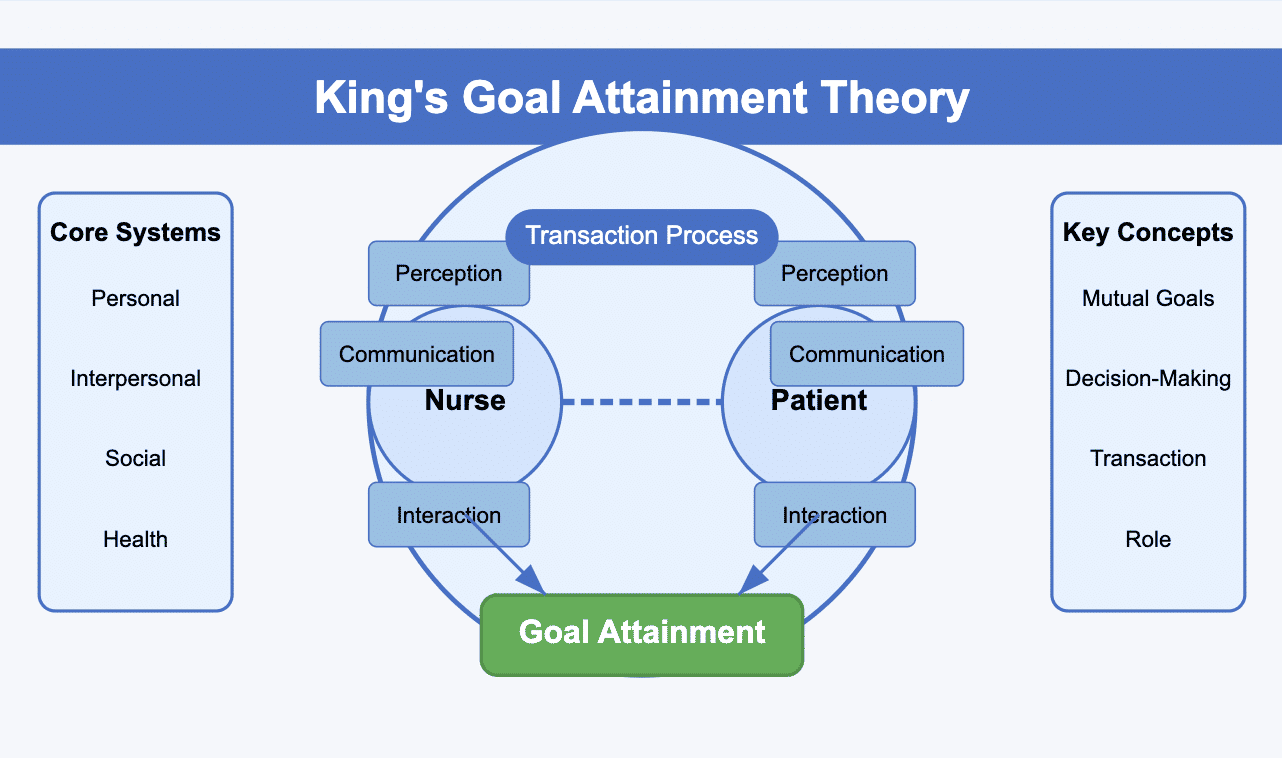
    Imogene King’s Goal Attainment Theory underscores the fundamental interaction between the nurse and client, which serves as a cornerstone for effective nursing practice. The success of this interaction leads to the establishment of nursing goals that align with the client’s health needs. Integral to this theory are key concepts such as communication, mutual decision-making, and collaborative goal-setting, all of which contribute to improved health outcomes.

    ConceptCategoryDescriptionApplication in Nursing Practice
    PerceptionPersonal SystemHow individuals interpret persons, objects, and events in their environment based on their background, experiences, and frame of referenceNurses must recognize that each client perceives health situations differently; assessment should include the client’s perception of their condition
    SelfPersonal SystemA person’s understanding and beliefs about who they areNurses should respect the client’s sense of self and incorporate their self-concept into care planning
    Growth and DevelopmentPersonal SystemContinuous changes in individuals across the lifespan; cellular, molecular, and behavioral changes over timeCare plans should be developmentally appropriate and account for the client’s life stage
    Body ImagePersonal SystemA person’s perception of their own body and physical appearanceNurses should be sensitive to changes in body image resulting from illness or treatment
    TimePersonal SystemThe sequence of events moving from past to future; subjective experience of durationTiming of interventions should consider the client’s readiness and temporal perception
    SpacePersonal SystemThe physical area and territory where interactions occurNurses should respect personal space and create appropriate healing environments
    InteractionInterpersonal SystemThe verbal and nonverbal behaviors between individuals with mutual goalsEffective nurse-client interactions form the foundation for therapeutic relationships
    CommunicationInterpersonal SystemThe exchange of information that influences goal achievementClear, culturally appropriate communication is essential for successful outcomes
    TransactionInterpersonal SystemPurposeful interactions leading to goal attainment; the observable behaviors of human beings interacting with their environmentThe culmination of successful perception, communication, and interaction
    RoleInterpersonal SystemThe set of behaviors expected when occupying a position in a social systemNurses and clients must understand their respective roles in the healthcare relationship
    StressInterpersonal SystemA dynamic state in response to environmental interactionsNurses should help clients identify and manage stressors that affect health
    AuthoritySocial SystemThe power to make decisions that guide the actions of self and othersNurses must understand the power dynamics within healthcare systems
    Decision MakingSocial SystemThe process of making choices and judgments about a course of actionClients should be empowered to participate in decisions about their care
    OrganizationSocial SystemA system of ordered positions and roles with rules and regulationsUnderstanding organizational systems helps navigate healthcare delivery
    PowerSocial SystemThe capacity to use resources to achieve goalsRecognition of power imbalances is necessary for ethical practice
    StatusSocial SystemThe relative position of an individual in a groupSocial determinants of health often relate to status differences
    ControlSocial SystemRegulation of events or situationsClients should maintain appropriate control over their health decisions
    Mutual Goal SettingProcessThe collaborative identification of goals and means to achieve themThe cornerstone of the theory, requiring active participation of both nurse and client

    The Role of the Nurse-Client Relationship

    The nurse-client relationship forms the basis of King’s framework, emphasizing collaboration aimed at reaching specific health goals. A strong relationship is characterized by trust, respect, and open communication. Each participant’s active involvement influences not only the care provided but also the perceived value of the nursing experience. This partnership allows for the identification of individualized nursing goals tailored to the unique circumstances of each client.

    Goals in Nursing Practice

    Setting appropriate nursing goals is essential for guiding the care process. These goals should reflect the client’s needs and aspirations, fostering a sense of ownership in their health journey. Clients who participate in the goal-setting process are more likely to take an active role in their care, enhancing the likelihood of positive outcomes. Effective nursing practice requires ongoing assessment and adjustment of these goals as client circumstances evolve.

    The Importance of Communication

    Effective communication plays a pivotal role in the nurse-client relationship. It facilitates the exchange of ideas, feelings, and essential health information necessary for achieving nursing goals. Goal Attainment Theory highlighted that clear and concise communication allows for better understanding and mutual perception between the nurse and client. By fostering an environment where clients feel comfortable sharing their thoughts and preferences, nurses can better tailor their interventions to meet individual needs.

    Components of Goal Attainment Theory

    Components of King's Goal Attainment Theory
    Components of King’s Goal Attainment Theory

    Imogene King’s Goal Attainment Theory consists of several integral components that shape the nursing practice framework. Understanding individual client needs serves as a cornerstone for developing tailor-made care strategies that reflect the unique situations and aspirations of each patient. The goal setting process, characterized by collaboration between the nurse and the patient, further enhances the likelihood of achieving successful nursing outcomes. By evaluating these outcomes, healthcare professionals can continuously refine their approach, ensuring alignment with evolving patient needs.

    Individual Client Needs

    Assessing individual client needs is essential for effective nursing practice. Each patient’s situation, aspirations, and health background play a significant role in the development of personalized care plans. This individualized approach fosters a deep understanding of what patients require, enabling nurses to deliver targeted interventions that reflect the unique dynamics of the patient’s life and health status.

    The Process of Goal Setting

    The goal setting process is a collaborative endeavor where nurses and patients work together to define clear and measurable objectives. This process considers the input and preferences of the patient, facilitating goal alignment with their personal wishes and health conditions. Such collaboration not only promotes patient engagement but also establishes a mutual commitment to achieving desired health outcomes.

    Evaluation of Outcomes

    Evaluation of outcomes is crucial in determining the effectiveness of nursing interventions aimed at achieving patient-centered goals. By measuring nursing outcomes, healthcare providers can assess the impact of their actions, identify areas for improvement, and adapt care strategies when necessary. This systematic evaluation ensures that the care provided continues to meet the changing needs of patients, ultimately enhancing their overall health and satisfaction.

    ComponentDescription
    Individual Client NeedsAssessment of personal circumstances and health backgrounds to tailor care.
    Goal Setting ProcessCollaboration between nurse and patient to define clear, measurable goals.
    Evaluation of OutcomesMeasuring the effectiveness of interventions to inform future care.

    Theoretical Framework of Goal Attainment

    The theoretical framework designed by Imogene King offers a structured approach to understanding the dynamics of the nurse-client relationship. Central to its philosophy are foundational theoretical assumptions that prioritize collaboration in the pursuit of health. This framework emphasizes that health outcomes result from joint efforts between nurses and patients, aligning with other recognized nursing models that underscore the importance of effective interpersonal interactions in healthcare.

    Assumptions of the Theory

    The assumptions of Goal Attainment Theory are critical to its effectiveness as a nursing framework. These include:

    • The belief that both the nurse and the client share responsibility for health outcomes.
    • The significance of establishing a therapeutic relationship characterized by trust and empathy.
    • The necessity for clear communication to facilitate understanding and goal setting.
    • Recognition of individual client needs and circumstances in the goal-setting process.

    Relationship to Other Nursing Theories

    King’s Goal Attainment Theory aligns closely with several prominent nursing models, illustrating the interconnectedness within nursing frameworks. For instance:

    • Orem’s Self-Care Theory emphasizes individual competence in managing health, complementing King’s focus on collaboration.
    • Peplau’s Interpersonal Relations Theory shares similar themes of relationship-building, highlighting the importance of interpersonal skills in nursing.
    • Theories that advocate for patient empowerment resonate with King’s views on fostering self-efficacy and ownership of health.

    This synergy among various nursing models enriches the understanding of goal attainment, offering comprehensive approaches to patient care while maintaining a commitment to individualized treatment within healthcare settings.

    Applications in Clinical Practice

    The applications of Imogene King’s Goal Attainment Theory within clinical practice have proven beneficial across various nursing settings, demonstrating the theory’s versatility. Nurses utilize this framework to tailor care plans that align with patient goals, enhancing engagement and facilitating better health outcomes. Despite its strengths, certain limitations have been noted in practice.

    Limitations of Goal Attainment Theory

    Theory limitations often arise from the complexity of establishing realistic goals, particularly in acute care scenarios, where patients might experience fluctuating health statuses. The subjective nature of patient goals can lead to challenges in consistent implementation, as what is attainable for one patient may not apply to another. Assessing outcomes based on patient involvement further complicates the evaluation process, sometimes resulting in discrepancies between expected and actual success in achieving set goals.

    Criticisms from the Nursing Community

    Certain situations reveal where the theory may fall short in nursing practice. For instance, cases involving non-compliant patients present significant challenges in achieving desired goals. Additionally, in high-pressure environments with limited time for thorough communication, nurses may struggle to establish effective partnerships with clients, which is crucial in the goal-setting process. Furthermore, the theory may not account for patients’ diverse backgrounds and beliefs, potentially affecting the overall efficacy of the interventions designed based on the theory.

    AspectDescription
    Nursing SettingsApplicable in various specialties, such as acute care and long-term rehabilitation.
    Goal Setting ComplexityChallenges in defining and achieving realistic goals under certain health conditions.
    Patient ComplianceNon-compliance can hinder successful goal attainment.
    Communication BarriersTime constraints in acute environments may limit collaborative goal-setting.
    Cultural SensitivityThe theory may need adaptations to account for diverse patient backgrounds.

    Understanding these elements is crucial for healthcare professionals seeking to effectively incorporate Imogene King’s theory into their nursing practice, thereby fostering patient-centered care while acknowledging the associated challenges.

    For those interested in further exploring this significant nursing framework, recommended readings include Imogene King’s own seminal works, particularly “Theory for Nursing: Systems, Concepts, Process.” This text provides foundational insights into her theoretical perspective, fostering ongoing discourse about its practical implications in nursing education and practice. By engaging with King’s writings and the broader body of nursing research, healthcare professionals can better integrate Goal Attainment Theory into their clinical practice, ultimately improving patient health outcomes.

    FAQ

    What is Imogene King’s Goal Attainment Theory?

    Imogene King’s Goal Attainment Theory is a nursing theory that emphasizes the collaborative dynamic between nurses and patients. It focuses on effective communication and shared goals to improve health outcomes, positing that patient involvement in care planning leads to better adherence to treatments and positive health outcomes.

    How did Imogene King’s background influence her theory?

    King’s background in clinical nursing and her educational journey, which included significant roles in nursing research and education, influenced her understanding of the importance of interpersonal relationships in nursing care. Her theory emerged during a time when individualized patient care was gaining prominence.

    What are the core concepts of Goal Attainment Theory?

    The core concepts of Goal Attainment Theory include the nurse-client relationship, collaborative goal setting, and the importance of communication. The theory asserts that mutual respect and understanding are integral to achieving specific health objectives.

    What components guide the nursing practice according to King’s theory?

    Key components include assessing individual client needs, developing personalized care plans, collaboratively defining clear and measurable objectives, and evaluating outcomes to measure the effectiveness of nursing actions, allowing for refinement of care strategies based on the patient’s evolving condition.

    How does King’s theory relate to other nursing theories?

    King’s Goal Attainment Theory shares similarities with other nursing theories, such as Orem’s Self-Care Theory and Peplau’s Interpersonal Relations Theory, as it emphasizes the significance of interpersonal processes in nursing practice and highlights the importance of patient engagement in the care process.

    What are the applications of Goal Attainment Theory in clinical practice?

    The theory applies across various nursing settings and specialties by guiding nurses in developing collaborative, patient-centered care plans. However, its implementation may face challenges, particularly in acute care settings where time constraints limit thorough communication.

    What are some criticisms of Goal Attainment Theory?

    Critics highlight potential difficulties in setting realistic goals in certain situations, such as with non-compliant patients or in environments that do not allow for sufficient interaction between nurses and patients, suggesting that the theory requires flexibility and adaptation under diverse circumstances.

    What research supports Goal Attainment Theory?

    Empirical studies validate the effectiveness of King’s theory in enhancing patient outcomes by promoting patient engagement. Future research directions aim to explore long-term impacts of collaborative goal setting and improve methodologies for evaluating nursing outcomes derived from the therapeutic nurse-client relationship.

    Where can I find more information about Imogene King’s theory?

    Recommended readings include Imogene King’s own writings, such as “Theory for Nursing: Systems, Concepts, Process,” which provide foundational insights into her theoretical framework and encourage ongoing discourse within nursing education and practice.

  • Katharine Kolcaba Comfort Theory

    Katharine Kolcaba Comfort Theory

    Katharine Kolcaba, a highly regarded nursing theorist, originated the Comfort Theory, which has gained significant traction within the healthcare community since its initial publication in 1994. With over 62,000 accesses by March 2023, this theory has been utilized globally for more than 30 years, emphasizing the importance of patient experience in holistic nursing. The framework articulates that comfort is a multidimensional and dynamic experience crucial to effective patient care.

    Kolcaba Comfort Theory is not only centered on traditional medical approaches but also integrates holistic perspectives that respect patients’ emotional, social, and spiritual needs alongside physical well-being. The theory underscores the necessity of systematic assessments to identify unmet comfort needs, leading to tailored interventions aimed at enhancing patient comfort. This approach fosters a healing environment that significantly improves patient outcomes, making it a fundamental concept in contemporary nursing practice.

    Overview of Katharine Kolcaba’s Background

    Katharine Kolcaba, a renowned nursing theorist, has made significant strides in the field of nursing education. Born in Cleveland, Ohio, in 1944, her academic journey began with a nursing diploma from St. Luke’s Hospital School of Nursing in 1965. Following her initial education, she advanced her studies, earning a Master of Science in Nursing with a focus on Gerontology from the Frances Payne Bolton School of Nursing at Case Western Reserve University in 1987, and later a Ph.D. in Nursing in 1997.

    Early Life and Education

    Katharine Kolcaba’s early life laid a solid foundation for her future endeavors in nursing. Her commitment to the field was evident from her completion of a nursing diploma, which led to diverse experiences across various healthcare settings, including operating rooms and home health. The rigorous academic environment at Case Western Reserve University enabled her to delve into nursing theories, where she initiated her work on what would become the Comfort Theory.

    Career Highlights

    Throughout her distinguished career, Kolcaba has contributed extensively to nursing education and practice. Her role as a professor at the University of Akron spanned over 23 years, during which she influenced countless nursing students. She has been the recipient of numerous awards, including the Cushing Robb Prize for outstanding performance in her Master’s program and the Advancement of Science Award from the Midwest Nursing Research Society in 2003, reflecting her expertise in end-of-life and palliative care nursing.

    Contributions to Nursing

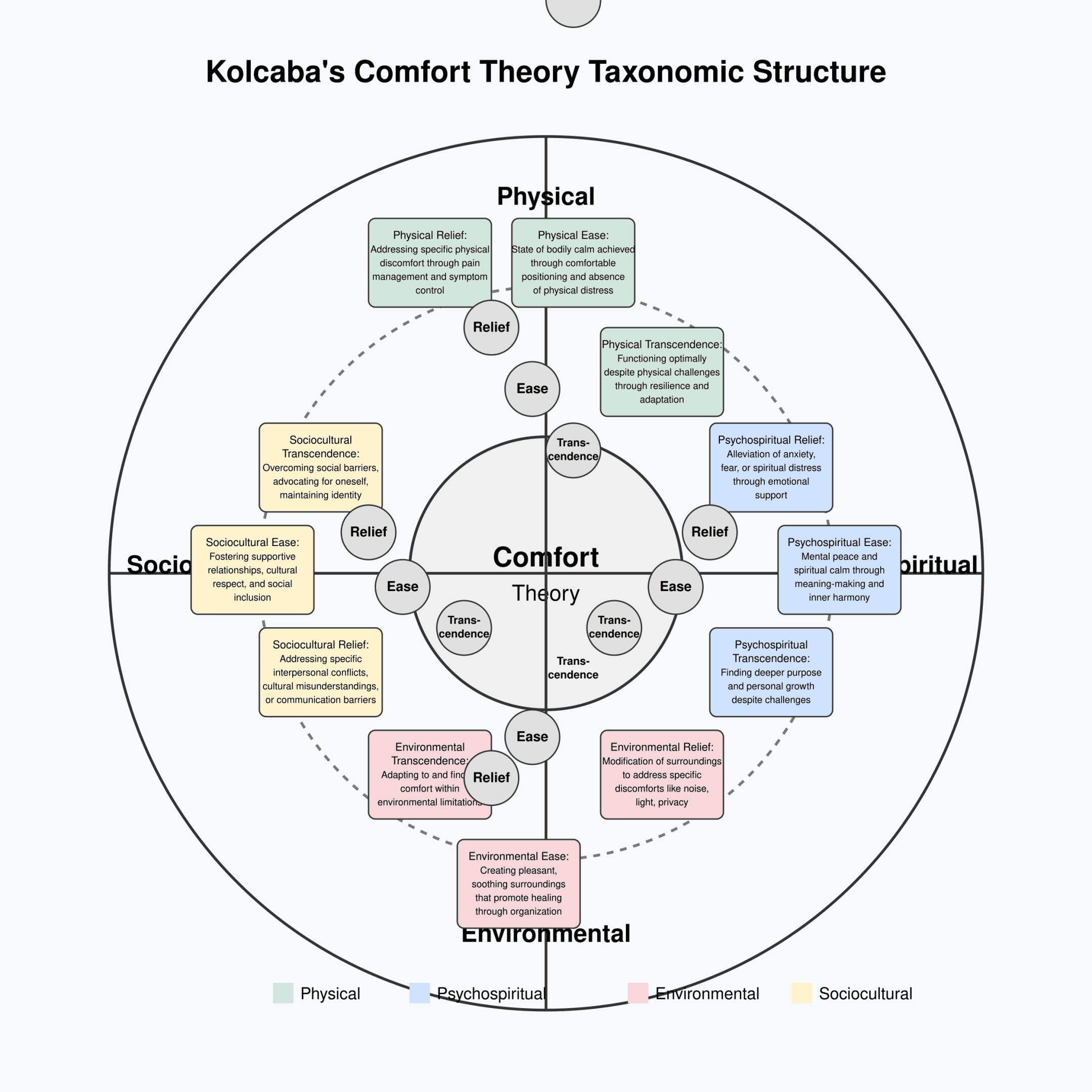
    Katharine Kolcaba’s legacy in nursing education is primarily characterized by the development of Comfort Theory in the 1990s. This middle-range nursing theory emphasizes comfort as a key component of patient care, operationalizing it through three levels: relief, ease, and transcendence. The theory encompasses four contexts: physical, psychospiritual, environmental, and sociocultural. Her pioneering work has provided nursing professionals with a valuable framework for evaluating and enhancing comfort, making significant impacts on nursing curricula and research worldwide.

    Comfort Theory

    Comfort Theory, developed by Katharine Kolcaba in the 1990s, is a significant framework in nursing that emphasizes the multifaceted nature of comfort within the healthcare context. It categorizes comfort as an immediate outcome of nursing care, integrating various dimensions of patient experience. This theory emerged from extensive research across multiple disciplines, including nursing, medicine, and psychology.

    Definition of Comfort in Nursing

    In the context of nursing, comfort is defined through its three forms: relief, ease, and transcendence. Relief is exemplified when pain medication is administered after surgery. Ease represents a state where patients feel calm and at peace, alleviating anxiety, while transcendence encourages individuals to rise above their challenges. Kolcaba’s Comfort Theory posits that comfort should be viewed as a holistic phenomenon embracing four contexts: physical, psychospiritual, environmental, and sociocultural.

    This definition urges nursing professionals to prioritize a comprehensive assessment of patients’ comfort needs. In practice, effective interventions lead to enhanced comfort not just for patients, but also for their families and the healthcare team. The relevance of comfort in nursing underscores its importance in promoting patient satisfaction and overall health outcomes. As healthcare providers implement Kolcaba’s framework, they contribute to the field of holistic nursing, ensuring that care is tailored to the diverse needs of patients.

    Kolcaba’s 12-Cell Taxonomic Structure for Kolcaba Comfort Theory

    Kolcaba's 12-Cell Taxonomic Structure for Comfort Theory
    Kolcaba’s 12-Cell Taxonomic Structure for Kolbaca Comfort Theory

    Kolcaba’s 12-Cell Taxonomic Structure for Comfort Theory

    ReliefEaseTranscendence
    PhysicalPhysical Relief: Addressing specific physical discomfort through pain management, symptom control, or meeting basic bodily needs.Physical Ease: State of bodily calm or contentment achieved through comfortable positioning, optimal temperature, and absence of physical distress.Physical Transcendence: Ability to function optimally despite physical challenges by developing resilience and adaptive strategies.
    PsychospiritualPsychospiritual Relief: Alleviation of anxiety, fear, or spiritual distress through information, emotional support, and addressing uncertainty.Psychospiritual Ease: State of mental peace and spiritual calm achieved through meaning-making, confidence, and inner harmony.Psychospiritual Transcendence: Finding deeper purpose and personal growth despite psychological challenges or spiritual questions.
    EnvironmentalEnvironmental Relief: Modification of surroundings to address specific environmental discomforts like noise, light, privacy, or safety concerns.Environmental Ease: Creating pleasant, soothing surroundings that promote healing through organization, cleanliness, and aesthetic considerations.Environmental Transcendence: Adapting to and finding comfort within environmental limitations or challenging surroundings.
    SocioculturalSociocultural Relief: Addressing specific interpersonal conflicts, cultural misunderstandings, or communication barriers through mediation or education.Sociocultural Ease: Fostering supportive relationships, cultural respect, and social inclusion that contribute to sense of belonging.Sociocultural Transcendence: Overcoming social barriers, advocating for oneself, and maintaining identity and dignity despite challenging social circumstances.

    The Kolcaba Comfort Theory identifies four primary contexts in which comfort is experienced by patients. Each context—physical, emotional, social, and spiritual—significantly contributes to the overall well-being and recovery of patients.Understanding these contexts enhances healthcare providers’ ability to address individual needs comprehensively. Each context—physical, emotional, social, and spiritual—significantly contributes to the overall well-being and recovery of patients.

    Physical Comfort

    Physical comfort refers to the sensations experienced by the body. It encompasses aspects such as pain management, symptom relief, and bodily function. Addressing physical comfort effectively can lead to improved outcomes, allowing patients to engage more fully with their care plans. Methodologies such as pharmacological interventions alongside non-pharmacological approaches, like music therapy or massage, serve to enhance this essential context.

    Emotional Comfort

    Emotional comfort is centered around psychological well-being, which includes coping mechanisms and emotional support. This facet plays a critical role in reducing anxiety and promoting a sense of security. Nurses are often tasked with fostering emotional comfort through empathy, active listening, and providing resources for stress management, thereby enhancing the patient experience throughout the continuum of care.

    Social Comfort

    Social comfort relates to the quality of interpersonal relationships and the influence of family dynamics on patient health. A supportive community and strong social networks can greatly enhance a patient’s sense of belonging and overall well-being. Healthcare professionals need to recognize the importance of social connections and family involvement in care plans, thereby reinforcing networks that contribute to recovery.

    Spiritual Comfort

    Spiritual comfort addresses a patient’s pursuit of meaning and connection, often culminating in a sense of purpose. This aspect encourages healthcare providers to consider their patients’ spiritual beliefs and values during treatment. Approaches to enhance spiritual comfort may include offering opportunities for reflection or connecting patients with spiritual care resources, ensuring holistic support that nurtures the whole person.

    ContextKey FocusInterventions
    Physical ComfortPain Management, Symptom ReliefMedications, Music Therapy, Massage
    Emotional ComfortPsychological Well-beingActive Listening, Stress Management Resources
    Social ComfortInterpersonal RelationshipsFamily Involvement, Support Groups
    Spiritual ComfortMeaning and ConnectionSpiritual Care Referrals, Reflection Opportunities

    Kolcaba Metaparadigm in Nursing through the Lens of Kolcaba Comfort Theory

    Katharine Kolcaba Comfort Theory redefines the nursing metaparadigm—person, environment, health, and nursing—by centering on the concept of comfort as both a process and an outcome. Here’s how each component is conceptualized:

    1. Person
      • Holistic Recipient: The person is viewed as a holistic being encompassing physical, psychospiritual, sociocultural, and environmental dimensions. This includes individuals, families, or communities.
      • Example: A nurse addressing a patient’s pain (physical), anxiety (psychospiritual), family support needs (sociocultural), and room adjustments (environmental) exemplifies this holistic approach.
    2. Health
      • Optimal Functioning via Comfort: Health is achieved when comfort enables patients to engage in health-seeking behaviors (e.g., mobility, treatment adherence). Comfort acts as a precursor to wellness, transcending mere absence of disease.
      • Example: Post-surgery comfort through pain management allows a patient to participate in rehabilitation, promoting recovery.
    3. Environment
      • Contextual and Physical Factors: The environment includes both physical settings (e.g., hospital room) and sociocultural contexts (e.g., cultural practices, family dynamics) that influence comfort. Nurses manipulate these to enhance comfort.
      • Example: Adjusting lighting/noise levels or respecting cultural preferences during care.
    4. Nursing
      • Proactive Comfort Interventions: Nurses assess comfort needs across all contexts, design tailored interventions (e.g., pain relief, emotional support), and evaluate outcomes. The goal is holistic care that anticipates needs.
      • Example: A nurse providing relaxation techniques (psychospiritual) and educating family members (sociocultural) to foster a supportive environment.

    The practical application of comfort theory in healthcare settings enhances patient experiences through tailored interventions that prioritize comfort needs. Various clinical applications emphasize the importance of addressing not only physical comfort but also psychospiritual and sociocultural aspects, as defined by Kolcaba. Implementing comfort-focused strategies creates an environment conducive to healing, ultimately improving patient-centered care.

    Healthcare professionals assess individual comfort requirements, allowing for personalized approaches in both pharmacological and non-pharmacological interventions. These measures can lead to improved clinical outcomes and higher levels of patient satisfaction. By addressing diverse comfort dimensions, caregivers improve not just patient care but also their own job satisfaction and institutional commitment.

    Evidence from research indicates that a focus on comfort enhances health-seeking behaviors among patients, which contributes to a healthcare institution’s overall integrity. A comprehensive understanding of the implications of comfort theory in healthcare ensures that interventions are adaptable and responsive to the changing needs of patients, particularly in palliative care settings. Specialized tools, such as the General Comfort Questionnaire, aid in systematically evaluating comfort levels and guiding interventions.

    Integrating comfort theory into clinical practice fosters a holistic approach to patient care. Healthcare organizations that embrace this theory can achieve not only better health outcomes but also improved retention strategies for healthcare staff, ultimately leading to an enhanced quality of care delivered to patients.

    Kolbaca Comfort Theory in Nursing Education

    Incorporating Comfort Theory into nursing education significantly enhances the preparation of future nurses, emphasizing the importance of patient comfort in healthcare. This theory encourages nursing students to adopt a holistic view, focusing on the three forms of patient comfort: relief, ease, and transcendence. Nurses equipped with this understanding are better prepared for effective nursing practice, as they can recognize the multifaceted aspects of patient needs.

    Research Supporting Comfort Theory

    Extensive comfort theory research highlights its critical role in nursing education, showcasing various studies that validate the framework’s efficacy. Over 30 years, from its initial publication in 1991, numerous studies have revealed the positive impact that comfort interventions can have on patient outcomes. The evidence and gap map (EGM) framework developed through consultations with international experts categorizes interventions based on effectiveness, providing a robust resource for nursing education as it bridges theory and practice.

    Key Studies and Findings

    Select studies have demonstrated that implementing comfort theory interventions can alleviate anxiety and elevate patient satisfaction. The development of comfort questionnaires, like the General Comfort Questionnaire (GCQ), also allows for a precise measurement of comfort in various contexts, including end-of-life care. Results show that non-pharmacological interventions, alongside coaching and technical comfort measures, have proven effective in diverse healthcare settings. Such findings provide valuable insights, urging nursing students to apply comfort theory principles to improve health-seeking behaviors within their clinical engagements.

    Role of Comfort Theory in Holistic Care

    Comfort Theory significantly enhances the practice of holistic care by promoting a framework that encourages healthcare providers to consider the complete spectrum of a patient’s needs. This approach emphasizes understanding the individual not merely as a set of symptoms but as a person with unique experiences, emotions, and spiritual needs. Addressing all these areas is essential for achieving optimal health and well-being.

    Addressing the Whole Person

    A holistic care approach necessitates recognizing the multi-dimensional aspects of a person’s health. Comfort Theory supports this by advocating for the integration of physical, emotional, social, and spiritual considerations into the care plan. This comprehensive perspective fosters an environment where patients feel valued and understood, acknowledging their individuality in the healing process.

    Interdisciplinary Collaboration

    Incorporating Comfort Theory into healthcare facilitates interdisciplinary collaboration across various medical professions. Collaboration among nurses, doctors, social workers, and therapists ensures that all aspects of a patient’s comfort are addressed. This teamwork enhances communication and allows for a more coordinated and effective approach to patient care, ultimately improving health outcomes.

    Patient-Centered Approaches

    Patient-centered approaches form the backbone of Comfort Theory by actively engaging patients and their families in healthcare decisions. By involving patients in their own care process, healthcare providers can tailor interventions that align closely with patients’ values and needs. This engagement enhances the overall healthcare experience and aligns with the principles of holistic care, ensuring that patients feel empowered and respected throughout their journey.

    Challenges and Critiques of Comfort Theory

    Comfort Theory, while valuable in nursing practice, deals with various challenges and critiques that can impact its effectiveness. Identifying limitations in application makes it essential to understand how Comfort Theory translates into practice across diverse healthcare settings. Observations reveal substantial variability in how comfort is interpreted and measured, posing challenges in nursing theory and complicating the assessment processes.

    Limitations in Application

    One significant limitation of Comfort Theory involves difficulties in creating universal assessment tools that can adequately capture the subjective nature of comfort. Many studies showcase variations in patients’ comfort needs based on their unique circumstances, leading to critiques of comfort theory’s broad applicability. The lack of standardized methods can result in inconsistent outcomes, hampering the effectiveness of interventions designed to enhance patient comfort.

    Common Misunderstandings

    Misunderstandings about Comfort Theory often arise from oversimplifying its constructs. Critics suggest that some interpretations fail to recognize the complexities involved in addressing comfort needs. This oversimplification can diminish the perceived effectiveness of interventions, leading to skepticism among healthcare professionals regarding the relevance of comfort theory in nursing practice.

    Solutions and Adaptations

    To address the challenges and critiques of comfort theory, various solutions and adaptations have emerged. Development of standardized comfort assessment tools can facilitate a more objective approach to measuring outcomes. Furthermore, enhancing education and training programs for nursing professionals can equip them with the skills necessary to implement comfort theory effectively in practice. Such adaptations in practice promote a deeper understanding of comfort’s multifaceted nature, enabling healthcare providers to meet the diverse needs of patients more effectively.

    Adaptation TypeDescriptionPotential Impact
    Standardized Assessment ToolsCreation of consistent instruments to evaluate comfortImproved measurement accuracy
    Enhanced Training ProgramsProgram development aimed at teaching Comfort Theory applicationsBetter nurse competencies in addressing comfort
    Research InitiativesStudies aimed at exploring comfort interventions in diverse settingsBroadened understanding of patients’ needs

    Conclusion

    In summary, Katharine Kolcaba’s Comfort Theory provides a foundational framework crucial for enhancing patient care through a comprehensive understanding of comfort across various dimensions. The importance of comfort in nursing is underscored by the theory’s holistic perspective, promoting a patient-centered approach that adeptly addresses the multifaceted needs of individuals. This integrative model has been effective in guiding nursing practice and education, ensuring that care strategies are tailored to promote optimal comfort levels.

    Over the last three decades, the framework has gained recognition globally, affirming its relevance across diverse healthcare settings. While research, including the recent studies involving interventions like progressive muscle relaxation, indicates varying degrees of effectiveness, it emphasizes the need for continued exploration within the realm of comfort interventions. Such insights are essential to refine approaches and fill existing gaps identified through the proposed evidence and gap maps.

    The evolution of Comfort Theory in nursing curricula and practice highlights not only the necessity of comfort as a primary patient objective but also the ongoing commitment to adapt educational resources in alignment with contemporary healthcare needs. As the discourse surrounding comfort continues to evolve, the integration of Kolcaba’s insights remains pivotal in shaping future nursing practices that prioritize patient comfort and satisfaction.

    FAQ

    What is Comfort Theory developed by Katharine Kolcaba?

    Comfort Theory is a holistic framework developed by Katharine Kolcaba that emphasizes the importance of enhancing patient comfort through a multidimensional approach, addressing physical, emotional, social, and spiritual needs.

    How does Comfort Theory impact patient care?

    Comfort Theory impacts patient care by encouraging healthcare professionals to systematically assess and address patients’ unmet comfort needs, ultimately leading to improved patient well-being, satisfaction, and clinical outcomes.

    What are the four contexts of comfort identified in Comfort Theory?

    The four contexts of comfort in Comfort Theory are physical comfort (bodily sensations and symptoms), emotional comfort (psychological well-being), social comfort (interpersonal relationships), and spiritual comfort (sense of meaning and purpose).

    How is Comfort Theory applied in clinical settings?

    In clinical settings, Comfort Theory is applied through tailored interventions that include both pharmacological and non-pharmacological measures aimed at enhancing comfort based on systematic assessments of patients’ needs.

    What role does Comfort Theory play in nursing education?

    Comfort Theory plays a crucial role in nursing education by emphasizing the importance of patient comfort as a central aspect of care, helping to prepare future nurses to prioritize and implement comfort-focused practices.

    What challenges does Comfort Theory face in its application?

    Comfort Theory faces challenges related to universal application, measurement of comfort outcomes, and the subjective nature of comfort assessment, which can vary widely among patients.

    How does Comfort Theory promote holistic care?

    Comfort Theory promotes holistic care by advocating for the addressal of not only physical ailments but also the emotional and spiritual needs of patients, thereby encouraging a comprehensive treatment approach.

    What are some critiques of Comfort Theory?

    Critiques of Comfort Theory often focus on its operationalization challenges, concerns regarding the subjective assessment of comfort, and potential oversimplification of diverse comfort needs.

    What are potential solutions to enhance the implementation of Comfort Theory?

    Potential solutions include developing standardized comfort assessment tools, providing training programs for nurses to better implement the theory, and fostering interdisciplinary collaboration for comprehensive patient care.

  • Myra Estrine Levine Conservation Model

    Myra Estrine Levine Conservation Model

    Myra Estrine Levine, a notable figure in the field of nursing, dedicated her career to the advancement of nursing theory and practice from 1944 until her retirement in 1987. In Levine Conservation Model, Levine synthesized the principles of energy conservation into a framework that emphasizes adaptation and the maintenance of wholeness in patient care.

    This nursing theory has been influential in promoting holistic nursing, pushing professionals to consider the multifaceted needs of individuals, including physical, emotional, and environmental factors.

    Her work is particularly significant in the context of clinical nursing education, as Levine was committed to mentoring and teaching. Throughout her career, she held numerous esteemed positions, including the chair of the Department of Clinical Nursing at Cook County School of Nursing and the coordinator for the graduate nursing program in oncology at Rush University.

    Levine’s contributions, underscored by her awards and recognitions, including the Elizabeth Russell Belford Award for teaching excellence, reflect her profound impact on nursing theory and practice, particularly through the lens of her innovative conservation model.

    Introduction to Myra Estrine Levine

    Myra Estrine Levine stands as a highly influential figure in the nursing profession. Her extensive biography reflects a commitment to advancing nursing theory and practice, particularly through her development of the Conservation Model. This model has provided a framework for understanding patient care and therapy in nursing.

    Biography

    Born on December 12, 1920, in Chicago, Illinois, Myra Estrine Levine dedicated her life to the nursing field. Her impactful career spanned several decades, concluding with her passing on March 20, 1996, in Evanston, Illinois. Recognized as a exemplary nursing theorist, Levine’s contributions have continued to resonate in nursing education and practice.

    Early Life

    Levine’s journey into nursing began with personal experiences in her youth, particularly related to a family member’s illness. These formative events ignited a passion for healthcare that guided her throughout her life and career. From an early age, she demonstrated an affinity for helping others, setting the stage for her future endeavors in nursing.

    Education

    Myra Estrine Levine’s education laid a strong foundation for her nursing career. She graduated with a diploma from the Cook County School of Nursing in 1944 and subsequently earned a Bachelor of Science in Nursing from the University of Chicago in 1949. Her pursuit of excellence did not stop there, as she completed a Master of Science in Nursing from Wayne State University in 1962, reflecting her deep commitment to furthering her education and expertise.

    Career & Appointments

    Throughout her varied nursing career, Levine held numerous roles that showcased her versatility and commitment to her profession. Starting as a private duty nurse in 1944, she served as a civilian nurse in the US Army in 1945. Her academic appointments included the position of preclinical instructor of Physical Sciences for Nurses from 1947 to 1950, followed by significant roles, such as being the director of the Drexel Home for Older Adults.

    Levine also worked as a surgical supervisor at renowned institutions, including the University of Chicago clinics and Henry Ford Hospital, demonstrating her broad expertise in nursing. From 1962 to 1987, she held academic positions at four nursing schools in Chicago and earned the title of Professor Emerita of medical and surgical nursing at the University of Illinois in 1987.

    Myra Estrine Levine’s pioneering contributions to nursing education, combined with her influential publications such as “Introduction to Clinical Nursing” and “Levine’s Conservation Model: A Framework for Nursing Practice,” solidified her legacy as a remarkable nursing theorist. Her work continues to inspire future generations in the nursing profession.

    Levine Conservation Model

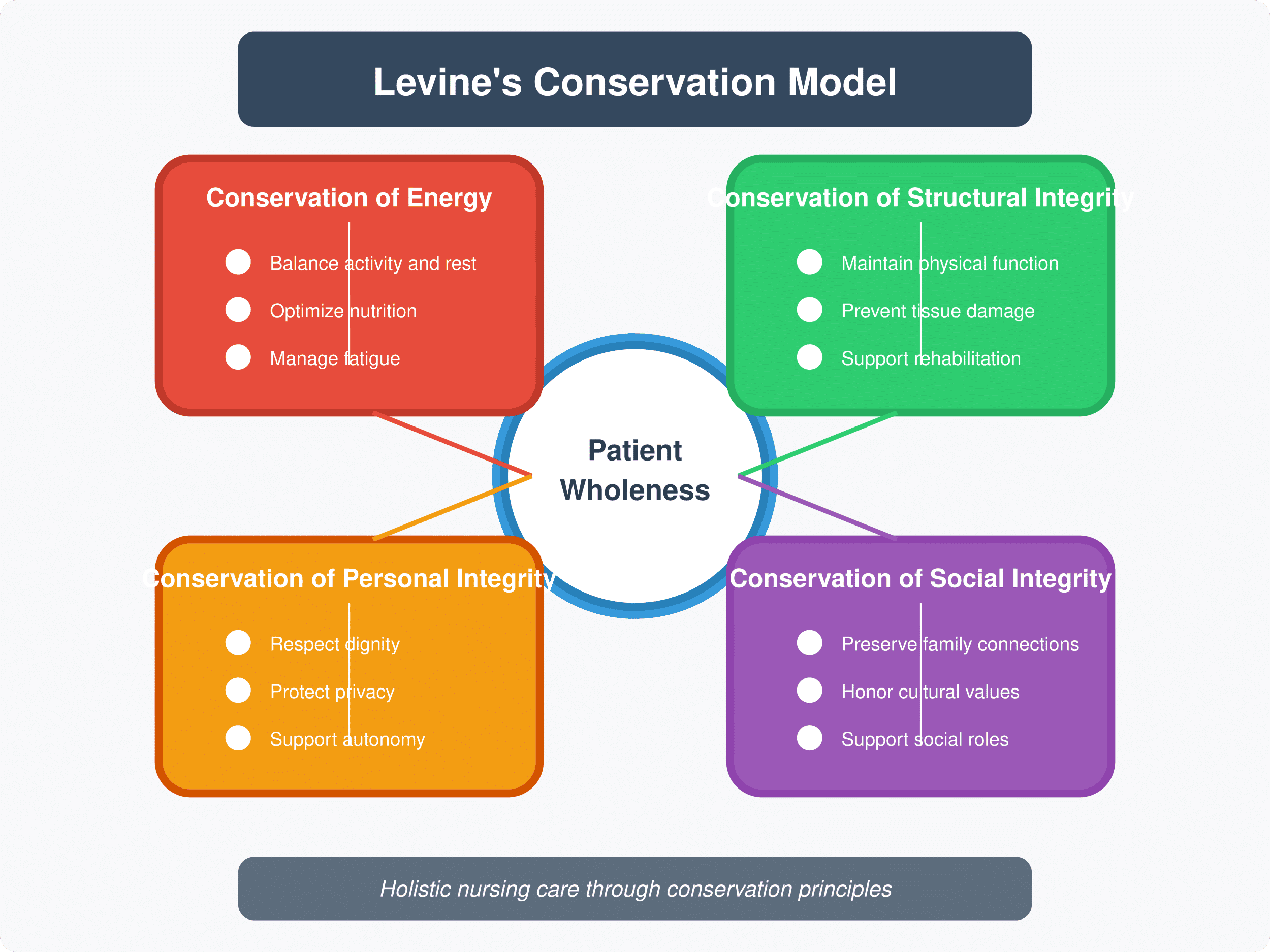
    The conservation model developed by Myra Levine presents a framework essential for nursing interventions that prioritize patient care. This model emphasizes the importance of conserving energy, structural integrity, personal integrity, and social integrity, each playing a vital role in fostering patient adaptation to health challenges.

    Definition and Key Concepts

    At the heart of the conservation model are four key conservation principles that guide nursing practices. The conservation of energy encourages adequate rest, nutrition, and exercise—essential elements to prevent fatigue and promote vitality. Structural integrity focuses on maintaining or restoring physical health, ensuring that patients receive the care necessary to support their physical wellbeing. Personal integrity addresses the individual’s need for recognition and self-determination, while social integrity highlights the importance of interactions with family and community.

    Goals of the Conservation Model

    The primary goal of the conservation model is to enhance overall patient well-being through a holistic approach to care. By using nursing interventions grounded in the conservation principles, healthcare professionals can cater to the unique adaptive responses of each individual.

    These responses, influenced by factors such as heredity and illness, guide the assessment and implementation of tailored interventions to optimize patient outcomes.

    Myra Levine’s insights into the conservation model underscore the necessity of comprehensive approaches in nursing practice, promoting effective patient care rooted in empathy and respect for individual needs.

    The Four Types of Conservation in Levine’s Model

    Conservation PrincipleKey FocusNursing InterventionsExpected Outcomes
    EnergyBalance between energy expenditure and restoration• Adequate nutrition
    • Planned rest periods
    • Graduated activity
    • Energy conservation techniques
    • Reduced fatigue
    • Improved vitality
    • Enhanced healing
    • Better activity tolerance
    Structural IntegrityMaintenance of physical body structure and function• Preventing tissue damage
    • Early mobilization
    • Range of motion exercises
    • Wound care
    • Preservation of physical abilities
    • Improved healing
    • Prevention of complications
    • Restoration of function
    Personal IntegrityRespect for patient identity and self-worth• Privacy protection
    • Informed consent
    • Patient education
    • Emotional support
    • Enhanced dignity
    • Increased self-esteem
    • Better coping
    • Improved treatment adherence
    Social IntegrityPreservation of social connections and roles• Family involvement
    • Cultural sensitivity
    • Support for social roles
    • Community resources
    • Maintained social connections
    • Cultural needs met
    • Role fulfillment
    • Community reintegration

    Myra Estrine Levine’s conservation model encompasses three essential types of conservation that form the foundation of effective nursing practice. Each type addresses a distinct aspect of patient care, ensuring a holistic approach that respects the diverse needs of individuals. The integration of these principles enhances healthcare outcomes while focusing on energy management, physical structure, and the dignity of patients.

    The Four Levine Conservation Model Principles

    1. Conservation of Energy: Focuses on balancing energy input and output to prevent excessive fatigue. This involves managing patient activities, ensuring adequate nutrition, promoting proper rest, and developing individualized care plans that respect the patient’s energy limitations.
    2. Conservation of Structural Integrity: Emphasizes maintaining or restoring the physical structure of the body. This includes preventing tissue damage, promoting healing, assisting with rehabilitation, and implementing interventions like range of motion exercises to support physical recovery.
    3. Conservation of Personal Integrity: Addresses the importance of maintaining the patient’s sense of identity, self-worth, and dignity. This principle involves respecting privacy, providing emotional support, and recognizing each patient’s uniqueness in the care process.
    4. Conservation of Social Integrity: Recognizes the patient as a social being within a family, community, and cultural context. This principle emphasizes preserving the patient’s social connections and roles, respecting cultural values, and involving family in the care process.
    The Four Levine Conservation Model Principles
    The Four Levine Conservation Model Principles

    Application of the Conservation Model in Nursing

    The application of Levine’s Conservation Model in nursing has generated various critiques, sparking discussions among healthcare professionals about its effectiveness. Critics have raised concerns that the model may place excessive emphasis on patients’ immediate needs, potentially neglecting their long-term health considerations. Such conservation model critiques suggest a necessity for a more balanced approach that integrates both short-term interventions and long-term health promotion strategies.

    Critiques of the Conservation Model

    One major criticism of the conservation model involves its focus primarily on individuals in an illness state. This aspect limits its potential to address broader health promotion initiatives effectively. The application in nursing should encompass not only the management of acute conditions but also the promotion of wellness to better serve diverse patient populations. Additionally, some argue that the model’s emphasis on individualized care, while essential, may overlook systemic factors that influence patient outcomes.

    Common Criticisms

    Another common critique centers on the model’s empirical foundation. Levine’s theory has not yet been widely researched, indicating a gap in empirical data that could support its application in various clinical settings. Despite this, the conservation model has practical relevance, especially in surgical environments, where its principles can guide recovery strategies. Yet, the absence of thorough empirical validation raises questions about its universal applicability.

    Strengths and Weaknesses

    The strengths of Levine’s Conservation Model cannot be overlooked. Its framework significantly supports patient advocacy, emphasizing the importance of individualized care and holistic practice. The nursing process, consisting of assessment, trophicognosis, hypothesis, interventions, and evaluation, systematically guides practitioners in this approach. The focus on holistic care aligns with current healthcare paradigms that advocate for comprehensive strategies addressing physical, emotional, and social well-being. Nonetheless, the model’s limited scope regarding persistent medical challenges highlights the need for further exploration in its application.

    AspectStrengthsWeaknesses
    Application in NursingSupports individualized patient care and advocacyNarrow focus on illness state
    Empirical SupportPractical relevance in surgical settingsLimited research backing
    Holistic PracticePromotes complete patient careMay overlook long-term health considerations
    FrameworkStructured nursing processNeed for broader applications

    In conclusion, the conservation model stands as a testament to Myra Estrine Levine’s enduring legacy in nursing. Its application continues to shape nursing practices, inspiring future generations to uphold the principles of holistic patient advocacy, while promoting a deeper understanding of the intricate dynamics involved in patient care. By integrating the conservation model into nursing frameworks, healthcare professionals can effectively uphold the tenets and nursing theory significance established by Levine, thus ensuring a more compassionate and effective approach to patient support and advocacy.

    FAQ

    What is Myra Estrine Levine’s Conservation Model?

    Myra Estrine Levine’s Conservation Model is a nursing framework that focuses on conserving the individual’s energy, structural integrity, personal integrity, and social integrity, allowing for tailored care based on the unique needs of each patient. It emphasizes holistic nursing practices that attend to physical, emotional, and environmental factors in patient care.

    How does the Conservation Model contribute to patient advocacy?

    The Conservation Model enhances patient advocacy by promoting individualized patient care strategies that consider the comprehensive needs of patients. It empowers nurses to facilitate optimal patient adaptation to health challenges while respecting and preserving their dignity and integrity.

    What are the core principles of the Conservation Model?

    The core principles of the Conservation Model include the conservation of energy, which optimizes a patient’s energy output; the conservation of structural integrity, which guides physical health restoration; and the conservation of personal integrity, which acknowledges each patient’s individuality and promotes respect and dignity in care.

    In what ways has Levine’s Conservation Model influenced nursing education?

    Levine’s Conservation Model has significantly shaped nursing education by integrating holistic care concepts into nursing curricula, encouraging future nurses to adopt strategies that prioritize the individual’s wholeness and well-being in clinical practice.

    What are some critiques of the Conservation Model?

    Critics argue that the Conservation Model may overemphasize current patient needs, potentially neglecting long-term health considerations. Additionally, some suggest it does not fully address persistent medical challenges, focusing instead on immediate concerns without a broader care context.

    How does the Conservation Model differ from traditional nursing interventions?

    The Conservation Model differs from traditional nursing interventions by prioritizing holistic care that looks at the patient as a whole, rather than just addressing the specific ailment. It emphasizes the interplay of personal and environmental factors in health, reinforcing the importance of patient-centered care.

  • Katie Eriksson Caritative Caring Theory

    Katie Eriksson’s Caritative Caring Theory, first articulated in 1995, presents a profound framework within the realm of healthcare ethics, emphasizing the intrinsic value of human dignity and the moral responsibilities associated with care. This theory differentiates between caring ethics and nursing ethics, while highlighting seven fundamental categories, including responsibility, virtue, and the profound implications of love and compassion in caregiving. Central to Eriksson’s concept is the understanding that ethical acts are not only pivotal to ensuring human dignity but are also integral to the foundational caritative caring relationship. In an era where ethical decision-making is paramount, Eriksson’s work serves as a guiding beacon, advocating for a compassionate approach that prioritizes the patient’s lived experience and fosters genuine connections in clinical practice.

    Biography

    Katie Eriksson was born on November 18, 1943, in Jakobstad, Finland. Her early life was marked by significant influences that shaped her understanding of healthcare and ethics. Growing up in a multicultural environment, she became aware of the complexities surrounding care as a fundamental human right. This foundation guided her future endeavors in nursing and education.

    Early Life

    In her formative years, Eriksson experienced various socio-cultural dynamics that informed her perspectives on caring practices. These early influences instilled in her a profound sense of empathy and an appreciation for the diverse backgrounds of individuals requiring care. Her upbringing laid the groundwork for the compassionate approach she would later advocate in her professional life.

    Education

    Katie Eriksson

    Katie Eriksson’s education began at the Helsinki Swedish School of Nursing, where she graduated in 1965. Following her nursing education, she completed a public health nursing specialty in 1967 and entered the nursing teacher education program, graduating in 1970. Eriksson continued her academic journey, earning a Master’s degree in philosophy from the University of Helsinki in 1974 and a licentiate degree in 1976. Her doctoral dissertation in pedagogy, defended in 1982, further contributed to her academic credentials. In 1984, she was appointed as the first Docent of Caring Science in the Nordic countries, reflecting her contributions to the field. As a Professor of Caring Science at Åbo Akademi University since 1992, she has significantly impacted nursing education.

    Throughout her career, the academic contributions of Katie Eriksson have included approximately 400 publications, encompassing textbooks, scientific reports, and journal articles. Her commitment to developing nursing as a scientific discipline has been fundamental in shaping modern nursing practices, influencing both educators and practitioners alike.

    Core Principles of Caritative Caring

    The core principles of Caritative Caring form an essential framework that informs healthcare practices. These principles are grounded in the profound understanding of the concept of caring, which emphasizes the inherent dignity of every individual. Eriksson’s approach highlights that effective caring relationships are built on compassion, trust, and the recognition of each person’s humanity.

    The Concept of Caring

    The concept of caring in Eriksson’s theory revolves around recognizing the innate worth of human beings. It fosters a relational dynamic where both caregiver and patient engage in meaningful interactions. This relationship is essential for creating an environment that supports healing and comfort, reinforcing the understanding that the act of caring is not merely procedural but deeply personal.

    The Action of Caring

    Focusing on the action of caring, Eriksson defines it as a practical application of love, mercy, and compassion in healthcare settings. Caregivers are encouraged to embody these values consistently, ensuring that their interactions with patients reflect understanding and empathy. Such actions not only enhance the care provided but also strengthen the emotional bonds between caregivers and patients, which is vital for effective healthcare delivery.

    The Importance of Love in Care

    The importance of love in care cannot be overstated within the framework of Caritative Caring. Eriksson asserts that love is a fundamental ethical imperative. It lays the groundwork for trust and connection, elements crucial for successful patient outcomes. In the context of healthcare, this love transcends traditional boundaries, becoming an integral component that nurtures both physical and emotional well-being.

    Core Principles of Katie Eriksson Caritative Caring Theory

    Theoretical Framework of Caritative Caring

    Katie Eriksson’s theoretical framework of Caritative Caring represents a significant contribution to the nursing field, showing a unique approach to understanding patient care. This framework emphasizes the vital role of personal ethics in healthcare, distinguishing itself from conventional nursing theories that often rely on external ethical guidelines. The crux of Eriksson’s theory lies in its integration of inner ethics, focusing on the complexities of human relationships and compassionate care. This approach to healthcare ethics nurtures a holistic understanding of the patient’s experience, allowing care to be tailored to individual needs and dignity.

    Relation to Other Nursing Theories

    Caritative Caring engages with various nursing theories to illustrate its foundations and contrasts. Notably, it resonates with Jean Watson’s Theory of Human Caring, which also values the relational aspect of nursing practice. While Watson emphasizes the connection between nurse and patient, Eriksson extends this perspective by incorporating the ethical dimensions essential for fostering meaningful relationships. Another relevant framework is Patricia Benner’s From Novice to Expert, which focuses on experiential learning in nursing. Both theories underscore the subjective encounters between caregivers and patients, reinforcing the importance of ethical decision-making.

    The table below summarizes these nursing theories and their relation to the Caritative Caring framework:

    Nursing Theory Key Focus Areas Relation to Caritative Caring
    Jean Watson’s Theory of Human Caring Relational connections in nursing practice Emphasizes the compassionate care aspect
    Patricia Benner’s From Novice to Expert Experiential learning in nursing Highlights ethical encounters between caregivers and patients
    Caritative Caring Inner ethics and patient-centered dignity Expands on relational ethics to ensure holistic care

    In summary, Eriksson’s theoretical framework offers a profound understanding of Caritative Caring, presenting it as an integral part of healthcare ethics. The emphasis on personal relationships and the recognition of patient dignity showcases how this framework can guide nursing practice effectively. Through its alignment and contrasts with existing nursing theories, Caritative Caring continues to influence both academic discourse and practical applications in healthcare.

    Application of Caritative Caring in Clinical Settings

    The application of Caritative Caring in clinical settings extends the principles laid out by Katie Eriksson into tangible actions within nursing practice. By emphasizing human dignity and the importance of ethical relationships, nurses are equipped to foster environments where patients feel recognized and valued. Practical manifestations of caritative care include attentive bedside manner and active listening, both critical for understanding the patient’s experiences. These approaches align with core tenets of clinical ethics, guiding practitioners towards decisions and actions that prioritize patient well-being.

    Examples in Nursing Practice

    The practical application of Caritative Caring in nursing practice can be observed across various clinical settings, demonstrating how Eriksson’s theoretical framework translates into tangible patient care approaches. These examples illustrate how nurses embody the seven fundamental categories of caring while honoring human dignity:

    • Bedside Manner: Nurses practicing Caritative Caring engage with patients using intentional presence and compassionate communication. This involves maintaining eye contact, using appropriate touch when culturally acceptable, adjusting their tone of voice to convey empathy, and positioning themselves at the patient’s level rather than standing over them. For example, an oncology nurse might sit beside a newly diagnosed patient, hold their hand if welcomed, and create space for emotional expression while explaining treatment options. This approach establishes trust, provides reassurance, and acknowledges the patient’s vulnerability without diminishing their inherent worth.
    • Active Listening: Caritative nurses practice deep listening that goes beyond merely hearing words to understanding the patient’s lived experience. This includes giving undivided attention, noticing non-verbal cues, validating emotions, asking clarifying questions, and refraining from interrupting. A psychiatric nurse might employ therapeutic silence when working with trauma patients, allowing them time to process and articulate difficult experiences. By genuinely hearing patients’ concerns without judgment, nurses demonstrate respect for individual narratives and create conditions that promote psychological healing alongside physical recovery.
    • Patient Engagement: Rather than viewing patients as passive recipients of care, the Caritative approach involves inviting patients to actively participate in their care planning and implementation. This might include explaining procedures in accessible language, presenting treatment options with their respective benefits and risks, incorporating patient preferences into care plans, and teaching self-care techniques that empower ongoing health management. A rehabilitation nurse might co-create mobility goals with stroke patients, honoring their priorities while providing professional guidance. This collaborative process fosters a sense of agency and preserves dignity, directly aligning with Eriksson’s emphasis on the caring relationship as foundational to ethical practice.

    These clinical applications represent Eriksson’s theoretical concepts in action, where each interaction embodies her seven basic categories: faith, hope, love, virtue, caritas, reconciliation, and responsibility. When integrated holistically, these elements transform routine nursing tasks into meaningful ethical encounters that honor the patient’s humanity while providing evidence-based care.

    For instance, when changing a wound dressing, a nurse practicing Caritative Caring doesn’t merely perform a technical procedure but creates a sacred space where suffering is acknowledged, dignity is preserved, and healing is facilitated through both scientific knowledge and compassionate presence.

    Challenges in Implementation

    The implementation challenges related to Caritative Caring are significant, impacting how nursing practitioners can embody the theory’s principles. Common barriers include:

    • Time Constraints: High workloads often impede nurses’ abilities to engage meaningfully with patients.
    • Institutional Culture: Environments that prioritize efficiency over compassion can undermine the essence of caritative care.
    • Policy Acceptance: The broader healthcare system sometimes lacks recognition of compassion-based care, limiting its integration into practice.

    Addressing these challenges is essential for ensuring that the application of Caritative Caring not only enriches nursing practice but also aligns with the ethical mandates of patient-centered care.

    Educational Implications of Katie Eriksson’s Theory

    The educational implications of Katie Eriksson’s Caritative Caring Theory serve as a critical framework for developing nursing curricula that emphasize the ethical dimensions of care. Her theory, first articulated in 1995, prioritizes a comprehensive understanding of care ethics, which identifies crucial categories such as dignity, care relationships, and responsibility. These elements are essential when shaping educational content in healthcare education, as they reflect key aspects of patient care and ethical accountability.

    Curriculum Development

    Integrating the Katie Eriksson theory into nursing curriculum development is essential for fostering a well-rounded approach to healthcare education. Programs should include training that focuses on:

    • Ethical caregiving: Emphasizing the importance of compassion and ethical actions in caregiving relationships.
    • Interpersonal skills: Teaching students to value the significance of patient interactions and personal relationships within care contexts.
    • Understanding of dignity: Training that helps future nurses recognize the impact of cultural influences on patient dignity and the right to self-determination.
    • Application of ethics: Encouraging a distinction between inner and external ethics, enhancing students’ ability to navigate complex moral situations in healthcare.

    By focusing the nursing curriculum on these core aspects of the Katie Eriksson theory, educational institutions can prepare nursing students to be more effective practitioners. Such training will not only improve their theoretical knowledge but also bridge the gap between theory and practice, ultimately enhancing patient outcomes across healthcare settings.

    Critiques of Caritative Caring Theory

    Critiques of Caritative Caring Theory often arise from its ethical framework, which some view as overly subjective. Detractors assert that the emphasis on love and personal relationships risks compromising professional boundaries within nursing practice. Critics argue that this approach lacks extensive empirical support, potentially leading to inconsistencies in how care is delivered. These critiques highlight significant arguments against the theory, raising questions about its application in diverse healthcare settings.

    Common Arguments Against the Theory

    Several common arguments against Caritative Caring include:

    • Subjectivity of Care Ethics: Opponents contend that a focus on emotional connections may lead to bias in patient care, undermining the impartiality expected in healthcare.
    • Lack of Empirical Evidence: The theory is frequently criticized for a perceived absence of rigorous research backing its claims, leaving its efficacy in question.
    • Potential for Inconsistency: The individualized nature of Caritative Caring could result in varied interpretations, leading to disparate care practices among different practitioners.

    Responses to Critiques

    Proponents of Caritative Caring offer robust responses to critiques. They maintain that Eriksson’s theory possesses inherent adaptability that resonates with evolving challenges in healthcare. Central to the theory is the belief that personal engagement significantly enhances effective care delivery. Supporters assert that integrating compassion has dual benefits: it elevates patient satisfaction while also forming the ethical bedrock of nursing practice. This perspective establishes a strong rationale for embracing Caritative Caring in nursing education and healthcare settings.

    In summary, while critiques of Caritative Caring Theory raise valid points, the responses highlight its crucial role in fostering empathetic healthcare practices. Addressing these concerns within nursing curricula can facilitate the development of professionals well-versed in ethical care.

    FAQs

    What is Katie Eriksson’s Caritative Caring Theory?

    Katie Eriksson’s Caritative Caring Theory is a significant ethical framework within healthcare that underscores the intrinsic value of human dignity and the moral implications of care, advocating for compassion and a patient-centered approach.

    How did Katie Eriksson’s background influence her theory?

    Eriksson’s experiences growing up in Sweden and her exposure to various socio-cultural dynamics shaped her understanding of care as a fundamental human right, influencing her theoretical framework linking compassionate caregiving with ethical considerations.

    What are the core principles of the Caritative Caring Theory?

    The core principles include the Concept of Caring, which emphasizes human dignity and relational aspects of care; the Action of Caring, focusing on ethical enactment in healthcare; and the Importance of Love in Care, which is critical for building trust and enhancing patient outcomes.

    How does technology integration affect Caritative Caring practice?

    Technology must be balanced with human connection to maintain ethical care according to Eriksson’s principles. While technological advancements can improve efficiency and outcomes, the Caritative approach emphasizes that digital tools should enhance rather than replace the compassionate presence that forms the foundation of ethical nursing practice.

    How might Caritative Caring address healthcare disparities in underserved communities?

    Caritative Caring’s emphasis on human dignity and ethical responsibility provides a framework for addressing inequities in healthcare access and delivery. By recognizing the intrinsic worth of all individuals regardless of socioeconomic status, nurses applying Eriksson’s principles advocate for equitable care while creating therapeutic relationships that acknowledge patients’ unique cultural contexts and lived experiences.

    What role does self-care play for nurses practicing Caritative Caring?

    Self-care is essential for nurses implementing Caritative Caring, as the theory recognizes that caregivers must nurture their own wellbeing to authentically practice compassion. Eriksson’s framework implies that reflective practice and personal renewal enable nurses to sustain the emotional presence required for ethical care, preventing burnout while enhancing their capacity to embody caritas in challenging healthcare environments.

  • Helen Erickson: Modeling and Role-Modeling Theory

    Helen Erickson: Modeling and Role-Modeling Theory

    Helen Erickson: Modeling and Role-Modeling Theory and Paradigm 

    Helen C. Erickson stands as a pivotal figure in the evolution of modern nursing celebrated for her groundbreaking contributions to nursing theory through the development of the Modeling and Role-Modeling Theory alongside colleagues Evelyn M. Tomlin and Mary Ann P. Swain. First introduced in 1983, this innovative framework emphasizes the significance of viewing patients through their unique perspectives, thereby fostering a more personalized approach to patient care.

    The Modeling and Role-Modeling Theory not only exemplifies the principles of holistic nursing but also reaffirms the necessity for healthcare providers to deeply understand individual patient needs. Through this theoretical lens, Erickson promotes an empathetic, compassionate practice that enhances the quality of care, ultimately reshaping the landscape of nursing and reaffirming the profession’s commitment to individualized, patient-centered care.

    Introduction to Helen C. Erickson’s Contributions

    Helen C. Erickson has made significant contributions to nursing theory since the 1970s, shaping the landscape of nursing education and practice. Her foundational work in holistic care emphasizes the interconnectedness of patients’ needs and environmental influences on health outcomes. Through her academic and clinical efforts, Dr. Erickson has championed a holistic approach, which fosters a deeper understanding of the therapeutic nurse-client relationship.

    Dr. Erickson’s curriculum development initiatives have had a transformative impact, enabling nursing education to incorporate holistic principles. Her theories guide nursing interventions, aiming not only for the treatment of illness but also for the promotion of overall well-being. As an Emeritus Professor at the University of Texas at Austin, she has influenced generations of nursing students and professionals through her teachings and mentorship.

    Her role as President of the Society for the Advancement of Modeling and Role-Modeling further underscores her commitment to enhancing nursing education. By organizing national symposia and conferences, Dr. Erickson has facilitated discourse and collaboration among healthcare professionals. These contributions highlight her enduring impact on nursing theory, emphasizing the importance of integrating holistic care into nursing practice.

    Throughout her career, Dr. Erickson’s work has been recognized with various awards, affirming her influence and dedication to the field. Today, her insights into nursing theory continue to resonate within academic circles and clinical settings, shaping the future of holistic nursing education.

    Biography

    Helen C. Erickson was born in 1936 in the United States. Her early life set the foundation for a remarkable nursing career characterized by dedication to holistic nursing and patient-centered care. Starting her path in nursing, she earned her diploma in 1957, which served as the launchpad for her extensive exploration of nursing theory development.

    Early Life

    Erickson’s formative years instilled in her a passion for nursing. Growing up in a supportive environment, she recognized the importance of caring for others. This background shaped her worldview and influenced her future endeavors in the healthcare field.

    Education

    After 15 years of practical nursing experience, Helen C. Erickson pursued higher education at the University of Michigan. She sought to formalize her vast nursing knowledge into a structured, theoretical framework. At this esteemed institution, she earned several nursing degrees, which equipped her with the necessary tools for her impactful contributions to nursing theory development.

    Career & Appointments

    Throughout her academic career, Erickson held various significant faculty positions, including at the University of Michigan, University of South Carolina, and University of Texas at Austin. From 1975 to 1997, she engaged in both teaching and research, concentrating on the constructs of Modeling and Role-Modeling Theory. Erickson’s appointments and administrative roles within nursing organizations highlighted her leadership and commitment to advancing holistic care in nursing practice.

    The central assumptions of Erickson’s contributions emphasize that holistic nursing requires comprehending each patient’s unique worldview. This approach is crucial for delivering effective nursing care. The major concepts within her Modeling and Role-Modeling Theory define essential nurse roles, which include facilitation, nurturance, unconditional acceptance, and the establishment of trust. Mutual goal-setting plays a vital role in enabling health-oriented outcomes, reflecting her commitment to the principles of holistic nursing.

    Key Concepts of the Theory of Modeling and Role Modeling 

    The Modeling and Role-Modeling Theory, designed by Helen Erickson and her colleagues, emphasizes several key concepts that enhance personalized care in nursing practices. Understanding these concepts is essential for healthcare professionals aiming to offer patient-centered care. Key terms such as “modeling,” “role-modeling,” “holism,” and “nurturance” serve as foundational definitions within this framework. Each term contributes distinct meaning to the overall approach, promoting individuality in patient care.

    Definition of Key Terms

    In the context of Modeling and Role-Modeling Theory, the following definitions highlight critical terminology:

    TermDefinition
    ModelingUnderstanding and interpreting the client’s distinct perspective.
    Role-ModelingUtilizing client understanding to develop tailored nursing interventions.
    HolismAssembling a comprehensive view of the patient as a whole person.
    NurturanceA care process aimed at supporting healing and personal growth.

    The Importance of Individuality

    Individuality stands at the core of Role-Modeling Theory, where each patient’s unique experiences and insights are recognized as vital components of their health journey.

    Dr. Erickson accentuates that acknowledging this individuality fosters a deeper understanding of patient needs. Nurses can develop effective strategies for personalized care when they appreciate patients as unique individuals.

    This approach empowers patients, enhancing their sense of autonomy and facilitating satisfaction in their therapeutic experience. The focus on unique perspectives ultimately promotes a more compassionate and responsive healthcare environment.

    Modeling

    Modeling involves the nurse’s process of developing an understanding of the client’s world from the client’s perspective. This requires:

    • Awareness of and respect for how each member of the dyad perceives their situation
    • Understanding the individual’s unique model of their world
    • Appreciating that both conscious and unconscious processes are equally important in shaping this model

    In modeling, the nurse seeks to understand the client’s:

    • Self-care knowledge
    • Strength of the adaptive potential
    • Resources available
    • Developmental status
    • Goals and perceived needs

    Role-Modeling

    Role-Modeling occurs when the nurse plans and implements interventions that are uniquely meaningful to the individual client. This involves:

    • Using the client’s model to plan interventions that nurture growth and healing
    • Facilitating the individual’s ability to mobilize resources needed for health
    • Supporting the individual’s adaptive potential
    • Understanding that the nurse’s job is to help people heal and grow

    Holistic Approach

    MRM is fundamentally holistic, recognizing that people are more than the sum of their parts. Key aspects include:

    • Mind-body-spirit function as one unit
    • Providing holistic care requires understanding the interconnectedness of physical, emotional, social, and spiritual needs
    • The American Holistic Nurses Association has recognized MRM as an exemplary theory for holistic nursing practice

    The Essence of the Theory

    The Theory of Modeling and Role-Modeling (MRM) represents a profound paradigm shift in nursing practice, introducing a holistic framework that transcends traditional nursing approaches.

    Core Concepts of Modeling and Role-Modeling Theory
    Core Concepts of Modeling and Role-Modeling Theory

    Developed by Helen C. Erickson, Evelyn Tomlin, and Mary Ann Swain, this theory provides both a philosophical foundation and practical methodology for nursing care that recognizes the intricate interplay between mind, body, and spirit as they function as one unit.

    At its core, MRM emphasizes understanding each client as a unique individual with their model of the world—shaped by their experiences, beliefs, and perceptions. This understanding becomes the foundation upon which nurses build their care strategies, enabling them to provide truly personalized, holistic care.

    Theoretical Foundations and Integration

    The theoretical underpinnings of MRM draw from multiple established frameworks, creating a rich tapestry of integrated concepts:

    Integration of Maslow’s Theory

    MRM incorporates Maslow’s theory of human needs hierarchy as a fundamental component. The authors emphasize that understanding where a client falls within this hierarchy provides critical insights into their current health status and needs. For example:

    • Physiological needs must be addressed before safety concerns
    • Safety concerns precede the need to belonging
    • Self-actualization becomes possible only when lower-level needs are satisfied

    Developmental Perspective

    Key Concepts in Modeling and Role-Modeling Theory
    Key Concepts in Modeling and Role-Modeling Theory

    This integration of Maslow’s theory helps nurses prioritize interventions while recognizing that all levels of needs may require simultaneous attention in holistic care.

    The theory places significant emphasis on developmental tasks throughout the lifespan. According to MRM, individuals continuously work through developmental tasks and the resolution of related developmental crises. This process is fundamental to health and growth.

    A unique aspect of MRM is the belief that alternative objects must be perceived as available for individuals to successfully navigate developmental challenges. Without perceiving these alternatives, individuals may become stuck in their developmental progression.

    The theory further explores how the need to know and the fear of knowing are associated with developmental tasks. This dynamic creates a tension that, when properly supported, can facilitate growth but may also create barriers to healing when unaddressed.

    The Theory of Modeling and Role-Modeling (MRM) emerged through collaborative scholarship, with Helen Erickson, Evelyn Tomlin, and Mary Ann Swain each contributing vital perspectives to its development. The theory’s distinctive name was coined during a discussion among the authors when one of the authors, Evelyn Tomlin, suggested terminology that captured their shared vision of how nurses can care for and nurture clients through understanding their unique worldviews.

    As described in MRM literature, this approach recognizes the fundamental tension between the need to know and fear of knowing that individuals experience when confronting health challenges—a dynamic directly associated with developmental progress. The theory proposes that alternative resources must be perceived as available in order for clients to successfully navigate developmental tasks and resolution of related crises, making this perception a cornerstone of effective nursing care. Erickson, Tomlin, and Swain integrated these insights with principles from self-care models, creating a comprehensive framework that honors client autonomy while providing structured support for healing and growth across the lifespan

    Support Systems and Development

    Support systems throughout life determine what developmental stage a person may be working through at any given time. The theory proposes that these systems provide the psychological safety necessary for individuals to:

    1. Confront developmental challenges
    2. Develop new coping strategies
    3. Build resources for future challenges
    4. Progress toward self-actualization

    The Modeling Process: Understanding the Client’s Reality

    Modeling represents the nurse’s cognitive process of understanding the client’s unique perception of their reality. This process involves several interconnected steps:

    1. Data Collection: Gathering information about the client’s experiences, perceptions, and needs
    2. Interpretation: Making sense of this information within the context of the client’s life
    3. Validation: Confirming understanding with the client to ensure accuracy
    4. Synthesis: Creating a comprehensive picture of the client’s model of the world

    Through modeling their clients’ perspective, nurses develop a deep appreciation for how individuals perceive their health situations. This understanding must encompass both conscious and unconscious processes, as both are considered equally important in MRM.

    The Nursing Process in Modeling and Role-Modeling theory
    The Nursing Process in Modeling and Role-Modeling theory

    The assessment model necessary to facilitate effective modeling includes exploration of:

    • Self-care knowledge and practices
    • Stressors and ability to cope
    • Support resources and how they’re utilized
    • Developmental history and current tasks
    • Personal meaning attributed to health experiences

    The Role-Modeling Process: Facilitating Growth and Healing

    Role-modeling, the second major component, involves the care provider’s deliberate use of the client’s model to facilitate health. This process:

    1. Accepts the client’s model as valid
    2. Plans interventions that align with the client’s worldview
    3. Facilitates the individual’s ability to mobilize resources needed for health
    4. Supports progression through developmental tasks
    5. Nurtures the client’s inherent capacity for healing

    The theory of modeling and role-modeling emphasizes that the nurse’s job is to help people heal and grow by creating conditions that support this natural process rather than imposing external solutions.

    The Unique Philosophical Underpinnings

    Several philosophical beliefs unique to MRM shape its application in practice:

    Holistic Perspective

    MRM holds that mind, body, and spirit function as one unit, making it impossible to address any aspect in isolation. This holistic healing approach requires nurses to:

    • Consider physical symptoms within their emotional and spiritual context
    • Recognize the interconnectedness of all aspects of human experience
    • Address underlying issues rather than just presenting symptoms

    Unconditional Acceptance

    A belief that all people have worth and deserve respect regardless of their condition or circumstances forms a cornerstone of MRM. The theory posits that people have an instinctual drive to be accepted, and this acceptance becomes a prerequisite to working through developmental challenges.

    Development of the Modeling and Role-Modeling theory
    Development of the Modeling and Role-Modeling theory

    Client as Expert

    Unlike many traditional nursing approaches, MRM positions the client as the expert on their own health. The nurse becomes a facilitator rather than a director of care, creating a collaborative relationship that honors the client’s autonomy and wisdom.

    The Paradigm: A New Framework for Nursing

    MRM provides both a theory and paradigm for nursing that fundamentally alters how nurses conceptualize their role. This paradigm:

    1. Redefines the Nurse-Client Relationship: Establishing a partnership rather than a hierarchical dynamic
    2. Shifts Assessment Focus: Looking for strengths and resources rather than just problems
    3. Transforms Intervention Goals: Facilitating self-healing rather than imposing external solutions
    4. Reconceptualizes Outcomes: Defining success according to the client’s goals rather than standardized metrics

    This paradigm shift has profound implications for how nursing is taught, practiced, and researched.

    Academic and Professional Impact

    The theory of human development and holistic healing presented in MRM has significantly influenced nursing education and practice:

    Educational Influence

    MRM has shaped nursing education through the development of:

    • Curricular guidelines for basic nursing programs
    • Specialized courses in holistic care approaches
    • Educational frameworks for advanced practice nurses
    • Mentorship models for doctoral students interested in theory-based clinical practice that focuses on holistic approaches

    The text books used in many nursing programs now incorporate MRM concepts, particularly at institutions where nursing at the university level embraces holistic frameworks.

    Professional Recognition

    The nursing community has recognized the significance of MRM through various honors:

    • The establishment of the Helen L. Erickson Endowed Lectureship
    • Recognition of practitioners through the Holistic Nurse of the Year award
    • The Excellence in Practice Writing Award for scholarship that exemplifies theory-based clinical practice
    • Acknowledgment of holistic nurse leaders who demonstrate lifetime achievement in advancing MRM principles

    Research Foundation

    The Journal of Holistic Nursing has published numerous studies demonstrating the effectiveness of practice and research based on MRM principles. This growing body of evidence supports the theory’s application across diverse clinical settings and populations.

    In clinical practice, MRM enables nurses to care for clients in profoundly meaningful ways:

    The Assessment Process

    The MRM assessment model provides a comprehensive framework for understanding clients holistically:

    1. Exploring Life Patterns: Identifying recurring themes in the client’s life experiences
    2. Uncovering Strengths: Recognizing inherent capacities for adaptation and growth
    3. Mapping Resources: Identifying internal and external supports available to the client
    4. Understanding Developmental Context: Placing current health challenges within a developmental framework
    5. Discerning Meaning: Appreciating the personal significance of health experiences

    Intervention Approaches

    Interventions based on MRM principles aim to:

    • Build trust through unconditional acceptance
    • Affirm the client’s model of the world
    • Support the client’s ability to mobilize resources
    • Facilitate working through developmental tasks
    • Nurture growth across all dimensions of health

    Outcome Evaluation

    Success in MRM is measured by:

    • Resolution of related developmental crises
    • Enhanced self-care abilities
    • Improved resource mobilization
    • Progress toward self-actualization
    • Integration of health experiences into a coherent personal narrative

    Theoretical Influences and Evolution

    The theoretical influences on Role-Modeling Theory largely stem from foundational psychological and developmental theories. Concepts from Piaget’s Theory of Cognitive Development and Maslow’s Hierarchy of Needs serve as primary influences. This integration showcases how cognitive development affects nursing interventions. The evolution of this theory represents a continuous response to the changing healthcare environments, ensuring that holistic nursing remains relevant and effective. By adapting its principles, the theory facilitates ongoing advancements in nursing practice, underscoring the importance of a holistic approach to care.

    Theoretical ElementsInfluenceRelevance to Nursing Practices
    Maslow’s Hierarchy of NeedsBasic needs and growth needsGuides nurse-patient relations, addressing unmet needs as a pathway to health
    Piaget’s Cognitive DevelopmentStages of cognitive growthInforms strategies tailored to patient’s developmental level during interventions
    Holistic ApproachesIntegration of mind, body, and spiritPromotes a comprehensive view of patient care that includes emotional and social factors

    Applications of Role-Modeling in Nursing

    The applications of Role-Modeling Theory in nursing practice significantly enhance standards of patient care. By adopting strategies rooted in this theory, nurses can provide individualized care that promotes trust and open communication with patients. This approach not only improves the quality of care but also empowers patients to take an active role in their healing journeys. Such empowerment is essential, particularly in the context of holistic nursing, where the focus lies in treating the patient as a whole rather than just addressing specific health issues.

    Furthermore, Role-Modeling Theory serves as an essential guide for nurses navigating complex healthcare scenarios. By acknowledging and honoring each patient’s unique needs and experiences, healthcare professionals can better understand the intricate dynamics that influence patient care. This tailored approach allows nurses to create care plans that resonate deeply with their patients, recognizing that effective nursing practice should interweave clinical expertise with personal insights into a patient’s emotional and psychological well-being.

    In holistic nursing, the integration of Role-Modeling Theory into practice exemplifies the ongoing commitment to improving healthcare outcomes. The insights gained from implementing these applications help healthcare providers structure their interactions in a way that is both empathetic and scientifically sound, ultimately advancing the principles of holistic nursing. By focusing on these applications, nurses can support their patients not only in their immediate health concerns but also in fostering resilience and long-term well-being.

    FAQ

    What is the Modeling and Role-Modeling (MRM) Theory?

    The Modeling and Role-Modeling Theory, developed by Helen C. Erickson, Evelyn M. Tomlin, and Mary Ann P. Swain, emphasizes understanding patients from their own perspectives to deliver effective and personalized nursing care. It promotes holistic nursing practices that respect individual patient experiences and strengths.

    How did Helen C. Erickson contribute to nursing education?

    Dr. Erickson significantly influenced nursing education by integrating holistic principles into curricula, advocating for a more compassionate and individualized approach to patient care, and establishing frameworks that guide nursing interventions.

    What are the key concepts of Role-Modeling Theory?

    Key concepts of Role-Modeling Theory include modeling, role-modeling, holism, and nurturance. Modeling refers to understanding the client’s perspective, while role-modeling uses that understanding to create individual nursing interventions. Holism emphasizes treating the patient as a whole, and nurturance reflects the supportive care process promoting healing and growth.

    Why is individuality important in nursing according to Dr. Erickson?

    Individuality is crucial as Dr. Erickson asserts that every patient has unique experiences that influence their health. Recognizing this individuality allows nurses to create tailored care strategies, empowering patients and enhancing their overall satisfaction and autonomy in the healing process.

    What were the historical influences on Role-Modeling Theory?

    Role-Modeling Theory emerged during a period when holistic approaches in nursing were becoming more prominent, challenging conventional medical practices that often overlooked emotional and social health dimensions. It reflects a broader movement towards integrating holistic care in nursing education and clinical practices.

    How has the Role-Modeling Theory evolved?

    The Role-Modeling Theory has evolved by incorporating contemporary psychological and developmental insights, adapting to changes in healthcare while adhering to its foundational principles. This adaptability has facilitated ongoing advancements in holistic nursing practices.

    What are the practical applications of Role-Modeling Theory in nursing?

    Practical applications of Role-Modeling Theory involve strategies that prioritize individualized care, foster patient trust, and enhance communication. These approaches empower patients to engage actively in their healing journeys, thereby improving the quality of care and addressing unique patient needs.

  • Florence Nightingale Environmental Theory

    Florence Nightingale Environmental Theory

    Florence Nightingale Environmental Theory

    Florence Nightingale, born in 1820, emerged as a pivotal figure in nursing during the mid-19th century, fundamentally transforming healthcare through her Environmental Theory. Nightingale’s approach emphasizes the critical role that a patient’s surroundings play in healing and recovery. Key components of this theory include the importance of adequate cleanliness, ventilation, sufficient light, and proper nutrition, each crucial for promoting well-being and health outcomes.

    Nightingale’s influential book, “Notes on Nursing,” published in 1859, served as a cornerstone in the education of nurses for decades, illustrating her role in modern nursing and healthcare reform. By introducing sanitation practices, Nightingale highlighted the necessity of environmental health, which remains relevant in addressing hospital-associated infections today, such as central line-associated bloodstream infections and catheter-associated urinary tract infections.

    Modern healthcare facilities adhere to stringent environmental health policies, showcasing the lasting impact of Nightingale’s humanitarian efforts. For instance, daily baths for patients undergoing invasive procedures and rigorous handwashing protocols are now standard practices among nursing professionals. This commitment to environmental cleanliness and standards reflects Nightingale’s legacy, as her insights continue to drive the evolution of nursing practices aimed at enhancing patient care and fostering a restorative healing environment.

    Introduction to Florence Nightingale and Her Theory

    Florence Nightingale stands as a landmark figure in nursing history, shaping the profession with her innovative ideas and relentless commitment to healthcare reform. Born on May 12, 1820, Nightingale recognized her calling as a nursing pioneer during a time when the field was undervalued and misunderstood. Her revolutionary approach transformed nursing from a mere vocation into a respected profession, thereby altering societal views on women’s roles in healthcare.

    Overview of Florence Nightingale’s Life

    Nightgale’s journey commenced in 1844 when she declared her intention to pursue nursing. She gained practical experience in 1850 at the Kaiserwerth Deaconesses’ Institute before taking on her first nursing role in 1853. Her most significant contribution arose during the Crimean War, where she led a team of 38 nurses to care for wounded British soldiers. The conditions in military hospitals were dire; data indicated that 600 out of every 1,000 injured soldiers succumbed to infectious diseases. Through her interventions, Nightingale drastically lowered the mortality rate, achieving an astounding reduction from 60% to just 2.2%.

    Key Contributions to Nursing and Healthcare

    In 1860, Nightingale established the Nightingale School of Nursing, the first secular nursing school in the world, which set the groundwork for modern nursing education. Her influential book, *Notes on Nursing*, published in the same year, became a cornerstone of nursing education, emphasizing the significance of the environment, sanitation, and patient care practices. The principles laid out in *Notes on Nursing* continue to resonate in nursing curricula today, a testament to the enduring legacy of this remarkable nursing pioneer. Nightingale’s work sparked vital discussions about healthcare reform, leading to the establishment of research institutions dedicated to military health and sanitation, ultimately reshaping the healthcare landscape for future generations.

    Historical Context of the Environmental Theory

    Understanding the historical background of Florence Nightingale’s Environmental Theory reveals its significant influence on modern healthcare practices. The Crimean War marked a pivotal turning point, as it served as a backdrop for Nightingale’s groundbreaking observations and contributions to the field. This conflict not only highlighted the poor conditions faced by soldiers but also drew attention to critical issues of health and hygiene within military hospitals. Nightingale’s efforts decisively shaped public health reforms and set the stage for advancements in healthcare history.

    The Crimean War: A Turning Point

    The Crimean War (1853-1856) acted as a crucial context for Nightingale’s Environmental Theory. During her service, she documented that soldiers suffered higher mortality rates due to unsanitary conditions than from battle injuries. Nightingale’s meticulous observations linked factors such as cleanliness, proper ventilation, and sanitation to improved patient outcomes. As a result of her work, government officials recognized the dire need for reforms and allocated increased funding for hospital improvements that emphasized health and hygiene.

    Core Principles of the Environmental Theory

    Florence Nightingale’s Environmental Theory is built upon foundational principles that highlight the impact of various environmental factors on patient recovery. Her observations and experiences revealed that elements such as cleanliness, fresh air, and light play crucial roles in creating a healing environment conducive to recovery. This section explores these core principles that have shaped nursing practice and continue to influence healthcare settings today.

    PrincipleKey ComponentsSpecific InsightsPractical ImplementationHealth Impact
    Pure, Fresh AirVentilation, Air circulation, Oxygen flowReduces bacterial growth, Supports respiratory health, Prevents air stagnationOpen windows regularly, Use efficient ventilation systems, Ensure constant air movementLowers infection risks, Improves oxygen intake, Supports immune function
    Clean EnvironmentSanitation, Regular cleaning, Contamination controlEliminates harmful microorganisms, Prevents cross-contamination, Maintains hygienic conditionsDevelop strict cleaning protocols, Use appropriate disinfectants, Regular environmental auditsReduces healthcare-associated infections, Creates safer healing spaces, Minimizes pathogen transmission
    Proper LightingNatural light, Full-spectrum illumination, Light qualitySupports psychological well-being, Regulates circadian rhythms, Provides visual comfortPosition beds near windows, Use adjustable lighting, Incorporate natural light sourcesImproves patient mood, Enhances recovery speed, Supports mental health
    Water Quality and HygieneWater system maintenance, Potable water, Hygiene protocolsEnsures safe drinking water, Prevents waterborne diseases, Supports overall cleanlinessRegular water testing, Implement water purification systems, Strict hygiene standardsReduces disease transmission, Supports patient hydration, Prevents water-related health risks
    Nutrition and Diet ManagementPersonalized nutrition, Food quality, Dietary supportStrengthens immune response, Supports healing processes, Addresses individual nutritional needsDevelop tailored meal plans, Ensure food quality and variety, Monitor patient nutritional intakeAccelerates recovery, Boosts immune function, Supports overall health
    Emotional and Psychological EnvironmentMental well-being, Stress reduction, Supportive atmosphereRecognizes holistic healing approach, Understands mind-body connection, Promotes emotional comfortCreate calming spaces, Provide psychological support, Minimize stressful stimuliReduces psychological stress, Supports emotional healing, Improves overall patient experience
    Noise and Sensory ManagementSound control, Sensory stimulation, Rest environmentUnderstands impact of environmental noise, Promotes healing through quiet, Manages sensory inputsImplement quiet zones, Use noise-reduction techniques, Control environmental stimuliImproves patient rest, Supports recovery process, Reduces stress and anxiety

    Core Principles of the Florence Nightingale Environmental Theory

     Florence Nightingale’s Environmental Theory
    Florence Nightingale’s Environmental Theory

    Case Studies Supporting the Environmental Theory

    Multiple case studies illustrate the direct link between environmental conditions and patient outcomes. Nightingale’s work during the Crimean War showed that health outcomes improved drastically with attention to sanitary environments.

    Hospital mortality rates dropped from 42.7% to 2.2% due to the implementation of her sanitation measures. Modern evidence shows flexible furniture layouts in waiting areas can improve patient flow, crucial during public health crises.

    The Nursing Institute for Healthcare Design (NIHD) supports initiatives to incorporate evidence-based design principles in creating healing environments. Strategies such as developing restorative spaces and respite areas, equipped with natural light and calming features, enhance clinician well-being and resilience. These resolutions support the theory that nurturing environments can significantly impact not only patient outcomes but also the overall quality of care provided by healthcare professionals.

    InterventionOutcome
    Increased daylight exposureSlept 37 minutes longer
    Enhancing natural light in offices42% higher cognitive scores
    Creation of separate entry and exit pointsImproved patient flow
    Sanitary reforms in hospitalsDecreased mortality rates from 42.7% to 2.2%
    Design of respite areas for nursesIncreased resilience and satisfaction

    Evidence-Based Practices Inspired by the Environmental Theory

    The integration of Nightingale’s principles into evidence-based practice is evident in numerous nursing initiatives. Contemporary nursing practice showcases substantial progress, such as significant reductions in hospital-acquired infections and improvements in patient safety.

    Data from a comprehensive project over 12 years highlights the efficacy of nurse-led initiatives, resulting in remarkable improvements across various health metrics: falls with injury were reduced in 43% of hospitals, while sepsis mortality rates improved in 77.1% of facilities.

    The commitment to quality care reflects Nightingale’s enduring influence. Each of these advancements underscores the necessity of an adaptive understanding of environmental conditions within healthcare, fostering a robust integration of principles that promotes healing and recovery.

    Challenges and Critiques of the Theory

    While Florence Nightingale’s Environmental Theory laid a significant foundation for modern nursing, it is not devoid of critiques.

    Some observers argue that the theory exhibits limitations particularly in its treatment of environmental factors. Nightingale emphasized the importance of physical conditions such as cleanliness and fresh air, yet critics of theory assert that this focus may minimize the psychosocial aspects of health.

    Contemporary nursing challenges demand a comprehensive approach to patient care, one that intertwines physical, emotional, and environmental factors.

    Limitations in Nightingale’s Approach

    Nightingale’s principles were groundbreaking for their time, emphasizing environmental factors in health and recovery. Nonetheless, critiques of theory highlight a lack of attention to mental health and societal influences on wellness. Her model may seem rigid in today’s healthcare environment, particularly as modern perspectives increasingly prioritize holistic methods.

    While her contributions to nursing education and practice are invaluable, they do not sufficiently address the complexity of current healthcare issues. For example, the advancement in medical knowledge and the recognition of social determinants of health have evolved significantly since Nightingale’s era.

    Future Directions for Environmental Nursing Theory

    As the field of healthcare evolves, the future directions for environmental nursing theory are increasingly vital. Ongoing research in environmental health emphasizes how surroundings influence patient outcomes. This focus aligns well with the integration of Nightingale’s principles into modern practices, enabling nursing professionals to address complex health challenges in innovative ways.

    Emerging Research in Environmental Health

    Emerging studies reveal significant links between environmental factors and health outcomes. Research highlights the role of clean air, safe drinking water, and hygiene in preventing disease. The pandemic has further underlined the importance of such factors, with substantial implications for nursing theory. Insights gained from recent global health crises reveal that environmental health must remain a focal point in both practice and education.

    Adapting Nightingale’s Principles to 21st Century Healthcare

    Integrating Florence Nightingale’s foundational principles into 21st century healthcare requires a commitment to advancing social determinants of health and sustainability. Effective nursing practices today must encompass not only physical health but also mental and emotional well-being, which echoes Nightingale’s holistic approach to healing. By focusing on moral resilience and addressing issues like resource allocation, modern nursing can adapt traditional theories to contemporary healthcare environments. This evolution ensures that Nightingale’s legacy continues to inform nursing theory and practice, making it more relevant in addressing current global challenges.

    FAQ

    What is Florence Nightingale’s Environmental Theory?

    Florence Nightingale’s Environmental Theory emphasizes the significance of a patient’s environment in promoting healing and recovery. This includes factors such as cleanliness, ventilation, light, and nutrition, which are essential in creating a restorative healing space.

    How did the Crimean War influence Nightingale’s work?

    The Crimean War was a pivotal moment for Nightingale, where she observed the terrible sanitary conditions in military hospitals. Her data-driven advocacy for cleanliness and proper ventilation dramatically reduced the mortality rates of soldiers, highlighting the impact of environmental conditions on health.

    What were some of Nightingale’s key contributions to nursing and healthcare?

    Florence Nightingale established the first secular nursing school and pioneered the use of statistical methods in healthcare. Her seminal work, *Notes on Nursing*, laid the foundations for modern nursing practice, emphasizing sanitation and patient-centered care.

    How does Nightingale’s Environmental Theory apply to modern nursing practice?

    In contemporary nursing, Nightingale’s principles guide the assessment and modification of healthcare environments to ensure optimal healing conditions. Evidence-based practices are implemented to maintain cleanliness and promote patient welfare.

    What challenges does Nightingale’s Environmental Theory face today?

    Critics argue that Nightingale’s Environmental Theory may overlook psychosocial aspects and the complexity of modern diseases. Current healthcare perspectives advocate for a more integrated approach that combines environmental, emotional, and physical health factors.

    How has Nightingale’s work influenced public health policy?

    Nightingale’s rigorous documentation linking sanitation to disease control led to significant reforms in public health and hospital administration, emphasizing the need for health policies that prioritize hygiene and sanitary conditions.

    What role does education play in perpetuating Nightingale’s legacy?

    Nursing education incorporates the Environmental Theory to prepare future nurses to understand and address environmental factors affecting health. Continuing education programs further emphasize the importance of environmental health in practice.

    How do global health initiatives reflect Nightingale’s principles?

    International health initiatives often draw upon Nightingale’s philosophy to advocate for better sanitation and healthcare practices in underserved regions, ensuring that her legacy continues through global nursing standards.

    What innovations are currently enhancing patient care environments in line with Nightingale’s principles?

    Innovations such as telehealth and improved facility designs emphasize supportive environments that foster quality patient-provider interactions while ensuring access to essential healthcare services.

    What are the future directions for research in Environmental Nursing Theory?

    Future research will focus on understanding the implications of environmental health on patient outcomes, addressing social determinants of health, and integrating emotional wellness into assessments, thereby adapting Nightingale’s insights to meet modern healthcare challenges.

  • Betty Neuman Systems Model

    Betty Neuman Systems Model

    Betty Neuman Systems Model (NSM), is a holistic framework designed to enhance patient-centered care through a rigorous understanding of wellness promotion and stress management.

    Born in 1924, Neuman dedicated her professional life to innovating nursing practices that embrace the intricate nature of human health. The Betty Neuman Systems Model NSM framework addresses the complexity inherent in wellness by exploring five interacting variables: physiological, psychological, sociocultural, developmental, and spiritual factors.

    Central to the Betty Neuman Systems Model is the concept of each individual possessing a normal line of defense, which helps maintain total wellness against the backdrop of various stressors. These stressors—classified as intrapersonal, interpersonal, or extrapersonal—have the potential to disrupt an individual’s equilibrium and impact their flexible line of defense.

    Notably, the Betty Neuman Systems Model categorizes interventions into three levels of prevention: primary, secondary, and tertiary, allowing for a systematic approach to stress management and recovery.

    Since its first publication in 1974, the Betty Neuman Systems Model has gained global recognition for its effectiveness in improving client outcomes and acknowledging individual differences in responses to stressors. Through its comprehensive approach, Betty Neuman Systems Model embodies the essence of nursing theory by focusing on the whole person and their unique circumstances, reinforcing the importance of holistic health in contemporary nursing practice.

    Introduction to Betty Neuman and Her Contributions

    Betty Neuman, born in 1924, has made significant contributions to nursing and healthcare over her nearly 100 years of life. As a pioneering figure, her work in developing the Betty Neuman Systems Model stands out as a transformative framework in nursing education and practice. This model encompasses a holistic approach to patient care, emphasizing the intricate relationship between patients and their environments. Neuman’s dedication to advancing nursing is reflected in her extensive academic qualifications and leadership in community mental health education.

    Overview of Betty Neuman Systems Model

    The Betty Neuman Systems Model was first introduced in draft form in 1972 and published as a book in 1982. This model categorizes stressors impacting health into three types: intrapersonal, interpersonal, and extra-personal. It emphasizes the importance of understanding the client as a dynamic system affected by various internal and external factors.

    Key concepts within the model include the normal line of defense, flexible line of defense, and resistance lines, which collectively illustrate how individuals maintain or regain wellness. This holistic care model facilitates a comprehensive understanding of patient needs, optimizing opportunities for effective nursing interventions.

    The relevance of the Neuman Systems Model in nursing practice cannot be underestimated. It offers a structured methodology for addressing complex patient scenarios, allowing for the integration of diverse nursing theories into a unified framework.

    By focusing on interventions across three prevention modalities—primary, secondary, and tertiary—the Neuman Systems Model promotes proactive and reactive strategies essential for patient care. This model not only enhances clinical practice but cultivates resilience among nurses by providing tools to manage stress and prevent burnout, ultimately fostering an environment of holistic care.

    Betty Neuman Systems Model Core Concepts

    Core ConceptDescriptionKey ComponentsApplication in Nursing
    Systems Theory FoundationViews the patient as an open system in constant interaction with both internal and external environments• Dynamic equilibrium
    • Input/output processes
    • Feedback loops • Open boundaries
    Guides assessment of how environmental factors impact the client’s health status
    Client/Client SystemThe central structure representing the patient as a complete system• Individual
    • Family
    • Community
    • Social issues
    Forms the basis for comprehensive patient assessment and care planning
    Basic StructureThe central core containing essential survival factors and energy resources• Genetic features
    • Response patterns
    • System strengths
    • Normal temperature range
    • Organ strength/weakness
    Helps identify fundamental patient strengths and vulnerabilities
    Lines of Defense and ResistanceProtective mechanisms that defend against stressors• Flexible line of defense (outermost)
    • Normal line of defense (middle)
    • Lines of resistance (innermost)
    Guides interventions to strengthen protective mechanisms
    Five Interacting VariablesInterdependent factors that affect client wellness• Physiological: bodily structure and functions
    • Psychological: mental processes and emotions
    • Sociocultural: relationships and cultural influences
    • Developmental: age-related processes
    • Spiritual: belief system and values
    Provides framework for holistic assessment and identifies areas needing intervention
    StressorsForces that have potential to disrupt system stability• Intrapersonal: within the individual
    • Interpersonal: between individuals
    • Extrapersonal: external environment
    Helps identify sources of stress requiring intervention
    Health/Wellness ContinuumDynamic state of balance along a wellness-illness spectrum• Optimal stability
    • Varying degrees of system stability
    • Energy conservation
    Guides determination of client’s current health status and goals
    Three Levels of PreventionFramework for nursing interventions• Primary: before stressor reaction
    • Secondary: after stressor reaction
    • Tertiary: after treatment
    Organizes nursing interventions at appropriate points in the illness-wellness continuum
    Holistic Nursing ApproachConsiders the whole person rather than isolated parts• Comprehensive assessment
    • Integrated care planning
    • Multi-dimensional interventions
    Promotes comprehensive care addressing all aspects of patient wellbeing
    Practice MethodologySystematic approach to applying the model• Assessment
    • Nursing diagnosis
    • Planning
    • Implementation
    • Evaluation
    Provides structure for nursing process within the theoretical framework

    The Neuman Systems Model, introduced in 1972, is rooted in systems theory and emphasizes the concept of holistic nursing.

    This model presents patients as open systems that interact with both internal and external environments. Each patient’s wellbeing is influenced by a variety of internal factors, such as physiological health, psychological state, sociocultural influences, development, and spirituality.

    Understanding these nuances allows healthcare professionals to adopt a comprehensive approach focused on patient care.

    Systems Theory and Holistic Care

    The application of systems theory in the Neuman Systems Model encourages a holistic perspective on patient care.

    In this model, six major concepts are identified: Client/Client System, Interacting Variables, Basic Structure, Health/Wellness/Optimal Client System Stability, Practice Methodology, and Theories Derived.

    By recognizing the intricate connections between these dimensions, nursing practice can be adapted to meet the diverse needs of patients. Such a holistic approach not only addresses health issues but also promotes overall wellness.

    This image illustrates the six major concepts of the Neuman Systems Model:

    This image illustrates the six major concepts of the Betty Neuman Systems Model
    1. Client/Client System (top): Represents the patient as an open system that interacts with both internal and external environments
    2. Interacting Variables (top right): The five variables (physiological, psychological, sociocultural, developmental, and spiritual) that interact to influence health
    3. Basic Structure (bottom right): The central core containing fundamental factors and resources essential to the client system
    4. Health/Wellness/Optimal Client System Stability (bottom): The dynamic state representing the best possible health condition for the client
    5. Practice Methodology (bottom left): The systematic approach to applying the model in nursing practice
    6. Theories Derived (top left): The theoretical frameworks that emerge from the model’s application

    At the center is “Holistic Nursing,” representing how these six concepts come together to form a comprehensive approach to patient care.

    The connecting lines show how these concepts are interrelated, with solid lines showing direct relationships and dashed lines indicating interdependence. The image emphasizes how this integrated approach ultimately promotes overall wellness, as noted at the bottom of the diagram.

    The Interrelatedness of Variables

    Neuman’s model outlines five interacting variables: physiological, psychological, sociocultural, developmental, and spiritual, each playing a critical role in determining a patient’s health status. The interplay among these variables is vital for maintaining optimal system stability and achieving health. With a focus on these interrelated factors, healthcare providers can develop targeted nursing interventions aimed at stabilizing the client system. This method underscores the importance of addressing not just symptoms but also the underlying causes of health disruptions, reinforcing the principles of holistic nursing in practice.

    Neuman’s Three Levels of Prevention

    The Neuman Systems Model categorizes the levels of prevention into primary, secondary, and tertiary prevention, providing a structured approach for nursing interventions. Each level aims to address different aspects of wellness and stress management in patients, reflecting the model’s holistic philosophy.

    Primary, Secondary, and Tertiary Prevention

    Neuman's Three Levels of Prevention in the Betty Neuman Systems Model
    Neuman’s Three Levels of Prevention in the Betty Neuman Systems Model

    Primary prevention focuses on preventing potential stressors from affecting the client system by enhancing resilience and promoting health before symptoms manifest. This level emphasizes proactive assessments and interventions, which are often implemented in inpatient settings. Factors such as physiological, psychological, and socio-cultural influences are addressed at this level to reduce possible risk factors.

    Secondary prevention comes into play once stressors compromise the client’s defense lines, aiming to manage any symptoms that emerge. This involves prioritizing appropriate nursing interventions tailored to stabilize the patient’s health and facilitate recovery from the immediate impacts of stressors.

    Tertiary prevention deals with the recovery process after stressors have affected the individual. It focuses on adjustment strategies and maintaining factors that assist patients in returning to optimal wellness, ultimately aligning with the principles of stress management. This level is essential in guiding nursing interventions to ensure ongoing health and well-being.

    Application in Clinical Settings

    Implementing the levels of prevention in clinical settings is crucial for developing effective protocols that enhance patient care. Nurses utilize a comprehensive assessment based on the Neuman Systems Model to evaluate intra, inter, and extra personal stressors impacting patients. By integrating these evaluations, healthcare professionals can create targeted nursing interventions that address specific needs, thereby improving patient outcomes and promoting overall health.

    Level of PreventionFocusNursing Interventions
    Primary PreventionPreventing stressors and promoting healthInpatient assessments, health education, resilience training
    Secondary PreventionManaging symptoms arising from stressorsPrioritizing treatments, symptom management, psychological support
    Tertiary PreventionFacilitating recovery and maintaining healthRehabilitation programs, support groups, ongoing evaluations

    Through a clear understanding of these levels of prevention, healthcare teams can effectively employ stress management strategies to support patients during their journey toward improved health, thus enhancing overall nursing practice within various clinical applications.

    The Neuman Systems Model in Nursing Education

    The integration of the Neuman Systems Model in nursing education plays a vital role in shaping the curriculum and preparing future nurses for the complexities inherent in patient care. By employing this holistic approach, educators can foster a comprehensive understanding of client systems, which is essential for effective nursing practice. The principles of the model not only enhance student learning but also bridge the gap between theory and practical application.

    Curriculum Development

    Incorporating the Neuman Systems Model in teaching provides a structured framework that guides curriculum development in nursing education. This model promotes the inclusion of various components essential for holistic care, including physiological, psychological, sociocultural, developmental, and spiritual variables. Educational institutions benefit from aligning their curricula with the tenets of the Neuman Systems Model, ensuring that future nurses are well-equipped with knowledge and skills for comprehensive client assessment and intervention. The model underscores the importance of resilience, emphasizing strategies for stress management and coping that are critical for nursing professionals.

    Preparing Future Nurses

    The emphasis on the Neuman Systems Model in nursing education prepares students to handle the diverse challenges of future nursing practice effectively. By understanding the mechanisms of stress responses and the interplay of various variables within client systems, students are trained to implement adaptive strategies that promote wellness. This preparatory phase cultivates a culture of resilience, enhancing the nurses’ ability to navigate stressful situations while delivering high-quality care. As future practitioners advance their education, they will be better positioned to collaborate with interdisciplinary teams and apply evidence-based practices, ultimately improving patient outcomes.

    Assessment in the Neuman Systems Model

    Assessment lies at the heart of the Neuman Systems Model, serving as a critical process for understanding client health and informing nursing interventions. By utilizing a range of assessment techniques, healthcare professionals can gather comprehensive data that reflects an individual’s needs and circumstances. This process encompasses various methods, such as health histories, physical examinations, and psycho-social assessments. Each tool contributes to a thorough understanding of the patient’s life, enabling nurses to tailor care effectively.

    Tools and Techniques for Assessment

    Effective tools for Neuman Systems Model assessment include structured questionnaires, interviews, and observational techniques. These assessment techniques not only provide vital information about the patient’s current health status but also illuminate potential stressors impacting their well-being. For instance, physical examinations reveal observable indicators of health, while health histories uncover past medical concerns and lifestyle choices. Engaging patients in a dialogue through interviews reveals valuable insights into their psycho-social environments, which could influence their health outcomes.

    Importance of a Comprehensive Assessment

    A holistic patient evaluation is essential when applying the Neuman Systems Model, as it ensures that all dimensions of a patient’s life are considered. Factors such as cultural background, personal beliefs, and social support systems play significant roles in shaping client health. By prioritizing a comprehensive assessment, nurses can identify both strengths and vulnerabilities within client systems. This knowledge empowers healthcare professionals to create more insightful, empathetic, and effective care strategies aimed at enhancing overall wellness.

    Application of the Model in Different Healthcare Settings

    The Neuman Systems Model is a versatile framework used across various healthcare settings, enhancing the quality of patient care. Its comprehensive nature supports the identification and management of stressors, leading to improved patient health outcomes and satisfaction in both inpatient and community health applications.

    Inpatient Care

    In inpatient care, the Neuman Systems Model integration proves essential in managing patient recovery. Nurses can effectively identify individual stressors impacting patients’ health, enabling targeted interventions to alleviate discomfort and facilitate smoother transitions from hospital settings. Significant research findings indicate that employing this model leads to reduced stress levels, enhancing overall patient comfort and satisfaction. Implementing structured assessments that consider physiological, psychological, sociocultural, developmental, and spiritual variables informs nursing diagnoses and interventions tailored to meet patients’ diverse needs.

    Community Health

    The utilization of the Neuman Systems Model in community health settings emphasizes prevention strategies that align with the specific needs of populations. This approach allows healthcare professionals to address relevant public health issues and enhance community resilience through tailored health initiatives. By focusing on primary, secondary, and tertiary prevention levels, nurses can implement interventions that improve health behaviors, ultimately leading to healthier communities. This model enables systematic evaluations of stressors within the community, ensuring holistic care through comprehensive health assessments and strategic health planning.

    Case Studies Utilizing the Neuman Systems Model

    Real-world case studies serve as pivotal tools to illustrate the Neuman Systems Model application in enhancing patient outcomes. These examples vary across diverse patient populations, demonstrating the model’s capability to address unique stressors and improve the effectiveness of nursing care. By employing the NSM framework, healthcare professionals can identify specific challenges that patients face, enabling tailored interventions and ultimately fostering recovery processes.

    Examples from Diverse Patient Populations

    One notable case study involved a group of 64 patients divided into intervention and control groups, each comprising 32 individuals. The age range in the intervention group was 48 to 70 years, whereas that of the control group was 33 to 69 years. Stressor scores recorded before the intervention showed a mean of 45.23 (SD = 21.64) in the intervention group compared to 49.05 (SD = 23.68) in the control group. After implementing the intervention, the post-intervention mean score of stressors fell to 25.84 (SD = 12.64) for the intervention group, while the control group remained at 48.90 (SD = 20.04).

    Outcomes and Effectiveness

    This intervention showcased marked statistical significance in the stressor scores post-treatment (P ≤ 0.001). Focusing on intrapersonal and interpersonal stressors revealed similar trends, where the mean score for intrapersonal stressors in the intervention group reduced significantly from 16.14 (SD = 8.84) prior to intervention to 7.78 (SD = 4.53) after intervention. Interpersonal stressors also showed improvement, with mean scores decreasing from 8 (SD = 3.81) to 6.12 (SD = 3.77). The effectiveness of nursing care was further emphasized by the reduction in extra personal stressors, from an initial mean score of 23.08 (SD = 9.50) to 13.84 (SD = 6.51) after the intervention.

    GroupPre-intervention Mean Stressor ScorePost-intervention Mean Stressor ScoreMean Stressor Score Before Discharge
    Intervention45.23 (SD = 21.64)25.84 (SD = 12.64)24.87 (SD = 12.86)
    Control49.05 (SD = 23.68)48.90 (SD = 20.04)52.49 (SD = 18.81)

    These case studies highlight the Neuman Systems Model’s adaptability in various healthcare environments, reinforcing its role in promoting effective nursing care and achieving improved patient outcomes. By addressing the multifaceted nature of health challenges, the NSM framework enables healthcare professionals to leverage resilience, ultimately transforming care delivery strategies.

    Critiques and Limitations of the Neuman Systems Model

    The Neuman Systems Model has played a significant role in shaping nursing practice and education. Despite its accolades, several critiques and Neuman Systems Model limitations have been noted within the academic community.

    Many practitioners point out that the model’s broad and generalized nature may lack specificity in addressing particular clinical scenarios. This issue raises questions regarding its applicability in diverse contexts and patient populations.

    Despite these critiques, the strengths and weaknesses of the Neuman Systems Model cannot be overlooked. Studies conducted across various healthcare settings, including hospital and community environments, reported notable improvements in patient well-being. This effectiveness is particularly relevant for elderly patients with conditions such as cancer and rheumatoid arthritis, demonstrating the model’s adaptability when managing stress and improving quality of life.

    While criticisms exist, ongoing evaluation of the model remains vital. Continuous exploration can illuminate aspects of its framework that require enhancement, ensuring its relevance in evolving healthcare settings. Future studies should focus on addressing the critiques while reinforcing the Neuman Systems Model’s foundational strengths.

    Conclusion: Betty Neuman System Model

    Betty Neuman’s legacy is indelibly marked in the nursing profession through the creation of the Neuman Systems Model, a framework that has revolutionized nursing philosophy and enriched educational practices globally. The model’s emphasis on the interconnection of the five variables—physiological, psychological, sociocultural, developmental, and spiritual—provides a comprehensive lens for understanding patient care. Neuman’s work has not only influenced how nursing is practiced but also how future generations of nurses are prepared to navigate the complexities of healthcare.

    As nursing philosophy continues to evolve, Neuman’s vision for future nursing practice urges professionals to embrace a holistic approach that prioritizes patient-centered care. This encourages nurses to engage collaboratively across disciplines, ensuring comprehensive assessments and promoting resilience in patients. The impact of Neuman’s model is evident in a variety of healthcare settings, fostering an environment where ongoing research and interdisciplinary collaboration enhance the quality of care.

    Betty Neuman’s contributions serve as a guiding principle, inspiring a future where nurses will advocate for patient wellness and deliver care that transcends traditional boundaries. As the Neuman Systems Model remains a cornerstone in nursing education and practice, its enduring influence will shape the next generations of healthcare professionals, equipping them to meet the evolving challenges of the healthcare landscape.

    FAQ

    What is the Neuman Systems Model?

    The Neuman Systems Model is a holistic framework developed by Betty Neuman, focusing on patient-centered care, stress management, and the promotion of wellness through an understanding of various stressors and internal factors that influence health.

    What are the main components of the Neuman Systems Model?

    Key components of the Neuman Systems Model include lines of defense, lines of resistance, and levels of prevention, which together form a comprehensive approach to address the complexities of patient care.

    How does the Neuman Systems Model apply to nursing education?

    The Neuman Systems Model is integral to nursing education as it equips students with the knowledge and skills to conduct holistic assessments and develop interventions that cater to the diverse needs of clients.

    What are the levels of prevention in the Neuman Systems Model?

    The levels of prevention categorized in the Neuman Systems Model include primary prevention, which aims to enhance resilience before symptoms arise; secondary prevention, which addresses existing symptoms; and tertiary prevention, which focuses on recovery post-stressor impact.

    How is patient assessment conducted within the Neuman Systems Model?

    Patient assessment within the Neuman Systems Model involves utilizing various tools and techniques such as health histories, physical examinations, and psycho-social assessments to gather comprehensive information about the patient’s life and potential stressors.

    In which healthcare settings is the Neuman Systems Model applicable?

    The Neuman Systems Model is applicable across various healthcare settings, including inpatient care and community health, focusing on the identification and management of stressors to promote patient recovery and enhance community resilience.

    What evidence supports the effectiveness of the Neuman Systems Model?

    Real-life case studies demonstrate the effectiveness of the Neuman Systems Model in enhancing patient outcomes by enabling nurses to identify and address unique stressors, resulting in improved interventions and overall health recovery.

    What are the critiques of the Neuman Systems Model?

    Some critiques of the Neuman Systems Model note that its broad nature may lack specificity in certain contexts, and more research is needed to clarify the interrelatedness of variables and stressors.

    How has Betty Neuman influenced nursing practice?

    Betty Neuman has significantly influenced nursing practice through her development of the Neuman Systems Model, fostering a holistic approach to patient care that emphasizes resilience, comprehensive assessment, and multidisciplinary collaboration.

  • Phil Barker Tidal Model

    The Phil Barker Tidal Model, first published in 1997, marks a transformative approach in the field of psychiatric nursing and mental health recovery. Developed by Phil Barker and Poppy Buchanan-Barker, this middle-range nursing theory has contributed significantly to patient engagement and empowerment, emphasizing the critical importance of the individual’s voice and experiences in their recovery journey. The model posits that patients are not merely recipients of care but active participants who set their own recovery goals.

    Characterized by its application across various clinical settings and disciplines beyond psychiatry, the Phil Barker Tidal Model advocates for a resourcefulness-oriented perspective, shifting the focus from problems and weaknesses to the potential for recovery. Its rich framework is underpinned by six core assumptions that foster a deeper understanding of patient experiences and interactions, enriching the practice of nursing. The metaphorical representation of recovery as a voyage through water not only reflects the fluidity of health and illness but also recognizes the diverse and cumulative nature of psychiatric crises.

    With a commitment to fostering health literacy, the Tidal Model equips patients with essential tools for self-repair amidst future mental health challenges, reinforcing the notion that change is an integral part of their journey. Through its core values expressed in ten commitments, the Tidal Model serves as a guide for healthcare professionals, positioning them as learners alongside their patients in a collaborative pursuit of mental well-being.

    Introduction to Phil Barker and His Contributions

    Phil Barker has made significant strides in the field of mental health nursing, contributing uniquely to the understanding and treatment of mental health issues. His journey has interconnected personal experiences, rigorous academic pursuits, and a deep commitment to patient empowerment. The influence of his work can be traced through his developments and philosophies that continue to shape mental healthcare today. Understanding Phil Barker’s biography, contributions, achievements, and impact not only offers insights into his professional journey but also sheds light on the broader implications for nursing practice.

    Biography

    Phil Barker was born on November 5, 1932. Over the years, he transitioned from a nursing assistant to a pioneer in mental health nursing. His endeavors include a focus on creating frameworks that empower healthcare professionals and patients alike. The innovation of the Tidal Model stands out as a central aspect of Phil Barker’s contributions to psychiatric care.

    Early Life

    Raised near Scotland, Phil Barker’s early life offered him exposure to the complexities of mental health. These formative years shaped his understanding and empathy towards individuals in mental distress, laying the foundation for his future achievements.

    Education

    Phil Barker’s educational background was instrumental in developing his theories and models. His academic journey culminated in receiving an honorary doctorate in 2001 from Oxford Brookes University, which validated his impactful work in nursing. As the first psychiatric nursing professor at Newcastle University, Barker advanced numerous educational initiatives tied to his foundational theories.

    Overview of Phil Barker’s Career

    Throughout his career, Phil Barker has played a pivotal role in advancing nursing theory. His most notable achievement is the formulation of the Tidal Model, which emphasizes patient narratives and recovery. This model reflects his work in promoting the patient’s voice within mental health settings, marking a significant impact on nursing practices worldwide. Through various publications and workshops, Barker has shared his insights with a global audience, fostering an understanding of patient-centered care that resonates across diverse healthcare environments.

    The Fundamentals of the Tidal Model

    The Tidal Model, a pioneering framework in mental health nursing, is built on fundamental principles that challenge traditional paradigms and enhance the recovery journey for individuals experiencing mental distress. Developed through Phil Barker innovations, the model prioritizes a collaborative engagement between caregivers and patients, initiating the recovery process during critical moments. This emphasis on personalized care reflects the dynamic and fluid nature of human experiences and recovery paths.

    Key Principles of the Tidal Model

    The Tidal Model represents a significant shift in mental health nursing approaches. Developed by Phil Barker, it emphasizes the fluid and dynamic nature of human experience and recovery – much like the constant ebb and flow of tides.

    At its core, the model prioritizes collaboration between caregivers and patients during critical moments in the recovery journey. Rather than imposing standardized treatments, it values the individual’s unique narrative and personal resources.

    Core principles of Phil Barker Tidal Model
    Core principles of Phil Barker Tidal Model

    The six key principles you mentioned guide practitioners to:

    • Approach each situation with genuine curiosity
    • Recognize the patient’s inherent resourcefulness
    • Respect the patient’s wishes and preferences
    • View crises as opportunities for growth
    • Ensure goals align with the patient’s actual needs
    • Strive for simple, effective solutions

    What makes the Tidal Model particularly distinctive in nursing model comparisons is its narrative-based approach. While many models emphasize evidence-based practices with structured interventions, the Tidal Model acknowledges the sometimes chaotic nature of human behavior and promotes flexibility in response.

    Central to the Tidal Model principles are six key assumptions that guide practice.

    These include valuing curiosity, recognizing resourcefulness, respecting patient wishes, viewing crises as opportunities, ensuring goals align with the patient’s needs, and striving for the simplest solutions to achieve these goals.

    By fostering a safe environment for sharing individual narratives, practitioners embody the person-centered ethos that defines the Phil Barker Tidal Model framework.

    Theoretical Framework Underpinning the Phil Barker Tidal Model

    The theoretical underpinnings of the Tidal Model are rooted in a narrative-based approach that diverges from traditional evidence-based practices. Recognizing the chaotic nature of human behavior, this model promotes continuous flexibility in responding to the unique needs of individuals in crisis. The Tidal Model asserts that effective care is not confined to a specific setting; it is applicable across various environments and tailored to diverse mental health populations. This adaptability makes it a significant player in nursing models comparison.

    Comparison with Other Nursing Models

    In contrast to rigid and deficit-oriented nursing frameworks, the Tidal Model presents a holistic view that honors the lived experiences of individuals. This model’s focus on initiating recovery journeys aligns closely with contemporary nursing practices that prioritize patient autonomy and narrative development. The use of ten key commitments within this model serves as a guide for practitioners, enhancing the overall quality of care and positioning the Tidal Model as a vital alternative in the landscape of nursing theories.

    The Tidal Model in Practice

    The practical application of the Tidal Model underscores several key assumptions rooted in holistic nursing practices. This model emphasizes the significance of interpersonal relationships within the nursing profession, aiming to empower individuals experiencing mental distress. By centering on the patient’s narrative as a fundamental aspect of care, the Tidal Model recognizes that each person’s experience is unique and integral to their recovery journey.

    Phil Barker Tidal Model: Core Assumptions and Key Concepts

    Phil Barker Tidal Model: Core Assumptions and Key Concepts
    Phil Barker Tidal Model: Core Assumptions and Key Concepts

    Holistic Approach

    The Tidal Model views each person as a complete individual rather than just a collection of symptoms. This holistic perspective recognizes that mental health experiences affect and are affected by all aspects of a person’s life.

    Individual Narrative

    People are the primary storytellers of their own experiences. The model emphasizes that individuals have unique insights into their situation that professionals cannot access without genuine collaboration. Nurses and other health professionals create spaces where patients can share their stories and feel truly heard.

    Recovery as Realistic

    Recovery is viewed as a genuine possibility for everyone, regardless of their diagnosis or circumstances. The model rejects the notion that mental health challenges are permanent or unchangeable states.

    Facilitative Role of Nurses

    Rather than being fixers or directors of care, nurses serve as facilitators who help patients rediscover their own strengths and capabilities. Their role is to support personal growth and re-empowerment through a collaborative therapeutic relationship.

    Patient as Active Participant

    Individuals are active participants in their healing journey, not passive recipients of treatment. The model encourages patients to take ownership of their recovery process with appropriate support..

    Resources for Continuing Education

    Healthcare professionals interested in enhancing their understanding of the Tidal Model and its applications can access various continuing education resources. Workshops and publications provide valuable insights into implementing holistic nursing principles effectively. Engaging with these resources not only deepens knowledge but also cultivates the necessary competencies for practicing Tidal Model approaches across diverse mental health settings. As the landscape of psychiatric nursing evolves, investment in ongoing education holds profound implications for improved patient outcomes and the overall significance of Phil Barker’s contributions to mental health care.

    Research and Evidence Supporting the Tidal Model

    The Tidal Model, a pioneering framework in mental health recovery, has attracted significant scrutiny from academic scholars and practitioners alike. Extensive Tidal Model research has emerged to analyze its efficacy in enhancing patient outcomes and fostering therapeutic relationships, aligning closely with the Phil Barker legacy of promoting recovery-oriented approaches in mental health care.

    Recent Studies and Findings

    Recent peer-reviewed studies provide valuable insights into the application and effectiveness of the Tidal Model. For instance, Brookes, Murata, and Tansey (2008) highlighted the model’s implementation in mental health recovery processes. Cook, Phillips, and Sadler (2005) focused on patient and nurse experiences within a forensic unit, exploring the model’s impact in specialized and high-stakes environments. Gordon, Morton, and Brooks (2005) further assessed the groundwork laid by the Tidal Model, illustrating its reception within the clinical community and its effectiveness in practical settings. Meanwhile, Lafferty and Davidson (2006) documented experiences in an adult acute admission ward, demonstrating the model’s commitment to person-centered care practices.

    Limitations of Current Research

    Despite its promising findings, several limitations persist within the scope of the current research. While many evaluations derive from clinical audits, the volume of standalone, dedicated studies remains limited. Inadequate empirical validation across diverse demographic groups hinders the comprehensive understanding of the Tidal Model’s applicability. Furthermore, the integration of the model into routine audits may dilute specific insights vital for further development. Future research should aim to address these gaps, contributing to the broader evidence-based practice landscape.

    Future Directions for Research

    Future research directions for the Tidal Model should emphasize the development of robust evaluation frameworks that incorporate interdisciplinary applications. Exploring the model within diverse mental health contexts may uncover additional benefits and highlight areas for improvement. Emphasizing the holistic approach inherent in the Tidal Model will enhance efforts towards self-management and recovery—a philosophy central to Barker’s legacy. Continued scholarly dialogue and publishing will reinforce the Tidal Model’s value in enhancing mental health practices and educational frameworks.

    Critiques of the Tidal Model

    Despite its innovative approach to mental health nursing, the Tidal Model has faced various critiques. Detractors often argue that its theoretical foundations might be excessively subjective, which poses challenges in standardizing its principles for clinical practice. Additionally, while the Tidal Model has been successfully implemented in over 100 projects across multiple countries, there remains a pressing need for empirical evidence to validate its efficacy in diverse clinical scenarios. Such discrepancies spark ongoing discussions regarding Phil Barker’s significance in the evolution of psychiatric care and the practical limitations within the model.

    It is essential to recognize the diversity of applications for the Tidal Model, including its role in caring for young individuals with acute psychiatric issues and elderly populations. However, the significant emphasis placed on narrative and individual experience could lead to difficulties in achieving a consistent application across varying settings. Nonetheless, the Tidal Model has been successfully adapted in unique contexts, such as the New Zealand mental health program with the Maori community, showcasing its potential for transcultural application.

    Recommended Resources

    For those interested in exploring the Tidal Model further amidst its critiques, a plethora of resources are available. Foundational texts by Phil Barker and his collaborators provide essential insights into the model’s principles. Current publications in psychiatric nursing journals continue to investigate new applications and developments within the Tidal framework. These Tidal Model resources are invaluable for healthcare professionals seeking to integrate its principles into their practice, ultimately enhancing their capacity to support patients amidst the challenges of mental health care.

    FAQ

    What is the Phil Barker Tidal Model?

    The Tidal Model, developed by Phil Barker and Poppy Buchanan-Barker, is an innovative framework in mental health recovery that emphasizes the importance of the individual’s voice and personal experiences, advocating for active patient participation in their recovery journey.

    What are the key principles of the Tidal Model?

    The Tidal Model is grounded in six key assumptions: valuing curiosity, recognizing resourcefulness, respecting patient wishes, viewing crises as opportunities, ensuring goals belong to the patient, and pursuing the simplest means to achieve those goals.

    How does the Tidal Model differ from traditional mental health models?

    Unlike traditional deficit-oriented models, the Tidal Model emphasizes the fluid, dynamic nature of recovery, allowing for a more personalized approach that respects patients’ narratives and autonomy, thereby promoting individualized care plans.

    What resources are available for professionals interested in the Tidal Model?

    Resources include foundational texts by Barker and Buchanan-Barker, workshops, and current publications in psychiatric nursing journals that explore practical applications and developments within the Tidal framework.

    What does recent research indicate about the effectiveness of the Tidal Model?

    Recent research has highlighted the Tidal Model’s potential to enhance patient empowerment and recovery outcomes, although there is a need for more extensive empirical validation across diverse clinical settings.

    What are some critiques of the Tidal Model?

    Some critiques point to the model’s theoretical foundations as potentially too subjective, raising challenges for standardized practice, as well as the necessity for further empirical evidence to substantiate its effectiveness in various clinical scenarios.

    How has Phil Barker impacted psychiatric nursing?

    Phil Barker’s contributions, through the development of the Tidal Model and his extensive publications, have significantly shaped contemporary nursing practices, emphasizing patient-centered care and the value of personal narratives in mental health recovery.

    What is the significance of Phil Barker’s legacy in nursing?

    Phil Barker’s legacy lies in his transformative approach to mental health nursing, advocating for an empathetic, narrative-driven understanding of patient experiences, which has influenced both nursing education and practice globally.

  • Med Surg Exam 1 blueprint nurs 3661

    N 3661 Exam 1 Exam Blueprint – Med Surg Exam 1 blueprint nurs 3661

    Med Surg Exam 1 blueprint nurs 3661

    The focus of the N3561 exams is nursing management (Med Surg Exam 1 blueprint nurs 3661. This will mean you need to recognize risk factors (what can they nurse teach about here), expected findings, signs of complications, how is this condition/disease managed (medications , diet , exercise , etc…). So, when you look at the content areas – think assessment, planning, intervention and evaluation.

    Perioperative Nursing 

    1. Explain the nurse’s responsibilities preoperatively and during surgery.

    Pre-op responsibilities

    • Assessment (includes vitals)
      • Ensure that ordered diagnostic procedures are done and provider is notified of abnormal results (labs, X-rays, EKG’s).Witness informed consent.Patient in gownAllergy/ID bands placed on pt.Perform any required bowel prep.  Perform any required skin prep.  Start IV (at least an 18 gauge)  Give ordered pre-op meds.Ensure patient has been NPO.Remove all jewelry, dentures, prosthetics, make-up, nail polish, glasses, contacts.Pt teaching about what to expect after surgery.Ask about blood thinners (aspirin, Plavix, lovenox, etc.)Patient uses restroom prior to ORDocumentationIntra-op responsibilitiesRoom prep (privacy, infection prevention, safety)Transfer pt to OR suite (verify pt identity, transfer pt safely)Surgical time-out (before anesthesia given)  Pt confirms name & DOB.Operative procedure and procedure sitePatient consent (verbal)Compare hospital ID # with pt armband and chart.Maintain sterile field.Sponge/instrument count.  Position pt for optimal alignment  Prevent chemical injury.Electrical equipment safety.Give meds safely.Monitor vitals.
      • Monitor blood loss and urine output.
    • Identify the purpose and components of preoperative nursing assessment and interpret the significance of data related to the patient’s health status and risk.
    • Vital signs (establishes baseline and is safety precaution)
    • Home medications (prescription, OTC, herbal supplements) Especially blood thinners (including aspirin) and beta blockers – reduced nonfatal MIs in highrisk patients undergoing elective surgery. Therefore, pts. Who are already on beta blockers should continue to take them during the perioperative period.
    • Allergies to drugs, foods, or latex (allergy to kiwi, avocado, bananas, [[or balloons may indicate latex allergy)
    • Previous surgical history/reactions to anesthesia
    • Labs/X-ray/EKG
    • Urinalysis- kidney fx, rule out infection.
    • Blood type and crossmatch- if pt needs transfusion.
    • CBC- hydration, anemia, infection/immune status
    • Pregnancy test- fetal risk
    • Clotting studies- PT, INR, aPTT, platelet count
    • Electrolyte levels (usually a BMP or CMP)- electrolyte imbalances
    • Serum creatinine and BUN- kidney fx
    • ABG’s (per ATI book) oxygenation status
    • Chest x-ray- heart and lung status
    • EKG- baseline, check for dysrhythmias, hx of cardiac disease, done on all pt’s  over 40 (per ATI)
    • Nutritional status
    • obesity, weight loss, malnutrition, deficiencies in specific nutrients,
    • metabolic abnormalities (nutrition affects healing. Table 17-2 on pg 425 talks about specific nutrients)
    • Hydration status -dehydration, hypovolemia and electrolyte imbalances can cause significant problems in surgery.
    • Dental- do they have dentures or anything removable in their mouth? Any anatomical issues that might make it hard for intubation. Decaying teeth may crumble and go into airway during intubation
    • Drug/alcohol use – weakens immune system, can interfere with medications, increases post-op complications, alcoholics tend to be malnourished.
    • Respiratory status – infections, resp diseases (asthma, COPD), smoking causes poor wound healing, more surgical site infections, complications the include blood clots and pneumonia.
    • Cardiovascular status- ensure pt can tolerate the O2, fluid and nutritional requirements of surgery. Uncontrolled HTN may cause delays in surgery.
    • Liver fx– liver metabolizes the medications, if liver sucks, meds can build up and be toxic.
    • Kidney fx– kidneys excrete meds, most surgeries are contraindicated on patients with renal problems unless the surgery is absolutely necessary.
    • Endocrine fxo
    • Diabetes- hypoglycemia can develop from inadequate carbs or too much insulin,
    • hyperglycemia can develop from stress of surgery and can increase risk of wound infection.
    • Patients who have been on corticosteroids any time in the last year may be at
    • risk of adrenal insufficiency.        Must be reported to CNRA or anesthesiologist.
    • Pt’s with uncontrolled thyroid disorders are at risk of thyrotoxicosis (with hyperthyroid disorders) or respiratory failure (with hypothyroid disorders)
    • Immune fx– determines infection and allergies. Immunosuppression can occur with corticosteroid therapy, organ transplant, radiation, chemo, immune system disorders like AIDs and leukemia.
    • Psychosocial factors
    • Preoperative anxiety (determine what it’s related to and provide supportive guidance)
    • Pt’s support system (how much help do they have or need at home?)
    • Pt’s baseline level of functioning and typical daily activities (assist in pt’s care and recovery)
    • Pt’s readiness to learn and how they learn (to provide the most affective education)
    • Spiritual & cultural beliefs
    • We must help the pt obtain the spiritual support they request (within reason of course, no live chickens or goats or anything)
    • Ask pt if their spiritual advisor is aware of impending surgery (be careful how you say it because it may make pt’s think that you think they are going to die or something)
    • Ask pt which ethnic group they belong to and any customs/beliefs the pt holds about illness and health care providers.
    • Joint problems – can impact patient positioning in surgery, don’t want to bend something in a way that it doesn’t bend anymore.
    • Special considerations
    • Elderly– can have more comorbidities. They have less physiological reserve (ability of an organ to return to normal after a disturbance in its equilibrium). Respiratory and cardiac complications are leading causes of post-op morbidity and mortality in older adults.
    • Bariatrico BMI > 30. Obesity increases the risk and severity of complications from surgery.
      • Increase in wound infections and dehiscence. Possible restrictions on theability to move.
      • Increased cardiac demand.
      • Shallow respirations when supine increased risk of hypoventilation and postop pulmonary problems.
      • Can have short, thick necks, big tongues, recessed chins, etc that can make them harder to intubate, increase O2 demand and decrease pulmonary reserves.
      • Assess for sleep apnea, very common in overweight folks.
      • Pt’s with disabilities– assess for need for assistive devices, modifications in
    • preop education, additional assistance with positioning and transferring.
    • Explain the etiology and nursing assessment with management of post-operative care.
      • Objectives are to provide care until pt has recovered from effects of anesthesia (resumes motor and sensory fx), making sure that the pt is oriented, has stable vital signs, and shows no evidence of hemorrhage or other complications.
      • Assess – airway, respiratory fx, cardiac fx, skin color, level of consciousness, ability to respond to commands, vital signs (minimum Q15, more frequent if needed), surgical sites, drainage tubes and monitoring lines, IV fluids and meds.
      • Airway
      • Primary objective- right after surgery, is maintaining ventilation and preventing hypoxemia and hypercapnia.
      • Give O2 as prescribed, assess resp rate & depth, ease of respiration, O2 sats, breath sounds.
      • Monitor for hypopharyngeal obstruction from lower jaw and tongue blocking airway.o S/S: choking, noisy & irregular respirations, decreased O2 sats, cyanosis (blue, dusky skin color).

    o Can try head tilt and chin lift to improve.

    • Use hand to feel pt’s breath, just b/c pt’s chest is moving doesn’t mean they are breathing HOB elevated 15 to 30 degrees unless contraindicated.
      • If vomiting, turn on the side.
        • Suction if needed.
        • Cardiac
        • Primary post op CV complications are hypotension and shock, hemorrhage, HTN and dysrhythmias.
        • Hypotension– blood loss, hypoventilation, position changes, pooling of blood in extremities, side effects of meds.
        • Shock-
        • Can be classified as hypovolemic, cardiogenic, neurogenic, anaphylactic, and septic.
        • Most common is hypovolemic.

    S/S: pallor; cool, moist skin; rapid breathing; cyanosis of lips, gums, and tongue; rapid, weak, thready pulse; narrowing pulse pressure; low blood pressure; concentrated urine.

    • Relieve pain and anxiety
      • usually opioids b/c they provide immediate relief and are short acting so not as much of a risk of prolonged respiratory depression.
      • Control nausea/vomiting – treat nausea ASAP to decrease chance of vomiting and aspiration.
      • Determine if pt ready to leave PACU (is a critical care unit where the pt’s vital signs are closely observed, pain mgt begins and fluids are given) o Aldrete score (tool to maintain assessment of the post anesthesia pt as they move through their stay in the dept. and in the hospital).assign number of 0, 1,, or 2 to 5. Variables.
      • Used to determine if pt is ready to leave PACU (Post Anesthesia Care Unit) o Q15 minutes, pt given score for activity (movement), respiration, circulation (blood pressure), consciousness, and O2 sats. Scores are added and usually if pt scores are below 7, they must stay in PACU. Usually, a score of 7-10 means pt can leave PACU. o ATI list of what nurses should monitor and assess.
      • Airway, circulation. Vital signs, positioning, response to anesthesia (sedation, nausea, vomiting), I/O’s, surgical wound/incision site/drainage, pain, mentation (mental activity).
    • Choose strategies to prevent postoperative complications.  Airway obstruction
      • Monitor for S/S of hypopharyngeal obstruction discussed above and intervene.
      • Head-tilt/chin-lift.
      • Keep resuscitation bag, suction equipment and airway supplies at bedside.
      • Notify anesthesiologist,
      • Elevate HOB if not contraindicated.
      • Give humidified O2,
      • Prepare for reintubation with ET tube.
      • Hypoxia
      • Monitor O2 status and give O2 as prescribed.
      • Encourage coughing and deep breathing to prevent atelectasis.
      • Elevate HOB and turn Q2 hours to facilitate chest expansion.
      • Hypovolemic shock
      • Monitor for decreased BP and urinary output, increased heart and respiratory rates, narrowing of pulse pressure and slow cap refill.
      • Give O2.
      • Supine position with legs elevated.
      • IV fluids and vasopressors as prescribed.
      • Paralytic ileus
      • Monitor bowel sounds.  Encourage ambulation.
      • Advance diet as tolerated when bowel sounds or flatus are present.
      • NG tube placement if needed to empty stomach.
      • Give prokinetic agents, such as metoclopramide, as prescribed.
      • Wound dehiscence or evisceration.
      • Monitor risk factors (obesity, coughing, moving without splinting, poornutritional status, diabetes, infection, hematoma, steroid use).
      • If it occurs, call for help, stay with pt, cover wound with sterile towel ordressing that is moistened with sterile saline, do not attempt to reinsert organs, place in low-Fowlers with hips and knees bent, monitor for shock, notify provider STAT.
      • DVT-
      • Prophylactic treatments:
        • low molecular weight heparin.
          • low-dose heparin, low dose warfarin.
          • anti-embolism stockings.
          • pneumatic compression devices.
          • range of motion (ROM) exercises.
          • early ambulation
      • Avoid any pressure behind the knee with a pillow or blanket, can constrict bloodvessels and decrease venous return.
      • Don’t let pt’s legs dangle very long.
      • Hydration with IV fluids and PO intake
      • Other complications listed on last page of powerpoint
      • Pulmonary embolism
      • Urinary retention
      • Infection
      • Gastric dilation
      • Pneumonia
      • Atelectasis
    • Describe general discharge teaching for the postop patient.

    Teach the patient-

    • The purpose, administration, guidelines, and adverse effects of meds
      • Activity restrictions (driving, stairs, limits on weightlifting, sexual activity)  Dietary guidelines
      • Treatment instructions (wound care, catheter, care, use of assistive devices)  Emergency contact info and what complications they should report.

    Content

    Perioperative Care

    A. Preoperative Nursing

    1. Consent
      1. Medications to avoid
        1. Teaching

    B. Postoperative Nursing

    1. Prevent complications ( IS, CD&B, ambulation , SCD’s etc..)
      1. Assessment

    C. Discharge Teaching

    1. potential limitations
      1. teaching that should occur ( what does the nurse need to cover)

    Fluid & Electrolytes

      Identify patients at risk for F&E imbalance. Infant age 1 and under and older adults.

      Describe the etiology, laboratory, diagnostic findings and nursing as well as collaborative management of persons with fluid and electrolyte imbalances.

    II.  Fluid & Electrolyte Imbalances

    A. Electrolyte imbalances

                      a.   Sodium

    • Normal range 135-145
    • Hyponatremia – < 135  Signs/symptoms:
    • Anorexia, nausea and vomiting, headache, lethargy, dizziness, muscle cramps and weakness, muscle

    twitching, seizures, increased pulse, decreased BP,

    • Labs:
    • Decreased serum and urine sodium, decreased urine specific gravity and osmolality.
    • Management.
    • Sodium replacement and water restriction  management:
    • Monitor and Ident. pts at risk.
    • Nursing management
    • Monitor I&O and daily weight.
    • Hypernatremia
    • 1. >145
    • Signs and symptoms
    • Thirst, elevated body temp, swollen dry tongue and sticky mucus membranes, hallucinations, lethargy,
    • restlessness, irritability, simple partial or tonic clonic.  seizures, pulmonary edema, hyperreflexia, twitching,  nausea, vomiting, anorexia, increase pulse and BP.
    • Labs
    • Increased serum sodium, decreased urine sodium,
    • increased urine specific gravity and osmolality
    • Nursing management
    • Gradual lowering of serum sodium with IV hypotonic solution or isotonic non saline solution
    • I&O monitoring.
    • Calcium
      • Normal range 8.5-10.5  Hypocalcemia – <8.5
      • Signs and symptoms
        • Numbness, tingling of fingers, toes, and circumoral region.
          • Positive Trousseau sign and Chvostek sign.
            • seizures, carpopedal spasms, hyperactive deep tendon reflexes, irritability, bronchospasm, anxiety, impaired clotting time,
            • ↓ prothrombin, diarrhea,
            • ↓BP. ECG: prolonged QT interval and lengthened ST
          • Management
          • Acute symptomatic
          • IV infusion of calcium salts.
          • Nutritional therapy
          • Vitamin D
          • Nurse management
            • Monitor pt if severe seizure precautions areimplemented.
            • Airway monitored for laryngeal stridor.
            • Diet education
      • Hypercalcemia   >10.5
      • Signs and symptoms

     Muscular weakness, constipation, anorexia, nausea and vomiting, polyuria and polydipsia, dehydration, hypoactive deep tendon reflexes, lethargy, deep bone pain, pathologic fractures, flank pain, calcium stones, hypertension. ECG: shortened ST segment and QT interval, bradycardia, heart blocks

    • Management
      • Aim to decrease calcium level.
        • Treating the underlying cause is essential.
          • Nurse management
            • Increase mobility and encourage fluid intake.
            • Unless contraindicated fluids with sodium should be encouraged.
            • Encourage adequate fiber intake.
            • Monitor cardiac rhythms.
    • potassium
      • Normal 3.5-5
        • Hypokalemia <3.5
          • Signs and symptoms
          • Fatigue, anorexia, nausea and vomiting, muscle weakness, polyuria, decreased bowel motility, ventricular asystole or fibrillation, paresthesia’s, leg cramps,
          • ↓ BP, ileus, abdominal distention, hypoactive reflexes.
          • ECG: flattened T waves, prominent U waves, ST depression, prolonged PR interval
          • Management
          • Oral or IV potassium replacement  Nurse Management
          • Monitor ECG and for dig toxicity.
          • Hyperkalemia – >5
          • Signs and symptoms
          • Muscle weakness, tachycardia → bradycardia, dysrhythmias, flaccid paralysis, paresthesia, intestinal colic, cramps, abdominal distention, irritability, anxiety.
          • ECG: tall, tented T waves, prolonged PR interval and QRS duration, absent P waves, ST depression
          • Management
          • ECG immediately obtained.
          • Kayexalate (poo the potassium away)
          • Emergency management
    • IV calcium gluconate
    • IV regular insulin and a hypertonic dextrose solution
      • Nurse management
        • Monitor pt and I&O
    • Magnesium
      • Normal 1.3-2.3
        • Hypomagnesemia – <1.3
        • Signs and symptoms
          • Neuromuscular irritability, positive Trousseau sign and Chvostek sign, insomnia, mood changes, anorexia, vomiting, increased tendon reflexes, and ↑BP.
            • ECG: PVCs, flat or inverted T waves, depressed ST segment, prolonged PR interval, and widened QRS.
          • Management
          • Mild-diet therapy
          • Magnesium salts can be given orally or IV.
          • Nurse management.  Monitor pt.
          • Education
          • Hypermagnesemia >2.3
          • Signs and symptoms
          • Flushing, hypotension, muscle weakness, drowsiness, hypoactivereflexes, depressed respirations, cardiac arrest and coma, diaphoresis.
          • ECG: tachycardia →bradycardia, prolonged PR interval and QRS, peaked T waves
          • Management
          • Avoid magnesium salts on pts with kidney injury.
          • In emergent situations IV calcium gluconate is indicated.

    B.NO ABG’S (arterial blood gases)

    • Fluid Volume Deficit; causes, symptoms and management. Remember BP changes
      • know orthostatic BP – how do you do it ? What’s normal ?
      • Fluid Volume Excess; causes, symptoms and management.
      • Some specific electrolyte disturbances- examples (not an all-inclusive list electrolytelosses secondary GI issue (like an NGT) NO ABG’S (arterial blood gases)

     Heart Failure:

    Heart Failure

    1. Causes ( risk factors)
    • Clinical Manifestations
      • Left-sided HF
        • Signs/symptoms
          • Dyspnea, orthopnea, nocturnal dyspnea  Fatigue
            • Displaces apical pulse.
            • S3 heart sound (gallop)
            • Pulmonary congestion
            • Frothy sputum
            • AMS
            • Manifestations of organ failure such as oliguria
            • nocturia
            • Nursing management
      • Right-sided HF
        • Signs/symptoms
          • JVD
          • Ascending dependent edema
          • Fatigue, weakness
          • Nausea and anorexia
          • Polyuria at rest (nocturnal)
          • Liver enlargement and tenderness
          • N 3561 Exam 1 Exam Blueprint
          • Weight gain
          • Nursing management Medical Management
          • labs to monitor.
          • BNP
          • lytes
          • Pharmacologic Therapy
          • Diuretics. (Labs to monitor, how do you know the medication was effective)
          • Digoxin. (Sign of toxicity, what does the nurse need to monitor)
          • HF Plan of Care
          • weight management /monitoring  signs of exacerbation
          • LOOK FOR ABOVE.

    Hypertension:

    Identify risk factors associated with primary hypertension.

    • Nonmodifiable risks
      • Age: over 60 or postmenopausal
        • Race: especially African Americans
          • Family history
          • Gender
          • Prehypertension or gestational diabetes
          • Modifiable risks
          • Overweight or obese
          • High sodium intake
          • Alcohol use
          • Lack of physical activity
          • Smoking
          • Stress
          • Hyperlipidemia

     Explain the medical and nursing management of the person with hypertension.

    • Lifestyle modifications
      • Weight loss (shoot for BMI of 18.5-24.9)
        • DASH diet (Dietary Approaches to Stop Hypertension)
          • Rich in fruits & vegetables
            • Low-fat dairy
            • Reduce saturated and total fat.
            • Reduce sodium intake to at least < 2400 mg a day, but preferably <1500 mg a day.
          • Aerobic activity at least 30 minutes a day, most days of the week
          • Reduce alcohol- limit consumption to 2 drinks or less (24 oz beer, 10 oz of wine,
          • or 3 oz 80-proof whiskey) per day in most men and 1 drink of less per day in
          • women or lighter weight people.
          • Medication therapy (they will start on lowest dose, then increase gradually if needed.
          • Multiple medications may be needed to reach the target).
          • The medications used for treating hypertension decrease peripheral resistance,  blood volume, or the strength and rate of myocardial contraction. Initial medication for African American patients and patients over 60 with stage I hypertension is a calcium channel blocker or a thiazide diuretic. Patients with stage I who are not African American and less than 60 are started with an ACE inhibitor or ARB. Patients are initially given low doses of medication. If the blood pressure does not fall less than 140/90 mm Hg, the dose is increased gradually, and additional hypertension medications may be included. When the bp is less than 140/90 for a least 1-year, gradual reduction of the types and doses is considered.
          • Diuretics
          • Thiazide diuretics (hydrochlorothiazide)
          • Usually, the first drug they put people on if they don’t have any other. major issues
    • Prevents reabsorption of sodium and water Excretes more potassium.
    • Monitor for hypokalemia.
    • Pt may need to eat more potassium.
      • Loop diuretics (furosemide AKA Lasix)  Same info as thiazides.
        • Potassium-sparing diuretics (spironolactone)  Prevent reabsorption of sodium  Hold onto potassium.
        • Monitor for hyperkalemia.
        • ACE Inhibitors (lisinopril and enalapril)
        • Prevent angiotensin I from converting to angiotensin II whichprevents vasoconstriction.
        • Monitor for hypotension, heart or kidney complications, edema.
        • Teach pt to report cough and any signs of heart failure (edema)
        • Can cause angioedema, HUGE swollen lips
        • Beta blockers (metoprolol and atenolol)
        • Decrease cardiac output and block release of renin, leads todecreased.

    vasoconstriction

    • Good for unstable angina or MI
      • Check bp and PULSE before giving.

     Identify the impact of uncontrolled hypertension on other body systems. (renal, cardiac, eyes, etc.…)

    • Uncontrolled hypertension can result in a hypertensive crisis.  Manifestations include-
      • severe headache, extremely high blood pressure greater than 240/120,  blurred vision, dizziness, disorientation, and epistaxis.
        • Prolonged blood pressure elevation gradually damages blood vessels throughout the body, target organs such as the heart, kidneys, brain, and eyes.
        • The typical outcome of Uncontrolled hypertension is MI, heart failure, chronic kidney disease, stroke, and impaired vision.
        • Hypertrophy of the left ventricle of the heart may occur as it works to pump blood against the elevated pressure.

     Identify which evaluation(s) would indicate a therapeutic response to the medical and nursing interventions.

    • Reports knowledge of disease management sufficient to maintain adequate tissue perfusion such as
      • The patient maintains a blood pressure less than 140/90 mm Hg with lifestyle modifications and medications.
        • Demonstrations no symptoms of angina, palpitation, or vision changes. Has stable BUN and serum creatinine levels.
        • Has palpable peripheral pulses.
        • Adheres to the self-care program such as abstains from tobacco and alcohol intake, adheres to dietary regimen, exercise regularly, takes medication.
        • Keeps follow up appointments, and measure bp routinely.
        • Has no complications such as  no changes in vision.
        • exhibits no retinal damage on vision testing.
        • reports no dyspnea or edema.
        • maintain pulse rate and rhythms and respiratory rate with normal ranges.
        • maintain urine output consistent with intake.
        • has renal function test results within normal range.
        • demonstrates no motor, speech, or sensory deficits.
        • and reports no headaches, dizziness, weakness, change in gait, or falls.

     Identify and discuss what is/are the priority teaching(s) to patients with hypertension.

    • Express the importance of adhering to the medication regimen.
      • Encourage the patient to keep all appointments with the provider to monitor efficacy of pharmacological treatment and possible electrolyte imbalance.
        • Encourage potassium-rich foods if the patient is taking a potassium-depleting diuretic.
        • Instruct patients who are taking antihypertensives to change positions slowly, and  to be careful when getting out of bed, driving, and climbing stairs.
        • Patients should rise slowly to prevent postural hypotension.
        • Patients should not stop their medications abruptly. Smoking cessation and stress reduction.
        • Patients should be taught how to monitor BP at home.

    Effect on organs macrovascular vs microvascular (this is complications)

    • Potential complications include left ventricular hypertrophy, MI, heart failure, TIAs, cerebrovascular disease (stroke or brain attack), renal insufficiency and chronic kidney disease, and retinal hemorrhage.

    Patient teaching- Diet- what kind? What does the nurse need to teach about?

    Dash Diet:

    • consume a diet rich in fruits, vegetables, low-fat dairy products with a reduced content of saturated fat.
      • monitor for hyperkalemia with salt substitute use.
        • Consume less than 2.3g/day of sodium.
        • Avoid foods high in sodium and fat (trans and saturated fat)  Consume feeds rich in calcium and magnesium.

    Medications: Table 31-4

    • Diuretics: Thiazide diuretics inhibit water and sodium reabsorption and increase potassium excretion.
      • Other diuretics can treat hypertension that is not responsive to thiazide diuretics such as loop diuretics and potassium diuretics.
        • Monitor potassium levels and watch for muscle weakness, irregular pulse, and dehydration.
        • Thiazide and loop can cause hypokalemia, and potassium-sparing diuretics can cause hyperkalemia.
        • Ace inhibitors: (end in -pril) prevents the conversion of angiotensin I to angiotensin II, which prevents vasoconstriction.
        • Hypotension is a common adverse effect.
        • Monitor for evidence of heart failure, edema.
        • ACE inhibitors can cause heart and kidney complications.
        • Teach the client to report a cough as it’s an adverse effect.
        • Beta blockers: (end in -olol) for clients with unstable angina and MI.
        • They decrease cardiac output and block the release of renin, decreasing vasoconstriction of the peripheral vasculature.
        • These meds can mask hypoglycemia in clients with DM.

    What does the medications do for the patient? How does the nurse know the medications are working? Side effects? What needs to be monitored?

    • The patients bp should be lower than 140/90.
      • When the patient returns for follow up care, all body systems must be assessed to detect any evidence of vascular damage.
        • An eye examination with an ophthalmoscope is important to detect retinal blood vessel damaged which indication similar damage elsewhere in the  vascular system.
        • The patient is questioned about blurred vision, spots in the front of eyes and diminished visual acuity.
        • The heart, nervous system, and kidneys are assessed.
        • The patient should report no changes in vision, edema, dyspnea,  no motor, sensory, or speech deficits.
        • Urine output should be consistent with input, no headaches, weakness, or falls. Any significant findings may indicate the need to change medications and additional diagnostic tests may be needed such as urinalysis, blood chemistry, a 12-lead electrocardiogram, and echocardiography.
        • Additional studies, such as creatinine clearance, renin level, urine tests, and 24-hour urine protein.

    Diabetes:

    1.   Describe the clinical manifestations of persons with diabetes. General Signs and Symptoms of Diabetes

    Type I vs Type II Diabetes

     Criteria for Diagnosing Diabetes

    *note – PGL plasma glucose level {there is a difference between a PGL and a BLG (blood glucose level).

    The textbook talks about obtaining plasma glucose levels.

    • Ketones – a highly acidic substance formed when the liver breaks down free fatty acids in the absence of insulin
    • Classic Signs of Diabetes – Polyuria, polydipsia, and weight loss

    2.Explain the relationship between diabetes and other disease processes  Macrovascular disease – usually associated with type II diabetes.

    • Pathology – Increased atherosclerosis [1] leading to ischemia
      • Changes in arterial walls r/t hyperglycemia and hyperinsulinemia  Changes in platelet and clotting factors  Decrease in RBC flexibility.
      • Decrease in oxygen release.  Specific Processes
      • Coronary Artery Disease (CAD)
      • MIs are more likely to occur, reoccur, and cause death.
      • MIs may not have ischemic signs and symptoms  silent MI related to neuropathy.
      • Cerebrovascular Disease
      • Thrombus of cerebral vessel or emboli that lodges in cerebral vessel  Recovery is also hampered in diabetics.
      • HHS and DKA symptoms may be similar to those of a stroke.  Peripheral Artery Disease (PAD)
      • S&S  diminished peripheral pulses, claudication, pale skin
      • PAD can progress resulting in ischemia, gangrene and need for
      • amputation
      • Microvascular – usually associated with type I diabetes.
      • Pathology
      • Elevated glucose causes a thickened capillary basement membrane.
      • Specific Processes
      • Diabetic Retinopathy
      • Leading cause of blindness in ages 20-74
      • Microvascular changes of retinal [2] blood vessels cause.

    S&S of Retinopathy

    • Many are asymptomatic until proliferative stage.
      • Floaters/cobwebs
      • Sudden, spotty, hazy vision
      • Sudden complete loss of vision

    Diabetic Nephropathy

    • Microvascular changes to and around kidney filtration mechanism
      • Caused by osmotic pressure placed on kidneys by excreted glucose and protein
      • Damage to kidneys can increase BP.

    Neuropathic – nerve damage caused by chronically elevated BGL.

    Pathology

    • Thickening and closing of capillary membrane around nerves decreases nerve.  perfusion
      • Demyelization of nerves slows/disrupts nerve conduction.

    Specific Processes

    • Peripheral (sensorimotor) polyneuropathy
      • Paresthesia
      • Decreased proprioception.
      • Charcot joints [3].
      • Decreased deep tendon reflex.
      • Autonomic neuropathy  affects every organ of the body.  Cardiovascular Neuropathy  Fixed, tachycardic HR.
      • Orthostatic hypotension
      • Silent MI Gastrointestinal Neuropathy  Delay gastric emptying.
      • Constipation or diarrhea
      • Wide swings in BGL due to inconsistent GI absorption of glucose
      • Renal/Bladder Neuropathy
      • Urinary retention with decreased sensation of fullness
      • UTIs

    Adrenal Medulla Neuropathy

    • Hypoglycemic unawareness
      • Adrenal glands no longer respond to hypoglycemic conditions.

    Sudomotor Neuropathy  anhidrosis (absent sweating) related to diabetic neuropathy.

    • Sexual Dysfunction  Reduced vaginal lubrication.  Decreased libido.
      • Vaginal infections
      • Erectile dysfunction/retrograde ejaculation  Cranial mononeuropathies

    Others

     Hypertension – most common complication in people with diabetes but may not bedirectly caused by diabetes.

    • High cholesterol = HTN
      • Kidney damage = HTN
      • Vascular damage = HTN
      • Erectile dysfunction = HTN related medications

    Metabolic Syndrome  interrelated conditions typical of type II diabetes

    • Atherosclerosis – blood vessel wall thickening, sclerosing, and becoming occluded by plaque.
    • Retina – the part of the eye that receives and sends images.
    • Charcot Joints – neuropathy related joint changes, often found in the foot, caused by abnormal weight distribution.
    • Explain the psychological and sociological effects of diabetes in the individual and family.

    Implementing nutritional changes can affect the entire family.

    • Hypoglycemia/DKA/HHS can be traumatic experiences for the family.
      • Children with diabetes have a significant impact on their family.
      • Administering injections
      • Sudden blindness caused by diabetes can be the first indication of diabetes.
    • Compare and contrast the pharmacological management and nursing implicationsassociated with people with diabetes.
      • General Nursing Considerations  Monitor BGL
      • Beta-blockers may block S&S of hypoglycemia.

    Ultra long acting insulin provides additional glucose control and lasts for more than 24 hrs

    [1] Lactic Acidosis S&S – myalgia, sluggishness, somnolence, hyperventilation

    • Apply the concepts of nutrition to the care of persons with diabetes
      • Nutrition, meal planning, weight control, and increased activity are the foundation of diabetes management.
      • Control total caloric intake to attain or maintain a reasonable body weight,
      • Control of blood glucose levels, and normalization of lipids and blood pressure to prevent heart disease.
      • Registered dietician and RNs responsible for design and educate about aspects of a therapeutic plan.
      • A meal plan for diabetes focuses on the percentages of calories that come from carbohydrates, proteins, and fats. OH=risk for hypoglycemia.
    • Appraise the learning needs and develop teaching plans for the person with diabetes.
      • Nursing management of patients with diabetes can involve treatment of a wide variety of physiologic disorders, depending on the patient’s health status and whether the patient is newly diagnosed or seeking care for an unrelated health problem. Monitor glc levels,  Assess self-care skills.
        • Provide basic education.
        • Reinforce the education provided by the specialist and refer patients for follow-up care.
    • Identify the nursing responsibility in the short and long-term management (including discharge instructions) of the person with diabetes.
      • Teachpt about diet = limit carbs, increase protein, limit fats, medication, exercise @ least 3X/wk, sleep, encourage weight loss, self-management skills, monitor blood glc and prevent complications.
        • Teach pt and family members S&S of hypo and hyperglycemia.
        • Diabetes management has five components:

     nutritional therapy, exercise, monitoring, pharmacologic therapy, and education.

     Need to do constant assessment.

    o Diabetes

    1. Type I and II Diabetes ( know the differences)
    • Clinical Manifestations – hypoglycemia & hyperglycemia

    Note: Additional info below if you want to go over it, if not continue part C. Nutrition Hypoglycemia- < 65, devastating effects on the CNS b/c relies on glc for energy if no glc lead to cell death.

    *How can it happen?

    • Too much insulin circulating, overly high dose of oral hypoglycemic.
    • Reduced clearance of insulin from the body because of renal insufficiency *Who is at risk?
    • Decreased nutritional intake.
    • Increase metabolism d/t exercise.
    • Alcohol can reduce glucose levels too by blunting the release of glucose from the liver.
    • Can be more severe if the early signs are blunted – pt. isn’t aware – one thing you might see is a change in mental status in the elderly.

    *S&S

    Anxiety, palpitations, hunger, paresthesia (numbness at lip), sweating, shakiness.

    *If it continues to drop – where the CNs would be involved

    • Difficulty thinking, dizzy, fatigue, sleepiness, slurred speech, weakness lack of  coordination.

    *If continues to be untreated: seizures coma

    If a patient suffers from hypogly frequently – they may be unaware of early symptoms – this patient should increase their BS control number to avoid hypogly events.

    Hyperglycemia = Diabetic Ketoacidosis (DKA) BG > 250

    *Causes – missed dose of insulin /inadequate insulin d/t increases insulin needs secondary to stress or infection

    New dx of DM 1 *How is it diagnosed?

    • ketones in the urine
    • arterial pH <7.30
    • serum bicarb <15
    • Positive anion gap

    *S&S

    The three P’s.

    • Pt. becomes dehydrated- electrolyte imbalance. Increase or decrease K+  Fluid shift from intracellular to the extracellular.
    • Leads to dilution AL hyponatremia.
    • Patient at risk/f hypovolemia 2’ to the osmotic diuresis.

    *If not treated what happens?

    • Hypotension, tachycardia secondary fluid vol. loss.
    • Kussmaul respiration develop – these are rapid deep respirations this is a  compensatory mechanism for acidosis.
    • fruity acetone breath – because of the ketone bodies s
    • n/v
    • lethargy, coma *Treatment
    • Fluid replacement – NS (isotonic)
    • Insulin administration
    • Correction of electrolyte imbalance.

    C. Nutrition – timing of snacks when giving insulin, general diet teaching

    • If a patient is in Lispro (rapid acting insulin) give it w/food bc it works quickly. Highest risk
    • for hypoglycemia is when it reaches peak level so here is when you need a snack for
    • the patient. Know peak time=snack time
    • N 3561 Exam 1 Exam Blueprint
    • Diabetic diet = limiting carbs or counting carbs. Pt edu @ bedside but need support when they go home they need to consult a dietician to help them with diet at home.  D. Acute and chronic complications: DKA, HHNS, hypoglycemia , effects on organs.
    • *DKA
    • hypotensive tachy secondary vol. loss.
    • kussmauls respirations develop – these are rapid deep respirations this is a

    compensatory mechanism for acidosis. fruity acetone breath – because of the ketone bodies n/v

    • lethargy
    • Coma

    *HHNS-Hyperosmolar Hyperglycemic Non-Ketosis or Hyperglycemic

    • Hyperosmolar State (HHS) is serious event, glucose levels rise toward 600 +
    • Characterized by hyperglycemia hyperosmolarity and dehydration without ketoacidosis (big distinguishing factor)
    • *It occurs when there is sufficient insulin to prevent the breakdown of fat and ketone release BUT not enough insulin to prevent severe hyperglycemia
    • *Because of this the body compensates this leads to extreme hyperosmolarity leads to osmotic diuresis –
    • The patient became severely dehydrated!!!! And suffers from electrolyte.
    • imbalances (severe)
    • They may also present with neuro defects.
    • *It is less common then DKA
    • Does have a higher mortality rate than DKA. Hypoglycemia
    • *If insulin continues to drop – the CNs would be involved
    • Difficulty thinking, dizzy, fatigue, sleepiness, slurred speech, weakness lack of coordination.
    • *If continues to be untreated: seizures coma
    • If a patient suffers from hypoglycemia frequently – they may be unaware of early symptoms – this patient should increase their BS control number to avoid hypoglycemia event.

    What are the long-term effects of DM on organs?

    • The immune system can be impacted – this can lead to infection and poor wound healing, foot ulcers,
    • Puts patients at risk for longer hospital stays – sepsis – tissue damage Vascular effects & heart failure.
    • Can be macrovascular (large arteries ) and microvascular ( small bld vessels)
    • Eyes (Retinopathy)
    • Gums (Periodontal)
    • Kidneys (Nephropathy)
    • PVD & PAD
    • Neurological effect
    • Diabetic peripheral neuropathy
    • Autonomic neuropathy – gastropareses (pt eats and stomach doesn’t empty or nauseous) ED orthostatic hypertension.
    • Urinary problems – difficulty starting stream.
    • inability to empty bladder completely
    • leads to UTI,
    • Cardiovascular disease – most likely will have some sort of cardio problem.
    • 75% higher risk for blockage.
    • fertility issues, liver dz, amputations

    Sick day management. Exercise management,

    *Sick day management keep monitoring blood glucose because blood sugar can go up. Illness or stress can trigger hyperglycemia. If a diabetic pt is admitted to hosp. and A1C is high find out why maybe underlying infection.

    • *Exercise at the same time of day (preferably when blood glucose levels are at their peak) and for the same duration each session. Inspect your feet daily after exercise.
    • Avoid exercise in extreme heat or cold. Avoid exercise during periods of poor metabolic control.
    • Eat a snack at the end of the exercise session and at bedtime and monitor the blood glucose level more frequently.
    • Know the insulins – onset, peak and duration, metformin too,  Know the insulins – onset, peak and duration, metformin too. Onset Peak Duration
    • *Rapid acting lispro – 10–15 minutes 1 hours 2-4 hrs.
    • Used for rapid reduction of glucose level, to treat postprandial hyperglycemia,  and/or to prevent nocturnal hypoglycemia.
    • *Short acting regular (Humulin R, Novolin)  30–60 minutes 2–3 hours 4–6 hours  given 20–30 minutes before a meal.
    • alone or w/long acting
    • *Intermediate acting: NPH (neutral protamine Hagedorn)  2–4 hours 4–12 hours 16–20 hours  taken after food.
    • *Very long acting: glargine (Lantus) detemir (Levemir) glargine  1-6 hrs. (no peak, cont.) 24 hrs. or 24–36hrs  Used for basal dose.

    * Metformin oral antidiabetic.

    • Inhibit production of glc by the liver. start pt @ lower dose possible and then gradually increase it.
    • Med will work to decrease the amount of
    • circulating glc. Need to monitor blood glc and take it every day. Can be used in comb w/insulin or other antidiabetic agents.
    • *Extra info!
    • *Pts on metformin discontinue the oral agent 24 to 48 hours before surgery, if glc not well controlled with diet and an oral antidiabetic agent before surgery) need to continue with insulin injections after discharge.
    • *Pt with minor surgery and stable glc level no dextrose is infused during the surgery.
    • After surgery, these patients may require small doses of regular insulin until the usual diet and oral agent are resumed.
    • *Metformin should be stopped 48 hours prior to and for 48 hours after the use of contrast agent or until kidney function is evaluated and normal.

    *NOTE: prof said peak onset and duration commit to memory!

    • The primary goal of treatment to maximize glycemic control for both type 1 and 2.
    • Achieve normal glc levels (euglycemia) without hypoglycemia while maintaining a high quality of life.

    Sick day management

    If pt sick they should increase their blood sugar checks What can increase blood sugar?

    If conscious: oral glucose administration, can give any form of a carbohydrate like juice soda, bread, or crackers.

    • Carbs that contain fat are not recommended – like ice cream.
    • Once taken recheck BS in 15 mins.
    • If unable to swallow – and has IV access- give D50 25-50 ml.
    • If no IV access- 1mg IM glucagon
    • Teach family members about the symptoms and how to treat them.
    • Check blood sugar levels 15 minutes after treatment.

    Effect of exercise – education needed.

    • *Exercise 3X wk.
    • teach pt that blood sugar will decrease so they need to know how to respond,
    • Check blood sugar before exercise, and if exercising for a long period of time check blood sugar before and after. If heavy exercise (check during).
    • They should have candy & eat it if hypoglycemia symptoms.
    • If using insulin, abdomen is best bc better absorption rate.
    • *Increased blood pressure associated with exercise may aggravate diabetic retinopathy and increase the risk of a hemorrhage into the vitreous or retina.

    Practice questions

    1. The nurse is reviewing laboratory values and notes that a patient will soon begin treatment for diabetes mellitus. Which glycosylated hemoglobin (A1C) level is on the patient’s medical record?
      1. A.1.7%
      1. B.3.4%
      1. C.5.2%
      1. D.6.8%
      1. C.6.8%

    Rationale:

    According to the American Diabetic Association diagnostic criteria, a hemoglobin A1C greater than or equal to 6.5% support the diagnosis of diabetes mellitus.

    • The nurse correlates which laboratory values as a diagnostic for DKA? Select all that apply.
      • A. serum bicarbonate of 15
      • B. negative anion gap
      • C. serum glucose of 350
      • D. positive anion gap
      • E. arterial pH of 7.36
      • C, d
    • The nurse is preparing to instruct a patient with type 1 diabetes mellitus on the complication of diabetic ketoacidosis. Which pathologic process should the nurse review with the patient about this complication?
      • A.A decreased amount of glucagon causes low protein levels
      • B. An excess amount of insulin drives all glucose into the cells
    • C. A deficit of insulin causes fat stores to be used as an energy source
      • D.An increase occurs in the breakdown of glucose molecules with hypoglycemia
      • C.A deficit of insulin causes fat stores to be used as an energy source

    Rationale: Untreated the glucose deficit in the cells causes fat store to break down to provide energy…..increased ketones….ketones are acids….causes metabolic acidosis DKA = Metabolic Acidosis

    • The nurse is providing discharge instructions to a patient with type 2 diabetes mellitus.

    Which patient statement indicates teaching about foot care at home has been successful?

    • A. “I always buy my shoes as soon as the stores open
      • B. “I will walk barefooted as long as I am in the house”
      • C. “I will check my feet for cuts and bruises every night”
      • D. “If I get a blister, I will just put alcohol on it and bandage it
      • C . “I will check my feet for cuts and bruises every night”

    Rationale: Visual inspection of the feet each day in important in preventing more serious complications. Shoes should be purchased later in the day when feet are at their largest. Footwear should always be worn. The patient should be instructed to never walk barefoot. Foot wounds should be treated by a healthcare professional.

    • 5. The nurse identifies the nursing diagnosis RISK FOR INJURY as appropriate for a patient with type 2 diabetes mellitus because of peripheral neuropathy involving both feet. Which assessment would support this diagnosis?
      • A.Loss of normal reflexes
        • B.Normal sensation to touch
        • C.States “I can’t feel my feet anymore”
        • D.States “I have been having chest pain”
        • C.States “I can’t feel my feet anymore”
    • Rationale: Diabetics are at risk for injury due to multiple factors. Neuropathies alter sensation, gait, and muscle control. There is an increased risk of accidents, burns, falls, and trauma.

    Vascular Problems:

    Vascular Problems: (Kim R)

    The 6 P’s to Assess Arterial Occlusion:

    • Pain
    • Pallor
    • Pulselessness
    • Paralysis
    • Paresthesia
    • Poikilothermic – decreased temp. in leg Vascular Problems
    • Compare & contrast signs & symptoms of arterial vs. venous – (be able to recognize thedifference )-  disorders.
    • Discuss the role of common risk     factors associated with the      of atherosclerosis.
      • Atherosclerosis – plaque buildup in artery walls. Plaque is fat deposits, cholesterol, and other substances = decreased blood flow.
        • If it becomes brittle or inflamed, it ruptures and causes blood clot = increased  blockage of arteries.
        • Peripheral Arterial Disease (PAD) is usually caused by atherosclerosis.  Atherosclerosis can cause artery narrowing (stenosis), obstruction via  thrombosis, aneurysm, ulceration, and ruptures.
        • Risk factors:
        • Modifiable Risk Factors:   Tobacco use
        •  Diets high in fat
        • Hypertension
        • Diabetes
        • Hyperlipidemia
        • Stress
        • Sedentary lifestyle
        • Elevated C-reactive protein
        • Hyperhomocysteinemia (abnormally high level of homocysteine in the blood, conventionally
        • described as above 15 μmol/L.
        • As a consequence of the biochemical reactions in which homocysteine is involved, deficiencies of vitamin B , folic acid, and vitamin B can lead  ₆₁₂ to high homocysteine levels)  Nonmodifiable Risk Factors:
        • Increased age
        • Female gender
        • Family predisposition/genetics.
    • Discuss medical, surgical, and nursing management of venous & arterial disorders.

    ARTERIAL DISORDERS

    • Arterial disorders include atherosclerosis, PAD, Upper extremity arterial occlusion disease, aortoiliac disease, aneurysms, dissecting aorta, and arterial embolisms/thrombosis.
      • PAD: commonly found in femoral-popliteal and below the knee in diabetics
      • Medical: Treated with
        • exercise like walking and arm-ergometer exercises to decrease pain associated with claudication.
          • Vasodilators, Antiplatelets: aspirin and clopidogrel, and statins used.
        • Surgical:
        • Stent in artery to hold it open,
        • Endarterectomy – removal of plaque, Arterial Bypass, and Grafts (high complication rate postop).
        • Nursing:

     lower legs below heart (neutral or dependent position),  encourage walking/moderate exercise.

    • Upper Extremity Occlusion Disease: less common and less severe. Usually result from trauma or atherosclerosis.
      • Medical: stents, bypass, grafts.
        • Nursing: BP in both arms, use of doppler flow if pulses hard to find. Same signs as in legs.
      • Aortoiliac Disease:
        • stenosis or occlusion in aorta causes butt and lower back pain, or impotence in men.
          • Surgery is necessary to fix.
          • Assess all pulse placements in arms and legs, I&Os, and abdominalsounds.
      • Aneurysms:
        • The sac dilated off weak point in an artery.
          • Thoracic aneurysms are most common and caused by atherosclerosis. Requires surgery and post-op care.
          • Dissecting Aorta: tear in aorta; more common in men. Causes chest pain that shoots to shoulder and mistaken as MI.
          • Arterial embolism and thrombosis: Acute occlusion of emboli mainly develop from thrombi in the heart from Afib/MI/CHF.
          • 6 P’s associated with acute occlusion.
      • Medical: Heparin therapy immediately! thrombolytics
      • Surgical: Embolectomy and thrombectomy
      • Nursing: bed rest before surgery, protect affected area, anticoagulation  therapy, and start walking after surgery.  Assess pulse, Doppler, and ABI.

    VENOUS DISORDERS

    • Venous disorders include DVT, PE, chronic insufficiency/Post thrombotic syndrome, leg ulcers, varicose veins.
      • DVT and PE are clinically silent.
      • DVT: unilateral thrombosis frequently accompanied by phlebitis.
      • Virchow’s Triad: 3 main risk factors leading to DVT are 1. Stasis, 2. Hyper coagulability, and 3. Vessel Wall Injury.
      • Edema, swelling, tenderness, warmth, feeling of heaviness in legs.
      • Medical: Anticoagulation therapy (prevents new thrombus formation NOT dissolve already formed thrombus), thrombolytics.
      • Nursing: monitor bleeding, elevate leg above heart, compression stockings, walking once anticoagulation therapy starts, bed exercises
      • Venous insufficiency from obstruction or blood reflux of valves.

    Post thrombotic syndrome: chronic stasis, edema, pain, and dermatitis.

    • Nursing: Elevate legs, graduated compression stockings, sleep with feet  elevated, walking, keep skin clean and dry.

    Venous ulcers – more common than PAD ulcers.

    • Occur at media land lateral malleolus, large, superficial, exudative aka WET ULCER.
      • Nursing: Debridement of ulcer, wound dressings, negative pressure wound therapy, hyperoxygenation.

    Varicose Veins: bad valves cause backflow of blood to outer, superficial veins.

    • Causes pain, dull ache, feeling of fullness, ankle edema.
      • Surgical:
        • vein stripping if needed but usually not necessary.
          • Sclerotherapy helps but does not cure them.
      • Nursing: elevate legs, change positions often, avoid restrictive clothes.

     Remember severity of pain NOT related to size of varicosities.

    • Develop a teaching plan for a patient with arterial/venous occlusive diseases. Discourage tobacco use.
      • Keep warm temperature to prevent vasoconstriction.
      • Manage stress.
      • Proper clothes that are not restrictive/tight = decreased blood flow and venous stasis.
      • Take meds as prescribed.
      • Promote exercise to increase circulation.
      • Protect skin and extremities from trauma because of delayed wound healing.
      • Wear protective shoes and pad pressure areas. Inspect feet and legs often.
      • Encourage meticulous hygiene.
      • Promote good nutrition for wound healing – Increase protein intake, vitamin A and C, and Zinc.
      • Include family in teaching, provide written material, and refer to resources such as exercise groups or support groups for smoking cessation.
    • Describe complications of peripheral vascular disorders and measures to prevent theiroccurrence.
      • Bleeds from heparin
      • Thrombosis, PE
      • Contraindications to peripheral thrombolytic therapy include active internal bleeding, cerebrovascular hemorrhage, recent major surgery, uncontrolled hypertension, and pregnancy.
      • Cellulitis, dermatitis, and ulceration from venous insufficiency
    • Identify & describe nursing intervention priorities for patient with vascular problemsincluding cellulitis.

    Cellulitis:

    • Common infection caused by limb swelling by allowing bacteria to enter subcutaneous skin layer.
      • Signs of swelling, localized redness, warmth, and pain accompanied with fever/chills/sweating.
      • Pitting “orange peel” appearance. Interventions
      • Elevate affected area 3-6 inches above heart level, apply cool/moist packs to site every 2 hours to resolve inflammation, then finish with a warm pack.
      • Caution with warm packs in patients with decreased sensory of temperature like diabetics (could cause burns).

    Thrombophlebitis – heparin, coumadin (warfarin), Lovenox – teaching involved, labs to monitor, signs of complications.

    • Prevention of clots:
      • Lovenox as prophylactic  Ambulate
      • sequential stockings/hose.
      • If clot developed, Heparin (anticoagulant) is used to prevent further clotting. (SubQ).  Monitor aPTT for dose adjustment.
      • If aPTT goes too HIGH = too much thinning blood = Give protamine sulfate(Vitamin K).
      • Monitor platelet count because it can cause issues with them. Should be greater than 100,000 platelets.
      • Monitor for bleeding (nose bleeds, bruises, gums)
      • Enoxaparin (Lovenox) given SubQ as prophylaxis and treatment of VTE.
      • Air bubbles at end DON’T push out.
      • Fewer bleeding complications than heparin.
      • Less monitoring required. Just platelet count.
      • After heparin and Lovenox use in hospital and going home, put on either Coumadin (Warfarin) or Xarelto.
      • Coumadin – Oral anticoagulant helps get up to therapeutic range so given with Heparin near the end of hospital stay.
      • Coumadin use PT and INR to monitor. Want above the “normal” range.
      • Xarelto – no antidote, caution. Expensive!
      • Meds that decrease clot formation & treat PAD:
      • Lovenox – Antithrombo.
      • Aspirin – thins blood
      • Plavix – antiplatelet
      • Pletal – anticoagulant
      • Trental – anticoagulant

    Raynaud’s disease (what is it , who is at risk , what do they need to avoid)

    • A form of intermittent arterial vasoconstriction of the fingertips and toes = coldness, pain, tingling, numbness, and pallor.
      • Primary Raynaud’s: occurs in absence of an underlying disease.
      • Secondary Raynaud’s: (Syndrome) Associated with underlying diseases like lupus, rheumatoid arthritis, scleroderma (common), trauma, or obstructive arterial lesions.
      • Triggered by stress and cold conditions.
      • Very common in women.
      • Medical management: avoid smoking and the cold.
      • Calcium channel blockers can relieve symptoms.
      • Nursing management: Avoid stressful situations, wear warm layers in cold, stop smoking.
      • Uncommon complications – gangrene and amputation.
      • Postural hypotension as an adverse effect of calcium channel blocker medications.

    For all of the above topics , recognize risk factors, symptoms, management both medical and nursing, treatment – know medication if it is indicated for diagnosis –