Search results for: “nursing care plan”

  • Diabetes SOAP Note Example and Guide

    A Diabetes SOAP Note is a structured method of documentation used by healthcare providers to record patient information, observations, and treatment plans specifically for patients with diabetes mellitus type 2. This standardized format ensures that all essential aspects of a patient’s diabetic condition are consistently captured and communicated among healthcare professionals.

    SOAP stands for Subjective, Objective, Assessment, and Plan. In the context of diabetes management, a SOAP note helps healthcare providers track the progress of a patient’s condition, monitor treatment effectiveness, and make informed decisions about ongoing care.

    Components of a SOAP Note

    1. Subjective: This section includes the patient’s reported symptoms, concerns, and experiences related to their diabetes. It may cover aspects such as fatigue, increased thirst (polydipsia), frequent urination (polyuria), blurred vision, or any other symptoms associated with diabetes type 2.
    2. Objective: This component documents measurable and observable data, including vital signs, physical examination findings, and laboratory results. For diabetes patients, this often includes blood glucose levels, hemoglobin A1C results, blood pressure readings, and weight.
    3. Assessment: In this section, the healthcare provider evaluates the patient’s condition based on the subjective and objective information gathered. It may include the current status of diabetes management, potential complications, and any new or ongoing issues related to the patient’s diabetes.
    4. Plan: The final section outlines the treatment plan, including any adjustments to medications, lifestyle modifications, follow-up appointments, and patient education needs.

    Diabetes SOAP Note Example

    SUBJECTIVE:

    Chief Complaint: “My blood sugar has been really high for the past week, and I feel very thirsty”

    History of Present Illness:
    58-year-old male with Type 2 Diabetes Mellitus (diagnosed 5 years ago) presents with one week of elevated blood glucose readings (ranging 250-400 mg/dL), increased thirst, frequent urination, and fatigue. Patient reports poor medication adherence over the past month due to financial constraints. Denies fever, chest pain, or shortness of breath. Has been drinking more water but hasn’t modified diet. Denies recent illness or new medications.

    Current Medications:

    • Metformin 1000mg BID (reports missing ~50% of doses in past month)
    • Glipizide 10mg daily (reports missing ~50% of doses in past month)
    • Lisinopril 10mg daily for hypertension

    Allergies: NKDA

    Review of Systems:

    Positive:

    • Constitutional: Fatigue, polydipsia
    • Urinary: Polyuria
    • Endocrine: Polyphagia
      Negative:
    • No chest pain, shortness of breath, nausea, vomiting
    • No visual changes
    • No numbness/tingling in extremities
    • No wounds or infections

    OBJECTIVE:

    Vital Signs:

    • BP: 142/88 mmHg
    • HR: 88 bpm
    • RR: 16/min
    • Temp: 98.6°F
    • SpO2: 98% on room air
    • Weight: 92 kg (stable)

    Physical Examination:
    General: Alert, oriented, no acute distress
    HEENT: Mucous membranes slightly dry
    Cardiovascular: Regular rate and rhythm, no murmurs
    Respiratory: Clear to auscultation bilaterally
    Abdominal: Soft, non-tender, non-distended
    Skin: No lesions or infections
    Neurological: Alert, oriented x3, intact sensation
    Extremities: No edema, no ulcers

    Laboratory Results:

    • Point of care glucose: 342 mg/dL
    • HbA1c: 10.2% (previous was 7.8% three months ago)
    • Basic Metabolic Panel:
    • Sodium: 138 mEq/L
    • Potassium: 4.2 mEq/L
    • Chloride: 102 mEq/L
    • CO2: 24 mEq/L
    • BUN: 18 mg/dL
    • Creatinine: 1.1 mg/dL
    • Calculated osmolality: 295 mOsm/kg
    • Urinalysis: Glucose 3+, no ketones
    • Urine microalbumin: 45 mg/24h

    ASSESSMENT:

    Primary Diagnosis:

    • Type 2 Diabetes Mellitus with Hyperglycemia (E11.65)
      Rationale: Elevated blood glucose, increased HbA1c, symptoms of hyperglycemia, and known history of T2DM

    Contributing Factors:

    1. Medication non-adherence due to financial constraints
    2. Poor dietary control
    3. Possible medication resistance

    Differential Diagnoses:

    1. Diabetic Ketoacidosis (E11.10)
      Rationale: Ruled out by absence of ketones, normal pH, and mental status
    2. Hyperosmolar Hyperglycemic State (E11.00)
      Rationale: Ruled out by normal osmolality and mental status
    3. New-onset infection (R50.9)
      Rationale: Ruled out by normal temperature and absence of symptoms

    Complications Assessment:

    • Early diabetic nephropathy (elevated urine microalbumin)
    • No current diabetic retinopathy or neuropathy

    PLAN:

    Medications:

    • Resume previous doses of Metformin and Glipizide
    • Add Empagliflozin 10mg daily (provided samples for 1 month)
    • Continue Lisinopril 10mg daily
      Rationale: Add SGLT2 inhibitor to improve glycemic control

    Laboratory Monitoring:

    • Basic metabolic panel in 1 week
    • HbA1c repeat in 3 months
    • Comprehensive metabolic panel in 1 month
      Rationale: Monitor response to therapy and assess organ function

    Diabetes Management:

    • Provided glucometer and testing supplies
    • Instructions for blood glucose monitoring 4x daily
    • Target blood glucose: 80-130 mg/dL fasting, <180 mg/dL post-prandial
      Rationale: Enable proper self-monitoring

    Education:

    • Detailed dietary counseling with emphasis on carbohydrate counting
    • Referral to diabetes educator
    • Signs/symptoms of hyper/hypoglycemia reviewed
      Rationale: Improve self-management skills

    Social Support:

    • Referral to social worker for medication assistance programs
    • Provided information about generic medication options
      Rationale: Address financial barriers to care

    Follow-up:

    • Return visit in 1 week
    • Call office if blood glucose >400 mg/dL or symptoms worsen
    • Provided after-hours contact information

    Patient Understanding:
    Patient verbalizes understanding of medication changes, glucose monitoring, and follow-up plan. Agrees to contact office if symptoms worsen.

    Time Spent: 30 minutes

    Hyperglycemia SOAP Note Example

    S: Subjective

    Chief Complaint: “I’ve been extremely thirsty, urinating a lot, and feeling tired for the past week.”
    HPI:

    • 48-year-old female with 7-day history of polyuria, polydipsia, fatigue, and blurred vision.
    • Reports unintentional weight loss of 4 lbs over 2 weeks.
    • Denies nausea, vomiting, abdominal pain, or recent illness.
    • No history of diabetes. Family history: Mother with type 2 diabetes.
    • Diet: High in sugary snacks and fast food; minimal physical activity.
      PMH: Hypertension, obesity (BMI 32).
      Medications: Lisinopril 10 mg daily.
      Allergies: NKDA.
      Social: Smokes ½ pack/day; denies alcohol/drug use.

    O: Objective

    Vital Signs:

    • Temp: 98.6°F (oral)
    • HR: 88 bpm
    • RR: 16/min
    • BP: 142/88 mmHg
    • Weight: 88 kg
    • Blood Glucose (fingerstick): 298 mg/dL (fasting)

    Physical Exam:

    • General: Alert, obese, fatigued appearance.
    • HEENT: Dry mucous membranes; no acanthosis nigricans.
    • Cardiac: Regular rate/rhythm, no murmurs.
    • Abdomen: Soft, non-tender, no hepatomegaly.
    • Skin: No lesions or infections; poor skin turgor.
    • Neurologic: Alert, oriented; no focal deficits.

    Labs (if available):

    • HbA1c: 9.2% (elevated, indicative of chronic hyperglycemia)
    • Urinalysis: Glucose 3+no ketones.
    • Basic Metabolic Panel: Serum glucose 310 mg/dL, normal anion gap.

    A: Assessment

    Primary Diagnosis:

    • Hyperglycemia, likely due to New-Onset Type 2 Diabetes Mellitus (ICD-10: R73.9 – Hyperglycemia, unspecified; E11.65 – Type 2 DM with hyperglycemia if confirmed)
      • Rationale:
        • Classic symptoms (polyuria, polydipsia, weight loss) + fasting glucose >126 mg/dL and HbA1c ≥6.5%.
        • No ketones or metabolic acidosis to suggest DKA.

    Differential Diagnoses:

    1. Diabetic Ketoacidosis (DKA) (ICD-10: E11.10)
      • Rationale for Exclusion: Absent ketones, normal anion gap, no acidosis.
    2. Hyperosmolar Hyperglycemic State (HHS) (ICD-10: E11.00)
      • Rationale for Exclusion: Serum osmolality not severely elevated; patient alert.
    3. Secondary Hyperglycemia (e.g., steroid use, infection) (ICD-10: R73.9)
      • Rationale for Exclusion: No recent steroid use; urinalysis negative for infection.

    P: Plan

    1. Immediate Interventions:
      • Hydration: Encourage oral fluids (water); monitor for signs of dehydration.
      • Blood Glucose Monitoring: Teach home glucose checks (fasting and 2 hours postprandial).
    2. Medications:
      • Metformin 500 mg PO BID (start after confirming renal function is normal).
      • Rationale: First-line for type 2 diabetes; improves insulin sensitivity.
    3. Lifestyle Modifications:
      • Dietary Counseling: Refer to dietitian for low-carbohydrate, high-fiber meal planning.
      • Exercise: Encourage 30 minutes of daily walking.
    4. Education:
      • Teach signs of DKA/HHS (e.g., vomiting, confusion) and when to seek emergency care.
      • Smoking cessation counseling (nicotine replacement therapy offered).
    5. Follow-Up:
      • Repeat HbA1c in 3 months.
      • PCP follow-up in 1 week for medication adherence and glucose logs.
      • Ophthalmology referral for blurred vision (rule out diabetic retinopathy).
    6. Monitoring:
      • Renal function tests (BUN/Cr) before starting metformin.
      • Foot exam for neuropathy at next visit.

    Rationale for ICD-10 Selection:

    • R73.9: Initial code for hyperglycemia without confirmed diabetes.
    • E11.65: Used if type 2 diabetes is confirmed (pending further evaluation).
    • Differentials excluded based on labs, exam, and history.

    Clinical Decision-Making:

    • Hyperglycemia likely reflects undiagnosed type 2 diabetes given risk factors (obesity, family history). Immediate focus on glycemic control and lifestyle changes to prevent complications.

    Mastering the diabetes SOAP note is an essential skill for nursing students entering clinical practice. A well-crafted diabetes SOAP note provides a comprehensive framework for documenting patient care, tracking progress, and ensuring proper diabetes management. As a nursing student, understanding how to properly document patient encounters related to diabetes mellitus can significantly impact patient outcomes and your professional development.

    SOAP Note Structure

    The SOAP note format has become the standard documentation method in healthcare settings. When applied to diabetes care, a diabetes SOAP note allows healthcare professionals to systematically record relevant information about patients with diabetes.

    Diabetes SOAP Note

    A SOAP note consists of four distinct components:

    • S (Subjective): Information reported by the patient
    • O (Objective): Measurable and observable data gathered during assessment
    • A (Assessment): Clinical conclusions based on subjective and objective information
    • P (Plan): Treatment strategies and next steps

    For diabetes care, each component of the SOAP note addresses specific aspects of the condition, from symptoms to treatment plans. Let’s explore how to effectively document each section for patients with diabetes.

    The Subjective Component of Diabetes SOAP Notes

    The subjective section of a diabetes SOAP note captures the patient’s personal experience with their condition. This includes their chief complaints, symptoms, and how diabetes affects their daily life.

    When documenting the subjective component for patients with diabetes, focus on:

    • Symptoms of hyperglycemia: Patients may report polyuria, increased thirst, blurred vision, or fatigue
    • Blood glucose monitoring: Patient-reported blood glucose levels and testing frequency
    • Medication adherence: Information about insulin administration or oral medications
    • Dietary habits: Food intake patterns and relationship to blood sugar levels
    • Physical activity: Exercise routines and their effect on glucose control
    • Recent changes: Any recent modifications to medication, diet, or lifestyle

    A thorough subjective section might include statements such as: “Patient reports blood glucose readings ranging from 180-250 mg/dL over the past week. Denies fever, chest pain, or shortness of breath. Patient admits to dietary non-compliance during weekend family gathering. Denies dizziness or abdominal pain.”

    The Objective Component in Diabetes SOAP Notes

    The objective section of a diabetes SOAP note documents clinical findings and measurable data. This critical component provides concrete evidence of the patient’s current health status.

    Key elements to include in the objective section for diabetes care:

    • Vital signs: Blood pressure (goal blood pressure for patients with diabetes is typically <140/90 mmHg), heart rate, respiratory rate, temperature
    • Weight and BMI: Important for tracking changes over time
    • Physical examination findings: Skin integrity, foot assessment, cardiovascular exam
    • Laboratory results: HbA1c (target is generally less than 7%), fasting plasma glucose, oral glucose tolerance test results if applicable
    • Blood glucose readings: Current readings and patterns from patient logs
    • Medication review: Current diabetes medications including insulin types and dosages

    For example: “Vital signs: BP 138/84 mmHg, HR 78, RR 16, Temp 98.6°F. Weight 192 lbs (no change from last visit). Random blood glucose: 187 mg/dL. HbA1c: 7.8% (increased from 7.2% three months ago). Physical exam reveals no acute findings. No signs of peripheral neuropathy. Foot exam shows intact skin, normal sensation.”

    Assessment in Diabetes SOAP Notes

    The assessment section synthesizes the subjective and objective information to form clinical judgments about the patient’s diabetes management. This section identifies problems and evaluates the patient’s condition in the context of diabetes.

    Important considerations for the assessment section:

    • Diabetes classification: Type 1 diabetes, type 2 diabetes, or gestational diabetes
    • Glycemic control: Whether blood glucose levels are well-managed
    • Complications: Presence of acute or chronic diabetes-related issues
    • Risk factors: Identification of factors affecting diabetes management
    • Comorbidities: Other conditions like hypertension or rheumatoid arthritis that may impact diabetes care

    A comprehensive assessment might read: “58-year-old male with type 2 diabetes mellitus with suboptimal glycemic control evidenced by elevated blood glucose readings and increased HbA1c. Patient demonstrates adequate medication adherence but struggles with dietary compliance. No signs of acute complications. Hypertension is currently well-controlled.”

    The Plan Component of Diabetes SOAP Notes

    The plan section outlines the treatment strategy for managing the patient’s diabetes and related conditions. This section should be clear, specific, and actionable.

    Elements to address in the plan section:

    • Medication adjustments: Changes to insulin doses or oral agents
    • Glucose monitoring: Recommendations for timing and frequency
    • Lifestyle modifications: Dietary guidance, physical activity recommendations
    • Education: Topics for diabetes self-management education
    • Referrals: Consultations with specialists if needed
    • Follow-up: Timing for next appointment and monitoring parameters

    An effective plan might include: “1. Continue Metformin 1000mg BID. 2. Increase Glipizide to twice daily dosing. 3. Monitor blood glucose levels before meals and at bedtime. 4. Referral to diabetes educator for dietary counseling, focusing on whole grains and portion control. 5. Encourage 30 minutes of physical activity 5 days per week. 6. Reduce sodium intake to 2 grams daily to manage hypertension. 7. Return for follow-up in 1 month with blood glucose log.”

    Diabetes SOAP Note Example for Type 2 Diabetes

    To illustrate the application of the SOAP format in the context of diabetes, here’s an example diabetes SOAP note for a patient with type 2 diabetes:

    S: 50-year-old African American male with type 2 diabetes presents for a routine follow-up. Reports average morning blood glucose readings of 150-180 mg/dL. Denies hypoglycemic episodes. States he has been “mostly” taking medications as prescribed but occasionally misses evening dose. Denies chest pain, shortness of breath, or blurred vision. Reports maintaining a healthy diet during weekdays but admits to poor choices on weekends. Currently walking 15 minutes daily.

    O: Vital signs: BP 142/88 mmHg, HR 76, RR 18, Temp 98.4°F. Weight 202 lbs (up 3 lbs from last visit). Random plasma glucose: 163 mg/dL. HbA1c: 7.9% (previous was 7.5%). Current medications were mentioned: Metformin 1000mg BID, Glipizide 5mg daily, Lisinopril 10mg daily. Physical exam reveals normal heart sounds, clear lungs. Foot exam shows no lesions or decreased sensation. No edema noted.

    A: Type 2 diabetes mellitus with worsening glycemic control. Contributing factors include medication non-adherence and inconsistent dietary habits. Hypertension borderline controlled. Weight gain since last visit indicating need for therapy in order to lower cardiovascular risk. No evidence of diabetic neuropathy or other acute complications.

    P:

    1. Adjust Glipizide, increased to twice daily
    2. Emphasize medication adherence, especially evening doses
    3. Recommend drinking more water and limiting caloric beverages
    4. Encourage increased physical activity to 30 minutes daily
    5. SMART goal: Patient will track blood glucose levels 2 times daily for next 2 weeks
    6. Avoid drinking alcohol as it has a negative interaction with current medications
    7. Follow up in 4 weeks with blood glucose log
    8. Lab work including lipid panel and kidney function in 2 weeks to reduce CVD risks by maintaining healthy cholesterol levels

    Type 1 Diabetes SOAP Note Considerations

    While many aspects of documentation are similar, a diabetes SOAP note for type 1 diabetes has some unique considerations. Type 1 diabetes management differs significantly from type 2 diabetes management, primarily due to the absolute insulin deficiency.

    In a SOAP note for type 1 diabetes:

    • Subjective: Focus on insulin administration, carbohydrate counting, and hypoglycemic episodes
    • Objective: Include insulin-to-carbohydrate ratios and correction factors
    • Assessment: Address insulin management and technology use (pumps, continuous glucose monitors)
    • Plan: Often includes more detailed insulin adjustments and hypoglycemia prevention strategies

    Best Practices for Effective Diabetes SOAP Notes

    To improve your diabetes SOAP note documentation, consider these best practices:

    • Use specific, measurable terms: Instead of “high glucose,” document actual readings (e.g., “blood glucose 275 mg/dL”).
    • Maintain chronological order: Present information in a logical sequence.
    • Avoid subjective judgments: Focus on facts rather than assumptions about patient behavior.
    • Document patient understanding: Note the patient’s comprehension of their condition and management plan.
    • Address barriers to care: Identify factors affecting the patient’s ability to manage their diabetes.
    • Use appropriate terminology: Accurately describe diabetes-related concepts using proper medical terminology.

    Diabetes SOAP Note Template for Student Practice

    To help nursing students practice documentation, here’s a basic diabetes SOAP note template:

    S:

    • Chief complaint
    • History of present illness
    • Diabetes history (type, duration, previous control)
    • Current symptoms
    • Medication adherence
    • Dietary patterns
    • Physical activity
    • Self-monitoring practices
    • Family history related to diabetes
    • Psychosocial factors affecting diabetes management

    O:

    • Vital signs
    • Height, weight, BMI
    • General appearance
    • Physical examination findings
    • Blood glucose reading (current)
    • Laboratory results
    • Medication list
    • Diabetes supplies and equipment

    A:

    • Diabetes type and control status
    • Acute or chronic complications
    • Contributing factors to current status
    • Risk assessment
    • Comorbidities
    • Barriers to management

    P:

    • Medications (continue, adjust, discontinue)
    • Monitoring recommendations
    • Dietary modifications
    • Physical activity recommendations
    • Education provided
    • Referrals
    • Goals (SMART format)
    • Follow-up timing and focus

    How to Structure a Diabetes SOAP Note

    When structuring a SOAP note for a patient with type 2 diabetes, it’s important to include specific information relevant to diabetes management. Here’s a general structure:

    Subjective:

    • Chief complaint or reason for visit
    • Patient’s reported symptoms (e.g., polyuria, polydipsia, fatigue)
    • Patient’s compliance with medication and lifestyle recommendations
    • Any changes in diet or physical activity
    • Stress levels or other factors affecting blood sugar control

    Objective:

    • Vital signs (blood pressure, heart rate, temperature, respiratory rate)
    • Weight and BMI
    • Blood glucose readings (fasting and postprandial)
    • Recent A1C results
    • Physical examination findings (e.g., foot exam, skin integrity)
    • Results of any recent lab tests (e.g., lipid panel, kidney function tests)

    Assessment:

    • Current status of diabetes control (well-controlled, poorly controlled)
    • Presence of any diabetes-related complications
    • Evaluation of risk factors (e.g., hypertension, hyperlipidemia)
    • Any new or ongoing issues related to diabetes management

    Plan:

    • Adjustments to medication regimen (if necessary)
    • Recommendations for lifestyle modifications
    • Referrals to specialists (e.g., endocrinologist, nutritionist)
    • Patient education needs
    • Follow-up appointment schedule
    • Goals for next visit

    What Should Be Included Comprehensive Soap Note for Diabetes Type 2?

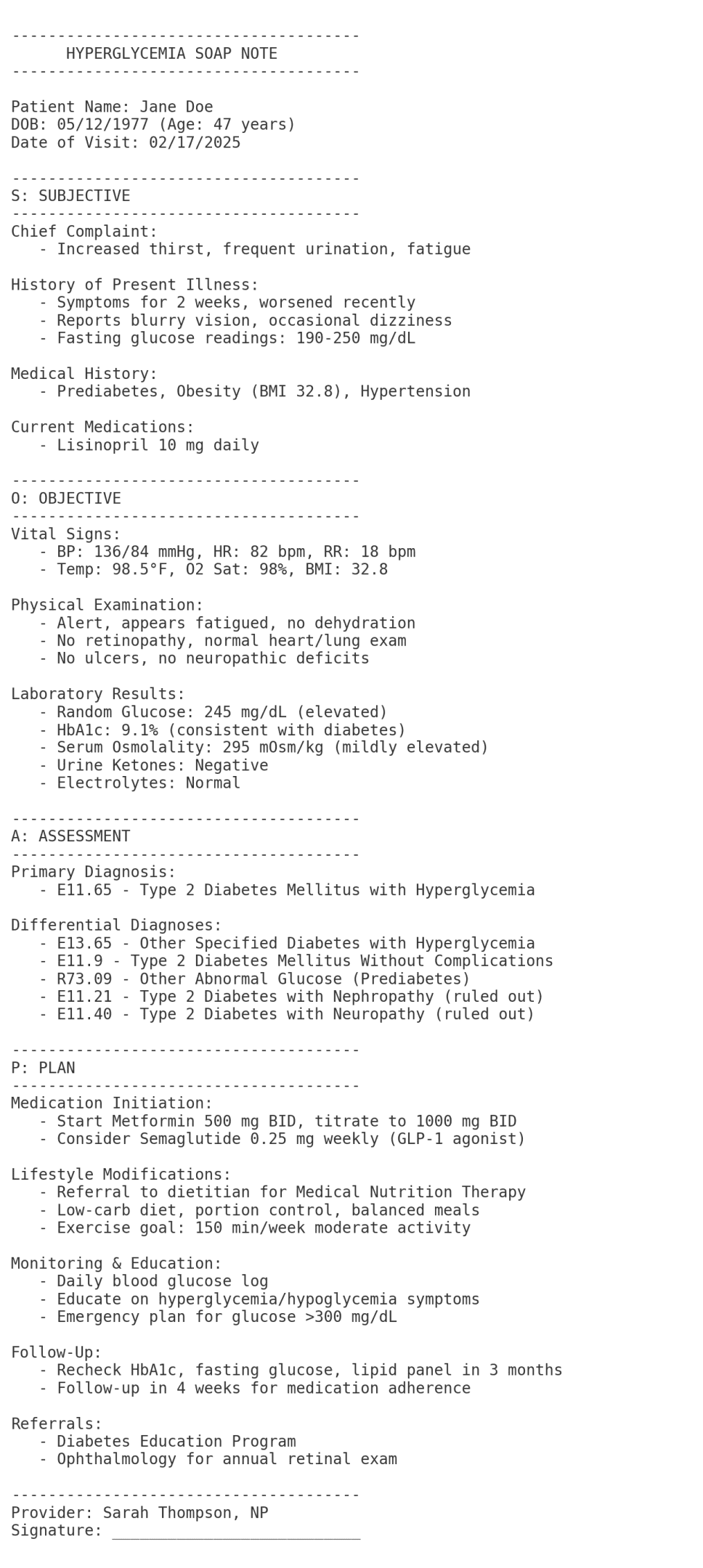
    Hyperglycemia Diabetes SOAP Note Example
    Hyperglycemia Diabetes SOAP Note Example

    Essential Patient Information for Diabetes SOAP Notes

    When documenting a Diabetes SOAP note for a patient with diabetes type 2, it’s crucial to include the following essential patient information:

    1. Patient Demographics: Name, age, gender, and date of visit
    2. Diabetes History: Date of diagnosis, type of diabetes, and current treatment regimen
    3. Comorbidities: Other medical conditions that may affect diabetes management
    4. Family History: Especially related to diabetes and cardiovascular diseases
    5. Social History: Occupation, living situation, and any social factors affecting diabetes management

    Documenting Current Medications in Diabetes Management

    Accurately recording current medications is vital for effective diabetes management. Include:

    1. Diabetes-specific medications (e.g., Metformin, insulin)
    2. Dosage and frequency of each medication
    3. Any recent changes in medication regimen
    4. Patient’s adherence to prescribed medications
    5. Over-the-counter medications and supplements
    6. Medications for comorbid conditions (e.g., hypertension, hyperlipidemia)

    Physical Examination Findings Relevant to Diabetes

    A comprehensive physical examination for a patient with diabetes type 2 should include:

    1. General appearance and level of alertness
    2. Vital signs (blood pressure, heart rate, respiratory rate, temperature)
    3. Height, weight, and BMI calculation
    4. Cardiovascular examination (heart sounds, peripheral pulses)
    5. Respiratory examination
    6. Abdominal examination (checking for hepatomegaly or tenderness)
    7. Neurological examination (sensory and motor function, especially in extremities)
    8. Foot examination (checking for ulcers, infections, or neuropathy)
    9. Skin examination (looking for acanthosis nigricans, insulin injection sites)
    10. Eye examination (if possible, or noting recent ophthalmology visits)

    How to Assess Blood Sugar Levels in Diabetes Type 2?

    Monitoring Blood Glucose: Tools and Techniques

    Assessing blood sugar levels is a crucial aspect of diabetes management. Here are some common tools and techniques:

    1. Glucometers: These portable devices allow patients to check their blood glucose levels at home using a small blood sample.
    2. Continuous Glucose Monitoring (CGM) Systems: These devices provide real-time glucose readings throughout the day and night, offering a more comprehensive view of glucose patterns.
    3. Fasting Plasma Glucose Test: This test measures blood sugar levels after an 8-hour fast, typically performed in a laboratory setting.
    4. Oral Glucose Tolerance Test (OGTT): This test involves measuring blood glucose levels before and 2 hours after consuming a glucose-rich drink.
    5. Random Plasma Glucose Test: This test can be done at any time of the day, regardless of when the patient last ate.

    Understanding A1C Levels and Their Importance

    Hemoglobin A1C (HbA1c) is a crucial marker for long-term blood glucose control:

    1. What is A1C?: It’s a blood test that reflects average blood glucose levels over the past 2-3 months.
    2. Target A1C: For most adults with diabetes, the target A1C is less than 7%. However, this may vary based on individual factors.
    3. Frequency of Testing: A1C is typically measured every 3-6 months, depending on how well the patient’s diabetes is controlled.
    4. Interpretation:
      • Below 5.7%: Normal
      • 5.7% to 6.4%: Prediabetes
      • 6.5% or above: Diabetes
    5. Importance: Regular A1C testing helps healthcare providers assess the effectiveness of the current treatment plan and make necessary adjustments.

    Identifying Symptoms of Hyperglycemia and Hypoglycemia

    Recognizing the symptoms of high and low blood sugar is essential for both patients and healthcare providers:

    Hyperglycemia (High Blood Sugar):

    • Increased thirst (polydipsia)
    • Frequent urination (polyuria)
    • Fatigue
    • Blurred vision
    • Slow-healing wounds
    • Recurrent infections

    Hypoglycemia (Low Blood Sugar):

    • Shakiness
    • Sweating
    • Rapid heartbeat
    • Confusion
    • Irritability
    • Hunger
    • Weakness
    • In severe cases, loss of consciousness

    What Lifestyle Modifications are Recommended for Patients with Diabetes?

    Dietary Changes to Manage Diabetes Type 2

    1. Carbohydrate Management: Encourage patients to monitor their carbohydrate intake and choose complex carbohydrates over simple sugars.
    2. Portion Control: Teach patients about appropriate portion sizes to help manage calorie intake and blood sugar levels.
    3. Increased Fiber Intake: Recommend a diet rich in fiber, including whole grains, legumes, fruits, and vegetables.
    4. Limit Saturated and Trans Fats: Advise patients to reduce intake of saturated fats and eliminate trans fats to support heart health.
    5. Consistent Meal Timing: Encourage regular meal times to help maintain stable blood glucose levels.
    6. Hydration: Stress the importance of adequate water intake.

    Importance of Physical Activity in Diabetes Management

    Regular physical activity is crucial for managing diabetes type 2:

    1. Blood Glucose Control: Exercise helps lower blood glucose levels and improves insulin sensitivity.
    2. Weight Management: Physical activity aids in maintaining a healthy weight or achieving weight loss goals.
    3. Cardiovascular Health: Regular exercise reduces the risk of heart disease and stroke, common complications in diabetes.
    4. Stress Reduction: Physical activity can help manage stress, which can affect blood glucose levels.
    5. Recommendations: Aim for at least 150 minutes of moderate-intensity aerobic activity per week, spread over at least 3 days, with no more than 2 consecutive days without exercise.

    Managing Hypertension and Cholesterol Levels

    Controlling blood pressure and cholesterol is essential in diabetes management:

    1. Blood Pressure Goals: The target blood pressure for most patients with diabetes is below 140/90 mmHg.
    2. Cholesterol Management:
      • LDL Cholesterol: Target is generally <100 mg/dL
      • HDL Cholesterol: Target is >40 mg/dL for men and >50 mg/dL for women
      • Triglycerides: Target is <150 mg/dL
    3. Lifestyle Modifications:
      • Reduce sodium intake
      • Increase consumption of fruits, vegetables, and whole grains
      • Limit alcohol consumption
      • Quit smoking
    4. Medication: If lifestyle changes are insufficient, medications may be prescribed to manage hypertension and hyperlipidemia.

    How to Document a Patient’s History of Present Illness?

    Key Questions to Ask During Patient Assessment

    When documenting the history of present illness for a patient with diabetes type 2, consider asking the following key questions:

    1. What brings you in today? Are you experiencing any new symptoms?
    2. How well controlled do you feel your blood sugar has been recently?
    3. Have you had any episodes of very high or very low blood sugar?
    4. Are you experiencing any symptoms like increased thirst, frequent urination, or blurred vision?
    5. Have you noticed any changes in your energy levels or weight?
    6. Are you having any problems with your feet, such as numbness, tingling, or wounds that won’t heal?
    7. Have you been able to follow your diet and exercise plan?
    8. Are you taking your medications as prescribed? Any side effects?
    9. Have you had any recent illnesses or stressors that might have affected your blood sugar?
    10. When was your last eye exam?

    Identifying Common Complaints in Type 2 Diabetes Patients

    Common complaints that should be noted in the history of present illness include:

    1. Fatigue or lack of energy
    2. Increased thirst and frequent urination
    3. Blurred vision
    4. Slow-healing wounds
    5. Numbness or tingling in hands or feet
    6. Recurrent infections (e.g., urinary tract infections, skin infections)
    7. Unexplained weight loss or gain
    8. Difficulty managing blood sugar levels
    9. Side effects from diabetes medications
    10. Stress or anxiety related to diabetes management

    Recording Patient Reports: What to Include

    When documenting patient reports in the SOAP note, include:

    1. The patient’s description of their symptoms in their own words
    2. The duration and frequency of reported symptoms
    3. Any factors that worsen or alleviate the symptoms
    4. The impact of symptoms on daily activities and quality of life
    5. Any self-management strategies the patient has tried
    6. The patient’s perception of their diabetes control
    7. Any concerns or questions the patient has about their condition
    8. Recent changes in lifestyle, diet, or medication adherence
    9. Any recent stressors or life events that may be affecting diabetes management
    10. The patient’s goals for their diabetes care

    What are the Common Complications in Diabetes Type 2?

    Recognizing Diabetic Neuropathy and Its Symptoms

    Diabetic neuropathy is a common complication of diabetes type 2:

    1. Types of Diabetic Neuropathy:
      • Peripheral neuropathy (most common)
      • Autonomic neuropathy
      • Focal neuropathy
      • Proximal neuropathy
    2. Symptoms of Peripheral Neuropathy:
      • Numbness or reduced sensation in the feet and legs
      • Tingling or burning sensations
      • Sharp pains or cramps
      • Increased sensitivity to touch
      • Muscle weakness
      • Loss of reflexes, especially at the ankle
      • Foot deformities
    3. Symptoms of Autonomic Neuropathy:
      • Bladder problems (incontinence or retention)
      • Digestive issues (constipation, diarrhea, nausea)
      • Sexual dysfunction
      • Difficulty recognizing hypoglycemia (due to impaired adrenaline response)
      • Abnormal heart rate and blood pressure control
    4. Diagnosis:
      • Physical examination (checking reflexes, sensation, and muscle strength)
      • Nerve conduction studies
      • Electromyography (EMG)
      • Quantitative sensory testing
    5. Management:
      • Tight glucose control
      • Pain management (medications like gabapentin or pregabalin)
      • Regular foot care and inspections
      • Treatment of specific symptoms (e.g., medications for digestive issues)

    Understanding the Risks of Long-term Hyperglycemia

    Long-term hyperglycemia can lead to various complications:

    1. Cardiovascular Disease:
      • Increased risk of heart attack and stroke
      • Development of coronary artery disease
      • Peripheral artery disease
    2. Kidney Disease (Diabetic Nephropathy):
      • Gradual loss of kidney function
      • May lead to end-stage renal disease requiring dialysis or transplant
    3. Eye Problems (Diabetic Retinopathy):
      • Damage to blood vessels in the retina
      • Can lead to vision loss or blindness if untreated
    4. Foot Problems:
      • Increased risk of infections
      • Poor wound healing
      • In severe cases, may lead to amputation
    5. Skin Conditions:
      • Increased susceptibility to bacterial and fungal infections
      • Development of diabetic dermopathy
    6. Cognitive Impairment:
      • Increased risk of dementia and Alzheimer’s disease
    7. Dental Problems:
      • Higher risk of gum disease and tooth decay

    Monitoring for Other Complications: A Comprehensive Approach

    A comprehensive approach to monitoring diabetes complications includes:

    1. Regular Eye Exams:
      • Annual dilated eye exams to check for retinopathy
    2. Kidney Function Tests:
      • Annual urine albumin test and estimated glomerular filtration rate (eGFR)
    3. Cardiovascular Assessments:
      • Regular blood pressure checks
      • Lipid panel tests
      • Electrocardiogram (ECG) as needed
    4. Foot Examinations:
      • Regular foot checks during office visits
      • Annual comprehensive foot exam
    5. Dental Check-ups:
      • Regular dental exams and cleanings
    6. Skin Inspections:
      • Regular skin checks for infections or abnormalities
    7. Neurological Assessments:
      • Periodic checks for neuropathy symptoms
    8. Mental Health Screening:
      • Assessment for depression and diabetes distress
    9. Immunizations:
      • Ensuring patients are up-to-date on recommended vaccinations
    10. Laboratory Tests:
      • Regular monitoring of HbA1c, fasting glucose, and other relevant markers

    Related Article

    Diabetes

    FAQs

    How do you explain diabetes type 2 to a patient?

    Type 2 diabetes is a chronic condition where your body either doesn’t produce enough insulin or has become resistant to its effects. This leads to high blood sugar levels, which can cause various health problems over time. It’s often related to lifestyle factors and can be managed through diet, exercise, and sometimes medication.

    What is the best description of type 2 diabetes?

    Type 2 diabetes is a metabolic disorder characterized by high blood sugar levels resulting from the body’s ineffective use of insulin. It’s the most common form of diabetes, often developing in adults and associated with obesity and sedentary lifestyle.

    What is the clinical presentation of diabetes mellitus type 2?

    The clinical presentation of type 2 diabetes can include increased thirst, frequent urination, unexplained weight loss, fatigue, blurred vision, slow-healing wounds, and recurrent infections. However, some patients may be asymptomatic and diagnosed through routine blood tests.

    What is diabetes type 2 concept?

    The diabetes type 2 concept refers to the understanding that this form of  diabetes is primarily characterized by insulin resistance and relative insulin deficiency. Unlike type 1 diabetes, where the pancreas doesn’t produce insulin, in type 2 diabetes, the body becomes less responsive to insulin or doesn’t produce enough to maintain normal blood glucose levels.

  • Focused Exam on COPD and Ellipta A Shadow Health Transcript Summary

    Chronic Obstructive Pulmonary Disease (COPD) is a progressive respiratory condition that affects millions of people worldwide. As one of the leading causes of morbidity and mortality, understanding COPD and its management is crucial for healthcare providers and patients alike.

    This article 0n “Focused Exam on COPD and Ellipta A Shadow Health Transcript Summary” will delve into the various aspects of COPD, including diagnosis, treatment options, and the role of medications like Ellipta in managing this chronic lung disease.

    Focused Exam on COPD and Ellipta A Shadow Health Transcript Summary

    What is COPD and How is it Diagnosed?

    COPD, or Chronic Obstructive Pulmonary Disease, is a group of lung diseases characterized by airflow limitation and breathing difficulties. The two main forms of COPD are chronic bronchitis and emphysema. These conditions often coexist and can significantly impact a person’s quality of life.

    What are the common signs of COPD?

    The primary symptoms of COPD include:

    1. Persistent cough (often referred to as “smoker’s cough”)
    2. Increased mucus production
    3. Shortness of breath, especially during physical activities
    4. Wheezing
    5. Chest tightness
    6. Frequent respiratory infections

    As the disease progresses, patients may experience more severe symptoms, including:

    1. Fatigue
    2. Weight loss
    3. Swelling in the ankles, feet, or legs
    4. Cyanosis (bluish discoloration of the lips or fingernail beds)

    How is the diagnosis of COPD confirmed?

    Diagnosing COPD involves a comprehensive approach that includes:

    1. Medical history: Healthcare providers will inquire about smoking history, exposure to lung irritants, and family history of COPD.
    2. Physical examination: A thorough examination of the chest and lungs is performed to detect any abnormalities in breathing patterns or lung sounds.
    3. Pulmonary function tests: These tests, particularly spirometry, are crucial in diagnosing COPD. The most important measurements include:
      • Forced Expiratory Volume in 1 second (FEV1)
      • Forced Vital Capacity (FVC)
      • FEV1/FVC ratio
    4. Imaging studies: Chest X-rays and CT scans can help identify lung damage and rule out other conditions.
    5. Arterial blood gas analysis: This test measures oxygen and carbon dioxide levels in the blood, providing information about lung function.

    What role does a chest radiograph play in COPD diagnosis?

    A chest radiograph, or chest X-ray, plays a supportive role in COPD diagnosis. While it cannot definitively diagnose COPD, it can:

    1. Rule out other lung conditions that may mimic COPD symptoms
    2. Identify lung hyperinflation, a common feature in advanced COPD
    3. Detect complications such as pneumonia or lung cancer
    4. Evaluate the size and shape of the heart, which may be affected in severe COPD

    It’s important to note that chest radiographs may appear normal in early stages of COPD, and therefore, should not be used as the sole diagnostic tool.

    What are the Treatment Options for Patients with COPD?

    Managing COPD requires a multifaceted approach that combines pharmacological and non-pharmacological interventions. The goal of treatment is to relieve symptoms, prevent exacerbations, and slow disease progression.

    How does pulmonary rehabilitation assist COPD patients?

    Pulmonary rehabilitation is a comprehensive program that helps COPD patients improve their overall health and quality of life. It typically includes:

    1. Exercise training: To improve cardiovascular fitness and muscle strength
    2. Breathing techniques: To help manage breathlessness
    3. Nutritional counseling: To address weight issues common in COPD
    4. Education: To help patients better understand and manage their condition
    5. Psychological support: To address anxiety and depression often associated with COPD

    Studies have shown that pulmonary rehabilitation can significantly improve exercise capacity, reduce hospitalization rates, and enhance quality of life for COPD patients.

    What medications are commonly prescribed for COPD treatment?

    Several classes of medications are used to manage COPD:

    1. Bronchodilators: These medications relax airway muscles and improve airflow. They include:
      • Short-acting beta-2 agonists (e.g., albuterol)
      • Long-acting beta-2 agonists (e.g., salmeterol, formoterol)
      • Short-acting anticholinergics (e.g., ipratropium)
      • Long-acting anticholinergics (e.g., tiotropium, umeclidinium)
    2. Inhaled corticosteroids: These reduce airway inflammation and are often combined with long-acting bronchodilators for patients with frequent exacerbations.
    3. Phosphodiesterase-4 inhibitors: Medications like roflumilast can help reduce inflammation and exacerbations in severe COPD.
    4. Antibiotics: Used to treat respiratory infections that can trigger COPD exacerbations.
    5. Oxygen therapy: Supplemental oxygen is prescribed for patients with severe COPD and low blood oxygen levels.

    How does the Ellipta inhaler work for COPD management?

    The Ellipta inhaler is a dry powder inhaler developed by GSK (GlaxoSmithKline) for the management of COPD and asthma. It delivers various medications, including:

    1. Fluticasone furoate/vilanterol (Breo Ellipta): A combination of an inhaled corticosteroid and a long-acting beta-2 agonist
    2. Umeclidinium/vilanterol (Anoro Ellipta): A combination of a long-acting anticholinergic and a long-acting beta-2 agonist

    The Ellipta inhaler works by delivering a precise dose of medication directly to the lungs. Its design makes it easy to use, requiring fewer steps compared to some other inhalers. This can improve medication adherence, which is crucial for effective COPD management.

    Clinical trials have shown that medications delivered via the Ellipta inhaler can significantly improve lung function, reduce exacerbations, and enhance quality of life for COPD patients.

    Understanding COPD Exacerbations

    COPD exacerbations are acute worsening of respiratory symptoms that require additional therapy. They can significantly impact a patient’s quality of life and accelerate disease progression.

    What triggers a COPD exacerbation?

    Common triggers for COPD exacerbations include:

    1. Respiratory infections (viral or bacterial)
    2. Air pollution
    3. Exposure to irritants (e.g., smoke, dust)
    4. Changes in weather
    5. Discontinuation of COPD medications
    6. Comorbid conditions (e.g., heart failure, pulmonary embolism)

    What are the symptoms of a COPD exacerbation?

    Symptoms of a COPD exacerbation typically include:

    1. Increased breathlessness
    2. Increased cough frequency and severity
    3. Changes in sputum color or volume
    4. Chest tightness
    5. Fatigue
    6. Fever (in case of infection)
    7. Confusion or drowsiness (in severe cases)

    How can patients with COPD prevent exacerbations?

    Preventing COPD exacerbations is crucial for maintaining lung function and quality of life. Strategies include:

    1. Adherence to prescribed medications
    2. Smoking cessation
    3. Regular vaccinations (influenza and pneumococcal)
    4. Avoiding triggers and air pollutants
    5. Proper inhaler technique
    6. Pulmonary rehabilitation
    7. Regular follow-ups with healthcare providers
    8. Early recognition and treatment of symptoms

    What is the Role of Subjective Data in COPD Management?

    Subjective data, or information provided by the patient about their symptoms and experiences, plays a crucial role in COPD management.

    How do healthcare providers use patient data in treatment planning?

    Healthcare providers use patient data to:

    1. Assess symptom severity and impact on daily life
    2. Identify triggers for exacerbations
    3. Evaluate treatment efficacy
    4. Adjust medication dosages or types
    5. Determine the need for additional interventions (e.g., oxygen therapy, pulmonary rehabilitation)
    6. Monitor disease progression over time

    What subjective data should be collected during a focused exam?

    During a focused exam for COPD, healthcare providers should collect the following subjective data:

    1. Severity and frequency of breathlessness
    2. Cough characteristics (frequency, productivity, color of sputum)
    3. Impact of symptoms on daily activities and quality of life
    4. Frequency and severity of exacerbations
    5. Smoking history and current status
    6. Occupational exposure to lung irritants
    7. Medication adherence and side effects
    8. Sleep quality and presence of nocturnal symptoms
    9. Exercise tolerance and limitations

    How does subjective data influence COPD treatment decisions?

    Subjective data significantly influences COPD treatment decisions by:

    1. Guiding medication adjustments based on symptom control
    2. Determining the need for additional therapies (e.g., pulmonary rehabilitation, oxygen therapy)
    3. Identifying barriers to treatment adherence
    4. Assessing the effectiveness of current management strategies
    5. Informing decisions about lifestyle modifications
    6. Helping to recognize and prevent exacerbations early

    Evaluating COPD Results and Lung Function

    Assessing lung function is crucial for diagnosing COPD, monitoring disease progression, and evaluating treatment effectiveness.

    What pulmonary function tests are used in COPD assessment?

    Key pulmonary function tests used in COPD assessment include:

    1. Spirometry: Measures FEV1, FVC, and FEV1/FVC ratio
    2. Lung volume measurements: Assess total lung capacity and residual volume
    3. Diffusing capacity: Evaluates gas exchange efficiency
    4. Six-minute walk test: Assesses exercise capacity and oxygen requirements
    5. Arterial blood gas analysis: Measures oxygen and carbon dioxide levels in the blood

    How are COPD results interpreted by healthcare providers?

    Healthcare providers interpret COPD results by:

    1. Comparing measured values to predicted values based on age, height, sex, and ethnicity
    2. Assessing the degree of airflow limitation using FEV1 % predicted
    3. Evaluating the FEV1/FVC ratio to confirm obstructive lung disease
    4. Considering the presence of reversibility after bronchodilator administration
    5. Assessing lung volumes to detect hyperinflation
    6. Interpreting diffusing capacity to evaluate the presence of emphysema
    7. Analyzing arterial blood gases to assess oxygenation and ventilation

    What is the significance of airflow limitation in COPD?

    Airflow limitation is the hallmark of COPD and has several important implications:

    1. Diagnosis: An FEV1/FVC ratio < 0.7 post-bronchodilator confirms airflow obstruction
    2. Disease severity: The degree of airflow limitation (based on FEV1 % predicted) helps classify COPD severity
    3. Prognosis: Lower FEV1 values are associated with increased mortality and exacerbation risk
    4. Treatment decisions: The severity of airflow limitation guides therapeutic choices
    5. Monitoring: Changes in FEV1 over time reflect disease progression or treatment efficacy

    What Lifestyle Changes Can Help Manage COPD?

    Lifestyle modifications play a crucial role in COPD management, complementing medical treatments and improving overall health outcomes.

    How important is smoking cessation for COPD patients?

    Smoking cessation is the single most important intervention for COPD patients who smoke. It can:

    1. Slow the rate of lung function decline
    2. Reduce exacerbation frequency
    3. Improve response to medications
    4. Enhance overall quality of life
    5. Decrease mortality risk

    Healthcare providers should offer support, counseling, and pharmacological interventions to help patients quit smoking.

    What role does oxygen therapy play in COPD treatment?

    Oxygen therapy is a vital component of treatment for patients with severe COPD and chronic hypoxemia. It can:

    1. Improve survival in patients with severe resting hypoxemia
    2. Reduce pulmonary hypertension
    3. Improve exercise capacity and quality of life
    4. Reduce hospitalizations and exacerbations

    Oxygen therapy may be prescribed for use during sleep, exercise, or continuously, depending on the patient’s needs.

    How can patients with COPD improve their overall lung health?

    Patients with COPD can improve their lung health through various strategies:

    1. Regular exercise: Improves cardiovascular fitness and muscle strength
    2. Proper nutrition: Maintains a healthy weight and supports immune function
    3. Avoiding triggers: Minimizes exposure to air pollutants and irritants
    4. Stress management: Reduces anxiety and improves overall well-being
    5. Vaccination: Prevents respiratory infections that can exacerbate COPD
    6. Proper inhaler technique: Ensures effective medication delivery
    7. Breathing exercises: Improves lung efficiency and reduces breathlessness
    8. Adequate sleep: Supports overall health and immune function
    9. Staying hydrated: Helps maintain proper mucus consistency

    Related Article

    Shadow Health Focused Exam, COPD- Subjective Data Collection

    FAQs (Focused Exam on COPD and Ellipta A Shadow Health Transcript Summary)

    1. What are the primary symptoms of COPD? The primary symptoms of COPD include persistent cough, increased mucus production, shortness of breath (especially during physical activities), wheezing, and chest tightness.
    2. Describe the pathophysiology of COPD. COPD is characterized by chronic inflammation of the airways, leading to structural changes, narrowing of the airways, and destruction of lung tissue. This results in airflow limitation, air trapping, and reduced gas exchange capacity.
    3. What are the common risk factors for developing COPD? Common risk factors for COPD include smoking, long-term exposure to air pollutants or occupational dust, genetic factors (alpha-1 antitrypsin deficiency), history of childhood respiratory infections, and advanced age.
    4. How is COPD diagnosed? COPD is diagnosed through a combination of clinical evaluation, spirometry (which confirms airflow obstruction), and other pulmonary function tests. Additional tests like chest X-rays and CT scans may be used to assess lung damage and rule out other conditions.
  • Katherine Harris ihuman Case Study

    The iHuman platform is a cutting-edge virtual patient simulation tool that has revolutionized nursing education. Through interactive case studies like the Katherine Harris case, nursing students can develop their clinical reasoning skills and learn to provide evidence-based, patient-centered care.

    Here we will examine the key findings from the Katherine Harris iHuman Case Study, discuss how primary care providers can address her symptoms, and explore the broader implications of this case for nursing practice. We will also provide helpful study tips and resources for students completing the NR 602 Week 3 assignment based on this case.

    What is the Katherine Harris iHuman Case Study?

     The Katherine Harris iHuman case study is a virtual patient scenario designed to help nursing students like you practice your clinical reasoning skills. It’s like a video game, but instead of fighting dragons, you’re battling health issues!

    Overview of the iHuman Katherine Harris Case

    In this case, we’re introduced to Katherine Harris, a 16-year-old girl who’s not feeling her best. She’s come to the clinic with some breathing troubles, and it’s up to us to figure out what’s going on and how to help her. Think of it as a medical mystery – you’re the detective, and Katherine’s symptoms are the clues!

    Importance of Case Studies in Nursing Education

    Now, you might be wondering, “Why are we doing this? Can’t we just learn from textbooks?” Well, case studies like Katherine’s are super important in nursing education. They bridge the gap between theory and practice, allowing you to apply what you’ve learned in a safe, controlled environment.

    Imagine trying to learn how to ride a bike just by reading about it. Pretty tough, right? That’s why we have case studies. They let you “practice” caring for patients without the pressure of a real-life situation. Plus, they’re a great way to develop your critical thinking skills – a must-have for any nurse!

    Key Findings from the Katherine Harris 16 Year Old Case Study

    What Symptoms Does Katherine Harris Present?

    Katherine isn’t feeling too hot. She’s come to the clinic with two main complaints:

    1. A nasty cough
    2. Shortness of breath

    Analyzing Cough and Shortness of Breath

    Katherine’s cough isn’t just your run-of-the-mill tickle in the throat. It’s described as a “wet” cough, which means she’s probably coughing up some mucus (gross, I know, but important!). This type of cough can be a sign of a respiratory infection.

    As for the shortness of breath, Katherine’s finding it harder than usual to catch her breath. This is particularly noticeable when she’s active – like when she’s running around in PE class.

    Duration and Severity of Symptoms: Past 3 Days

    Here’s something important to note: Katherine has been dealing with these symptoms for the past three days. In the world of health, timing is everything. The fact that these symptoms have been persistent for several days suggests that this isn’t just a 24-hour bug.

    Impact of Respiratory Infections on Health

    Respiratory infections, even seemingly minor ones, can have a significant impact on a person’s health and daily life. For a teenager like Katherine, it could mean missing school, sitting out of sports practice, or just feeling plain miserable.

    More importantly, respiratory infections can sometimes lead to more serious conditions if left untreated. That’s why it’s crucial for us, as future healthcare providers, to take these symptoms seriously and investigate thoroughly.

    How Can Primary Care Address Katherine’s Symptoms?

    Now that we’ve got a handle on what Katherine’s experiencing, let’s talk about how we can help her. As primary care providers, our job is to assess the situation, come up with a treatment plan, and make sure Katherine gets better.

    Initial Assessment for Shortness of Breath

    When a patient comes in complaining of shortness of breath, there are a few key things we need to check:

    1. Vital Signs: We’ll want to measure Katherine’s respiratory rate, heart rate, blood pressure, and oxygen saturation. These can give us important clues about how her body is coping with the breathing difficulties.
    2. Lung Sounds: Using a stethoscope, we’ll listen to Katherine’s lungs. Are there any wheezes, crackles, or other unusual sounds? These can help us understand what’s going on in her airways.
    3. Physical Examination: We’ll look for signs of respiratory distress, like the use of accessory muscles when breathing or nasal flaring.
    4. Medical History: We’ll ask Katherine about any previous respiratory issues, allergies, or other relevant medical history.

    Remember, every bit of information we gather is another piece of the puzzle!

    Recommended Treatments for Cough and Wheeze

    Based on Katherine’s symptoms, here are some treatments we might consider:

    1. Bronchodilators: These medications can help open up the airways, making it easier for Katherine to breathe. They’re often used for conditions like asthma.
    2. Cough Suppressants: While we don’t always want to suppress a cough (sometimes it’s the body’s way of clearing out gunk), a cough suppressant might help Katherine get some relief, especially at night.
    3. Antibiotics: If we suspect a bacterial infection, we might prescribe antibiotics. However, we’d need to be pretty sure it’s bacterial and not viral before going this route.
    4. Inhaled Corticosteroids: These can help reduce inflammation in the airways, which might be contributing to Katherine’s symptoms.

    Remember, the exact treatment will depend on our full assessment and diagnosis. We’re not just throwing darts at a dartboard here – everything we do should have a good reason behind it!

    Follow-up Strategies for Katherine Harris

    Our job isn’t done once we send Katherine home with a treatment plan. Follow-up is crucial to make sure she’s improving and to catch any potential complications early. Here’s what we might do:

    1. Schedule a follow-up appointment: We’d probably want to see Katherine again in a few days to a week, depending on the severity of her symptoms.
    2. Provide education: We’d teach Katherine and her family about warning signs to watch out for and when to seek immediate medical attention.
    3. Discuss lifestyle modifications: This might include things like avoiding triggers (if we suspect asthma), getting enough rest, and staying hydrated.
    4. Consider referral: If Katherine’s symptoms persist or worsen despite treatment, we might consider referring her to a specialist, like a pulmonologist.

    The key here is to be thorough and proactive. We want to nip this in the bud and get Katherine back to feeling her best!

    What Study Help is Available for the NR 602 Week 3 Assignment?

    Alright, let’s switch gears a bit and talk about how you can ace your NR 602 Week 3 assignment on the Katherine Harris case. Don’t worry, I’ve got your back!

    Accessing Study Documents for iHuman Cases

    First things first, you’ll want to make sure you have access to all the necessary documents for the iHuman cases. These usually include:

    1. The case scenario details
    2. Patient history forms
    3. Lab results (if any)
    4. Assessment guidelines

    Your course instructor should have provided access to these, typically through your school’s online learning platform. If you’re having trouble finding them, don’t be shy – reach out to your instructor or a classmate for help.

    Resources for Week 3 iHuman Katherine Harris Analysis

    When it comes to analyzing the Katherine Harris case, here are some resources that might come in handy:

    1. Textbooks: Your nursing textbooks are goldmines of information. The chapters on respiratory assessment and pediatric care will be particularly useful for this case.
    2. Class Notes: Don’t underestimate the value of your own notes from lectures and discussions. They often contain pearls of wisdom that aren’t in the textbooks.
    3. Online Databases: Resources like PubMed or CINAHL can provide you with up-to-date research on respiratory conditions in adolescents.
    4. Study Groups: Sometimes, two (or more) heads are better than one. Discussing the case with your classmates can help you see things from different angles.
    5. Office Hours: Your instructors are there to help. If you’re stuck on something, don’t hesitate to drop by during office hours or send an email.

    What are the Implications of Katherine Harris’s Case for Nursing Practice?

    Learning Outcomes from the Katherine Harris iHuman Case Study

    This case study offers several valuable learning outcomes:

    1. Assessment Skills: We’ve practiced gathering and interpreting patient data, from symptoms to vital signs.
    2. Differential Diagnosis: By considering various possible causes for Katherine’s symptoms, we’ve honed our ability to think critically and consider multiple possibilities.
    3. Treatment Planning: We’ve explored different treatment options and learned to tailor our approach to the specific patient.
    4. Patient Education: We’ve considered how to educate Katherine and her family about her condition and treatment plan.
    5. Follow-up Care: We’ve learned the importance of ongoing care and monitoring, not just treating the immediate symptoms.

    Integrating Case Study Insights into Clinical Practice

    1. Holistic Assessment: Remember to look at the whole patient, not just the presenting symptoms. Katherine’s age, medical history, and lifestyle all play a role in her care.
    2. Evidence-Based Practice: Use the latest research and guidelines to inform your decisions, just like we did when considering treatment options for Katherine.
    3. Patient-Centered Care: Keep the patient’s needs and preferences at the center of your care plan. For a teenager like Katherine, this might mean considering how the treatment will affect her school and social life.
    4. Interprofessional Collaboration: Although we focused on primary care in this case, remember that complex cases often require collaboration with specialists, respiratory therapists, and other healthcare professionals.
    5. Continuous Learning: Medicine is always evolving. Use each patient encounter as an opportunity to learn and grow, just like we did with this case study.

    Future Considerations for Primary Care Providers

    1. Prevention is Key: While we focused on treating Katherine’s acute symptoms, don’t forget the importance of preventive care. Regular check-ups and health education can prevent many conditions from developing or worsening.
    2. Technology in Healthcare: The iHuman platform itself is an example of how technology is changing healthcare education. Stay open to new technologies that can enhance patient care and medical education.
    3. Cultural Competence: While it wasn’t a major factor in Katherine’s case, cultural background can significantly impact health beliefs and behaviors. Always strive to provide culturally competent care.
    4. Mental Health Integration: Remember that physical health and mental health are closely linked. In future practice, consider how conditions like respiratory issues might impact a patient’s mental well-being, and vice versa.
    5. Adaptability: If there’s one thing the COVID-19 pandemic taught us, it’s the importance of being adaptable. Be prepared to adjust your practice based on new evidence, changing guidelines, or unprecedented situations

    Related Article

    NR602 Week 3 I Human Katherine Harris Question with Answers,100% CORRECT

    FAQs

    What is iHuman?

    iHuman is an interactive, web-based simulation platform used in healthcare education. It provides virtual patient encounters that allow students to practice clinical reasoning skills in a safe, controlled environment.

    What are the benefits of using iHuman in medical education?

    1. It provides hands-on experience without risking patient safety.
    2. Students can practice at their own pace and repeat scenarios as needed.
    3. It exposes students to a wide variety of cases they might not encounter during clinical rotations.
    4. It helps develop critical thinking and decision-making skills.
    5. It provides immediate feedback, allowing students to learn from their mistakes.

    What other political positions has Katherine Harris held?

    It’s important to note that the Katherine Harris in our case study is a fictional 16-year-old patient, not a political figure. However, there is a real Katherine Harris who has held political positions. She served as Secretary of State of Florida from 1999 to 2002 and was a member of the U.S. House of Representatives from 2003 to 2007.

    What are some controversies associated with Katherine Harris?

    The real-life politician Katherine Harris was involved in controversy during the 2000 U.S. Presidential election recount in Florida. As Florida’s Secretary of State, she played a significant role in certifying the state’s election results, which were crucial in determining the outcome of the election.

  • How to Write a Nurse Practitioner Soap Note with Example

    As a nurse practitioner (NP) or NP student, mastering the art of writing SOAP notes is crucial for providing excellent patient care. This comprehensive guide on how to write a nurse practitioner Soap Note example and template will walk you through everything you need to know about SOAP notes, from understanding their format to creating your own. We’ll also provide examples and templates to help you perfect your documentation skills.

    How to Write a Nurse Practitioner Soap Note Example and Template

    What is a SOAP Note and Why is it Important for Nurse Practitioners?

    A SOAP note is a standardized method of documentation used by healthcare providers to record patient encounters. SOAP is an acronym that stands for Subjective, Objective, Assessment, and Plan. This structured format helps organize patient information in a clear, concise manner, ensuring that all relevant details are captured and easily accessible to other healthcare professionals.

    For nurse practitioners, SOAP notes are essential tools for:

    1. Maintaining accurate and comprehensive patient records
    2. Communicating effectively with other healthcare providers
    3. Ensuring continuity of care
    4. Supporting clinical reasoning and decision-making
    5. Meeting legal and regulatory requirements

    Understanding the SOAP Note Format

    The SOAP note format consists of four main sections:

    1. Subjective (S): This section includes the patient’s chief complaint, history of present illness, and other subjective information provided by the patient.
    2. Objective (O): Here, you document objective data such as vital signs, physical exam findings, and results from diagnostic tests.
    3. Assessment (A): In this section, you summarize your clinical reasoning, including differential diagnoses and your primary diagnosis.
    4. Plan (P): The final section outlines your treatment plan, including medications, therapies, patient education, and follow-up instructions.

    Benefits of Using SOAP Notes in Primary Care

    SOAP notes offer several advantages for nurse practitioners working in primary care settings:

    1. Standardization: The structured format ensures consistency across patient encounters and among different providers.
    2. Efficiency: SOAP notes help organize information logically, making it easier to review and update patient records quickly.
    3. Improved communication: The clear format facilitates better communication between healthcare professionals, leading to improved patient care.
    4. Legal protection: Well-documented SOAP notes can serve as valuable evidence in case of legal disputes or audits.
    5. Quality improvement: Consistently using SOAP notes allows for easier tracking of patient progress and identification of areas for improvement in care delivery.

    Key Components of a SOAP Note

    While the basic structure of a SOAP note remains consistent, the specific components may vary depending on the patient’s condition and the clinical setting. Here are some essential elements to include in each section:

    Subjective:

    • Chief complaint
    • History of present illness
    • Review of systems
    • Past medical history
    • Social history
    • Family history

    Objective:

    • Vital signs
    • Physical examination findings
    • Laboratory results
    • Imaging results
    • Other diagnostic test results

    Assessment:

    • Primary diagnosis
    • Differential diagnoses
    • Clinical reasoning

    Plan:

    • Treatment plan (medications, therapies, procedures)
    • Patient education
    • Referrals
    • Follow-up instructions

    How to Write a SOAP Note: Step-by-Step Guide

    Now that we understand the components of a SOAP note, let’s break down the process of writing one into manageable steps.

    Gathering Subjective and Objective Information

    1. Start with the patient’s chief complaint and history of present illness.
    2. Conduct a thorough review of systems and document pertinent positives and negatives.
    3. Record the patient’s past medical history, including current medications and allergies.
    4. Note relevant social and family history.
    5. Perform a physical examination and document your findings.
    6. Record vital signs and any diagnostic test results.

    Documenting the Assessment Section

    1. Analyze the subjective and objective data you’ve gathered.
    2. Formulate your primary diagnosis based on the available information.
    3. List any differential diagnoses you’ve considered.
    4. Briefly explain your clinical reasoning for arriving at your assessment.

    Creating a Clear Treatment Plan

    1. Outline your proposed treatment plan, including medications, therapies, or procedures.
    2. Include patient education points and any lifestyle modifications recommended.
    3. Note any referrals to specialists or other healthcare providers.
    4. Specify follow-up instructions and timeline.

    What Does a Nurse Practitioner SOAP Note Example Look Like?

    Let’s examine a sample SOAP note for a hypothetical patient encounter:

    S: Mrs. Johnson, a 45-year-old female, presents to the clinic with complaints of shortness of breath and chest pain for the past 3 days. She describes the pain as a “squeezing” sensation in the center of her chest, radiating to her left arm. The pain is exacerbated by exertion and relieved by rest. She denies fever, cough, or recent travel. Patient has a history of hypertension and type 2 diabetes.

    O: Vital Signs: BP 150/90, HR 92, RR 20, Temp 98.6°F, SpO2 97% on room air Physical Exam:

    • General: Alert and oriented, in mild distress
    • HEENT: Normocephalic, atraumatic
    • Cardiovascular: Regular rate and rhythm, no murmurs, rubs, or gallops
    • Respiratory: Clear to auscultation bilaterally, no wheezes or crackles
    • Extremities: No edema, pulses 2+ bilaterally

    ECG: Normal sinus rhythm, no ST-segment changes Troponin: Within normal limits

    A:

    1. Unstable angina
    2. Differential diagnoses:
      • Acute coronary syndrome
      • Gastroesophageal reflux disease (GERD)
      • Anxiety

    Assessment based on patient’s risk factors (hypertension, diabetes), presenting symptoms, and ECG findings. While initial troponin is normal, unstable angina cannot be ruled out at this time.

    P:

    1. Admit patient to telemetry unit for observation and serial troponin measurements
    2. Start aspirin 325mg PO daily
    3. Initiate nitroglycerin 0.4mg SL PRN for chest pain
    4. Cardiology consult for further evaluation and management
    5. Patient education on heart-healthy diet and lifestyle modifications
    6. Follow-up appointment in 1 week after discharge

    Analyzing a Sample SOAP Note

    This sample SOAP note demonstrates several key features:

    1. Concise yet comprehensive documentation of the patient’s presenting symptoms
    2. Clear presentation of objective data, including vital signs and physical exam findings
    3. A well-reasoned assessment with differential diagnoses
    4. A detailed plan that addresses both immediate and long-term patient care needs

    Common Mistakes to Avoid in Nurse Practitioner SOAP Notes

    1. Omitting important details from the subjective or objective sections
    2. Using unclear abbreviations or jargon
    3. Failing to update the plan section in follow-up visits
    4. Including irrelevant information that clutters the note
    5. Not documenting patient education or follow-up instructions

    How to Use SOAP Notes in Clinical Rotations

    For med students and nurse practitioner students, clinical rotations are an excellent opportunity to practice writing SOAP notes. Here are some tips:

    1. Familiarize yourself with the SOAP note format before starting rotations
    2. Observe how experienced clinicians document patient encounters
    3. Practice writing SOAP notes on every patient you see, even if they’re not submitted
    4. Seek feedback from preceptors on your documentation skills
    5. Use SOAP notes to present patient cases during rounds or case discussions

    Tips for Med Students and Nurse Practitioner Students

    1. Be concise but thorough in your documentation
    2. Focus on relevant information for each patient encounter
    3. Use appropriate medical terminology while avoiding excessive jargon
    4. Practice writing SOAP notes regularly to improve your skills
    5. Review your notes with experienced clinicians for feedback and improvement

    Integrating Nursing SOAP Notes into Patient Care

    SOAP notes are not just a documentation requirement but a valuable tool for improving patient care. Here’s how to effectively integrate them into your practice:

    1. Use SOAP notes to track patient progress over time
    2. Refer to previous SOAP notes to identify trends or changes in the patient’s condition
    3. Use the assessment and plan sections to guide your clinical decision-making
    4. Share relevant information from SOAP notes during handoffs or consultations
    5. Use SOAP notes as a basis for patient education and care planning

    What Should Be Included in a Nurse Practitioner SOAP Note?

    Essential Details for the Subjective Section:

    • Chief complaint in the patient’s own words
    • Detailed history of present illness
    • Relevant review of systems
    • Pertinent past medical history
    • Current medications and allergies
    • Social and family history as appropriate

    Importance of Accurate Vital Signs Documentation: Vital signs provide crucial objective data that can influence your assessment and plan. Always include:

    • Blood pressure
    • Heart rate
    • Respiratory rate
    • Temperature
    • Oxygen saturation (if relevant)

    Including Past Medical History in Your SOAP Notes: While you don’t need to list the entire medical history in every SOAP note, include relevant details that may impact the current presentation or treatment plan. This might include:

    • Chronic conditions
    • Previous surgeries or hospitalizations
    • Allergies and adverse drug reactions
    • Current medications and treatments

    Related Article

    SOAP Notes

    FAQ

    How do you write a focused SOAP note?

    A focused SOAP note concentrates on a specific problem or concern. Include only relevant information related to the chief complaint, omit unrelated details, and keep your assessment and plan targeted to the primary issue.

    What not to include in SOAP notes?

     Avoid including irrelevant personal opinions, excessive medical jargon, unsubstantiated assumptions, or information not directly related to the patient’s care. Also, refrain from using judgmental language or making non-clinical observations about the patient.

    How do I dictate a SOAP note?

    When dictating a SOAP note, follow the SOAP format closely. Speak clearly, use appropriate medical terminology, and organize your thoughts before starting. Practice can help improve your dictation skills and efficiency.

    How long should a SOAP note be?

    The length of a SOAP note can vary depending on the complexity of the patient’s condition and the purpose of the encounter. Generally, aim for concise yet comprehensive documentation that covers all necessary information without unnecessary details. Most SOAP notes range from 1-3 paragraphs per section.

  • Differences between Genogram and Ecomap with Examples

    Introduction: Genogram and Ecomap

    Genograms and ecomaps are key in understanding relationships, whether within a family or between an individual and their social environment. These visual representations help nurses understand both the internal family dynamics and external support systems that influence a patient’s health outcomes.

    A genogram is a sophisticated visual tool that goes beyond a traditional family tree to map relationships, health patterns, and generational influences within the family structure. Meanwhile, an ecomap (sometimes referred to as an eco-map) illustrates how individuals and families connect with their external environment, including community organizations and support networks.

    Importance of Genograms and Ecomaps

    Healthcare providers, especially nurses, benefit tremendously from incorporating these visual assessment techniques into their practice. Here’s why:

    • Holistic Assessment: Genograms provide crucial insights into hereditary conditions and family health patterns that might impact current treatment plans.
    • Identifying Resources: A social worker might use an ecomap to understand available support systems when developing discharge plans.
    • Uncovering Hidden Factors: A genogram may uncover relationship dynamics that affect medication adherence or treatment compliance.
    • Communication Tool: These diagrams create a visual language that makes it easier to understand complex family situations during interdisciplinary team meetings.

    Genogram and Ecomap Guide with Examples

    Here’s a step-by-step guide for creating both a genogram and an ecomap with common genogram and ecomap symbols, including examples.

    Let’s start with a genogram:

    Guide on Creating a Genogram in Nursing

    Common Genogram Symbols

    genogram and ecomap symbols

    Step 1: Gather Comprehensive Information

    Start by collecting detailed information spanning at least three generations. Include:

    • Names, birth/death dates
    • Health conditions, with special attention to substance abuse patterns
    • Major life events and transitions
    • Relationship qualities between family members

    Step 2: Select Your Central Focus

    For nursing assessments, typically place the patient (client) at the center of the genogram. This provides context for understanding how family history impacts their current health status.

    Step 3: Construct the Basic Framework

    • Use squares for males, circles for females
    • Arrange generations horizontally, with oldest at top
    • Connect partners with horizontal lines
    • Draw vertical lines connecting parents to children
    • Use standardized symbols for marriage, divorce, and other relationships

    Step 4: Add Relationship Indicators

    Different line styles between individuals are used to indicate relationship quality:

    • Solid lines for strong, positive connections
    • Jagged lines for conflictual relationships
    • Dotted lines for distant or estranged relationships
    • Use colors or patterns to highlight specific traits or conditions that run in the family.
    • Create a legend explaining what each color or pattern represents.

    Step 5: Incorporate Health Information

    As a nursing student, this step is particularly important. Document:

    • Chronic conditions
    • Mental health diagnoses
    • Substance use patterns
    • Age and cause of death for deceased family members

    Step 6: Include Emotional Relationships

    • Use different line styles to show the emotional bonds between family members.
    • Indicate particularly strong alliances or estranged relationships.

    Step 7: Add Contextual Information

    • Include relevant social, cultural, or historical events that impacted the family.
    • Note major moves, changes in socioeconomic status, or other significant life changes.

    Step 8: Review and Refine

    • Check the genogram for accuracy and completeness.
    • Ensure all symbols and lines are clear and consistent.
    • Add any additional notes or explanations as needed.

    Step 9: Create a Legend

    • Provide a clear legend explaining all symbols, lines, and colors used in your genogram.
    • This helps others interpret your genogram correctly.

    Step 10: Update as Needed

    • Genograms are living documents. Update them as new information becomes available or as family circumstances change.

    Genogram Example

    Comprehensive SOAP Note for Dysuria Patient with Family Genome

    Patient Initials: ___J.S____ Age: 37 years old_______ Gender: _Female______

    SUBJECTIVE DATA:                                                          

     Chief Complaint (CC): I have a burning sensation during urination.’

    History of Present Illness (HPI): Jane Smith (J.S), a 37-year-old woman, is a third-generation Asian American woman whose grandparents came from Japan. She presents to the clinic complaining of discomfort around the pelvic area and a burning sensation when passing urine. She also reports the increased frequency of urination, passing water three times in less than one and half hours. J.S admits experiencing a strong urge to urinate over the last six days and hastens to add that the urine looks cloudy when accompanied by a fish-like odor. She admits she has been active with several male partners over the last three years, with her partners not using condoms or other barrier protection. She denies nausea, vomiting, myalgia blood in urine, vulvar/ vaginal irritation; she also reports a white vaginal discharge and no flank pain.

    Genogram Example

    Guide on Creating an Ecomap in Nursing

    Basic Ecomap Structure

    genogram and ecomap examples
    Figure 2: Ecomap Symbols Chart

    Step 1: Identify Your Central Focus

    Place your patient or family unit in the center circle of the ecomap. This forms the foundation for mapping external connections.

    Step 2: Map Key External Systems

    Identify and draw circles representing significant external influences, such as:

    • Healthcare systems
    • Educational institutions
    • Workplace environments
    • Religious/spiritual communities
    • Government assistance programs
    • Friend networks

    Step 3: Establish Connection Types

    Draw lines between the central circle and external systems, where:

    • Solid lines represent strong, supportive connections
    • Dashed lines indicate tenuous relationships
    • Jagged lines show stressful or conflictual interactions

    Step 4: Indicate Flow Direction

    Add arrows to show energy and resource exchange:

    • Single-headed arrows for one-way support
    • Double-headed arrows for reciprocal relationships
    • Note specific types of support (e.g., “emotional,” “financial,” “informational”)

    Step 5: Identify Stressors and Supports

    Label connections clearly to indicate whether each external system functions as:

    • A source of support
    • A significant stressor
    • Both support and stress (common with family relationships)

    Genogram Example

    Summative Assessment: Family and Community Assessment

    Identifying Data

    The child, C.K, is a second born in a family of four. Her mother left home when she was seven and a half years following domestic violence. Additionally, her elder sister died of pneumonia at six years. Therefore, C.K. and her other two younger siblings, N.K, six years, and L.K, three years living with their father.

    Developmental Stage and Family’s History

    They are from a below-average family and barely afford two meals a day. The father, Mr. K, is an alcoholic and unemployed, making it difficult to provide for his children. Mr. K reported that his wife could not keep up with the challenges, and she always despised him, which resulted in frequent domestic violence, where she decided to leave, leaving behind the children. She was also an alcoholic and used heroin which affected her ability to raise her children.

    The children are malnourished as they rarely get enough food. C.K is the eldest child among the three and does most of the chores in the house, including babysitting her youngest sibling and cleaning. However, she misses school most of the time to take care of her siblings or the father’s financial constraints. She claims that her father has physically abused her severely. In this case, the father denies her a chance to mingle with other children or adults in the neighborhood to avoid sharing the incidences and is always harsh with her. As a result, she is mostly restricted from leaving her house.

    However, she ended up sharing what she was going through with her neighbor after the pain became unbearable. During this time, the neighbor brought her to the hospital for a check-up. C.K. seemed sickly, weak, unkempt, withdrawn, and underweight for her age. We found that she had been physically abused severally and was wounded after the examination. She was then transferred to the pediatric wing for further treatment and check-up. We then reported the case to the police to take legal action against Mr. K. We found him at his home with the other two unkempt children, who were visibly unkempt. He was arrested and charged with the abuse. The other children were also taken to the hospital for further examination. They were malnourished and weak. After receiving treatment, C.K. and her siblings were taken to a child rescue center to receive better care. They have improved in the last two weeks, and plans are underway on how C.K. can rejoin school once she is fully recovered.

    Environmental Data

    The family lives in an isolated area. They live in a decapacitated two-bedroomed house. The house is not properly roofed, and C.K. reports that water leaks into the house at times during the rainy seasons. The living conditions are unsafe, and they lack basic needs such as water and toilets. In this regard, the environment places the family at risk of waterborne diseases and the children at risk of respiratory complications.

    Family Structure

    The family’s structure can be defined as a single-parent family. It comprises Mr. K as the family head and his three children. However, they were a nuclear family until the mother left home, never to be seen again.

    Family Functions

    The only family function in Mr. K’s home is the social control of the children. In this case, they are limited to how the children should socialize with the external society. However, it is harmful to prevent C.K. from revealing that he has been physically abusing C.K. severally. Nonetheless, the children do not socialize with others; they do not receive proper maintenance, physical care, love, and nurture, and the father does not produce any goods or services.

    Family Stress and Coping

    Mr. K and the children have stress but no appropriate coping strategies. Specifically, Mr. K has to provide for his three young children but does not have the means to provide. In this case, he takes alcohol to cope with the situation. The two younger children cry when they lack food.

    Family Composition

    As earlier identified, the family is composed of four people, Mr. K, C.K, N.K, and L.K. However, they were initially a family of six, but C.K.’s elder sister died of pneumonia, and the mother no longer stays with them. While the father is a single parent, he finds it challenging to provide for the children all by himself. He also abuses alcohol which negatively affects his ability to provide and take care of his children, leading to child neglect and abuse.

    Ecomap                                     

    Ecomap Example

    The Critical Differences: When to Use Genograms vs. Ecomaps

    While like genograms in some ways, ecomaps serve distinct purposes in nursing assessment:

    Genogram FocusEcomap Focus
    Internal family dynamicsExternal support systems
    Generational health patternsCurrent social relationships
    Hereditary conditionsCommunity services access
    Family relationship qualityResource availability

    The right tool depends on your specific assessment needs. Often, the most comprehensive picture emerges when both tools are used together, allowing healthcare providers to understand both internal and external factors that shape patient health.

    Frequently Asked Questions (FAQs) on Genograms and Ecomaps

    What is a genogram and ecomap?

    A genogram is a visual representation of a person’s family relationships and medical history across multiple generations. It uses symbols and lines to depict family structures, hereditary patterns, and psychological factors.

    An ecomap, on the other hand, is a diagram that shows the social and personal relationships of an individual or family with their environment. It illustrates connections to external systems such as schools, work, healthcare, and community resources.

    What is the purpose of an ecomap?

    The primary purposes of an ecomap are:

    • To visualize an individual’s or family’s connections to their social environment
    • To identify sources of support and stress in a person’s life
    • To assess the strength and quality of relationships with various systems
    • To help in planning interventions by highlighting areas of need or potential resources
    • To facilitate discussions about a person’s social network and support system

    What is a genogram used for?

    Genograms serve several purposes:

    • Visualizing family structures and relationships across generations
    • Identifying patterns of health, behavior, or relationships within a family
    • Exploring family dynamics and potential hereditary issues
    • Facilitating discussions about family history and connections
    • Assisting in medical and psychological assessments by revealing potential genetic or behavioral patterns
    • Aiding in family therapy by providing a clear picture of family relationships and patterns

    What is the difference between a genogram and a culturagram?

    While both tools are used to understand families, they have different focuses:

    Genogram:

    • Focuses on family structure, relationships, and patterns across generations
    • Uses standardized symbols to represent family members and relationships
    • Typically includes medical and psychological information

    Culturagram:

    • Focuses on the cultural aspects of a family or individual
    • Highlights factors like reasons for migration, legal status, language, health beliefs, and cultural values
    • Designed to understand the impact of culture on family dynamics and individual behavior
    • Does not use standardized symbols but rather text boxes or sections for different cultural elements

    What are the disadvantages of genograms?

    While genograms are useful tools, they do have some limitations:

    • They can oversimplify complex family relationships
    • They may not capture the full emotional quality of relationships
    • They can be time-consuming to create, especially for large families
    • They may bring up sensitive or painful family issues
    • They rely on the accuracy of reported information, which can be subjective or incomplete
    • They provide a static view and need regular updating to remain relevant
    • They may not adequately represent non-traditional family structures without modification

    Is family mapping the same as a genogram?

    While family mapping and genograms are related concepts, they are not exactly the same:

    • Genogram: A specific, structured tool using standardized symbols to represent family relationships, medical history, and patterns across generations.
    • Family Mapping: A broader term that can include various ways of visually representing family relationships. It might use genograms, but could also include other methods like family trees, timelines, or more freeform representations of family connections.

    In essence, a genogram is a specific type of family mapping, but not all family mapping is necessarily a genogram. Family mapping might be less formal and more flexible in its representation, while genograms follow more standardized conventions.

    How do ecomaps use different symbols than genograms?

    Ecomaps use circles connected by various line types, while genograms provide more detailed representations of individuals using gender-specific symbols. Ecomaps show external connections, whereas genograms display family relationships.

    Can I use digital tools to create these assessments?

    Yes, several digital platforms offer templates for creating professional genograms and ecomaps. However, many nursing students find that hand-drawing these tools during initial learning helps develop a deeper understanding of the relationships they represent.

    How often should I update these tools when working with patients?

    These visual tools represent a snapshot in time. In nursing practice, it’s advisable to update them when significant changes occur in the patient’s condition, family structure, or support system—particularly during major life transitions or health crises.

    What if my patient doesn’t want to share certain information?

    Respect for privacy is paramount. Document only the information your patient consents to share, and be sensitive to cultural differences in how family information is discussed. Remember that unauthorized disclosure of sensitive information is strictly prohibited under privacy regulations.

  • How to Write an Essay About Why I Want to Become A Nurse

    Writing about why you want to be a nurse is your chance to tell your unique story. It’s not just about listing your qualities or experiences – it’s about showing the person behind those things.

    Your essay should paint a picture of who you are, why nursing speaks to you, and how you’ll make a difference in people’s lives as a nurse.

    In this guide, How to Write an Essay About Why I Want to Become A Nurse, we’ll walk through everything you need to know to write a stellar essay about why you want to become a nurse. We’ll cover what to include, how to start strong, common themes to explore, and tips to make your essay stand out.

    So let’s dive in and get you on your way to nursing school!

    How to Write an Essay About Why I Want to Become A Nurse

    Why I Want to Become a Nurse: Crafting a Compelling Nurse Essay

    What Should I Include in My Nurse Essay?

    When you sit down to write your essay on why you want to become a nurse, there are a few key elements you’ll want to include. These will help create a well-rounded picture of you as a future nurse.

    Key Elements of a Strong Personal Statement

    1. Your motivation: Explain what drew you to nursing in the first place. Was it a personal experience? A role model? A desire to help others?
    2. Your qualities: Highlight the traits you have that would make you a great nurse, like compassion, attention to detail, or ability to stay calm under pressure.
    3. Your experiences: Share any relevant experiences you’ve had, whether it’s volunteering at a hospital, caring for a family member, or shadowing a nurse.
    4. Your goals: Talk about what you hope to achieve as a nurse and how this aligns with your personal values.
    5. Your understanding of nursing: Show that you know what nursing really involves – both the rewards and the challenges.

    How to Articulate Your Desire to Help People

    One of the most common reasons people choose nursing is the desire to help others. But how do you express this in a way that doesn’t sound cliché? Here are some tips:

    1. Be specific: Instead of just saying “I want to help people,” give examples of how you want to help. For instance, “I want to provide comfort to patients during their most vulnerable moments.”
    2. Share a story: If you have a personal experience that sparked your desire to help, tell that story. It could be about a time you or a loved one received great care from a nurse.
    3. Connect it to nursing: Explain why you believe nursing is the best way for you to help others. What about nursing specifically appeals to you?

    What Makes Nursing a Unique Profession?

    In your essay, it’s good to show that you understand what sets nursing apart from other healthcare professions. Here are some unique aspects of nursing you might want to touch on:

    1. Patient advocacy: Nurses often act as a voice for their patients, ensuring their needs are met.
    2. Holistic care: Nurses care for the whole person – not just their physical health, but their emotional and mental well-being too.
    3. Constant learning: The medical field is always changing, and nurses are lifelong learners.
    4. Versatility: Nursing offers many different specialties and work environments.
    5. Human connection: Nurses often form meaningful bonds with patients and their families.

    How Do I Start My Essay on Wanting to Be a Nurse?

    The beginning of your essay is crucial – it’s your chance to grab the reader’s attention and make them want to keep reading. Here are some tips for crafting a strong introduction:

    Crafting an Attention-Grabbing Introduction

    1. Start with a hook: This could be a surprising fact about nursing, a powerful quote, or a thought-provoking question.
    2. Share a vivid anecdote: Begin with a short story that illustrates why you’re drawn to nursing.
    3. State your purpose clearly: Within the first paragraph, make it clear that you’re explaining why you want to become a nurse.
    4. Keep it concise: Your introduction should be engaging but brief – aim for 3-5 sentences.

    Here’s an example of how you might start your essay:

    “The steady beep of the heart monitor, the hushed voices of concerned family members, and the gentle reassurance of a nurse – these are the sounds that first drew me to the world of nursing. It was during my grandmother’s hospital stay that I witnessed firsthand the profound impact a compassionate nurse can have on a patient’s journey. From that moment, I knew I wanted to become a nurse and make that same difference in people’s lives.”

    Sharing Your Personal Journey in Nursing

    Your essay should tell the story of how you came to choose nursing as your career path. This personal journey is unique to you and is what will make your essay stand out. Here are some questions to help you reflect on your journey:

    1. When did you first become interested in nursing?
    2. Was there a specific moment or experience that confirmed this was the right path for you?
    3. How have your experiences so far (volunteering, coursework, etc.) shaped your understanding of nursing?
    4. What challenges have you faced on your path to nursing, and how have you overcome them?

    What Motivated You to Choose Nursing?

    There are many reasons why someone might choose nursing as a career. Reflecting on your personal motivations will help make your essay more authentic and compelling. Some common motivations include:

    1. A desire to make a difference in people’s lives
    2. Interest in healthcare and medicine
    3. Personal experience with illness or caregiving
    4. Admiration for a nurse role model
    5. The variety and opportunities within the nursing field
    6. Job security and career growth potential

    Remember, it’s okay to have multiple motivations. The key is to explain them honestly and show how they’ve shaped your decision to become a nurse.

    What Are Common Themes in a ‘Become a Nurse’ Essay?

    While every nursing essay is unique, there are some common themes that often come up. Including these in your essay can help demonstrate your understanding of what it means to be a nurse.

    The Importance of Making a Difference in People’s Lives

    One of the most rewarding aspects of nursing is the ability to make a real difference in people’s lives. In your essay, you might want to:

    1. Describe a time when you saw a nurse make a difference
    2. Explain how you hope to impact patients’ lives as a nurse
    3. Discuss why making a difference is important to you personally

    For example: “I’ve always been drawn to professions where I can make a tangible difference in people’s lives. In nursing, I see the opportunity to do this every day – whether it’s easing a patient’s pain, providing emotional support to a worried family member, or educating someone about managing their health condition.”

    Discussing Goals in Nursing as Part of Your Career Path

    Your essay should not only explain why you want to become a nurse but also touch on your future goals in the nursing field. This shows that you’re thinking long-term and are committed to growing in your career. Some goals you might discuss:

    1. Specializing in a particular area of nursing (e.g., pediatrics, oncology, critical care)
    2. Pursuing advanced education to become a nurse practitioner or nurse anesthetist
    3. Taking on leadership roles in healthcare
    4. Contributing to nursing research or education

    Here’s how you might incorporate this: “While my immediate goal is to become a registered nurse and gain experience in a hospital setting, I’m excited about the many paths a nursing career can take. In the future, I hope to specialize in pediatric nursing and perhaps even pursue a role as a pediatric nurse practitioner. I’m drawn to the idea of building long-term relationships with young patients and their families, supporting them through various stages of growth and health.”

    Incorporating Experiences that Influenced Your Decision

    Personal experiences often play a big role in the decision to become a nurse. Sharing these experiences in your essay can make it more personal and impactful. These might include:

    1. Volunteering at a hospital or clinic
    2. Caring for a sick family member
    3. Overcoming a personal health challenge
    4. Shadowing a nurse or other healthcare professional
    5. Participating in a health-related school program

    When sharing these experiences, focus on what you learned and how they confirmed or shaped your desire to become a nurse. For instance: “Last summer, I volunteered at a local community health clinic. I was amazed by the nurses’ ability to connect with patients from all walks of life, providing not just medical care but also education and emotional support. This experience reinforced my desire to become a nurse and showed me the importance of cultural competence in healthcare.”

    How Can I Make My Nursing Scholarship Essay Stand Out?

    With so many passionate aspiring nurses applying to nursing schools, it’s important to make your essay stand out. Here are some strategies to help your nursing scholarship essay shine:

    Highlighting Unique Personal Experiences

    While many applicants may have similar motivations for wanting to become a nurse, your personal experiences are unique to you. Use these to your advantage:

    1. Share specific stories that shaped your decision to pursue nursing
    2. Describe how you’ve already started preparing for a nursing career
    3. Discuss any challenges you’ve overcome on your path to nursing

    For example: “Growing up in a rural community with limited access to healthcare, I saw firsthand the critical role nurses play in maintaining community health. From organizing vaccination drives to providing home care for elderly residents, the nurses in my town were true healthcare heroes. Their dedication inspired me to want to bring that same level of care to underserved communities as a nurse.”

    Connecting Your Goals to the Nursing Profession

    Show how your personal goals align with the nursing profession:

    1. Explain how nursing will help you fulfill your passion for helping others
    2. Discuss how your strengths and interests fit with specific areas of nursing
    3. Share your vision for how you want to contribute to the nursing field

    Here’s an example: “My goal is not just to treat illnesses, but to promote overall well-being. I’m particularly interested in preventive care and patient education. As a nurse, I hope to empower patients with the knowledge and tools they need to take control of their health, potentially preventing serious illnesses before they occur.”

    What to Avoid in Your Nursing Scholarship Essay

    While it’s important to know what to include in your essay, it’s equally crucial to know what to avoid:

    1. Clichés: Avoid overused phrases like “I’ve always wanted to be a nurse” without providing specific reasons or experiences.
    2. Negativity: Don’t speak negatively about other healthcare professions or complain about past experiences.
    3. Exaggeration: Be honest about your experiences and motivations. Admissions committees can often spot insincerity.
    4. Too much focus on money or job security: While these are valid considerations, your essay should primarily focus on your passion for nursing and desire to help others.
    5. Irrelevant information: Stay focused on experiences and qualities relevant to nursing.
    6. Errors: Proofread carefully to avoid spelling and grammar mistakes.

    Why Is It Important to Share Your Passion for Nursing?

    Your passion for nursing is what will drive you through the challenges of nursing school and a nursing career. It’s important to convey this passion in your essay because it shows your commitment to the field.

    Demonstrating Your Commitment to the Nursing Field

    Show your dedication to nursing by:

    1. Discussing any steps you’ve already taken towards becoming a nurse (volunteering, relevant coursework, certifications)
    2. Explaining how you plan to continue growing and learning in the nursing field
    3. Sharing your long-term vision for your nursing career

    For instance: “My commitment to nursing goes beyond just wanting a stable career. I’ve already started preparing by volunteering at a local hospital, taking advanced biology courses, and getting certified in CPR. I’m excited to continue this journey in nursing school and beyond, always striving to provide the best possible care for my future patients.”

    How Passion Influences Your Nursing Career

    Explain how your passion will make you a better nurse:

    1. Discuss how your enthusiasm will help you overcome challenges
    2. Explain how your passion will benefit your future patients
    3. Share how your dedication will contribute to the nursing profession as a whole

    Here’s an example: “My passion for nursing isn’t just about personal fulfillment – it’s about the impact I can have on my patients. I believe that when you’re truly passionate about what you do, it shows in the quality of care you provide. My enthusiasm for nursing will drive me to stay updated on the latest medical advancements, to always go the extra mile for my patients, and to be a positive force in the healthcare team.”

    Stories of Impact: Making a Difference in Healthcare

    Share stories that illustrate the impact nurses can have:

    1. Describe a time when you witnessed a nurse making a significant difference
    2. Discuss a healthcare issue you’re passionate about addressing as a nurse
    3. Share your vision of how you hope to impact healthcare in your career

    For example: “During my hospital volunteer experience, I saw a nurse sit with a scared child before surgery, explaining the procedure with patience and kindness. The child’s fear visibly melted away. This moment crystallized for me the profound impact nurses can have, not just on physical health, but on emotional well-being too. As a nurse, I hope to provide this level of holistic care, making a difference in my patients’ lives one interaction at a time.”

    What Are the Next Steps After Writing My Nurse Essay?

    Once you’ve written your essay, your work isn’t quite done. Here are the next steps to ensure your essay is the best it can be:

    Editing and Revising for Clarity and Impact

    1. Take a break: Step away from your essay for a day or two, then come back to it with fresh eyes.
    2. Read it out loud: This can help you catch awkward phrasing or sentences that don’t flow well.
    3. Check for clarity: Make sure each paragraph has a clear main point that supports your overall message.
    4. Eliminate redundancy: Look for places where you’ve repeated ideas and consolidate them.
    5. Strengthen your language: Replace vague words with more specific, impactful ones.
    6. Proofread: Check for spelling, grammar, and punctuation errors.

    Seeking Feedback from Nursing Professionals

    Getting input from people in the nursing field can be incredibly valuable:

    1. Ask a nurse you know to read your essay. They can provide insight into whether you’ve accurately represented the profession.
    2. If possible, have a nursing school admissions counselor review your essay. They can give you an idea of how it compares to other essays they’ve seen.
    3. Consider having an English teacher or writing tutor look over your essay for structure and clarity.

    Remember, while feedback is helpful, make sure the essay still sounds like you. Don’t let others’ suggestions overshadow your unique voice.

    Preparing for the Nursing School Application Process

    Your essay is just one part of your nursing school application. Here are some other steps to prepare:

    1. Research schools: Look into the specific requirements for each nursing program you’re interested in.
    2. Gather transcripts: Request official transcripts from all previous schools.
    3. Secure recommendations: Ask for letters of recommendation from teachers, employers, or volunteer supervisors who can speak to your potential as a nurse.
    4. Prepare for interviews: Many nursing programs require interviews. Practice answering common questions about why you want to be a nurse.
    5. Plan for prerequisites: Make sure you’ve completed or are enrolled in all required prerequisite courses.
    6. Consider finances: Look into scholarship opportunities and financial aid options.

    Remember, the application process can be lengthy, so start early and stay organized. Your thoughtful, well-crafted essay on why you want to become a nurse will be a strong foundation for your application.

    Related Article

    Essay On Why I Want To Become A Nurse

    FAQs on How to Write an Essay About Why I Want to Become A Nurse

    How do you write an introduction for a nursing essay?

    To write a strong introduction for your nursing essay, start with an attention-grabbing opening like a relevant quote, a surprising statistic about nursing, or a brief personal anecdote. Then, clearly state your purpose – explain that you’re writing about why you want to become a nurse. Briefly outline the main points you’ll cover in your essay. Keep it concise, aiming for 3-5 sentences that set the tone for the rest of your essay.

    Why do you dream of becoming a nurse?

    I dream of becoming a nurse because I want to make a tangible difference in people’s lives during their most vulnerable moments. Nursing offers a unique opportunity to combine my passion for science and healthcare with my desire to provide compassionate care. I’m drawn to the challenges and rewards of the nursing profession, the opportunity for continuous learning, and the chance to be a crucial part of the healthcare team.

    Why am I motivated to be a nurse?

    I’m motivated to be a nurse for several reasons. Firstly, I have a strong desire to help others and make a positive impact on people’s lives. Secondly, I’m fascinated by the human body and medical science, and nursing allows me to apply this knowledge practically. Additionally, I value the versatility of the nursing profession – the various specialties and work environments offer opportunities for continual growth and learning. Lastly, my personal experiences with healthcare have shown me the crucial role nurses play, and I want to be part of that important work.

    Why do I love to be a nurse?

     Nursing offers the opportunity to directly impact people’s lives in meaningful ways every day. I would love the chance to provide comfort and care to patients, to be an advocate for their needs, and to work as part of a healthcare team. The constant learning and growth in nursing is exciting to me, as is the ability to specialize in areas that particularly interest me. Most of all, I would love knowing that my work as a nurse would make a real difference in people’s lives.

  • Role of Grammarly Safe assign and paraphrasing to academic integrity in 2025

    You’ve probably heard your professors talk about it, but what does academic integrity really mean in our high-tech world? And how do tools like Grammarly and SafeAssign fit into the picture? Don’t worry – I’ve got you covered!

    In this blog post, Role of Grammarly Safe assign and paraphrasing to academic integrity in 2025, we’re going to dive into the world of academic integrity and explore how it relates to the tech we use every day. We’ll break down what academic integrity means in 2025, why it’s super important for your success, and how you can use tools like Grammarly and SafeAssign to keep your academic game strong.

    But that’s not all! We’ll also chat about the art of paraphrasing (it’s cooler than it sounds, trust me) and how it can help you showcase your smarts while giving credit where it’s due.

    Role of Grammarly Safe assign and paraphrasing to academic integrity in 2025

    What is Academic Integrity and Why is it Important?

    Defining Academic Integrity in 2025

    So, what exactly is academic integrity? Think of it as the golden rule of being a student. It’s all about being honest, responsible, and fair in your academic work. In 2025, this concept has become even more crucial as we navigate a world filled with AI tools, online resources, and collaborative platforms.

    Academic integrity means:

    • Doing your own work
    • Giving credit where it’s due
    • Being truthful about your sources
    • Following the rules set by your school or professor

    It’s like playing a game fairly – you want to win, but you want to do it the right way.

    The Relationship Between Academic Integrity and Plagiarism

    Now, let’s talk about the big bad wolf of academia: plagiarism. It’s like the evil twin of academic integrity. Plagiarism happens when you use someone else’s ideas, words, or work without giving them proper credit. It’s basically passing off someone else’s brilliance as your own – not cool, right?

    Here’s the thing: academic integrity and plagiarism are two sides of the same coin. When you maintain academic integrity, you’re automatically avoiding plagiarism. It’s like using hand sanitizer – you’re protecting yourself and others from the nasty germs of academic dishonesty.

    Consequences of Violating Academic Integrity

    Alright, let’s get real for a second. Breaking the rules of academic integrity isn’t just frowned upon – it can have serious consequences. We’re talking:

    • Failed assignments or courses
    • Disciplinary action from your school
    • A permanent mark on your academic record
    • Damage to your reputation
    • In extreme cases, even expulsion

    Think of it like getting caught cheating in a relationship. It’s hard to rebuild trust, and the effects can last a long time. So, it’s always better to play it safe and stick to the rules of academic integrity.

    How Does Grammarly Help in Maintaining Academic Integrity?

    Features of Grammarly for Academic Writing

    Enter Grammarly, your new best friend in the world of academic writing. This nifty tool is like having a super-smart, always-available writing tutor right on your computer. Here’s how it can help you maintain academic integrity:

    1. Grammar and spelling checks: Grammarly catches those pesky errors that might make your work look sloppy or unprofessional.
    2. Style suggestions: It helps you write in a more academic tone, making your work sound more polished and appropriate for your assignments.
    3. Clarity improvements: Grammarly suggests ways to make your writing clearer and more concise, which is super important in academic work.
    4. Vocabulary enhancements: It offers synonym suggestions to help you expand your vocabulary and avoid repetition.

    By using these features, you’re ensuring that your work is not only error-free but also genuinely yours. It’s like having a personal writing coach cheering you on!

    Using Grammarly to Detect Plagiarism

    Now, here’s where Grammarly really shines in the academic integrity department. It has a built-in plagiarism checker that can help you avoid accidental plagiarism. Here’s how it works:

    1. Grammarly scans your text against billions of web pages and academic papers.
    2. It highlights any passages that match existing content online.
    3. You can then review these sections and make sure you’ve cited your sources properly.

    It’s like having a friendly robot buddy that taps you on the shoulder and says, “Hey, this part looks familiar. Did you remember to cite it?”

    How Grammarly Aids in Proper Citation

    Citing sources correctly is a huge part of academic integrity, and Grammarly’s got your back here too. While it doesn’t create citations for you, it can help in a few ways:

    1. It can detect when you’ve used information that might need a citation.
    2. Some versions of Grammarly integrate with citation management tools.
    3. It can help you format your in-text citations correctly by checking punctuation and placement.

    Think of Grammarly as your citation wingman, always there to remind you to give credit where it’s due.

    What is the Role of SafeAssign in Plagiarism Detection?

    How SafeAssign Works to Maintain Integrity

    SafeAssign is another tool in your academic integrity toolkit, but it works a bit differently from Grammarly. It’s usually integrated into your school’s learning management system (like Blackboard) and is specifically designed to check for plagiarism.

    Here’s how it typically works:

    1. You submit your assignment through SafeAssign.
    2. The system compares your work to a massive database of academic papers, internet sources, and previously submitted student work.
    3. It generates a report showing any matching text and the percentage of your paper that matches other sources.

    It’s like having a super-detective scan your work for any sneaky bits of borrowed text.

    Comparing SafeAssign with Other Plagiarism Detection Tools

    So, how does SafeAssign stack up against other plagiarism checkers? Let’s break it down:

    1. Database: SafeAssign has access to a huge academic database, which can be more comprehensive for scholarly work compared to some other tools.
    2. Integration: It’s often built right into your school’s system, making it convenient to use.
    3. Accuracy: SafeAssign is pretty good at catching word-for-word plagiarism, but it might not always catch cleverly paraphrased content.
    4. Report detail: The reports can be quite detailed, showing exactly where matches were found.

    Compared to Grammarly’s plagiarism checker, SafeAssign is more focused on academic sources and is often the “official” tool used by many schools.

    Best Practices for Using SafeAssign

    To get the most out of SafeAssign and maintain your academic integrity, try these tips:

    1. Submit your work early: This gives you time to review the report and make any necessary changes.
    2. Don’t panic about small matches: Some matching text is normal, especially for common phrases or properly cited quotes.
    3. Use it as a learning tool: Review the matches to understand where you might need to improve your paraphrasing or citation skills.
    4. Double-check your citations: Make sure all your sources are properly cited, even if SafeAssign doesn’t flag them.

    Remember, SafeAssign is there to help you, not to catch you out. Use it wisely, and it can be a great tool for improving your academic writing skills.

    How Can Paraphrasing Contribute to Academic Integrity?

    The Importance of Effective Paraphrasing

    Alright, let’s talk about paraphrasing – the art of saying something in your own words. It’s like being a translator, but instead of changing languages, you’re changing the way ideas are expressed.

    Effective paraphrasing is crucial for academic integrity because it shows that you:

    1. Understand the original material
    2. Can think critically about the information
    3. Are able to integrate others’ ideas into your own work
    4. Avoid plagiarism by not copying directly

    Think of it as making a cover song. You’re taking someone else’s work and putting your own spin on it, while still giving credit to the original artist.

    Strategies for Paraphrasing Without Losing Meaning

    Paraphrasing isn’t just about swapping out words with synonyms. It’s about truly understanding the idea and expressing it in a new way. Here are some strategies to help you paraphrase effectively:

    1. Read and understand: Make sure you really get what the original text is saying before you try to reword it.
    2. Put it in your own words: Close the original source and explain the idea as if you’re telling a friend.
    3. Change the structure: Try starting with a different part of the information or changing the order of ideas.
    4. Use different vocabulary: Replace words with synonyms, but make sure they fit the context.
    5. Simplify or expand: Depending on the complexity of the original, you might need to break it down or add more explanation.

    Here’s an example:

    Original: “The rapid advancement of technology has revolutionized communication, enabling instant global connectivity.”

    Paraphrased: “Thanks to quick progress in tech, we can now chat with people all over the world in real-time, completely changing how we interact.”

    See how the main idea is the same, but the wording is different? That’s good paraphrasing!

    How to Properly Cite Paraphrased Content

    Even when you paraphrase, you still need to give credit to the original source. Here’s how to do it right:

    1. In-text citation: After your paraphrased content, add a citation according to your required style (APA, MLA, etc.).
    2. Reference list: Include the full reference for the source in your bibliography or works cited page.
    3. Be clear: Make sure it’s obvious where the paraphrased idea begins and ends in your writing.

    Example (APA style): Paraphrased: Technology has dramatically changed how we communicate, allowing for immediate worldwide connections (Smith, 2025).

    Remember, citing paraphrased content is like giving a shoutout to the person who inspired your thoughts. It’s not only good academic practice, but it also shows you’ve done your research!

    What are the Best Strategies to Promote Academic Integrity in 2025?

    Creating a Culture of Integrity in Educational Institutions

    Building a culture of academic integrity is like creating a positive vibe in your school or university. It’s not just about rules and punishments – it’s about fostering an environment where everyone values honesty and fairness. Here are some ways educational institutions can promote this culture:

    1. Clear guidelines: Make sure everyone understands what academic integrity means and what’s expected of them.
    2. Open discussions: Encourage conversations about ethics in academics and why it matters.
    3. Support systems: Provide resources and help for students who are struggling with assignments or feeling pressured to cheat.
    4. Celebrate integrity: Recognize and reward students who consistently demonstrate academic honesty.
    5. Lead by example: Ensure that faculty and staff also adhere to high standards of integrity.

    It’s like creating a school where everyone wants to do the right thing, not because they’re afraid of getting caught, but because they believe it’s important.

    Incorporating Professional Practices and Scholarly Ethics

    As students, we’re not just learning facts and figures – we’re preparing for our future careers. That’s why it’s crucial to incorporate professional practices and scholarly ethics into our academic lives. Here’s how:

    1. Real-world scenarios: Use case studies and examples from various professions to discuss ethical dilemmas.
    2. Guest speakers: Invite professionals to talk about integrity in their fields.
    3. Internships and practicums: Provide opportunities for students to experience professional ethics in action.
    4. Interdisciplinary projects: Encourage collaboration across different fields to understand diverse ethical perspectives.
    5. Ethical decision-making workshops: Teach students how to navigate complex ethical situations they might face in their careers.

    By doing this, we’re not just learning how to be good students, but also how to be ethical professionals in the future.

    Utilizing Technology to Support Academic Integrity

    In 2025, technology is a huge part of our lives, and it can be a powerful ally in promoting academic integrity. Here are some ways to harness tech for good:

    1. Plagiarism detection tools: Use software like Grammarly and SafeAssign to help students check their work.
    2. Online tutorials: Create interactive modules on academic integrity that students can access anytime.
    3. Digital badges: Reward students who complete integrity courses or consistently demonstrate ethical academic behavior.
    4. AI-powered writing assistants: Use advanced AI tools that can help improve writing while maintaining originality.
    5. Blockchain for academic records: Implement secure, tamper-proof systems for storing academic achievements and credentials.

    Remember, technology is like a superpower – it’s all about how we use it. By leveraging these tools responsibly, we can create a stronger culture of academic integrity.

    How Can Students Maintain Integrity in Their Academic Work?

    Tips for Academic Writing with Integrity

    Alright, fellow students, let’s get down to the nitty-gritty of maintaining integrity in our academic work. Here are some practical tips to keep you on the straight and narrow:

    1. Start early: Give yourself plenty of time to research, write, and review your work. Rushing often leads to cutting corners.
    2. Take good notes: Keep track of your sources as you research. It’ll make citing much easier later on.
    3. Use your own words: When you’re writing, try to explain concepts in a way that makes sense to you, rather than copying from sources.
    4. Cite as you write: Don’t wait until the end to add citations. Do it as you go to avoid forgetting where you got information.
    5. Use plagiarism checkers: Run your work through tools like Grammarly or SafeAssign before submitting.
    6. Ask for help: If you’re struggling, reach out to your professor or a tutor. It’s better to get help than to resort to cheating.
    7. Understand the assignment: Make sure you know exactly what’s expected, including citation style and collaboration rules.

    Remember, it’s like building a house – if you lay a strong foundation of integrity, the rest of your academic work will stand strong.

    Understanding the Importance of Accurate Citation

    Citations might seem like a pain, but they’re actually super important. Here’s why:

    1. Giving credit: It’s about acknowledging the hard work and ideas of others.
    2. Showing your research: Citations prove that you’ve done your homework and based your work on solid sources.
    3. Adding credibility: Good citations make your work more trustworthy and professional.
    4. Avoiding plagiarism: Proper citation is your best defense against accidental plagiarism.
    5. Contributing to academic conversation: Citations show how your ideas fit into the bigger picture of your field.

    Think of citations like the credits at the end of a movie. They might not be the most exciting part, but they’re essential for giving credit where it’s due.

    Building a Personal Success and Professional Development Plan

    Creating a personal plan for success and professional development is like making a roadmap for your academic and career journey. Here’s how to do it with integrity in mind:

    1. Set clear goals: Define what you want to achieve academically and professionally.
    2. Identify your values: Make sure your goals align with your personal ethics and integrity.
    3. Develop good habits: Create routines that support academic integrity, like regular study times and proper citation practices.
    4. Seek mentorship: Find role models who exemplify integrity in your field of study or desired profession.
    5. Continuous learning: Stay updated on academic integrity policies and professional ethics in your field.
    6. Reflect regularly: Take time to think about your actions and decisions, ensuring they align with your integrity goals.
    7. Plan for challenges: Think about potential ethical dilemmas you might face and how you’ll handle them.

    Remember, your personal success plan is like a living document. It should grow and change as you do, always keeping integrity at its core.

    Related Article

    Student usage of AI tools

    FAQs (Role of Grammarly Safe assign and paraphrasing to academic integrity in 2025)

    How does Grammarly contribute to academic integrity?

    Grammarly helps maintain academic integrity by checking for plagiarism, improving writing quality, and assisting with proper citation formatting. It acts as a safeguard against accidental plagiarism and helps students produce original, well-written work.

    How does SafeAssign contribute to academic integrity?

    SafeAssign contributes to academic integrity by comparing submitted work against a vast database of academic sources, detecting potential instances of plagiarism. It provides detailed reports that help students understand where they might need to improve their citation or paraphrasing skills.

    How does paraphrasing contribute to academic integrity?

    Paraphrasing contributes to academic integrity by demonstrating a student’s understanding of the source material and ability to integrate ideas into their own work. When done correctly and cited properly, paraphrasing helps avoid plagiarism while still acknowledging the original source.

    What is the use of Grammarly in academia?

    In academia, Grammarly is used to improve writing quality, check for plagiarism, ensure proper citation, and enhance overall clarity and coherence in academic papers. It serves as a helpful tool for students to refine their writing skills and maintain academic integrity.

  • FNP vs PMHNP Psychiatric Nurse Practitioner

    Picture this: You’re standing at a career crossroads. One path leads you to the complex and fascinating world of mental health, where you’ll help people navigate the challenges of conditions like depression, anxiety, and bipolar disorder. The other path takes you into the diverse field of family healthcare, where you’ll be the go-to person for everything from treating the flu to managing chronic illnesses.

    Sounds interesting, right? But which path is right for you?

    That’s exactly what we’re here to figure out. In this blog post, FNP vs PMHNP Psychiatric Nurse Practitioner, we’ll break down the key differences between PMHNPs and FNPs in plain, simple language. We’ll cover everything from their day-to-day responsibilities and educational requirements to salary expectations and certification processes. By the end of this post, you’ll have a clear picture of what it takes to become a PMHNP or FNP, and hopefully, a better idea of which role might be the best fit for you.

    Let’s dive in!

    FNP vs PMHNP Psychiatric Nurse Practitioner

    What is the Difference Between PMHNP and FNP?

    First things first, let’s talk about what sets these two roles apart. While both PMHNPs and FNPs are advanced practice registered nurses (APRNs), they focus on different areas of healthcare.

    Defining the Roles of PMHNPs and FNPs

    PMHNPs, as you might guess from the name, specialize in mental health care. They work with patients who have mental health conditions or substance abuse issues. On the other hand, FNPs are more like your family doctor. They provide general healthcare to people of all ages, from babies to grandparents.

    Key Responsibilities of a Psychiatric Nurse Practitioner

    Let’s take a closer look at what PMHNPs do:

    1. Assess and diagnose mental health conditions
    2. Create treatment plans for patients
    3. Prescribe medications for mental health issues
    4. Provide therapy and counseling
    5. Work with patients who have substance abuse problems
    6. Collaborate with other healthcare professionals

    For example, a PMHNP might work with a teenager struggling with depression. They’d assess the teen’s symptoms, diagnose the condition, and create a treatment plan that could include therapy sessions and medication if needed.

    Key Responsibilities of a Family Nurse Practitioner

    Now, let’s look at what FNPs do:

    1. Provide primary care for patients of all ages
    2. Perform physical exams and health screenings
    3. Diagnose and treat common illnesses
    4. Prescribe medications for various health conditions
    5. Educate patients on health and wellness
    6. Manage chronic conditions like diabetes or high blood pressure

    An FNP might see a 5-year-old with an ear infection in the morning, give a physical to a 40-year-old in the afternoon, and help an elderly patient manage their blood pressure medication later in the day.

    What Are the Educational Requirements for PMHNP and FNP?

    Now that we know what these roles involve, let’s talk about how to become a PMHNP or FNP. Both paths require advanced education beyond becoming a registered nurse (RN).

    Necessary Nursing Degree for PMHNP

    To become a PMHNP, you’ll need:

    1. A Bachelor of Science in Nursing (BSN) degree
    2. An RN license
    3. A Master of Science in Nursing (MSN) or Doctor of Nursing Practice (DNP) with a focus on psychiatric-mental health nursing

    Necessary Nursing Degree for FNP

    The path to becoming an FNP is similar:

    1. A Bachelor of Science in Nursing (BSN) degree
    2. An RN license
    3. A Master of Science in Nursing (MSN) or Doctor of Nursing Practice (DNP) with a focus on family practice

    MSN Program Details for Both Specialties

    Both PMHNP and FNP programs typically take 2-3 years to complete after your BSN. These programs include coursework and clinical practice hours. Here’s what you might expect:

    PMHNP programs often include courses like:

    • Advanced psychopharmacology
    • Mental health assessment across the lifespan
    • Psychotherapy techniques

    FNP programs might include courses like:

    • Advanced health assessment
    • Primary care across the lifespan
    • Chronic disease management

    Both programs will also include general advanced practice nursing courses like research methods and healthcare policy.

    What is the Average Salary for PMHNPs and FNPs?

    Now, let’s talk money. How much can you expect to earn as a PMHNP or FNP?

    Annual Salary Comparison Between PMHNP and FNP

    According to the Bureau of Labor Statistics, the median annual salary for nurse practitioners (including both PMHNPs and FNPs) was $120,680 as of May 2021. However, salaries can vary based on specialty.

    PMHNPs often earn slightly more than FNPs due to their specialized skills. The average annual salary for PMHNPs is around $125,000, while FNPs earn an average of about $115,000 per year.

    Factors Influencing Salary in Nursing Careers

    Several factors can affect your salary as a nurse practitioner:

    1. Experience: The longer you’ve been practicing, the more you’re likely to earn.
    2. Location: Salaries tend to be higher in urban areas and states with a higher cost of living.
    3. Work setting: Hospitals often pay more than private practices or clinics.
    4. Education level: Nurses with a DNP may earn more than those with an MSN.
    5. Certifications: Additional certifications can lead to higher pay.

    Average Annual Salary in Different States

    Salaries can vary significantly from state to state. Here are some examples:

    • California: PMHNPs – $150,000, FNPs – $145,000
    • New York: PMHNPs – $135,000, FNPs – $130,000
    • Texas: PMHNPs – $120,000, FNPs – $115,000
    • Florida: PMHNPs – $115,000, FNPs – $110,000

    Remember, these are averages, and your actual salary could be higher or lower based on the factors we discussed earlier.

    What Certifications Are Required for PMHNPs and FNPs?

    Certification is a crucial step in becoming a nurse practitioner. It shows that you’ve met national standards for education and clinical practice in your specialty.

    Certification Process for Psychiatric Mental Health Nurse Practitioners

    To become certified as a PMHNP, you’ll need to:

    1. Complete an accredited PMHNP program
    2. Have an active RN license
    3. Pass the Psychiatric-Mental Health Nurse Practitioner (Across the Lifespan) Certification (PMHNP-BC) exam offered by the American Nurses Credentialing Center (ANCC)

    Certification Process for Family Nurse Practitioners

    For FNPs, the process is similar:

    1. Complete an accredited FNP program
    2. Have an active RN license
    3. Pass the Family Nurse Practitioner (FNP-BC) exam offered by the ANCC or the Family Nurse Practitioner (FNP) exam offered by the American Academy of Nurse Practitioners Certification Board (AANPCB)

    Importance of Certification for Career Advancement

    Certification is more than just a piece of paper. It’s essential for:

    1. Getting licensed as a nurse practitioner in your state
    2. Demonstrating your expertise to employers and patients
    3. Advancing your career and potentially earning a higher salary
    4. Keeping your skills and knowledge up-to-date through continuing education requirements

    How Do PMHNPs and FNPs Approach Patient Care?

    While both PMHNPs and FNPs are nurse practitioners, their approach to patient care can be quite different due to their specialized focus.

    Scope of Practice for PMHNPs

    PMHNPs focus on mental health care across the lifespan. Their scope of practice includes:

    1. Conducting psychiatric evaluations
    2. Diagnosing mental health disorders
    3. Developing and managing treatment plans
    4. Prescribing psychotropic medications
    5. Providing various forms of psychotherapy
    6. Collaborating with other healthcare providers for comprehensive care

    For example, a PMHNP might work with a patient who has bipolar disorder. They would assess the patient’s mood swings, sleep patterns, and overall functioning. Then, they’d create a treatment plan that might include mood stabilizers and cognitive-behavioral therapy sessions.

    Scope of Practice for FNPs

    FNPs, on the other hand, provide comprehensive primary care. Their scope of practice includes:

    1. Performing physical exams and health screenings
    2. Diagnosing and treating common illnesses and injuries
    3. Managing chronic health conditions
    4. Prescribing medications
    5. Providing health education and preventive care
    6. Referring patients to specialists when needed

    An FNP might see a patient with diabetes. They would monitor the patient’s blood sugar levels, adjust medications as needed, provide education on diet and exercise, and screen for complications related to diabetes.

    Differences in Mental Health Care Approaches

    While both PMHNPs and FNPs can provide some level of mental health care, their approaches differ:

    • PMHNPs specialize in mental health and can provide more in-depth psychiatric care, including complex medication management and specialized psychotherapy techniques.
    • FNPs can identify and treat common mental health issues like mild depression or anxiety but will typically refer patients with more complex mental health needs to a PMHNP or psychiatrist.

    For instance, if a patient comes to an FNP complaining of feeling sad and tired all the time, the FNP might screen for depression. If it’s a mild case, they might prescribe an antidepressant and provide some counseling. However, if the patient has a history of severe depression or shows signs of a more complex mental health issue, the FNP would likely refer them to a PMHNP for specialized care.

    How to Become a PMHNP or FNP?

    Alright, so you’ve learned about what PMHNPs and FNPs do, how much they earn, and what certifications they need. Now, let’s break down the steps to become one!

    Steps to Become a Psychiatric Nurse Practitioner

    1. Earn a Bachelor of Science in Nursing (BSN) degree
      • This typically takes 4 years
      • You’ll learn nursing basics and get hands-on clinical experience
    2. Pass the NCLEX-RN exam to become a licensed Registered Nurse (RN)
      • This is a nationwide exam that tests your nursing knowledge
    3. Gain experience as an RN
      • Most PMHNP programs require at least 1-2 years of RN experience
      • Try to work in mental health settings if possible
    4. Earn a Master of Science in Nursing (MSN) or Doctor of Nursing Practice (DNP) with a PMHNP focus
      • MSN programs typically take 2-3 years
      • DNP programs can take 3-4 years
      • You’ll take advanced courses in psychiatry, psychopharmacology, and therapeutic techniques
    5. Pass the PMHNP certification exam
      • This is offered by the American Nurses Credentialing Center (ANCC)
    6. Obtain state licensure as a PMHNP
      • Requirements vary by state, but typically include proof of RN licensure, completion of an accredited PMHNP program, and passing the certification exam

    Steps to Become a Family Nurse Practitioner

    1. Earn a Bachelor of Science in Nursing (BSN) degree
      • Just like for PMHNPs, this usually takes 4 years
    2. Pass the NCLEX-RN exam to become a licensed RN
    3. Gain experience as an RN
      • Most FNP programs also require 1-2 years of RN experience
      • Experience in family practice or primary care settings can be helpful
    4. Earn an MSN or DNP with an FNP focus
      • Similar timeframe to PMHNP programs
      • You’ll take courses in advanced health assessment, pharmacology, and primary care across the lifespan
    5. Pass the FNP certification exam
      • You can choose between exams offered by the ANCC or the American Academy of Nurse Practitioners Certification Board (AANPCB)
    6. Obtain state licensure as an FNP
      • Requirements are similar to those for PMHNPs

    Choosing Between PMHNP and FNP Career Paths

    Deciding between PMHNP and FNP can be tough. Here are some questions to ask yourself:

    1. Do you prefer working with a variety of health issues (FNP) or focusing specifically on mental health (PMHNP)?
    2. Are you comfortable discussing sensitive mental health topics and providing emotional support (PMHNP)?
    3. Do you enjoy working with patients of all ages on general health concerns (FNP)?
    4. Are you interested in prescribing and managing psychiatric medications (PMHNP)?
    5. Do you prefer a broader scope of practice (FNP) or a more specialized focus (PMHNP)?

    Remember, there’s no right or wrong choice. Both careers offer opportunities to make a significant impact on patients’ lives. Consider shadowing both types of nurse practitioners if possible to get a better feel for each role.

    Related Article

    FNP vs. PMHNP: Which Specialty is Better?

    FAQs (FNP vs PMHNP Psychiatric Nurse Practitioner)

    What is the difference between PMHNP and FNP?

    PMHNPs specialize in mental health care, while FNPs provide general primary care for patients of all ages. PMHNPs focus on diagnosing and treating mental health disorders, while FNPs handle a wide range of health issues from common illnesses to chronic conditions.

    What is the highest level of nurse practitioner?

    The highest level of education for nurse practitioners is the Doctor of Nursing Practice (DNP) degree. However, in terms of practice, all nurse practitioners (whether they have an MSN or DNP) are considered advanced practice registered nurses (APRNs).

    What is the difference between ANP and FNP?

    ANP stands for Adult Nurse Practitioner, while FNP stands for Family Nurse Practitioner. The main difference is that ANPs focus on adult patients (usually 13 and older), while FNPs care for patients of all ages, from infants to the elderly.

    What does NP mean in psychiatry?

    In psychiatry, NP typically refers to a Psychiatric Nurse Practitioner, also known as a Psychiatric-Mental Health Nurse Practitioner (PMHNP). These are advanced practice nurses who specialize in providing mental health care, including diagnosing mental health conditions, prescribing medications, and providing therapy.

  • How to Write a Reflective Journal

    Reflective journaling isn’t just about writing down what happened in your day. It’s about diving deep into your thoughts and feelings, questioning your assumptions, and uncovering insights that can help you grow as a person. Whether you’re trying to ace your classes, navigate relationships, or figure out your future career path, reflective writing can be a game-changer.

    In this guide, how to write a reflective journal, we’ll explore the ins and outs of reflective journaling. We’ll cover what it is, why it’s so beneficial, and how you can get started. Don’t worry if you’re not a “writer” – this isn’t about creating a literary masterpiece. It’s about having an honest conversation with yourself on paper (or screen).

    How to Write a Reflective Journal

    Reflective Journal: Tips, Prompts, and Examples for Reflective Writing

    1. What is a Reflective Journal?

    Understanding Reflective Writing

    Reflective writing is a form of personal and academic writing that involves deeply considering and analyzing your experiences, thoughts, and feelings. It goes beyond simply describing events; instead, it delves into the meaning behind those events and how they impact your understanding of yourself and the world around you.

    In reflective writing, you:

    • Examine your experiences critically
    • Explore your emotional responses
    • Consider alternative perspectives
    • Connect experiences to your knowledge and beliefs
    • Identify areas for personal growth and learning

    Purpose of Keeping a Reflective Journal

    The primary purpose of a reflective journal is to serve as a tool for self-discovery and continuous learning. It provides a structured way to:

    1. Document your experiences
    2. Process your thoughts and emotions
    3. Gain insights into your behaviors and thought patterns
    4. Track your personal and professional growth over time
    5. Develop critical thinking and analytical skills
    6. Improve your decision-making abilities
    7. Enhance your self-awareness and emotional intelligence

    How Reflective Journaling Can Aid Personal Growth

    Reflective journaling is like a workout for your mind. Just as physical exercise strengthens your body, regular reflection strengthens your mental and emotional capacities. Here’s how:

    • Self-awareness: By consistently examining your thoughts and actions, you become more attuned to your patterns, triggers, and motivations.
    • Emotional processing: Writing about your feelings helps you understand and manage them better, leading to improved emotional intelligence.
    • Problem-solving: Analyzing past situations enhances your ability to approach future challenges more effectively.
    • Goal setting and achievement: Reflection helps you clarify your aspirations and track your progress towards them.
    • Stress reduction: Journaling can be a therapeutic outlet for processing stress and anxiety.
    • Improved learning: Reflecting on your learning experiences helps reinforce new knowledge and skills.
    • Enhanced creativity: Regular reflection can spark new ideas and perspectives, boosting your creative thinking.

    2. Why Should You Write a Reflective Journal?

    Reasons to Write a Reflective Journal

    1. Boost self-understanding: Regular reflection helps you recognize your strengths, weaknesses, values, and motivations.
    2. Improve decision-making: By analyzing past choices, you can make more informed decisions in the future.
    3. Enhance academic performance: Reflective writing is a valuable skill in many academic disciplines and can improve your critical thinking abilities.
    4. Process complex emotions: Journaling provides a safe space to explore and understand difficult feelings.
    5. Track personal growth: Looking back on old entries allows you to see how you’ve evolved over time.
    6. Increase mindfulness: Reflection encourages you to be more present and engaged in your daily experiences.
    7. Develop problem-solving skills: Analyzing challenges in writing can lead to new solutions and perspectives.
    8. Improve communication: Articulating your thoughts in writing can enhance your ability to express yourself verbally.

    The Benefits of Reflection Through Journaling

    Reflective journaling offers numerous benefits that can positively impact various aspects of your life:

    • Mental health: Regular journaling can reduce symptoms of anxiety and depression by providing an outlet for negative thoughts and emotions.
    • Stress management: Writing about stressors can help you feel more in control and develop coping strategies.
    • Personal relationships: Reflecting on your interactions can lead to better understanding and communication with others.
    • Professional development: Analyzing your work experiences can help you identify areas for improvement and set career goals.
    • Academic success: Reflective writing enhances critical thinking and can improve your performance in various subjects.
    • Creativity boost: Regular reflection can stimulate new ideas and innovative thinking.
    • Emotional intelligence: Journaling helps you recognize and understand your own emotions and those of others.
    • Goal achievement: Writing down and reflecting on your goals makes you more likely to achieve them.

    How Reflective Writing Promotes Positive Change

    Reflective writing can be a powerful catalyst for positive change in your life. Here’s how:

    • Increased self-awareness: By regularly examining your thoughts and actions, you become more conscious of your habits, both positive and negative.
    • Identification of patterns: Reflection helps you recognize recurring themes or behaviors in your life that may need addressing.
    • Clarity of values: Writing about your experiences can help you clarify what’s truly important to you.
    • Improved decision-making: Analyzing past decisions helps you make better choices in the future.
    • Enhanced problem-solving: Reflection allows you to approach challenges from different angles, leading to more effective solutions.
    • Personal accountability: Writing about your actions encourages you to take responsibility for your choices and their consequences.
    • Motivation for growth: Recognizing areas for improvement can inspire you to take action towards personal development.
    • Celebration of progress: Reflecting on your achievements, no matter how small, can boost your confidence and motivation.

    3. How to Write a Reflective Journal?

    Steps to Start Reflective Writing

    • Choose your medium: Decide whether you prefer a physical notebook or a digital platform for your journal.
    • Set a schedule: Determine how often you’ll write (daily, weekly, etc.) and stick to it.
    • Create a comfortable environment: Find a quiet, relaxing space where you can focus on your thoughts.
    • Begin with a prompt: Use a question or topic to get your reflection started.
    • Write freely: Don’t worry about perfect grammar or structure; focus on getting your thoughts down.
    • Be honest: Remember that this is for your eyes only, so be truthful with yourself.
    • Describe the experience: Start by recounting what happened.
    • Explore your feelings: Delve into how the experience made you feel and why.
    • Analyze the situation: Consider different perspectives and what you learned.
    • Plan for the future: Think about how you can apply these insights going forward.

    Tips for Writing Reflectively

    • Use “I” statements: Keep the focus on your personal experience and perspective.
    • Be specific: Instead of general statements, provide concrete examples and details.
    • Ask yourself probing questions: Use queries like “Why did I react that way?” or “What assumptions am I making?”
    • Consider multiple perspectives: Try to see the situation from different angles.
    • Identify lessons learned: Always try to extract meaningful insights from your experiences.
    • Connect to broader themes: Link your reflections to your overall goals, values, or areas of study.
    • Be open to vulnerability: Don’t shy away from exploring difficult emotions or admitting mistakes.
    • Use descriptive language: Paint a vivid picture of your experiences to enhance your reflection.
    • Balance description with analysis: Don’t just recount events; focus on what they mean to you.
    • Revisit and revise: Return to your entries later to add new insights or perspectives.

    Creating a Consistent Journaling Practice

    • Set realistic goals: Start with small, achievable targets like writing for 10 minutes three times a week.
    • Choose a consistent time: Whether it’s right after waking up or before bed, having a set time can help form a habit.
    • Make it enjoyable: Use a journal and pen you love, or a digital app that’s pleasant to use.
    • Use reminders: Set alarms or notifications to prompt you to write.
    • Don’t skip days: Even if you only write a sentence or two, try to maintain your schedule.
    • Be flexible: If your chosen time doesn’t work, be willing to adjust your routine.
    • Combine it with other habits: Link journaling to an existing habit, like having your morning coffee.
    • Create a ritual: Develop a short routine (like lighting a candle or making tea) to signal it’s reflection time.
    • Use prompts: Keep a list of reflective questions handy for days when you’re not sure what to write about.
    • Review and celebrate: Regularly look back on your entries and acknowledge your commitment to self-reflection.

    4. What are Effective Reflective Journal Prompts?

    Examples of Reflective Journal Prompts

    • Personal Growth:
    • What’s the biggest challenge I’m facing right now, and how can I overcome it?
    • In what ways have I grown in the past year?
    • What’s one habit I’d like to change, and why?
    • Academic Reflection:
    • What was the most interesting thing I learned in class today?
    • How can I apply today’s lesson to my life outside of school?
    • What study strategies are working well for me, and which ones need improvement?
    • Emotional Exploration:
    • When did I feel most alive today?
    • What made me angry recently, and why did I react that way?
    • How do I typically handle stress, and is this effective?
    • Relationship Reflection:
    • How have my relationships changed recently?
    • What qualities do I value most in my friends?
    • In what ways can I be a better friend/partner/family member?
    • Career and Future Planning:
    • What are my top three career goals right now?
    • How does my current path align with my long-term aspirations?
    • What skills do I need to develop to achieve my professional goals?

    Using Prompts to Enhance Your Reflection

    Prompts can significantly enhance your reflective practice by:

    • Providing focus: They give you a specific aspect of your life or experience to examine.
    • Encouraging deeper thinking: Well-crafted prompts push you beyond surface-level observations.
    • Offering new perspectives: They can help you consider angles you might not have thought of on your own.
    • Breaking through writer’s block: When you’re unsure what to write about, prompts give you a starting point.
    • Tracking progress: Using the same prompts periodically can help you see how your thoughts and feelings change over time.
    • Balancing reflection: They can ensure you’re reflecting on various aspects of your life, not just one area.
    • Challenging assumptions: Some prompts may push you to question your beliefs or typical ways of thinking.
    • Stimulating creativity: Unusual or thought-provoking prompts can spark creative reflection and problem-solving.

    How to Develop Your Own Reflective Prompts

    Creating your own prompts can make your reflective practice more personal and relevant. Here’s how:

    • Identify key areas: List the main aspects of your life you want to reflect on (e.g., personal growth, relationships, career).
    • Consider your goals: What do you want to achieve through reflection? Create prompts that align with these objectives.
    • Use open-ended questions: Start with words like “how,” “why,” or “what” to encourage detailed responses.
    • Draw from your experiences: Think about significant events or recurring themes in your life and form questions around them.
    • Incorporate your values: Create prompts that explore your core beliefs and principles.
    • Challenge yourself: Develop prompts that push you out of your comfort zone or challenge your assumptions.
    • Use “what if” scenarios: Create hypothetical situations to explore your thoughts and potential reactions.
    • Revisit and refine: As you use your prompts, note which ones lead to meaningful reflection and adjust accordingly.
    • Seek inspiration: Look to books, articles, or conversations for ideas that can be turned into prompts.
    • Keep it fresh: Regularly create new prompts to prevent your reflection from becoming routine or stale.

    5. What are Some Examples of Reflective Writing?

    Reflective Journal Examples for Inspiration

    Example 1: Academic Reflection

    “Today’s lecture on climate change left me feeling both overwhelmed and inspired. The professor’s breakdown of global temperature increases over the past century was alarming, especially when she showed us projections for the next 50 years. I found myself wondering about my own carbon footprint and what changes I could make in my daily life.

    One thing that struck me was how interconnected all the factors are – from industrial emissions to individual consumption habits. It made me realize that my Environmental Science major isn’t just about studying ecosystems; it’s about understanding complex global systems and how human behavior impacts them.

    I’m motivated to dive deeper into sustainable living practices. Maybe I could start a campus initiative for reducing plastic use or organize a series of workshops on eco-friendly habits. This lecture has definitely shifted my perspective from feeling helpless about climate change to seeing opportunities for meaningful action.”

    Example 2: Personal Growth Reflection

    “I snapped at my roommate this morning over something trivial – she left a dirty dish in the sink – and I’ve been feeling guilty all day. When I step back and analyze my reaction, I realize it wasn’t really about the dish at all. I’ve been stressed about my upcoming exams and taking it out on the people around me.

    This isn’t the first time my stress has manifested as irritability. It’s a pattern I’m not proud of, and it’s affecting my relationships. I need to find healthier ways to manage my stress. Perhaps I could try that meditation app my friend recommended, or maybe schedule regular breaks during my study sessions to prevent burnout.

    I also owe my roommate an apology. This incident has made me realize the importance of open communication. Instead of letting stress build up, I should be more upfront about what I’m going through. Not only will this help prevent misunderstandings, but it might also lead to more supportive relationships.

    Moving forward, I want to work on being more self-aware in the moment. If I can recognize when stress is affecting my mood, I might be able to take a step back before reacting negatively. This experience, though uncomfortable, has been a valuable lesson in emotional intelligence and interpersonal relationships.”

    Example 3: Professional Development Reflection

    “During today’s team meeting, I noticed something about my behavior that I hadn’t been aware of before. I kept interrupting my colleagues when they were speaking, especially when I was excited about an idea. It wasn’t until I saw the frustration on Sarah’s face that I realized what I was doing.

    This realization has made me question my communication style. I’ve always prided myself on being an engaged team member, but now I’m wondering if my enthusiasm sometimes comes across as disrespect for others’ ideas. It’s possible that in my eagerness to contribute, I’m actually hindering effective collaboration.

    I need to work on active listening skills. Perhaps I could try writing down my ideas while others are speaking, instead of blurting them out immediately. This would allow me to contribute my thoughts without disrupting the flow of conversation.

    I’m also curious about how this behavior might have affected my professional relationships over time. Have I been unintentionally alienating colleagues or missing out on valuable insights because I’m too focused on my own ideas?

    This experience has highlighted the importance of self-awareness in professional settings. I plan to pay more attention to my behavior in future meetings and actively practice being a better listener. I might even ask for feedback from trusted colleagues to help me improve.

    Ultimately, I believe this realization will make me a more effective team member and leader. It’s a reminder that professional growth isn’t just about developing hard skills, but also about continually refining our interpersonal abilities.”

    Analyzing Effective Reflective Writing

    What makes these examples effective?

    • Specific situations: Each entry focuses on a particular event or realization, providing context for the reflection.
    • Emotional honesty: The writers openly discuss their feelings, both positive and negative.
    • Self-awareness: There’s a clear recognition of personal behaviors, thoughts, and patterns.
    • Analysis: The writers go beyond describing events to examine why they happened and what they mean.
    • Connection to broader themes: Reflections are linked to larger concepts like academic interests, personal growth, or professional development.
    • Future-oriented thinking: Each entry considers how to apply insights moving forward.
    • Balanced perspective: The writers acknowledge both strengths and areas for improvement.
    • Consideration of impact on others: There’s reflection on how personal actions affect relationships and team dynamics.
    • Openness to change: The entries demonstrate a willingness to learn and adapt based on new insights.
    • Action plans: Concrete steps for improvement or change are proposed.

    Reflective Diary Entries: What to Include

    When writing your own reflective diary entries, try to incorporate these elements:

    1. Date and context: Note when the event occurred and any relevant background information.
    2. Description of the event: Briefly explain what happened, focusing on key details.
    3. Initial reactions: Record your immediate thoughts and feelings about the experience.
    4. Deep analysis: Explore why you reacted the way you did, considering your beliefs, values, and past experiences.
    5. Alternative perspectives: Try to view the situation from different angles or through others’ eyes.
    6. Connections: Link the experience to your broader life, academic concepts, or professional knowledge.
    7. Lessons learned: Identify key takeaways or insights gained from the experience.
    8. Future applications: Consider how you can apply what you’ve learned in future situations.
    9. Questions raised: Note any uncertainties or areas for further exploration.
    10. Action steps: Outline specific actions you plan to take based on your reflection.

    6. How to Maintain a Reflective Journal?

    Best Practices for Keeping a Reflective Journal

    1. Consistency is key: Set a regular schedule for journaling, whether it’s daily, weekly, or at another interval that works for you.
    2. Create a conducive environment: Find a quiet, comfortable space where you can reflect without distractions.
    3. Start with a ritual: Develop a small routine (like brewing a cup of tea) to signal the start of your reflection time.
    4. Use diverse prompts: Vary your reflection topics to ensure you’re exploring different aspects of your life and experiences.
    5. Be honest and authentic: Remember that your journal is for your eyes only, so be truthful in your writing.
    6. Don’t aim for perfection: Focus on the process of reflection rather than creating a polished piece of writing.
    7. Review periodically: Regularly look back on past entries to track your growth and identify patterns.
    8. Experiment with formats: Try different styles of writing, such as lists, mind maps, or stream of consciousness.
    9. Balance positive and negative: Reflect on both challenges and successes to maintain a realistic perspective.
    10. Connect entries: Look for themes or connections between different reflections to gain deeper insights.

    Incorporating Gratitude into Your Journaling

    Adding a gratitude component to your reflective journal can significantly boost its positive impact:

    1. Daily gratitude list: End each entry with three things you’re grateful for, no matter how small.
    2. Gratitude prompts: Use questions like “What made me smile today?” or “Who am I thankful for right now?”
    3. Expand on grateful moments: Choose one thing you’re grateful for and explore why it’s meaningful to you.
    4. Gratitude for challenges: Reflect on difficult experiences and try to find something positive or educational about them.
    5. Future gratitude: Write about things you look forward to and why you’re grateful for these upcoming experiences.
    6. Gratitude for personal qualities: Reflect on your own strengths and qualities you’re thankful for.
    7. Expressing gratitude: Write about how you can show appreciation to others in your life.
    8. Gratitude journal: Consider keeping a separate gratitude journal to complement your reflective writing.

    Challenges of Reflective Journaling and How to Overcome Them

    1. Challenge: Finding time to write Solution: Start with just 5 minutes a day, or try voice recording your reflections if writing feels too time-consuming.
    2. Challenge: Feeling like you have nothing to write about Solution: Keep a list of prompts handy, or reflect on a book you’re reading, a conversation you had, or a decision you need to make.
    3. Challenge: Being too critical of yourself Solution: Practice self-compassion in your writing. Treat yourself as you would a good friend, with understanding and kindness.
    4. Challenge: Worrying about privacy Solution: If using a physical journal, keep it in a secure place. For digital journaling, use a password-protected app or encrypted document.
    5. Challenge: Losing motivation Solution: Set small, achievable goals (like writing twice a week), and reward yourself when you meet them. Also, remind yourself of the benefits you’ve experienced from journaling.
    6. Challenge: Feeling stuck in negative thoughts Solution: Use your journal to challenge negative thinking patterns. Try writing out alternative, more balanced perspectives.
    7. Challenge: Struggling with self-reflection Solution: Start with simple, concrete prompts and gradually move to more introspective questions as you become more comfortable with the process.
    8. Challenge: Maintaining consistency Solution: Link your journaling habit to an existing routine, like having your morning coffee or winding down before bed.

    Remember, reflective journaling is a skill that improves with practice. Be patient with yourself as you develop this habit, and don’t be discouraged if it feels challenging at first. With time and consistency, you’ll likely find that your reflective journal becomes an invaluable tool for personal growth, self-understanding, and continuous learning.

    Related Article

    How to Write a Reflective Journal with Tips and Examples

    FAQs

    How do you start a reflective journal? Starting a reflective journal is simple:

    • Choose a medium (notebook or digital app)
    • Set aside specific time for journaling
    • Begin with a simple prompt like “What was significant about my day?”
    • Write freely without worrying about perfect grammar
    • Reflect on your thoughts, feelings, and actions
    • Consider what you’ve learned or how to approach similar situations in the future

    What is an example of a reflective journal?

    Here’s a brief example: “Today, I gave a presentation in my psychology class. I was nervous at first, but as I started speaking, I felt more confident. Making eye contact with classmates helped me feel connected. However, I rushed through some parts due to time concerns. Next time, I’ll practice more to manage pacing better. Overall, I’m proud of facing my public speaking fear and see improvement from my last presentation.”

    What is an example of a reflective statement?

    A reflective statement might look like this: “Through this group project, I’ve realized my tendency to take control isn’t always best. While it stems from wanting to ensure quality, it can make others feel undervalued. I need to work on trusting teammates and appreciating diverse perspectives, which will likely lead to more creative and comprehensive solutions.

    What are the 5 R’s of reflection?

    The 5 R’s of reflection are:

    1. Reporting: Describe the event or situation objectively
    2. Responding: Express immediate thoughts and feelings
    3. Relating: Connect the experience to prior knowledge or experiences
    4. Reasoning: Analyze why things happened and what you learned
    5. Reconstructing: Consider how to apply new understanding in future situations
  • Medical Persuasive Speech Topics for Nurses

    As a nursing student or professional, the ability to deliver impactful and engaging speeches is a valuable skill that can elevate your practice and contribute to the advancement of the nursing profession.

    Whether you’re educating patients, collaborating with healthcare teams, or advocating for policy changes, strong communication abilities are essential.

     In this blog, we will explore how to approach persuasive speech topics questions using the example below

    Write an informative speech approximately 2 minutes on the effects of substance abuse on physical and psychological health 

    Medical Persuasive Speech Topics for Nurses
    Medical Persuasive Speech Topics for Nurses

    Tips for Choosing the Best Nursing Persuasive Speech Topic

    Choosing the right nursing persuasive speech topic can be a crucial step in delivering an impactful and engaging presentation. As a nursing student or professional, you have a wealth of knowledge and experiences to draw from, but narrowing down your focus can be challenging. Here are some tips to help you select the best nursing persuasive speech topic:

    1. Identify your target audience: Consider who you will be addressing – fellow nurses, hospital administrators, patients, or a mix of stakeholders. Tailor your topic to their specific needs, concerns, and interests.
    2. Reflect on current issues and challenges: Think about the pressing problems, trends, or controversies in the nursing field that you feel passionately about. These could range from patient safety and care quality to nursing burnout and professional development. (Medical Persuasive Speech Topics for Nurses)
    3. Leverage your expertise and experience: Draw from your nursing specialization, clinical rotations, or personal experiences to identify topics that you can speak about confidently and with authority.
    4. Research and stay up-to-date: Continuously monitor industry publications, news, and research to identify emerging topics or areas that could benefit from persuasive advocacy.
    5. Consider your learning objectives: Determine what you hope to achieve through your persuasive speech, such as raising awareness, inspiring change, or proposing a specific solution.
    6. Assess the feasibility and relevance: Ensure your chosen topic is not only compelling but also practical, actionable, and relevant to your audience and the nursing profession.
    7. Seek feedback and guidance: Consult with your instructors, mentors, or nursing peers to get their input on potential speech topics and refine your approach.

    By carefully considering these factors, you can select a nursing persuasive speech topic that is both impactful and well-suited to your skills, interests, and the needs of your audience.

    Nursing Informative Speech Topics: Categories and Ideas

    When it comes to nursing informative speech topics, there are several key areas to consider. Let’s explore some of the most relevant categories and ideas:

    Patient Care and Safety (H2) Ensuring the highest standards of patient care and safety is a fundamental responsibility of nurses. Informative speech topics in this category could include:

    • Improving patient outcomes through evidence-based nursing practices: Discuss how nurses can implement the latest research and clinical guidelines to enhance patient care, such as wound care protocols or medication administration best practices.
    • Enhancing infection control measures in healthcare settings: Educate your audience on the importance of proper hand hygiene, personal protective equipment (PPE) use, and environmental cleaning to prevent the spread of healthcare-associated infections.
    • Implementing effective pain management strategies: Explore how nurses can play a crucial role in assessing, managing, and advocating for comprehensive pain management plans for their patients.
    • Promoting fall prevention initiatives for elderly patients: Highlight the significant impact of nurse-led fall prevention programs, including risk assessment, environmental modifications, and patient education.
    • Advocating for patient-centered care and shared decision-making: Discuss the benefits of engaging patients as active partners in their healthcare and how nurses can facilitate this approach.

    Nursing Ethics and Legal Issues

     Nurses often face complex ethical dilemmas and legal considerations in their daily practice. Informative speech topics in this category could include:

    • Navigating ethical dilemmas in end-of-life care: Explore the ethical principles and frameworks that nurses can apply when supporting patients and families in end-of-life decision-making.
    • Addressing patient confidentiality and privacy concerns: Educate your audience on the legal and ethical obligations of nurses regarding patient information and the proper handling of sensitive data.
    • Examining the role of nurses in informed consent processes: Discuss the nurse’s responsibility in ensuring patients understand the risks, benefits, and alternatives of proposed treatments or procedures. (Medical Persuasive Speech Topics for Nurses)
    • Discussing the legal implications of medication errors: Raise awareness about the potential legal consequences of medication administration errors and the importance of implementing robust safety measures.
    • Advocating for nurse whistleblower protection: Highlight the ethical duty of nurses to report patient safety concerns and the need for policies that shield them from retaliation.

    Nursing Specialties and Advanced Practice

    The nursing profession encompasses a diverse range of specialties and advanced practice roles. Informative speech topics in this category could include:

    • Exploring the benefits of nurse-led clinics or specialty care: Showcase how nurse practitioners, clinical nurse specialists, or other advanced practice nurses can provide high-quality, cost-effective care in specialized settings.
    • Promoting the role of nurse practitioners in primary care: Educate your audience on the expanding scope of practice for nurse practitioners and their contributions to improving access to primary healthcare services.
    • Highlighting the importance of geriatric nursing or pediatric nursing: Discuss the unique knowledge and skills required to care for older adults or children, and the critical role these nursing specialties play in the healthcare system.
    • Advocating for increased access to mental health nursing services: Raise awareness about the growing need for specialized mental health nursing and the positive impact these professionals can have on patient outcomes.
    • Discussing the impact of nurse anesthetists in surgical settings: Inform your audience about the vital role of certified registered nurse anesthetists in administering anesthesia and ensuring patient safety during operations.

    Mental Health and Nursing (H3) As the healthcare industry recognizes the importance of mental health, nurses have a crucial role to play in addressing these issues. Informative speech topics in this category could include:

    • Destigmatizing mental health issues among healthcare providers: Discuss the prevalence of mental health challenges among nurses and strategies to create a more supportive and understanding work environment.
    • Addressing burnout and compassion fatigue among nurses: Educate your audience on the causes and symptoms of burnout, as well as evidence-based interventions to promote nurse well-being.
    • Implementing effective stress management techniques for nurses: Introduce your audience to various coping strategies, such as mindfulness, exercise, or peer support programs, to help nurses manage the demands of their profession.(Medical Persuasive Speech Topics for Nurses)
    • Promoting mental health education and resources for patients: Highlight the nurse’s role in providing mental health education, screening, and referrals to ensure patients receive the necessary support.
    • Advocating for better integration of mental health services in hospitals: Discuss the benefits of embedding mental health professionals within healthcare teams to address the holistic needs of patients.

    Nursing Education and Professional Development

     Investing in nursing education and ongoing professional development is crucial for the advancement of the nursing profession. Informative speech topics in this category could include:

    • Enhancing nursing education curricula to meet evolving healthcare needs: Explore how nursing programs can adapt their curricula to prepare graduates for emerging challenges, such as telehealth, new technologies, or population health management.
    • Advocating for increased funding and resources for nursing programs: Highlight the importance of adequate funding and resources to support nursing education, including for simulation laboratories, faculty development, and student scholarships.
    • Promoting continuous professional development and lifelong learning: Educate your audience on the importance of nurses engaging in ongoing education, certification, and skills-based training to maintain competence and deliver high-quality care.
    • Addressing the nursing shortage and strategies to attract new talent: Discuss the factors contributing to the nursing shortage and effective recruitment and retention strategies to build a sustainable nursing workforce.
    • Highlighting the importance of diversity and inclusion in the nursing profession: Raise awareness about the need for a more diverse and inclusive nursing workforce that reflects the communities they serve.

    Persuasive Essay Topic Examples

    To further inspire your nursing persuasive speech topic selection, here are some examples:

    Nursing Specialties and Roles

    • The crucial role of nurse practitioners in improving primary care access: Advocate for the expansion of nurse practitioner-led primary care clinics to address the growing demand for healthcare services and improve patient outcomes. (Medical Persuasive Speech Topics for Nurses)
    • Expanding the scope of practice for clinical nurse specialists: Argue for the recognition and utilization of clinical nurse specialists’ advanced expertise in specific patient populations or care settings.
    • Advocating for the recognition of certified nurse midwives in maternal care: Highlight the benefits of integrating certified nurse midwives into the healthcare system to provide high-quality, patient-centered maternity care.

    Nursing Ethics and Advocacy

    • Ethical considerations in end-of-life decision-making for patients: Discuss the ethical principles and frameworks that nurses can use to guide end-of-life care planning and decision-making.
    • Promoting patient autonomy and informed consent in healthcare: Advocate for the implementation of robust informed consent processes that empower patients to make informed decisions about their care. (Medical Persuasive Speech Topics for Nurses)
    • Addressing the ethical dilemmas of nurse whistleblowers: Argue for the need to protect nurses who report patient safety concerns or unethical practices, and the responsibility of healthcare organizations to address such issues.

    Patient Care and Nursing Skills

    • Improving bedside manner and patient-centered communication: Persuade your audience about the positive impact of nurses’ interpersonal skills on patient satisfaction, adherence, and overall outcomes.
    • Enhancing IV insertion techniques to minimize patient discomfort: Advocate for the adoption of evidence-based practices and technologies that can improve the patient experience during intravenous (IV) therapy. (Medical Persuasive Speech Topics for Nurses)
    • Advocating for the implementation of new technologies to enhance patient safety: Argue for the integration of innovative technologies, such as smart pumps or electronic medical records, to reduce the risk of medication errors and improve patient safety.

    The Art of Informative Speaking in Nursing

    Why Informative Speaking is Vital in Nursing (H3) Effective communication is a cornerstone of the nursing profession. Whether you’re educating patients, collaborating with healthcare team members, or advocating for policy changes, the ability to deliver informative and engaging speeches is crucial. Informative speaking allows nurses to:

    • Enhance patient understanding and adherence to treatment plans: By presenting complex medical information in a clear and accessible manner, nurses can help patients better understand their conditions and actively participate in their own care.
    • Collaborate more effectively with other healthcare professionals: Informative speeches enable nurses to share their expertise, contribute to inter professional decision-making, and foster a culture of mutual understanding and respect within the healthcare team. (Medical Persuasive Speech Topics for Nurses)
    • Advocate for important nursing-related initiatives and policies: Nurses can use informative speeches to raise awareness, garner support, and drive change on issues that impact the nursing profession and patient care.
    • Contribute to the ongoing education and professional development of peers: Informative speeches provide opportunities for nurses to share their knowledge, insights, and best practices with their colleagues, facilitating continuous learning and improvement.
    • Demonstrate their expertise and leadership within the nursing field: Effective informative speaking can position nurses as subject matter experts, thought leaders, and valuable assets within their organizations and the broader healthcare community.

    Tips for Effective Informative Speaking in Nursing (H3) As a nursing student or professional, here are some tips to help you deliver impactful informative speeches:

    • Know your audience: Tailor your content and delivery style to the specific needs and expectations of your audience, whether they are patients, fellow nurses, hospital administrators, or other stakeholders. Consider their prior knowledge, interests, and the level of detail they require.
    • Organize your content logically: Structure your speech with a clear introduction, body, and conclusion to ensure your message is easily understood. Use transitions to guide your audience through the key points and maintain a coherent flow. (Medical Persuasive Speech Topics for Nurses)
    • Use visual aids effectively: Incorporate well-designed PowerPoint slides, handouts, or other visual aids to enhance your presentation and reinforce key points. Ensure your visuals are clear, concise, and free from clutter.
    • Speak with confidence and enthusiasm: Practice your speech and maintain good posture, eye contact, and a positive, engaging tone to keep your audience interested and attentive. Vary your pace, volume, and inflection to maintain their attention.
    • Incorporate relevant examples and anecdotes: Share personal experiences, case studies, or real-world scenarios to make your information more relatable and memorable. These can help illustrate complex concepts or bring your message to life.
    • Be prepared to answer questions: Anticipate potential questions from your audience and be ready to provide clear, concise, and informative responses. This demonstrates your mastery of the topic and your ability to engage in constructive dialogue. (Medical Persuasive Speech Topics for Nurses)
    • Seek feedback and continuously improve: Solicit feedback from your peers, instructors, or mentors, and use it to refine your informative speaking skills over time. Reflect on what worked well and identify areas for improvement to deliver even more effective speeches in the future.

    By mastering the art of informative speaking, nurses can become more effective communicators, educators, and advocates within the healthcare field. These skills can open up new opportunities for professional growth, leadership, and positive impact on patient outcomes and the nursing profession as a whole.

    Related Articles

    367 Medical Persuasive Speech Topics & Informative Ideas

    FAQs (Medical Persuasive Speech Topics for Nurses)

    How to choose a topic for informative speech?

    When choosing a topic for an informative speech, consider the following:

    • Choose a topic you are genuinely interested in and knowledgeable about. Your passion and expertise will shine through in your delivery.
    • Ensure the topic is relevant and meaningful to your target audience. Think about their needs, concerns, and the information they would find most valuable. (Medical Persuasive Speech Topics for Nurses)
    • Select a topic that is neither too broad nor too narrow in scope. A focused, well-defined topic will allow you to provide a comprehensive yet concise informative speech.
    • Prioritize topics that have the potential to educate, inform, and engage your listeners. Choose subjects that are thought-provoking, practical, or that address a pressing issue or need.
    • Research the topic thoroughly to ensure you have a solid understanding of the subject matter and can present accurate, up-to-date information. (Medical Persuasive Speech Topics for Nurses)
    • Consider the resources and time you have available to prepare and deliver the speech. Choose a topic you can adequately research and present within the given constraints.

    What are the 4 informative speeches?

    The four main types of informative speeches are:

    1. Descriptive: Providing detailed information about a person, place, object, or event. This type of speech aims to paint a vivid picture for the audience, using sensory details and descriptions.
    2. Explanatory: Clarifying how or why something works or happens. Explanatory speeches focus on breaking down complex processes, concepts, or phenomena in an easy-to-understand manner.
    3. Demonstrative: Showing how to perform a specific task or procedure. Demonstrative speeches involve step-by-step instructions and visual aids to guide the audience through a practical demonstration.
    4. Definitional: Defining and explaining the meaning of a concept or term. Definitional speeches help the audience understand the precise definition, origin, and nuances of a particular idea or terminology.

    Regardless of the specific type, the primary goal of an informative speech is to increase the audience’s knowledge, understanding, and awareness of the topic being presented.

    How to start an informative speech?

    An effective way to start an informative speech is to:

    1. Grab the audience’s attention with a compelling opening. This could be a relevant quote, statistic, anecdote, or thought-provoking question that immediately piques their interest and sets the tone for the presentation.
    2. Clearly state the purpose and main topic of your speech. Provide a clear and concise overview of what your audience can expect to learn or discover during the presentation.
    3. Provide a brief outline or preview of the key points you will cover. This helps the audience understand the structure and flow of your speech, making it easier for them to follow along and retain the information. (Medical Persuasive Speech Topics for Nurses)
    4. Transition smoothly into the body of your speech, using transitional phrases or statements that seamlessly connect the introduction to the main content.

    Starting your informative speech with a strong, attention-grabbing introduction sets the stage for an engaging and successful presentation. Remember, the opening sets the tone and prepares your audience to actively listen and learn.

    What are 3 parts of an informative speech?

    The three main parts of an informative speech are:

    • Introduction: The introduction is the opening of your speech, where you capture the audience’s attention, establish the topic and purpose, and provide a preview of the key points you will cover. This section sets the stage for the rest of the presentation.(Medical Persuasive Speech Topics for Nurses)
    • Body: The body of the speech is where you present the main information, facts, and details in a clear and organized manner. Use relevant examples, supporting evidence, and logical flow to help your audience understand and retain the content.
    • Conclusion: The conclusion is the final part of your speech, where you summarize the key takeaways, reinforce the importance of the topic, and leave the audience with a lasting impression. This section should tie together the main points and provide a sense of closure to the presentation.