Search results for: “pharmacology”

  • Nursing SWOT Analysis Example and Best Guide

    Nursing SWOT Analysis Example for Effective Strategic Planning

    A SWOT analysis is a widely recognized framework used to evaluate strategic positioning in various professional fields, including healthcare. In nursing, this method provides a structured approach to evaluating internal and external factors that impact both individual practice and broader organizational objectives. By examining strengths, weaknesses, opportunities, and threats, healthcare professionals can better understand how to align resources with patient care needs and institutional expectations.

    Within the nursing profession, SWOT analyses are used to support professional development, team coordination, and long-term planning. For instance, nurse managers might employ a SWOT framework to assess staffing patterns, while a nursing student could use it to identify areas for academic and clinical improvement. In both cases, the tool provides a snapshot of where one stands and what strategies might enhance future performance.

    This article explores the practical application of SWOT analyses in nursing contexts. It introduces the concept, breaks down its key components, and provides examples that show how the analysis can help nurses address weaknesses, leverage strengths, and ultimately improve patient outcomes and the quality of nursing care.

    Nursing SWOT Analysis
    Nursing SWOT Matrix

    Understanding SWOT Analyses in Nursing

    What is a SWOT Analysis?

    A SWOT analysis is a structured strategic planning tool used to systematically assess four interrelated elements: Strengths, Weaknesses, Opportunities, and Threats. The model provides a framework for evaluating both internal factors (such as competencies, resources, and organizational culture) and external factors (including policy shifts, technological changes, and socio-demographic trends). Originally designed for business contexts, the SWOT framework has been successfully adapted for application in complex environments like the healthcare sector, where decision-making is multifaceted and directly impacts patient outcomes.

    In nursing practice, a SWOT analysis serves as a guide for reflecting on current performance and formulating future actions. At the individual level, nurses and nursing students may use a personal SWOT analysis to examine their clinical abilities, communication styles, ethical awareness, and adaptability to shifting demands in patient care. For instance, a new nurse might recognize strong interpersonal relationships and empathy as strengths, while identifying a lack of familiarity with electronic health records as a weakness. Opportunities could involve mentorship programs or nursing education workshops, whereas potential threats might include job insecurity due to policy changes or evolving licensure requirements.

    At the institutional level, nursing departments and healthcare organizations utilize SWOT analyses to align strategic plans with available resources and evolving community needs. A hospital unit experiencing high staff turnover might use the SWOT method to uncover underlying issues—such as inadequate onboarding processes or unclear role expectations—that threaten teamwork and compromise the quality of care. Meanwhile, a well-trained nursing staff and access to evidence-based practice tools might be flagged as critical strengths.

    A typical internal and external SWOT analysis template is formatted as a four-quadrant matrix, enabling users to categorize data efficiently. For example:

    • Strengths: Skilled team, strong collaboration, effective patient communication.
    • Weaknesses: Gaps in staff training, delayed documentation, time constraints.
    • Opportunities: Access to new technologies, interprofessional education, telehealth expansion.
    • Threats: Regulatory changes, staff burnout, rising patient acuity levels.

    This type of analysis process helps ensure that strategic decisions are grounded in a holistic understanding of both internal capabilities and external realities.

    Importance of SWOT Analysis in Nursing

    The application of a SWOT analysis in the nursing profession supports data-informed decision-making, enhances professional practice, and strengthens the capacity of nurses to deliver quality care in diverse healthcare settings. As nurses operate at the intersection of direct patient interaction and broader systemic processes, they must be able to evaluate not only their own performance but also the institutional conditions that shape care delivery.

    At the individual level, using a SWOT analysis fosters professional development by encouraging nurses to assess their knowledge and skills, evaluate their readiness for new responsibilities, and reflect on their long-term career goals. For example, a nurse preparing for a leadership position might identify experience in interdepartmental coordination as a strength, while noting limited exposure to budgeting as a weakness. With this insight, they can pursue targeted training or shadow a nurse manager to address weaknesses and build competence in areas critical for administrative roles.

    For nursing teams, especially in specialized units like critical care, a comprehensive SWOT analysis can guide training needs analysis, evaluate clinical outcomes, and identify workflow inefficiencies. Consider a situation where the team’s strengths include a high level of certification and strong interdisciplinary collaboration, yet their weaknesses might involve inconsistent handoff procedures or delays in medication administration. Recognizing these areas can lead to targeted improvements, such as implementing standardized communication protocols or additional nursing education sessions focused on pharmacologic safety.

    In academic environments, nursing students can benefit from the reflective process offered by a SWOT analysis to monitor their academic progress and clinical exposure. Early engagement with this tool can help them prioritize areas for improvement, such as pharmacology or documentation, and make informed choices about electives or externships that align with their career goals in community health, critical care, or other specialties.

    On a broader scale, healthcare providers and administrators use the SWOT framework to evaluate the health of their service models. In a community health clinic, for instance, healthcare professionals may use a SWOT analysis to explore how current health policy changes affect service delivery, or how emerging technologies like mobile health apps might present new opportunities and threats to traditional care models. In such settings, recognizing external influences—such as social determinants of health or funding limitations—can shape how resources are allocated to improve patient care across diverse populations.

    Importantly, a SWOT analysis can help not just identify weaknesses, but actively address weaknesses through strategic planning and accountability. By embracing this tool as part of a broader strategic analysis, healthcare organizations create the conditions necessary for innovation, sustainable staffing, and the advancement of best practices in nursing.

    Whether the goal is to support professional growth, adapt to internal and external factors, or improve care through coordinated planning, the SWOT analysis remains an indispensable tool in the evolving landscape of the healthcare industry.

    SWOT Analysis Template for Nurses

    A SWOT analysis template provides a structured approach for evaluating the internal and external landscape of a nursing professional, nursing team, or healthcare organization. This tool typically takes the form of a four-quadrant matrix, with each quadrant dedicated to one of the core elements: Strengths, Weaknesses, Opportunities, and Threats. These categories are further divided into two main dimensions—internal factors (Strengths and Weaknesses) and external factors (Opportunities and Threats).

    Using a SWOT analysis in nursing helps visualize critical areas that influence success or present challenges in patient care, education, or organizational outcomes. It encourages logical thinking, supports data analysis, and aligns well with reflective and strategic practices in the nursing profession.

    Components of the SWOT Analysis Template

    Each quadrant in the internal and external SWOT analysis template focuses on a distinct aspect of performance or strategy. Here’s a breakdown of what each component includes:

    1. Strengths (Internal Factors)

    This quadrant highlights what the nurse, team, or department does well. These could be attributes, competencies, or resources that enhance performance. In the context of nursing practice, strengths may include:

    • Strong clinical assessment skills
    • Supportive team dynamics
    • Certification in specialized areas (e.g., critical care, oncology)
    • Access to up-to-date medical equipment
    • High patient satisfaction scores

    For example, a nurse practitioner might identify their advanced training in chronic disease management as a key strength that improves care delivery in primary care settings.

    2. Weaknesses (Internal Factors)

    This quadrant identifies limitations, gaps, or areas for growth. Strengths and weaknesses are often assessed together to offer a balanced view of current capacity. Common nursing-related weaknesses may include:

    • Limited experience in certain clinical areas
    • Poor documentation habits
    • Inconsistent adherence to protocols
    • Staffing shortages or burnout
    • Inadequate orientation for new hires

    Recognizing a weakness, such as difficulty managing time during a busy shift, allows nurses or nurse managers to plan for mentorship, training, or workflow revisions.

    3. Opportunities (External Factors)

    This section outlines external circumstances that could be leveraged for growth or improvement. In healthcare organizations, this often involves examining shifts in the healthcare system that present new directions. Examples include:

    • Access to government-funded nursing education programs
    • Emerging evidence-based practices
    • Advances in telehealth
    • Expansion of community-based health services
    • Policy support for nurse-led initiatives

    A nursing student may identify an opportunity such as an internship at a teaching hospital, which can expand clinical exposure and inform their future nursing career.

    4. Threats (External Factors)

    Opportunities and threats are external in nature and often beyond direct control. This quadrant captures factors that pose risks to performance or sustainability. Common threats in nursing care environments include:

    • Changes in national health policy
    • Increasing nurse-to-patient ratios
    • Rising workplace violence incidents
    • Legal or regulatory changes impacting scope of practice
    • Declining funding for nursing workforce development

    Identifying potential threats early on allows healthcare professionals and teams to mitigate risks and proactively adapt through contingency planning or team-wide interventions.

    How to Use the SWOT Template in Nursing

    The utility of a SWOT analysis template in nursing lies in its flexibility—it can be used for personal and professional development, nursing department strategy sessions, or unit-based quality improvement initiatives.

    Step 1: Define the Objective

    Start by clarifying the purpose of the analysis. Are you a nursing professional exploring areas for improvement in your skill set? Is your nursing team looking to redesign shift workflows? Is your healthcare team planning a new outreach initiative for community health? Having a clear goal helps focus the analysis.

    Step 2: Gather Input

    Conduct the analysis collaboratively where applicable. Health professionals, team leaders, educators, and patients may offer insights into the work environment, communication, or care needs. Collect performance metrics, survey data, or conduct team discussions to fill in the four quadrants.

    Step 3: Fill the Template

    Use the four-quadrant format to list findings. This stage is not about fixing problems yet—it’s about honest assessment. For example:

    StrengthsWeaknesses
    Strong mentorship cultureHigh staff turnover
    Consistent patient outcomesDelays in charting/documentation
    OpportunitiesThreats
    Access to trauma trainingBudget cuts in the next fiscal year
    Expansion into rural clinicsIncreased competition for hiring

    Step 4: Analyze Relationships Between Quadrants

    This is where strategic analysis begins. For example:

    • Can any strengths be used to reduce weaknesses?
    • Can you act on opportunities using existing resources?
    • How might threats undermine your strengths, and what plans can reduce that risk?

    In this way, the SWOT analysis can help align specific goals—like improving patient care or adapting to a new policy—with real strategies.

    Step 5: Plan Actions and Follow Up

    The final step is implementation. Prioritize the findings from your SWOT. Develop a roadmap based on the key takeaways—for example, initiating time-saving protocols, scheduling in-service training, or lobbying for more nursing staff through leadership channels.

    Conducting a Nursing SWOT Analysis

    Conducting a SWOT analysis in nursing is a reflective and systematic process that allows both individual nurses and healthcare teams to evaluate current capabilities and formulate actionable strategies. The process goes beyond simply listing factors in four quadrants—it involves deep insight into both internal factors (strengths and weaknesses) and external factors (opportunities and threats) that influence nursing practice, care delivery, and organizational outcomes.

    When effectively carried out, a comprehensive SWOT analysis can enhance the quality of patient care, inform leadership decisions, and support professional development across various nursing roles—from nursing students to nurse managers.

    Identifying Strengths and Weaknesses in Nursing

    The first step in conducting a SWOT analysis is to assess internal factors—specifically, your strengths and weaknesses. These are elements within the control of the nurse, nursing staff, or nursing department. Acknowledging both positive attributes and limitations is essential for balanced self-evaluation and goal-setting.

    Strengths in Nursing

    Strengths are assets that enhance nursing effectiveness and support team or organizational goals. These may include:

    • Strong patient advocacy skills
    • Team-oriented mindset and collaboration
    • Proficiency with electronic health records (EHRs)
    • Specialized certifications (e.g., in critical care or wound management)
    • Cultural competence and effective communication in diverse settings

    For example, a nursing professional working in a multicultural community health clinic may highlight their bilingual communication skills and cultural awareness as vital strengths in improving access and trust among patients.

    Weaknesses in Nursing

    Weaknesses are areas in need of improvement that may hinder performance or reduce efficiency. Common weaknesses include:

    • Difficulty prioritizing tasks during high-acuity shifts
    • Gaps in pharmacological knowledge or technology use
    • Inconsistent adherence to documentation protocols
    • Limited leadership or delegation experience
    • Emotional exhaustion or susceptibility to burnout

    A new nurse, for instance, might struggle with time management during a fast-paced shift, affecting timely assessments or medication administration. By identifying such issues, nurses can seek mentorship, use scheduling tools, or participate in targeted workshops that address weaknesses.

    This process can be supported through formal evaluations, peer feedback, self-reflection, or a training needs analysis. The goal is to foster personal and professional growth while enhancing safety and accountability in care provision.

    Recognizing Opportunities and Threats in Healthcare

    The second part of a SWOT analysis focuses on external factors—those that exist outside the individual or team’s immediate control but have a significant impact on outcomes. Understanding opportunities and threats enables nurses and administrators to anticipate change, adapt strategies, and mitigate risk.

    Opportunities in Healthcare

    Opportunities represent emerging possibilities that can enhance nursing care, education, or organizational performance. These may include:

    • Funding for continuing education or certifications
    • Access to simulation labs or clinical fellowships
    • Expansion of telehealth services or digital charting systems
    • Interdisciplinary training programs within the healthcare team
    • Public health campaigns promoting nurse-led community initiatives

    For example, a nursing student may identify a new hospital externship program as an opportunity to build clinical skills and network with healthcare professionals, shaping their future nursing career. Similarly, an experienced nurse might take advantage of leadership courses that support a transition into management.

    Threats in Healthcare

    Threats are challenges that may negatively impact nursing staff, service delivery, or patient outcomes. They can arise from regulatory, economic, technological, or sociopolitical environments. Common threats include:

    • Increased patient-to-nurse ratios or budgetary constraints
    • Policy changes affecting scope of practice or documentation standards
    • High turnover among health workers, contributing to workload pressure
    • Misinformation or health illiteracy among patient populations
    • Cybersecurity threats affecting access to patient records

    In one scenario, a healthcare organization may face reduced funding for inpatient units, posing a serious threat to staffing levels, especially in critical care areas. Conducting a SWOT analysis helps leaders foresee such issues and develop preemptive plans, such as rotating staff or restructuring unit workflows.

    Putting It into Practice

    When conducting a SWOT analysis, nurses and teams should move beyond identification and toward integration. The process should involve:

    1. Data collection: Use performance metrics, patient feedback, staff surveys, or audits.
    2. Collaborative input: Engage colleagues, educators, or leaders for a holistic view.
    3. SWOT mapping: Use a template to clearly organize the four categories.
    4. Strategic prioritization: Focus on elements most relevant to your strategic plan or unit goals.

    Here’s a simplified example for a nurse working in a cardiac unit:

    StrengthsWeaknesses
    ACLS-certified, quick responderStruggles with time documentation
    Strong rapport with patientsLimited familiarity with new EMR
    OpportunitiesThreats
    Grant-funded EHR training courseRising patient load after policy shift

    By analyzing this grid, the nurse could plan to enroll in EHR training to turn a weakness into a strength, and proactively speak with their nurse manager about workflow improvements before the anticipated patient increase becomes overwhelming.

    Nursing SWOT Analysis
    Nursing SWOT Analysis Example

    Example of a SWOT Analysis in Nursing

    Let’s begin with a general example that could apply to a hospital-based nursing team in a busy critical care unit. This team is seeking to improve workflow and enhance patient outcomes following an internal audit that revealed delays in medication administration and inconsistent documentation.

    General Nursing SWOT Example:

    StrengthsWeaknesses
    – Highly trained and certified staff (CCRN, ACLS)
    – Strong interdisciplinary collaboration
    – High patient satisfaction scores
    – Delayed documentation in electronic health records
    – Inconsistent handoff communication
    – Limited time for in-service training
    OpportunitiesThreats
    – Access to hospital-funded time management workshops
    – Availability of digital tools to streamline charting
    – New quality improvement grants from the hospital board
    – Increased patient load due to hospital mergers
    – Budget cuts affecting training programs
    – High turnover in support roles (e.g., transport staff)

    Analysis Aims:
    This comprehensive SWOT analysis allows the team to focus on targeted strategies, such as using their strong teamwork to streamline handoff procedures and allocating protected time for documentation training. Recognizing internal and external factors also enables the unit to proactively apply for grants to sustain their quality care initiatives.

    Case Study: SWOT Analysis for Nursing Students

    A nursing student preparing to transition from the academic environment into a clinical role can use a personal SWOT analysis to reflect on readiness, identify training needs, and plan for professional growth.

    Student Case Profile:

    Sarah is a final-year student in a Bachelor of Science in Nursing (BSN) program. She has completed rotations in community health, pediatrics, and adult medical-surgical units. As graduation approaches, Sarah wants to assess her capabilities and determine how best to enter the workforce.

    SWOT Analysis – Nursing Student:

    StrengthsWeaknesses
    – Strong academic performance
    – Excellent written communication
    – Confident in patient education
    – Passionate about evidence-based practice
    – Limited exposure to high-acuity units
    – Nervous during bedside procedures
    – Difficulty delegating tasks during simulations
    OpportunitiesThreats
    – Access to a post-graduation residency program
    – Networking through university’s alumni mentors
    – Scholarships for graduate studies in nursing education
    – Competitive job market in urban hospitals
    – Fear of burnout from understaffed facilities
    – Limited clinical hours due to curriculum restructuring

    Strategic Plan:
    Using this SWOT, Sarah can focus her professional development on building confidence in technical skills—perhaps through extra practice sessions or seeking preceptorships in high-acuity settings. She may also begin planning to specialize in nursing education, aligning with her long-term interests and capitalizing on available scholarships.

    This kind of reflective analysis enhances knowledge and skills, prepares students for areas of improvement, and encourages informed decision-making for long-term nursing careers.

    Application of SWOT Analysis for Nurse Managers

    In the context of leadership, nurse managers are responsible for aligning nursing staff performance with organizational objectives. A SWOT analysis for nurses at the management level helps evaluate operational processes, staffing needs, and team readiness while identifying external factors that may affect the work environment or care provision.

    Nurse Manager Case Example:

    A nurse manager in a surgical unit is preparing an annual department review. The goal is to improve throughput, ensure best practices in postoperative care, and address recent staff feedback about morale and burnout.

    SWOT Analysis – Nurse Manager:

    StrengthsWeaknesses
    – Strong unit cohesion and low absenteeism
    – Experienced senior staff
    – Support from upper-level leadership for innovation
    – Limited formal leadership training for charge nurses
    – Inconsistent mentoring for new hires
    – Lack of unit-specific performance benchmarks
    OpportunitiesThreats
    – Departmental budget allocation for leadership development
    – Availability of project management tools
    – Collaboration with nurse educators on in-service topics
    – Shrinking hospital reimbursement rates
    – Rising patient acuity
    – Risk of turnover due to burnout and overtime

    Action Plan:
    The SWOT analysis is a tool that helps this nurse manager prioritize leadership training and implement a formal mentoring program to strengthen onboarding. By using their existing strengths—such as cohesive staffing—and aligning with organizational funding opportunities, they can address identified weaknesses and threats while reinforcing a positive and effective work environment.

    Best Practices for Using a SWOT Analysis in Nursing

    A SWOT analysis can help nurses make informed decisions when it is conducted systematically and interpreted through a critical, goal-oriented lens. Here are essential best practices:

    1. Set a Clear Objective

    Whether the goal is to improve shift efficiency, enhance quality of care, or develop a nursing education curriculum, it’s important to define the purpose of the analysis. This keeps the process focused and ensures relevance to the current strategic plan or clinical environment.

    2. Engage Stakeholders

    Involving multiple perspectives—from nursing staff and administrators to allied health professionals and even patients—enhances the depth and accuracy of the analysis. For example, in a nursing department, feedback from front-line workers might reveal challenges that leadership is unaware of, such as workflow bottlenecks or inadequate staffing during peak hours.

    3. Base the Analysis on Objective Data

    Use performance reports, audit findings, satisfaction surveys, and outcomes data to support each entry in the SWOT matrix. This ensures the analysis is grounded in reality, not perception. For instance, data analysis of medication error rates may highlight a weakness in administration protocols that requires immediate attention.

    4. Keep the Template Dynamic

    The internal and external SWOT analysis template should be revisited regularly. Conditions in the healthcare industry shift rapidly—new technologies, changing policies, or emerging public health threats can quickly alter the landscape. A flexible, ongoing SWOT approach allows the nursing team to remain adaptive and forward-thinking.

    5. Link SWOT to Strategic Planning

    Each quadrant of the SWOT matrix should connect to a broader objective. For example, a hospital that identifies burnout as a threat and strong mentorship as a strength can develop a strategy that leverages experienced nurses to support newer staff—thus addressing both internal factors and external factors in a targeted way.

    Improving Care through Strategic Analysis

    The ultimate aim of conducting a SWOT analysis in healthcare is to inform decisions that improve nursing, refine workflows, and enhance the quality of care delivered. This process is known as strategic analysis—using insights from the SWOT framework to develop and prioritize actionable goals.

    Consider the following scenario:
    A nursing workforce in a busy emergency department identifies “efficient triage” as a strength, but “delayed follow-up care” as a weakness. The opportunity lies in implementing a digital tracking system for follow-ups, while the threat is an expected increase in patient visits due to a neighboring clinic closure.

    By aligning this SWOT with broader departmental objectives, the unit can:

    • Reinforce triage procedures through peer coaching
    • Develop a protocol for follow-up appointment scheduling
    • Request funding for the new tracking system
    • Cross-train float nurses to manage increased volume

    This shows how strategic analysis turns insights into focused interventions that improve care and reduce fragmentation.

    Another example could involve nurse practitioners working in rural community health settings. By identifying transportation as a threat to care access and mobile clinics as an opportunity, they may advocate for a mobile health van, backed by grant proposals aligned with community health initiatives.

    Implementing the SWOT Analysis Findings

    After completing the SWOT analysis and deriving strategic insights, the most critical step is implementation. Without execution, even the most accurate and thoughtful analysis loses its value. Effective implementation requires careful planning, communication, and follow-up.

    Step 1: Prioritize Key Issues

    Not all entries in a SWOT matrix require immediate action. Focus on the most urgent or high-impact items. For instance, addressing a high turnover rate among nursing staff may take precedence over less urgent matters like updating lounge facilities.

    Step 2: Develop an Action Plan

    Create a detailed plan that includes:

    • Specific goals (e.g., “Reduce documentation errors by 40% in six months”)
    • Assigned responsibilities
    • Timelines and deadlines
    • Metrics for evaluation

    Each action should be tied back to one or more elements of the SWOT matrix. For example, if a weakness is “poor interdepartmental communication,” the action plan might include implementing a daily team huddle to promote information sharing.

    Step 3: Communicate the Plan

    Engage the healthcare team in open communication about the findings and strategies. Transparency ensures buy-in and allows for feedback that may improve the plan. This is especially important in diverse teams where each role contributes to care for patients.

    Step 4: Monitor and Adjust

    Evaluate the effectiveness of the action plan through follow-up audits, performance metrics, or feedback surveys. If outcomes are not improving, revisit the SWOT and make adjustments. This iterative approach ensures that improvements in care delivery and teamwork are sustained over time.

    Conclusion: The Value of SWOT Analysis in Nursing Education

    The SWOT analysis remains one of the most adaptable and strategic tools in the landscape of modern nursing. As outlined in this guide, it plays a pivotal role in helping nurses, students, and healthcare leaders evaluate performance, identify critical gaps, and enhance the quality of care across diverse settings. By breaking down an individual’s or organization’s context into strengths, weaknesses, opportunities, and threats, the framework provides a structured path toward continuous improvement and well-informed decision-making.

    This approach aligns closely with the broader goals of professional development and strategic planning in nursing. Whether used to refine a nursing student’s self-assessment or guide a nurse manager’s leadership strategy, the SWOT framework equips practitioners with a clear understanding of both internal and external factors that shape practice. It fosters self-awareness, encourages data-driven planning, and supports initiatives aimed at delivering quality care and meeting evolving patient care needs.

    In the context of nursing education, the tool also serves as a reflective exercise, helping students and new nurses transition from theory to real-world application. By using a SWOT analysis early in their careers, they develop habits of critical thinking, adaptability, and accountability—core attributes that define successful healthcare professionals.

    Ultimately, the SWOT analysis is more than just a planning method; it is a mindset that promotes excellence, growth, and responsiveness in an increasingly complex healthcare system. When used consistently and thoughtfully, it empowers the nursing workforce to deliver safe, effective, and compassionate care while advancing the broader mission of healthcare excellence.

    Frequently Asked Questions

    What is a SWOT analysis for nursing?

    A SWOT analysis for nursing is a structured planning tool used to evaluate a nurse’s or nursing organization’s Strengths, Weaknesses, Opportunities, and Threats. It helps identify internal capabilities and limitations, as well as external challenges and opportunities that can influence nursing performance, professional development, and patient care.

    What are some strengths and weaknesses in nursing?

    • Strengths may include strong communication skills, clinical expertise, adaptability, empathy, and teamwork.
    • Weaknesses might involve poor time management, limited experience in certain specialties, high stress levels, or insufficient documentation skills.

    What are the 5 points of SWOT analysis?


    While the core SWOT analysis has four points—Strengths, Weaknesses, Opportunities, and Threats—a fifth point is sometimes added as an action or strategy step. This involves developing a plan based on the findings to improve performance or guide strategic decision-making.

    What are the threats in nursing SWOT analysis?


    Common threats in nursing SWOT analysis include staffing shortages, increased patient loads, burnout, policy changes, evolving healthcare regulations, workplace violence, and technological disruptions that outpace training. These are external factors that may hinder safe and effective care delivery.
  • Nursing Research Topics for Best Examples for Nursing Research Papers

    Nursing Research Topics for Best Examples for Nursing Research Papers

    Nursing Research Topics for Students and Research Questions

    Nursing research plays a vital role in advancing the nursing profession and improving patient care. Whether in academic settings like a school of nursing or in clinical environments, research allows nurses to ask meaningful questions, explore healthcare challenges, and contribute to the growing body of evidence-based practice. For nursing students, engaging with research early on is not only essential for academic growth but also prepares them for real-world clinical decision-making.

    A well-defined research topic is the foundation of any successful nursing research paper. It helps focus the inquiry, guides the research process, and ensures that the findings are relevant to modern nursing practice. By choosing a nursing research topic that aligns with current healthcare priorities—such as pain management, pediatric nursing, or mental health—students and professionals can contribute to better health outcomes and more informed nursing interventions.

    This article explores the best nursing research topics and how to frame strong research questions using the PICO format. From qualitative studies to quantitative nursing research questions, and from topic selection to paper writing, the following guide is designed to help nursing students and professionals navigate each step of the research journey.

    Nursing Research Topics
    Nursing Research Process

    Understanding Nursing Research and Its Importance

    Definition of Nursing Research

    Nursing research is a systematic and scientific inquiry aimed at developing, refining, and expanding knowledge to support the nursing profession. It investigates critical issues in nursing practice, nursing education, healthcare policies, and patient care to provide solutions that enhance the quality of care across diverse settings. This process plays a foundational role in ensuring that nurses base their decisions on sound evidence, contributing directly to evidence-based practice (EBP) and improved health outcomes.

    Nursing research spans both qualitative and quantitative methods. Qualitative nursing research explores patient experiences, behaviors, and social dynamics—such as how patients cope with chronic illnesses—while quantitative research focuses on measurable data, like infection rates, medication adherence, or pain levels. These approaches are essential for addressing a wide range of nursing research topics, from mental health nursing and pediatric nursing to midwifery and adult care. For instance, qualitative studies may explore how nurses perceive ethical dilemmas in care, while quantitative nursing research topics often examine the effectiveness of specific nursing interventions.

    The nursing research process typically follows a structured, step-by-step approach similar to the nursing process used in clinical care. This includes:

    1. Identifying a clinical problem or research question – Often based on real challenges in clinical nursing, this step involves framing a clear and focused inquiry, such as through the PICO framework (Population, Intervention, Comparison, Outcome).
    2. Reviewing nursing literature – A comprehensive literature review helps assess existing research and identify gaps in knowledge, guiding the development of a strong research topic.
    3. Choosing a research design – Depending on the type of question, researchers may select a qualitative, quantitative, or mixed-methods approach, guided by ethical and methodological standards.
    4. Collecting and analyzing data – Data may come from patient interviews, electronic health records, surveys, or clinical observations. This stage requires rigor and adherence to ethical principles.
    5. Interpreting results and drawing conclusions – Researchers analyze findings to assess trends, validate hypotheses, or uncover new insights into nursing care.
    6. Disseminating findings – Results are shared through scholarly journals, presentations, or healthcare organizations to inform best practice and improve future nursing outcomes.

    Ultimately, whether the study addresses emergency nursing, pain management, or chronic disease, the goal of nursing research remains the same: to strengthen clinical decision-making, enhance the effectiveness of nursing, and support innovation across the nursing field. This rigorous, structured process ensures that research delves deep into real-world problems, offering evidence-based solutions that shape practice nursing research topics and improve patient-centered care.

    Importance of Nursing Research in Evidence-Based Practice

    Nursing research serves as the foundation of evidence-based practice (EBP)—a systematic approach to clinical decision-making that integrates the best available research evidence, the nurse’s clinical expertise, and the individual patient’s preferences and values. This model not only guides nursing practice but also ensures that patient care remains safe, effective, and up to date. By identifying what works, what doesn’t, and why, nursing research helps practitioners move away from outdated habits and implement interventions proven to produce better health outcomes.

    Through high-quality research, nurses are empowered to select the most appropriate nursing interventions for specific populations. For instance, EBP has led to the adoption of structured pain assessment tools in postoperative care, validated repositioning schedules to prevent pressure ulcers, and standard infection control measures that reduce hospital-acquired infections. Research in areas like pediatric nursing, chronic disease management, and mental health nursing has led to innovations in care models and improved patient education strategies. These contributions are crucial in supporting best practice and standardizing protocols across diverse healthcare systems.

    Beyond guiding clinical decisions, nursing research maintains high standards of care by serving as a mechanism for accountability, quality assurance, and continuous improvement. When nurses rely on data-supported interventions rather than tradition or anecdotal experience, the margin for error narrows significantly. For example, studies in journals such as Nursing Outlook and The Journal of Nursing Scholarship have shown that healthcare facilities with a strong culture of research and EBP experience lower patient mortality rates, improved nurse satisfaction, and better long-term patient care outcomes.

    Moreover, incorporating research into nursing education ensures that students and novice nurses enter the workforce with the skills to critically evaluate clinical evidence. It also fosters a culture of lifelong learning—an essential trait in the rapidly evolving field of healthcare. As a result, nurses can adapt to new challenges like emerging infectious diseases, evolving healthcare policies, and technological innovations, all while adhering to the highest standards of nursing care.

    Impact on Nursing Education and Student Learning

    Nursing research plays a transformative role in shaping how nursing students are educated and how they prepare for the demands of clinical practice. By embedding research into the curriculum, nursing programs ensure students are not just trained in technical skills, but also in critical thinking, ethical reasoning, and clinical inquiry. Below are key ways in which nursing research impacts nursing education and student development:

    1. Development of Critical Thinking and Problem-Solving Skills
    Understanding the research process equips nursing students with the ability to assess problems systematically, consider multiple perspectives, and make informed clinical decisions. Whether exploring a qualitative nursing research study on patient coping mechanisms or reviewing quantitative research topics like medication compliance rates, students learn how to draw evidence-based conclusions. These analytical skills are vital for improving nursing care and adapting to real-world clinical challenges.

    2. Enhancing Research Literacy
    Modern nursing curricula emphasize research literacy—the ability to understand, evaluate, and apply scientific evidence. Students are taught how to critique nursing literature, analyze study designs, interpret data, and recognize bias or limitations. This prepares them to use scholarly evidence when choosing effective nursing interventions or contributing to the design of research projects during their careers.

    3. Preparation for Evidence-Based Practice
    By engaging in activities such as developing a PICO question, writing a nursing research paper, or participating in research simulations, students learn how to link theory to practice. These experiences help them understand how evidence-based practice is implemented and how research findings influence nursing practice guidelines. It also encourages students to view research as a practical tool for clinical improvement rather than an abstract academic requirement.

    4. Exposure to a Wide Range of Nursing Topics
    Research activities introduce students to a wide range of nursing areas such as pediatric nursing, mental health nursing, chronic disease management, and even midwifery nursing. This exposure allows students to explore their interests, choose a topic for their research, and consider specialized roles within the nursing field. It also enhances their understanding of the diversity and complexity of modern healthcare.

    5. Fostering Leadership and Innovation
    Research-driven education cultivates leadership by encouraging students to question existing protocols, propose solutions, and evaluate the effectiveness of current practices. As nursing students transition into professional roles, this mindset empowers them to influence healthcare policies, participate in nursing research projects, and advocate for improvements in patient care systems.

    6. Encouraging Lifelong Learning and Academic Advancement
    Exposure to research early in nursing school often motivates students to pursue further academic goals, such as advanced practice degrees or participation in research in nursing. It also reinforces the importance of staying current with popular nursing research topics and contributing to the continuous evolution of best nursing research practices.

    Choosing a Nursing Research Topic

    Selecting a strong and relevant nursing research topic is the first and most critical step in the research process. The topic serves as the foundation for the entire project—shaping the research question, influencing the design, and determining the significance of the results. Whether you’re a graduate student developing a nursing research paper, an undergraduate in nursing school, or a practicing nurse engaged in continuing education, choosing the right topic ensures your work contributes meaningfully to the nursing profession and enhances patient care.

    A well-formulated research topic in nursing should be specific, evidence-based, and aligned with current issues in healthcare. It should reflect areas where further investigation is needed—such as pain management, mental health nursing, pediatric care, or the impact of nursing interventions on chronic disease outcomes. Nursing students are encouraged to pick topics that not only meet academic requirements but also fuel their personal interest and professional goals.

    Guidelines for Selecting the Best Nursing Research Topic 

    To help nursing students choose a research topic that is both feasible and impactful, the following guidelines can serve as a step-by-step framework:

    1. Start with a Clinical Interest or Passion Area
    Identify topics within the nursing field that personally interest you or relate to your future specialty. Do you have a strong interest in emergency nursing, pediatric nursing, or mental health? Choosing an area you’re passionate about will keep you motivated throughout the research process and increase the relevance of your work to your future practice.

    Example: A student passionate about maternal health may focus on nursing support during high-risk pregnancies or breastfeeding education programs.

    2. Focus on Current and Relevant Issues
    Choose a topic that addresses a current challenge in healthcare or nursing practice. Consider reviewing professional journals, health news outlets, and list of nursing research topics from scholarly sources to find gaps in existing research. Timely topics—like infection control, telehealth in nursing, or the impact of healthcare policies on nursing roles—are more likely to be meaningful and publishable.

    Example: With the rise of virtual care, a nursing student might explore how telehealth affects nurse-patient communication and clinical outcomes.

    3. Narrow the Scope
    Avoid broad or vague subjects that are difficult to explore in depth. Instead, focus on a specific aspect or population group. Use frameworks like PICO (Population, Intervention, Comparison, Outcome) to refine your research topic into a focused clinical question.

    Example: Instead of “mental health in adolescents,” consider “the effectiveness of school-based cognitive behavioral therapy for adolescents with anxiety disorders.”

    4. Ensure the Topic is Researchable and Evidence-Based
    Make sure your topic can be supported by existing data or can be reasonably studied through surveys, clinical trials, or observational methods. A good research topic should allow you to collect and analyze data, contributing to evidence-based practice and improvements in nursing care.

    Example: Quantitative research can explore the effect of structured education programs on diabetic foot care in older adults, while qualitative research may look at patients’ lived experiences managing chronic illness.

    5. Align the Topic with Educational Goals and Course Requirements
    Verify that your chosen topic meets your course objectives and aligns with your level of study. Some nursing research topics for students may require a literature review, while others might demand original data collection. Consult your instructor or supervisor to ensure feasibility within your timeline and resources.

    6. Consider the Population and Setting
    When choosing a nursing research topic, think about the target population (e.g., children, older adults, postpartum mothers) and clinical setting (e.g., ICU, community health, school health). Tailoring your topic to a defined demographic and context ensures clarity and relevance.

    Example: Studying how nursing interventions in community clinics improve health outcomes for low-income families.

    7. Review Ethical and Logistical Considerations
    Choose topics that are ethical to research, especially if involving human participants. Avoid areas that may require invasive procedures or pose a risk without adequate institutional support. Consider the availability of time, resources, and access to participants or data sources.

    8. Explore Literature Before Finalizing
    Before settling on a topic, conduct a brief literature scan to ensure there’s enough research to support your inquiry. A strong topic should be supported by existing scholarly articles while also presenting opportunities for new insights.

    Example: Reviewing current qualitative and quantitative nursing research studies on nurse burnout can help you identify unique angles for your study.

    Interesting Nursing Research Topics for Nursing Students

    1. Mental Health Nursing Research Topics

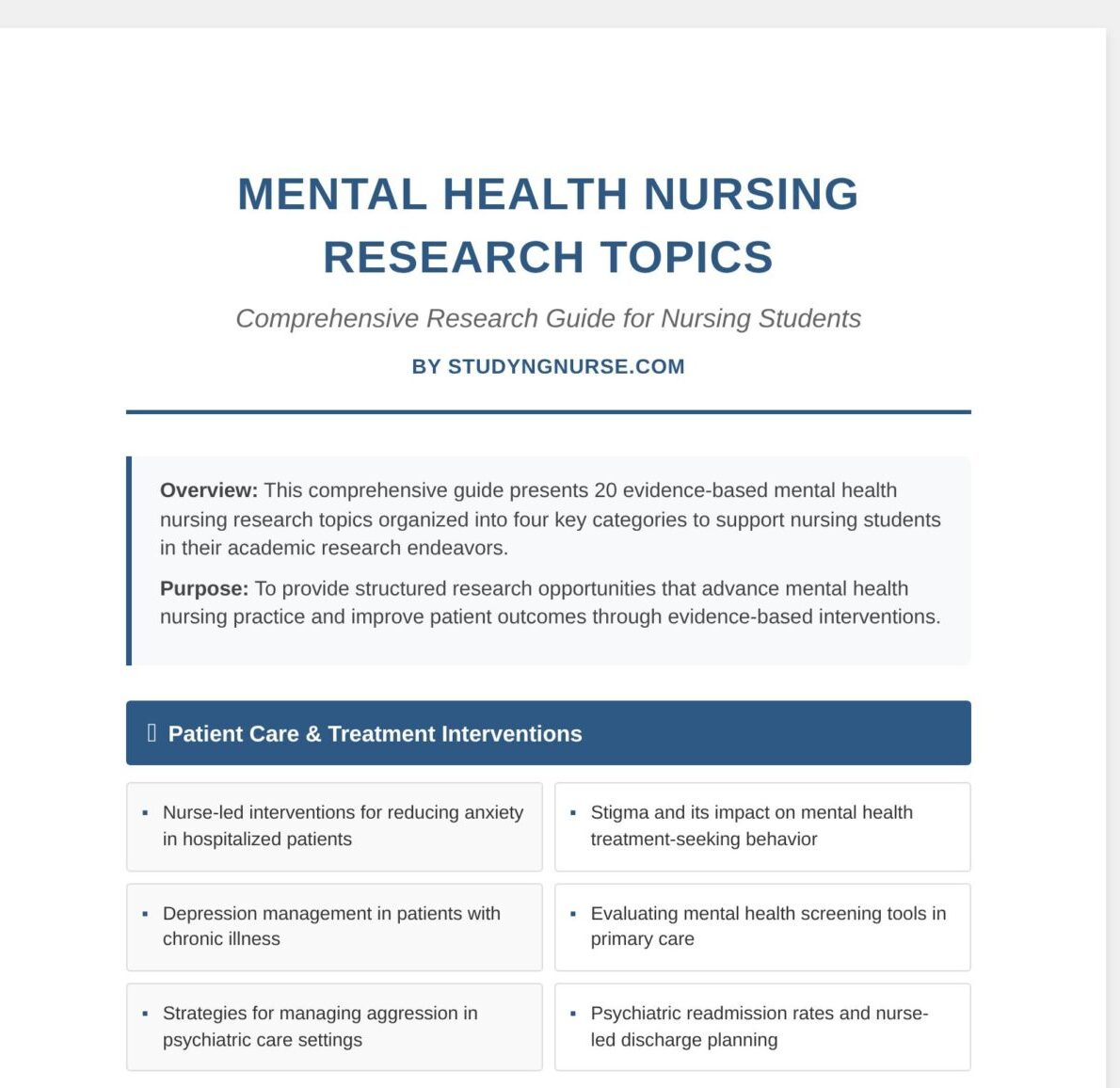
    1. Nurse-led interventions for reducing anxiety in hospitalized patients
    2. Stigma and its impact on mental health treatment-seeking behavior
    3. Effectiveness of mindfulness practices among psychiatric nurses
    4. Coping strategies among caregivers of patients with schizophrenia
    5. Post-pandemic mental health challenges in nurses
    6. Suicide prevention protocols in emergency nursing settings
    7. Impact of shift work on nurses’ mental well-being
    8. The role of community nursing in mental health promotion
    9. Depression management in patients with chronic illness
    10. Peer support interventions for adolescent mental health
    11. Telepsychiatry and nursing roles in remote care delivery
    12. The impact of nurse burnout on patient care in mental health units
    13. Cultural competence in mental health nursing practice
    14. Strategies for managing aggression in psychiatric care settings
    15. Evaluating mental health screening tools in primary care
    16. Role of school nurses in adolescent mental health awareness
    17. Psychiatric readmission rates and nurse-led discharge planning
    18. Evidence-based interventions for PTSD in military veterans
    19. Effect of trauma-informed care training on nursing outcomes
    20. Mental health literacy among student nurses

    2. Evidence-Based Practice (EBP) Capstone Projects: Topics

    1. Using EBP to reduce catheter-associated urinary tract infections
    2. Implementing fall prevention protocols in acute care settings
    3. Nurse-driven hand hygiene programs to prevent HAIs
    4. Pain assessment accuracy using validated EBP tools
    5. EBP strategies for preventing medication administration errors
    6. Early mobility protocols for ICU patients
    7. Standardizing SBAR communication in nursing handoffs
    8. Reducing pressure injuries through evidence-based skin care
    9. Application of EBP in managing diabetic foot ulcers
    10. Evaluating nurse-led EBP training programs
    11. EBP approaches for improving end-of-life care
    12. Enhancing maternal care through evidence-based interventions
    13. Reducing hospital readmissions using EBP discharge planning
    14. Evidence-based interventions for pediatric asthma management
    15. Improving patient satisfaction with evidence-based nurse rounding
    16. EBP in post-operative wound care management
    17. Effectiveness of hourly rounding on patient safety
    18. Implementing EBP to manage chemotherapy-related side effects
    19. Nurse-driven protocols for sepsis identification and response
    20. Evaluating outcomes of nurse-led smoking cessation programs

    3. Patient Care and Safety Nursing Research Topics

    1. Strategies for preventing patient falls in long-term care
    2. Safe medication administration protocols for student nurses
    3. Patient safety culture and nurse engagement
    4. Early warning systems in acute patient deterioration
    5. Role of nurse staffing in patient safety outcomes
    6. Hospital-acquired infections and nurse-led prevention strategies
    7. Improving patient handover communication between shifts
    8. The impact of safe sleep education in neonatal care
    9. Managing alarm fatigue in high-acuity settings
    10. Best practices in blood transfusion safety
    11. Nursing interventions to prevent post-operative complications
    12. Safe patient handling and mobility training for nurses
    13. Standardizing care to prevent surgical site infections
    14. Nurse role in reducing medication reconciliation errors
    15. Enhancing safety in pediatric medication dosing
    16. Real-time documentation and its impact on patient safety
    17. Nurse-led safety rounds in hospital wards
    18. Using barcode scanning to improve medication safety
    19. Evaluating patient safety policies in outpatient settings
    20. Family involvement in patient safety initiatives

    4. Chronic Disease Management Nursing Research Topics

    1. Nurse-led care coordination in heart failure management
    2. Diabetes education and self-care interventions by nurses
    3. The role of nurses in COPD patient education
    4. Chronic pain management strategies in primary care
    5. Lifestyle modification programs for hypertension patients
    6. Adherence to asthma care plans among pediatric patients
    7. Nursing interventions for chronic kidney disease management
    8. Addressing depression in patients with chronic conditions
    9. Reducing hospital admissions in chronic illness through home visits
    10. Nurse coaching for weight loss in obese patients
    11. Palliative care for patients with late-stage chronic illnesses
    12. Monitoring and managing long-term effects of stroke
    13. Chronic disease prevention through community-based nursing
    14. Effectiveness of telemonitoring in chronic care management
    15. Integrating behavioral health in chronic illness care
    16. Medication adherence support programs for HIV-positive patients
    17. Nursing role in managing inflammatory bowel disease
    18. Care planning for patients with multiple chronic illnesses
    19. Reducing diabetic complications through nurse-led follow-ups
    20. Chronic disease self-management and digital tools in nursing

    5. Mental Health Nursing Research Topics

    1. Nurses’ role in managing bipolar disorder
    2. Psychiatric nursing and therapeutic communication strategies
    3. Ethical dilemmas in involuntary psychiatric treatment
    4. De-escalation techniques used by mental health nurses
    5. Nurse-patient relationship in psychiatric rehabilitation
    6. Managing borderline personality disorder in acute units
    7. Nurse burnout in psychiatric hospitals: Causes and solutions
    8. The role of mental health nurses in suicide prevention
    9. Supporting family caregivers in schizophrenia management
    10. Substance use disorder: Nursing care approaches
    11. Role of psychiatric nurses in forensic mental health settings
    12. Therapeutic activities for patients with mood disorders
    13. Evaluation of nurse-led group therapy outcomes
    14. Impact of trauma-informed care in psychiatric nursing
    15. Patient perceptions of safety in mental health units
    16. Managing sleep disorders in psychiatric patients
    17. The use of music therapy in mental health nursing
    18. Nurses’ attitudes toward patients with eating disorders
    19. Effects of staffing ratios on psychiatric patient outcomes
    20. Telehealth psychiatric nursing and access to care

    6. Geriatric Care Nursing Research Topics

    1. Preventing falls in elderly patients through nursing education
    2. Nutritional interventions for undernourished geriatric patients
    3. Nurse-led cognitive assessments in dementia screening
    4. Depression in elderly patients: Nursing intervention strategies
    5. Managing polypharmacy in older adults
    6. Promoting mobility and independence in geriatric care
    7. End-of-life decision-making in nursing homes
    8. Prevention of pressure ulcers in elderly patients
    9. Pain management in non-verbal elderly patients
    10. Reducing hospital readmission rates in geriatric patients
    11. Evaluating geriatric care transitions from hospital to home
    12. Use of restraints and ethical implications in elder care
    13. Elder abuse screening and nurse reporting responsibilities
    14. Managing urinary incontinence in long-term care settings
    15. Delirium prevention in hospitalized elderly patients
    16. Home-based nursing care for aging populations
    17. Nurse-led interventions for reducing social isolation in seniors
    18. The role of geriatric nurses in Alzheimer’s care
    19. Vaccination compliance in elderly populations
    20. Telemonitoring of chronic diseases in elderly patients

    7. Nursing Education and Leadership Nursing Research Topics

    1. Leadership styles and their effect on nurse performance
    2. Simulation-based learning in nursing education
    3. Evaluating the impact of mentorship on new graduate nurses
    4. Nurse educator strategies for online learning engagement
    5. Emotional intelligence in nurse leadership
    6. Incorporating EBP in undergraduate nursing curricula
    7. The effect of leadership on nurse retention and morale
    8. Peer-to-peer learning models in nursing education
    9. Leadership training for nurse managers
    10. Role modeling and professionalism in clinical instruction
    11. Managing generational diversity in nursing teams
    12. Nurse leadership in policy advocacy
    13. Evaluating the effectiveness of clinical preceptorships
    14. The role of transformational leadership in nursing innovation
    15. Cultural competence education in nursing schools
    16. Measuring the outcomes of leadership development programs
    17. Burnout prevention through supportive leadership structures
    18. Reflective journaling as a tool in nursing education
    19. Faculty satisfaction in nursing education institutions
    20. Interprofessional collaboration training for nursing students

    8. Technology in Nursing Nursing Research Topics

    1. Electronic health records and nursing documentation accuracy
    2. Nurse training for telehealth platforms
    3. Effect of mobile apps on patient self-care
    4. AI integration in nursing workflows
    5. Nursing implications of wearable health monitoring devices
    6. Use of barcode medication administration systems
    7. Simulation technology in clinical nursing education
    8. Nurse perspectives on robotic-assisted surgery
    9. Technology and patient privacy in digital health records
    10. Mobile technology to improve medication adherence
    11. Virtual reality in pain distraction for pediatric patients
    12. E-learning in nursing continuing education
    13. Use of electronic alerts in fall prevention
    14. Smart bed technology and patient mobility tracking
    15. Digital triage systems and emergency nursing efficiency
    16. Implementing tele-ICU models and nursing outcomes
    17. The impact of technology fatigue in nurses
    18. Patient portals and nurse-patient communication
    19. Nurse satisfaction with remote patient monitoring systems
    20. Challenges in integrating health informatics in rural settings

    9. Ethical Considerations in Nursing Research Topics

    1. Ethical decision-making in end-of-life care
    2. Patient autonomy vs. medical necessity: Nurse perspectives
    3. Handling informed consent in vulnerable populations
    4. Confidentiality issues in adolescent care
    5. Ethical challenges in organ donation and transplantation
    6. Nursing ethics in resource-limited settings
    7. Professional boundaries in nurse-patient relationships
    8. Refusal of care: Legal and ethical implications
    9. Cultural sensitivity in ethical nursing practice
    10. Allocation of scarce resources during pandemics
    11. Nurses’ role in reporting abuse or neglect
    12. Moral distress among nurses in palliative care
    13. Ethical implications of nurse understaffing
    14. Ethics of using physical restraints in dementia care
    15. Addressing discrimination in nursing practice
    16. Conscientious objection in reproductive healthcare
    17. Use of AI in decision-making: Ethical concerns in nursing
    18. Truth-telling and transparency in pediatric oncology
    19. Navigating family dynamics in medical decision-making
    20. Legal responsibility and nursing errors

    Types of Nursing Research Questions

    In the nursing profession, research questions are the foundation for building strong and focused inquiries that guide the entire research process. Formulating the right kind of question is crucial for conducting effective nursing research—whether you’re exploring patient experiences, evaluating clinical outcomes, or comparing treatment options. The type of question you ask determines your research design, methods, and the kind of data you’ll collect.

    Nursing research questions typically fall into three broad categories: qualitative, quantitative, and PICO-formatted clinical questions. Each type serves a distinct purpose and is aligned with different types of evidence and inquiry.

    Qualitative Nursing Research Questions

    Qualitative nursing research is a method of scientific inquiry that focuses on exploring the subjective experiences, perspectives, and emotions of individuals within the healthcare system. Unlike quantitative research, which seeks to measure variables and outcomes using numerical data, qualitative research aims to capture the depth and complexity of human experiences through interviews, focus groups, observations, and thematic analysis. It provides nurses with a deeper understanding of the contextual and emotional realities that patients and healthcare providers encounter in various care settings.

    This type of research is particularly valuable when the goal is to understand the “how” and “why” behind certain behaviors, feelings, or care practices—information that cannot be easily quantified. It aligns well with nursing’s holistic care model, which considers not only the physical aspects of health but also the psychological, emotional, social, and cultural factors affecting patient outcomes.

    Applications of Qualitative Research Across Nursing Fields

    1. Mental Health Nursing
      Qualitative methods help uncover how individuals cope with anxiety, depression, schizophrenia, or PTSD. Understanding their narratives can guide more empathetic, person-centered mental health interventions.
      Example: “What are the lived experiences of young adults managing anxiety without medication?”
    2. Geriatric Nursing
      Aging brings a range of physical, emotional, and cognitive changes. Qualitative research explores how elderly patients experience aging, chronic illness, social isolation, or long-term institutional care.
      Example: “How do older adults in assisted living perceive their autonomy and dignity?”
    3. Palliative and End-of-Life Care
      This field benefits greatly from qualitative insights into the emotional and ethical challenges surrounding death, grief, and family involvement in care.
      Example: “What are the experiences of hospice nurses supporting families through bereavement?”
    4. Pediatric Nursing
      Nurses often work with families and children facing serious health conditions. Qualitative studies can explore how caregivers and young patients experience hospitalization or treatment.
      Example: “How do parents of children with cancer perceive their role during hospital stays?”
    5. Nursing Education and Leadership
      Nurse educators use qualitative research to evaluate student experiences, learning challenges, and faculty-student relationships, while leaders explore team dynamics and organizational culture.
      Example: “What are the perceptions of student nurses regarding simulation-based training?”
    6. Community and Public Health Nursing
      Understanding cultural beliefs, barriers to care, or perceptions of health promotion is essential for effective outreach in diverse populations.
      Example: “How do migrant farmworkers view access to preventive health services in rural areas?”

    Practical Examples of Qualitative Nursing Research Questions

    Here are qualitative research questions that are practical, patient-centered, and applicable to everyday nursing practice:

    1. How do elderly patients in long-term care facilities perceive their quality of life?
    2. What are the lived experiences of nurses providing care in pediatric oncology units?
    3. How do patients with chronic pain describe the effectiveness of non-pharmacological nursing interventions?
    4. What emotional and ethical challenges do nurses face when providing end-of-life care?
    5. How do new graduate nurses experience the transition from nursing school to clinical practice?
    6. How do ICU nurses cope with emotional burnout during prolonged patient care?
    7. What are the experiences of patients navigating telehealth nursing services in rural settings?
    8. How do caregivers of patients with Alzheimer’s disease manage emotional strain and decision-making?
    9. What do patients with diabetes think about nurse-led education programs on lifestyle change?
    10. How do nurse managers perceive the impact of shared governance on decision-making?

    Quantitative Nursing Research Topics and Questions

    Quantitative nursing research focuses on the measurement and analysis of numerical data to evaluate the effectiveness, efficiency, and outcomes of nursing care. It is a foundational element of evidence-based practice (EBP), enabling nurses to make informed clinical decisions based on statistically validated evidence. This approach often involves experimental, quasi-experimental, or observational study designs and utilizes tools such as surveys, laboratory results, electronic health records, and clinical trials.

    Quantitative research is instrumental in assessing interventions such as medication administration, infection control protocols, patient monitoring systems, and nurse education strategies. It helps determine cause-and-effect relationships, make comparisons between groups, and identify correlations between variables—thus informing best practices and healthcare policy.

    Applications of Quantitative Research in Nursing Fields

    1. Patient Care and Safety
      Quantitative research helps determine how specific interventions impact patient outcomes like hospital-acquired infections, fall rates, readmissions, or medication errors.
      Example Topic: “Evaluating the effect of nurse-led discharge education on 30-day hospital readmission rates.”
    2. Chronic Disease Management
      Studies assess how lifestyle interventions, education, or follow-up care influence health indicators in patients with diabetes, hypertension, or heart failure.
      Example Topic: “Impact of telemonitoring on blood pressure control in hypertensive patients.”
    3. Nursing Education
      Quantitative methods measure learning outcomes from training programs, such as simulation labs or online modules.
      Example Topic: “Assessing the effectiveness of flipped classrooms in pharmacology education for nursing students.”
    4. Mental Health Nursing
      Research can evaluate the efficacy of cognitive-behavioral interventions, medication adherence programs, or therapy schedules in patients with anxiety or depression.
      Example Topic: “The impact of nurse-led mindfulness sessions on anxiety levels in adolescent inpatients.”
    5. Infection Control and Prevention
      Studies measure the outcomes of specific hygiene protocols or PPE training on infection transmission rates.
      Example Topic: “Effect of hand hygiene compliance training on nosocomial infection rates in ICU settings.”
    6. Staffing and Workforce Management
      Quantitative research can explore how staffing levels, shift rotations, and workload affect job satisfaction, burnout, and care quality.
      Example Topic: “Relationship between nurse-to-patient ratios and nurse burnout in surgical units.”

    Examples of Quantitative Research Questions

    Here are quantitative nursing research questions that reflect current healthcare challenges and align with high-quality nursing research topics for academic or capstone projects:

    1. What is the effect of hourly nurse rounding on patient fall rates in acute care units?
    2. Does the use of electronic medication administration records reduce medication errors in nursing practice?
    3. What is the relationship between nurse-to-patient ratios and patient satisfaction in emergency nursing?
    4. How effective are nurse-led smoking cessation programs in reducing tobacco use among adults?
    5. Does simulation training improve critical thinking skills among nursing students?
    6. What is the impact of early ambulation protocols on post-operative recovery time in orthopedic patients?
    7. How does the use of high-fidelity simulation affect clinical performance in nursing students?
    8. What is the effectiveness of intravenous fluid warming in reducing perioperative hypothermia?
    9. Does structured discharge education decrease 30-day readmission rates among heart failure patients?
    10. What is the association between shift length and medication error rates among nurses?
    11. How does patient-controlled analgesia compare with nurse-administered pain management in post-surgical care?
    12. Does nurse-led diabetes education improve HbA1c levels in newly diagnosed patients?
    13. What is the effect of telehealth nursing on medication adherence in rural elderly populations?
    14. How does the use of electronic charting impact documentation accuracy in long-term care facilities?
    15. What is the effect of aromatherapy on postoperative nausea in cesarean section patients?
    16. How does a falls prevention training program affect incident rates in geriatric wards?
    17. What is the relationship between continuing education hours and patient care outcomes in community health nursing?
    18. Does bilingual nurse communication improve patient satisfaction scores in multicultural urban hospitals?
    19. What is the effectiveness of nurse-led prenatal education on breastfeeding initiation rates?
    20. How does peer mentoring influence the retention rates of new graduate nurses during their first year?

    Developing a PICO Question for Nursing Research

    The PICO framework is one of the most effective tools used in nursing research and evidence-based practice (EBP) for developing well-structured, answerable clinical questions. It enables nurses, educators, and students to translate broad health concerns into focused research inquiries. PICO helps to define the key components of a research question so that relevant scientific evidence can be identified quickly and effectively through literature searches and database reviews.

    What Does PICO Stand For?

    • P – Population or Patient Problem:
      Who is the patient or what is the population of interest? This could include age group, gender, medical condition, or specific healthcare setting.
      Example: Older adults with dementia; pediatric patients with asthma; ICU patients.
    • I – Intervention:
      What is the main intervention you want to study? This can be a treatment, educational program, diagnostic test, or preventive strategy.
      Example: Nurse-led education, turning schedules, digital reminders, mindfulness training.
    • C – Comparison:
      Is there an alternative to compare with the intervention? This could be a different treatment, placebo, or standard care.
      Example: Physician-led education, no intervention, usual care.
    • O – Outcome:
      What are you trying to measure or improve? Outcomes could include pain relief, infection rates, patient satisfaction, or clinical indicators like HbA1c levels or blood pressure.
      Example: Reduced hospital readmissions, improved medication adherence, enhanced quality of life.

    Why PICO Is Important in Nursing Research

    Using PICO helps clarify your nursing research question, making it easier to:

    • Perform targeted literature reviews using databases such as CINAHL, PubMed, or Cochrane Library.
    • Identify evidence-based resources relevant to clinical or academic decision-making.
    • Improve the quality of nursing research papers, capstone projects, and EBP assignments.
    • Ensure that the research directly informs and improves nursing practice and patient outcomes.
    • Foster a systematic approach for both novice and experienced nurse researchers in developing rigorous studies.

    Step-by-Step Example of a PICO Question

    Let’s construct a full PICO question step by step:

    • P (Population): Adult patients with type 2 diabetes
    • I (Intervention): Nurse-led diabetes self-management education
    • C (Comparison): Standard physician-led education
    • O (Outcome): Improved glycemic control (measured by HbA1c)

    PICO Question:
    In adult patients with type 2 diabetes, how does nurse-led self-management education compare to physician-led education in improving glycemic control?

    More Sample PICO Questions in Nursing Practice

    Here are additional well-structured PICO questions across different areas of nursing research to illustrate how the framework is used in real-world applications:

    1. Mental Health Nursing
      P: Adults diagnosed with generalized anxiety disorder
      I: Cognitive behavioral therapy provided by nurses
      C: Standard medication management
      O: Reduced anxiety symptoms
      In adults with generalized anxiety disorder, does nurse-led cognitive behavioral therapy reduce anxiety symptoms compared to medication alone?
    2. Geriatric Care
      P: Elderly patients in nursing homes
      I: Scheduled hourly turning
      C: No turning protocol
      O: Reduction in pressure ulcer incidence
      In elderly patients, does scheduled hourly turning reduce pressure ulcer development compared to no scheduled turning?
    3. Pediatric Nursing
      P: Children with asthma
      I: Use of digital inhaler reminder devices
      C: Standard care without reminders
      O: Improved medication adherence
      In pediatric asthma patients, do digital inhaler reminders improve medication adherence compared to standard care?
    4. Nursing Staff Well-being
      P: Nurses working rotating night shifts
      I: Mindfulness-based stress reduction programs
      C: No intervention
      O: Lower perceived stress levels
      Among nurses working night shifts, does mindfulness training reduce perceived stress compared to no intervention?
    5. Patient Safety
      P: Patients admitted to surgical units
      I: Implementation of a fall prevention checklist
      C: Standard fall risk documentation
      O: Reduction in patient falls
      In surgical patients, does the use of a structured fall prevention checklist reduce fall incidents compared to standard documentation?
    Nursing Research Topics
    PICO Framework

    Examples of Best Nursing Research Topics

    Nursing research topics often emerge from everyday clinical challenges, evolving patient needs, or advancements in care. By exploring specific areas like pediatric care, mental health, and chronic disease management, nurses can contribute to evidence-based improvements in patient outcomes. Below are practical and high-impact research topic examples with brief explanations to guide selection and development.

    Pediatric Nursing Research Topics

    1. The role of family-centered care in improving pediatric patient outcomes
    2. Effectiveness of distraction techniques during pediatric immunizations
    3. The impact of nurse-led asthma education on pediatric hospital readmission rates
    4. Addressing childhood obesity through school-based nursing interventions
    5. Evaluation of pain management strategies in post-operative pediatric patients
    6. Parental involvement and its effects on adherence to pediatric chronic care plans
    7. The impact of virtual reality in reducing procedural anxiety among children
    8. Nurse communication strategies for children with developmental disorders
    9. Pediatric palliative care: Emotional support needs of terminally ill children
    10. Best practices for nutritional screening in pediatric outpatient nursing care
    11. Infection control compliance in pediatric hospital units
    12. Early intervention programs for at-risk infants: The nurse’s role
    13. Evaluating telehealth nursing support for children with epilepsy
    14. Assessing the effectiveness of play therapy in pediatric oncology units
    15. The role of school nurses in managing chronic conditions like type 1 diabetes
    16. Use of mobile health apps for pediatric medication adherence
    17. Outcomes of nurse-led breastfeeding education programs in newborn care
    18. Supporting siblings of hospitalized pediatric patients: A nursing perspective
    19. Pediatric nurse experiences in managing child abuse cases
    20. Cultural sensitivity in pediatric nursing: Bridging gaps in multicultural care

    Mental Health Nursing Research Topics

    1. The role of psychiatric nurses in suicide risk assessment in emergency settings
    2. Effectiveness of mindfulness training for nurses experiencing burnout
    3. Exploring stigma and its impact on mental health treatment-seeking behavior
    4. The therapeutic alliance in nurse-patient relationships in psychiatric care
    5. Evaluating the use of trauma-informed care models in mental health nursing
    6. Nursing interventions to reduce self-harm in adolescent psychiatric units
    7. Effectiveness of group therapy led by nurses in managing depression
    8. Strategies for managing aggression in acute psychiatric settings
    9. The impact of sleep hygiene education in inpatient psychiatric care
    10. Role of mental health nurses in community-based psychiatric rehabilitation
    11. Evaluating telepsychiatry in delivering nursing care to rural mental health patients
    12. Coping strategies among nurses caring for patients with schizophrenia
    13. Substance abuse management protocols: A nursing research perspective
    14. Supporting patients with dual diagnoses: Integrating mental health and addiction care
    15. Best nursing practices for managing anxiety disorders in outpatient clinics
    16. The effect of nurse-led psychoeducation on medication adherence in bipolar disorder
    17. Patient experiences of dignity and autonomy in mental health institutions
    18. Psychiatric nurse training in handling culturally diverse mental health presentations
    19. The impact of structured debriefing on nurses’ mental health after traumatic incidents
    20. Nursing ethics in the use of restraint and seclusion in psychiatric care

    Chronic Disease Management in Nursing

    1. The role of nurse practitioners in managing type 2 diabetes in primary care
    2. Nurse-led interventions for hypertension control in community health settings
    3. Evaluating the effectiveness of telemonitoring for patients with heart failure
    4. Self-management support provided by nurses for patients with COPD
    5. Nursing education strategies for improving medication adherence in chronic illness
    6. PICO research question on chronic kidney disease and lifestyle modification
    7. Nurse-coordinated care models for managing multiple chronic conditions
    8. Behavioral change interventions led by nurses for obesity management
    9. Impact of motivational interviewing on chronic disease outcomes in nursing
    10. Integrating palliative care principles in the nursing management of advanced chronic illnesses
    11. Using mobile apps for chronic disease self-care: A nursing perspective
    12. The impact of community-based nursing on reducing hospital readmissions
    13. Best nursing practices for managing comorbid depression in chronic illness
    14. Developing nurse-led clinics for rheumatoid arthritis management
    15. Assessing the role of nurses in diabetes foot care education and prevention
    16. Use of wearable health tech in chronic disease monitoring: Nurse experiences
    17. Chronic pain management in patients with fibromyalgia: A nursing research focus
    18. Patient-centered care plans for long-term chronic disease control: Nurse strategies
    19. Nurse-patient communication and its effect on outcomes in chronic illness
    20. Evaluating nurse-led group sessions for chronic disease self-management

    Pain Management Strategies in Nursing Care

    1. The effectiveness of nurse-administered relaxation techniques in post-op pain relief
    2. Exploring the role of nurses in assessing and documenting chronic pain
    3. Non-pharmacological pain management interventions led by nurses in oncology
    4. PICO question example: Ice therapy vs. heat application for acute injury pain
    5. Nurse-led education on opioid use and misuse in chronic pain patients
    6. Pain management strategies for elderly patients with cognitive decline
    7. Evaluating the use of pain assessment tools in pediatric nursing care
    8. Role of cultural competence in nursing pain management practices
    9. Use of aromatherapy and massage therapy by nurses in palliative care
    10. Strategies for managing breakthrough pain in cancer patients: A nursing study
    11. The impact of nurse-led pain education on patient satisfaction in surgical units
    12. Interdisciplinary collaboration for pain control: The nurse’s role in the team
    13. Ethical challenges in administering opioids: A nursing ethics perspective
    14. Comparing PCA (patient-controlled analgesia) to nurse-administered analgesia
    15. Evaluating music therapy as a pain reduction tool in post-operative recovery
    16. Assessment and intervention protocols for pain in trauma care nursing
    17. The role of simulation training in improving nurse pain management competencies
    18. Effectiveness of cognitive behavioral therapy techniques used by nurses
    19. Post-surgical pain assessment: Differences between nurse and physician practices
    20. Nursing strategies for managing phantom limb pain in amputee patients

    Research Process in Nursing

    Steps Involved in Conducting Nursing Research

    The nursing research process is typically divided into several key stages, each critical for generating valid, reliable, and applicable results:

    1. Identifying a Research Problem or Question

    Start by recognizing a clinical problem, gap in care, or an area needing improvement. Research questions can be framed using the PICO format (Population, Intervention, Comparison, Outcome), especially in evidence-based practice (EBP) projects.

    Example: In adult ICU patients (P), does implementing hourly rounding (I) reduce fall rates (O) compared to traditional rounding schedules (C)?

    2. Conducting a Literature Review

    Review existing scholarly articles, systematic reviews, and nursing journals to understand what has already been studied. This step helps refine your research topic and identify gaps in knowledge.

    3. Formulating the Research Hypothesis or Purpose Statement

    In quantitative research, you’ll develop a testable hypothesis. In qualitative research, you’ll formulate guiding questions focused on experiences or perceptions.

    4. Choosing a Research Design

    Select the appropriate design based on your research question:

    • Qualitative (e.g., phenomenology, ethnography) for exploring lived experiences.
    • Quantitative (e.g., experimental, descriptive, correlational) for measuring outcomes and analyzing variables.

    5. Ethical Approval and Informed Consent

    All research involving human participants must go through ethical review. Nursing researchers must ensure compliance with institutional review boards (IRBs) and obtain informed consent from participants.

    6. Data Collection

    Depending on the methodology, data collection may include interviews, surveys, chart reviews, or biometric data. Nursing students often start with observational data or retrospective chart analyses.

    7. Data Analysis

    Use statistical tools for quantitative data (e.g., SPSS, R) or coding frameworks for qualitative data (e.g., NVivo). The goal is to identify trends, themes, or correlations.

    8. Interpreting Results

    Compare findings with existing literature and assess whether they support your hypothesis or align with previous research. Consider limitations, bias, and generalizability.

    9. Dissemination of Findings

    Share your results through nursing research papers, journal articles, academic presentations, or clinical policy updates. Research dissemination is crucial for practice improvement and academic growth.

    Writing a Nursing Research Paper

    Writing a high-quality nursing research paper involves more than presenting findings. It requires critical thinking, scholarly formatting, and clarity in presenting arguments and evidence.

    Structure of a Nursing Research Paper:

    1. Title and Abstract – Provide a concise, informative title with relevant keywords (e.g., “Best Practices in Geriatric Nursing Care”) and a 150–250-word abstract summarizing the study.
    2. Introduction – Introduce the research problem, its significance, and background based on literature.
    3. Literature Review – Present a synthesized review of relevant nursing research studies.
    4. Methodology – Detail the research design, sample, data collection tools, and ethical considerations.
    5. Results – Present your findings using charts, graphs, or thematic narratives.
    6. Discussion – Interpret the results, discuss implications for nursing practice, and compare with previous studies.
    7. Conclusion and Recommendations – Summarize key findings and suggest future research directions.
    8. References – Use APA 7th edition format to cite scholarly sources.
    Nursing Research Topics
    Nursing Research Paper Structure

    Best Practices in Nursing Research

    Adhering to best practices ensures that nursing research contributes to high-quality patient care and professional integrity. Here are key guidelines:

    1. Maintain Rigor and Validity

    Use valid measurement tools, appropriate sample sizes, and standardized protocols. Rigor ensures your findings are reliable and reproducible.

    2. Follow Ethical Standards

    Obtain IRB approval, respect participant confidentiality, and ensure transparency in data handling. Ethical breaches can invalidate your study.

    3. Ensure Clinical Relevance

    Choose a nursing research topic that addresses real-world clinical problems or contributes to nursing education. Topics aligned with current healthcare priorities (e.g., infection control, mental health nursing) are especially impactful.

    4. Use Evidence-Based Frameworks

    Incorporate tools like PICO, SPICE, or FINER to structure research questions and guide your design.

    5. Collaborate Across Disciplines

    Engage with multidisciplinary teams including physicians, therapists, and pharmacists to enrich your research perspective and scope.

    6. Publish and Present Findings

    Contribute to the body of nursing knowledge by submitting your work to conferences, academic journals, or evidence-based nursing databases. Sharing findings helps inform practice, policy, and education.

    Conclusion

    In conclusion, nursing research is a vital component of advancing nursing practice, improving patient outcomes, and fostering innovation in healthcare. By following a structured research process—from identifying a clinical question to disseminating findings—nurses and students can contribute valuable evidence to the profession. Whether exploring qualitative experiences or analyzing quantitative data, nursing research equips professionals with the tools needed to make informed, ethical, and patient-centered decisions. Incorporating best practices and writing clearly structured nursing research papers ensures that insights gained through research translate into real-world improvements in care delivery, education, and leadership.

    Frequently Asked Questions

    What is a good PICO question for nursing examples?

    A good PICO question in nursing clearly defines the patient population, intervention, comparison, and outcome to address a specific clinical issue.
    Example:
    P: Hospitalized elderly patients
    I: Use of hourly rounding by nurses
    C: Standard care without scheduled rounding
    O: Reduction in fall incidents
    PICO Question: In hospitalized elderly patients, how does hourly nurse rounding compared to standard care affect fall prevention outcomes?

    Which topic is best for research in nursing?

    The best nursing research topics are those that address current clinical challenges, improve patient outcomes, and are feasible to study. Some high-impact areas include:

    • Pain management strategies
    • Infection control practices
    • Mental health nursing interventions
    • Patient safety and fall prevention
    • Chronic disease self-management education
      Topics aligned with evidence-based practice and healthcare quality improvement are especially valuable in today’s nursing landscape.

    What are examples of clinical research questions in nursing?

    Clinical research questions in nursing aim to explore interventions, outcomes, or patient experiences to inform best practices. Examples include:

    • Does hand hygiene training reduce infection rates in ICU units?
    • How effective is cognitive-behavioral therapy in reducing anxiety among adolescent patients?
    • What is the impact of nurse-to-patient ratios on patient satisfaction in emergency departments?
    • Does preoperative patient education reduce anxiety before surgery?

    What type of nursing research questions specifically is the mnemonic PICOT used to formulate?

    The PICOT mnemonic (Population, Intervention, Comparison, Outcome, and Time) is specifically used to formulate quantitative nursing research questions, especially within evidence-based practice. It is most helpful when evaluating clinical interventions, comparing treatments, or assessing patient outcomes. PICOT questions guide systematic literature reviews and help frame hypotheses for studies that require measurable, statistically analyzable data.

  • Nurse Short-Term Goals: SMART Goals Examples for Nursing Students

    Nurse Short-Term Goals: SMART Goals Examples for Nursing Students

    Nurse Short-Term Goals

    Goal setting is essential for every nurse aiming to grow in the nursing profession. Whether you’re a nursing student starting your journey or an experienced nurse, setting SMART nursing goals can help guide your career path and support both personal and professional growth.

    Short-term goals in nursing, like completing a certification or improving a specific nursing skill, offer quick wins that support long-term career success. In contrast, long-term goals such as earning an advanced nursing degree or entering a nursing specialty help nurses build a strong foundation for leadership and advanced practice.

    This article explores how setting nursing career goals—both short- and long-term—improves patient care, supports career advancement, and strengthens your role within the nursing community. You’ll find SMART goal examples and practical tips to help you achieve your nursing career goals and advance in your career.

    SMART Nurse Short-Term Goals
    SMART Nurse Short-Term Goals

    Nursing Short term Goals and Their Impact on Career Development

    What Are Nursing Goals?

    Nursing goals encompass patient care outcomes (e.g. reducing pain, improving mobility, preventing pressure ulcers), professional development aims (such as obtaining nursing certification, mastering clinical skills, or completing a bachelor of science in nursing), and career advancement objectives (like entering a nursing specialty, earning an advanced nursing degree, or becoming a nurse leader). These goals help nurses set goals that bring structure and clarity to their career as a nurse, guiding everyday decisions and actions 

    When intelligently framed, nursing goals give your professional nursing career direction and purpose. They support clinical reasoning and a strong care plan that aligns with evidence-based nursing, directly improving patient care outcomes and ensuring high-quality, efficient care delivery

    Why Setting Nursing Career Goals Is Important

    Clearly planning your nursing career path—through both short‑term goals and long‑term career goals—empowers you to take control of your career development and professional journey. Research shows that goal orientation fosters resilience and grit, helping nurses commit to continuous growth despite challenges

    Professional goals like attending workshops, publishing research, or mentoring new nurses accelerate professional development, expand nursing skills, and support career advancement, increasing job satisfaction and long-term fulfillment 

    Meeting goals leads to tangible progress in clinical competence, stronger engagement in patient care, and a deeper sense of purpose—especially important in today’s complexities of the healthcare environment.

    Short-Term vs. Long-Term Nursing Goals

    Short-term nursing goals typically span hours to a few months. They might include managing a patient’s fever within 24 hours, mastering IV insertion, or completing a wound-care certification—SMART goals that are specific, measurable, and achievable. For example: “By end of week, the patient will demonstrate safe mobility transfers with minimal assistance.”

    In contrast, long-term goals take longer—several months to years—such as earning an MSN or DNP, entering a new nursing specialty, or moving into leadership roles. These are long-term career goals that align with broader aspirations and support sustained professional growth.

    Using the stepping stone approach, short-term goals act as building blocks toward long-term success. Completing certification or developing a specific skill supports eventual goals like becoming a nurse educator or clinical specialist, helping you advance your career, improve patient outcomes, and achieve lasting impact across the nursing profession.

    Nurse Short-Term Goals vs long-term goals: SMART Goals Examples for Nursing Students
    Nurse Short-Term Goals vs long-term goals: SMART Goals Examples for Nursing Students

    The SMART Framework for Setting Nursing Goals

    SMART Nursing Goals

    The SMART framework—standing for Specific, Measurable, Achievable, Relevant, and Time‑bound—is essential for setting nursing career goals. It transforms broad aspirations into precise SMART nursing goals, fostering professional nursing clarity and direction within the nursing profession. Research shows that structured goal-setting boosts professional development and supports both short-term and long-term career advancement in nursing .

    Benefits of SMART Goals in Nursing Career Advancement

    • Helps nurses enhance their professional development and nursing skills through specific, manageable steps.
    • Improves patient care outcomes by aligning actions with measurable standards.
    • Increases job satisfaction and sense of achievement when goals are measurable and progress is documented

    How to Apply SMART Goals in Professional Nursing

    Specific: Creating Well‑Defined Nursing Objectives

    Define exactly what you want to achieve: e.g., “Reduce medication errors by implementing a double-check system in high-risk medication administration.”

    This clarity helps nurses focus on precise tasks and set smart goals that align with unit quality standards Measurable: Setting Parameters to Track Goal Progress

    Use data-driven metrics: e.g., “Decrease medication errors by 15% in three months,” or “achieve a 95% hand hygiene compliance rate.”

    These measurable goals provide accountability and help nurses assess progress accurately Achievable: Setting Realistic Nursing Career Goals

    Ensure goals fit within resource constraints: e.g., “Complete ACLS certification within three months by studying two hours weekly.”

    This approach supports professional goals that are realistic for working nurses or nursing students balancing shifts Relevant: Aligning Goals with Career Aspirations

    Goals should connect to your career path and long-term plans: e.g., obtaining a nursing certification in pediatrics if you plan to specialize.

    Relevant goals ensure alignment with your professional growth and broader nursing career goals Time‑bound: Creating Deadlines for Fulfilling Goals

    Assign a clear deadline: e.g., “Achieve pediatric certification within six months,” or “Conduct weekly patient education sessions for six weeks.”

    Time-bound goals add urgency and enable tracking of short-term goal progress and long-term career success

    Examples of SMART Nursing Goals

    Patient Education Goal Example

    Goal: Conduct weekly diabetes education for at least 15 patients per session over six weeks, aiming for a 30% increase in knowledge retention via pre- and post-session quizzes.

    • Specific: Diabetes education sessions
    • Measurable: 15 patients + 30% knowledge gain
    • Achievable: Scheduled within usual shifts
    • Relevant: Improves patient care and self-management skills
    • Time‑bound: Six-week timeframe 

    Professional Certification Objective

    Goal: Obtain ACLS certification within three months by studying two hours weekly and attending a one-day training.

    • Specific: ACLS certification
    • Measurable: Exam passed
    • Achievable: Study time and training fit schedule
    • Relevant: Enhances emergency nursing skills and career development
    • Time‑bound: Three-month deadline 

    Clinical Skill Enhancement Target

    Goal: Improve IV insertion success to a 95% first-attempt rate over the next quarter through hands-on practice and feedback from preceptors.

    • Specific: IV catheter insertion skill
    • Measurable: 95% first-attempt accuracy
    • Achievable: Practice opportunities on shifts + mentorship
    • Relevant: Core nursing skill enhancing patient care
    • Time‑bound: Three-month period

    Examples of Professional Nursing Goals for Career Growth

    Smart Nursing Goals for Students

    Nursing degree advancement goals

    Obtain your bachelor of science in nursing (BSN) within four years while maintaining a GPA ≥ 3.5, supported by structured weekly study hours.

    Set a SMART goal: *“Complete BSN degree within four years by taking two courses per semester and attending study groups each week”—aligns with pursuing advanced nursing degree and career development 

    Clinical competency development

    Master core skills like IV insertion or medication safety: “Achieve 90% first‑attempt IV insertion success within three months through supervised practice and feedback.”

    Or: “Complete 100 pediatric clinical hours by end of final year, tracked and evaluated by preceptor.” These actionable goals support confidence and professional growth .

    Building communication skills in nursing

    Attend at least one workshop on therapeutic communication and apply techniques to daily patient interactions.

    SMART example: “Increase patient satisfaction scores by 10% in six months through improved empathetic communication, as measured by feedback surveys.” This enhances patient care and interpersonal practice 

    Networking and mentorship objectives

    Join nursing student associations and attend two conferences in one year.

    Set a goal: “Connect with at least five nursing professionals via LinkedIn and schedule three informational interviews by year-end.” Helps build career goals, access mentors, and align with career path aspirations 

    Professional Development Goals for Practicing Nurses

    Advanced certification pursuits

    SMART goal: “Earn wound care certification within six months by enrolling in online modules and treating at least three wound patients weekly.” Certification aligns with nursing specialty, improves patient care, and advances professional status ([turn0search4], [turn0search0]).

    Enhancing clinical assessment skills

    Set goal: “Perform daily head-to-toe assessments with 95% accuracy in documentation by quarter-end.”

    Or: “Reduce medication administration errors by 15% within six months via double‑check procedures.” These measurable improvements foster professional development and safe practice ([turn0search3], [turn0search4]).

    Leadership and management preparation

    SMART goal: “Complete a leadership development program within one year and apply for a charge nurse role within 18 months.”

    Also: “Mentor two new nurses within 12 months, meeting monthly to provide feedback and support.” These professional nursing goals prepare you for leadership roles and improve team outcomes ([turn0search0], [turn0search1], [turn0search6]).

    Technology proficiency development

    Set goal: “Become the unit’s ‘super‑user’ of electronic health record (EHR) software within three months by attending training and coaching peers.”

    Or: “Achieve proficiency in telehealth platforms and remote patient monitoring within six months.” These fit professional goals in evolving nursing practice and career growth ([turn0search1], [turn0reddit20]).

    Career Advancement and Specialization Goals

    Pursuing advanced nursing degrees (BSN, MSN, DNP)

    SMART example: “Enroll in part-time MSN program and graduate within two years while working part‑time.”

    Or aim for DNP by year‑end to support long‑term career goals in advanced practice or clinical nurse specialist roles ([turn0search1], [turn0search4]).

    Specialized certification pathways

    Choose a specialty like CCRN or oncology certification: “Obtain CCRN certification within one year by completing required coursework and passing the exam.” Enhances nursing specialty qualification and opens new career opportunities ([turn0search6], [turn0search4]).

    Leadership role preparation

    Plan to lead unit-level initiatives: “Lead a quality improvement project to reduce discharge delays by 20% in six months, preparing for nurse manager application.”

    Set a mentor goal: “Become a nurse mentor within 12 months and guide at least two new nurses through structured feedback.” These goals support preparation for leadership or educator positions ([turn0search0], [turn0search6]).

    Research and publication objectives

    SMART goal: “Submit at least one evidence-based nursing article to a peer‑reviewed journal within one year, by collaborating with a mentor and using reflective practice.”

    Or: “Present two quality improvement or educational posters at professional conferences within 18 months.” Supports academic growth and contributes to the nursing profession ([turn0search5], [turn0search12]).

    Setting Professional Goals: A Step-by-Step Guide for Nurses

    Self-Assessment for Setting Nursing Career Goals

    Begin by evaluating your current professional development and standing in the nursing career:

    • Reflect on your current role, responsibilities, and accomplishments.
    • Identify your strengths and nursing skills (e.g. assessment, documentation, patient education).
    • Note areas needing improvement—communication gaps, time management, or leadership readiness.
    • Explore your interests and aspirations—whether they lie in clinical practice, teaching, research, or advanced practice.

    A structured skills assessment can reveal opportunities for improvement, helping you identify your goals, whether related to professional nursing, career advancement, or enhancing patient care, and align them with your personal and professional values

    Creating Your Nursing Career Development Plan

    Crafting a solid nursing career development plan involves several important steps:

    Outline short‑term and long‑term nursing objectives:

    • Short‑term goals: e.g., improving IV insertion, completing a certification, or enhancing communication within six months.
    • Long‑term goals: e.g., earning an MSN or DNP, entering a leadership role, or pursuing a nursing specialty.

    Analyze gaps between where you are and where you want to be—such as missing certifications, clinical hours, or leadership experience.

    Develop a timeline for goal achievement:

    • Break long-term goals into smaller milestones.
    • Assign deadlines and review intervals.

    Identify resources and plan for them:

    • Educational programs, mentorship, workshops, and associations.
    • Time management support, study groups, or peer networks.
    • Tools like vision boards, affirmation practices, and goal‐tracking apps can help stay motivated.

    This structured plan supports professional growth, ensuring your goals align with aspirations in your career path and helping you advance your career strategically.

    Setting Smart Goals for Different Nursing Career Stages

    New graduate nurse goals:

    Goal: Within three months, achieve 90% competency in head‑to‑toe assessments under supervision by practicing 5 assessments weekly and receiving feedback.

    Targets clinical competency development, supports transition from nursing student to professional nursing stage.

    Experienced nurse professional development:

    Goal: Complete a leadership development course within six months and mentor at least two new nurses during this period.

    Advances professional development, strengthens leadership readiness, and builds mentorship skills aligned with career advancement.

    Career transition objectives:

    Goal: Enroll in RN-to-BSN program within three months, complete degree in two years, then apply for MSN or DNP to step into advanced practice specialty.

    Bridges degree advancement goals, specialization, and long-term nursing career goals.

    These SMART planning examples—specific, measurable, achievable, relevant, and time‑bound—provide concrete direction and help nurses at all stages build actionable goals toward career milestones

    Nurse Short-Term Goals
    Setting Professional Nursing Goals Guide

    Examples of Smart Nursing Goals by Category

    Patient Care and Clinical Excellence Goals

    Improving patient education delivery

    Goal: Conduct weekly condition-specific education sessions (e.g., diabetes or heart failure) for at least 15 patients, achieving a 20–30% improvement in knowledge retention via pre/post‑session quizzes over six weeks.

    Enhances patient care, engagement, and self-management. 

    Enhancing hand hygiene compliance

    Goal: Achieve 95% hand hygiene compliance on the ward within three months through peer audits and monthly training.

    Reduces infections and aligns with National Patient Safety Goals. 

    Medication safety improvement

    Goal: Reduce medication errors by 15% over three months by implementing a double‑check system and standardized protocols.

    Promotes accuracy, accountability, and improved patient outcomes. 

    Pain management optimization

    Goal: Implement standardized pain assessments every four hours post‑surgery and lower patient‑reported pain scores by 20% within two weeks.

    Elevates comfort, satisfaction, and clinical standards. 

    Infection control protocol adherence

    Goal: Achieve 90% compliance with infection-control measures—including PPE use and sterilization processes—within four months through targeted education and audits.

    Strengthens unit safety and aligns with broader safety standards. 

    Professional Nursing Skill Development Goals

    Communication enhancement objectives

    Goal: Raise patient satisfaction scores related to communication by 15% in six months by completing training and implementing active listening techniques.

    Improving rapport and trust enhances overall care quality. 

    Mastering new medical technologies

    Goal: Become the EHR super‑user on the unit in three months by attending advanced training and mentoring peers.

    Supports efficient documentation and care coordination. 

    Clinical assessment skill improvement

    Goal: Perform 95% accurate head‑to‑toe assessments within three months by practicing daily and requesting supervisor feedback.

    Enhances diagnostic confidence and patient assessment quality. 

    Critical thinking development

    Goal: Participate in at least three simulation-based case reviews over four months and reflect on decision-making processes during debriefs.

    Builds analytical skills under pressure. 

    Time management optimization

    Goal: Reduce overtime hours by 25% in two months by adopting time‑blocking and prioritization tools during shifts.

    Helps manage workload, minimize stress, and improve patient care delivery. 

    Nursing Career Goals for Professional Growth

    Nursing mentorship development

    Goal: Become a nurse mentor within six months by completing a preceptor training course and mentoring two new nurses, meeting monthly.

    Promotes leadership, professional support, and community contribution. 

    Continuing education pursuits

    Goal: Earn a specialty certification (e.g., pediatrics, oncology) within 12 months by studying weekly and completing required clinical hours.

    Enhances competencies and unlocks new career opportunities. 

    Professional networking expansion

    Goal: Attend at least two nursing conferences and connect with five professionals on LinkedIn within the year.

    Facilitates growth, exposure, and career opportunities. 

    Board membership participation

    Goal: Serve on a hospital or nursing professional board within 18 months, starting with volunteering on committees.

    Builds leadership experience and governance insight. 

    Research and publication goals

    Goal: Submit one nursing journal article or present a poster at a conference within a year based on a quality improvement or clinical case study.

    Contributes to evidence-based practice and academic recognition.

    Examples of Goals for Nursing Students

    Academic performance objectives

    Goal: Achieve ≥90% in pharmacology by dedicating 3 study hours weekly and participating in group quizzes for two months. 

    Clinical rotation success metrics

    Goal: Complete five error-free IV insertions during clinical per week and assist head‑to‑toe assessments with ≥90% accuracy by rotation’s end.

    NCLEX-RN preparation goals

    Goal: Attend a review course and complete daily questions, aiming to pass the NCLEX‑RN within six months post-graduation. 

    Professional behavior development

    Goal: Receive positive feedback on professionalism and communication in 90% of instructor evaluations by semester end. 

    Work‑life balance establishment

    Goal: Follow a weekly study-rest pattern with allocated downtime—such as two rest days per week—to maintain wellness and avoid burnout. 

    Nurse Short-Term Goals
    SMART Nurse Short-Term Goals Examples

    Implementing and Tracking Your Smart Nursing Goals

    Creating Measurable Goals That Drive Results

    Establish clear metrics for nursing objectives:
    Define what success looks like—for example:

    “Reduce patient falls by 20% in six months via hourly rounding.”
    Metrics might include percentages, counts, compliance rates, or time intervals. This strengthens measurable goals and improves patient care outcomes. 

    Set milestones for long‑term goals:
    Break down broader nursing career goals into achievements such as monthly progress, certification completions, or quarterly reviews. These intermediate steps help monitor progress and maintain momentum. 

    Progress tracking methods and tools:

    • Use goal‑tracking platforms like ClickUp RN templates or spreadsheets to monitor completion, status, and deadlines. 
    • Keep a journal or dashboard to log reflections, milestone completions, feedback, and next steps.
    • Use regular self-reviews or mentor check‑ins to assess movement toward both short‑term goals and long‑term career success.

    Strategies for Fulfilling Goals in Nursing

    Breaking large goals into manageable tasks:
    Divide complex goals (like completing an MSN or DNP) into manageable action items: research programs, apply, register, complete coursework, and clinical hours. This stepping stone approach enhances feasibility. 

    Utilizing mentorship and networking:
    Engage a mentor or peer network to support goal progress, accountability, and guidance. Mentorship enhances professional development and shapes realistic career path steps. 

    Leveraging organizational resources:
    Tap into workshops, in‑service training, professional development funds, simulation labs, and continuing education programs. These support building nursing skills, fulfilling professional goals, and career advancement.

    Celebrating achievements and milestones:
    Recognize each milestone—like earning a certification or completing a module. Celebrations reinforce motivation and promote continued professional growth and satisfaction

    Overcoming Challenges in Setting Professional Goals

    Time management strategies:
    Use techniques like time-blocking, prioritization, and scheduled study or learning sessions. A goal such as “plan daily tasks at the start of each shift” improves productivity and reduces burnout. 

    Balancing ambition with practicality:
    Align your career aspirations with realistic timelines and existing commitments. Use SMART criteria to ensure goals are both motivating and feasible. 

    Resource limitations and solutions:
    If staffing or funding is limited, explore creative alternatives—online learning, webinars, peer‑led training, and welding collaborative initiatives to build skills cost‑effectively. 

    Adapting goals to changing circumstances:
    Healthcare environments evolve—patient loads, protocols, technology. Regularly review and adjust your goals, using reflective practice to align them with shifts in context or priorities.

    Advanced Goal-Setting Strategies for Professional Nursing

    Setting Smart Goals for Nursing Leadership

    Management and supervisory role preparation
    Goal: Define and lead a small team‑based project within six months, with monthly check‑ins and 90% staff satisfaction scores.
    Supports readiness for quality improvement initiative leadership and builds confidence in delegation and coordination.

    Clinical practice advancement objectives
    Goal: Implement a new evidence‑based clinical protocol (e.g., fall prevention) over three months, achieving 80% adherence among clinical staff.
    Demonstrates leadership in improving professional nursing practice and influencing patient care outcomes.

    Quality improvement initiative leadership
    Goal: Lead an infection control QI project that reduces central line–associated bloodstream infections by 25% in six months.
    Reinforces your ability to drive change and deliver measurable impact in the nursing field.

    Policy advocacy and change management
    Goal: Draft and present a policy brief to the nursing council within nine months advocating for evidence-based staffing ratios or protocol changes.
    Aligns with leadership ambitions and supports professional nursing career growth and influence.

    Goals Important for Nursing Specialization

    Specialty certification achievement
    Goal: Obtain CCRN or oncology certification within 12 months via weekly study and required clinical hours.
    Enhances clinical credibility, opens new career opportunities, and advances nursing specialty development. 

    Advanced practice preparation
    Goal: Enroll in an MSN program within six months, complete within two years, and begin clinical practicum by Year 3.
    Bridges long-term goals and positions you for roles as an APRN, educator, or specialist. 

    Research and evidence-based practice goals
    Goal: Within 18 months, design and complete a nursing research or quality improvement project, and submit findings to a journal or conference.
    Contributes to evidence‑based nursing, elevates professional development, and positions you as a practitioner-scholar. 

    Continuing education in specialized areas
    Goal: Attend at least three specialized CE workshops (e.g., informatics, palliative care, telehealth) within one year and apply learnings in clinical practice.
    Keeps you current in evolving practice and enhances professional goals in the nursing profession.

    Setting Your Nursing Career Goals for Long-term Success

    Aligning personal and professional aspirations
    Goal: Define a five-year vision combining career milestones (e.g., leadership, certification) with personal goals (e.g., wellness, flexible schedule), revised annually.
    Ensures cohesion between values, ambition, and real-world practice in your nursing career path

    Adapting to healthcare industry changes
    Goal: Join a professional association or committee within six months to stay informed on evolving standards (e.g., telehealth, EHR upgrades) and attend at least one related webinar quarterly.
    Supports agility, ongoing professional development, and relevance in a dynamic field. 

    Maintaining work‑life balance
    Goal: Enforce boundaries by declining overtime shifts during designated off days and scheduling one self‑care activity weekly (e.g., yoga or walk).
    Reinforces resilience, reduces burnout, and supports long-term career fulfillment. 

    Self‑care and wellness objectives
    Goal: Dedicate at least 30 minutes daily to mindfulness, exercise, or reflection activities for six months, with monthly check-ins to adjust as needed.
    Encourages holistic wellness, emotional stability, and sustainable practice.

    Frequently Asked Questions 

    What is an example of a short-term goal in nursing?


    An example of a short-term goal in nursing is:
    “Improve my IV insertion technique within the next 30 days by practicing under supervision and reviewing best practices weekly.”
    This goal is specific, measurable, and helps enhance clinical competency in patient care.

    What are the goals of growth and development in nursing?


    The goals of growth and development in nursing include:

    • Enhancing clinical skills and critical thinking
    • Advancing evidence-based practice knowledge
    • Improving communication and leadership abilities
    • Pursuing career advancement through certification or higher education
      These goals support nursing care quality, job satisfaction, and long-term career progression.

    What is my goal as a nursing student?


    As a nursing student, your goal may be:
    “To successfully complete clinical rotations while developing strong patient care skills, time management, and preparation for the NCLEX-RN exam.”
    This reflects a clear focus on foundational skills and future nursing career readiness.

    What is your career goal’s best answer for nursing?


    The best way to answer this is:
    “My career goal is to become a specialized nurse practitioner, combining advanced clinical skills with compassionate care to improve patient outcomes, while continuously growing through education, mentorship, and leadership roles.”
    This shows ambition, alignment with nursing values, and commitment to lifelong learning.

  • Nursing Research Paper Help

    Nursing Research Paper Help

    Nursing Research Paper Help

    Get nursing research paper writing services from expert nursing writers. 

    ADN-DNP, ZERO AI, ZERO Plagiarism, and 💯 Timely Delivery. 

    perfect nursing research paper help

    What Customers say about our Nursing Research Paper Help

    4.9
    Rated 5 out of 5
    4.8
    Rated 5 out of 5

    Sitejabber

    4.9
    Rated 5 out of 5
    Helped Students
    1 K+
    Total Papers Completed
    0 K+
    Active Writers
    0 +
    Subject Areas
    2 +

    Our Guarantees

    Our nursing research paper writing services cater to students at all levels, from undergraduate to doctoral.
    • 100% original, plagiarism-free content
    • No use of AI-generated content
    • On-time delivery, always meeting your deadlines
    • Strict confidentiality and privacy protection
    • Free revisions until you are completely satisfied
    • 24/7 customer support to address your concerns
    • Affordable prices without compromising quality
    • Secure payment methods to protect your financial information

    Buy Online Research Paper

    NURSING RESEARCH PAPER Help

    NURSING RESEARCH PAPER WRITERS

    We take pride in our team of highly skilled and experienced nursing research paper writers. Each writer is carefully selected based on their academic qualifications, nursing background, and writing expertise. They possess advanced degrees in nursing and related fields, ensuring that your paper is written by someone who understands the intricacies of the nursing discipline.

    Our rigorous selection process includes:

    • Verifying academic credentials and nursing experience
    • Conducting writing tests to assess their skills and knowledge
    • Providing ongoing training to keep them updated with the latest research techniques and academic writing standards

    When you entrust your nursing research paper to our writers, you can be confident that they will:

    • Conduct thorough research using reliable sources
    • Analyze data and synthesize information effectively
    • Follow your specific instructions and requirements
    • Create a well-structured, coherent, and engaging paper
    • Cite sources accurately and format your paper according to the specified style guide
     
    NURSING RESEARCH PAPER WRITERS

    Nursing Research Paper Structure Example

    NURSING RESEARCH PAPER STRUCTURE EXAMPLE

    NURSING RESEARCH PAPER HELP PROCESS

    1. Place your order: Fill out our online form, providing details about your nursing research paper, such as topic, length, deadline, and any specific requirements.
    2. Writer assignment: We assign your project to a qualified writer with expertise in your nursing research topic, ensuring the best possible match for your needs.
    3. Research and writing: Your writer conducts thorough research, analyzes data, and crafts your nursing research paper according to your specifications.
    4. Editing and proofreading: Our editing team reviews your paper for grammar, punctuation, formatting, and plagiarism, ensuring a polished and error-free final product.
    5. Delivery: We deliver your completed nursing research paper to you via email or your customer account, ready for you to review and submit.
    We understand the unique challenges nursing students face and offer tailored assistance to help you succeed. 
    We work closely with you to ensure your paper meets your specific requirements and adheres to the highest academic standards. 
    Whether you need help with a specific section or a complete paper from scratch, we are here to support you throughout the writing process.

    Nursing Research Paper Help: Professional Nursing Writing Service for Nursing Papers, Essays, and Research Assignments – Help with nursing research papers

    If you’re a nursing student in need of expert academic support, our nursing research paper writing service is here to help. From topic development to final editing, we assist with every phase of the research and writing process. Whether you’re working on a nursing essay, tackling a complex research proposal, or preparing a nursing dissertation, we offer reliable, plagiarism-free, and APA-compliant writing support tailored to your needs.

    Nursing Papers: Nursing Writing Service by the Nursing Writers

    Our service is designed to accommodate nursing students across all levels—associate, bachelor’s, master’s, and doctoral programs. We understand that nursing coursework often involves a variety of written assignments, including care plans, case studies, reflection papers, and evidence-based practice reports. Our writers are trained to address both theoretical content and clinical applications, using peer-reviewed literature, current guidelines, and ethical considerations relevant to nursing practice.

    We produce fully customized nursing papers that align with course objectives and assignment criteria. Whether you’re studying community health nursing, gerontology, psychiatric nursing, or critical care, our writers adapt their approach to reflect discipline-specific expectations. In addition, we integrate recent research and follow appropriate formatting styles such as APA 7th edition.

    You’ll also receive detailed reference lists and well-organized content that reflects current trends and debates in the nursing field, helping you demonstrate subject mastery and academic professionalism.

    Nursing Essay Writing Service: Nursing Essay Writers that provide Clear, Concise, and Critical writing Assistance

    Nursing essays often require students to reflect critically on nursing theory, practice, and policy. Unlike general academic essays, nursing essays must integrate clinical experience, evidence-based research, and ethical reasoning. Our nursing essay writing service provides expertly written, structured content that effectively addresses the assignment prompt while aligning with nursing frameworks such as the Nursing Process, Gibbs’ Reflective Cycle, or Orem’s Self-Care Theory.

    We support all types of essays, including analytical essays, persuasive essays, and reflective essays. Writers pay close attention to the nuances of clinical reasoning, patient safety, communication, and interdisciplinary collaboration, crafting arguments that are not only well-supported but contextually relevant to professional practice.

    Additionally, we ensure correct terminology, accurate citations, and coherent paragraph structures. Our nursing essay help service is especially useful for non-native English speakers, returning students, or those unfamiliar with academic conventions in the healthcare context.

    Nursing Research Paper Writing: Nursing Research: Methodology, Analysis, and Application

    Nursing research is critical for advancing healthcare outcomes, informing clinical protocols, and improving patient care. Our nursing writing team assists with all types of nursing research papers, including qualitative studies, quantitative research, mixed methods designs, and systematic reviews. Whether you need help with designing a research question, selecting sampling methods, or interpreting statistical results, we guide you through the entire process.

    Writers and editors with academic backgrounds in epidemiology, biostatistics, and nursing informatics ensure methodological rigor and proper application of frameworks like PICOT or PRISMA. We also assist in the critical appraisal of sources and alignment with practice guidelines from bodies such as AACN, ANA, or WHO.

    Our goal is not only to produce a high-quality research paper but also to help you understand the research process, build evidence-based thinking skills, and contribute meaningfully to the field of professional nursing.

    How Nursing Research Paper Writers Can Help with Each Section: Professional Nursing Essay Writers

    1. Title and Abstract
    Professional nursing research paper writers craft a concise, informative title that reflects your paper’s scope and focus. They also write a compelling abstract summarizing the research question, methodology, key findings, and conclusions, ensuring it meets academic standards and word limits.

    2. Introduction
    Writers help you frame your problem statement, define your research objectives, and provide a rationale grounded in relevant nursing literature. They establish the significance of your study and link it to clinical practice or policy.

    3. Literature Review
    Experienced writers conduct thorough literature searches, synthesize findings from peer-reviewed sources, and identify research gaps. They ensure the review is coherent, critical, and well-organized, following APA or other style guidelines.

    4. Methodology
    Writers assist in detailing your research design, population, sampling methods, data collection tools, and ethical considerations. They articulate your approach using appropriate scientific language and justify methodological choices.

    5. Results
    They help organize and present findings clearly, using tables, figures, or narrative summaries. For quantitative studies, writers ensure accurate statistical reporting; for qualitative work, they present themes and participant responses systematically.

    6. Discussion
    Writers interpret the results in the context of existing literature, discuss implications for nursing practice, and address limitations. They also suggest areas for future research and ensure your conclusions are evidence-based.

    7. References
    Nursing paper writers format all sources according to the latest APA guidelines, ensuring accuracy and consistency in in-text citations and the reference list.

    8. Appendices and Supplementary Materials
    If needed, writers assist in compiling tools like survey instruments, consent forms, or additional data for appendices, ensuring completeness and clarity.


    Nursing Research Paper Topics

    Choosing the right topic is the foundation of any strong nursing research paper. Our nursing research paper topics service helps students generate, refine, and validate research questions that are relevant, researchable, and impactful. Whether you’re interested in maternal healthgeriatric nursingmental health care, or evidence-based practice, we help you align your topic with current trends and scholarly debates.

    Our writers help you avoid vague or overused topics and guide you toward focused questions suitable for your course level, whether for a term paper or a graduate thesis. Let us help you write a nursing research paper that starts strong with the title. 

    How Nursing Research Paper Writers Assist with Topic Selection and Literature Search

    1. Selecting a Research Paper Topic

    Choosing an appropriate research topic is a foundational step in writing a strong nursing research paper. Professional nursing paper writers guide students through this process by:

    • Understanding academic level and interests: Writers consider your nursing education level (e.g., ADN, BSN, MSN, DNP) and areas of interest, such as pediatrics, mental health, geriatrics, or critical care.

    • Identifying feasible and relevant topics: They help generate topics that are both practically significant and researchable within available time and resource constraints.

    • Aligning with current nursing trends: Writers suggest topics that align with evidence-based practice, healthcare policy changes, and emerging challenges in nursing (e.g., COVID-19 response, telehealth, nurse burnout).

    • Narrowing broad ideas into research questions: They refine general interests into specific, focused research questions that can drive systematic investigation.

    • Ensuring institutional alignment: Writers consider your school’s academic expectations and course requirements to propose topics that meet grading rubrics and learning outcomes.

    2. Conducting a Literature Search

    Once a topic is selected, nursing writers help conduct a comprehensive literature search to establish a strong research foundation:

    • Database expertise: Writers use academic databases like CINAHL, PubMed, ProQuest, and Cochrane Library to find relevant peer-reviewed sources.

    • Keyword and MeSH term development: They identify effective search terms and Medical Subject Headings (MeSH) to retrieve high-quality results.

    • Boolean logic application: Skilled writers employ advanced search techniques (e.g., AND, OR, NOT operators) to broaden or narrow search queries appropriately.

    3. Evaluating and Categorizing Sources

    Nursing writers are trained to distinguish between various types of sources and critically evaluate their quality and relevance:

    • Primary sources: These include original research studies (e.g., clinical trials, cohort studies, qualitative interviews). Writers assess their methodology, sample size, and validity.

    • Secondary sources: These include narrative reviews or meta-summaries. Writers use them to contextualize findings or identify recurring themes across multiple studies.

    • Systematic reviews and meta-analyses: Considered high-level evidence, writers evaluate these sources for methodological rigor and synthesis accuracy.

    • Grey literature: When appropriate, writers may also explore policy documents, dissertations, or practice guidelines, especially in applied nursing topics.

    Writers also assess:

    • Recency and relevance: Most nursing programs require recent literature (typically within the last 5 years); writers ensure all sources meet this standard unless older, seminal works are justified.

    • Credibility: Writers evaluate journal impact factors, author qualifications, and research funding sources to avoid bias or low-quality studies.

    Online Nursing Research Paper Writing Help

    Our online nursing research paper writing help offers students around-the-clock access to qualified writing professionals, no matter their location. Through our secure digital platform, you can submit your instructions, upload course materials, and directly communicate with a nursing paper writer. We designed our system with user convenience and academic integrity in mind, making it easy for nursing students to get real-time updates, request revisions, and track the progress of their assignments.

    Whether you’re enrolled in an ADN, BSN, MSN, or DNP program, our online nursing paper help ensures that you receive personalized, structured, and academically sound work. We support a wide range of nursing topics, including community health, mental health nursing, pharmacology, pediatrics, and evidence-based practice. Every paper is developed with scholarly sources and formatted in accordance with APA or your institution’s preferred style guide. For students juggling shifts, clinical hours, and assignments, this service offers a reliable, time-saving solution that upholds the highest academic standards.

    Cheap Nursing Research Paper Writing Services

    We believe that academic paper help should be accessible to all students, including those managing tight budgets. Our cheap nursing research paper writing services are designed to provide high-quality writing at affordable rates, without sacrificing the academic standards expected at top nursing schools. We understand that many nursing students are also working professionals, single parents, or full-time caregivers, and we strive to make our services both valuable and budget-friendly.

    Despite our competitive pricing, we never compromise on quality. Each nursing writer on our team holds relevant qualifications and has experience in writing a nursing research paper that meets institutional requirements. We also offer discounted rates for first-time users, loyalty programs for returning clients, and seasonal promotions. When you choose our affordable nursing research paper help, you receive a well-written, properly cited, and thoroughly researched document. Our goal is to help students thrive academically while staying financially secure, making us the best choice for cheap but reliable nursing paper help

    What is a Nursing Research Paper Writing Service?

    nursing research paper writing service is a professional service designed to assist nursing students in writing high-quality research papers. These services provide expert guidance and support in crafting well-researched, original papers that meet academic standards. Whether you need nursing help due to time constraints, lack of understanding of the subject, or other commitments, these services can help you achieve your academic goals.

    Why should I consider using a Nursing Research Paper Writing Service?

    Using a nursing research paper writing service can significantly lighten your workload. If you’re juggling classes, clinical rotations, and personal commitments, finding time to conduct thorough research and write a comprehensive paper can be challenging. By choosing to buy nursing research paper services, you gain access to expert writers who are knowledgeable in the field and can produce high-quality work that adheres to your institution’s guidelines.

    How do I choose the right Nursing Research Paper Writing Service?

    Choosing the right nursing report writing services involves considering several factors. First, look for services with positive reviews and testimonials from previous clients. Ensure that the writers have relevant qualifications and experience in nursing research. Additionally, check if they offer plagiarism-free guarantees and revisions. A reputable service should also provide clear communication channels for you to discuss your requirements.

    Can I buy nursing essays online?

    Yes, you can buy nursing essays online from various writing services. These services specialize in providing custom-written essays tailored to your specific needs and academic level. When you buy nursing essay, it’s crucial to ensure that the service you choose produces original content and has a solid reputation for quality and reliability.

    What types of papers can I get help with in nursing research?

    Nursing research paper writing services can assist with a wide range of academic papers, including but not limited to research papers, case studies, literature reviews, and dissertations. Whether you need nursing help for an urgent assignment or long-term projects, these services can provide the necessary support to ensure your work meets academic standards.

    How does the process of using a Nursing Research Paper Writing Service work?

    The process typically involves a few simple steps. First, you submit your requirements, including the topic, guidelines, and deadline. Then, the writing service assigns a qualified writer who specializes in nursing research. After the paper is completed, you will receive it for review. If necessary, you can request revisions to ensure it meets your expectations. This streamlined process allows you to write a paper without the stress of starting from scratch

    Research Paper Writing Services

    Write My Nursing Research Paper UK

    Our “Write My Nursing Research Paper UK” service is designed specifically for nursing students in the United Kingdom.

    We understand the unique requirements and expectations of UK nursing programs and have a team of writers who are familiar with the UK academic system. Our writers are experienced in the research and writing conventions commonly used in UK nursing schools and can ensure that your paper meets the necessary standards.

    Whether you are an undergraduate or graduate nursing student in the UK, we can provide the assistance you need to succeed in your research paper.

    With our help, you can submit a well-written, properly formatted paper that demonstrates your knowledge and skills.

    Nursing Assignment Help: Structured Support for Complex Tasks

    From weekly discussion posts to capstone projects, nursing assignments require clear articulation of complex ideas, clinical accuracy, and structured academic writing. Our nursing assignment help service provides targeted support for tasks such as patient case analyses, community assessments, ethical evaluations, and pathophysiology write-ups.

    Writers follow detailed rubrics and respond to specific instructor guidelines, ensuring that each section of your assignment—introduction, body, conclusion, and references—is aligned with expectations. We emphasize critical thinking, application of clinical reasoning, and evidence integration. Where applicable, assignments are supported with recent studies from PubMed, CINAHL, and Cochrane Library.

    We also help students struggling with integrating nursing frameworks into practical applications, offering explanatory notes alongside the content so that the learning process is enhanced. This ensures you not only submit quality work but also improve your subject comprehension.

    Nursing Paper Writing Service and Nursing Essay Writing Help: Precision and Professionalism

    Our nursing paper writing service is built around precision, professionalism, and personalization. Each paper is written by a qualified academic with a nursing or health science background. We conduct in-depth research, maintain discipline-specific tone, and adhere to formatting guidelines such as APA, Harvard, or MLA.

    Whether you’re working on an undergraduate paper or a doctoral-level analysis, we match you with a writer who understands the level of depth and scholarly rigor required. Our team is skilled in qualitative coding and quantitative statistical analysis using SPSS, NVivo, or Excel for papers involving data.

    We ensure your paper includes a logical flow, accurate terminology, and a clear argument supported by up-to-date peer-reviewed sources. Every paper is passed through plagiarism detection software and is proofread by an academic editor before delivery. We aim to deliver a paper that not only meets but exceeds your professor’s expectations.

    Research Paper Writing Service: Evidence-Based, Peer-Reviewed, and Original

    We specialize in research paper writing services for nursing students who need help transforming ideas into scholarly research. Our writers are familiar with the nuances of academic nursing writing, including evidence hierarchy, conceptual frameworks, and theoretical integration. All research papers include robust literature reviews, accurate in-text citations, and a reference list featuring recent and reputable sources.

    We incorporate nursing models such as Roy’s Adaptation Model, Leininger’s Transcultural Nursing Theory, or Neuman’s Systems Model when applicable, making your paper academically competitive and clinically relevant. Data interpretation, policy analysis, and ethical considerations are also handled with precision.

    Each research paper is customized to the client’s topic and course requirements, offering a unique academic product free from generic content. We work collaboratively to revise the work based on your feedback, making our service both high-quality and flexible to your learning style. 

    Nursing Report Writing Services

    Our nursing report writing services are designed to support nursing students and professionals who need to produce high-quality, structured, and clinically relevant reports. Nursing reports differ from typical academic essays—they require concise presentation of patient data, critical thinking, and evidence-based recommendations. Our expert nursing writers have both clinical experience and academic training, enabling them to craft reports that meet professional and educational standards.

    We assist with a wide range of nursing report types, including clinical placement reports, reflective practice reports, patient case studies, incident reports, and evidence-based care plans. Each report is carefully written to align with the required format, such as SBAR (Situation, Background, Assessment, Recommendation), SOAP notes, or institution-specific guidelines. Our writers apply current best practices in nursing documentation, ensuring that your report demonstrates analytical reasoning, adherence to nursing protocols, and ethical standards.

    Whether you’re preparing a report for nursing school assessment, clinical evaluation, or professional development, we offer reliable nursing report writing help that combines academic integrity with real-world nursing insight. You can also request reports in line with UK NMC, U.S. NCLEX, or Australian NMBA guidelines, depending on your region of study or practice.

    Nursing Research Paper Writing Service 

    Our nursing research paper writing service provides comprehensive support for students at all stages of their academic journey, from associate-level coursework to doctoral dissertations. Whether you’re writing a nursing essay, developing a research proposal, or completing a full-length academic paper, we offer specialized writing help tailored to the rigorous demands of nursing school.

    With a team of professional nursing essay writers and researchers, we assist you in writing a nursing research paper that reflects current best practices, evidence-based methodology, and scholarly rigor. From topic selection to final formatting, we provide personalized guidance to ensure your paper meets academic standards and aligns with your specific program requirements. Whether you need custom nursing research, editing, or complete writing assistance, our goal is to help you succeed.

    Online Nursing Research Paper Writing Help 

    With our online nursing paper writing help, students can connect with nursing paper writers from anywhere in the world. Our secure platform allows you to submit your requirements, communicate with a nursing writer, and receive your completed paper without delays or complications. We provide nursing research paper help online for all types of assignments, including nursing term papers, essays, care plans, and case studies.

    Our platform is designed to be user-friendly and confidential, so you can seek help confidently. Every academic paper is customized to your instructions, and our writing service ensures timely delivery, proper formatting (APA, MLA, or Harvard), and zero plagiarism. Whether you’re managing clinical hours, work responsibilities, or family life, our help with nursing research papers allows you to maintain academic excellence.

    Cheap Nursing Research Paper Writing Services with the best Online Nursing Paper Help

    We understand the financial constraints many nursing students face, which is why we offer affordable nursing paper help without compromising on quality. Our cheap nursing research paper writing services are designed to be accessible, reliable, and results-driven. Even at a lower cost, we provide high-quality content written by skilled nursing writers who understand the unique requirements of writing nursing research papers.

    By offering cost-effective packages, discounts for recurring clients, and clear pricing structures, we ensure you can buy a nursing research paper that fits your budget. Despite being budget-friendly, our work maintains academic rigor and is tailored to your assignment rubric and institutional guidelines.

    Custom Nursing Research Paper Writing Services for professional writing and high-quality papers

    Every nursing student has unique goals, challenges, and academic expectations. Our custom nursing research paper writing services provide personalized writing assistance tailored to your exact needs. Whether you’re tackling a nursing capstone project, developing a literature review, or preparing for admission to a nursing school, we craft content that reflects your perspective and clinical experience.

    We work closely with you through every step—brainstorming topics, developing thesis statements, conducting evidence-based research, and polishing the final manuscript. Our goal is to write nursing papers that not only meet academic criteria but also showcase your critical thinking, reflective practice, and professional insight.

    Nursing Term Papers – order nursing writing service and get someone to write nursing papers for you

    Writing a nursing term paper is a crucial component of academic success in nursing school. These assignments often require students to demonstrate a deep understanding of complex healthcare concepts, apply evidence-based practice, and critically evaluate patient care models, healthcare policies, or ethical issues. Our nursing term paper writing service is designed to support students in crafting high-quality academic papers that meet the expectations of nursing faculty and reflect strong analytical and writing skills.

    Our experienced nursing paper writers can assist at every stage of the writing process—selecting a relevant topic, conducting scholarly research, developing a structured outline, and composing a well-organized final paper. We use peer-reviewed journals, clinical guidelines, and systematic reviews to support your arguments, ensuring academic credibility and currency of information. Whether you’re tackling a complex concept in pathophysiology or analyzing a nursing leadership theory, our team is equipped to deliver high-quality papers that align with APA or other specified formatting standards.

    We also provide custom nursing term papers tailored to your course requirements, academic level (undergraduate, graduate, or doctoral), and institutional guidelines. With our support, you can submit a professional nursing term paper that not only meets academic expectations but also enhances your confidence in nursing research and scholarly writing.

    Nursing Research Paper in APA

    Correct formatting is a crucial aspect of writing a nursing research paper, especially when adhering to APA style, the standard for most nursing school assignments. Our Nursing Research Paper in APA service ensures that your paper aligns with the latest guidelines for citation, structure, references, and academic tone.

    Our expert nursing writers are proficient in applying APA formatting to everything from title pages and abstracts to in-text citations and reference lists. We ensure every detail—from running headers to page numbers—is properly formatted so that your work meets institutional requirements and demonstrates professional polish.

    Nursing Research Paper Assignment Help

    Balancing clinical placements, lectures, and personal commitments can make writing a nursing assignment especially challenging. That’s where our nursing research paper assignment help comes in. We assist with any component of the assignment, whether it’s writing a research problem, developing a conceptual framework, or crafting a comprehensive discussion section.

    You can rely on our nursing essay writing help to produce accurate, relevant, and reflective work. With a deep understanding of patient care, pathophysiology, and public health, our writers deliver high-quality papers tailored to your nursing specialization. Get nursing paper help you can trust—on time and formatted to your academic standards.

    Nursing Research Paper Rewrite Services

    Already written a draft, but not satisfied with the result? Our nursing research paper rewrite services help elevate your paper to meet scholarly expectations. We revise your content for clarity, coherence, logical flow, and academic tone. Whether your argument needs refining or your citations need correction, our editors provide the professional writing help you need.

    Our rewrite services ensure your revised draft is free from grammatical errors, logical inconsistencies, and formatting issues. We respect your original content while strengthening your message, research backing, and structural integrity.

    Nursing Research Paper Writers

    Our team of nursing research paper writers includes qualified professionals with advanced degrees in nursing, healthcare, and related fields. Each paper writer has experience in nursing education, clinical practice, and academic writing. Whether you’re struggling with research design, literature synthesis, or data interpretation, our professional nursing writers have the skills to guide you.

    We assign your paper based on subject specialization to ensure content accuracy and relevance. You’ll receive a paper that’s not only well-written but also grounded in real-world clinical and academic knowledge.

    Write My Nursing Research Paper

    If you’re overwhelmed with clinical hours, exams, and deadlines, our “write my nursing research paper” service provides a stress-free solution. You can order nursing research help and get a fully original, thoroughly researched paper crafted to your specifications.

    Our write my nursing paper service is ideal for students facing time constraints or seeking support to improve their writing skills. Let a professional nursing paper writer help you complete your assignment with confidence.

    Write My Nursing Research Paper UK

    UK nursing students face unique academic and regulatory requirements. Our write my nursing research paper UK service is designed specifically for students studying in British institutions. Our writers are familiar with NMC standards, NHS frameworks, and university marking schemes.

    We tailor your paper to include UK-specific references, policies, and health system context, ensuring your submission aligns with academic expectations in the UK. Whether you’re pursuing a BSc in Adult Nursing or an MSc in Mental Health Nursing, we offer the best nursing paper writing service for UK students.

    Nursing Research Paper Writing Service

    Our nursing research paper writing service is tailored to meet the academic demands of students enrolled in diploma, undergraduate, and graduate-level nursing programs. Writing a nursing research paper requires not only subject matter knowledge but also a strong command of academic writing, evidence-based reasoning, and formal citation standards such as APA. Our service is designed to provide full-spectrum support to students seeking help with nursing research papers, whether you’re just starting your outline or need an entire paper written from scratch.

    We employ experienced nursing essay writers who have educational backgrounds in nursing, public health, and health sciences. Each nursing writer is trained in research methodologies and skilled in crafting high-quality, plagiarism-free content tailored to your academic level and topic. From topic selection, data gathering, and literature reviews to methodology, analysis, and conclusion, we guide you through each component with precision. With our professional writing service, you can confidently submit papers that reflect clinical insight, academic rigor, and polished presentation.

    .

    Frequently Asked Questions for our nursing Research Paper Writing Services

    Yes, seeking assistance with your nursing research paper is ethical. Our services are designed to support your learning and help you improve your research and writing skills. We provide guidance and resources to help you understand the subject matter better and develop your own ideas

    Our writers are highly experienced, with advanced degrees in nursing and related fields. They have a deep understanding of the nursing discipline and the latest research techniques, ensuring that your paper is of the highest quality.

    We prioritize client confidentiality and have a proven track record of delivering high-quality nursing research papers. Your personal information and the content of your paper remain strictly confidential.

    We offer free revisions to address your concerns and ensure your complete satisfaction. If you feel that the delivered paper does not meet your expectations, simply provide us with specific feedback, and we will make the necessary changes.

    We understand the importance of academic integrity and the consequences of plagiarism. That’s why we guarantee that every nursing research paper we deliver is 100% original and plagiarism-free. Our writers create each paper from scratch, and we use advanced plagiarism detection tools to ensure the uniqueness of your work.

    Yes, we allow you to choose a preferred writer for your nursing research paper. If you have worked with one of our writers before and were satisfied with their work, you can request the same writer for your future assignments, ensuring consistency and familiarity with your preferences.

    • Selecting highly qualified and experienced writers
    • Providing clear instructions and guidelines to our writers
    • Conducting thorough research and analysis
    • Editing and proofreading each paper to ensure clarity, coherence, and adherence to academic standards
    • Using advanced plagiarism detection tools to guarantee originality
    • Offering free revisions to address any concerns or feedback from our clients

    Yes, we understand that nursing students often face tight deadlines, and we are equipped to handle urgent assignments. Simply choose the appropriate deadline when placing your order, and our writers will work diligently to deliver your nursing research paper on time, without compromising on quality.

    We offer secure and convenient payment methods, including credit cards and online payment platforms. Our payment process is simple, and we ensure the safety and confidentiality of your financial information

    Our friendly and knowledgeable customer support team is available 24/7 to answer any questions or concerns you may have. You can reach out to us via email, phone, or live chat, and we will be happy to assist you.

  • Nursing Homework Help

    Nursing Homework Help

    Nursing Homework Assignments Help

    Nursing Homework Help for the best Nursing Papers, with Expert Nursing Homework Writers for BSN, MSN, and DNP Nurse Homework

    ✅ 100% Confidential ✅ 24/7 Nursing Experts ✅ A+ Grades Guaranteed

    Join the 10K+ Nursing Students who have trusted our Certified Nursing Writers to write their nursing papers

    Nursing Homework Assignments

    Balancing clinical rotations, lectures, and nursing homework can feel impossible. That’s where our Nursing Homework help steps in. This platform offers nursing homework help tailored to your needs, connecting you with professional nursing writers who deliver accurate, timely, and customized solutions. Whether you’re stuck on a nursing research paper or need to order nursing assignments quickly,  Nursing Homework Help is the best nursing assignment help service online. Keep reading to learn how it works, what makes it unique, and how it can help you succeed.

    Why do clients trust us?

    Over the years, we have assembled a team of professionals with a high level of expertise in writing research papers.

    Original, AI-free work

    All papers completed on our website are 100% unique. Our writers compose each paper from scratch and ensure it can pass any software.

    Specializing in nursing

    Unlike other writing services, we cover all subjects related to nursing. You can entrust our experts with any work for CNA, LVN/LPN, ADN, BSN, MSN, DNP, PhD degrees.

    A-level quality & all instructions met

    Once an expert finishes work, we carefully check the written paper several times to ensure it’s free of mistakes & follows 100% of your instructions.

    We can accept last-minute orders

    Your order can be completed within 3 hours due to our extensive pool of writers. Our statistics say that 40% of orders are finished long before their deadlines.

    Need Expert Help With Your Nursing Homework? We’re Ready to Help!

    Struggling with nursing assignments? You’re not alone. Many nursing students find themselves overwhelmed with complex nursing homework, tight deadlines, and demanding coursework. That’s where our nursing homework help comes in! We help professional nursing assignment tailored to your academic needs. Whether you need help with a nursing paper, nursing essay, or nursing research, our expert nursing writers are ready to help.

    Nursing Homework Help

    Our Nursing Homework Help isn’t just another help service—it’s a specialized platform designed for nursing students, by nursing experts. Here’s why it stands out:

    1. Qualified Writers: Every nursing assignment writer on the team holds advanced degrees (BSN, MSN, or DNP) and has real-world clinical experience. Whether you need a mental health nursing case study or a community health nursing project, they’ve got the expertise.

    2. 100% Original Work: All assignments are crafted from scratch and include free plagiarism reports.

    3. 24/7 Support: Need help with your nursing homework at 2 AM? Their support team is always ready to assist.

    For example, a nursing student overwhelmed by a nursing dissertation on pediatric oncology can partner with a nursing assignment expert to structure research, analyze data, and meet strict formatting guidelines.

    How Does Nursing Homework Assignments Ensure High-Quality Nursing Homework Help

    Quality is non-negotiable in nursing assignments, and Nursing Homework Help guarantees it through a rigorous process:

    1. Topic Matching: Your task is assigned to a writer with expertise in that specific nursing field. A pediatric nursing essay goes to a nurse with pediatric ICU experience.

    2. Research-Backed Writing: Writers use peer-reviewed journals, clinical guidelines, and textbooks like Nursing: A Concept-Based Approach to ensure accuracy.

    3. Multi-Step Editing: Every nursing paper undergoes checks for medical accuracy, grammar, and formatting (APA, AMA, or Harvard).

    This meticulous approach ensures that even complex tasks, like nursing research proposals or nursing care plans, meet academic standards and reflect current best practices

    What Types of Nursing Assignments Can You Order from our nursing homework help?

    From essays to clinical logs, this platform covers every nursing homework task:

    • Case Studies: E.g., analyzing a diabetes management scenario in adult health nursing.

    • Care Plans: Personalized interventions for patients with COPD, heart failure, or sepsis.

    • Research Papers: Topics like “Ethical Dilemmas in Palliative Care” or “Impact of Nurse-Patient Ratios on Outcomes.”

    • NCLEX Prep Guides: Custom quizzes and study materials tailored to your weak areas.

    • Reflective Journals: Documenting clinical experiences in mental health nursing rotations.

    • Nursing Essays – Need help structuring your nursing essay? Our experts craft compelling, well-researched papers.
    • Nursing Research Papers – Get professional nursing research assistance with credible sources and proper citations.
    • Case Studies – Our writers analyze real-world cases to provide detailed, insightful case study reports.
    • Nursing Thesis & Dissertations – Struggling with your nursing thesis or nursing dissertation? We offer expert-level support.
    • Mental Health Nursing Assignments – Specialized help for assignments in mental health nursing and community health nursing.
    • Nursing Coursework – Get help with your entire nursing coursework, from assignments to projects and reports

    They even handle niche tasks like nursing thesis writing, poster presentations, and literature reviews. If you’re unsure whether they can help with your nursing assignment, just ask—their team likely has a specialist for it

    What Makes Our Nursing Assignment Help Service the Best?

    If you’re looking for quality help with nursing assignments, you need a reliable service that guarantees top-notch work. Here’s why students choose our Nursing Homework Help service;

    • Experienced Nursing Writers – Our team consists of professional nursing assignment writers with years of experience in the field of nursing.
    • Plagiarism-Free Work – We provide 100% original content, ensuring that your assignments meet academic integrity standards.
    • Timely Delivery – Never miss a deadline! Our assignment experts work efficiently to deliver your work on time.
    • Affordable Prices – We offer budget-friendly pricing to help you get the assistance you need without breaking the bank.
    • 24/7 Customer Support – Our team is available around the clock to answer your questions and provide assistance for nursing assignments.

    Nursing Homework Assignments Affordable, Expert Help for Nursing Students

    Struggling to balance clinical, lectures, and nursing homework? Our service delivers budget-friendly nursing homework help without compromising quality. Specializing in nursing assignments, this platform connects nursing students with licensed nursing writers for essays, care plans, research papers, and more—all at transparent prices. Discover how their nursing assignment writers make academic success accessible and stress-free.

    Why Choose Nursing Homework Assignments for Nursing Homework Help?

    Nursing Homework Assignments stands out as a dedicated partner for nursing students, offering:

    1. Affordable Pricing: Transparent rates starting at $15/page for nursing assignments, with discounts for repeat clients.

    2. Qualified Nursing Writers: Every nursing assignment writer holds a BSN, MSN, or DNP and has clinical experience in fields like pediatrics or mental health nursing.

    3. Zero Plagiarism: All work is original, backed by free Turnitin reports.

    Whether you need a last-minute nursing case study or a complex nursing research paper, their experts ensure accuracy aligned with AACN standards.

    How Do Nursing Writers Ensure High-Quality Assignments?

    Quality is non-negotiable. Here’s how nursing assignment writers deliver excellence:

    • Specialized Expertise: A pediatric nurse handles your child health essay; an ICU veteran tackles critical care scenarios.

    • Evidence-Based Research: Sources from journals like AJN or Nursing Research ensure credibility.

    • Rigorous Editing: Papers are checked for medical accuracy, APA/AMA formatting, and clarity.

    For example, a nursing student needing a community health nursing project on vaccine education receives a tailored paper with CDC statistics and culturally competent strategies.

    Transparent Pricing for Every Nursing Student’s Budget

    Nursing Homework prioritizes affordability:

    • Clear Cost Breakdown: Prices depend on deadline, complexity, and length—no hidden fees.

    • Budget-Friendly Options: A 3-page nursing essay on ethics costs 45; a100−page nursing dissertation starts at $20 per page

    • Free Revisions: Request unlimited tweaks until your nursing assignment meets expectations.

    Fast, Simple Ordering: Get Nursing Homework Help in 3 Steps

    1. Submit Details: Share your nursing assignment requirements (topic, rubric, deadline) via their intuitive portal.

    2. Match with a Writer: Their AI system pairs you with a nursing assignment writer specializing in your subject—e.g., mental health nursing or pharmacology.

    3. Track & Receive: Communicate directly with your writer and download the finished paper on time.

    Urgent? Their 3-hour express service ensures even nursing homework due at midnight is completed promptly. 

    Nursing Homework Assignments

    Our Nursing Homework Help empowers nursing students to conquer their toughest nursing homework and nursing assignments with confidence. Our platform connects you with licensed nursing writers who combine clinical expertise with academic precision, ensuring every paper meets the highest standards. Here’s how we deliver unmatched value:

    Why Trust Our Nursing Homework Help Service?

    1. Expert Nursing Writers: Every nursing assignment writer on our team holds advanced degrees (BSN, MSN, DNP) and specializes in areas like:

      • Pediatric Nursing

      • Mental Health Nursing

      • Community Health Nursing

      • Critical Care & Pharmacology
        Profiles highlight their clinical experience, certifications, and sample work—so you choose the perfect expert for your task.

    2. 100% Nursing-Focused Assistance: We’re not a generic essay mill. Our services are tailored for nursing students, covering:

      • Care Plans & SOAP Notes

      • Evidence-Based Research Papers

      • NCLEX Prep Guides & Case Studies

      • Clinical Logs & Reflective Journals

    3. Guaranteed Originality: Every nursing assignment includes a free Turnitin report. Plagiarism? Never.

    Seamless Collaboration with Nursing Experts

    1. Match with Your Ideal Writer:

      • Share your nursing homework details (e.g., “Write a sepsis care plan using NANDA-I guidelines”).

      • Our team pairs you with a nursing assignment writer who has handled similar tasks.

      • Review profiles, chat directly, and request revisions in real time.

    2. Tools Built for Nursing Success:

      • Care Plan Templates: Save time with customizable frameworks.

      • Drug Interaction Checker: Cross-reference medications instantly.

      • APA/AMA Formatting Guides: Perfect citations for nursing journals.

    Flexible, Affordable Pricing for Every Nursing Student

    We prioritize transparency and affordability:

    • Clear Rates: From $15/pageto 2100-page dissertations and DNP projects .

    • Discounts: 10% off for first-time users, 15% for bulk orders.

    • Free Extras: Title pages, references, and unlimited revisions.

    Example: A 5-page community health nursing paper on vaccine hesitancy costs just $75, with peer-reviewed sources included.

    24/7 Support for Nursing Students on the Go

    Juggling clinicals and deadlines? We’ve got your back:

    • Instant Help: Chat live with nursing educators for urgent queries.

    • 3-Hour Turnaround: Emergency nursing homework help for last-minute tasks.

    • Mobile-Friendly Portal: Track progress from your phone during shifts.

    How to Order Nursing Homework Help in 3 Steps

    1. Submit Details: Upload your rubric, notes, or patient scenario.

    2. Choose Your Writer: Filter by specialty (e.g., mental health nursing).

    3. Download & Ace Your Class: Receive a polished, citation-ready paper.

    Key Benefits of Our Nursing Homework Help

    BenefitWhy It Matters
    Licensed NursesWriters with active RN licenses and clinical experience.
    Evidence-Based ContentSources from PubMed, CINAHL, and nursing textbooks.
    HIPAA-CompliantYour data and assignments are encrypted—always.
    Money-Back GuaranteeUnhappy? We’ll refund your payment—no questions asked.

    Specialized Nursing Services

    • NCLEX Prep: Custom quizzes with rationales mirroring the Next Gen NCLEX.

    • Dissertation Help: PhD-level writers guide your research from proposal to defense.

    • Clinical Reflection Papers: Connect theory to practice with expert feedback.

    How to Connect with the Best Nursing Assignment Writers

    Our Nursing Homework Help Service lets you collaborate directly with experts:

    1. Browse Profiles: View nursing writers’ credentials, ratings, and sample work.

    2. Request Preferred Writers: Favorite a writer who nailed your previous nursing essay? Prioritize them for future tasks.

    3. Direct Messaging: Discuss details or share feedback in real time.

    Their writers are vetted through strict exams and background checks—only 3% of applicants make the team.

    Key Benefits for Nursing Students

    • Stress Reduction: Focus on exams and clinicals while experts handle nursing homework.

    • Skill Improvement: Use model papers to master care plans, SOAP notes, and evidence-based writing.

    • Grade Boost: 98% of clients report a B+ or higher.

    Why Wait? Get Nursing Homework Help Today!

    Our Nursing Homework Help Service is your go-to for:
    ✅ Any Nursing Assignment: Essays, case studies, dissertations, NCLEX prep.

    ✅ Licensed Nursing Writers: Experts with real-world experience.
    ✅ Pocket-Friendly Rates: Quality help that fits a student’s budget.

    Don’t let nursing homework overwhelm you—visit studyingnurse.com, submit your task, and let their nursing assignment writers help you excel!

    Meet Deadlines with Reliable Nursing Assignment Help

    Juggling clinical rotations and nursing homework? Their writers deliver:

    • Swift Turnarounds: 93% of orders are completed ahead of schedule.

    • 24/7 Support: Chat live with their team to resolve questions or update requirements.

    • Real-Time Updates: Monitor progress via desktop or mobile.

    nursing student overwhelmed by a 48-hour patient care plan can delegate it confidently, freeing time for hands-on practice.


    How we work

    Want to order a paper? Follow the 3 easy steps

    Send us instructions & pay securely

    Complete the order form to provide us with your assignment details. Then, use our safe payment method.

    Track progress & chat with your expert

    Your personal Customer Area will be created after you place the order. There, you can track the order progress, talk to the writer, upload instructions, and more!

    Download the paper via Customer Area

    After your task is finished by an expert, you’ll get a notification via email or SMS. At that point, you can download the task from your Customer Area.

    Frequently Asked Questions

    Some Questions about Our Nursing Research Paper Writing Services Related

    Yes, seeking assistance with your nursing homework is ethical. Our services are designed to support your learning and help you improve your research and writing skills. We provide guidance and resources to help you understand the subject matter better and develop your own ideas

    Our writers are highly experienced, with advanced degrees in nursing and related fields. They have a deep understanding of the nursing discipline and the latest research techniques, ensuring that your paper is of the highest quality.

    We prioritize client confidentiality and have a proven track record of delivering high-quality nursing homeworks. Your personal information and the content of your paper remain strictly confidential.

    We offer free revisions to address your concerns and ensure your complete satisfaction. If you feel that the delivered paper does not meet your expectations, simply provide us with specific feedback, and we will make the necessary changes.

    We understand the importance of academic integrity and the consequences of plagiarism. That’s why we guarantee that every nursing homework we deliver is 100% original and plagiarism-free. Our writers create each paper from scratch, and we use advanced plagiarism detection tools to ensure the uniqueness of your work.

    Yes, we allow you to choose a preferred writer for your nursing homework. If you have worked with one of our writers before and were satisfied with their work, you can request the same writer for your future assignments, ensuring consistency and familiarity with your preferences.

    • Selecting highly qualified and experienced writers
    • Providing clear instructions and guidelines to our writers
    • Conducting thorough research and analysis
    • Editing and proofreading each paper to ensure clarity, coherence, and adherence to academic standards
    • Using advanced plagiarism detection tools to guarantee originality
    • Offering free revisions to address any concerns or feedback from our clients

    Yes, we understand that nursing students often face tight deadlines, and we are equipped to handle urgent assignments. Simply choose the appropriate deadline when placing your order, and our writers will work diligently to deliver your nursing research paper on time, without compromising on quality.

    We offer secure and convenient payment methods, including credit cards and online payment platforms. Our payment process is simple, and we ensure the safety and confidentiality of your financial information

    Our friendly and knowledgeable customer support team is available 24/7 to answer any questions or concerns you may have. You can reach out to us via email, phone, or live chat, and we will be happy to assist you.

  • Bibliographic Essay Example: Tips for Nursing Students

    Introduction to Bibliographic Essays

    A bibliographic essay is an analysis of some well-defined literature. Unlike a standard essay or research paper, a bibliographic essay offers a unique opportunity to demonstrate your command of the topic while providing an overview of the literature available on a particular subject. This type of essay not only showcases your understanding of nursing concepts but also helps you develop critical analysis skills vital for evidence-based practice.

    In this comprehensive guide, we’ll explore what characterizes the bibliographic essay, review a bibliographic essay example, and provide practical guidance on how to write a bibliographic essay that meets academic standards. Whether you’re preparing for a nursing research course or developing your scholarly writing skills, this article will equip you with the knowledge to compose an effective bibliographic essay on virtually any topic within the nursing field.

    What Is a Bibliographic Essay?

    A bibliographic essay is a specialized academic writing format that enumerates, summarizes, and evaluates key sources on a specific topic. Unlike an annotated bibliography that provides brief notes about individual sources in alphabetical order, a bibliographic essay weaves these sources into a cohesive narrative discussion that highlights the significant themes, points of view, and recent publications in your field of study.

    For nursing students, the bibliographic essay serves as more than just a writing assignment—it becomes a vital part of your research process. By constructing a comprehensive picture of the literature related to nursing practices, theories, or health conditions, you develop a deeper understanding of the subject matter while helping others navigate the wealth of information available.

    The bibliographic essay differs from a literature review in that it focuses more explicitly on the sources themselves rather than using those sources to support a thesis statement. However, both formats require you to understand the sources and connect them to the overall topic in meaningful ways.

    Key Elements of a Bibliographic Essay

    Before examining a bibliographic essay example, let’s explore the essential components that should be included:

    1. Introduction: Establishes the particular subject or general topic of the essay and explains its significance to nursing practice.
    2. Body: Organizes sources thematically, methodologically, or chronologically while evaluating their strengths and weaknesses.
    3. Analysis: Provides thoughtful commentary that accounts for similarities and differences among works and identifies gaps in the current literature.
    4. Conclusion: Synthesizes the major trends and points of view in the literature and suggests directions for future research.
    5. Bibliography or Works Cited Page: A comprehensive list of all sources discussed, formatted according to the appropriate citation style (typically APA for nursing).

    How to Write a Bibliographic Essay

    Writing a successful bibliographic essay requires careful planning and execution. Follow these steps to create a well-structured bibliographic essay:

    How to Write a Bibliographic Essay Example

    Step 1: Select Your Topic

    The first step you take should be choosing a specific topic within nursing that interests you. While you can write a bibliographic essay on virtually any topic, narrowing your focus to a particular question or aspect of nursing will result in a more manageable and useful essay. For example, instead of covering “pediatric nursing” broadly, you might focus on “non-pharmacological pain management techniques for pediatric patients.”

    Step 2: Research Thoroughly

    Conduct comprehensive research using diverse sources of information. Include:

    • Journal articles from nursing publications
    • Scholarly books
    • Relevant research papers
    • Newspaper articles (for current trends)
    • Encyclopedia entries (for background information)
    • Secondary sources that provide context and analysis

    For nursing students, databases like CINAHL, PubMed, and Nursing Reference Center are invaluable resources for finding high-quality, peer-reviewed sources.

    Step 3: Evaluate Your Sources

    As you collect materials, evaluate each source for:

    • Relevance to your topic
    • Credibility of authors and publications
    • Currency of information (particularly important in healthcare)
    • Methodological rigor
    • Contribution to nursing knowledge

    Remember that a bibliographic essay is evaluative by nature, so you’ll need to assess the scholarly value of each source.

    Step 4: Organize Your Materials

    Create a logical structure for your essay that helps readers understand the sources available and the ways they connect. You might organize by:

    • Chronological development of ideas
    • Contrasting theoretical approaches
    • Research methodology
    • Clinical applications
    • Points of view on controversial issues

    Step 5: Compose Your Essay

    When writing your bibliographic essay, focus on crafting clear, analytical paragraphs that not only summarize but also synthesize the literature on your topic. Avoid simply listing sources—instead, create meaningful connections between them.

    Begin with a strong introduction that establishes your specific topic and explains its significance to nursing practice. In the body paragraphs, group related sources together, highlighting how they complement or contradict each other. Conclude by offering insights into the current state of knowledge and identifying areas where further research is needed.

    Bibliographic Essay Example for Nursing Students

    To illustrate these concepts, let’s examine a sample section from a nursing bibliographic essay on evidence-based pain management techniques:

    Bibliographic Essay Example: Evidence-Based Pain Management in Nursing Practice

    In the evolving landscape of pain management, nursing literature has increasingly emphasized non-pharmacological approaches alongside traditional medication regimens. Smith and Jones (2023) provide a comprehensive overview in their research paper “Integrative Pain Management Strategies,” documenting the shift toward multimodal approaches. Their work represents a significant departure from earlier texts like Anderson’s “Pharmacology in Pain Control” (2015), which primarily focused on medication-based interventions.

    The literature on non-pharmacological pain management techniques reveals several distinct methodological approaches. Brown et al. (2022) conducted a systematic review of mind-body interventions, evaluating their efficacy across different patient populations. Their findings indicate that techniques such as guided imagery and progressive muscle relaxation show particular promise for post-surgical pain. This research builds upon earlier work by Rodriguez (2019), who explored similar techniques but with a narrower focus on pediatric patients.

    More recent publications have begun to address the implementation challenges of these evidence-based techniques. Chang’s “Barriers to Non-Pharmacological Pain Management” (2024) provides a critical analysis of institutional factors that limit adoption, while Martinez and Lee (2023) offer practical solutions in their handbook for clinical nurses. Together, these sources demonstrate both the theoretical foundation and practical applications of alternative pain management strategies in contemporary nursing practice.

    Bibliographic Essay Format: APA vs. MLA

    When composing your bibliographic essay, following the appropriate citation style is essential. For nursing students, the American Psychological Association (APA) format is typically required, though some programs may use MLA (Modern Language Association) guidelines instead.

    APA Format for Nursing Bibliographic Essays

    The APA style guide emphasizes the publication date, making it particularly suitable for nursing and scientific writing where currency of information is crucial. Key elements include:

    • In-text citations that include author and year
    • A reference list at the end of the paper
    • Running head and page numbers
    • Double-spacing throughout
    • 12-point Times New Roman font

    MLA Format Considerations

    If your program requires MLA format, you’ll need to adjust your approach:

    • In-text citations include author and page number
    • A works cited page replaces the reference list
    • No running head, but include page numbers
    • Author’s name and course information on the first page

    Regardless of which citation style you use, consistency is key. A bibliographic essay must be free of grammatical errors and formatting inconsistencies to maintain credibility.

    Tips for Writing an Effective Bibliographic Essay

    To elevate your bibliographic essay from good to excellent, consider these writing tips:

    1. Be selective: While comprehensiveness is important, include only sources that meaningfully contribute to the discussion.
    2. Maintain focus: Connect each source back to your particular subject rather than straying into tangential topics.
    3. Provide context: Help readers understand where each source fits within the broader field of nursing knowledge.
    4. Balance description and analysis: Don’t just summarize sources—evaluate their significance, reliability, and contributions.
    5. Use transitions effectively: Create smooth connections between different sources and sections of your essay.
    6. Remain objective: While you should evaluate sources, maintain a scholarly tone rather than inserting personal opinions.
    7. Revise thoroughly: Ensure your essay is well-organized, clearly written, and free of grammatical errors.

    The Difference Between a Bibliographic Essay and an Annotated Bibliography

    While similar in their focus on sources, a bibliographic essay differs significantly from an annotated bibliography. An annotated bibliography presents sources in alphabetical order, each with its own annotation or summary. In contrast, a bibliographic essay creates a cohesive narrative that groups sources thematically and discusses their relationships.

    Difference Between a Bibliographic Essay and an Annotated Bibliography

    Think of an annotated bibliography as providing individual portraits of sources, while a bibliographic essay paints a landscape showing how these sources relate to each other. Both formats require you to summarize and evaluate sources, but the bibliographic essay demands more analytical thinking and narrative skill.

    Frequently Asked Questions

    What is the difference between a literature review and a bibliographic essay?

    A literature review synthesizes existing research to support a specific thesis or research question, often as part of a larger research paper. In contrast, a bibliographic essay focuses primarily on describing and evaluating the sources themselves, providing readers with a comprehensive overview of the literature on a topic without necessarily advancing a specific argument. While both require thorough understanding of sources, they serve different purposes in academic writing.

    How should I format my reference page when writing a bibliographic essay for a nursing course?

    For nursing courses, your reference page should typically follow APA guidelines, listing all sources in alphabetical order by author’s last name. Each entry should include the author, publication date, title, and publication information, with precise formatting requirements based on the type of source (journal articles, books, etc.). Double-check your style guide for specific formatting details, as proper citation is crucial for academic integrity in nursing scholarship.

    What makes a strong thesis statement for a bibliographic essay in nursing?

    A strong thesis statement for a nursing bibliographic essay should identify the scope and significance of the literature being examined rather than arguing a specific point. For example: “This essay examines key research on pain management in pediatric oncology from 2010-2025, revealing a gradual shift from pharmacological interventions toward integrated approaches that incorporate family involvement.” This clarifies your focus while providing a framework for organizing the sources you’ll discuss.

    How can I incorporate encyclopedia entries and newspaper articles into my bibliographic essay while maintaining scholarly credibility?

    While scholarly journal articles should form the core of your nursing bibliographic essay, encyclopedia entries can provide valuable background information or definitions of specialized terminology. Similarly, newspaper articles can illustrate real-world applications or current events relevant to your topic. Include these different sources strategically, clearly explaining their purpose and limitations within your analysis. For instance, use encyclopedia entries to establish baseline knowledge before delving into more complex research, and newspaper articles to demonstrate public health implications or emerging trends.

  • How to Write an Exemplar in Nursing with a Nursing Exemplar Example

    How to Write an Exemplar in Nursing with a Nursing Exemplar Example

    What Is a Nursing Exemplar?

    A nursing exemplar is a detailed narrative written in the first person on a real patient to illustrate an RN’s practice/experience. The exemplar showcases clinical experience from a nurse’s perspective. This reflective document highlights how a nurse applied critical thinking, clinical expertise, and compassionate care in a specific patient scenario. For nursing students, understanding how to craft a compelling nursing exemplar example is essential for professional development and academic success.

    As you progress through your nursing education, you’ll encounter various opportunities to write a nursing exemplar that demonstrates your growth in the nursing field. These reflective pieces serve as powerful tools for self-assessment and professional advancement.

    Nursing Exemplars in nursing practice provide concrete examples of how theoretical knowledge translates into real-world patient care. Every nurse encounters pivotal moments in their career that shape their approach to the profession. By documenting these experiences through a nursing exemplar, you create a valuable record of your clinical reasoning and professional growth.

    The process of writing an exemplar encourages nurses to analyze their actions, consider alternative approaches, and identify areas for improvement. This reflective practice is central to developing proficiency in nursing care and advancing your capabilities as a healthcare provider.

    Essential Elements of a Nursing Exemplar

    Elements of a Nursing Exemplar
    Elements of a Nursing Exemplar

    Patient Context and Assessment

    A strong nursing exemplar begins with a clear description of the patient’s situation. Consider this example: “Lynda was newly diagnosed with laryngeal cancer and admitted for initial treatment and care plan development.” This concise introduction immediately establishes the clinical context.

    When writing your nursing exemplar, include relevant assessment findings such as vital signs, physical examination results, and psychosocial factors that influenced your nursing interventions. Remember to maintain patient confidentiality by using pseudonyms and removing identifying information.

    Nursing Process Application

    The heart of any nursing exemplar is the detailed explanation of how you applied the nursing process to address patient needs. This section should demonstrate your systematic approach to:

    1. Assessment: Document how you gathered and interpreted patient data
    2. Diagnosis: Identify the nursing diagnoses that guided your care
    3. Planning: Outline the goals and expected outcomes
    4. Implementation: Detail the specific nursing interventions you performed
    5. Evaluation: Explain how you determined the effectiveness of your care

    For example, in a respiratory case, you might describe: “After noting decreased oxygen saturation and audible wheezing, I implemented nursing interventions including positioning, oxygen therapy, and suctioning to improve airway clearance. This patient-centered approach addressed the immediate respiratory distress while maintaining the patient’s comfort.”

    Critical Reflection Component

    The reflection section of your nursing exemplar transforms a simple clinical narrative into a powerful learning tool. This is where you demonstrate critical thinking by analyzing:

    • What went well in the patient encounter
    • What challenges did you face
    • How you adapted your nursing care to overcome obstacles
    • What would you do differently in a future similar situation
    • How does this experience contribute to your development as a nurse

    How to write an exemplar in Nursing: Step-by-Step Guide

    How to write an exemplar in Nursing: Step-by-Step Guide

1. Select a Meaningful Clinical Situation:

Choose a patient encounter that had a significant impact on your nursing practice. The best nursing exemplar example often comes from challenging situations where you grew professionally. Consider instances where:

You faced an unexpected change in patient status

You implemented a complex nursing intervention

You collaborated effectively with an interdisciplinary team

You advocated for a patient's needs

You applied evidence-based practice to improve patient outcomes

2. Gather Relevant Information

Before writing, collect the key details about the patient encounter, including:

Chief complaint and medical diagnosis

Relevant assessment findings

Nursing interventions performed

Patient responses to care

Communication with healthcare team members

Resources utilized

For example, if your nursing exemplar focuses on caring for a patient with a newly diagnosed chronic condition, document how you provided initial education and emotional support during this critical period.

3. Write a Detailed account in First-person perspective

Structure your nursing exemplar in a logical flow that guides the reader through the experience. A common organizational approach includes:

Introduction to the patient and clinical situation

Detailed description of your nursing assessment findings

Explanation of your clinical reasoning and decision-making process

Account of the nursing interventions implemented

Discussion of patient outcomes and response to care

Reflection on the experience and lessons learned

4. Incorporate Nursing Theory and Evidence

Strengthen your nursing exemplar by connecting your actions to nursing theories, evidence-based guidelines, or best practices. This demonstrates your ability to integrate theoretical knowledge with clinical practice.

Example:
"My approach to pain management in this case was informed by McCaffery's definition of pain as 'whatever the experiencing person says it is.' This patient-centered perspective guided my assessment and nursing interventions, leading to more effective pain control and improved patient satisfaction."

5. Reflect Deeply on the Experience

The reflective component elevates a simple case study to a true nursing exemplar. Consider questions such as:

What emotions did you experience during this patient encounter?

What went well? What could have been improved?

How did this experience change your approach to nursing care?

What did you learn about yourself as a nurse?

How will this experience inform your future nursing practice?

    1. Select a Meaningful Clinical Situation:

    Choose a patient encounter that had a significant impact on your nursing practice. The best nursing exemplar example often comes from challenging situations where you grew professionally. Consider instances where:

    • You faced an unexpected change in patient status
    • You implemented a complex nursing intervention
    • You collaborated effectively with an interdisciplinary team
    • You advocated for a patient’s needs
    • You applied evidence-based practice to improve patient outcomes

    2. Gather Relevant Information

    Before writing, collect the key details about the patient encounter, including:

    • Chief complaint and medical diagnosis
    • Relevant assessment findings
    • Nursing interventions performed
    • Patient responses to care
    • Communication with healthcare team members
    • Resources utilized

    For example, if your nursing exemplar focuses on caring for a patient with a newly diagnosed chronic condition, document how you provided initial education and emotional support during this critical period.

    3. Write a Detailed account in First-person perspective

    Structure your nursing exemplar in a logical flow that guides the reader through the experience. A common organizational approach includes:

    • Introduction to the patient and clinical situation
    • Detailed description of your nursing assessment findings
    • Explanation of your clinical reasoning and decision-making process
    • Account of the nursing interventions implemented
    • Discussion of patient outcomes and response to care
    • Reflection on the experience and lessons learned

    4. Incorporate Nursing Theory and Evidence

    Strengthen your nursing exemplar by connecting your actions to nursing theories, evidence-based guidelines, or best practices. This demonstrates your ability to integrate theoretical knowledge with clinical practice.

    Example:
    “My approach to pain management in this case was informed by McCaffery’s definition of pain as ‘whatever the experiencing person says it is.’ This patient-centered perspective guided my assessment and nursing interventions, leading to more effective pain control and improved patient satisfaction.”

    5. Reflect Deeply on the Experience

    The reflective component elevates a simple case study to a true nursing exemplar. Consider questions such as:

    • What emotions did you experience during this patient encounter?
    • What went well? What could have been improved?
    • How did this experience change your approach to nursing care?
    • What did you learn about yourself as a nurse?
    • How will this experience inform your future nursing practice?

    Sample Nursing Exemplar with Examples

    CC (chief complaint): A brief statement identifying why the patient is here. This statement is verbatim of the patient’s own words about why presenting for assessment. For a patient with dementia or other cognitive deficits, this statement can be obtained from a family member.

    HPI: Begin this section with patient’s initials, age, race, gender, purpose of evaluation, current medication and referral reason. For example:

    N.M. is a 34-year-old Asian male presents for psychiatric evaluation for anxiety. He is currently prescribed sertraline which he finds ineffective. His PCP referred him for evaluation and treatment.

    Or

    P.H., a 16-year-old Hispanic female, presents for psychiatric evaluation for concentration difficulty. She is not currently prescribed psychotropic medications. She is referred by her therapist for medication evaluation and treatment.

    Then, this section continues with the symptom analysis for your note. Thorough documentation in this section is essential for patient care, coding, and billing analysis.

    Paint a picture of what is wrong with the patient. First what is bringing the patient to your evaluation.  Then, include a PSYCHIATRIC REVIEW OF SYMPTOMS.  The symptoms onset, duration, frequency, severity, and impact. Your description here will guide your differential diagnoses. You are seeking symptoms that may align with many DSM-5 diagnoses, narrowing to what aligns with diagnostic criteria for mental health and substance use disorders.

    Past Psychiatric History: This section documents the patient’s past treatments. Use the mnemonic Go Cha MP. 

    General Statement: Typically, this is a statement of the patients first treatment experience. For example: The patient entered treatment at the age of 10 with counseling for depression during her parents’ divorce. OR The patient entered treatment for detox at age 26 after abusing alcohol since age 13.

    Caregivers are listed if applicable.

    Hospitalizations: How many hospitalizations? When and where was last hospitalization? How many detox? How many residential treatments? When and where was last detox/residential treatment? Any history of suicidal or homicidal behaviors? Any history of self-harm behaviors?

    Medication trials: What are the previous psychotropic medications the patient has tried and what was their reaction? Effective, Not Effective, Adverse Reaction? Some examples: Haloperidol (dystonic reaction), risperidone (hyperprolactinemia), olanzapine (effective, insurance wouldn’t pay for it)

    Psychotherapy or Previous Psychiatric Diagnosis: This section can be completed one of two ways depending on what you want to capture to support the evaluation. First, does the patient know what type? Did they find psychotherapy helpful or not? Why? Second, what are the previous diagnosis for the client noted from previous treatments and other providers. Thirdly, you could document both.

    Substance Use History: This section contains any history or current use of caffeine, nicotine, illicit substance (including marijuana), and alcohol. Include the daily amount of use and last known use. Include type of use such as inhales, snorts, IV, etc. Include any histories of withdrawal complications from tremors, Delirium Tremens, or seizures.

    Family Psychiatric/Substance Use History: This section contains any family history of psychiatric illness, substance use illnesses, and family suicides. You may choose to use a genogram to depict this information. Be sure to include a reader’s key to your genogram or write up in narrative form.

    Social History: This section may be lengthy if completing an evaluation for psychotherapy or shorter if completing an evaluation for psychopharmacology.  However, at a minimum, please include:

    Where patient was born, who raised the patient

    Number of brothers/sisters (what order is the patient within siblings)

    Who the patient currently lives with in a home? Are they single, married, divorced, widowed? How many children?

    Educational Level

    Hobbies:

    Work History: currently working/profession, disabled, unemployed, retired?

    Legal history: past hx, any current issues?

    Trauma history: Any childhood or adult history of trauma?

    Violence Hx:Concern or issues about safety (personal, home, community, sexual (current & historical)

    Medical History: This section contains any illnesses, surgeries, include any hx of seizures, head injuries.

    Current Medications: Include dosage, frequency, length of time used, and reason for use. Also include OTC or homeopathic products.

    Allergies:Include medication, food, and environmental allergies separately. Provide a description of what the allergy is (e.g., angioedema, anaphylaxis). This will help determine a true reaction vs. intolerance.

    Reproductive Hx:Menstrual history (date of LMP), Pregnant (yes or no), Nursing/lactating (yes or no), contraceptive use (method used), types of intercourse:  oral, anal, vaginal, other, any sexual concerns

    ROS: Cover all body systems that may help you include or rule out a differential diagnosis.  Please note: THIS IS DIFFERENT from a physical examination!

    You should list each system as follows: General: Head: EENT: etc. You should list these in bullet format and document the systems in order from head to toe.

    Example of Complete ROS:

    nursing exemplar example - ros example

    GENERAL: No weight loss, fever, chills, weakness, or fatigue.

    HEENT: Eyes: No visual loss, blurred vision, double vision, or yellow sclerae. Ears, Nose, Throat: No hearing loss, sneezing, congestion, runny nose, or sore throat.

    SKIN: No rash or itching.

    CARDIOVASCULAR: No chest pain, chest pressure, or chest discomfort. No palpitations or edema.

    RESPIRATORY: No shortness of breath, cough, or sputum.

    GASTROINTESTINAL: No anorexia, nausea, vomiting, or diarrhea. No abdominal pain or blood.

    GENITOURINARY: Burning on urination, urgency, hesitancy, odor, odd color

    NEUROLOGICAL: No headache, dizziness, syncope, paralysis, ataxia, numbness, or tingling in the extremities. No change in bowel or bladder control.

    MUSCULOSKELETAL: No muscle, back pain, joint pain, or stiffness.

    HEMATOLOGIC: No anemia, bleeding, or bruising.

    LYMPHATICS: No enlarged nodes. No history of splenectomy.

    ENDOCRINOLOGIC: No reports of sweating, cold, or heat intolerance. No polyuria or polydipsia.

    Physical exam (If applicable and if you have opportunity to perform—document if exam is completed by PCP): From head to toe, include what you see, hear, and feel when doing your physical exam. You only need to examine the systems that are pertinent to the CC, HPI, and History. Do not use “WNL” or “normal.” You must describe what you see. Always document in head-to-toe format i.e., General: Head: EENT: etc.

    Diagnostic results: Include any labs, X-rays, or other diagnostics that are needed to develop the differential diagnoses (support with evidenced and guidelines).

    Assessment

    Mental Status Examination: For the purposes of your courses, this section must be presented in paragraph form and not use of a checklist! This section you will describe the patient’s appearance, attitude, behavior, mood and affect, speech, thought processes, thought content, perceptions (hallucinations, pseudohallucinations, illusions, etc.)., cognition, insight, judgment, and SI/HI. See an example below. You will modify to include the specifics for your patient on the above elements—DO NOT just copy the example. You may use a preceptor’s way of organizing the information if the MSE is in paragraph form.  

    He is an 8-year-old African American male who looks his stated age. He is cooperative with examiner. He is neatly groomed and clean, dressed appropriately. There is no evidence of any abnormal motor activity. His speech is clear, coherent, normal in volume and tone. His thought process is goal directed and logical. There is no evidence of looseness of association or flight of ideas. His mood is euthymic, and his affect appropriate to his mood. He was smiling at times in an appropriate manner. He denies any auditory or visual hallucinations. There is no evidence of any delusional thinking.   He denies any current suicidal or homicidal ideation. Cognitively, he is alert and oriented. His recent and remote memory is intact. His concentration is good. His insight is good. 

    Differential Diagnoses: You must have at least three differentials with supporting evidence. Explain what rules each differential in or out and justify your primary diagnosis selection. You will use supporting evidence from the literature to support your rationale. Include pertinent positives and pertinent negatives for the specific patient case.

    Also included in this section is the reflection. Reflect on this case and discuss whether or not you agree with your preceptor’s assessment and diagnostic impression of the patient and why or why not. What did you learn from this case? What would you do differently?

    Also include in your reflection a discussion related to legal/ethical considerations (demonstrating critical thinking beyond confidentiality and consent for treatment!), health promotion and disease prevention taking into consideration patient factors (such as age, ethnic group, etc.), PMH, and other risk factors (e.g., socioeconomic, cultural background, etc.).

    References (move to begin on next page) You are required to include at least three evidence-based, peer-reviewed journal articles or evidenced-based guidelines which relate to this case to support your diagnostics and differentials diagnoses. Be sure to use correct APA 7th edition formatting

    Nursing Exemplar Template

    When crafting your first nursing exemplar, a template can provide helpful structure. Here’s a basic nursing exemplar template to guide your writing:

    Title: Brief description of the clinical focus (e.g., “Nursing Care for a Patient Following Stroke”)

    Patient Introduction: Age, gender, relevant medical history, and presenting condition

    Setting: Hospital unit, clinic, or community setting where care was provided

    Initial Assessment: Key findings from your nursing assessment

    Nursing Diagnoses: Primary nursing concerns identified

    Goals and Expected Outcomes: What you aimed to achieve through your care

    Interventions: Specific nursing actions implemented

    Evaluation: Patient responses and outcomes of care

    Reflection: Personal insights and professional growth from the experience

    References: Any sources cited in your exemplar

    Examples of Nursing Exemplar Clinical Situations

    The range of potential clinical situation topics for a nursing exemplar is as diverse as nursing practice itself. Some common examples include:

    • Managing care for a patient experiencing an acute crisis
    • Providing end-of-life care and family support
    • Implementing a complex wound care regimen
    • Coordinating care for a patient with multiple comorbidities
    • Advocating for a vulnerable patient’s needs
    • Educating a patient newly diagnosed with a chronic condition
    • Implementing fall prevention strategies for an at-risk patient
    • Managing pain for a post-surgical patient
    • Providing culturally sensitive care to diverse populations
    • Supporting a patient through a difficult diagnostic process

    Frequently Asked Questions

    What is the difference between a nursing care plan and a nursing exemplar?

    A nursing care plan is a structured document outlining specific interventions for a patient’s identified problems, while a nursing exemplar is a reflective narrative describing a significant clinical experience from the nurse’s perspective. Care plans focus on planning patient care, whereas exemplars emphasize reflection, critical thinking, and professional growth through clinical experiences.

    How can I effectively incorporate suctioning procedures into my nursing exemplar?

    When including suctioning in your nursing exemplar, describe your assessment findings that indicated the need for this intervention, detail your preparation and technique, and discuss how you maintained patient comfort and dignity throughout the procedure. Explain how you evaluated the effectiveness of suctioning and any adjustments you made based on the patient’s response.

    What are some strategies for showcasing my clinical expertise in a nursing exemplar?

    To highlight clinical expertise in your exemplar, include detailed descriptions of your assessment techniques, explain your clinical reasoning behind intervention choices, describe how you adapted standard procedures to meet individual patient needs, and reflect on how your specialized knowledge influenced patient outcomes. Use specific examples that demonstrate advanced skills rather than general statements about your abilities.

    How should I address case management involved in complex patient situations?

    When discussing case management in your nursing exemplar, describe the coordination of services across disciplines, explain your role in facilitating communication between team members, detail how you advocated for appropriate resources, and reflect on how effective case management impacted the patient’s overall care experience and outcomes. Include specific examples of collaboration with social workers, discharge planners, and other case management professionals.

  • Shadow Health COPD Simulation Guide

    Introduction

    The Shadow Health COPD module features virtual patient Debbie O’Connor, designed to help you develop critical assessment, communication, and treatment planning skills for COPD management. This digital clinical experience bridges the gap between classroom theory and real-world practice, particularly when dealing with complex respiratory conditions like Chronic Obstructive Pulmonary Disease (COPD). This comprehensive guide will navigate you through the Shadow Health COPD experience, from understanding the core objectives to achieving excellent scores on your assignments.

    Shadow Health COPD Digital Clinical Experience

    The Shadow Health COPD simulation places you in the role of a nurse practitioner working with Debbie O’Connor, a virtual patient with COPD. This interactive experience tests your ability to collect subjective data, perform a focused exam, analyze symptoms, recommend appropriate medication, and provide patient teaching about inhaler use and smoking cessation.

    Shadow Health’s COPD module goes beyond basic knowledge checking—it evaluates your clinical reasoning, communication approach, and ability to respond to a patient’s health conditions with empathy and professionalism. The comprehensive nature of this simulation mirrors the multifaceted responsibilities you’ll face when treating actual patients with COPD in clinical practice.

    Preparing for Your Shadow Health COPD Assignment

    Before diving into the Shadow Health COPD simulation, familiarize yourself with the fundamental aspects of COPD pathophysiology, assessment techniques, and management strategies. Review your course materials, study guides, and textbook sections on respiratory health to establish a solid foundation.

    The Shadow Health COPD module evaluates your performance across several domains:

    • Thoroughness of subjective data collection
    • Accuracy of the focused exam
    • Appropriateness of medication selection
    • Quality of patient teaching
    • Documentation and prescription writing
    • Overall therapeutic communication

    To excel in your Shadow Health COPD assignment, develop a systematic approach to patient interaction. Remember that your score depends not only on asking the right questions but also on how you ask them and respond to Debbie’s concerns.

    Navigating the Shadow Health COPD Interface

    The Shadow Health COPD simulation features several interactive tabs that organize the clinical encounter:

    • Patient information
    • Subjective data collection (interview)
    • Focused exam (physical assessment)
    • Lab results and diagnostics
    • Patient teaching
    • Documentation
    • Prescription writing

    Each section of the Shadow Health COPD experience requires different skills. For example, during the interview, you’ll need to balance open and closed questions to yield better patient information, while the focused exam requires systematic assessment of respiratory status.

    Remember to click through all tabs in the Shadow Health interface to ensure you don’t miss any critical elements. The comprehensive approach to the Shadow Health COPD simulation will improve your score and provide a more complete learning experience.

    Subjective Data Collection with Debbie O’Connor

    The interview portion of the Shadow Health COPD simulation evaluates your ability to gather relevant information about Debbie’s health history, symptoms, and current health status. Effective subjective data collection forms the foundation for all subsequent clinical decisions.

    When interviewing Debbie in the Shadow Health COPD simulation, focus on:

    • Chief complaint and history of present illness
    • Duration and severity of symptoms (cough, shortness of breath, fatigue)
    • Smoking history and readiness for smoking cessation
    • Current medication regimen and compliance
    • Environmental triggers that exacerbate COPD symptoms
    • Impact of COPD on daily activities and quality of life

    Use a combination of open and closed questions during your Shadow Health interview. Open questions encourage Debbie to share her experience in her own words, while focused questions help clarify specific details about her COPD management.

    The subjective data collection in Shadow Health rewards thorough interviewing. Don’t rush through this section—taking time to build rapport with Debbie O’Connor will improve both your score and your understanding of the patient’s perspective.

    Conducting an Effective Focused Exam for COPD

    The Shadow Health focused exam for COPD tests your ability to perform and interpret a targeted respiratory assessment. This section evaluates your knowledge of appropriate examination techniques and your ability to recognize abnormal findings associated with COPD.

     COPD

    During the Shadow Health focused exam, be sure to:

    • Assess respiratory rate, rhythm, and effort
    • Auscultate all lung fields systematically
    • Note any abnormal breath sounds (wheezes, crackles, diminished breath sounds)
    • Evaluate for signs of respiratory distress (accessory muscle use, pursed-lip breathing)
    • Check for digital clubbing or cyanosis
    • Assess oxygen saturation levels

    The Shadow Health COPD focused exam reflects real-world clinical practice where efficiency matters. Focus your assessment on systems most relevant to COPD while still being comprehensive enough to detect potential complications or comorbidities.

    Prescription Writing and Medication Management

    One of the most challenging aspects of the Shadow Health COPD simulation is appropriate prescription writing. This section tests your knowledge of COPD pharmacology and your ability to select appropriate medications based on Debbie’s specific presentation.

    When approaching prescription writing in the Shadow Health COPD module:

    • Consider the classification and severity of Debbie’s COPD
    • Select appropriate medication classes (bronchodilators, corticosteroids)
    • Determine correct dosage and delivery method
    • Evaluate potential drug interactions with Debbie’s current medications
    • Consider contraindications based on her health history

    The prescription writing component of Shadow Health requires attention to detail. Remember to include all necessary elements of a valid prescription, including proper formatting, dosage instructions, and refill information.

    Patient Teaching for COPD Management

    Effective patient teaching is essential for successful COPD management. The Shadow Health COPD simulation evaluates your ability to provide clear, actionable education that empowers Debbie to manage her condition.

    Key topics to address in your Shadow Health COPD patient teaching include:

    • Proper inhaler technique
    • Medication purpose, schedule, and potential side effects
    • Recognition of COPD exacerbation warning signs
    • Smoking cessation strategies and resources
    • Energy conservation techniques
    • Importance of pulmonary rehabilitation
    • Vaccination recommendations

    Your approach to patient teaching in the Shadow Health COPD simulation should demonstrate both clinical knowledge and empathy. Tailor your education to Debbie’s specific needs, learning style, and readiness for behavior change.

    Documentation and Scoring in Shadow Health COPD

    Comprehensive documentation is a critical nursing skill that directly impacts patient care. The Shadow Health COPD simulation evaluates your ability to record relevant findings clearly and concisely.

    When documenting in the Shadow Health COPD module:

    • Organize information logically using appropriate medical terminology
    • Include all pertinent positive and negative findings
    • Document subjective data using direct patient quotes when appropriate
    • Record objective data precisely from your focused exam
    • Create a clear assessment and plan for Debbie’s COPD management

    Your documentation score in Shadow Health reflects both completeness and accuracy. Review your notes before submission to ensure you’ve captured all essential elements of the clinical encounter.

    Strategies to Improve Your Shadow Health COPD Score

    Strategies to Improve Your Shadow Health COPD Score

    To maximize your score on the Shadow Health COPD assignment:

    1. Complete all sections thoroughly—don’t leave any tabs unexplored
    2. Practice therapeutic communication techniques throughout the encounter
    3. Demonstrate clinical reasoning by connecting assessment findings to interventions
    4. Show empathy toward Debbie’s experience living with COPD
    5. Provide evidence-based patient teaching and medication recommendations
    6. Document comprehensively using professional terminology

    Remember that the Shadow Health COPD simulation evaluates not just what you do but how you do it. Approaching Debbie with respect and compassion will positively impact your overall performance.

    Common Challenges in the Shadow Health COPD Experience

    Students often encounter several hurdles when completing the Shadow Health COPD assignment:

    • Difficulty navigating the interface initially
    • Uncertainty about the depth of questioning required
    • Challenges with the natural language processing used by Shadow Health
    • Time management across all components of the simulation
    • Balancing comprehensive assessment with focused efficiency

    If you struggle with certain aspects of the Shadow Health COPD simulation, remember that your fellow students likely face similar challenges. Forming study groups to discuss approaches to the Shadow Health COPD module can provide valuable perspectives and strategies.

    How Shadow Health COPD Prepares You for Clinical Practice

    The skills practiced in the Shadow Health COPD simulation directly translate to real-world nursing care. By working through this digital clinical experience, you’re developing:

    • Clinical reasoning abilities for complex respiratory conditions
    • Therapeutic communication techniques for patients with chronic illness
    • Medication management competencies specific to COPD
    • Patient education skills for inhaler use and lifestyle modifications
    • Ethical and professional approaches to healthcare delivery

    The comprehensive nature of the Shadow Health COPD experience prepares you for the multifaceted responsibilities of nursing practice beyond the simulation environment.

    Frequently Asked Questions

    How can I effectively document subjective data collection in my Shadow Health COPD assignment?

    When documenting subjective data collection, organize information according to body systems, use direct quotes from Debbie O’Connor where appropriate, and clearly separate subjective from objective findings. Focus on capturing the patient’s experience in their own words while maintaining professional documentation standards.

    What strategies can help me improve my combination of open and closed questions to yield better patient information during the interview?

    Balance exploratory questions like “Tell me about your breathing difficulties” with specific inquiries such as “Do you use your rescue inhaler more than twice weekly?” This approach allows you to gather comprehensive information while guiding the conversation toward clinically relevant details about Debbie’s COPD management.

    How should I approach the lab pass section of the Shadow Health COPD simulation?

    Review Debbie’s lab results methodically, comparing values to normal ranges and connecting abnormalities to COPD pathophysiology. Pay particular attention to arterial blood gases, complete blood count, and pulmonary function tests, as these provide critical information about her current health status and disease progression.

    What are the purposes of learning about ethical healthcare delivery through the Shadow Health digital clinical experience?

    The ethical dimensions of the Shadow Health simulation teach you to respect patient autonomy, provide culturally sensitive care, maintain confidentiality, and address healthcare disparities. These principles prepare you for the complex ethical situations you’ll encounter as a nurse, ensuring you develop not just technical skills but also professional integrity in your practice.

  • The Essentials of Master’s Education in Nursing

    The essentials of master’s education in nursing represent a crucial foundation for advanced practice nurses who aim to excel in today’s complex healthcare environment. This advanced degree program builds upon undergraduate nursing education to develop highly skilled healthcare professionals capable of leading teams, implementing evidence-based practices, and delivering superior patient care. When exploring the essentials of master’s education in nursing, students encounter a comprehensive curriculum that combines theoretical knowledge with practical experience.

    A master’s education in nursing prepares professionals for roles beyond direct patient care, including leadership positions, educational roles, and specialized clinical practice. The program emphasizes critical thinking, advanced clinical decision-making, and the development of expertise in specific areas of nursing practice. Students pursuing their master’s degree learn to integrate research findings into clinical practice, develop innovative solutions to healthcare challenges, and advocate for improved patient outcomes.

    The essentials of master’s education in nursing encompass various core competencies, including advanced health assessment, pharmacology, pathophysiology, and leadership skills. These programs typically require two to three years of full-time study, though many institutions offer flexible learning options to accommodate working professionals. During their studies, students engage in both classroom learning and clinical practicums, gaining hands-on experience in their chosen specialization.

    The curriculum is designed to meet the evolving needs of the healthcare system while adhering to standards set by national nursing organizations. Students learn to navigate complex healthcare systems, implement quality improvement initiatives, and utilize technology effectively in healthcare delivery. The essentials of master’s education in nursing also emphasize the importance of cultural competency, ethical decision-making, and interprofessional collaboration.

    Core Components of Master’s Education in Nursing

    The essentials of master’s education in nursing encompass several fundamental components that prepare nurses for advanced practice roles. These components include advanced clinical knowledge, leadership development, research methodology, and specialized skills within chosen concentrations. Students delve deep into advanced pathophysiology, pharmacology, and health assessment, forming the scientific foundation of nursing practice at the master’s level.

    The curriculum structure emphasizes evidence-based practice, requiring students to develop expertise in analyzing research and applying findings to clinical situations. Healthcare policy and advocacy form another crucial component, enabling nurses to understand and influence healthcare delivery systems. Quality improvement methodologies and patient safety initiatives are integrated throughout the program, ensuring graduates can lead systematic changes in healthcare settings.

    Professional ethics and cultural competency training prepare nurses to handle complex clinical situations while respecting diverse patient populations. The essentials of master’s education in nursing also include advanced communication skills, crucial for collaboration with healthcare teams and patient education. Technology integration and informatics prepare nurses to utilize modern healthcare systems and electronic health records effectively.

    Curriculum and Course Requirements for Master’s Education in Nursing

    When examining the essentials of master’s education in nursing, the curriculum typically includes both core courses and specialized tracks. Core courses often cover advanced health assessment, pathophysiology, pharmacology, nursing theory, and research methods. These foundational courses ensure all graduates possess advanced clinical reasoning skills regardless of their chosen specialization.

    Specialized courses vary depending on the concentration but might include advanced practice roles, population-specific care, or educational theory for nurse educators. The curriculum also incorporates leadership and management courses, preparing nurses for administrative roles. Students must complete a specific number of clinical hours, typically ranging from 500 to 1,000 hours, depending on their specialization.

    Course requirements often include completing a capstone project or thesis, demonstrating the integration of learned concepts and research skills. Many programs also require courses in healthcare economics, policy, and systems leadership. The essentials of master’s education in nursing emphasize interdisciplinary collaboration, requiring students to work with other healthcare professionals during their studies.

    Clinical Practice and Hands-on Training

    Clinical practice is a cornerstone of the essentials of master’s education in nursing, providing students with supervised real-world experience in their chosen specialty. During clinical rotations, students work with experienced preceptors who guide them in applying theoretical knowledge to patient care. These practical experiences occur in various healthcare settings, from hospitals to community health centers.

    Students must demonstrate competency in advanced nursing skills, clinical decision-making, and patient management. The hands-on training includes performing advanced procedures, developing treatment plans, and managing complex patient cases. Clinical experiences also focus on developing leadership skills, working with healthcare teams, and implementing evidence-based practices.

    The essentials of master’s education in nursing ensure that clinical training includes exposure to diverse patient populations and healthcare settings. Students learn to navigate different healthcare systems, implement quality improvement projects, and develop professional relationships with other healthcare providers. Documentation skills, electronic health record management, and healthcare technology utilization are integrated into clinical training.

    Advanced Nursing Roles and Specializations

    The essentials of master’s education in nursing prepare graduates for various advanced practice roles and specializations. These include Clinical Nurse Specialists, Nurse Practitioners, Nurse Educators, and Nurse Administrators. Each specialization requires specific coursework and clinical experiences aligned with the role’s requirements.

    Nurse Practitioners focus on primary or specialized patient care, while Clinical Nurse Specialists develop expertise in specific patient populations or clinical areas. Nurse Educators learn pedagogical theories and teaching methodologies to prepare future nurses. Nurse Administrators focus on healthcare management, leadership, and organizational behavior.

    Students learn to function autonomously within their scope of practice while collaborating with other healthcare professionals. The essentials of master’s education in nursing ensure graduates can adapt to changing healthcare environments and assume leadership roles in their chosen specialization.

    Research and Evidence-Based Practice

    Understanding and applying research is crucial in the essentials of master’s education in nursing. Students learn to critically evaluate research studies, interpret statistical data, and implement evidence-based practices. The curriculum emphasizes the importance of research in improving patient outcomes and advancing nursing practice.

    Students develop skills in research methodology, data analysis, and project implementation. They learn to identify practice problems, search relevant literature, and design quality improvement projects. The essentials of master’s education in nursing include training in research ethics, protection of human subjects, and responsible conduct of research.

    Graduate students often participate in research projects or conduct their own studies as part of their capstone experience. This hands-on research experience helps them understand the research process and its application to clinical practice.

    Technology and Innovation in Master’s Education in Nursing

    The essentials of master’s education in nursing incorporate modern technology and innovative teaching methods. Students learn to use advanced healthcare technologies, including simulation labs, electronic health records, and telehealth platforms. Digital literacy and informatics competencies prepare nurses for technology-driven healthcare environments.

    Innovation in nursing education includes virtual learning environments, online collaboration tools, and advanced simulation scenarios. Students learn to evaluate and implement new technologies in healthcare settings while considering patient safety and quality care. The curriculum addresses emerging technologies in healthcare delivery and their impact on nursing practice.

    Technology integration extends to data analytics, clinical decision support systems, and patient monitoring devices. The essentials of master’s education in nursing ensure graduates can effectively use and evaluate healthcare technologies.

    Professional Development and Leadership

    Leadership development is a key component of the essentials of master’s education in nursing. Students learn organizational behavior, change management, and strategic planning. The curriculum emphasizes professional development, mentorship, and continuous learning throughout one’s nursing career.

    Students develop skills in team leadership, conflict resolution, and professional communication. They learn to advocate for patients, influence healthcare policy, and lead quality improvement initiatives. The essentials of master’s education in nursing include training in professional ethics, cultural competency, and healthcare economics.

    Leadership training prepares nurses to assume administrative roles, lead healthcare teams, and contribute to organizational success. Students learn to balance clinical excellence with operational efficiency while maintaining focus on patient outcomes.

    Related Article: A Guide to Writing an Anthropology Observation Paper

    FAQs

    What are the essentials of nursing education?

    The essentials include advanced clinical knowledge, research skills, leadership development, evidence-based practice, health assessment, pharmacology, pathophysiology, and specialized clinical expertise.

    What is the most essential professional competency for a master’s prepared nurse?

    Critical thinking and clinical decision-making are considered the most essential competencies, as they enable nurses to provide advanced patient care and lead healthcare teams effectively.

    How many DNP essentials are there?

    There are 8 DNP essentials established by the American Association of Colleges of Nursing (AACN).

    What are the fundamentals of nursing education?

    The fundamentals include patient care basics, health assessment, anatomy and physiology, pharmacology, nursing theory, clinical skills, and professional ethics.

    What are the principles of teaching in nursing education?

    Key principles include adult learning theory, experiential learning, evidence-based teaching strategies, student-centered learning, assessment and evaluation methods, and the integration of theory with clinical practice.

  • Pediatrics Miah Zavarro iHuman Case Study: Insights and Solutions

    The Miah Zavarro iHuman Case Study is a virtual patient simulation designed to provide nursing students with a realistic and interactive learning experience in pediatric care. This case study focuses on Miah Zavarro, a 21-month-old female patient presenting with symptoms that challenge students to apply their knowledge and critical thinking skills in a simulated clinical setting.

    The iHuman platform presents Miah’s case through a series of interactive scenarios, allowing students to gather patient history, perform virtual physical examinations, order and interpret diagnostic tests, and make clinical decisions. This particular case study is centered around Miah’s presentation with swollen hands and feet, abdominal pain, and other symptoms that lead to the investigation of potential underlying conditions such as sickle cell anemia.

    Miah Zavarro iHuman

    Key Insights from Miah Zavarro’s Case

    The Miah Zavarro case provides several key insights for nursing students:

    1. The importance of thorough patient history taking, especially in pediatric cases where the patient may not be able to communicate effectively.
    2. The need for careful physical examination and interpretation of symptoms in young children.
    3. The significance of considering genetic conditions, such as sickle cell anemia, particularly in patients with unknown family histories (as Miah is adopted).
    4. The challenge of differentiating between common childhood illnesses and more serious underlying conditions.
    5. The critical role of nurses in educating families about chronic conditions and their management.

    Importance of Case Studies in Pediatrics

    Case studies like Miah Zavarro’s are invaluable in pediatric nursing education for several reasons:

    1. Real-world application: They bridge the gap between theoretical knowledge and practical application, allowing students to apply their learning to realistic scenarios.
    2. Critical thinking development: Case studies challenge students to analyze complex situations, consider multiple factors, and make evidence-based decisions.
    3. Safe learning environment: Virtual simulations provide a risk-free setting for students to practice and learn from mistakes without compromising patient safety.
    4. Exposure to diverse cases: Students can encounter a wide range of pediatric conditions and presentations that they might not see during limited clinical rotations.
    5. Interdisciplinary approach: Case studies often require students to consider various aspects of patient care, promoting a holistic understanding of pediatric healthcare.
    6. Preparation for clinical practice: By working through complex cases, students become better prepared for the challenges they will face in real clinical settings.

    What are the symptoms of Sickle Cell Anemia in Pediatrics?

    Common Symptoms in Children with Sickle Cell

    Sickle cell anemia is a genetic disorder that affects the shape of red blood cells, causing them to become crescent or “sickle” shaped. This leads to various symptoms in children, which can include:

    1. Anemia: Children may experience fatigue, weakness, and pale skin due to a lack of healthy red blood cells.
    2. Pain crises: Sudden, severe pain can occur in various parts of the body, including the chest, abdomen, and joints.
    3. Increased susceptibility to infections: Children with sickle cell anemia are more vulnerable to bacterial infections.
    4. Delayed growth and development: The condition can affect a child’s physical growth and sexual maturation.
    5. Jaundice: Yellowing of the skin and eyes may occur due to the rapid breakdown of red blood cells.
    6. Acute chest syndrome: This serious complication can cause chest pain, fever, and difficulty breathing.

    Understanding Swollen Hands and Feet

    One of the distinctive symptoms in Miah Zavarro’s case is swollen hands and feet, which is particularly relevant in pediatric sickle cell anemia:

    1. Dactylitis: Also known as hand-foot syndrome, this painful swelling of the hands and feet is often one of the first symptoms of sickle cell anemia in infants and young children.
    2. Mechanism: The swelling occurs when sickle-shaped cells block small blood vessels in the hands and feet, causing pain, tenderness, and swelling.
    3. Age of onset: Dactylitis typically appears in children under 3 years old, making it a crucial symptom to recognize in early childhood.
    4. Differentiation: It’s important to distinguish this symptom from other causes of swelling in children, such as infections or injuries.
    5. Impact on daily activities: As seen in Miah’s case, the swelling and pain can significantly affect a child’s willingness to use their hands or bear weight on their feet.

    Managing Abdominal Pain in Sickle Cell Patients

    Abdominal pain is another significant symptom in sickle cell anemia, as exemplified in Miah Zavarro’s case:

    1. Vaso-occlusive crisis: Abdominal pain can result from sickle cells blocking blood vessels in the abdomen, leading to ischemia and pain.
    2. Organ involvement: Pain may be associated with complications affecting organs such as the spleen or liver.
    3. Differential diagnosis: It’s crucial to differentiate sickle cell-related abdominal pain from other causes, such as appendicitis or gastroenteritis.
    4. Pain management: Treatment often involves hydration, pain relief medications, and sometimes blood transfusions.
    5. Monitoring: Close observation is necessary to detect any signs of acute chest syndrome or other complications that may develop from an abdominal pain crisis.

    How does the iHuman platform assist in Pediatric Nursing Education?

    Features of the iHuman Case Study Tool

    The iHuman platform offers several features that enhance pediatric nursing education:

    1. Virtual patient interactions: Students can engage with lifelike virtual patients, practicing communication and assessment skills.
    2. Realistic medical records: The platform provides electronic health records, lab results, and imaging studies that mimic real clinical documentation.
    3. Decision-making scenarios: Students are presented with various clinical decisions, allowing them to practice critical thinking and clinical judgment.
    4. Immediate feedback: The system provides real-time feedback on student choices, helping them learn from both correct and incorrect decisions.
    5. Diverse case library: iHuman offers a wide range of pediatric cases, exposing students to various conditions and patient presentations.
    6. Customizable learning: Instructors can tailor cases to focus on specific learning objectives or curriculum requirements.

    Benefits for Nursing Students

    The iHuman platform offers numerous benefits for nursing students:

    1. Hands-on experience: Students gain practical experience in a risk-free environment before encountering real patients.
    2. Repetition and practice: Cases can be repeated multiple times, allowing students to refine their skills and knowledge.
    3. Self-paced learning: Students can work through cases at their own pace, spending more time on challenging aspects.
    4. Comprehensive approach: The platform encourages students to consider all aspects of patient care, from initial assessment to treatment planning.
    5. Preparation for clinical rotations: By working through virtual cases, students feel more confident and prepared for real clinical experiences.
    6. Exposure to rare cases: Students can encounter and learn about conditions they might not see during limited clinical placements.

    Engagement and Forum Discussions

    The iHuman platform promotes engagement and collaborative learning through:

    1. Discussion forums: Students can participate in online discussions about cases, sharing insights and asking questions.
    2. Peer learning: By engaging with fellow students’ perspectives, learners gain a broader understanding of clinical scenarios.
    3. Instructor-led debriefs: Faculty can use the platform to guide group discussions and highlight key learning points from each case.
    4. Real-time collaboration: Some versions of iHuman allow for real-time collaboration, mimicking team-based care in clinical settings.
    5. Reflective practice: Students are encouraged to reflect on their decision-making processes, fostering critical thinking skills.

    What are the key findings from Miah Zavarro’s Case Study?

    Analysis of Miah’s Symptoms and Diagnosis

    The Miah Zavarro case study presents several key findings that are crucial for pediatric nursing students to understand:

    1. Presenting symptoms:
      • Swollen hands and feet
      • Abdominal pain
      • Refusal to bear weight or hold objects
      • Fussiness and irritability
    2. Medical history:
      • 21-month-old female
      • Adopted with unknown family history
      • Recent history of fever (101.5°F) that resolved quickly
    3. Physical examination:
      • Hands and feet visibly swollen
      • Clear and painful fingers and toes
      • Signs of discomfort when touched
    4. Diagnostic considerations:
      • Initial suspicion of hand-foot-mouth disease
      • Consideration of sickle cell anemia due to symptom presentation and unknown family history
    5. Differential diagnoses:
      • Juvenile rheumatoid arthritis
      • Infectious causes of joint swelling
      • Other genetic or hematological disorders

    Discussion of Treatment Options

    Based on the diagnosis of sickle cell anemia, treatment options for Miah may include:

    1. Pain management:
      • Age-appropriate pain medications
      • Non-pharmacological pain relief methods (e.g., distraction techniques, cool compresses)
    2. Hydration:
      • Ensuring adequate fluid intake to prevent sickling of red blood cells
      • Possible IV fluids if oral intake is insufficient
    3. Infection prevention:
      • Up-to-date vaccinations
      • Prophylactic antibiotics if recommended
    4. Nutritional support:
      • Ensuring proper nutrition to support growth and development
      • Possible folic acid supplementation
    5. Monitoring and follow-up:
      • Regular check-ups to monitor growth and development
      • Screening for complications of sickle cell disease
    6. Family education:
      • Teaching caregivers about sickle cell disease management
      • Providing information on when to seek medical attention

    Implications for Future Pediatric Care

    The Miah Zavarro case study has several implications for future pediatric care:

    1. Early recognition: The importance of recognizing early signs of genetic disorders, even in the absence of family history.
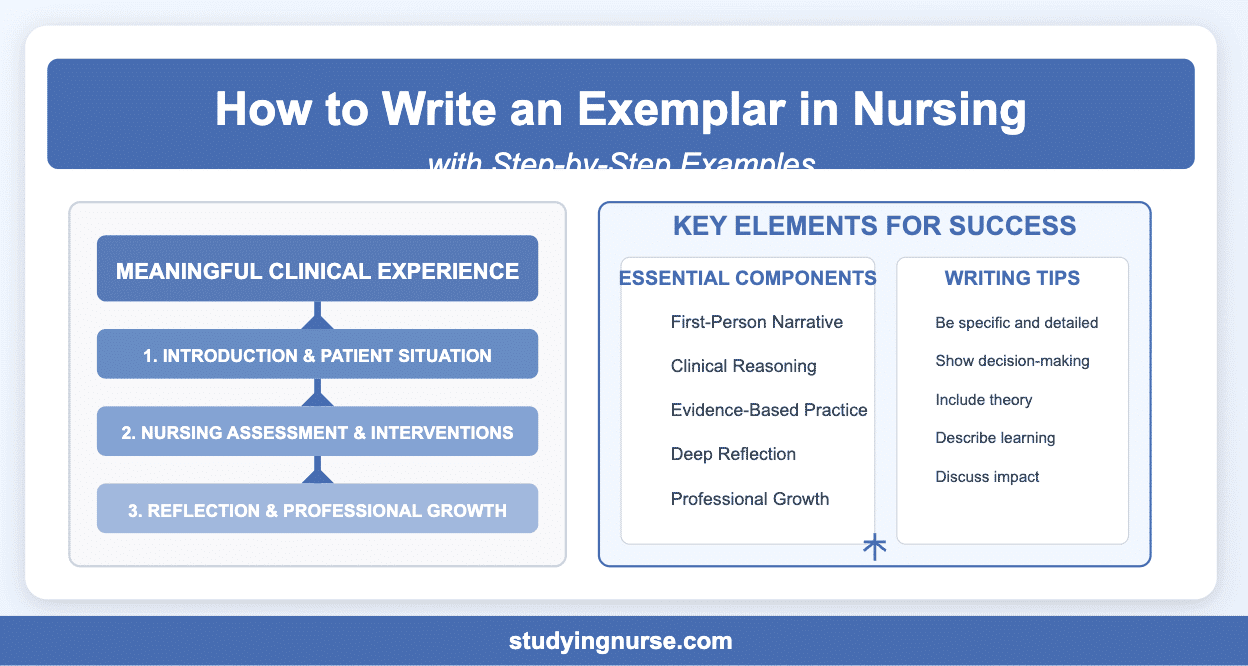
    2. Comprehensive assessment: The need for thorough physical examinations and careful consideration of all symptoms in pediatric patients.
    3. Cultural competence: Understanding the unique challenges faced by adopted children with unknown medical histories.
    4. Interdisciplinary care: The value of collaboration between various healthcare professionals in managing chronic conditions like sickle cell anemia.
    5. Patient and family-centered care: The crucial role of educating and supporting families in managing chronic pediatric conditions.
    6. Long-term management: The need for ongoing care and monitoring of children with chronic hematological disorders.

    How can fellow students benefit from discussing the Miah Zavarro case?

    Collaborative Learning through Forums

    Discussing the Miah Zavarro case in forums provides numerous benefits for nursing students:

    1. Diverse perspectives: Students can gain insights from their peers’ interpretations and approaches to the case.
    2. Knowledge consolidation: Explaining concepts to others and engaging in discussions helps reinforce learning.
    3. Critical thinking development: Debating different aspects of the case enhances analytical and problem-solving skills.
    4. Communication skills: Participating in forums improves students’ ability to articulate clinical reasoning and findings.
    5. Peer support: Forums create a supportive environment where students can share challenges and seek clarification.

    Sharing Experiences and Insights

    Through case discussions, students can:

    1. Compare decision-making processes: Understanding how others approached the case can broaden one’s clinical reasoning.
    2. Discuss real-world connections: Students can share related experiences from clinical rotations or personal encounters.
    3. Explore cultural considerations: Discussions can highlight the importance of cultural competence in pediatric care.
    4. Reflect on emotional aspects: Sharing thoughts on the emotional challenges of pediatric care can prepare students for real-world scenarios.
    5. Identify learning gaps: Through discussions, students can recognize areas where they need further study or clarification.

    Applying Knowledge to Real-World Scenarios

    Case discussions help bridge the gap between theory and practice by:

    1. Simulating clinical decision-making: Students can practice making choices and defending their decisions in a safe environment.
    2. Exploring “what-if” scenarios: Discussions can extend beyond the case, considering various potential outcomes and complications.
    3. Integrating multidisciplinary knowledge: Students can draw connections between different areas of study (e.g., pharmacology, pathophysiology, and nursing interventions).
    4. Developing clinical judgment: By analyzing the case collectively, students refine their ability to prioritize care and anticipate patient needs.
    5. Preparing for similar real-world cases: Discussions help students feel more confident and prepared when encountering similar situations in clinical practice.

    Related article; i-Human Patients by Kaplan

    FAQs on Miah Zavarro iHuman

    What does iHuman do?

    iHuman is a virtual patient simulation platform that provides interactive case studies for healthcare education, allowing students to practice clinical decision-making in a risk-free environment.

    Is iHuman a documentary?

    No, iHuman is not a documentary. It is an educational software platform used for virtual patient simulations in healthcare education.

    How to access iHuman?

    iHuman is typically accessed through educational institutions that have subscribed to the platform. Students usually receive login credentials from their instructors or educational program.

    Who is the founder of iHuman?

    iHuman was developed by i-Human Patients, Inc., which was founded by Norm Wu and Craig Knoche. The company has since been acquired by Kaplan, a global educational services company.