Search results for: “pediatric”

  • 112 Nursing Debate Topics for Studying Nurses

    As a nursing student, engaging in debates and discussions is crucial for developing critical thinking skills, enhancing communication abilities, and deepening your understanding of complex healthcare issues. This comprehensive guide explores various aspects of nursing debate topics, providing you with valuable insights and resources to excel in your academic journey and future career. We’ll cover 112 nursing debate topics and ideas across different categories, offering both breadth and depth in our exploration of nursing issues.

    Nursing Debate Topics for 2025

    Current Nursing Debate Topics

    The nursing profession is constantly evolving, and several ongoing debates are shaping its future. Here are 15 current nursing debate topics:

    1. Mandatory overtime for nurses: Is it necessary or exploitative?
    2. Nurse-to-patient ratios: Should they be legally mandated?
    3. The role of nurse practitioners in primary care: Should their scope of practice be expanded?
    4. Telemedicine in nursing: Does it improve or impede patient care?
    5. Unionization in nursing: Does it benefit or hinder the profession?
    6. Mandatory continuing education for nurses: Is it essential or burdensome?
    7. The impact of electronic health records on nursing efficiency
    8. Standardized uniforms in nursing: Professional necessity or personal freedom infringement?
    9. The role of nurses in prescribing medication: Should it be expanded?
    10. Addressing nurse burnout: Individual responsibility or systemic issue?
    11. The use of AI and machine learning in nursing practice: Helpful tool or potential threat?
    12. Specialization vs. generalization in nursing education: Which better prepares future nurses?
    13. The role of nurses in end-of-life decisions: How much influence should they have?
    14. Nursing leadership in hospital administration: Are nurses adequately represented?
    15. The impact of travel nursing on healthcare systems and local nursing communities

    These nursing debate topics and ideas reflect the dynamic nature of the nursing profession and the healthcare industry as a whole. They touch on issues of patient care, professional development, workplace conditions, and the evolving role of nurses in the healthcare system.

    Good Topics for Nursing Debates

    When selecting a topic for a nursing debate, consider issues that are relevant, controversial, and have multiple perspectives. Here are 15 good nursing debate topics:

    1. Should vaccinations be mandatory for all healthcare workers?
    2. Is euthanasia ethical in terminal illness cases?
    3. Should nurses be allowed to refuse treatment based on personal beliefs?
    4. Is it appropriate for nurses to use social media to discuss their work?
    5. Should there be a standardized national nursing curriculum?
    6. The ethics of restraint use in healthcare settings
    7. Balancing patient confidentiality with family involvement in care
    8. Ethical considerations in organ donation and transplantation
    9. The nurse’s role in informed consent for vulnerable populations
    10. Ethical implications of genetic testing and counseling
    11. Should nurses be required to maintain a certain level of physical fitness?
    12. The role of spirituality in nursing care: Essential or overstepping?
    13. Mandatory drug testing for nurses: Necessary precaution or invasion of privacy?
    14. The use of medical marijuana in healthcare settings: Should nurses be involved in administration?
    15. Gender bias in nursing: Addressing challenges faced by male nurses

    These topics encourage critical thinking and can lead to lively discussions about the ethical, practical, and professional aspects of nursing.

    What Are Good Nursing Argument Topics for a Debate

    Effective argument topics for a nursing debate should be relevant, controversial, evidence-based, and impactful. Here are 10 good nursing argument topics:

    1. The pros and cons of 12-hour shifts vs. 8-hour shifts for nurses
    2. Should nursing students be paid for clinical placements?
    3. Is it ethical for nurses to accept gifts from patients?
    4. The role of nurses in advocating for healthcare policy changes
    5. Should nurses have the right to refuse to work in unsafe conditions?
    6. The impact of nurse-to-patient ratios on patient outcomes
    7. Is a BSN degree necessary for entry-level nursing positions?
    8. Should nurses be allowed to go on strike?
    9. The role of nurses in addressing social determinants of health
    10. Should there be age limits for nursing practice?

    These nursing debate topics can lead to in-depth discussions about the nature of nursing practice, education, and professional ethics.

    Trending Topics in Nursing

    Staying informed about trending topics in nursing can help you engage in timely and relevant debates. Here are 12 current trending nursing debate topics:

    1. The long-term impact of COVID-19 on nursing practice and education
    2. Artificial intelligence in nursing: Threat or opportunity?
    3. Climate change and its effects on public health: The nurse’s role
    4. Addressing health disparities: Strategies for providing equitable care
    5. The opioid crisis: Nursing interventions and policy recommendations
    6. Mental health in nursing: Addressing stigma and improving care
    7. Telehealth and remote patient monitoring: Expanding the nurse’s role
    8. Precision medicine and personalized healthcare: Implications for nursing
    9. Global health initiatives: The role of nurses in international healthcare
    10. The impact of an aging nursing workforce on healthcare delivery
    11. Nursing’s role in disaster preparedness and response
    12. The integration of complementary and alternative medicine in nursing practice

    These topics reflect current challenges and innovations in healthcare, offering opportunities for nurses to contribute to important discussions and developments in the field.

    Interesting Nursing Debate Topics

    To keep your audience engaged, consider these 10 interesting nursing debate topics:

    1. Nursing in extreme environments: Space, arctic, and disaster zones
    2. The intersection of art and nursing: Using creativity in patient care
    3. Historical figures in nursing: Lessons for modern practice
    4. Cultural competence in nursing: Addressing diverse patient populations
    5. Nursing innovations: Cutting-edge technologies shaping the future of healthcare
    6. The psychology of nursing: Understanding the nurse-patient relationship
    7. Nursing in popular culture: Impact on public perception and recruitment
    8. Alternative medicine integration in nursing practice: Benefits and challenges
    9. The role of humor in nursing: Balancing professionalism and patient rapport
    10. Forensic nursing: The intersection of healthcare and criminal justice

    These topics can spark curiosity and encourage nurses to think beyond traditional healthcare settings and practices.

    Discussion Topics for Nursing Students

    Engaging in discussions helps nursing students develop critical thinking skills. Here are 10 thought-provoking discussion topics:

    1. Ethical dilemmas in end-of-life care: Case studies and solutions
    2. The impact of social determinants on health outcomes: A nursing perspective
    3. Balancing patient autonomy with evidence-based practice
    4. Addressing implicit bias in healthcare settings: Strategies for nurses
    5. The role of nurses in public health and disease prevention
    6. Interprofessional collaboration in healthcare: Overcoming barriers
    7. Nursing leadership: Developing skills for career advancement
    8. Patient safety initiatives: The nurse’s role in preventing medical errors
    9. The future of nursing education: Integrating technology and hands-on learning
    10. Ethical considerations in nursing research: Balancing progress and patient protection

    These topics encourage students to think critically about complex issues in healthcare and nursing practice.

    Hot Topics in Nursing

    Hot topics in nursing often reflect current societal issues and healthcare trends. Here are 10 hot topics:

    1. Workplace violence prevention: Ensuring nurse safety
    2. The nurse’s role in addressing the opioid crisis
    3. LGBTQ+ healthcare: Providing inclusive and culturally competent care
    4. Artificial intelligence in nursing: Ethical considerations and practical applications
    5. Global health and pandemic preparedness: Lessons learned from COVID-19
    6. Nurse advocacy in healthcare policy: Influencing legislation
    7. Addressing the nursing shortage: Innovative recruitment and retention strategies
    8. The future of nursing education: Virtual reality and simulation-based learning
    9. Nurses’ role in combating human trafficking: Recognition and intervention
    10. The impact of social media on nursing practice and patient care

    These topics reflect urgent issues in healthcare and society, highlighting the diverse roles nurses play in addressing complex challenges.

    Current Healthcare Debate Topics

    Broader healthcare debates often have significant implications for nursing practice. Here are 10 current healthcare debate topics:

    1. Universal healthcare vs. private insurance systems: Implications for nursing
    2. The role of preventive care in reducing healthcare costs: A nursing perspective
    3. Addressing the mental health crisis: Improving access to care
    4. Balancing patient privacy with the need for comprehensive health data
    5. The impact of an aging population on healthcare systems: Challenges for nursing
    6. Healthcare rationing: Ethical considerations in resource allocation
    7. The role of technology in reducing healthcare disparities
    8. Pharmaceutical pricing and access to medications: The nurse’s advocacy role
    9. The future of primary care: Nurse practitioners vs. physicians
    10. Ethical considerations in healthcare marketing and advertising

    These topics reflect broader healthcare issues that directly impact nursing practice and patient care.

    Biggest Problem in Nursing Today

    While opinions may vary, many consider the nursing shortage to be the biggest problem facing the profession today. Here are 5 debate topics related to this issue:

    1. Addressing the global nursing shortage: Causes and solutions
    2. Nurse burnout and compassion fatigue: Prevention and intervention strategies
    3. Improving nurse retention: Strategies for creating positive work environments
    4. Bridging the theory-practice gap in nursing education
    5. The impact of the nursing shortage on patient care quality and safety

    Debating solutions to these multifaceted problems can lead to innovative ideas and strategies for addressing the challenges facing the nursing profession.

    Hardest Nursing Topics

    Some of the most challenging topics in nursing require extensive study and practical application to master. Here are 5 debate topics related to these challenging areas:

    1. Advanced pathophysiology: Strategies for mastering complex disease processes
    2. Pharmacology challenges: Improving medication knowledge and safety
    3. Critical care nursing: Managing high-acuity patients and complex equipment
    4. Nursing research and evidence-based practice: Interpreting and applying findings
    5. Healthcare policy and economics: Navigating the complexities of healthcare systems

    Debating these topics can help students and professionals alike deepen their understanding of these complex areas of nursing practice.

    Nursing Ethics Topics for Debate

    Ethical debates are crucial for developing moral reasoning skills. Here are 5 nursing ethics topics for debate:

    1. Ethical considerations in end-of-life care: The nurse’s role
    2. Patient autonomy vs. beneficence: Resolving conflicts in nursing care
    3. Ethical challenges in pediatric nursing: Balancing child and parental rights
    4. Resource allocation in nursing: Ethical decision-making in times of scarcity
    5. Ethical implications of genetic testing and counseling: The nurse’s responsibility

    These topics encourage nurses to grapple with complex ethical dilemmas they may encounter in their practice.

    Debate on Nursing as a Profession

    Discussions about nursing as a profession can help students understand its evolving nature. Here are 5 debate topics on nursing as a profession:

    1. Is nursing a vocation or just a job? Exploring professional identity
    2. The impact of degree requirements on the nursing profession: BSN vs. ADN
    3. Advancing the public image of nursing: Strategies for professional recognition
    4. The evolving role of nurses in healthcare: From bedside to boardroom
    5. Balancing the art and science of nursing in modern healthcare

    These topics encourage reflection on the nature of nursing as a profession and its place in the broader healthcare landscape.

    In conclusion, engaging in debates on these various nursing and healthcare topics can significantly enhance your critical thinking skills, deepen your understanding of complex issues, and prepare you for the challenges of your future nursing career. Remember to approach each debate with an open mind, conduct thorough research, and always consider the ethical implications of different perspectives. As you progress in your studies and career, continue to stay informed about current issues and engage in meaningful discussions with your peers and colleagues.

  • Best Evidence-based practice project examples and Examples of evidence-based practice nursing topics

    Best Evidence-based practice project examples and Examples of evidence-based practice nursing topics

    Evidence-based practice (EBP) is about using the best research, clinical skills, and patient input to improve care. For nursing students or professionals—whether you’re working on a BSN, MSN, DNP, or just staying updated—choosing the right EBP project ideas can feel overwhelming. But it doesn’t have to! This list of Examples of Evidence-Based Practice in Nursing with Research keywords, EBP nursing ideas, EBP examples, EBP nursing research topics, and best evidence-based practice examples helps you choose the right EBP project topic.

    Evidence-based practice project examples
    evidence-based practice project examples

    You’ll find practical evidence-based research topics across every specialty: pediatric nursing, mental health, geriatrics, nursing education, informatics, and more. Want to explore how to reduce hospital infections? Or improve pain management for cancer patients? Maybe you’re interested in using apps to teach new nurses? These EBP examples are grounded in real-world problems and designed to sharpen your research skills while improving nursing care.

    Best Evidence-based practice project examples for 2025

    1. Central Line-Associated Bloodstream Infection (CLABSI) Prevention: Evidence-based CLABSI prevention involves implementing care bundles that include proper hand hygiene, maximal barrier precautions during insertion, chlorhexidine skin antisepsis, optimal catheter site selection, and daily review of line necessity. The Centers for Disease Control and Prevention and The Joint Commission have established guidelines that have transformed central line care. Implementation requires comprehensive staff education, standardized insertion kits, and continuous monitoring of compliance. Keywords: CLABSI bundle, catheter-related infections, insertion protocol, chlorhexidine, maintenance bundle

    2. Hourly Rounding: Hourly rounding involves nurses proactively checking on patients following a structured format, addressing the “4 Ps”: pain, positioning, personal needs, and proximity of personal items. This practice originated from patient safety research and has been widely adopted by Magnet hospitals. Implementation requires consistent documentation, leadership support, and incorporation into workflow patterns. Keywords: purposeful rounding, patient satisfaction, fall prevention, call light reduction, patient-centered care

    3. Early Mobility Protocols: Early mobility protocols involve progressive activity from passive range-of-motion exercises to ambulation as soon as clinically appropriate, particularly for critically ill patients. The American Association of Critical-Care Nurses and the Society of Critical Care Medicine support early mobility as a standard of care. Implementation requires interdisciplinary collaboration between nursing, physical therapy, and respiratory therapy. Keywords: progressive mobility, ICU rehabilitation, ambulation protocol, delirium prevention, ventilator weaning

    4. Chlorhexidine Bathing for ICU Patients: Daily bathing with chlorhexidine gluconate cloths for ICU patients has been adopted by many healthcare systems following research demonstrating infection reduction. The practice is supported by guidelines from the Society for Healthcare Epidemiology of America. Implementation involves standardized protocols, staff education on proper technique, and monitoring for skin sensitivity. Keywords: daily CHG bathing, antiseptic bathing, healthcare-associated infections, MRSA reduction, skin colonization

    5. Nurse-Led Diabetes Self-Management Education: Nurse-led diabetes education programs follow standards established by the American Diabetes Association and the Association of Diabetes Care & Education Specialists. These programs incorporate individualized goal setting, problem-solving strategies, and ongoing support. Certified diabetes educators deliver a curriculum addressing medication management, monitoring, nutrition, and complication prevention. Keywords: DSME, diabetes educator, self-care behaviors, glycemic control, patient empowerment

    6. Surgical Site Infection Prevention Bundles: Evidence-based surgical site infection prevention includes interventions supported by organizations like the Association of PeriOperative Registered Nurses: appropriate antibiotic prophylaxis, proper hair removal, maintenance of normothermia, glycemic control, and adequate oxygenation. Implementation requires perioperative checklists, standardized protocols, and continuous quality monitoring. Keywords: perioperative care bundle, SSI prevention, surgical prophylaxis, normothermia, glycemic control

    7. Ventilator-Associated Pneumonia Prevention: VAP prevention bundles include elevation of the head of the bed, daily sedation interruption, oral care with chlorhexidine, and assessment of extubation readiness. These practices are endorsed by the Institute for Healthcare Improvement and the American Association of Critical-Care Nurses. Implementation requires interdisciplinary protocols and regular compliance audits. Keywords: VAP bundle, oral care protocol, head-of-bed elevation, sedation vacation, aspiration prevention

    8. Targeted Temperature Management Post-Cardiac Arrest: Evidence supports maintaining body temperature between specific ranges after cardiac arrest to improve neurological outcomes. The American Heart Association includes temperature management in post-cardiac arrest care guidelines. Implementation requires specialized cooling equipment, continuous temperature monitoring, and management of physiological changes associated with temperature control. Keywords: therapeutic hypothermia, cardiac arrest recovery, neurological protection, shivering prevention, post-resuscitation care

    9. Nurse-Driven Catheter Removal Protocols: Nurse-driven protocols empower nurses to assess and remove urinary catheters based on specific criteria without physician orders. These protocols are supported by the Centers for Disease Control and Prevention and the American Nurses Association as part of CAUTI prevention strategies. Implementation requires staff education, assessment tools, and electronic health record reminders. Keywords: CAUTI prevention, appropriate indications, catheter discontinuation, bladder scanning, nurse protocol

    10. Delirium Prevention and Management: Evidence-based delirium protocols include regular screening using validated tools, multicomponent interventions addressing risk factors, and non-pharmacological approaches. Organizations like the American Geriatrics Society and the Society of Critical Care Medicine have established guidelines for delirium management. Implementation requires interdisciplinary collaboration and environmental modifications. Keywords: CAM-ICU, ICDSC, cognitive assessment, non-pharmacological interventions, sleep promotion

    11. Standardized Handoff Communication: Structured handoff tools like SBAR (Situation, Background, Assessment, Recommendation) or I-PASS improve communication during care transitions. The Joint Commission identifies handoff communication as a National Patient Safety Goal. Implementation requires staff training, customized tools integrated into documentation systems, and monitoring of communication-related events. Keywords: care transitions, communication framework, SBAR, I-PASS, patient safety

    12. Nurse-Led Heart Failure Education and Management: Comprehensive heart failure management programs led by specialized nurses follow guidelines from the American Heart Association and the Heart Failure Society of America. These programs include patient education on self-monitoring, medication management, dietary guidance, and early recognition of symptoms. Implementation requires heart failure nurse specialists and structured follow-up systems. Keywords: heart failure readmissions, self-care management, fluid restriction, symptom monitoring, medication adherence

    13. Sepsis Early Recognition and Treatment Protocols: Evidence-based sepsis protocols follow the Surviving Sepsis Campaign guidelines and include early screening tools, rapid laboratory testing, and bundles of care. Many healthcare systems have implemented nurse-driven sepsis screening and response protocols. Implementation requires electronic health record alerts, interdisciplinary response teams, and continuous quality monitoring. Keywords: sepsis bundle, QSOFA, lactate monitoring, fluid resuscitation, antibiotic stewardship

    14. Family Presence During Resuscitation: Evidence supports offering families the option to be present during resuscitation efforts with appropriate support from designated staff. Organizations like the Emergency Nurses Association and the American Association of Critical-Care Nurses have position statements supporting this practice. Implementation requires the development of clear policies and the designation of personnel to support family members. Keywords: family-centered care, resuscitation witness, family support facilitator, grief processing, patient rights

    15. Kangaroo Care for Premature Infants: Kangaroo care involves skin-to-skin contact between parents and premature infants. This practice is endorsed by the World Health Organization and the American Academy of Pediatrics for its benefits in neonatal care. Implementation requires NICU protocols, parent education, and adaptations to the care environment to facilitate early and frequent skin-to-skin contact. Keywords: skin-to-skin contact, thermoregulation, neurodevelopment, parent-infant bonding, breastfeeding promotion

    Best Evidence-based practice project examples | EBP Nursing Ideas 2025

    Examples of Evidence-Based Practice in Nursing with Research keywords

    16. Non-Pharmacological Pain Management: Evidence-based non-drug approaches to pain management include guided imagery, music therapy, positioning, and distraction techniques. These approaches align with guidelines from organizations like the American Society for Pain Management Nursing. Implementation requires staff education on techniques, documentation of interventions, and integration into pain management algorithms. Keywords: complementary therapies, alternative pain control, multimodal analgesia, opioid-sparing, comfort measures

    17. Medication Reconciliation Process: Structured medication reconciliation at transitions of care is endorsed by The Joint Commission and the Institute for Safe Medication Practices. The process involves a comprehensive comparison of medication lists and resolution of discrepancies. Implementation requires standardized forms, electronic health record support, pharmacy involvement, and staff education. Keywords: medication safety, transitions of care, adverse drug events, discrepancy resolution, home medication verification

    18. Peripheral IV Care and Maintenance Bundles: Evidence-based peripheral IV management follows guidelines from the Infusion Nurses Society and includes standardized insertion techniques, dressing protocols, regular site assessment, and timely removal. Implementation requires standardized protocols, regular audits, and competency validation for all staff inserting and maintaining IVs. Keywords: phlebitis prevention, catheter dwell time, site rotation, flushing protocol, infiltration assessment

    19. Oral Care Protocols for Ventilated Patients: Comprehensive oral care protocols for ventilated patients have been developed based on research showing a reduction in ventilator-associated pneumonia. These protocols are endorsed by the American Association of Critical-Care Nurses and include regular oral assessment, brushing, and oral moisturizing. Implementation requires standardized kits and regular competency assessment. Keywords: oral hygiene, chlorhexidine, dental plaque, ventilator bundle, subglottic suctioning

    20. Nurse-Led Smoking Cessation Interventions: Evidence-based smoking cessation interventions incorporate the framework recommended by the U.S. Public Health Service: Ask, Advise, Assess, Assist, and Arrange. The American Nurses Association supports nurse involvement in tobacco cessation counseling. Implementation requires screening tools, referral protocols, and pharmacotherapy guidance. Keywords: tobacco dependence, nicotine replacement, motivational interviewing, relapse prevention, quitline referral

    21. Pressure Injury Risk Assessment and Prevention: Comprehensive pressure injury prevention follows guidelines from the National Pressure Injury Advisory Panel and includes validated risk assessment tools, repositioning schedules, support surfaces, and nutritional support. Implementation requires standardized documentation, turning schedules, skin assessment protocols, and appropriate equipment availability. Keywords: Braden Scale, offloading, microclimate management, support surfaces, nutritional assessment

    22. Reducing Alarm Fatigue: Evidence-based approaches to alarm management follow recommendations from The Joint Commission’s National Patient Safety Goal on alarm management. Strategies include customizing alarm parameters, regular assessment of alarm necessity, and tiered response systems. Implementation requires interdisciplinary committees, equipment standardization, and staff education. Keywords: alarm fatigue, clinical alarm safety, customized parameters, critical alarm identification, response prioritization

    23. Evidence-Based Blood Transfusion Practices: Blood conservation strategies and restrictive transfusion protocols follow guidelines from organizations like the AABB (formerly American Association of Blood Banks) and the Society of Critical Care Medicine. These practices include single-unit transfusions and specific hemoglobin triggers. Implementation requires transfusion committees, electronic ordering systems with decision support, and staff education. Keywords: restrictive transfusion strategy, blood conservation, hemoglobin trigger, single-unit transfusion, transfusion reactions

    24. Structured Discharge Planning: Comprehensive discharge planning follows recommendations from organizations like the Agency for Healthcare Research and Quality. The process begins at admission and includes assessment of post-discharge needs, medication education, and follow-up communication. Implementation requires discharge planning tools, interdisciplinary collaboration, and post-discharge follow-up protocols. Keywords: transitions of care, readmission prevention, medication reconciliation, teach-back method, follow-up appointment

    25. Evidence-Based Wound Care Protocols: Wound care protocols based on wound etiology and characteristics follow guidelines from organizations like the Wound, Ostomy and Continence Nurses Society. These protocols include appropriate assessment tools, cleansing methods, dressing selection, and infection management. Implementation requires wound care specialists and staff education on wound classification. Keywords: wound assessment tools, moisture balance, debridement methods, biofilm management, wound healing markers

    26. Nurse-Led Transitional Care Models: Transitional care models involve specialized nurses following patients from hospital to home with structured visits and support. These models were pioneered by nurse researchers like Mary Naylor and Eric Coleman. Implementation requires advanced practice nurses, structured visit protocols, and collaboration with community resources. Keywords: care transitions, home visits, post-discharge follow-up, medication management, self-care coaching

    27. Music Therapy for Symptom Management: Evidence supports using music therapy during procedures and for symptom management, as recognized by the American Music Therapy Association. Research has demonstrated effects on anxiety, pain, and physiological parameters. Implementation requires the development of music libraries and guidelines for appropriate implementation based on patient preferences. Keywords: anxiety reduction, procedural support, pain distraction, patient-selected music, headphone delivery

    28. Early Warning Scoring Systems: Early warning systems use objective parameters to identify deteriorating patients before critical events. These systems are endorsed by organizations like the Institute for Healthcare Improvement and the National Institute for Health and Care Excellence. Implementation requires standardized assessment tools, response protocols, and rapid response team activation criteria. Keywords: NEWS score, MEWS, deterioration recognition, rapid response activation, vital sign trends

    29. Bereavement Support Programs: Evidence-based bereavement support follows guidelines from organizations like the National Hospice and Palliative Care Organization. Support includes structured follow-up with families after patient death, memory-making activities, and referral to resources. Implementation requires bereavement coordinators and staff education on supporting grieving families. Keywords: grief support, family follow-up, legacy building, compassionate care, memory creation

    30. Nurse-Led Antibiotic Stewardship: Nursing involvement in antibiotic stewardship aligns with recommendations from the Centers for Disease Control and Prevention and the American Nurses Association. Nurse responsibilities include accurate allergy documentation, timely specimen collection, monitoring for adverse effects, and promotion of appropriate therapy duration. Implementation requires education on antimicrobial resistance and collaboration with pharmacy. Keywords: antimicrobial stewardship, appropriate prescribing, culture collection, IV-to-oral conversion, resistance prevention

    Easy EBP Project Ideas Nursing

    • Effectiveness of nurse-led transitional care models in reducing 30-day readmissions for patients with chronic heart failure
    • Explores how structured nurse interventions during the transition from hospital to home can improve outcomes
    • Impact of mandatory nurse-patient ratios on patient safety outcomes and nurse satisfaction
    • Investigate the relationship between staffing levels and measurable quality improvement indicators.
    • Comparison of various pain assessment tools for accuracy in pediatric populations with developmental disabilities
    • Evaluates which instruments provide the most reliable pain measurements in challenging assessment situations
    • Evidence-based interventions to reduce workplace violence against emergency department nurses
    • Examine the effectiveness of safety protocols, environmental modifications, and training programs
    • Effectiveness of simulation-based education versus traditional clinical teaching methods for new graduate nurses
    • Measures competency development and confidence between different educational approaches
    • Implementation science approach to improving compliance with sepsis bundles in emergency departments
    • Investigate barriers and facilitators to adherence to evidence-based sepsis protocols.
    • Nurse-led protocols for early mobilization of post-surgical patients: impact on recovery timelines and complications
    • Examines how structured mobility interventions affect key recovery metrics
    • Effectiveness of various delirium prevention strategies in hospitalized elderly patients
    • Compares multicomponent interventions for reducing delirium incidence and severity
    • Cultural adaptation of diabetes self-management education for specific ethnic populations
    • Explores how culturally tailored approaches improve adherence and outcomes
    • Impact of dedicated education units on nursing student clinical competency development
    • Evaluates partnership models between academic and healthcare institutions
    • Evidence-based approaches to reducing maternal mortality in rural healthcare settings
    • Examines interventions that can be implemented in resource-limited environments
    • Effectiveness of telehealth monitoring for patients with multiple chronic conditions: nursing implications
    • Investigate remote care models and the nursing role in virtual health management
    • Nurse-led motivational interviewing techniques for improving medication adherence in psychiatric patients
    • Examines communication approaches that enhance treatment compliance
    • Comparison of wound care protocols for pressure injury prevention in high-risk populations
    • Evaluates the effectiveness of different evidence-based prevention bundles
    • Implementation of trauma-informed care principles in emergency nursing practice
    • Explores how this approach affects patient experience and outcomes
    • Effectiveness of various hand hygiene promotion strategies on healthcare worker compliance
    • Compare interventions for sustaining hand hygiene behavior change
    • Nurse navigator programs for improving cancer patient outcomes and experience
    • Examines the impact of dedicated nurse coordination on the cancer care journey
    • Evidence-based interventions for addressing compassion fatigue and moral distress in critical care nurses
    • Evaluates programs designed to support nurse wellbeing and retention
    • Impact of standardized communication tools on reducing medication errors during transitions of care
    • Explores how structured information exchange affects medication safety
    • Cost-effectiveness analysis of nurse-led chronic disease management programs in primary care settings
    • Examines the economic and clinical value of expanding nursing roles in disease management

    Examples of evidence-based practice nursing topics 2025 | EBP Nursing Topics

    evidence-based practice project examples and Evidence-Based Practice Nursing Topics 2025
    Evidence-Based Practice Nursing Topics 2025

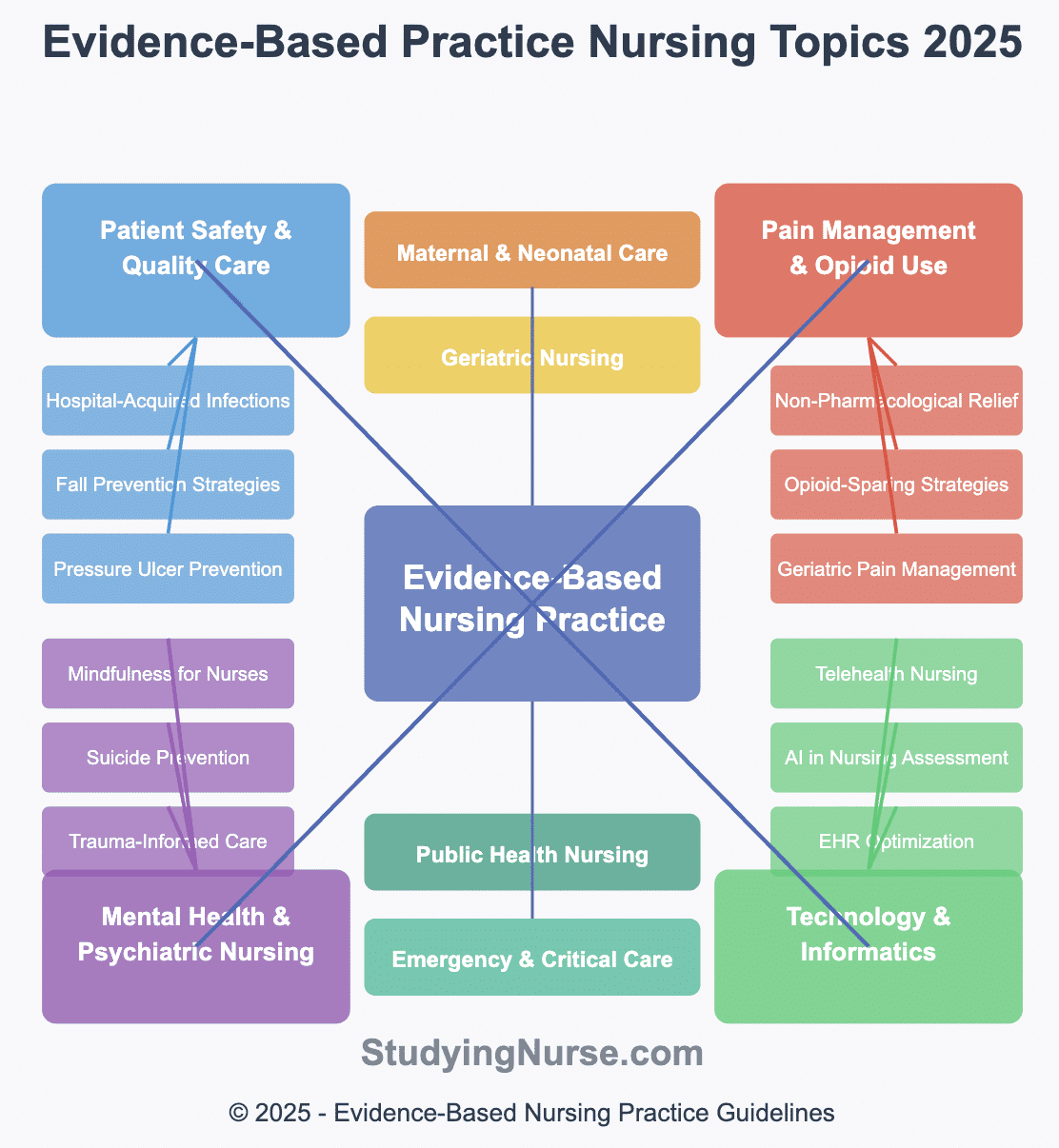
    In 2025, Evidence-Based Practice (EBP) in nursing continues to evolve, incorporating advancements in technology, patient-centered care, and new research findings. Below are key EBP nursing topics that are relevant for current practice:

    1. Patient Safety and Quality Care

    • Reducing Hospital-Acquired Infections (HAIs) – Best practices for preventing central line-associated bloodstream infections (CLABSIs), catheter-associated urinary tract infections (CAUTIs), and ventilator-associated pneumonia (VAP).
    • Fall Prevention Strategies – Use of predictive tools, fall prevention bundles, and environmental modifications.
    • Pressure Ulcer Prevention – Skin assessment protocols, repositioning techniques, and early intervention technologies.

    2. Pain Management and Opioid Use

    • Non-Pharmacological Pain Management – Use of music therapy, guided imagery, aromatherapy, and virtual reality in pain control.
    • Opioid-Sparing Strategies – Role of multimodal analgesia and alternative pain relief methods to reduce opioid dependence.
    • Chronic Pain Management in Elderly Patients – Effective and safe pain management options for older adults with multiple comorbidities.

    3. Mental Health and Psychiatric Nursing

    • Suicide Prevention in Hospital Settings – Identifying high-risk patients and implementing evidence-based interventions.
    • Mindfulness and Stress Reduction for Nurses – Preventing burnout and improving mental well-being among healthcare providers.
    • Trauma-Informed Care in Nursing – Enhancing patient outcomes through a trauma-sensitive approach.

    4. Maternal and Neonatal Care

    • Skin-to-Skin Contact and Breastfeeding Support – Benefits of early bonding and breast milk for neonatal health.
    • Postpartum Depression Screening – Early identification and intervention strategies for new mothers.
    • Delayed Cord Clamping in Newborns – Updated guidelines and benefits for neonatal health.

    5. Emergency and Critical Care Nursing

    • Sepsis Early Recognition and Treatment – Implementation of the latest sepsis care bundles.
    • Rapid Response Teams (RRTs) in Hospitals – Reducing patient deterioration through early intervention.
    • Point-of-Care Ultrasound (POCUS) in Nursing – Enhancing bedside diagnostics in emergency settings.

    6. Geriatric Nursing and Long-Term Care

    • Polypharmacy Management in Older Adults – Reducing medication overload and adverse drug reactions.
    • Dementia and Alzheimer’s Disease Care – Effective strategies for managing agitation, confusion, and behavioral issues.
    • End-of-Life Care and Palliative Nursing – Improving comfort and dignity in hospice settings.

    7. Technology and Informatics in Nursing

    • Artificial Intelligence in Nursing Assessment – Use of AI to predict patient deterioration and improve workflow.
    • Telehealth Nursing and Remote Patient Monitoring – Expanding access to care through digital health solutions.
    • Electronic Health Records (EHR) Optimization – Reducing documentation burden and enhancing patient data security.

    8. Public Health and Community Nursing

    • Vaccine Hesitancy and Public Education – Strategies to Improve Immunization Rates.
    • Social Determinants of Health (SDOH) in Nursing Care – Addressing disparities in healthcare access.
    • Community-Based Interventions for Chronic Disease Prevention – Lifestyle modifications to reduce diabetes and hypertension prevalence.

    9. Ethical and Legal Issues in Nursing

    • Nursing and Patient Autonomy – Balancing ethical decision-making and patient rights.
    • Workplace Violence Prevention in Healthcare – Strategies to protect nurses from aggression and abuse.
    • Cultural Competency in Nursing Practice – Providing equitable care for diverse populations.

    10. Nursing Education and Professional Development

    • Simulation-Based Training for Nursing Students – Enhancing clinical skills through virtual and mannequin simulations.
    • Mentorship Programs for New Nurses – Improving retention and transition to practice.
    • Continuing Education in Nursing Leadership – Developing strong nurse leaders through advanced training.

    How do you choose the best EBP nursing topics?

    How to Choose the Best EBP Nursing Topics
    How to Choose the Best EBP Nursing Topics

    When choosing an Evidence-based practice (EBP) nursing topic, think about a clinical topic, problem, or question that interests you and/or from your personal, professional, or clinical experience.

    As we look towards 2025, your nursing research problem/question should be related to contemporary nursing practice in some way. In other words, there needs to be nursing implications to addressing your question in the specific EBP project topic area that you select.

    So, do you need ideas for a paper on evidence-based practice? This article provides a list of EBP Nursing Research Topics for 2025 that will help you address specific nursing practice problems.

    Selecting an appropriate research topic is crucial for conducting meaningful, evidence-based practice in nursing. When choosing a topic, consider the following:

    1. Relevance to current nursing practice
    2. Potential to improve patient outcomes
    3. Alignment with your areas of interest or expertise
    4. Availability of research evidence
    5. Feasibility of implementing findings in clinical settings

    Remember, the goal is to find a topic that not only interests you but also has the potential to enhance nursing care and patient experiences.

    Evidence-based projects in Nursing Topics

    Qualitative Nursing EBP Project Ideas

    Qualitative research in nursing focuses on exploring the experiences, perceptions, and behaviors of patients and healthcare providers. This approach is valuable for understanding complex phenomena in healthcare settings. Here are 10 qualitative nursing research topics:

    1. Exploring nurses’ experiences with implementing evidence-based practice guidelines
    2. Patient perceptions of nurse-led interventions in chronic disease management
    3. The impact of cultural competence training on nursing care delivery
    4. Nurses’ experiences with ethical decision-making in end-of-life care
    5. Exploring the lived experiences of new graduate nurses transitioning to practice
    6. Patient experiences with mindfulness-based interventions for pain management
    7. Nurses’ perspectives on barriers to EBP implementation in clinical settings
    8. The role of nurse leaders in promoting a culture of evidence-based practice
    9. Exploring family experiences with pediatric palliative care services
    10. Nurses’ experiences with using telehealth technologies in rural healthcare settings

    Quantitative Nursing EBP Project Ideas

    Quantitative research in nursing involves collecting and analyzing numerical data to test hypotheses and establish relationships between variables. Here are 10 quantitative research topics:

    1. Effectiveness of nurse-led education programs on medication adherence among patients with chronic conditions
    2. Impact of evidence-based fall prevention protocols on reducing fall rates in acute care settings
    3. Evaluation of early mobilization interventions on length of stay for surgical patients
    4. Comparison of different nursing handoff methods on reducing medical errors
    5. Effects of implementing evidence-based pressure ulcer prevention strategies on incidence rates
    6. Assessing the impact of nurse-to-patient ratios on patient outcomes and nurse burnout
    7. Evaluating the effectiveness of evidence-based delirium prevention protocols in ICU settings
    8. Measuring the impact of EBP implementation on hospital-acquired infection rates
    9. Analyzing the relationship between nurses’ EBP competencies and patient satisfaction scores
    10. Assessing the effectiveness of nurse-led smoking cessation interventions on quit rates

    Good Nursing Research Topics for Evidence-based Practice

    Choosing good research topics is essential for advancing nursing science and improving patient care. Working on an Evidence-based Practice project, here are good ebp project ideas areas consider:

    1. Implementing a nurse-driven protocol for early sepsis recognition and management
    2. Developing and evaluating a mindfulness-based stress reduction program for oncology nurses
    3. Creating an evidence-based toolkit for managing behavioral symptoms in dementia patients
    4. Implementing a nurse-led transitional care program to reduce hospital readmissions
    5. Evaluating the effectiveness of a peer mentoring program for new graduate nurses
    6. Exploring the use of artificial intelligence in nursing decision support systems
    7. Evaluating the impact of virtual reality training on nursing skills acquisition
    8. Investigating the role of genomics in personalized nursing care
    9. Assessing the effectiveness of mobile health apps in promoting patient self-management
    10. Examining the impact of climate change on population health and nursing practice
    11. Implementing an evidence-based hand hygiene protocol to reduce healthcare-associated infections
    12. Evaluating the effectiveness of nurse-led diabetes education programs on patient outcomes
    13. Implementing a standardized pain assessment tool in pediatric units
    14. Assessing the impact of bedside shift reports on patient satisfaction and safety
    15. Evaluating the effectiveness of evidence-based interventions for preventing catheter-associated urinary tract infections
    16. Evaluating the effectiveness of nurse residency programs on retention rates
    17. Assessing the impact of flexible scheduling on nurse job satisfaction and burnout
    18. Investigating the role of leadership styles in reducing nurse turnover
    19. Evaluating the effectiveness of international nurse recruitment strategies
    20. Assessing the impact of workplace violence prevention programs on nurse retention
    21. Implementing shared decision-making models in clinical practice
    22. Evaluating the effectiveness of nurse-led clinics in managing chronic conditions
    23. Assessing the impact of evidence-based preoperative fasting guidelines on patient outcomes
    24. Implementing evidence-based strategies for preventing central line-associated bloodstream infections
    25. Evaluating the effectiveness of multicomponent interventions for preventing hospital-acquired pressure injuries
    26. Exploring the use of telenursing in providing care to rural and underserved populations
    27. Evaluating the effectiveness of nurse-led interventions in addressing social determinants of health
    28. Assessing the impact of nurse practitioner-led primary care on patient outcomes and healthcare costs
    29. Investigating the role of nurses in promoting vaccine acceptance and addressing vaccine hesitancy
    30. Evaluating the effectiveness of evidence-based interventions for managing post-COVID-19 symptoms 

    NICU EBP Project Ideas – 15 NICU Evidence-Based Practice Project Ideas

    NICU stands for Neonatal Intensive Care Unit, a specialized hospital department that provides intensive medical care for newborns who require advanced support. These units care for:

    • Premature infants (born before 37 weeks of gestation)
    • Low birth weight babies
    • Infants with congenital abnormalities
    • Newborns with respiratory distress, infections, or other medical conditions
    • Babies requiring surgery or specialized medical interventions

    NICU teams include neonatologists, specialized nurses, respiratory therapists, nutritionists, pharmacists, and other professionals with specific training in neonatal care. The environment features sophisticated medical equipment adapted for tiny patients, including incubators, ventilators, and advanced monitoring systems.

    NICU EBP project topics and A clear definition of what a NICU is
An explanation of how evidence-based practice works in neonatal care
The key benefits of implementing EBP in the NICU setting
    1. Kangaroo Care Implementation Protocol: Develop standardized guidelines for skin-to-skin contact between parents and premature infants, including assessment criteria, duration recommendations, and monitoring parameters to improve thermoregulation, weight gain, and parent-infant bonding. Keywords: skin-to-skin contact, thermoregulation, parental involvement, attachment, physiological stability
    2. Noise Reduction Strategy: Design and implement a comprehensive noise reduction program, including sound monitoring, staff education, equipment modification, and a designated quiet period, to reduce stress responses and improve sleep quality in premature infants. Keywords: developmental care, environmental stimuli, acoustic monitoring, sleep protection, stress reduction
    3. Non-Pharmacological Pain Management Bundle: Create an evidence-based protocol for procedural pain management incorporating sucrose solutions, facilitated tucking, swaddling, and non-nutritive sucking to minimize physiological stress during routine painful procedures. Keywords: neonatal pain assessment, sucrose analgesia, containment, comfort measures, PIPP score
    4. Necrotizing Enterocolitis Prevention Protocol: Implement a standardized feeding advancement protocol with human milk prioritization, probiotic administration, and standardized fortification practices to reduce NEC incidence in very low birth weight infants. Keywords: human milk feeding, gut microbiome, trophic feeding, feeding intolerance, probiotic supplementation
    5. NICU-Specific Infection Prevention Bundle: Develop a comprehensive infection prevention program including central line care, hand hygiene compliance monitoring, antibiotic stewardship, and skin care practices tailored specifically for the neonatal population. Keywords: CLABSI prevention, skin integrity, antimicrobial stewardship, healthcare-associated infections, bundle compliance
    6. Family-Integrated Care Model: Implement a structured program to engage parents as primary caregivers in the NICU, including education, mentorship, participation in medical rounds, and gradual assumption of care responsibilities. Keywords: parental empowerment, family-centered care, discharge readiness, caregiver confidence, parental presence
    7. Standardized Neonatal Positioning Protocol: Develop evidence-based guidelines for developmental positioning using commercially available positioning aids and standardized assessment tools to promote optimal neurodevelopment and prevent positional deformities. Keywords: developmental positioning, postural support, physiological flexion, midline orientation, motor development
    8. Breastfeeding Support for NICU Mothers: Create a comprehensive lactation support program including early pumping protocols, skin-to-skin care, non-nutritive sucking at the breast, and transition to direct breastfeeding with specialized support from trained staff. Keywords: human milk provision, milk expression, breastfeeding readiness, cue-based feeding, lactation support
    9. Standardized Discharge Planning Process: Implement a structured discharge preparation pathway beginning at admission, with family education checkpoints, home care simulation, interdisciplinary coordination, and post-discharge follow-up protocol. Keywords: transition to home, discharge readiness, caregiver education, home equipment management, follow-up coordination
    10. NICU Early Mobility Protocol: Design an age-appropriate developmental stimulation and positioning program to optimize neuromotor development in premature infants, including appropriate sensory stimulation and graded activity progression. Keywords: neurodevelopmental therapy, sensory integration, motor development, positional therapy, range of motion
    11. Neonatal Abstinence Syndrome Non-Pharmacological Management: Implement a comprehensive approach to managing infants with prenatal substance exposure, emphasizing environment modification, consoling techniques, feeding strategies, and parental involvement to reduce pharmacological intervention. Keywords: NAS scoring, environmental modification, rooming-in, consoling techniques, eat-sleep-console method
    12. Developmentally Supportive Care Bundle: Create a comprehensive developmental care program including protected sleep periods, cycled lighting, individualized handling, sensory input regulation, and family involvement to support neurodevelopment. Keywords: NIDCAP principles, cue-based care, state regulation, environmental adaptation, neurodevelopmental outcomes
    13. Neonatal Palliative Care Protocol: Develop a structured approach to palliative and end-of-life care in the NICU, including family support, comfort care practices, memory-making activities, and bereavement follow-up. Keywords: perinatal palliative care, family support, symptom management, ethical decision-making, bereavement care
    14. Extrauterine Growth Restriction Prevention: Implement a nutrition optimization program including standardized TPN formulations, human milk fortification protocols, growth monitoring parameters, and feeding advancement guidelines to improve growth outcomes. Keywords: nutritional assessment, growth velocity, protein supplementation, fortification strategies, anthropometric monitoring
    15. NICU-Specific Delirium Recognition and Management: Develop and implement a screening and intervention protocol for neonatal delirium, including assessment tools, environmental modification, and pharmaceutical management when appropriate. Keywords: neonatal delirium assessment, sleep-wake cycle regulation, neurobehavioral assessment, environmental modification, iatrogenic withdrawal

    Interesting nursing research topics for nursing research papers

    1. Exploring the role of nurse navigators in improving cancer care coordination and patient outcomes
      2. Evaluating the effectiveness of mindfulness-based interventions for reducing compassion fatigue in oncology nurses
      3. Assessing the impact of nurse-led health coaching on self-management behaviors in patients with chronic conditions
      4. Investigating the role of nurses in promoting advanced care planning in primary care settings
      5. Evaluating the effectiveness of evidence-based interventions for preventing nurse burnout and promoting resilience

    Popular nursing research topics for nursing papers

    1. Assessing the impact of nurse-led interventions on reducing hospital-acquired infections
      2. Evaluating the effectiveness of evidence-based pain management protocols in postoperative patients
      3. Investigating the role of nurses in promoting breastfeeding and supporting new mothers
      4. Assessing the impact of nurse-led care coordination on patient outcomes in complex chronic conditions
      5. Evaluating the effectiveness of evidence-based interventions for managing behavioral symptoms in dementia patients

    Topics that support evidence-based nursing practice

    1. Implementing evidence-based protocols for early recognition and management of sepsis
      2. Evaluating the effectiveness of nurse-led interventions for promoting physical activity in patients with chronic conditions
      3. Assessing the impact of evidence-based skin care protocols on preventing pressure ulcers in high-risk patients
      4. Implementing evidence-based strategies for reducing alarm fatigue in critical care settings
      5. Evaluating the effectiveness of nurse-led interventions for managing depression in patients with chronic illnesses

    Nursing Informatics Topics for EBP in nursing

    1. Evaluating the impact of electronic health records on nursing workflow and patient outcomes
      2. Assessing the effectiveness of clinical decision support systems in promoting evidence-based practice
      3. Implementing and evaluating the use of mobile devices for point-of-care access to evidence-based resources
      4. Investigating the role of big data analytics in improving nursing care quality and patient outcomes
      5. Evaluating the effectiveness of telehealth interventions in providing nursing care to rural populations

    Research articles that support evidence-based practice

    1. Systematic reviews on the effectiveness of nurse-led interventions in chronic disease management
      2. Meta-analyses of evidence-based strategies for preventing hospital-acquired infections
      3. Randomized controlled trials evaluating the impact of evidence-based protocols on patient outcomes
      4. Qualitative studies exploring nurses’ experiences with implementing evidence-based practice
      5. Implementation science research on strategies for promoting EBP adoption in healthcare settings

    Evidence-based practice nursing topics in critical care

    1. Implementing early mobilization protocols to improve outcomes in mechanically ventilated patients
      2. Evaluating the effectiveness of evidence-based interventions for preventing ventilator-associated pneumonia
      3. Assessing the impact of nurse-led protocols for managing sedation and delirium in ICU patients
      4. Implementing evidence-based strategies for preventing central line-associated bloodstream infections in critical care
      5. Evaluating the effectiveness of nurse-led interventions for promoting family engagement in ICU care

    Evidence-based practice nursing topics in medical-surgical

    1. Implementing evidence-based protocols for postoperative pain management
      2. Evaluating the effectiveness of nurse-led interventions for promoting early ambulation after surgery
      3. Assessing the impact of evidence-based discharge planning on reducing hospital readmissions
      4. Implementing standardized communication tools to improve handoffs and patient safety
      5. Evaluating the effectiveness of nurse-led interventions for managing chronic wounds in medical-surgical patients

    Evidence based practice nursing topics in oncology

    1. Implementing evidence-based protocols for managing chemotherapy-induced nausea and vomiting
      2. Evaluating the effectiveness of nurse-led interventions for managing cancer-related fatigue
      3. Assessing the impact of evidence-based strategies for preventing and managing oral mucositis in cancer patients
      4. Implementing nurse-led survivorship care programs for cancer patients in remission
      5. Evaluating the effectiveness of evidence-based interventions for managing cancer-related pain

    Easy EBP Nursing Topics

    Evidence-based practice nursing topics pediatric

    1. Implementing evidence-based protocols for managing pediatric asthma exacerbations
      2. Evaluating the effectiveness of nurse-led interventions for promoting healthy weight in children and adolescents
      3. Assessing the impact of family-centered care models on outcomes in pediatric intensive care units
      4. Implementing evidence-based strategies for managing procedural pain in pediatric patients
      5. Evaluating the effectiveness of nurse-led interventions for promoting medication adherence in children with chronic conditions

    Evidence based practice nursing topics in obstetrics

    1. Implementing evidence-based protocols for preventing postpartum hemorrhage
      2. Evaluating the effectiveness of nurse-led interventions for promoting breastfeeding initiation and duration
      3. Assessing the impact of evidence-based strategies for reducing cesarean section rates
      4. Implementing skin-to-skin contact protocols to improve newborn outcomes
      5. Evaluating the effectiveness of nurse-led interventions for managing gestational diabetes

    EBP project ideas for Emergency Department

    • Implementing evidence-based triage protocols to improve patient flow and outcomes
    • Evaluating the effectiveness of nurse-led interventions for managing acute pain in the emergency department
    • Assessing the impact of evidence-based strategies for reducing door-to-balloon time in acute myocardial infarction
    • Implementing nurse-initiated protocols for early sepsis recognition and management
    • Evaluating the effectiveness of evidence-based interventions for preventing workplace violence in emergency departments

    EBP Quality Improvement Ideas on Acute Care/Critical Care

    • Implementation of evidence-based delirium prevention bundles to reduce ICU delirium incidence and duration
    • Nurse-driven protocols for ventilator liberation to reduce mechanical ventilation days
    • Standardized fluid resuscitation guidelines based on the latest evidence for septic shock patients
    • Implementation of evidence-based feeding protocols to improve nutritional outcomes in critically ill patients
    • Nurse-led early warning scoring systems to identify clinical deterioration before adverse events
    • Development of evidence-based family presence protocols during invasive procedures and resuscitation
    • Implementation of up-to-date bundle approaches to prevent ventilator-associated pneumonia

    Evidence-Based Practice Topics in Pediatric Nursing

    • Evidence-based pain assessment and management protocols for children with developmental disabilities
    • Implementation of distraction techniques based on research findings to reduce procedural anxiety in children
    • Development of evidence-based protocols for managing pediatric asthma exacerbations in school settings
    • Nurse-driven programs for evidence-based screening of adverse childhood experiences (ACEs)
    • Implementation of research-supported strategies to improve medication adherence in adolescents with chronic conditions
    • Evidence-based interventions to reduce needle phobia in children and adolescents
    • Development of standardized discharge education protocols for pediatric post-surgical patients based on current research

    Nursing Capstone Research Questions and Topics on Mental Health Nursing

    • Implementation of evidence-based crisis de-escalation techniques to reduce restraint use
    • Nurse-led screening protocols for suicide risk using validated assessment tools
    • Evidence-based interventions to address medication non-adherence in patients with serious mental illness
    • Implementation of trauma-informed care principles based on current research in acute psychiatric settings
    • Development of evidence-based therapeutic communication guidelines for patients experiencing psychosis
    • Integration of evidence-based physical activity interventions to manage depression symptoms
    • Implementation of research-supported sleep hygiene protocols for inpatient psychiatric units

    Ideas for EBP Nursing Projects in Geriatric Nursing

    • Evidence-based multicomponent interventions to prevent falls in community-dwelling older adults
    • Implementation of validated screening tools to identify elder abuse in primary care settings
    • Development of evidence-based protocols for managing behavioral symptoms of dementia without pharmacological restraints
    • Nurse-led medication reconciliation processes to reduce polypharmacy in elderly patients
    • Implementation of evidence-based exercise programs to improve mobility in long-term care residents
    • Development of standardized protocols for assessing and addressing frailty based on the latest research
    • Implementation of evidence-based reminiscence therapy for improving quality of life in dementia care

    Latest Evidence-Based Practice in Women’s Health/Obstetric Nursing

    • Implementation of evidence-based delayed cord clamping protocols to improve neonatal outcomes
    • Development of nurse-driven postpartum hemorrhage prevention bundles based on current guidelines
    • Evidence-based interventions to reduce cesarean section rates in low-risk pregnancies
    • Implementation of research-supported breastfeeding promotion strategies to improve initiation and duration rates
    • Nurse-led evidence-based screening protocols for postpartum depression and anxiety
    • Development of standardized evidence-based preconception counseling programs in primary care
    • Implementation of up-to-date protocols for managing hyperemesis gravidarum based on the latest research

    Topics for Nursing Education and Professional Development EBP projects

    • Evidence-based simulation strategies to develop clinical judgment in nursing students
    • Implementation of validated debriefing methodologies to maximize learning in simulation experiences
    • Development of evidence-based preceptor training programs to improve new graduate nurses
    • Implementation of research-supported strategies to address moral distress among nurses
    • Evidence-based approaches to cultivate resilience and prevent burnout in nursing staff
    • Development of standardized competency assessment tools based on current best practices
    • Implementation of evidence-based mentorship programs to improve nurse retention

    EBP in Nursing Projects on Community/Public Health Nursing

    • Evidence-based community interventions to increase childhood vaccination rates
    • Implementation of research-supported home visiting programs for at-risk postpartum families
    • Development of evidence-based screening protocols for social determinants of health in primary care
    • Nurse-led interventions based on current research to reduce opioid overdose deaths in high-risk communities
    • Implementation of evidence-based diabetes prevention programs in underserved populations
    • Development of standardized protocols for community-based hypertension management based on the latest guidelines
    • Implementation of research-supported telehealth interventions to improve rural healthcare access
    • Evidence-based health literacy assessment and intervention strategies for vulnerable populations

    Evidence-Based Practice Nursing Research Topics

    • Implementing a standardized handoff protocol using the I-PASS method to reduce communication-related medical errors
    • Evaluating the effectiveness of hourly rounding in reducing patient falls in medical-surgical units.
    • Developing a nurse-led protocol for early identification and management of sepsis
    • Implementing a comprehensive pressure ulcer prevention program using AI-assisted risk assessment
    • Evaluating the impact of nurse-led medication reconciliation on reducing medication errors
    • Implementing virtual reality training for new nurse orientation and skills assessment
    • Evaluating the effectiveness of wearable technology in the early detection of patient deterioration
    • Developing a mobile app-based patient education program for chronic disease management
    • Implementing AI-powered predictive analytics for patient risk assessment
    • Evaluating the impact of telehealth nursing interventions on rural patient outcomes
    • Implementing trauma-informed care practices in emergency departments
    • Developing a nurse-led program for identifying and managing postpartum depression
    • Evaluating the effectiveness of mindfulness interventions for patients with anxiety disorders
    • Implementing a comprehensive suicide risk assessment and prevention protocol
    • Developing strategies for managing workplace violence in healthcare settings
    • Evaluating the efficacy of UV-C light disinfection in reducing healthcare-associated infections
    • Implementing automated hand hygiene monitoring systems
    • Developing protocols for managing multi-drug resistant organisms (MDRO) outbreaks
    • Evaluating the impact of probiotic therapy on C. difficile infection rates
    • Implementing evidence-based central line infection prevention bundles
    • Developing culturally competent care protocols for diverse patient populations
    • Implementing bedside shift reporting to improve patient engagement
    • Evaluating the impact of noise reduction protocols on patient satisfaction and recovery
    • Developing patient-centered discharge planning processes
    • Implementing shared decision-making tools in chronic disease management
    • Developing nurse-led protocols for managing diabetic ketoacidosis
    • Implementing remote monitoring programs for heart failure patients
    • Evaluating the effectiveness of lifestyle modification programs in hypertension management
    • Developing comprehensive care protocols for patients with multiple chronic conditions
    • Implementing pharmacogenetic testing protocols for medication management
    • Implementing rapid response team protocols based on early warning scores
    • Developing nurse-led protocols for post-cardiac arrest care
    • Evaluating the effectiveness of simulation training in emergency response
    • Implementing standardized protocols for mechanical ventilation weaning
    • Developing evidence-based protocols for managing acute stroke patients
    • Implementing family-centered care protocols in pediatric units
    • Developing pain assessment and management protocols for non-verbal children
    • Evaluating the effectiveness of play therapy in reducing pediatric anxiety
    • Implementing evidence-based protocols for managing pediatric asthma
    • Developing nurse-led childhood obesity prevention programs
    • Implementing comprehensive fall prevention programs in long-term care facilities
    • Developing protocols for managing behavioral symptoms in dementia patients
    • Evaluating the effectiveness of music therapy in reducing agitation
    • Implementing evidence-based protocols for preventing functional decline
    • Developing nurse-led programs for medication management in elderly patients
    • Implementing mentorship programs for new graduate nurses
    • Developing evidence-based protocols for nurse retention and job satisfaction
    • Evaluating the effectiveness of simulation-based competency assessment
    • Implementing peer-review programs for nursing practice improvement
    • Developing protocols for measuring and improving nurse resilience

    Evidence-Based Practice in Nursing Project Ideas on Nursing Informatics

    • Implementing electronic health records (EHR) in small clinics
    • Evaluating the effectiveness of clinical decision support systems
    • Developing a mobile app for patient medication adherence
    • Assessing the impact of telenursing on rural healthcare access
    • Implementing barcode medication administration systems
    • Evaluating the use of wearable devices for patient monitoring
    • Developing a nursing-specific data analytics dashboard
    • Implementing virtual reality for nursing education
    • Assessing the impact of AI-assisted triage systems in emergency departments
    • Evaluating cybersecurity measures in nursing practice

    EBP Topics in Nursing Child Health

    • Implementing evidence-based strategies to reduce childhood obesity
    • Evaluating the effectiveness of school-based asthma management programs
    • Developing a pediatric pain assessment tool for non-verbal children
    • Implementing family-centered care in pediatric oncology units
    • Assessing the impact of play therapy on hospitalized children’s anxiety
    • Evaluating nutrition education programs for parents of picky eaters
    • Implementing skin-to-skin contact protocols in NICUs
    • Assessing the effectiveness of video game-based exercises for children with cerebral palsy
    • Evaluating strategies to improve vaccination rates in underserved communities
    • Implementing evidence-based interventions for pediatric sleep disorders

    EBP Nursing Project Ideas on Elderly Care

    • Implementing fall prevention programs in long-term care facilities
    • Evaluating the effectiveness of reminiscence therapy for dementia patients
    • Developing a comprehensive geriatric assessment tool
    • Implementing music therapy for pain management in elderly patients
    • Assessing the impact of exercise programs on cognitive function in older adults
    • Evaluating strategies to reduce polypharmacy in elderly patients
    • Implementing telehealth monitoring for elderly patients with chronic conditions
    • Assessing the effectiveness of intergenerational programs in nursing homes
    • Evaluating nutritional interventions to prevent sarcopenia in older adults
    • Implementing evidence-based protocols for preventing pressure ulcers

    EBP Nursing Project Ideas on Mental Health

    EBP Nursing Project Ideas on Mental Health
    EBP Nursing Project Ideas on Mental Health
    • Implementing trauma-informed care practices in psychiatric units
    • Evaluating the effectiveness of mindfulness-based interventions for anxiety disorders
    • Developing a suicide risk assessment tool for primary care settings
    • Implementing cognitive behavioral therapy protocols for depression in outpatient clinics
    • Assessing the impact of peer support programs for individuals with severe mental illness
    • Evaluating the effectiveness of art therapy in treating PTSD
    • Implementing strategies to reduce the use of physical restraints in psychiatric facilities
    • Assessing the impact of exercise programs on mood disorders

    EBP Nursing Project Ideas on ICU and Critical Care Nursing

    • Implementing early mobilization protocols in ICU patients
    • Evaluating the effectiveness of nurse-led weaning protocols for mechanical ventilation
    • Developing a delirium prevention program for ICU patients
    • Implementing evidence-based central line-associated bloodstream infection (CLABSI) prevention bundles
    • Assessing the impact of family presence during resuscitation
    • Evaluating the effectiveness of prone positioning in ARDS patients
    • Implementing noise reduction strategies in ICU environments
    • Assessing the impact of standardized handoff protocols on patient safety in ICUs

    EBP Nursing Project Ideas on Maternal and Newborn Health

    • Implementing skin-to-skin contact protocols immediately after cesarean births
    • Evaluating the effectiveness of centering pregnancy programs on maternal outcomes
    • Developing a postpartum depression screening and intervention program
    • Implementing evidence-based strategies to reduce cesarean section rates
    • Assessing the impact of prenatal yoga on maternal stress and birth outcomes
    • Evaluating the effectiveness of breastfeeding support interventions
    • Implementing delayed cord clamping protocols
    • Assessing the impact of culturally tailored prenatal education programs

    EBP Nursing Project Ideas on Public Health Nursing

    • Implementing a community-based diabetes prevention program
    • Evaluating the effectiveness of school-based mental health screening programs
    • Developing a home visitation program for high-risk postpartum mothers
    • Implementing evidence-based smoking cessation interventions in community settings
    • Assessing the impact of nurse-led health education programs on health literacy
    • Evaluating the effectiveness of community health worker programs in underserved areas
    • Implementing strategies to increase colorectal cancer screening rates
    • Assessing the impact of workplace wellness programs on employee health outcomes

    EBP Nursing Project Ideas on Oncology Nursing

    • Implementing evidence-based interventions for chemotherapy-induced nausea and vomiting
    • Evaluating the effectiveness of exercise programs on quality of life in cancer survivors
    • Developing a comprehensive sexual health assessment tool for cancer patients
    • Implementing strategies to improve oral mucositis management in oncology patients
    • Assessing the impact of nurse navigation programs on patient outcomes
    • Evaluating the effectiveness of mindfulness-based stress reduction for cancer-related fatigue
    • Implementing evidence-based protocols for managing immunotherapy side effects
    • Assessing the impact of palliative care integration in oncology settings

    EBP Nursing Project Ideas on Nursing Education and Professional Development

    • Implementing simulation-based training for new graduate nurses
    • Evaluating the effectiveness of interprofessional education programs
    • Developing a mentorship program for novice nurse researchers
    • Implementing evidence-based strategies to reduce nursing student attrition
    • Assessing the impact of reflective practice on critical thinking skills in nursing students
    • Evaluating the effectiveness of online continuing education programs for nurses
    • Implementing strategies to improve NCLEX pass rates
    • Assessing the impact of leadership development programs on nurse retention and job satisfaction

    Anatomy of a Good Evidence-Based Practice Nursing Project Topic

    Anatomy of a Good Evidence-Based Practice EBP Nursing Ideas

    A well-constructed EBP project topic has several key components that make it practical, impactful, and feasible to implement. Here’s a breakdown of what makes an effective EBP project topic:

    1. Clinical Problem Focus

    • Clearly defined problem: Identifies a specific clinical issue that needs improvement
    • Population-specific: Targets a particular patient population or healthcare setting
    • Measurable concern: Addresses an issue that can be quantified through metrics

    2. Intervention Clarity

    • Specific intervention: Clearly states what practice change is being proposed
    • Evidence-based foundation: Built on existing research and best practices
    • Implementation-ready: Describes an actionable approach, not just a concept

    3. Comparison Element

    • Current practice reference: Establishes what is being done now as a baseline.
    • Alternative approaches: May compare multiple evidence-based options
    • Benchmark consideration: References standards of care or institutional goals

    4. Outcome Focus

    • Clear desired results: Specifies what improvement is expected
    • Patient-centered: Emphasizes benefits to patient care or experience
    • System impact: May include organizational benefits like cost reduction

    5. Feasibility Factors

    • Resource consideration: Realistic about required staff, time, and materials
    • Implementation scope: Appropriate for the setting and available resources
    • Sustainability potential: Can be maintained beyond the initial project period

    Format Structure

    A well-structured EBP topic often follows the PICOT format:

    • P = Population/Problem
    • I = Intervention
    • C = Comparison
    • O = Outcome
    • T = Time frame

    For example: “In adult ICU patients (P), does the implementation of a nurse-led daily chlorhexidine bathing protocol (I) compared to standard bathing procedures (C) reduce the rate of central line-associated bloodstream infections (O) over 6 months (T)?”

    Frequently Asked Questions

    What is an example of an evidence-based practice (EBP) project?

    An example of an EBP project is “Implementing a Nurse-Led Protocol to Reduce Catheter-Associated Urinary Tract Infections (CAUTIs).” This project would involve:

    • Reviewing current literature on CAUTI prevention
    • Developing a protocol based on the best available evidence
    • Implementing the protocol in a clinical setting
    • Measuring outcomes (e.g., CAUTI rates) before and after implementation
    • Analyzing results and making recommendations for practice

    What is the evidence-based project for nursing?

    An evidence-based project in nursing is a systematic approach to improving patient care by integrating the best available research evidence with clinical expertise and patient preferences. It typically involves:

    • Identifying a clinical problem or question
    • Searching for and critically appraising relevant research
    • Implementing evidence-based interventions
    • Evaluating outcomes
    • Disseminating findings to improve nursing practice

    What is an example of an EBP question in nursing?

    An example of an EBP question in nursing, formatted using the PICO (Population, Intervention, Comparison, Outcome) framework, could be:

    “In adult patients with type 2 diabetes (P), how does a nurse-led diabetes self-management education program (I), compared to standard care (C), affect HbA1c levels and quality of life (O) in 6 months?”

    How to choose an EBP topic?

    To choose an EBP topic:

    • Identify issues in your clinical practice or area of interest
    • Consider the significance of the problem and its impact on patient outcomes
    • Assess the feasibility of addressing the issue within your timeframe and resources
    • Ensure there’s sufficient literature available on the topic
    • Consider your passion for the subject – choose something you’re genuinely interested in
    • Align the topic with your academic level and program requirements
    • Consult with your faculty advisor or clinical mentor for guidance

    Which is the best example of evidence-based nursing practice?

    A strong example of evidence-based nursing practice is the implementation of early mobilization protocols for ICU patients. This practice:

    • It is based on robust research showing improved outcomes
    • Integrates clinical expertise in assessing patient readiness for mobilization
    • Considers patient preferences and tolerances
    • Involves interdisciplinary collaboration
    • Has measurable outcomes (e.g., reduced length of stay, improved functional status)
    • Can be standardized yet tailored to individual patient needs
  • Imogene king theory of goal attainment in Nursing Practice

    So, what’s the big deal about this theory? Well, imagine having a roadmap that helps you work with your patients to smash their health goals. Pretty cool, right? That’s exactly what King’s theory does. It’s all about teamwork between you and your patients, setting awesome goals together, and then crushing those goals like the healthcare superstars you are.

    Throughout this post, we’re going to break down this theory into bite-sized, easy-to-digest pieces. We’ll look at how it works in real-life nursing situations (because let’s face it, that’s what really matters), and we’ll explore how it can make you a better nurse.

    Imogene king theory of goal attainment in Nursing Practice

    Imogene king theory of goal attainment in Nursing Practice

    What is the Theory of Goal Attainment by Imogene King?

    Alright, let’s start with the basics. The Theory of Goal Attainment is like a roadmap for nurses to help their patients reach their health goals. It was developed by a nursing pioneer and renowned theorist named Imogene King. She was a smart cookie who really understood how nurses and patients work together to achieve better health outcomes.

    King’s theory focuses on the idea that nursing is all about helping people attain, maintain, or restore their health. It’s not just about giving meds or changing bandages (though those are important too!). It’s about working with patients to set goals and then helping them achieve those goals.

    Overview of Imogene King’s contributions to nursing theory

    Before we dive deeper into the theory, let’s take a moment to appreciate the awesome lady behind it. Imogene King was born in 1923 and she was a total nursing rockstar. She got her nursing diploma from St. John’s Hospital School of Nursing in St. Louis, Missouri. Later, she earned her Bachelor of Science in Nursing from St. Louis University and went on to get her master’s and doctorate degrees too.

    King was one of those people who never stopped learning and growing. She worked in all sorts of nursing roles – from staff nurse to educator to researcher. Her experiences in these different areas helped her develop her ideas about nursing theory.

    In 1971, King published her conceptual framework for nursing, which laid the groundwork for her Theory of Goal Attainment. This theory was first introduced in 1981 and has been influencing nursing practice, education, and research ever since.

    Key components of the goal attainment theory

    Now, let’s break down the main parts of King’s theory. It’s built on three major systems:

    1. Personal System: This is all about you as an individual. It includes things like how you perceive situations, your personal growth, your body image, and how you learn.
    2. Interpersonal System: This is about how people interact with each other. In nursing, it’s mostly about the relationship between the nurse and the patient.
    3. Social System: This is the bigger picture – it includes things like family, religion, education, and healthcare systems that influence how people behave.

    King’s theory says that these three systems are constantly interacting and influencing each other. As a nurse, understanding these systems can help you provide better care to your patients.

    Importance of the conceptual system in nursing practice

    King’s conceptual system is like the foundation of a house – it’s what the whole theory is built on. It helps nurses understand how different factors influence a patient’s health and well-being.

    For example, let’s say you’re caring for a patient who needs to start eating healthier. The personal system might involve their knowledge about nutrition and their motivation to change. The interpersonal system could include how their family supports (or doesn’t support) their diet changes. The social system might involve cultural food traditions or access to healthy food in their neighborhood.

    By considering all these factors, you can develop a more effective care plan that addresses the whole person, not just their physical symptoms. Pretty cool, right?

    How does the Goal Attainment Theory apply to nursing practice?

    Okay, so now that we’ve got the basics down, let’s talk about how this theory actually works in real-life nursing situations. The Goal Attainment Theory is all about teamwork between the nurse and the patient. It’s not about the nurse telling the patient what to do – it’s about working together to set and achieve health goals.

    Here’s how it typically goes down:

    1. The nurse and patient meet and start getting to know each other.
    2. They share information and perceptions about the patient’s health situation.
    3. Together, they identify health goals that the patient wants to achieve.
    4. They make a plan to reach those goals.
    5. They work together to put the plan into action.
    6. Finally, they evaluate how well the plan worked and make adjustments if needed.

    This process is all about communication, mutual understanding, and respect between the nurse and patient. It recognizes that patients are the experts on their own lives and health, while nurses bring their professional knowledge and skills to the table.

    Integrating goal attainment theory in everyday nursing

    So, how do you actually use this theory in your day-to-day nursing work? Here are some practical ways:

    1. Active Listening: Really pay attention to what your patients are saying about their health, their concerns, and their goals. Don’t just focus on their physical symptoms.
    2. Collaborative Goal Setting: Instead of telling patients what their goals should be, ask them what they want to achieve. Help them set realistic, achievable goals.
    3. Patient Education: Use your nursing knowledge to help patients understand their health conditions and treatment options. This empowers them to make informed decisions about their care.
    4. Regular Check-ins: Continuously assess progress towards goals and be ready to adjust the plan if needed.
    5. Celebrate Successes: Acknowledge and celebrate when patients reach their goals, no matter how small. This can boost their motivation and confidence.

    Examples of nursing situations using this theory

    Let’s look at a couple of examples to see how this theory works in practice:

    Example 1: Weight Management

    Imagine you’re working with a patient who needs to lose weight to manage their diabetes. Instead of just telling them to eat less and exercise more, you’d use the Goal Attainment Theory like this:

    1. Get to know the patient and their lifestyle.
    2. Discuss their understanding of diabetes and weight management.
    3. Ask what health goals they want to achieve (maybe they want to be able to play with their grandkids without getting tired).
    4. Work together to set specific, achievable goals (like losing 5 pounds in a month).
    5. Create a plan that fits their lifestyle (maybe they hate the gym but love dancing, so you suggest dance classes).
    6. Check in regularly to see how it’s going and adjust the plan if needed.

    Example 2: Medication Adherence

    Let’s say you have a patient who often forgets to take their blood pressure medication. Here’s how you might apply the theory:

    1. Talk with the patient to understand why they’re having trouble taking their meds.
    2. Discuss the importance of the medication and get their perspective on it.
    3. Set a mutual goal of taking the medication consistently.
    4. Work together to come up with strategies (like setting phone reminders or using a pill organizer).
    5. Implement the plan and follow up to see how it’s working.
    6. Adjust the plan if needed based on the patient’s feedback.

    Role of the nurse in achieving mutual goals

    In the Goal Attainment Theory, the nurse plays a crucial role in helping patients achieve their health goals. But it’s not about being the boss or the expert who knows everything. Instead, the nurse is more like a coach or a partner.

    As a nurse using this theory, your job is to:

    1. Create a supportive, non-judgmental environment where patients feel comfortable sharing their thoughts and concerns.
    2. Use your nursing knowledge to help patients understand their health situation and treatment options.
    3. Guide patients in setting realistic and achievable goals.
    4. Help patients develop strategies to overcome obstacles to their goals.
    5. Provide encouragement and support throughout the process.
    6. Continuously assess progress and help patients adjust their plans as needed.

    Remember, the key word here is “mutual.” You’re working with the patient, not just doing things for them or to them. This approach respects the patient’s autonomy and helps them take an active role in their own healthcare.

    What are the benefits of programs based on goal attainment?

    Nursing programs and interventions that use the Goal Attainment Theory as their foundation have shown some pretty awesome benefits. Let’s break them down:

    1. Improved Patient Outcomes: When patients are actively involved in setting and working towards their health goals, they’re more likely to achieve them. This can lead to better overall health outcomes.
    2. Increased Patient Satisfaction: Patients often feel more satisfied with their care when they’re treated as partners in the process rather than passive recipients of care.
    3. Better Patient Engagement: The collaborative nature of this approach can help patients feel more engaged and motivated in their healthcare journey.
    4. Enhanced Communication: The theory emphasizes clear, open communication between nurses and patients, which can lead to better understanding and fewer misunderstandings.
    5. Personalized Care: By considering each patient’s unique personal, interpersonal, and social systems, care plans can be more tailored to individual needs.
    6. Empowered Patients: This approach helps patients develop skills and confidence in managing their own health, which can have long-term benefits.

    Evaluation of intervention programs based on goal attainment

    When nursing programs use the Goal Attainment Theory, it’s important to evaluate how well they’re working. This evaluation usually looks at a few key areas:

    1. Goal Achievement: Are patients actually reaching the goals they set? If not, why?
    2. Patient Satisfaction: How do patients feel about the care they received? Did they feel listened to and respected?
    3. Nurse Satisfaction: How do nurses feel about using this approach? Do they find it effective?
    4. Health Outcomes: Has there been an improvement in patients’ overall health or specific health markers?
    5. Cost-Effectiveness: Does this approach lead to better outcomes without significantly increasing healthcare costs?

    Research has shown that programs based on King’s theory often lead to positive results in these areas. For example, studies have found that using this approach can improve medication adherence, enhance self-care behaviors in chronic conditions, and increase patient satisfaction with their care.

    Impact on nursing care effectiveness

    The Goal Attainment Theory can have a big impact on how effective nursing care is. Here’s why:

    1. Patient-Centered Care: By focusing on the patient’s perceptions and goals, care becomes more personalized and relevant to the patient’s life.
    2. Holistic Approach: The theory considers not just physical health, but also psychological, social, and environmental factors that influence health.
    3. Proactive Care: Instead of just reacting to health problems, this approach helps prevent issues by setting and working towards health goals.
    4. Improved Nurse-Patient Relationship: The collaborative nature of this approach can lead to better trust and understanding between nurses and patients.
    5. Increased Patient Compliance: When patients are involved in setting their own goals, they’re often more motivated to follow through with treatment plans.
    6. Better Use of Resources: By focusing on specific, achievable goals, this approach can help target nursing interventions more effectively.

    Application in nursing research and education

    King’s Theory of Goal Attainment isn’t just useful in clinical practice – it’s also super valuable in nursing research and education.

    In research, the theory provides a framework for studying things like:

    • How nurse-patient interactions affect health outcomes
    • The effectiveness of goal-setting in managing chronic conditions
    • Factors that influence goal achievement in different patient populations

    In nursing education, the theory helps student nurses learn:

    • How to communicate effectively with patients
    • The importance of considering patients’ perspectives and goals
    • How to develop and implement patient-centered care plans

    Many nursing schools use King’s theory as part of their curriculum, helping to shape the next generation of nurses who understand the importance of collaborative, goal-oriented care.

    How can Imogene King’s theory assist the millennial nurse?

    Alright, my millennial nursing friends, this part’s especially for you! King’s theory might have been developed before you were born, but it’s still super relevant for today’s nursing practice. Here’s why:

    Understanding goal achievement for new generations

    As millennials, you guys are all about setting and achieving goals, right? Well, King’s theory fits perfectly with that mindset. It’s all about helping patients set and reach their health goals, which aligns well with the goal-oriented nature of your generation.

    Plus, the theory’s focus on collaboration and mutual decision-making fits well with the millennial preference for teamwork and shared responsibility. It’s not about the nurse being the boss, but about working together with patients as partners.

    Challenges faced by millennial nurses in goal setting

    Of course, applying this theory isn’t always easy, especially for new nurses. Some challenges you might face include:

    1. Balancing technology use with personal interaction: You’re probably super comfortable with tech, but remember that face-to-face communication is key in this theory.
    2. Dealing with patients from different generations: Older patients might not be as familiar with goal-setting approaches, so you might need to explain and guide them more.
    3. Managing time constraints: In today’s fast-paced healthcare environment, taking the time to really get to know patients and their goals can be challenging.
    4. Overcoming the urge to “fix” everything: As a caring nurse, you might want to solve all your patients’ problems, but remember that the goal is to empower patients to manage their own health.

    Mentoring tools for nurse educators based on this theory

    If you’re a nurse educator working with millennial nursing students, King’s theory can be a great teaching tool. Here are some ways to use it:

    1. Role-playing exercises: Have students practice nurse-patient interactions using the goal attainment process.
    2. Case studies: Present real-world scenarios and have students apply the theory to develop care plans.
    3. Reflective journaling: Encourage students to reflect on their clinical experiences through the lens of King’s theory.
    4. Technology integration: Use apps or online tools to help students practice goal-setting and progress tracking.
    5. Peer mentoring: Pair more experienced students with newcomers to model effective use of the theory in practice.

    What is the significance of mutual goal setting in nursing?

    Mutual goal setting is at the heart of King’s Theory of Goal Attainment. But why is it so important? Let’s break it down:

    Building relationships through interpersonal systems

    Mutual goal setting isn’t just about deciding what health targets to aim for. It’s a process that helps build strong, trusting relationships between nurses and patients. When you sit down with a patient to discuss their goals, you’re showing that you value their input and respect their autonomy.

    This process helps create what King calls an “interpersonal system” – a connection between nurse and patient that goes beyond just providing medical care. It’s about understanding each other, sharing information, and working together towards a common purpose.

    For example, imagine you’re working with a patient who needs to manage their diabetes. Instead of just telling them what to do, you ask about their lifestyle, their challenges, and what they want to achieve. Maybe they mention that they want to have more energy to play with their grandkids. Now you have a meaningful goal to work towards together, and you’ve shown that you care about what matters to them.

    Strategies for effective nursing processes

    Mutual goal setting isn’t just good for relationships – it also makes the nursing process more effective. Here are some strategies to make it work:

    1. Active Listening: Really pay attention to what your patient is saying. Don’t just focus on their medical symptoms, but try to understand their whole situation.
    2. Open-Ended Questions: Ask questions that encourage patients to share more about their thoughts and feelings. For example, “What does good health mean to you?” or “How do you think this condition is affecting your life?”
    3. Collaborative Planning: Work with the patient to develop a plan that fits their lifestyle and preferences. If they’re not keen on going to the gym, maybe suggest home exercises or dancing instead.
    4. Regular Check-ins: Set up times to review progress and adjust goals if needed. This shows the patient that you’re committed to their success.
    5. Celebrate Small Wins: Acknowledge and celebrate progress, no matter how small. This can boost motivation and build confidence.

    Outcomes of effective goal attainment in patient care

    When mutual goal setting is done well, it can lead to some pretty awesome outcomes:

    1. Improved Health Outcomes: Patients are more likely to follow through on treatment plans when they’ve been involved in setting the goals.
    2. Increased Patient Satisfaction: Patients feel heard and respected, which can lead to greater satisfaction with their care.
    3. Better Self-Management: By participating in goal setting, patients learn skills that can help them manage their health long-term.
    4. Reduced Healthcare Costs: When patients are more engaged in their care and better at self-management, it can lead to fewer hospitalizations and complications.
    5. Enhanced Nurse Job Satisfaction: Nurses often find it more rewarding to work collaboratively with patients rather than just giving orders.

    How does Imogene King’s theory influence the future of nursing?

    Alright, let’s put on our future-thinking caps and consider how King’s theory is shaping the nursing profession going forward.

    Evolution of the theory in nursing practice

    King’s theory isn’t static – it’s been evolving since it was first introduced in 1981. Here’s how it’s changing and adapting:

    1. Integration with Technology: With the rise of telemedicine and health apps, nurses are finding new ways to apply goal attainment theory in virtual settings.
    2. Focus on Population Health: The theory is being expanded to consider not just individual goals, but community and population health goals too.
    3. Emphasis on Cultural Competence: There’s growing recognition of the need to consider cultural factors when setting and working towards health goals.
    4. Application in Specialized Fields: The theory is being adapted for use in specialized areas like mental health nursing, pediatrics, and geriatrics.

    Potential research directions in nursing theories

    King’s theory continues to inspire new research in nursing. Some exciting areas for future study include:

    • Impact of Social Media: Researchers are starting to look at how social media and online communities affect goal setting and attainment in health care.
    • Goal Attainment in Chronic Disease Management: There’s growing interest in how the theory can be applied to help patients manage long-term conditions like diabetes or heart disease.
    • Cross-Cultural Applications: As nursing becomes more global, there’s a need to study how the theory works in different cultural contexts.
    • Integration with Other Theories: Some researchers are exploring how King’s theory can be combined with other nursing theories for even more comprehensive care.

    Future challenges and opportunities for nursing knowledge

    As we look to the future, King’s theory presents both challenges and opportunities for nursing:

    Challenges:

    1. Adapting to Rapid Technological Changes: Nurses will need to figure out how to maintain the personal connection emphasized in King’s theory while using new technologies.
    2. Addressing Health Disparities: The theory will need to evolve to better address issues of health equity and social determinants of health.
    3. Balancing Efficiency and Patient-Centered Care: In a healthcare system that often prioritizes speed and efficiency, nurses will need to find ways to implement goal attainment processes without sacrificing quality care.

    Opportunities:

    1. Personalized Medicine: King’s focus on individual perceptions and goals aligns well with the trend towards personalized medicine.
    2. Interprofessional Collaboration: The theory can be expanded to guide goal setting not just between nurses and patients, but among entire healthcare teams.
    3. Patient Empowerment: As patients become more involved in their own health care, King’s theory provides a framework for supporting patient autonomy and self-management.
    4. Preventive Care: The goal-oriented approach of King’s theory fits well with the growing emphasis on preventive care and wellness.

    Related Article

    Effects of Nurse-Led Intervention Programs Based on Goal Attainment Theory: A Systematic Review and Meta-Analysis

    FAQs

    What is the King model theory?

     The King model theory, also known as the Theory of Goal Attainment, is a nursing theory developed by Imogene King. It focuses on the process of nurse-patient interactions leading to goal attainment. The theory emphasizes that nurses and patients work together to set and achieve health goals.

    What is goal attainment approach theory?

    The goal attainment approach theory suggests that nursing care is most effective when nurses and patients communicate, set mutual goals, and work together to achieve these goals. It emphasizes the importance of understanding patients’ perceptions and involving them in their own care.

    What are the three interacting systems of the goal attainment theory?

    The three interacting systems in King’s theory are:

    1. Personal System (the individual)
    2. Interpersonal System (groups of individuals, like nurse-patient interactions)
    3. Social System (larger groups or society, including healthcare systems)

    What is King’s goal attainment theory NCBI?

    NCBI (National Center for Biotechnology Information) provides resources and research related to King’s Goal Attainment Theory. It’s a platform where you can find scientific studies and articles that have applied or analyzed this theory in various nursing contexts.

  • PICOT Question Examples per type of Clinical Question in Evidence-based Practice Research – Nursing PICO Ideas

    PICOT Question Examples per type of Clinical Question in evidence-based practice research

    PICO stands for Population, Intervention, Comparison, and Outcome, while PICOT extends this by sometimes including Time. These frameworks are used to create clear, focused questions for nursing research, which is crucial for evidence-based practice (EBP). For example, a PICO question might be: “In elderly patients (Population), how effective is physical therapy (Intervention) compared to medication (Comparison) in reducing fall risk (Outcome)?

    The importance of PICO in nursing research lies in its ability to streamline the search for high-quality studies, enhance critical thinking, and support informed patient care. Whether investigating new treatments, comparing interventions, or assessing patient outcomes, a well-structured PICOT question (PICO with Time) improves clarity and efficiency in research.

    Working on a PICOT Paper?

    We have the perfect nursing writer for your paper. The writer will tailor the paper to your needs, deadlines, and instructions. 

    PICO or PICOT Questions: Differentiation and Application

    FeaturePICOPICOT
    ElementsPatient/Population, Intervention, Comparison, OutcomePatient/Population, Intervention, Comparison, Outcome, Time
    StructureFour componentsFive components
    Temporal ConsiderationDoes not explicitly address timeframeSpecifically includes timeframe for intervention and measurement
    ScopeMore general frameworkMore specific and detailed framework
    OriginOriginal evidence-based practice frameworkEvolution of PICO with added temporal dimension

    Types of Clinical Questions: PICOT Frameworks in Nursing Practice

    PICOT QUESTION EXAMPLES PER TYPE OF CLINICAL QUESTION
    PICOT QUESTION EXAMPLES PER TYPE OF CLINICAL QUESTION

    1. Intervention/Therapy PICOT Questions

    What is an Intervention PICOT Question?: Intervention questions examine the effects of specific nursing actions, treatments, or care protocols on patient outcomes. These questions investigate cause-and-effect relationships between nursing interventions and measurable results.

    Purpose & Application: Best used when you need to determine which nursing intervention is most effective for a specific patient population. Particularly valuable when:

    • Comparing a new approach against standard care
    • Evaluating different nursing techniques for the same condition
    • Implementing evidence-based practices in your clinical setting
    • Conducting quality improvement projects
    • Justifying changes to nursing protocols
    • Developing nursing care plans that produce optimal outcomes

    Intervention PICOT Question Template and Structure

    In ________ (P – specific patient population), how does ________ (I – nursing intervention with details), compared to ________ (C – alternative approach or standard care), affect ________ (O – specific measurable outcome) within ________ (T – realistic timeframe)?

    Intervention PICOT Question Examples

    1. In hospitalized adult patients with urinary catheters (P), how does nurse-initiated reminder protocol for catheter removal (I), compared to physician-initiated removal orders (C), affect the incidence of catheter-associated urinary tract infections (O) during hospital stay (T)?
    2. In adult patients undergoing abdominal surgery (P), how does early ambulation within 6 hours post-operation (I), compared to standard ambulation protocols starting 24 hours post-operation (C), affect length of hospital stay (O) within the first week after surgery (T)?
    3. In elderly patients with dementia in long-term care facilities (P), how does music therapy during bathing (I), compared to standard bathing procedures (C), affect agitation levels (O) during hygiene care (T)?
    4. In pediatric patients receiving IV therapy (P), how does the use of child-specific distraction techniques (I) compared to standard care (C) affect pain scores and anxiety levels (O) during IV insertion (T)?
    5. In pregnant women with gestational diabetes (P), how does nurse-led weekly telephone monitoring (I), compared to standard biweekly clinic visits (C), affect glycemic control (O) during the third trimester (T)?
    6. In adult patients with chronic heart failure (P), how does a nurse-implemented home-based exercise program (I), compared to standard discharge instructions (C), affect hospital readmission rates (O) within 30 days of discharge (T)?
    7. In postoperative patients with acute pain (P), how does scheduled administration of analgesics (I), compared to as-needed administration (C), affect pain intensity scores and patient satisfaction (O) during the first 48 hours after surgery (T)?
    8. In oncology patients receiving chemotherapy (P), how does nurse-led nutritional counseling (I), compared to standard nutritional handouts (C), affect nutritional status and treatment tolerance (O) over a three-month treatment period (T)?
    9. In adult patients recovering from stroke (P), how does early mobilization protocol implementation (I), compared to standard physical therapy referrals (C), affect functional independence measures (O) at discharge and 3 months post-discharge (T)?
    10. In neonates in intensive care (P), how does clustered nursing care (I), compared to standard care delivery (C), affect physiological stability measures (O) over the first week of life (T)?
    11. In adults with newly diagnosed type 2 diabetes (P), how does nurse-delivered teach-back education (I), compared to standard diabetes education (C), affect self-management behaviors and HbA1c levels (O) at 3 and 6 months (T)?
    12. In surgical patients at risk for pressure injuries (P), how does a 2-hour repositioning schedule (I) compared to a 4-hour repositioning schedule (C) affect pressure injury incidence (O) during hospitalization (T)?
    13. In patients with chronic obstructive pulmonary disease (P), how does pulmonary rehabilitation with nurse coaching (I), compared to standard medication management (C), affect exercise tolerance and quality of life (O) over 6 months (T)?
    14. In adults undergoing colonoscopy (P), how does nurse-delivered pre-procedure education with visual aids (I), compared to standard written instructions (C), affect patient anxiety levels and procedure adherence (O) at the time of the procedure (T)?
    15. In patients with depression in outpatient settings (P), how does nurse-led cognitive behavioral therapy (I), compared to medication management alone (C), affect depression severity scores (O) after 12 weeks of treatment (T)?
    16. In mechanically ventilated ICU patients (P), how does a daily sedation vacation protocol (I), compared to continuous sedation (C), affect ventilator days and ICU length of stay (O) during critical illness (T)?
    17. In adult burn patients (P), how does virtual reality distraction (I), compared to standard analgesic administration (C), affect pain intensity during dressing changes (O) throughout the wound healing process (T)?
    18. In women in active labor (P), how does continuous nursing support (I), compared to intermittent nursing checks (C), affect labor duration and maternal satisfaction (O) during the birthing process (T)?
    19. In patients receiving palliative care (P), how does a nurse-implemented dignity therapy intervention (I), compared to standard psychosocial support (C), affect psychological distress and quality of life (O) during the final month of life (T)?
    20. In adolescents with newly diagnosed asthma (P), how does nurse-led asthma self-management education using mobile applications (I), compared to traditional asthma education (C), affect emergency department visits and school absences (O) over 6 months (T)?

    Best Intervention PICOT Question Example (highlighted above): Example #7 represents an ideal intervention PICOT question because it specifies all components: a well-defined population (postoperative patients with acute pain), a specific intervention with implementation details (scheduled administration), a practical comparison (as-needed administration), measurable outcomes (pain scores and satisfaction), and a realistic timeframe (48 hours).

    2. Diagnosis PICOT Questions with examples 

    What is a Diagnosis PICOT Question? Diagnosis questions evaluate the accuracy, reliability, sensitivity, or specificity of assessment tools, screening protocols, or diagnostic methods used in nursing practice.

    Purpose & Application: Best used when determining which assessment approach yields the most accurate results. Particularly valuable when:

    • Implementing new assessment tools
    • Comparing different screening methods
    • Evaluating the efficiency of triage protocols
    • Determining which assessment approach is most time-effective
    • Identifying the most sensitive early detection methods
    • Validating nursing assessment techniques in specific populations

    Diagnosis PICOT Question Template and Structure

    In ________ (P – specific patient population), is/are ________ (I – diagnostic test or assessment method) compared to ________ (C – alternative test or assessment) more accurate in diagnosing or assessing ________ (O – specific condition or parameter) during ________ (T – timeframe for assessment)?

    Diagnosis PICOT Question Examples

    1. In adult emergency department patients with suspected sepsis (P), is the qSOFA score (I) compared to SIRS criteria (C) more accurate in identifying patients requiring intensive care (O) within the first 6 hours of presentation (T)?
    2. In elderly residents of long-term care facilities (P), is the Braden Scale (I) compared to the Norton Scale (C) more accurate in predicting pressure injury development (O) over a 2-week period (T)?
    3. In pediatric patients aged 3-10 years (P), is the FLACC pain scale (I) compared to self-reported pain using the Wong-Baker FACES scale (C) more accurate in assessing post-operative pain levels (O) during the first 24 hours after surgery (T)?
    4. In pregnant women at 24-28 weeks gestation (P), is the one-step glucose tolerance test (I), compared to the two-step approach (C), more accurate in diagnosing gestational diabetes (O) at prenatal screening (T)?
    5. In adult patients with suspected urinary tract infection (P), is nurse-performed dipstick urinalysis (I), compared to symptoms assessment (C), more accurate in identifying patients requiring antibiotic treatment (O) at initial assessment (T)?
    6. In adult patients with heart failure (P), is B-type natriuretic peptide (BNP) monitoring (I) compared to daily weight measurement (C) more accurate in detecting early decompensation (O) during outpatient follow-up (T)?
    7. In post-surgical patients (P), is capnography monitoring (I), compared to pulse oximetry (C), more accurate in detecting early respiratory depression (O) during the first 24 hours of opioid administration (T)?
    8. In adults with suspected stroke (P), is the Cincinnati Prehospital Stroke Scale (I) compared to the Los Angeles Prehospital Stroke Screen (C) more accurate in identifying acute stroke (O) during initial emergency assessment (T)?
    9. In newborns (P), is transcutaneous bilirubin measurement (I) compared to visual assessment (C) more accurate in identifying hyperbilirubinemia requiring phototherapy (O) during the first week of life (T)?
    10. In adolescents (P), is computerized screening (I) compared to nurse interview (C) more accurate in identifying high-risk behaviors (O) during routine health visits (T)?
    11. In intensive care patients (P), is continuous electrocardiographic monitoring (I) compared to intermittent vital sign assessment (C) more accurate in detecting cardiac arrhythmias (O) during the first 48 hours after admission (T)?
    12. In adult patients with diabetes (P), is continuous glucose monitoring (I) compared to fingerstick blood glucose testing (C) more accurate in detecting hypoglycemic episodes (O) over a 2-week period (T)?
    13. In patients with chronic wounds (P), is wound measurement using digital photography (I) compared to manual ruler measurement (C) more accurate in tracking healing progress (O) during an 8-week treatment period (T)?
    14. In adults with cognitive impairment (P), is the Montreal Cognitive Assessment (I) compared to the Mini-Mental State Examination (C) more accurate in detecting mild cognitive dysfunction (O) during initial geriatric assessment (T)?
    15. In patients with chronic pain (P), is the Brief Pain Inventory (I) compared to a simple numeric rating scale (C) more accurate in assessing pain interference with daily activities (O) at monthly follow-up visits (T)?
    16. In adult trauma patients (P), is focused abdominal sonography for trauma (FAST) (I), compared to physical examination (C), more accurate in detecting intra-abdominal bleeding (O) during the primary trauma survey (T)?
    17. In patients at risk for falls (P), is the Hendrich II Fall Risk Model (I) compared to the Morse Fall Scale (C) more accurate in predicting fall events (O) during hospitalization (T)?
    18. In adults with suspected deep vein thrombosis (P), is the Wells score with D-dimer testing (I) compared to symptoms assessment alone (C) more accurate in determining the need for ultrasound imaging (O) at initial evaluation (T)?
    19. In postpartum women (P), is the Edinburgh Postnatal Depression Scale (I), compared to clinical interview (C), more accurate in identifying postpartum depression (O) at the 6-week postpartum visit (T)?
    20. In mechanically ventilated patients (P), is spontaneous breathing trial assessment (I) compared to rapid shallow breathing index (C) more accurate in predicting successful extubation (O) before ventilator weaning (T)?

    Best Diagnosis PICOT Question Example: In pediatric patients aged 3-10 years (P), is the FLACC pain scale (I) compared to self-reported pain using the Wong-Baker FACES scale (C) more accurate in assessing post-operative pain levels (O) during the first 24 hours after surgery (T)?

    3. Etiology PICOT Questions with Examples

    What is an Etiology PICOT Question? Etiology questions investigate the causes, risk factors, or exposures contributing to health problems, disease development, or specific patient outcomes.

    Purpose & Application: Best used when you need to understand causal relationships that impact patient health. Particularly valuable when:

    • Identifying high-risk patient groups requiring enhanced surveillance
    • Developing prevention strategies based on modifiable risk factors
    • Allocating resources toward addressing root causes
    • Designing targeted screening programs
    • Understanding disease or condition mechanisms
    • Informing patients about risk reduction

    Etiology PICOT Question Template and Structure

    Are ________ (P – specific patient population) who have/are exposed to ________ (I – risk factor or exposure) at increased/decreased risk for ________ (O – specific outcome or condition) compared to ________ (P – similar population) without ________ (C – the risk factor or with alternative exposure) over ________ (T – timeframe)?

    Etiology PICOT Question Examples

    1. Are adults with type 2 diabetes (P) who have untreated sleep apnea (I) at increased risk for poor glycemic control (O) compared to diabetic adults without sleep apnea (C) over one year (T)?
    2. Are pregnant women (P) who work night shifts (I) at increased risk for preterm labor (O) compared to pregnant women working day shifts (C) during the third trimester (T)?
    3. Are elderly patients (P) who take more than five medications daily (I) at increased risk for falls (O) compared to elderly patients taking fewer than five medications (C) over six months (T)?
    4. Are postoperative patients (P) who are ambulated within 6 hours of surgery (I) at decreased risk for venous thromboembolism (O) compared to patients ambulated after 24 hours (C) during the first week after surgery (T)?
    5. Are adolescents (P) who use electronic cigarettes (I) at increased risk for transitioning to conventional cigarette use (O) compared to non-e-cigarette users (C) over two years (T)?
    6. Are intensive care patients (P) who receive chlorhexidine bathing (I) at decreased risk for hospital-acquired infections (O) compared to patients receiving soap and water bathing (C) during their ICU stay (T)?
    7. Are children under 5 years (P) who attend daycare centers (I) at increased risk for recurrent respiratory infections (O) compared to home-cared children (C) during winter months (T)?
    8. Are hospitalized elderly patients (P) who experience nursing shift changes more than twice daily (I) at increased risk for medication errors (O) compared to patients experiencing fewer shift changes (C) during hospitalization (T)?
    9. Are women with gestational diabetes (P) who receive specialized nutritional counseling (I) at decreased risk for requiring insulin therapy (O) compared to women receiving standard dietary advice (C) during pregnancy (T)?
    10. Are adult surgical patients (P) who receive preoperative warming (I) at decreased risk for surgical site infections (O) compared to patients receiving standard preparation (C) within 30 days of surgery (T)?
    11. Are premature infants (P) who receive skin-to-skin care (I) at decreased risk for hypothermia (O) compared to infants in isolettes (C) during the first 24 hours of life (T)?
    12. Are burn patients (P) who receive high-protein nutritional support (I) at decreased risk for delayed wound healing (O) compared to patients on standard hospital diets (C) during the acute treatment phase (T)?
    13. Are adult patients with depression (P) who participate in regular exercise programs (I) at decreased risk for symptom recurrence (O) compared to non-exercising patients (C) over six months (T)?
    14. Are nursing staff (P) who use patient lifting equipment (I) at decreased risk for back injuries (O) compared to staff using manual lifting techniques (C) over one year (T)?
    15. Are patients with chronic kidney disease (P) who receive nurse-led fluid management education (I) at decreased risk for emergency dialysis (O) compared to patients receiving standard care (C) over three months (T)?
    16. Are adult patients with heart failure (P) who self-monitor daily weights (I) at decreased risk for hospital readmission (O) compared to patients without self-monitoring (C) within 30 days of discharge (T)?
    17. Are stroke patients (P) who receive dysphagia screening within 24 hours (I) at decreased risk for aspiration pneumonia (O) compared to patients with delayed screening (C) during the first two weeks post-stroke (T)?
    18. Are diabetic patients (P) who participate in shared medical appointments (I) at decreased risk for complications (O) compared to patients in traditional one-on-one appointments (C) over one year (T)?
    19. Are adults with mobility impairments (P) who receive home safety assessments (I) at decreased risk for household accidents (O) compared to those without assessments (C) over six months (T)?
    20. Are patients with chronic obstructive pulmonary disease (P) who receive smoking cessation counseling (I) at decreased risk for exacerbations (O) compared to patients receiving standard care (C) over one year (T)?

     Ideal Etiology PICOT question example: Are postoperative patients (P) who are ambulated within 6 hours of surgery (I) at decreased risk for venous thromboembolism (O) compared to patients ambulated after 24 hours (C) during the first week after surgery (T)?

    Because it identifies a specific population (postoperative patients), a well-defined exposure (early ambulation within 6 hours), a clinically important outcome (venous thromboembolism), a clear comparison group (ambulation after 24 hours), and a reasonable timeframe (first week after surgery).

    4. Prevention PICOT Questions with Examples

    What is a Prevention PICOT Question?: Prevention questions evaluate interventions, strategies, or approaches designed to reduce the risk or incidence of adverse health outcomes, complications, or disease development.

    When to use Prevention PICOT Questions: Best used when you need to determine effective ways to prevent negative outcomes. Particularly valuable when:

    • Implementing preventive care protocols
    • Reducing complication rates
    • Developing patient safety initiatives
    • Creating health promotion programs
    • Designing risk reduction strategies
    • Planning primary, secondary, or tertiary prevention activities

    Prevention PICOT Question Template and Structure

    For ________ (P – specific patient population), does ________ (I – preventive intervention) reduce the risk of ________ (O – adverse outcome) compared with ________ (C – alternative approach or standard care) over ________ (T – timeframe)?

    Prevention PICOT Question Examples

    1. For hospitalized adults over 65 years (P), does a nurse-led hourly rounding protocol (I) reduce the incidence of falls (O) compared with standard call light response (C) during the hospital stay (T)?
    2. For adult patients with indwelling urinary catheters (P), does a nurse-managed catheter removal protocol (I) reduce the rate of catheter-associated urinary tract infections (O) compared with physician-dependent removal orders (C) during hospitalization (T)?
    3. For pregnant women with risk factors for gestational diabetes (P), does early nutritional counseling in the first trimester (I) reduce the incidence of gestational diabetes diagnosis (O) compared with standard prenatal care (C) by the end of pregnancy (T)?
    4. For surgical patients (P), does preoperative chlorhexidine bathing (I) reduce surgical site infection rates (O) compared with standard preoperative preparation (C) within 30 days after surgery (T)?
    5. For nursing home residents with dementia (P), does implementation of a person-centered care model (I) reduce the use of physical restraints (O) compared with traditional care approaches (C) over six months (T)?
    6. For patients at risk for pressure injuries (P), does a two-hour repositioning schedule (I) reduce pressure injury development (O) compared with a four-hour repositioning schedule (C) during the first two weeks of care (T)?
    7. For adult oncology patients receiving chemotherapy (P), does prophylactic antiemetic administration (I) reduce the incidence of chemotherapy-induced nausea and vomiting (O) compared with as-needed administration (C) during the treatment cycle (T)?
    8. For newborns in the NICU (P), does a noise reduction protocol (I) reduce stress behaviors and vital sign fluctuations (O) compared with standard NICU care (C) during the hospital stay (T)?
    9. For patients with heart failure (P), does a structured discharge education program with follow-up calls (I) reduce 30-day readmission rates (O) compared with standard discharge instructions (C) over the first month post-discharge (T)?
    10. For adults with type 2 diabetes (P), does nurse-led diabetes self-management education (I) reduce the development of diabetes complications (O) compared with physician-only management (C) over one year (T)?
    11. For hospitalized patients receiving anticoagulant therapy (P), does a nurse-led anticoagulation monitoring protocol (I) reduce bleeding complications (O) compared with standard medication administration (C) during the hospital stay (T)?
    12. For patients undergoing mechanical ventilation (P), does a daily sedation vacation protocol (I) reduce ventilator-associated pneumonia rates (O) compared with continuous sedation (C) during ICU stay (T)?
    13. For postpartum women (P), does early lactation support within 6 hours after delivery (I) reduce breastfeeding discontinuation rates (O) compared with standard breastfeeding education (C) during the first six weeks postpartum (T)?
    14. For adult patients with chronic wounds (P), does negative pressure wound therapy (I) reduce healing time (O) compared with conventional wound dressings (C) over an eight-week treatment period (T)?
    15. For adolescents in school settings (P), does a nurse-led comprehensive sexual education program (I) reduce unplanned pregnancy rates (O) compared with abstinence-only education (C) over two years (T)?
    16. For patients with asthma (P), does a personalized asthma action plan (I) reduce emergency department visits (O) compared with standard asthma education (C) over six months (T)?
    17. For elderly patients after hip fracture repair (P), does a multidisciplinary fall prevention program (I) reduce subsequent falls (O) compared with standard rehabilitation (C) during the first year after surgery (T)?
    18. For adults with hypertension (P), does home blood pressure monitoring with telemonitoring (I) reduce uncontrolled hypertension rates (O) compared with office-based monitoring only (C) over three months (T)?
    19. For adult patients undergoing elective surgery (P), does preoperative carbohydrate loading (I) reduce postoperative insulin resistance and complications (O) compared with preoperative fasting (C) during the first 72 hours after surgery (T)?
    20. For critical care patients (P), does a nurse-implemented early progressive mobility protocol (I) reduce ICU-acquired weakness (O) compared with standard physical therapy referrals (C) during the ICU stay (T)?

    Perfect Example (highlighted above): Example #2 represents an ideal prevention PICOT question because it specifies a well-defined at-risk population (adult patients with indwelling urinary catheters), a specific preventive intervention (nurse-managed catheter removal protocol), an important outcome (catheter-associated UTI rates), a practical comparison (physician-dependent removal), and an appropriate timeframe (during hospitalization).

    5. Prognosis/Prediction PICOT Questions

    What is a Prognosis PICOT Question: Prognosis/prediction questions examine how certain factors, conditions, or interventions influence the course of illness, recovery trajectories, or future health outcomes in specific patient populations.

    When to use a Prognosis PICOT question: Best used when you need to understand or predict patient outcomes over time. Particularly valuable when:

    • Planning long-term care strategies
    • Establishing realistic recovery expectations
    • Developing discharge planning protocols
    • Creating patient monitoring schedules
    • Allocating resources based on predicted outcomes
    • Designing follow-up care pathways

    Prognosis/Prediction PICOT Question Template and Structure

    In ________ (P – specific patient population), how does ________ (I – prognostic factor or predictor), compared to ________ (C – alternative factor or absence of factor), influence ________ (O – future outcome) over ________ (T – follow-up timeframe)?

    Prognosis/Prediction PICOT Question Examples

    1. In adult patients recovering from ischemic stroke (P), how does early mobilization within 24 hours (I), compared to bed rest for 48 hours (C), influence functional independence (O) at 3 months post-stroke (T)?
    2. In adults with newly diagnosed type 2 diabetes (P), how does participation in a nurse-led diabetes education program (I), compared to standard physician counseling (C), influence glycemic control (O) over one year (T)?
    3. In patients with heart failure (P), how does adherence to a low-sodium diet and medication regimen (I), compared to medication adherence alone (C), influence hospital readmission rates (O) within 90 days of discharge (T)?
    4. In elderly patients discharged after hip fracture repair (P), how does participation in home-based rehabilitation (I), compared to outpatient rehabilitation (C), influence recovery of activities of daily living (O) at 6 months post-discharge (T)?
    5. In adults undergoing coronary artery bypass grafting (P), how does preoperative frailty (I), compared to normal functional status (C), influence postoperative complications and length of stay (O) during the first 30 days after surgery (T)?
    6. In infants born prematurely at 28-32 weeks (P), how does kangaroo mother care (I), compared to conventional incubator care (C), influence neurodevelopmental outcomes (O) at 12 months corrected age (T)?
    7. In adolescents with major depressive disorder (P), how does early intervention with cognitive behavioral therapy (I), compared to delayed treatment (C), influence academic performance and social functioning (O) over two years (T)?
    8. In patients with chronic obstructive pulmonary disease (P), how does participation in pulmonary rehabilitation (I), compared to medication management alone (C), influence quality of life and exercise capacity (O) over six months (T)?
    9. In women diagnosed with breast cancer (P), how does psychological resilience (I), compared to psychological distress (C), influence treatment adherence and recovery (O) during the first year after diagnosis (T)?
    10. In patients undergoing major abdominal surgery (P), how does preoperative nutritional status (I), compared to standard preoperative preparation (C), influence wound healing and recovery time (O) within the first 30 days after surgery (T)?
    11. In patients with chronic kidney disease (P), how does nurse-led self-management support (I), compared to standard nephrology care (C), influence disease progression rates (O) over two years (T)?
    12. In adults recovering from traumatic brain injury (P), how does early cognitive rehabilitation (I), compared to delayed intervention (C), influence return to work or previous activities (O) at one year post-injury (T)?
    13. In cancer survivors (P), how does regular physical activity (I), compared to a sedentary lifestyle (C), influence cancer recurrence rates (O) over five years (T)?
    14. In patients after myocardial infarction (P), how does participation in cardiac rehabilitation (I), compared to standard follow-up care (C), influence cardiovascular event-free survival (O) over three years (T)?
    15. In pregnant women with gestational diabetes (P), how does tight glycemic control (I) compared to standard management (C) influence maternal and neonatal outcomes (O) at delivery and 6 weeks postpartum (T)?
    16. In patients with chronic pain (P), how does a multidisciplinary pain management approach (I), compared to medication management alone (C), influence pain intensity and functional status (O) over six months (T)?
    17. In older adults discharged from the hospital (P), how does a transitional care program with home visits (I), compared to telephone follow-up (C), influence hospital readmission rates (O) within 30 days of discharge (T)?
    18. In children with asthma (P), how does parental education about trigger avoidance (I), compared to symptom management education alone (C), influence emergency department visits (O) over one year (T)?
    19. In patients with diabetic foot ulcers (P), how does hemoglobin A1c level at treatment initiation (I), compared to wound size (C), influence healing time (O) over a 12-week treatment period (T)?
    20. In adults with severe mental illness (P), how does early engagement in community support services (I), compared to usual care (C), influence employment status and independent living (O) at one year after diagnosis (T)?

    Ideal prognosis/prediction PICOT question: In patients with heart failure (P), how does adherence to a low-sodium diet and medication regimen (I), compared to medication adherence alone (C), influence hospital readmission rates (O) within 90 days of discharge (T)?

    Because it identifies a specific population (heart failure patients), examines an important prognostic factor (adherence to both diet and medication vs. medication alone), focuses on a clinically significant outcome (readmission rates), and specifies an appropriate follow-up timeframe (90 days post-discharge).

    6. Quality of Life/Meaning PICOT Questions

    What is a Life/Meaning PICOT Question: Quality of life/meaning questions explore subjective experiences, perceptions, or the impact of conditions, treatments, or nursing interventions on patients’ well-being, satisfaction, or quality of life.

    When to use a Life/Meaning PICOT Question: Best used when you need to understand the patient experience or subjective outcomes. Particularly valuable when:

    • Developing patient-centered care approaches
    • Evaluating the impact of interventions on well-being
    • Understanding patient perspectives on care
    • Assessing satisfaction with treatment options
    • Exploring lived experiences of health conditions
    • Designing holistic care interventions

    Quality of Life/Meaning PICOT Question Template and Structure

    How do ________ (P – specific patient population) with/receiving ________ (I – condition, situation, or intervention) perceive/experience ________ (O – quality of life aspect or phenomenon) during ________ (T – relevant timeframe)?

    Quality of Life/Meaning PICOT Question Examples

    1. How do adults with newly diagnosed type 2 diabetes (P) receiving nurse-led diabetes education (I) perceive their ability to self-manage their condition (O) during the first six months after diagnosis (T)?
    2. How do adolescents with cancer (P) receiving chemotherapy (I) experience changes in body image and social relationships (O) during treatment and three months post-treatment (T)?
    3. How do family caregivers of patients with advanced dementia (P) participating in a nurse-led support program (I) perceive their caregiving burden and quality of life (O) over six months (T)?
    4. How do pregnant women with high-risk pregnancies (P) on bed rest (I) experience daily life and emotional well-being (O) during the third trimester (T)?
    5. How do elderly patients with chronic pain (P) receiving non-pharmacological pain management (I) perceive pain control and functional ability (O) over a three-month intervention period (T)?
    6. How do young adults with inflammatory bowel disease (P) using telemedicine for follow-up care (I) experience access to healthcare and disease management (O) over one year (T)?
    7. How do burn survivors (P) undergoing rehabilitation (I) perceive body image and psychosocial adjustment (O) during the first year after injury (T)?
    8. How do patients with advanced cancer (P) receiving palliative care (I) experience quality of life and symptom management (O) during the last three months of life (T)?
    9. How do stroke survivors (P) participating in a community reintegration program (I) perceive their social participation and independence (O) during the first six months post-discharge (T)?
    10. How do women who have undergone mastectomy (P), receiving nurse-led body image counseling (I), experience femininity and intimate relationships (O) during the first year after surgery (T)?
    11. How do veterans with post-traumatic stress disorder (P) participating in a mindfulness-based intervention (I) perceive stress management and sleep quality (O) over an eight-week program (T)?
    12. How do parents of infants in the neonatal intensive care unit (P) with access to family-centered care (I) experience parental role development and attachment (O) during hospitalization (T)?
    13. How do patients on long-term hemodialysis (P) receiving supportive care coordination (I) perceive treatment burden and life satisfaction (O) over six months (T)?
    14. How do adolescents with type 1 diabetes (P) using continuous glucose monitoring (I) experience disease management and social activities (O) during the school year (T)?
    15. How do adults recovering from severe COVID-19 (P) participating in a post-COVID rehabilitation program (I) perceive respiratory function and fatigue (O) during the first three months of recovery (T)?
    16. How do women after childbirth (P) receiving enhanced postpartum support (I) experience the transition to motherhood and emotional well-being (O) during the first six weeks postpartum (T)?
    17. How do patients with chronic wounds (P) undergoing negative pressure wound therapy (I) perceive treatment comfort and daily activities (O) during the treatment period (T)?
    18. How do individuals with spinal cord injury (P) participating in adaptive sports programs (I) experience self-efficacy and life satisfaction (O) over a one-year period (T)?
    19. How do patients with ostomies (P) receiving specialized ostomy care education (I) perceive body image and social engagement (O) during the first six months after surgery (T)?
    20. How do homeless individuals with chronic health conditions (P) accessing nurse-led street medicine programs (I) experience healthcare access and trust in healthcare providers (O) over a three-month engagement period (T)?

     Best quality of life/meaning PICOT question example: How do family caregivers of patients with advanced dementia (P) participating in a nurse-led support program (I) perceive their caregiving burden and quality of life (O) over a six-month period (T)?

    How to Write a PICOT Question

    Crafting an effective PICOT question requires precision and intent. Here’s a guide on how to write one:

    How to Write a PICOT Question examples
    How to Write a PICOT Question Examples
    1. Start with a background question: Identify a general area of interest (e.g., reducing infections in ICU patients).
    2. Use question templates: Try “In [population], does [intervention] compared to [comparison] improve [outcome] within [time]?” to structure your thoughts.
    3. Make it specific: Narrow the focus to create a question worth researching (e.g., “In ICU patients with central lines, does chlorhexidine bathing reduce infections?”).
    4. Ensure it’s answerable: A good PICOT question should lead to measurable outcomes supported by the hierarchy of evidence.
    5. Tailor to your specialty: Whether you’re addressing maternal health or ICU care, adapt the question to your clinical context.

    Core Components of PICOT Question in Nursing Research

    P – Patient/Population

    Definition: The specific group of patients or individuals to whom the question applies.

    Considerations: Include relevant demographics (age, gender), clinical condition, setting (inpatient, community), and any distinguishing characteristics.

    Example: “Adult patients with Type 2 diabetes in primary care settings”

    I – Intervention/Indicator

    Definition: The nursing action, treatment, assessment, or approach being considered.

    Considerations: Be specific about what nurses would do, including frequency, duration, and method.

    Example: “Daily foot examination using the Wagner classification system”

    C – Comparison/Control

    Definition: The alternative approach against which the intervention is measured.

    Considerations: Often standard care, but could be another intervention, no intervention, or different frequencies/intensities.

    Example: “Compared to weekly foot examinations”

    O – Outcome

    Definition: The measurable result or effect that you want to evaluate.

    Considerations: Must be specific, measurable, and relevant to nursing care and patient well-being.

    Example: “Incidence of foot ulcers requiring medical attention”

    T – Time/Type

    Definition: The timeframe for the intervention and outcome measurement, or the type of study/question.

    Considerations: Be realistic about when effects would be observable; include follow-up periods when relevant.

    Example: “Over six months”

    Working on a Nursing Paper?

    We guarantee 100% original papers (No Plagiarism and AI), crafted to meet your specific requirements and the highest academic standards. Our writers are well-versed in nursing and deliver well-researched, timely Nursing papers.

    PICOT Question Example – Perfect Nursing Clinical Question

    • P: In adult ICU patients with sepsis-induced ARDS
    • I: Does the use of prone positioning
    • C: Compared to standard supine positioning
    • O: Improve oxygenation and reduce mortality
    • T: Within 28 days?

    This PICOT question addresses a critical issue in ICU care: the management of patients with Acute Respiratory Distress Syndrome (ARDS) caused by sepsis. Let’s break it down:

    ICU PICOT Question example
    Example of an ICU PICOT Questions

    30 Evidence-Based Practice ICU PICOT Question Examples 

    Below are 30 PICOT questions grouped by clinical focus, showcasing their relevance to ICU nursing. These examples serve as a sample to guide your research and can be adapted using question templates for your inquiries.

    Respiratory and Ventilation Management

    1. In adult ICU patients with sepsis-induced ARDS (P), does the use of prone positioning (I) compared to standard supine positioning (C) improve oxygenation and reduce mortality (O) within 28 days (T)?
    2. In mechanically ventilated ICU patients (P), does implementing a nurse-led early mobility protocol (I) compared to standard care protocols (C) reduce ventilator days and ICU length of stay (O) during the ICU admission period (T)?
    3. In post-extubation ICU patients (P), does high-flow nasal cannula oxygen therapy (I), compared to conventional oxygen therapy (C), prevent reintubation and respiratory failure (O) within 72 hours of extubation (T)?
    4. In ICU patients with acute respiratory failure (P), does awake prone positioning (I) compared to standard oxygen therapy (C) prevent intubation (O) within the first 48 hours of admission (T)?
    5. In ventilated ICU patients (P), does continuous subglottic suctioning (I) compared to intermittent suctioning (C) reduce ventilator-associated pneumonia rates (O) during the mechanical ventilation period (T)?

    Hemodynamic and Cardiovascular Care

    PICOT Question Examples for nursing evidence based practice research - PICO Question Examples for Health Research
    PICOT Question Examples for nursing
    1. In ICU patients with septic shock (P), does nurse-driven protocol-based vasopressor titration (I) compared to physician-directed titration (C) improve time within the target MAP range (O) during the first 48 hours of treatment (T)?
    2. In hemodynamically stable ICU patients (P), does early enteral nutrition within 24 hours (I) compared to delayed feeding (C) improve patient outcomes and reduce complications (O) during the first week of ICU stay (T)?
    3. In ICU patients requiring vasopressors (P), does peripheral vasopressor administration (I) compared to central line administration (C) reduce central line-associated complications (O) during vasopressor therapy (T)?
    4. In ICU patients with invasive devices (P), does daily device necessity assessment (I) compared to no formal assessment (C) reduce device-associated complications (O) throughout ICU admission (T)?
    5. In mechanically ventilated ICU patients (P), do daily spontaneous breathing trials (I) compared to clinician-determined trials (C) reduce the duration of mechanical ventilation (O) throughout ICU stay (T)?

    Nursing PICOT Questions Examples and Good PICOT Question Ideas for Nursing Students to Use 

    Here’s a list of PICOT nursing question examples that span various topics and populations to inspire clinical research questions or guide nursing students in crafting their own.

    PICOT Questions on Hypertension and Cardiovascular Health Sciences

    1. In adults aged 65 years and older with hypertension (P), does a nursing intervention involving dietary education (I) compared to no intervention (C) reduce the risk of developing cardiovascular complications (O) over 6 months (T)?
    2. For patients with high blood pressure (P), does hourly blood pressure monitoring by a cardiac nurse (I) compared to standard monitoring (C) lower blood pressure levels (O) during a hospital stay (T)?
    3. Among patients awaiting cardiac operation (P), does pre-surgery education by a cardiac nurse (I) compared to standard care (C) reduce anxiety levels (O) before surgery (T)?
    4. In patients suspected of an acute myocardial infarction (P), does performing one initial 12-lead ECG (I) compared to serial ECGs (C) improve accuracy in diagnosing (O)?
    5. For women aged 40-60 years with hypertension (P), does the use of oral contraceptives (I) compared to no hormonal contraception (C) increase the risk for an acute myocardial infarction (O) over 5 years (T)?

    PICOT Questions on Diabetes Management Topics

    1. In patients with type 2 diabetes (P), does daily self-monitoring of blood sugar levels (I) compared to weekly monitoring (C) reduce the incidence of acute myocardial infarction (O) over one year (T)?
    2. For children newly diagnosed with type 1 diabetes (P), does intensive insulin therapy (I) compared to conventional therapy (C) reduce the future risk of complications (O) over 10 years (T)?
    3. In adults with type 2 diabetes (P), does a nurse-led education session (I), compared to written materials only (C), improve their health status (O) after 3 months (T)?
    4. For patients newly diagnosed with diabetes (P), does a mobile app for glucose tracking (I), compared to paper logs (C), lower HbA1c levels (O) over 6 months (T)?
    5. In adolescents with type 1 diabetes (P), does continuous glucose monitoring (I) compared to fingerstick monitoring (C) improve glycemic control (O) after 4 months (T)?

    PICOT Question Examples on Maternal and Neonatal Health

    1. In pregnant women with hypertension (P), does antihypertensive medication (I), compared to lifestyle modifications alone (C), lower the risk of giving birth to premature babies (O)?
    2. For premature babies in the NICU (P), does kangaroo mother care (I), compared to incubator care (C), improve weight gain (O) during the first month (T)?
    3. In postpartum women (P), does breastfeeding support from a lactation consultant (I), compared to standard care (C), increase exclusive breastfeeding rates (O) at 6 weeks (T)?
    4. Among pregnant women with gestational diabetes (P), does dietary counseling (I) compared to standard prenatal care (C) reduce the need for insulin (O) during pregnancy (T)?
    5. In mothers of preterm infants (P), does breast pump use (I) compared to hand expression (C) increase milk production (O) in the first week postpartum (T)?

    PICOT Question Examples on Mental Health Issues and Therapy

    1. In nursing students with mental health issues (P), does a stress management program (I) compared to no program (C) improve academic performance (O) during the semester (T)?
    2. For adolescents with depression (P), does cognitive-behavioral therapy (I), compared to pharmacotherapy alone (C), improve remission rates (O) after 6 months (T)?
    3. Among nurses in intensive care units (P), does a resilience training program (I), compared to no training (C), reduce burnout symptoms (O) over 12 months (T)?
    4. In teenagers with anxiety disorders (P), does mindfulness-based stress reduction (I), compared to standard care (C), reduce anxiety symptoms (O) after 8 weeks (T)?
    5. For patients with schizophrenia (P), do long-acting injectable antipsychotics (I), compared to oral medication (C), improve adherence (O) over 6 months (T)?

    PICOT Question Examples on Evidence-Based Nursing and Nursing Students’ Education

    1. Among nursing students (P), does simulation-based learning (I), compared to traditional lectures (C), improve clinical competency scores (O) by semester’s end (T)?
    2. In registered nurses (P), does evidence-based nursing practice training (I), compared to standard training (C), enhance job satisfaction (O) after one year (T)?
    3. For nursing students (P), does incorporating nursing theory into the curriculum (I), compared to traditional methods (C), improve research question formulation (O)?
    4. In nursing school faculty (P), does a PICOT question guide (I), compared to no guide (C), increase the quality of student research papers (O) over a term (T)?
    5. Among new nurses (P), does a mentorship program (I), compared to no mentorship (C), improve confidence in nursing practice (O) after 6 months (T)?

    PICOT Question Examples on Gerontological Nursing

    1. What is a good PICOT question for fall prevention? In elderly nursing home residents (P), does a fall prevention program (I), compared to standard care (C), reduce the incidence of falls (O) over 6 months (T)?
    2. For older adults with dementia (P), does music therapy (I) compared to no therapy (C) reduce agitation behaviors (O) during caregiving (T)?
    3. In hospitalized elderly patients (P), does oral nutritional supplementation (I) compared to a standard diet (C) reduce malnutrition risk (O) during their stay (T)?
    4. Among adults aged 65 years and older (P), does the influenza vaccine (I) compared to no vaccine (C) reduce influenza-related hospitalizations (O) during flu season (T)?
    5. In patients with osteoarthritis (P), does aquatic therapy (I) compared to land-based therapy (C) reduce pain levels (O) after 8 weeks (T)?

    PICOT Question Examples on Infection Control and Prevention

    1. Among healthcare workers (P), does alcohol-based hand sanitizer (I) compared to soap and water (C) reduce hospital-acquired infections (O)?
    2. In hospitalized patients with suspected infections (P), does procalcitonin-guided antibiotic therapy (I) compared to standard care (C) reduce antibiotic exposure (O)?
    3. For healthcare workers (P), does mandatory influenza vaccination (I) compared to voluntary vaccination (C) increase vaccination rates (O) during flu season (T)?
    4. In patients with pressure ulcers, do honey dressings (I) compared to standard dressings (C) promote faster healing (O) within 4 weeks (T)?
    5. Among surgical patients (P), does preoperative skin preparation with chlorhexidine (I) compared to povidone-iodine (C) reduce infection rates (O)?

    PICOT Question Examples on Pain and Postoperative Care

    1. In postoperative patients (P), does patient-controlled analgesia (I), compared to nurse-administered analgesia (C), improve pain control (O) within 24 hours (T)?
    2. For pediatric patients undergoing venipuncture (P), does topical anesthetic (I) compared to distraction techniques (C) reduce pain scores (O)?
    3. In patients undergoing total knee replacement (P), does cryotherapy (I), compared to no cryotherapy (C), reduce swelling (O) in the first 48 hours (T)?
    4. Among nonverbal patients (P), does the Pain Assessment in Advanced Dementia scale (I), compared to the Behavioral Pain Scale (), improve pain assessment accuracy (O)?
    5. In patients with chronic pain (P), does acupuncture (I) compared to standard medication (C) reduce pain intensity (O) over 12 weeks (T)?

    PICOT Question Examples on Chronic Disease Management

    1. In patients with chronic kidney disease (P), does a low-sodium diet (I) compared to a regular diet (C) slow progression to end-stage renal disease (O) over 2 years (T)?
    2. For adults with asthma (P), does a written action plan (I) compared to verbal instructions (C) decrease exacerbations (O) over one year (T)?
    3. In patients with heart failure (P), does telemonitoring of symptoms (I) compared to in-person visits (C) reduce readmissions (O) within 30 days (T)?
    4. Among patients with COPD (P), does pulmonary rehabilitation (I), compared to standard care (C), improve exercise capacity (O) after 12 weeks (T)?
    5. In patients with atrial fibrillation (P), does anticoagulation therapy (I), compared to antiplatelet therapy (C), reduce stroke risk (O) over 5 years (T)?

    PICOT Question Examples on Community and Public Health

    1. In low-income communities (P), does a nurse-led hypertension screening program (I), compared to no program (C), increase detection of undiagnosed cases (O) within one year (T)?
    2. For adult smokers (P), does nicotine replacement therapy (I), compared to counseling alone (C),increase quit rates (O) at one year (T)?
    3. In teenagers with obesity (P), does a school-based exercise program (I), compared to no program (C), reduce BMI (O) over the school year (T)?
    4. Among rural patients with diabetes (P), does teleconsultation (I), compared to in-person visits (C), maintain glycemic control (O) over one year (T)?
    5. In women aged 40-60 years (P), does regular mammography screening (I) compared to no screening (C) reduce breast cancer mortality (O) over 10 years (T)?

    For nursing papers, research statements, and a more comprehensive understanding, consider reviewing collections of 50 to 100 PICOT examples across different specialties and research studies. These resources demonstrate how evidence-based practice questions evolve through the research process.

    PICOT Questions: Frequently Asked Questions

    How do you write a PICOT question?

    To write a useful PICOT question, follow this evidence-based practice flow chart:

    1. Identify a clinical issue from your practice
    2. Determine which question type applies (Intervention, Diagnosis, Etiology, etc.)
    3. Define each PICOT element:
      • P: Specific patient population (age, gender, condition)
      • I: Intervention or exposure of interest
      • C: Control or alternative comparison
      • O: Measurable outcomes
      • T: Timeframe for observation
    4. Structure using the appropriate template for your question type
    5. Ensure your PICOT question is specific, measurable, and research-oriented

    What is an example of a PICO question about infection?

    For patients with central venous catheters (P), does the use of chlorhexidine-impregnated dressings (I) compared to standard dressings (C) reduce the risk of developing catheter-related bloodstream infections (O) during hospitalization (T)?

    What is an example of a good research question in nursing?

    In adults with hypertension (P), how does a nurse-led medication adherence program using mobile reminders (I), compared to standard care (C), affect blood pressure control and medication compliance (O) over six months (T)?

    What is a good PICOT question for nurse burnout?

    In hospital-based registered nurses (P), how does implementation of a mindfulness-based stress reduction program (I), compared to standard support resources (C), affect levels of burnout, compassion fatigue, and job satisfaction (O) over three months (T)?

    How do you come up with a good PICO question?

    The research process for developing strong PICOT questions involves:

    1. Start with foreground questions from clinical practice
    2. Use research guides to identify knowledge gaps
    3. Review example questions in your area of interest
    4. Ensure all PICOT elements are clearly defined
    5. Verify that control or alternative comparisons are appropriate
    6. Confirm outcomes are meaningful and measurable
    7. Test your question by asking if it would generate useful evidence

    What is an example of a PICOT question with hypertension?

    In obese adults with uncontrolled hypertension (P), how does a nurse-coordinated weight management program (I), compared to standard hypertension education (C), influence blood pressure readings and need for medication adjustments (O) over a 12-week intervention period (T)?

    What are examples of clinical questions in nursing?

    Nursing research guides identify these categories of clinical questions to address in practice:

    1. Intervention questions: “How does hourly rounding affect fall rates?”
    2. Diagnosis questions: “Is the FLACC scale more accurate than self-reporting for pain assessment?”
    3. Etiology questions: “Are night shift nurses at increased risk for metabolic syndrome?”
    4. Prevention questions: “Does early ambulation reduce DVT risk?”
    5. Prognosis questions: “How does nutritional status influence surgical recovery?”
    6. Quality of Life questions: “How do pregnant women with diabetes perceive reporting blood sugar levels during pregnancy and six weeks postpartum?”

    What is an example of a PICO question for maternity?

    In pregnant women with gestational diabetes (P), how does a nurse-led carbohydrate counting education program (I), compared to standard diabetic diet counseling (C), affect maternal blood glucose levels and neonatal outcomes (O) during pregnancy and six weeks postpartum (T)

  • Best Nursing Powerpoint Presentation Topics 2025

    Choosing a nursing powerpoint presentation topic can feel like trying to find a needle in a haystack! That’s why I’m here.

    We’re keeping things simple and easy to understand because let’s face it, nursing school is tough enough without adding unnecessary complications. So, whether you’re a first-year student still trying to figure out which end of the stethoscope goes in your ears, or a seasoned pro ready to revolutionize the nursing world, there’s something here for you.

    Best Nursing Powerpoint Presentation Topics 2025

    What Are the Best Nursing Powerpoint Presentation topics for Students?

    Choosing the right topic for your nursing research can make a huge difference in how much you enjoy the process and how well your presentation goes. Here are some areas to consider:

    Top Qualitative Powerpoint Presentation topics

    Qualitative research in nursing focuses on understanding experiences and perspectives. Some interesting topics include:

    1. The emotional impact of caring for COVID-19 patients on nurses
    2. Patients’ experiences with telemedicine during the pandemic
    3. Nurses’ views on work-life balance in high-stress environments
    4. Cultural beliefs and their influence on patient care decisions
    5. The role of empathy in nurse-patient relationships

    For example, you could interview nurses about their experiences caring for COVID-19 patients and analyze their responses to understand the emotional toll and coping strategies they used.

    Engaging Quantitative Powerpoint Presentation topics

    Quantitative research deals with numbers and statistics. Here are some topics that could make for compelling presentations:

    1. The effect of nurse-to-patient ratios on patient outcomes
    2. Comparing the effectiveness of different pain management techniques
    3. The impact of regular exercise on recovery times for cardiac patients
    4. Correlation between nurse burnout rates and medication errors
    5. Effectiveness of various patient education methods on medication adherence

    For instance, you could collect data on nurse-to-patient ratios in different hospitals and compare them with patient satisfaction scores or recovery times.

    Interesting Nursing Powerpoint Presentation Topics

    Want to grab your audience’s attention? Try one of these topics:

    1. The use of virtual reality in pain management
    2. Robotic assistants in nursing: Help or hindrance?
    3. The impact of music therapy on patients with dementia
    4. Exploring the potential of wearable technology in patient monitoring
    5. The role of humor in patient care and recovery

    Imagine presenting on how virtual reality headsets are being used to distract patients during painful procedures – that’s sure to get people interested!

    How to Choose a Nursing Powerpoint Presentation Topic?

    Picking the right topic is crucial. Here’s how to go about it:

    Factors to Consider When Choosing a Topic for Nursing

    1. Your interests: Choose something you’re passionate about
    2. Relevance: Make sure it’s current and important to nursing practice
    3. Feasibility: Consider if you can realistically research this topic
    4. Available resources: Check if you have access to necessary information
    5. Originality: Try to find a unique angle on a topic

    For example, if you’re interested in pediatric nursing, you might choose to research the effectiveness of child-friendly hospital environments on recovery times.

    Popular Nursing Powerpoint Presentation Topics in Nursing Education

    If you’re looking to focus on nursing education, consider these areas:

    1. The effectiveness of simulation-based learning in nursing education
    2. Integrating cultural competence into nursing curricula
    3. The impact of mentorship programs on new graduate nurses
    4. Comparing online vs. traditional nursing education outcomes
    5. Strategies for teaching critical thinking skills to nursing students

    Guidelines for Selecting Nursing Powerpoint Presentation Topics

    Here are some tips to help you choose the best topic:

    1. Brainstorm ideas based on your clinical experiences
    2. Read recent nursing journals to identify current issues
    3. Talk to your instructors or practicing nurses for inspiration
    4. Consider topics that align with your career goals
    5. Look for gaps in existing research that you could explore

    What Are Some Current Trends in Nursing Research?

    Staying up-to-date with current trends can help you choose a relevant and impactful topic.

    Hot Nursing Research Areas in 2025

    1. Artificial Intelligence in nursing practice
    2. Personalized medicine and its impact on nursing care
    3. Climate change and its effects on public health nursing
    4. Blockchain technology for secure health records management
    5. Genetic testing and its ethical implications for nursing

    Emerging Nursing Powerpoint Presentation Topics in Pediatric Nursing

    Pediatric nursing is always evolving. Here are some cutting-edge areas to explore:

    1. The impact of screen time on child development and health
    2. Innovative approaches to managing childhood obesity
    3. Telemedicine in pediatric care: benefits and challenges
    4. The role of play therapy in pediatric mental health
    5. Strategies for improving vaccination rates among hesitant parents

    Innovative Nursing Powerpoint Presentation Topics in Mental Health Nursing

    Mental health is a crucial area of nursing. Consider these innovative topics:

    1. The use of smartphone apps in managing anxiety disorders
    2. Exploring the potential of psychedelic-assisted therapy in depression treatment
    3. The impact of social media on adolescent mental health
    4. Integrating mindfulness practices into mental health nursing
    5. Telepsychiatry: Effectiveness and challenges in rural areas

    How to Develop a Nursing Research Paper?

    Once you’ve chosen your topic, it’s time to start developing your research paper.

    Structuring Your Nursing Research Paper

    A well-structured paper typically includes:

    1. Introduction: Explain your topic and why it’s important
    2. Literature Review: Summarize existing research on your topic
    3. Methodology: Describe how you conducted your research
    4. Results: Present your findings
    5. Discussion: Interpret your results and discuss their implications
    6. Conclusion: Summarize your key points and suggest future research directions

    Remember to use clear, simple language throughout your paper.

    Common Research Questions in Nursing

    Here are some examples of research questions you might explore:

    1. How does nurse burnout affect patient satisfaction?
    2. What is the most effective way to prevent pressure ulcers in bedridden patients?
    3. How do cultural differences impact pain management strategies?
    4. What are the most effective interventions for reducing medication errors?
    5. How does the implementation of electronic health records affect nursing workflow?

    Best Practices for Evidence-Based Nursing Research

    Evidence-based practice is crucial in nursing. Here’s how to ensure your research follows best practices:

    1. Use credible sources: Rely on peer-reviewed journals and reputable health organizations
    2. Be critical: Evaluate the strengths and weaknesses of the studies you review
    3. Consider multiple perspectives: Look at your topic from different angles
    4. Stay current: Focus on recent research (within the last 5 years if possible)
    5. Be ethical: Ensure your research respects patient privacy and follows ethical guidelines

    What Are the Challenges in Nursing Research?

    Research isn’t always smooth sailing. Let’s look at some common challenges and how to overcome them.

    Overcoming Barriers in Nursing Research

    1. Time constraints: Plan your research schedule carefully and stick to it
    2. Limited resources: Be creative and consider collaborating with others
    3. Lack of participants: Use multiple recruitment strategies and clearly explain the benefits of participation
    4. Data analysis complexities: Seek help from statistics experts if needed
    5. Publication difficulties: Start with smaller journals or consider presenting at conferences

    Ethical Considerations in Nursing Research

    Ethics are paramount in nursing research. Always consider:

    1. Informed consent: Ensure participants understand and agree to the research
    2. Confidentiality: Protect participants’ personal information
    3. Minimizing harm: Ensure your research doesn’t put anyone at risk
    4. Fairness: Treat all participants equally and respectfully
    5. Integrity: Report your findings honestly, even if they’re not what you expected

    Addressing Patient Outcomes in Nursing Research

    Patient outcomes should be at the heart of your research. Consider:

    1. How your research could improve patient care
    2. Ways to measure patient outcomes effectively
    3. The long-term impact of interventions on patient health
    4. Patient perspectives on care and treatment
    5. How to translate research findings into practical improvements

    What Topics Are Relevant for Nursing Presentations?

    Presentations are a great way to share your research. Let’s look at some engaging topics and how to present them effectively.

    Speech Topics for Nursing Students

    1. The future of nursing: Emerging technologies and their impact
    2. Stress management techniques for nurses
    3. The importance of cultural competence in nursing
    4. Innovative patient education strategies
    5. Ethical dilemmas in nursing: Case studies and discussions

    Research Topics for Nursing Presentations

    1. The impact of nurse-led clinics on patient outcomes
    2. Exploring the effectiveness of different pain assessment tools
    3. The role of nutrition in wound healing
    4. Comparing different approaches to fall prevention in elderly patients
    5. The impact of sleep quality on nurse performance and patient safety

    Creating Impactful Presentations on Nursing Care

    To make your presentation stand out:

    1. Use visuals: Include charts, graphs, or images to illustrate your points
    2. Tell stories: Share real-life examples or case studies to engage your audience
    3. Interact: Encourage questions and discussion
    4. Keep it simple: Use clear, jargon-free language
    5. Practice: Rehearse your presentation to build confidence

    Related Article

    Top 10 Nursing Trends for 2024

    FAQs on Best Nursing Research Topics For Presentation In 2025

    Which topic is best for research in nursing?

    The best topic depends on your interests and current trends. Topics related to technology in healthcare, patient-centered care, and mental health are particularly relevant in 2025.

    What are the top 3 trends in the nursing industry?

    As of 2025, top trends include the integration of AI in nursing practice, the focus on personalized medicine, and the increasing importance of telemedicine.

    What are the four current priorities for nursing research?

     Current priorities include improving patient outcomes, addressing healthcare disparities, enhancing nursing education, and exploring the impact of technology on nursing practice.

    What are the qualitative nursing research topics?

    Qualitative topics often explore experiences and perceptions. Examples include studying the emotional impact of end-of-life care on nurses or investigating patients’ experiences with new treatment approaches.

  • How to Write an Essay About Why I Want to Become A Nurse

    Writing about why you want to be a nurse is your chance to tell your unique story. It’s not just about listing your qualities or experiences – it’s about showing the person behind those things.

    Your essay should paint a picture of who you are, why nursing speaks to you, and how you’ll make a difference in people’s lives as a nurse.

    In this guide, How to Write an Essay About Why I Want to Become A Nurse, we’ll walk through everything you need to know to write a stellar essay about why you want to become a nurse. We’ll cover what to include, how to start strong, common themes to explore, and tips to make your essay stand out.

    So let’s dive in and get you on your way to nursing school!

    How to Write an Essay About Why I Want to Become A Nurse

    Why I Want to Become a Nurse: Crafting a Compelling Nurse Essay

    What Should I Include in My Nurse Essay?

    When you sit down to write your essay on why you want to become a nurse, there are a few key elements you’ll want to include. These will help create a well-rounded picture of you as a future nurse.

    Key Elements of a Strong Personal Statement

    1. Your motivation: Explain what drew you to nursing in the first place. Was it a personal experience? A role model? A desire to help others?
    2. Your qualities: Highlight the traits you have that would make you a great nurse, like compassion, attention to detail, or ability to stay calm under pressure.
    3. Your experiences: Share any relevant experiences you’ve had, whether it’s volunteering at a hospital, caring for a family member, or shadowing a nurse.
    4. Your goals: Talk about what you hope to achieve as a nurse and how this aligns with your personal values.
    5. Your understanding of nursing: Show that you know what nursing really involves – both the rewards and the challenges.

    How to Articulate Your Desire to Help People

    One of the most common reasons people choose nursing is the desire to help others. But how do you express this in a way that doesn’t sound cliché? Here are some tips:

    1. Be specific: Instead of just saying “I want to help people,” give examples of how you want to help. For instance, “I want to provide comfort to patients during their most vulnerable moments.”
    2. Share a story: If you have a personal experience that sparked your desire to help, tell that story. It could be about a time you or a loved one received great care from a nurse.
    3. Connect it to nursing: Explain why you believe nursing is the best way for you to help others. What about nursing specifically appeals to you?

    What Makes Nursing a Unique Profession?

    In your essay, it’s good to show that you understand what sets nursing apart from other healthcare professions. Here are some unique aspects of nursing you might want to touch on:

    1. Patient advocacy: Nurses often act as a voice for their patients, ensuring their needs are met.
    2. Holistic care: Nurses care for the whole person – not just their physical health, but their emotional and mental well-being too.
    3. Constant learning: The medical field is always changing, and nurses are lifelong learners.
    4. Versatility: Nursing offers many different specialties and work environments.
    5. Human connection: Nurses often form meaningful bonds with patients and their families.

    How Do I Start My Essay on Wanting to Be a Nurse?

    The beginning of your essay is crucial – it’s your chance to grab the reader’s attention and make them want to keep reading. Here are some tips for crafting a strong introduction:

    Crafting an Attention-Grabbing Introduction

    1. Start with a hook: This could be a surprising fact about nursing, a powerful quote, or a thought-provoking question.
    2. Share a vivid anecdote: Begin with a short story that illustrates why you’re drawn to nursing.
    3. State your purpose clearly: Within the first paragraph, make it clear that you’re explaining why you want to become a nurse.
    4. Keep it concise: Your introduction should be engaging but brief – aim for 3-5 sentences.

    Here’s an example of how you might start your essay:

    “The steady beep of the heart monitor, the hushed voices of concerned family members, and the gentle reassurance of a nurse – these are the sounds that first drew me to the world of nursing. It was during my grandmother’s hospital stay that I witnessed firsthand the profound impact a compassionate nurse can have on a patient’s journey. From that moment, I knew I wanted to become a nurse and make that same difference in people’s lives.”

    Sharing Your Personal Journey in Nursing

    Your essay should tell the story of how you came to choose nursing as your career path. This personal journey is unique to you and is what will make your essay stand out. Here are some questions to help you reflect on your journey:

    1. When did you first become interested in nursing?
    2. Was there a specific moment or experience that confirmed this was the right path for you?
    3. How have your experiences so far (volunteering, coursework, etc.) shaped your understanding of nursing?
    4. What challenges have you faced on your path to nursing, and how have you overcome them?

    What Motivated You to Choose Nursing?

    There are many reasons why someone might choose nursing as a career. Reflecting on your personal motivations will help make your essay more authentic and compelling. Some common motivations include:

    1. A desire to make a difference in people’s lives
    2. Interest in healthcare and medicine
    3. Personal experience with illness or caregiving
    4. Admiration for a nurse role model
    5. The variety and opportunities within the nursing field
    6. Job security and career growth potential

    Remember, it’s okay to have multiple motivations. The key is to explain them honestly and show how they’ve shaped your decision to become a nurse.

    What Are Common Themes in a ‘Become a Nurse’ Essay?

    While every nursing essay is unique, there are some common themes that often come up. Including these in your essay can help demonstrate your understanding of what it means to be a nurse.

    The Importance of Making a Difference in People’s Lives

    One of the most rewarding aspects of nursing is the ability to make a real difference in people’s lives. In your essay, you might want to:

    1. Describe a time when you saw a nurse make a difference
    2. Explain how you hope to impact patients’ lives as a nurse
    3. Discuss why making a difference is important to you personally

    For example: “I’ve always been drawn to professions where I can make a tangible difference in people’s lives. In nursing, I see the opportunity to do this every day – whether it’s easing a patient’s pain, providing emotional support to a worried family member, or educating someone about managing their health condition.”

    Discussing Goals in Nursing as Part of Your Career Path

    Your essay should not only explain why you want to become a nurse but also touch on your future goals in the nursing field. This shows that you’re thinking long-term and are committed to growing in your career. Some goals you might discuss:

    1. Specializing in a particular area of nursing (e.g., pediatrics, oncology, critical care)
    2. Pursuing advanced education to become a nurse practitioner or nurse anesthetist
    3. Taking on leadership roles in healthcare
    4. Contributing to nursing research or education

    Here’s how you might incorporate this: “While my immediate goal is to become a registered nurse and gain experience in a hospital setting, I’m excited about the many paths a nursing career can take. In the future, I hope to specialize in pediatric nursing and perhaps even pursue a role as a pediatric nurse practitioner. I’m drawn to the idea of building long-term relationships with young patients and their families, supporting them through various stages of growth and health.”

    Incorporating Experiences that Influenced Your Decision

    Personal experiences often play a big role in the decision to become a nurse. Sharing these experiences in your essay can make it more personal and impactful. These might include:

    1. Volunteering at a hospital or clinic
    2. Caring for a sick family member
    3. Overcoming a personal health challenge
    4. Shadowing a nurse or other healthcare professional
    5. Participating in a health-related school program

    When sharing these experiences, focus on what you learned and how they confirmed or shaped your desire to become a nurse. For instance: “Last summer, I volunteered at a local community health clinic. I was amazed by the nurses’ ability to connect with patients from all walks of life, providing not just medical care but also education and emotional support. This experience reinforced my desire to become a nurse and showed me the importance of cultural competence in healthcare.”

    How Can I Make My Nursing Scholarship Essay Stand Out?

    With so many passionate aspiring nurses applying to nursing schools, it’s important to make your essay stand out. Here are some strategies to help your nursing scholarship essay shine:

    Highlighting Unique Personal Experiences

    While many applicants may have similar motivations for wanting to become a nurse, your personal experiences are unique to you. Use these to your advantage:

    1. Share specific stories that shaped your decision to pursue nursing
    2. Describe how you’ve already started preparing for a nursing career
    3. Discuss any challenges you’ve overcome on your path to nursing

    For example: “Growing up in a rural community with limited access to healthcare, I saw firsthand the critical role nurses play in maintaining community health. From organizing vaccination drives to providing home care for elderly residents, the nurses in my town were true healthcare heroes. Their dedication inspired me to want to bring that same level of care to underserved communities as a nurse.”

    Connecting Your Goals to the Nursing Profession

    Show how your personal goals align with the nursing profession:

    1. Explain how nursing will help you fulfill your passion for helping others
    2. Discuss how your strengths and interests fit with specific areas of nursing
    3. Share your vision for how you want to contribute to the nursing field

    Here’s an example: “My goal is not just to treat illnesses, but to promote overall well-being. I’m particularly interested in preventive care and patient education. As a nurse, I hope to empower patients with the knowledge and tools they need to take control of their health, potentially preventing serious illnesses before they occur.”

    What to Avoid in Your Nursing Scholarship Essay

    While it’s important to know what to include in your essay, it’s equally crucial to know what to avoid:

    1. Clichés: Avoid overused phrases like “I’ve always wanted to be a nurse” without providing specific reasons or experiences.
    2. Negativity: Don’t speak negatively about other healthcare professions or complain about past experiences.
    3. Exaggeration: Be honest about your experiences and motivations. Admissions committees can often spot insincerity.
    4. Too much focus on money or job security: While these are valid considerations, your essay should primarily focus on your passion for nursing and desire to help others.
    5. Irrelevant information: Stay focused on experiences and qualities relevant to nursing.
    6. Errors: Proofread carefully to avoid spelling and grammar mistakes.

    Why Is It Important to Share Your Passion for Nursing?

    Your passion for nursing is what will drive you through the challenges of nursing school and a nursing career. It’s important to convey this passion in your essay because it shows your commitment to the field.

    Demonstrating Your Commitment to the Nursing Field

    Show your dedication to nursing by:

    1. Discussing any steps you’ve already taken towards becoming a nurse (volunteering, relevant coursework, certifications)
    2. Explaining how you plan to continue growing and learning in the nursing field
    3. Sharing your long-term vision for your nursing career

    For instance: “My commitment to nursing goes beyond just wanting a stable career. I’ve already started preparing by volunteering at a local hospital, taking advanced biology courses, and getting certified in CPR. I’m excited to continue this journey in nursing school and beyond, always striving to provide the best possible care for my future patients.”

    How Passion Influences Your Nursing Career

    Explain how your passion will make you a better nurse:

    1. Discuss how your enthusiasm will help you overcome challenges
    2. Explain how your passion will benefit your future patients
    3. Share how your dedication will contribute to the nursing profession as a whole

    Here’s an example: “My passion for nursing isn’t just about personal fulfillment – it’s about the impact I can have on my patients. I believe that when you’re truly passionate about what you do, it shows in the quality of care you provide. My enthusiasm for nursing will drive me to stay updated on the latest medical advancements, to always go the extra mile for my patients, and to be a positive force in the healthcare team.”

    Stories of Impact: Making a Difference in Healthcare

    Share stories that illustrate the impact nurses can have:

    1. Describe a time when you witnessed a nurse making a significant difference
    2. Discuss a healthcare issue you’re passionate about addressing as a nurse
    3. Share your vision of how you hope to impact healthcare in your career

    For example: “During my hospital volunteer experience, I saw a nurse sit with a scared child before surgery, explaining the procedure with patience and kindness. The child’s fear visibly melted away. This moment crystallized for me the profound impact nurses can have, not just on physical health, but on emotional well-being too. As a nurse, I hope to provide this level of holistic care, making a difference in my patients’ lives one interaction at a time.”

    What Are the Next Steps After Writing My Nurse Essay?

    Once you’ve written your essay, your work isn’t quite done. Here are the next steps to ensure your essay is the best it can be:

    Editing and Revising for Clarity and Impact

    1. Take a break: Step away from your essay for a day or two, then come back to it with fresh eyes.
    2. Read it out loud: This can help you catch awkward phrasing or sentences that don’t flow well.
    3. Check for clarity: Make sure each paragraph has a clear main point that supports your overall message.
    4. Eliminate redundancy: Look for places where you’ve repeated ideas and consolidate them.
    5. Strengthen your language: Replace vague words with more specific, impactful ones.
    6. Proofread: Check for spelling, grammar, and punctuation errors.

    Seeking Feedback from Nursing Professionals

    Getting input from people in the nursing field can be incredibly valuable:

    1. Ask a nurse you know to read your essay. They can provide insight into whether you’ve accurately represented the profession.
    2. If possible, have a nursing school admissions counselor review your essay. They can give you an idea of how it compares to other essays they’ve seen.
    3. Consider having an English teacher or writing tutor look over your essay for structure and clarity.

    Remember, while feedback is helpful, make sure the essay still sounds like you. Don’t let others’ suggestions overshadow your unique voice.

    Preparing for the Nursing School Application Process

    Your essay is just one part of your nursing school application. Here are some other steps to prepare:

    1. Research schools: Look into the specific requirements for each nursing program you’re interested in.
    2. Gather transcripts: Request official transcripts from all previous schools.
    3. Secure recommendations: Ask for letters of recommendation from teachers, employers, or volunteer supervisors who can speak to your potential as a nurse.
    4. Prepare for interviews: Many nursing programs require interviews. Practice answering common questions about why you want to be a nurse.
    5. Plan for prerequisites: Make sure you’ve completed or are enrolled in all required prerequisite courses.
    6. Consider finances: Look into scholarship opportunities and financial aid options.

    Remember, the application process can be lengthy, so start early and stay organized. Your thoughtful, well-crafted essay on why you want to become a nurse will be a strong foundation for your application.

    Related Article

    Essay On Why I Want To Become A Nurse

    FAQs on How to Write an Essay About Why I Want to Become A Nurse

    How do you write an introduction for a nursing essay?

    To write a strong introduction for your nursing essay, start with an attention-grabbing opening like a relevant quote, a surprising statistic about nursing, or a brief personal anecdote. Then, clearly state your purpose – explain that you’re writing about why you want to become a nurse. Briefly outline the main points you’ll cover in your essay. Keep it concise, aiming for 3-5 sentences that set the tone for the rest of your essay.

    Why do you dream of becoming a nurse?

    I dream of becoming a nurse because I want to make a tangible difference in people’s lives during their most vulnerable moments. Nursing offers a unique opportunity to combine my passion for science and healthcare with my desire to provide compassionate care. I’m drawn to the challenges and rewards of the nursing profession, the opportunity for continuous learning, and the chance to be a crucial part of the healthcare team.

    Why am I motivated to be a nurse?

    I’m motivated to be a nurse for several reasons. Firstly, I have a strong desire to help others and make a positive impact on people’s lives. Secondly, I’m fascinated by the human body and medical science, and nursing allows me to apply this knowledge practically. Additionally, I value the versatility of the nursing profession – the various specialties and work environments offer opportunities for continual growth and learning. Lastly, my personal experiences with healthcare have shown me the crucial role nurses play, and I want to be part of that important work.

    Why do I love to be a nurse?

     Nursing offers the opportunity to directly impact people’s lives in meaningful ways every day. I would love the chance to provide comfort and care to patients, to be an advocate for their needs, and to work as part of a healthcare team. The constant learning and growth in nursing is exciting to me, as is the ability to specialize in areas that particularly interest me. Most of all, I would love knowing that my work as a nurse would make a real difference in people’s lives.

  • Top Nursing Capstone Project Ideas in 2025

    Your capstone project is more than just a final assignment. It’s your opportunity to showcase everything you’ve learned, to dive deep into an area of nursing that fascinates you, and to make a real impact on patient care. It’s your chance to transition from nursing student to nursing professional.

    Let’s explore some awesome project topics that’ll help you finish your nursing program with a bang!

    Nursing Capstone Project Ideas in 2025

    Nursing Capstone Project Ideas for BSN Nursing Students

    As a Bachelor of Science in Nursing (BSN) student, your capstone project should demonstrate your ability to apply your knowledge to real-world healthcare challenges. Here are some innovative ideas to get your creative juices flowing:

    What are some innovative nursing capstone project ideas in 2025?

    1. Implementing a mobile app for patient education in diabetes management
      • Develop a user-friendly app that provides daily tips, medication reminders, and blood sugar tracking
      • Include features like carbohydrate counting and insulin dose calculators
      • Evaluate the app’s impact on patient adherence and blood sugar control
    2. Developing a virtual reality program for pain management in pediatric patients
      • Create immersive environments that distract children during painful procedures
      • Incorporate age-appropriate games and activities
      • Measure the program’s effectiveness in reducing pain scores and anxiety levels
    3. Creating a nurse-led telehealth program for rural communities
      • Design a program that connects rural patients with healthcare providers via video conferencing
      • Include remote monitoring of vital signs and chronic conditions
      • Assess the program’s impact on access to care and health outcomes
    4. Designing a gamified approach to teaching proper hand hygiene to hospital staff
      • Develop a mobile game that reinforces proper hand washing techniques
      • Include leaderboards and rewards to encourage participation
      • Measure the impact on hand hygiene compliance rates
    5. Implementing a pet therapy program in a geriatric care facility
      • Establish protocols for bringing therapy animals into the facility
      • Train staff on managing animal-patient interactions
      • Evaluate the program’s effect on patient mood, socialization, and overall well-being
    6. Developing a mentorship program for new graduate nurses
      • Create a structured program pairing experienced nurses with new graduates
      • Include regular check-ins, skill-building workshops, and emotional support
      • Assess the program’s impact on job satisfaction and retention rates
    7. Creating a mindfulness-based stress reduction program for oncology nurses
      • Design a series of workshops teaching mindfulness techniques
      • Include guided meditations, breathing exercises, and stress management strategies
      • Measure the program’s effect on nurse burnout rates and job satisfaction
    8. Implementing a nurse-led smoking cessation program in a community health center
      • Develop a comprehensive program including counseling, nicotine replacement therapy, and follow-up support
      • Incorporate motivational interviewing techniques
      • Evaluate the program’s success rate in helping patients quit smoking
    9. Developing a culturally sensitive prenatal education program for immigrant populations
      • Create educational materials in multiple languages
      • Include information on cultural practices and beliefs related to pregnancy and childbirth
      • Assess the program’s impact on prenatal care adherence and birth outcomes
    10. Creating a simulation-based training program for responding to mass casualty incidents
      • Develop realistic scenarios for different types of mass casualty events
      • Include training on triage, resource management, and team communication
      • Evaluate the program’s effectiveness in improving emergency response readiness

    How to choose a topic for your nursing capstone project?

    Selecting the right topic for your capstone project is crucial. Here are some tips to help you make the best choice:

    1. Follow your passion: Choose a topic that genuinely interests you. Your enthusiasm will shine through in your work and keep you motivated throughout the project.
    2. Consider your career goals: Pick a project that aligns with your future nursing career aspirations. This can help you develop relevant skills and make valuable connections in your desired field.
    3. Look for gaps in current practice: Reflect on your clinical experiences. Is there a problem or inefficiency you’ve noticed that could be addressed? These real-world issues often make excellent capstone projects.
    4. Talk to your mentors: Don’t hesitate to reach out to your professors, clinical preceptors, or practicing nurses for ideas. They have a wealth of experience and can provide valuable insights into current healthcare needs.
    5. Keep it realistic: While it’s great to be ambitious, make sure your project is something you can reasonably complete within the given timeframe and with available resources.
    6. Consider the impact: Choose a topic that has the potential to make a meaningful difference in patient care or nursing practice. This will make your project more rewarding and impressive to potential employers.
    7. Review current literature: Look at recent nursing journals and publications to identify trending topics and areas of emerging research in nursing.

    What makes a good nursing capstone project?

    A stellar nursing capstone project should have the following characteristics:

    1. Relevance: The project should address a current issue or challenge in nursing practice or patient care. It should be timely and applicable to real-world healthcare settings.
    2. Evidence-based: Your project should be grounded in solid research and best practices. Make sure to conduct a thorough literature review to support your project’s rationale and methods.
    3. Innovative: While your project doesn’t need to reinvent the wheel, it should bring a fresh perspective or approach to addressing the chosen issue. Think creatively about solutions!
    4. Measurable outcomes: Your project should have clear, specific, and measurable goals. This allows you to effectively evaluate the success of your intervention or program.
    5. Practical application: The best projects can be realistically implemented in healthcare settings. Consider the feasibility of your project in terms of resources, time, and staff requirements.
    6. Clear presentation: Your project should be well-organized and easy to understand, even for people outside of nursing. Use clear language, visual aids, and a logical structure to present your work.
    7. Ethical considerations: Ensure your project respects patient rights, maintains confidentiality, and adheres to ethical guidelines in healthcare research and practice.
    8. Interdisciplinary approach: Consider how your project might involve or impact other healthcare disciplines. Collaboration across specialties can strengthen your project.
    9. Sustainability: Think about how your project could be maintained or expanded over time. Projects with long-term potential are particularly valuable.
    10. Reflection of core nursing values: Your project should demonstrate key nursing principles such as patient-centered care, evidence-based practice, and quality improvement.

    Exploring Nurse Leadership Capstone Projects

    Leadership skills are crucial for nurses at all levels. These projects focus on developing and demonstrating your ability to lead in healthcare settings.

    What are effective nursing leadership capstone project ideas?

    1. Developing a peer mentorship program to reduce nurse turnover
      • Design a structured program pairing experienced nurses with new hires
      • Include regular check-ins, skill-building workshops, and social events
      • Measure the program’s impact on nurse retention rates and job satisfaction
    2. Implementing a shared governance model in a hospital unit
      • Establish unit-based councils for nurses to participate in decision-making
      • Develop processes for nurses to propose and implement changes
      • Evaluate the model’s effect on nurse empowerment and patient outcomes
    3. Creating a leadership development program for charge nurses
      • Design a series of workshops covering topics like conflict resolution, delegation, and team building
      • Include practical exercises and case studies
      • Assess the program’s impact on charge nurse confidence and unit performance
    4. Designing a conflict resolution workshop for interdisciplinary teams
      • Develop interactive sessions teaching communication and mediation skills
      • Include role-playing exercises based on common healthcare conflicts
      • Measure the workshop’s effect on team dynamics and patient care coordination
    5. Implementing a nurse-led quality improvement initiative
      • Identify a specific quality issue in your unit (e.g., reducing falls, improving hand hygiene)
      • Develop and implement an evidence-based intervention
      • Evaluate the initiative’s impact on quality metrics and patient outcomes
    6. Developing a program to improve nurse-physician communication
      • Create structured communication tools (e.g., SBAR) and train staff in their use
      • Implement regular interdisciplinary rounds or huddles
      • Assess the program’s effect on communication errors and patient safety
    7. Creating a resilience-building workshop for nursing staff
      • Design sessions teaching stress management, emotional intelligence, and self-care strategies
      • Include mindfulness exercises and peer support components
      • Measure the workshop’s impact on nurse burnout rates and job satisfaction
    8. Implementing a nurse-driven bedside rounding model
      • Develop a protocol for including nurses in physician rounds
      • Train nurses in presenting patient information effectively
      • Evaluate the model’s impact on patient satisfaction and care coordination
    9. Developing a program to increase nurse participation in hospital committees
      • Create a system for identifying and preparing nurses for committee roles
      • Implement mentorship and support for nurses new to committee work
      • Assess the program’s effect on nurse engagement and policy influence
    10. Creating a nurse leader shadowing program for nursing students
      • Design a structured program allowing students to shadow nurse leaders
      • Include reflection exercises and debriefing sessions
      • Evaluate the program’s impact on students’ leadership aspirations and career plans

    How can nurse leadership impact patient care?

    Effective nurse leadership is crucial for delivering high-quality patient care. Here’s how nurse leaders can make a difference:

    1. Setting the tone: Nurse leaders create a culture of excellence that influences all aspects of patient care. They model professional behavior, ethical decision-making, and a commitment to quality.
    2. Advocating for patients: Strong nurse leaders speak up for patient needs and rights. They ensure that patient perspectives are considered in all healthcare decisions and policies.
    3. Improving processes: Nurse leaders are well-positioned to identify inefficiencies and implement improvements in care delivery. They can streamline workflows, reduce waste, and enhance patient safety.
    4. Fostering teamwork: Good leadership promotes better collaboration among healthcare providers. This leads to improved communication, fewer errors, and more coordinated care for patients.
    5. Implementing evidence-based practices: Nurse leaders stay up-to-date on the latest research and ensure it’s put into practice. They champion the use of proven interventions to improve patient outcomes.
    6. Developing staff: By mentoring and supporting nursing staff, leaders contribute to a more skilled and confident workforce. This directly translates to better patient care.
    7. Managing resources: Effective nurse leaders ensure that human and material resources are used efficiently, maximizing the quality of care within budget constraints.
    8. Driving quality improvement: Nurse leaders spearhead initiatives to continuously improve care quality and patient safety. They use data to identify areas for improvement and implement changes.
    9. Enhancing patient experience: Leaders set the standard for patient-centered care, ensuring that patients feel heard, respected, and involved in their care decisions.
    10. Navigating change: In the ever-evolving healthcare landscape, nurse leaders guide their teams through changes in technology, policy, and best practices, ensuring smooth transitions that benefit patients.

    Emergency Nursing Capstone Project Topics

    Emergency nursing is a high-stakes, fast-paced specialty that requires quick thinking and adaptability. These project ideas focus on improving care in emergency settings.

    What are the best emergency nursing capstone project ideas?

    1. Developing a triage education program for new emergency department nurses
      • Create a comprehensive training curriculum covering triage principles and protocols
      • Include simulation exercises and case studies
      • Evaluate the program’s impact on triage accuracy and wait times
    2. Implementing a rapid response team in the emergency department
      • Design protocols for activating and utilizing a dedicated rapid response team
      • Train staff on roles and responsibilities
      • Assess the team’s effect on patient outcomes and code blue rates
    3. Creating a simulation program for mass casualty incident training
      • Develop realistic scenarios simulating various types of mass casualty events
      • Include training on triage, resource management, and team communication
      • Measure the program’s effectiveness in improving emergency response readiness
    4. Developing a protocol for managing agitated patients in the ER
      • Create evidence-based guidelines for de-escalation techniques and safe restraint use
      • Implement staff training on managing aggressive behavior
      • Evaluate the protocol’s impact on staff injuries and patient outcomes
    5. Implementing a nurse-led follow-up program for discharged ER patients
      • Design a system for contacting patients post-discharge to check on their recovery
      • Include protocols for addressing ongoing symptoms or concerns
      • Assess the program’s effect on patient satisfaction and readmission rates
    6. Creating a falls prevention program specific to the emergency department
      • Develop risk assessment tools tailored to the ER environment
      • Implement preventive measures like non-slip footwear and frequent rounding
      • Measure the program’s impact on fall rates in the emergency department
    7. Developing a pediatric pain assessment and management protocol for the ER
      • Create age-appropriate pain assessment tools
      • Implement evidence-based pain management strategies for children
      • Evaluate the protocol’s effectiveness in improving pain control and patient satisfaction
    8. Implementing a sepsis screening tool in emergency triage
      • Develop or adapt a validated sepsis screening tool for use in triage
      • Train triage nurses on its use and implementation
      • Assess the tool’s impact on early sepsis identification and treatment initiation
    9. Creating a program to improve door-to-balloon time for STEMI patients
      • Develop streamlined protocols for STEMI patient management
      • Implement staff education and regular drills
      • Measure the program’s effect on door-to-balloon times and patient outcomes
    10. Developing a violence prevention program for emergency department staff
      • Create comprehensive safety protocols and environmental modifications
      • Implement de-escalation training for all ED staff
      • Evaluate the program’s impact on workplace violence incidents and staff safety perceptions

    How to address nurse burnout in emergency settings?

    Burnout is a significant issue in emergency nursing. Here are strategies to combat it:

    1. Implement regular debriefing sessions: Hold structured debriefings after difficult cases or shifts to allow staff to process emotions and experiences.
    2. Create a peer support program: Train selected nurses to provide emotional support and resources to colleagues experiencing stress or burnout.
    3. Develop a self-care education program: Offer workshops on stress management, mindfulness, and work-life balance techniques specific to emergency nursing.
    4. Implement flexible scheduling options: Consider self-scheduling or shorter shifts to improve work-life balance for emergency nurses.
    5. Create a quiet space: Designate a peaceful area in the department where nurses can take short breaks to decompress during shifts.
    6. Develop a recognition program: Regularly acknowledge the hard work and achievements of emergency nurses through formal and informal recognition.
    7. Implement regular team-building activities: Organize events that foster camaraderie and support among ED staff.
    8. Provide adequate staffing: Ensure appropriate nurse-to-patient ratios to prevent overwork and exhaustion.
    9. Offer professional development opportunities: Provide chances for emergency nurses to grow their skills and advance their careers.
    10. Promote a culture of self-care: Encourage nurses to prioritize their own health and well-being, and model this behavior at the leadership level.

    Nursing Informatics Capstone Project Ideas

    In our increasingly digital healthcare landscape, nursing informatics plays a crucial role in improving patient care and streamlining nursing practice.

    What are creative nursing informatics capstone project ideas?

    1. Developing a mobile app for bedside medication verification
      • Create a user-friendly app that allows nurses to scan medications and verify against orders
      • Include features like drug interaction alerts and allergy warnings
      • Evaluate the app’s impact on medication error rates and nurse efficiency
    2. Implementing a telenursing program for chronic disease management
      • Design a platform for remote patient monitoring and virtual nurse consultations
      • Include features for tracking vital signs, symptoms, and medication adherence
      • Assess the program’s effect on hospital readmissions and patient self-management
    3. Creating a data visualization tool for nurse managers to track quality metrics
      • Develop an intuitive dashboard displaying key performance indicators
      • Include features for trend analysis and benchmarking
      • Measure the tool’s impact on decision-making and quality improvement initiatives
    4. Developing an AI-powered triage chatbot for patient portals
      • Create a chatbot that can assess symptoms and provide basic triage advice
      • Include natural language processing capabilities for user-friendly interactions
      • Evaluate the chatbot’s accuracy and its impact on ER utilization
    5. Implementing a blockchain solution for secure sharing of patient records
      • Develop a system using blockchain technology to ensure secure, transparent data sharing
      • Include features for patient consent management and access control
      • Assess the system’s impact on data security and care coordination
    6. Creating a virtual reality program for nursing education
      • Design immersive VR scenarios for skills training and patient interaction practice
      • Include a variety of clinical situations and patient types
      • Evaluate the program’s effectiveness compared to traditional teaching methods
    7. Developing a predictive analytics tool for hospital readmissions
      • Create a model using machine learning to identify patients at high risk of readmission
      • Include features for generating personalized care plans
      • Measure the tool’s accuracy and its impact on readmission rates
    8. Implementing a smart pump technology program to reduce medication errors
      • Develop protocols for using smart infusion pumps with built-in drug libraries
      • Include staff training on proper use and troubleshooting
      • Assess the program’s impact on IV medication errors and near-misses
    9. Creating a wearable technology program for patient monitoring
      • Implement the use of wearable devices to continuously monitor vital signs
      • Develop algorithms for early detection of patient deterioration
      • Evaluate the program’s effect on rapid response team activations and patient outcomes
    10. Developing an electronic early warning system for patient deterioration
      • Create a system that integrates data from various sources (e.g., EHR, vital signs monitors)
      • Develop algorithms to identify early signs of patient decline
      • Assess the system’s effectiveness in reducing code blue events and improving patient outcomes

    How does nursing informatics improve healthcare delivery?

    Nursing informatics is revolutionizing healthcare delivery in numerous ways:

    1. Streamlining documentation: Electronic health records (EHRs) save time and reduce errors by providing a centralized, easily accessible platform for patient information.
    2. Improving patient safety: Technology can help prevent medication errors through barcode scanning, drug interaction alerts, and smart pump technology.
    3. Enhancing communication: Digital tools facilitate better information sharing among healthcare team members, leading to more coordinated care.
    4. Supporting evidence-based practice: Informatics tools can provide nurses with quick access to the latest research and clinical guidelines at the point of care.
    5. Empowering patients: Patient portals and health apps give patients more control over their health information and care management.
    6. Data-driven decision making: Analytics tools help nurse leaders make informed decisions about staffing, resource allocation, and quality improvement initiatives.
    7. Improving efficiency: Automated systems for tasks like scheduling and supply management free up nurses to focus more on direct patient care.
    8. Enhancing education: Simulation technologies and e-learning platforms provide more engaging and flexible options for nursing education and continuing professional development.
    9. Facilitating remote care: Telehealth technologies enable nurses to provide care and monitoring to patients outside of traditional healthcare settings.
    10. Predictive analytics: Advanced data analysis can help identify patients at risk for complications or readmissions, allowing for proactive interventions.

    Health Promotion in Nursing Capstone Projects

    Health promotion is a crucial aspect of nursing that focuses on empowering individuals and communities to improve their health. These projects aim to prevent illness and promote wellness.

    What health promotion nursing capstone project topics are relevant today?

    1. Developing a community-based diabetes prevention program
      • Create a comprehensive program including nutrition education, exercise classes, and health coaching
      • Include culturally appropriate interventions for diverse communities
      • Evaluate the program’s impact on participants’ blood sugar levels and lifestyle changes
    2. Creating a school-based mental health awareness campaign
      • Develop age-appropriate educational materials on mental health topics
      • Implement peer support groups and counseling resources
      • Assess the campaign’s effect on mental health stigma and help-seeking behavior
    3. Implementing a workplace wellness program for night shift workers
      • Design interventions addressing sleep hygiene, nutrition, and stress management
      • Include health screenings and personalized wellness plans
      • Measure the program’s impact on worker health outcomes and job satisfaction
    4. Developing a culturally sensitive HIV prevention program for at-risk youth
      • Create educational materials that resonate with the target population
      • Implement peer education and community outreach strategies
      • Evaluate the program’s effectiveness in increasing HIV testing rates and safe sex practices
    5. Creating a nutrition education program for low-income families
      • Develop practical workshops on budget-friendly healthy eating
      • Include cooking demonstrations and grocery store tours
      • Assess the program’s impact on families’ eating habits and nutritional knowledge
    6. Implementing a falls prevention program for community-dwelling older adults
      • Design home safety assessments and modification recommendations
      • Implement balance and strength training classes
      • Measure the program’s effect on fall rates and participants’ confidence in preventing falls
    7. Developing a substance abuse prevention program for college students
      • Create peer-led education sessions on the risks of substance abuse
      • Implement campus-wide policies promoting responsible behavior
      • Evaluate the program’s impact on substance use rates and attitudes towards drugs and alcohol
    8. Creating a social media campaign to promote vaccination
      • Develop engaging, scientifically accurate content for various social media platforms
      • Implement strategies to combat vaccine misinformation
      • Assess the campaign’s reach and its impact on vaccination rates
    9. Implementing a stress management program for high school students
      • Design workshops teaching relaxation techniques, time management, and coping skills
      • Include a mindfulness app for daily practice
      • Measure the program’s effect on students’ stress levels and academic performance
    10. Developing a community walking program to promote physical activity
      • Create mapped walking routes in local neighborhoods
      • Implement a buddy system and group walking events
      • Evaluate the program’s impact on participants’ physical activity levels and overall health

    How can health promotion strategies be integrated into nursing practice?

    Health promotion should be a core part of every nurse’s practice. Here’s how to integrate it effectively:

    1. Patient education: Use every patient interaction as an opportunity to teach about healthy habits and preventive care.
    2. Motivational interviewing: Learn and apply techniques to help patients set and achieve health goals.
    3. Community partnerships: Collaborate with local organizations to expand the reach of health promotion efforts.
    4. Technology integration: Utilize apps, wearables, and social media to engage patients in health promotion activities.
    5. Holistic assessments: Consider all aspects of a patient’s life that impact their health, including social and environmental factors.
    6. Preventive screenings: Advocate for and facilitate appropriate health screenings for patients.
    7. Cultural competence: Tailor health promotion strategies to respect and incorporate patients’ cultural beliefs and practices.
    8. Policy advocacy: Get involved in advocating for policies that support health promotion at the local, state, or national level.
    9. Interdisciplinary collaboration: Work with other healthcare professionals to provide comprehensive health promotion interventions.
    10. Continuous learning: Stay updated on the latest health promotion research and evidence-based practices.

    General Nursing Capstone Project Concepts

    These general nursing capstone project ideas can be adapted to various specialties and settings.

    What are some general nursing capstone project ideas?

    1. Implementing a bedside shift report process to improve patient satisfaction
      • Develop a standardized format for bedside shift reports
      • Train staff on effective communication techniques
      • Evaluate the impact on patient satisfaction scores and nurse communication ratings
    2. Developing a cultural competence training program for nursing staff
      • Create interactive workshops on cultural awareness and sensitivity
      • Include case studies and role-playing exercises
      • Assess the program’s effect on patient satisfaction among diverse populations
    3. Creating a nurse-led chronic pain management clinic
      • Design a comprehensive program including medication management, non-pharmacological interventions, and patient education
      • Implement a multidisciplinary approach involving physical therapy and mental health services
      • Evaluate the clinic’s impact on patients’ pain levels and quality of life
    4. Implementing a program to reduce hospital-acquired infections
      • Develop evidence-based protocols for infection prevention
      • Create staff education modules on proper hygiene and isolation procedures
      • Measure the program’s effect on infection rates and associated costs
    5. Developing a transitional care program to reduce hospital readmissions
      • Create a structured follow-up process for high-risk patients post-discharge
      • Implement medication reconciliation and home visit components
      • Assess the program’s impact on 30-day readmission rates
    6. Creating a mindfulness-based stress reduction program for patients with chronic illnesses
      • Develop a series of workshops teaching mindfulness techniques
      • Include guided meditations and at-home practice materials
      • Evaluate the program’s effect on patients’ stress levels and symptom management
    7. Implementing a nurse-led smoking cessation program
      • Design a comprehensive program including counseling, nicotine replacement therapy, and follow-up support
      • Incorporate motivational interviewing techniques
      • Measure the program’s success rate in helping patients quit smoking
    8. Developing a program to improve medication adherence in elderly patients
      • Create simplified medication schedules and visual aids
      • Implement medication reminder technologies
      • Assess the program’s impact on medication adherence rates and health outcomes
    9. Creating a peer support program for patients with newly diagnosed chronic diseases
      • Train peer mentors who have successfully managed their condition
      • Develop support group sessions and one-on-one mentoring opportunities
      • Evaluate the program’s effect on patients’ self-management skills and quality of life
    10. Implementing a nurse-led sleep hygiene program for hospitalized patients
      • Develop interventions to promote better sleep in the hospital environment
      • Include staff education on the importance of patient sleep
      • Measure the program’s impact on patient satisfaction and recovery times

    How to ensure your nursing project meets academic standards?

    To ensure your capstone project meets academic standards:

    1. Start with a solid literature review: Conduct a thorough review of current research to support your project’s rationale and methodology.
    2. Develop clear objectives: Define specific, measurable, achievable, relevant, and time-bound (SMART) objectives for your project.
    3. Use a recognized project framework: Consider using models like the Plan-Do-Study-Act (PDSA) cycle or the Logic Model to structure your project.
    4. Collect and analyze data: Use both quantitative and qualitative data to evaluate your project’s success. Ensure your data collection methods are rigorous and appropriate.
    5. Follow ethical guidelines: Obtain necessary approvals from institutional review boards (IRBs) and ensure your project respects patient rights and privacy.
    6. Document meticulously: Keep detailed records of your project process, including challenges and adjustments made along the way.
    7. Use proper citation: Correctly cite all sources using the required academic style (e.g., APA, MLA).
    8. Seek feedback: Have your mentors and peers review your work at various stages and provide constructive criticism.
    9. Align with nursing theories: Connect your project to relevant nursing theories or conceptual frameworks.
    10. Consider sustainability: Address how your project could be maintained or scaled up in the future.

    Related Article

    50 Unique Capstone Project Ideas for Bachelor of Science in Nursing

    FAQs

    What is the topic of the capstone project in nursing?

    A nursing capstone project topic can be any area of nursing practice that allows you to demonstrate your knowledge and skills. It could focus on patient care improvements, leadership development, health promotion, or innovative uses of technology in nursing. The key is to choose a topic that’s relevant to current nursing practice and aligns with your interests and career goals.

    How do you write a nursing capstone project?

    Writing a nursing capstone project involves several steps:

    1. Choose a topic
    2. Conduct a literature review
    3. Develop your project plan
    4. Implement the project
    5. Collect and analyze data
    6. Evaluate the results
    7. Write up your findings
    8. Present your project

    Take it one step at a time, and don’t hesitate to seek guidance from your mentors throughout the process.

    What is a good topic for capstone?

    A good capstone topic is one that:

    • Is relevant to current nursing practice
    • Interests you personally
    • Is feasible to complete in the time you have
    • Has the potential to make a real impact on patient care or nursing practice
    • Allows you to demonstrate the knowledge and skills you’ve gained in your program

    What is a capstone for nursing?

    A nursing capstone is a final project that nursing students complete to demonstrate the cumulative knowledge and skills they’ve gained throughout their nursing program. It’s an opportunity to apply theoretical knowledge to a real-world nursing problem or initiative. The capstone typically involves identifying an issue in nursing practice, developing and implementing an intervention, and evaluating its effectiveness.

  • Medical Persuasive Speech Topics for Nurses

    As a nursing student or professional, the ability to deliver impactful and engaging speeches is a valuable skill that can elevate your practice and contribute to the advancement of the nursing profession.

    Whether you’re educating patients, collaborating with healthcare teams, or advocating for policy changes, strong communication abilities are essential.

     In this blog, we will explore how to approach persuasive speech topics questions using the example below

    Write an informative speech approximately 2 minutes on the effects of substance abuse on physical and psychological health 

    Medical Persuasive Speech Topics for Nurses
    Medical Persuasive Speech Topics for Nurses

    Tips for Choosing the Best Nursing Persuasive Speech Topic

    Choosing the right nursing persuasive speech topic can be a crucial step in delivering an impactful and engaging presentation. As a nursing student or professional, you have a wealth of knowledge and experiences to draw from, but narrowing down your focus can be challenging. Here are some tips to help you select the best nursing persuasive speech topic:

    1. Identify your target audience: Consider who you will be addressing – fellow nurses, hospital administrators, patients, or a mix of stakeholders. Tailor your topic to their specific needs, concerns, and interests.
    2. Reflect on current issues and challenges: Think about the pressing problems, trends, or controversies in the nursing field that you feel passionately about. These could range from patient safety and care quality to nursing burnout and professional development. (Medical Persuasive Speech Topics for Nurses)
    3. Leverage your expertise and experience: Draw from your nursing specialization, clinical rotations, or personal experiences to identify topics that you can speak about confidently and with authority.
    4. Research and stay up-to-date: Continuously monitor industry publications, news, and research to identify emerging topics or areas that could benefit from persuasive advocacy.
    5. Consider your learning objectives: Determine what you hope to achieve through your persuasive speech, such as raising awareness, inspiring change, or proposing a specific solution.
    6. Assess the feasibility and relevance: Ensure your chosen topic is not only compelling but also practical, actionable, and relevant to your audience and the nursing profession.
    7. Seek feedback and guidance: Consult with your instructors, mentors, or nursing peers to get their input on potential speech topics and refine your approach.

    By carefully considering these factors, you can select a nursing persuasive speech topic that is both impactful and well-suited to your skills, interests, and the needs of your audience.

    Nursing Informative Speech Topics: Categories and Ideas

    When it comes to nursing informative speech topics, there are several key areas to consider. Let’s explore some of the most relevant categories and ideas:

    Patient Care and Safety (H2) Ensuring the highest standards of patient care and safety is a fundamental responsibility of nurses. Informative speech topics in this category could include:

    • Improving patient outcomes through evidence-based nursing practices: Discuss how nurses can implement the latest research and clinical guidelines to enhance patient care, such as wound care protocols or medication administration best practices.
    • Enhancing infection control measures in healthcare settings: Educate your audience on the importance of proper hand hygiene, personal protective equipment (PPE) use, and environmental cleaning to prevent the spread of healthcare-associated infections.
    • Implementing effective pain management strategies: Explore how nurses can play a crucial role in assessing, managing, and advocating for comprehensive pain management plans for their patients.
    • Promoting fall prevention initiatives for elderly patients: Highlight the significant impact of nurse-led fall prevention programs, including risk assessment, environmental modifications, and patient education.
    • Advocating for patient-centered care and shared decision-making: Discuss the benefits of engaging patients as active partners in their healthcare and how nurses can facilitate this approach.

    Nursing Ethics and Legal Issues

     Nurses often face complex ethical dilemmas and legal considerations in their daily practice. Informative speech topics in this category could include:

    • Navigating ethical dilemmas in end-of-life care: Explore the ethical principles and frameworks that nurses can apply when supporting patients and families in end-of-life decision-making.
    • Addressing patient confidentiality and privacy concerns: Educate your audience on the legal and ethical obligations of nurses regarding patient information and the proper handling of sensitive data.
    • Examining the role of nurses in informed consent processes: Discuss the nurse’s responsibility in ensuring patients understand the risks, benefits, and alternatives of proposed treatments or procedures. (Medical Persuasive Speech Topics for Nurses)
    • Discussing the legal implications of medication errors: Raise awareness about the potential legal consequences of medication administration errors and the importance of implementing robust safety measures.
    • Advocating for nurse whistleblower protection: Highlight the ethical duty of nurses to report patient safety concerns and the need for policies that shield them from retaliation.

    Nursing Specialties and Advanced Practice

    The nursing profession encompasses a diverse range of specialties and advanced practice roles. Informative speech topics in this category could include:

    • Exploring the benefits of nurse-led clinics or specialty care: Showcase how nurse practitioners, clinical nurse specialists, or other advanced practice nurses can provide high-quality, cost-effective care in specialized settings.
    • Promoting the role of nurse practitioners in primary care: Educate your audience on the expanding scope of practice for nurse practitioners and their contributions to improving access to primary healthcare services.
    • Highlighting the importance of geriatric nursing or pediatric nursing: Discuss the unique knowledge and skills required to care for older adults or children, and the critical role these nursing specialties play in the healthcare system.
    • Advocating for increased access to mental health nursing services: Raise awareness about the growing need for specialized mental health nursing and the positive impact these professionals can have on patient outcomes.
    • Discussing the impact of nurse anesthetists in surgical settings: Inform your audience about the vital role of certified registered nurse anesthetists in administering anesthesia and ensuring patient safety during operations.

    Mental Health and Nursing (H3) As the healthcare industry recognizes the importance of mental health, nurses have a crucial role to play in addressing these issues. Informative speech topics in this category could include:

    • Destigmatizing mental health issues among healthcare providers: Discuss the prevalence of mental health challenges among nurses and strategies to create a more supportive and understanding work environment.
    • Addressing burnout and compassion fatigue among nurses: Educate your audience on the causes and symptoms of burnout, as well as evidence-based interventions to promote nurse well-being.
    • Implementing effective stress management techniques for nurses: Introduce your audience to various coping strategies, such as mindfulness, exercise, or peer support programs, to help nurses manage the demands of their profession.(Medical Persuasive Speech Topics for Nurses)
    • Promoting mental health education and resources for patients: Highlight the nurse’s role in providing mental health education, screening, and referrals to ensure patients receive the necessary support.
    • Advocating for better integration of mental health services in hospitals: Discuss the benefits of embedding mental health professionals within healthcare teams to address the holistic needs of patients.

    Nursing Education and Professional Development

     Investing in nursing education and ongoing professional development is crucial for the advancement of the nursing profession. Informative speech topics in this category could include:

    • Enhancing nursing education curricula to meet evolving healthcare needs: Explore how nursing programs can adapt their curricula to prepare graduates for emerging challenges, such as telehealth, new technologies, or population health management.
    • Advocating for increased funding and resources for nursing programs: Highlight the importance of adequate funding and resources to support nursing education, including for simulation laboratories, faculty development, and student scholarships.
    • Promoting continuous professional development and lifelong learning: Educate your audience on the importance of nurses engaging in ongoing education, certification, and skills-based training to maintain competence and deliver high-quality care.
    • Addressing the nursing shortage and strategies to attract new talent: Discuss the factors contributing to the nursing shortage and effective recruitment and retention strategies to build a sustainable nursing workforce.
    • Highlighting the importance of diversity and inclusion in the nursing profession: Raise awareness about the need for a more diverse and inclusive nursing workforce that reflects the communities they serve.

    Persuasive Essay Topic Examples

    To further inspire your nursing persuasive speech topic selection, here are some examples:

    Nursing Specialties and Roles

    • The crucial role of nurse practitioners in improving primary care access: Advocate for the expansion of nurse practitioner-led primary care clinics to address the growing demand for healthcare services and improve patient outcomes. (Medical Persuasive Speech Topics for Nurses)
    • Expanding the scope of practice for clinical nurse specialists: Argue for the recognition and utilization of clinical nurse specialists’ advanced expertise in specific patient populations or care settings.
    • Advocating for the recognition of certified nurse midwives in maternal care: Highlight the benefits of integrating certified nurse midwives into the healthcare system to provide high-quality, patient-centered maternity care.

    Nursing Ethics and Advocacy

    • Ethical considerations in end-of-life decision-making for patients: Discuss the ethical principles and frameworks that nurses can use to guide end-of-life care planning and decision-making.
    • Promoting patient autonomy and informed consent in healthcare: Advocate for the implementation of robust informed consent processes that empower patients to make informed decisions about their care. (Medical Persuasive Speech Topics for Nurses)
    • Addressing the ethical dilemmas of nurse whistleblowers: Argue for the need to protect nurses who report patient safety concerns or unethical practices, and the responsibility of healthcare organizations to address such issues.

    Patient Care and Nursing Skills

    • Improving bedside manner and patient-centered communication: Persuade your audience about the positive impact of nurses’ interpersonal skills on patient satisfaction, adherence, and overall outcomes.
    • Enhancing IV insertion techniques to minimize patient discomfort: Advocate for the adoption of evidence-based practices and technologies that can improve the patient experience during intravenous (IV) therapy. (Medical Persuasive Speech Topics for Nurses)
    • Advocating for the implementation of new technologies to enhance patient safety: Argue for the integration of innovative technologies, such as smart pumps or electronic medical records, to reduce the risk of medication errors and improve patient safety.

    The Art of Informative Speaking in Nursing

    Why Informative Speaking is Vital in Nursing (H3) Effective communication is a cornerstone of the nursing profession. Whether you’re educating patients, collaborating with healthcare team members, or advocating for policy changes, the ability to deliver informative and engaging speeches is crucial. Informative speaking allows nurses to:

    • Enhance patient understanding and adherence to treatment plans: By presenting complex medical information in a clear and accessible manner, nurses can help patients better understand their conditions and actively participate in their own care.
    • Collaborate more effectively with other healthcare professionals: Informative speeches enable nurses to share their expertise, contribute to inter professional decision-making, and foster a culture of mutual understanding and respect within the healthcare team. (Medical Persuasive Speech Topics for Nurses)
    • Advocate for important nursing-related initiatives and policies: Nurses can use informative speeches to raise awareness, garner support, and drive change on issues that impact the nursing profession and patient care.
    • Contribute to the ongoing education and professional development of peers: Informative speeches provide opportunities for nurses to share their knowledge, insights, and best practices with their colleagues, facilitating continuous learning and improvement.
    • Demonstrate their expertise and leadership within the nursing field: Effective informative speaking can position nurses as subject matter experts, thought leaders, and valuable assets within their organizations and the broader healthcare community.

    Tips for Effective Informative Speaking in Nursing (H3) As a nursing student or professional, here are some tips to help you deliver impactful informative speeches:

    • Know your audience: Tailor your content and delivery style to the specific needs and expectations of your audience, whether they are patients, fellow nurses, hospital administrators, or other stakeholders. Consider their prior knowledge, interests, and the level of detail they require.
    • Organize your content logically: Structure your speech with a clear introduction, body, and conclusion to ensure your message is easily understood. Use transitions to guide your audience through the key points and maintain a coherent flow. (Medical Persuasive Speech Topics for Nurses)
    • Use visual aids effectively: Incorporate well-designed PowerPoint slides, handouts, or other visual aids to enhance your presentation and reinforce key points. Ensure your visuals are clear, concise, and free from clutter.
    • Speak with confidence and enthusiasm: Practice your speech and maintain good posture, eye contact, and a positive, engaging tone to keep your audience interested and attentive. Vary your pace, volume, and inflection to maintain their attention.
    • Incorporate relevant examples and anecdotes: Share personal experiences, case studies, or real-world scenarios to make your information more relatable and memorable. These can help illustrate complex concepts or bring your message to life.
    • Be prepared to answer questions: Anticipate potential questions from your audience and be ready to provide clear, concise, and informative responses. This demonstrates your mastery of the topic and your ability to engage in constructive dialogue. (Medical Persuasive Speech Topics for Nurses)
    • Seek feedback and continuously improve: Solicit feedback from your peers, instructors, or mentors, and use it to refine your informative speaking skills over time. Reflect on what worked well and identify areas for improvement to deliver even more effective speeches in the future.

    By mastering the art of informative speaking, nurses can become more effective communicators, educators, and advocates within the healthcare field. These skills can open up new opportunities for professional growth, leadership, and positive impact on patient outcomes and the nursing profession as a whole.

    Related Articles

    367 Medical Persuasive Speech Topics & Informative Ideas

    FAQs (Medical Persuasive Speech Topics for Nurses)

    How to choose a topic for informative speech?

    When choosing a topic for an informative speech, consider the following:

    • Choose a topic you are genuinely interested in and knowledgeable about. Your passion and expertise will shine through in your delivery.
    • Ensure the topic is relevant and meaningful to your target audience. Think about their needs, concerns, and the information they would find most valuable. (Medical Persuasive Speech Topics for Nurses)
    • Select a topic that is neither too broad nor too narrow in scope. A focused, well-defined topic will allow you to provide a comprehensive yet concise informative speech.
    • Prioritize topics that have the potential to educate, inform, and engage your listeners. Choose subjects that are thought-provoking, practical, or that address a pressing issue or need.
    • Research the topic thoroughly to ensure you have a solid understanding of the subject matter and can present accurate, up-to-date information. (Medical Persuasive Speech Topics for Nurses)
    • Consider the resources and time you have available to prepare and deliver the speech. Choose a topic you can adequately research and present within the given constraints.

    What are the 4 informative speeches?

    The four main types of informative speeches are:

    1. Descriptive: Providing detailed information about a person, place, object, or event. This type of speech aims to paint a vivid picture for the audience, using sensory details and descriptions.
    2. Explanatory: Clarifying how or why something works or happens. Explanatory speeches focus on breaking down complex processes, concepts, or phenomena in an easy-to-understand manner.
    3. Demonstrative: Showing how to perform a specific task or procedure. Demonstrative speeches involve step-by-step instructions and visual aids to guide the audience through a practical demonstration.
    4. Definitional: Defining and explaining the meaning of a concept or term. Definitional speeches help the audience understand the precise definition, origin, and nuances of a particular idea or terminology.

    Regardless of the specific type, the primary goal of an informative speech is to increase the audience’s knowledge, understanding, and awareness of the topic being presented.

    How to start an informative speech?

    An effective way to start an informative speech is to:

    1. Grab the audience’s attention with a compelling opening. This could be a relevant quote, statistic, anecdote, or thought-provoking question that immediately piques their interest and sets the tone for the presentation.
    2. Clearly state the purpose and main topic of your speech. Provide a clear and concise overview of what your audience can expect to learn or discover during the presentation.
    3. Provide a brief outline or preview of the key points you will cover. This helps the audience understand the structure and flow of your speech, making it easier for them to follow along and retain the information. (Medical Persuasive Speech Topics for Nurses)
    4. Transition smoothly into the body of your speech, using transitional phrases or statements that seamlessly connect the introduction to the main content.

    Starting your informative speech with a strong, attention-grabbing introduction sets the stage for an engaging and successful presentation. Remember, the opening sets the tone and prepares your audience to actively listen and learn.

    What are 3 parts of an informative speech?

    The three main parts of an informative speech are:

    • Introduction: The introduction is the opening of your speech, where you capture the audience’s attention, establish the topic and purpose, and provide a preview of the key points you will cover. This section sets the stage for the rest of the presentation.(Medical Persuasive Speech Topics for Nurses)
    • Body: The body of the speech is where you present the main information, facts, and details in a clear and organized manner. Use relevant examples, supporting evidence, and logical flow to help your audience understand and retain the content.
    • Conclusion: The conclusion is the final part of your speech, where you summarize the key takeaways, reinforce the importance of the topic, and leave the audience with a lasting impression. This section should tie together the main points and provide a sense of closure to the presentation.
  • Nursing Assignments Help

    Nursing Assignment Help – Nursing Assignments Writing Service

    Get the best Nursing Assignment Help with expert writers for BSN, MSN, and DNP papers

    ✅ 100% Confidential ✅ 24/7 Nursing Experts ✅ A+ Grades Guaranteed

    Written by Human, No AI Used

    Free Plagiarism Report

    2452 Reviews Rated 4.9/5

    Why choose us to write an essay for you?

    Experience Truly Original Nursing Assignment Help Designed Just for You
    Our nursing writing service is committed to delivering 100% original, custom-written nursing papers crafted to meet your specific academic needs. Each assignment is developed from scratch by qualified experts in nursing and healthcare, ensuring that your work is plagiarism-free and academically rigorous. With a focus on authenticity, quality, and timely delivery, we help you achieve academic excellence with confidence

    Stay ahead of deadlines with our prompt and dependable nursing assignment help service. Our experienced writers are dedicated to delivering high-quality, well-researched work right on schedule—every time. We understand the importance of timely submissions in academic success, and we never compromise on quality. Let us help you meet your deadlines with confidence.

    Your privacy is our priority. Our nursing assignment help service guarantees complete confidentiality at every step—from order placement to final delivery. We safeguard your personal information and academic integrity while providing expertly written, custom-tailored assignments. With secure processes and a strict non-disclosure policy, you can trust us for discreet, high-quality academic support you can rely on.

    Achieve perfection with our nursing assignment help service that offers unlimited revisions to meet your exact expectations. Our expert writers and editors work closely with you to refine every detail—until you’re fully satisfied. We’re committed to your academic success, providing ongoing support without limits to ensure your assignment is accurate, polished, and submission-ready.

    Title page

    FREE

    Formatting

    FREE

    Plagiarism check

    FREE

    Nursing Assignment Help and Homework – Human Written Nursing Papers

    What Is Nursing Assignments Help and Who Needs It?

    Nursing assignment help is a professional service that assists students with academic tasks in the nursing field. This includes help with writing nursing essays, completing nursing care plans, case studies, and even nursing dissertations.

    Many nursing students and studying nurses seek these services due to the complexity of nursing coursework. Clinical schedules, part-time jobs, and family obligations leave little time for writing long nursing papers. Whether you’re struggling with nursing research, unsure about APA formatting, or stuck on a community health assignment, getting nursing essay writing help online can be a game-changer.

    Why Is Online Nursing Assignments Help So Popular Among Students?

    The demand for online nursing assignment help is skyrocketing. Students can access top-quality assistance from the comfort of their homes, receiving timely support on various nursing topics, nursing essays, nursing essay writing service, nursing homework, writing help, and help with nursing assignments

    What makes it even more appealing is the timely help with nursing tasks. Whether it’s a last-minute nursing essay or a complex nursing care plan, studying nurses get their assistance with assignments done professionally and on time. This nursing assignment help from us online ensures that no one falls behind in their academic progress.

    What Types of Nursing Assignments Can You Get Help With in our nursing assignment writing help?

    Nursing assignments help services cover a wide range of tasks. You can get nursing support with:

    • Nursing essays and reflective journals

    • Nursing research papers

    • Nursing care plans

    • Nursing dissertations

    • Nursing Homework Help
    • Nursing Paper
    • Nursing Essay Writing 
    • Homework and case study reports

    No matter how complex the task, there’s always nursing assignment help from experts who specialize in that area. This includes professionals in public health nursing, mental health, pediatrics, and more. They understand the standards of professional nursing writing and are skilled at delivering high-scoring content.

    Who Are the Best Nursing Assignment Writers?

    The best nursing assignment writers are typically registered nurses or academic professionals with advanced degrees like a Bachelor of Science in Nursing or higher. These nursing professionals have firsthand experience in clinical and academic settings.

    They are trained to write my nursing paper with clarity, evidence-based reasoning, and proper citations. Professional nursing assignment writers also understand the structure of different assignments, from essays to lab reports, and they help tailor excellent nursing assignments to your institution’s requirements.

    How Can Nursing Assignment Help Services Boost Your Academic Success?

    With reliable nursing assignment help and nursing essay help, students can focus more on clinical rotations and less on stressing about deadlines. These services help in:

    • Improving grades by delivering high-quality nursing papers

    • Reducing workload by managing nursing homework assignments through online assignment writing

    • Enhancing writing skills through exposure to professionally written content

    Getting best assignment help from us can save your academic life, especially during exam seasons or internship periods. Nursing assignment writing help is not just about shortcuts—it’s about writing nursing content that meets your academic goals.

    6. What to Look for in a High-Quality Nursing Assignment Writing Service?

    When selecting a nursing assignment writing service, look for the following:

    • Experienced nursing experts with academic credentials

    • Plagiarism-free guarantees and original content

    • Timely delivery for tight deadlines

    • Revisions and satisfaction policies

    • A proven track record of helping nursing students

    Choose a website for nursing assignment help that offers secure payment methods and responsive customer service. Check reviews, samples, and credentials before trusting any assignment help provider.

    Get the Best Nursing Homework Help at StudyingNurses.com

    Are you struggling to stay on top of your nursing assignments? At StudyingNurses.com, we’re here to make your academic life easier with expert-level nursing help designed for today’s busy nursing students.

    We specialize in online nursing assignment writing that helps you complete your nursing homework with confidence. Whether you’re dealing with essays, care plans, research papers, or presentations, we’ll provide nursing assignment support tailored to your needs. From your first request to your completed assignment, you’ll get high-quality work that’s accurate, original, and ready to submit.

    Why Choose StudyingNurses.com?

    • ✅ Get nursing assignment help. Every nursing assignment type covered — essays, case studies, care plans, and more

    • ✅ Fast, reliable nursing assignments online support available 24/7

    • ✅ Get the best assignment assistance from friendly experts who are used to working with studying nurses.

    • ✅ We provide the best results — every time

    • ✅ Ethical, professional service that helps you learn while getting help

    If you’re asking for help, you’re not alone — many students seek nursing assignment help to manage their workload, improve their grades, and reduce stress. That’s why we exist.

    Let us provide the best service for your next deadline. Whether you’re behind on a task or just need clarification, our services can help you succeed. When it comes to nursing, we understand what’s expected — and we deliver.

    📩 Ready to get started?
    Reach out to StudyingNurses.com now and let us help you with your nursing coursework. You deserve the best nursing homework help, and we’re here to make it happen.

    How Do I Get the Best Nursing Assignment Help from Experts?

    To get the best nursing assignment help services available:

    1. Clearly define your topic and requirements.

    2. Choose the right service with specialized nursing assignment writers.

    3. Use platforms that offer 24/7 help on our website.

    4. Ask for samples of previous work.

    5. Request assignment assistance early to avoid last-minute pressure.

    Working with assignment expert teams ensures you get top-quality work with attention to detail. Nursing writing is a unique skill, and relying on general writers might not meet the mark—opt for those who offer nursing expertise specifically.

    Where to Find Trusted Nursing Assignment Help Online?

    Reliable sources for online assignment help include well-known academic platforms, freelance sites with verified professionals, and specialized nursing homework writing companies. When it comes to nursing, not every site will provide the necessary subject-matter accuracy.

    Seek assignment help in the United States or globally by checking student forums and educational reviews. You can also explore our nursing assignment help website, where we connect you with top-rated nursing assignment help from our experts for perfect nursing papers.

    Where to Find Trusted Nursing Assignment Help Online?

    If you’re searching for reliable, accurate, and student-approved nursing assignment help, look no further than StudyingNurses.com your go-to destination for high-quality, professional support tailored to the nursing field.

    Unlike general academic sites or freelance platforms, StudyingNurses.com is built specifically for nursing students. We understand the depth, detail, and clinical accuracy required for top-tier nursing assignments. Whether you’re tackling a complex nursing paper, creating a care plan, or preparing a presentation, our nursing assignment help from experts ensures you’re working with professionals who get it.

    Students in the United States and around the world seek nursing assignment help from StudyingNurses.com because we offer:

    • 🎓 100% focused support for the nursing field

    • 🩺 Verified nursing professionals with academic and clinical experience

    • 💡 Guidance tailored to every nursing topic, from fundamentals to advanced care

    • 📚 A dedicated nursing assignment help website designed to make learning easier

    • 🏆 Consistently provide the best service with accurate, plagiarism-free assignments

    Whether you’re studying in the U.S., Canada, or beyond, you can trust StudyingNurses.com to provide nursing assignment support that’s fast, dependable, and aligned with your curriculum. Our team helps you submit a perfect nursing paper — every time.

    When you’re ready to level up your grades and reduce the pressure, join thousands of nursing students who turn to us for help at StudyingNurses.com

    Is It Ethical to Use Nursing Assignment Help Services?

    Using nursing assignment help ethically means treating it as a learning aid, not a way to cheat. Think of it like getting a tutor or joining a study group.

    By studying the materials you receive, you enhance your nursing education and prepare for real-world scenarios. Nursing professionals deal with lives, so foundational knowledge is crucial. Use these services to complete your nursing assignments with a better understanding, not to bypass learning.

    Why we are the best online nursing assignment writing service for studying nurses

    • Nursing assignment help is ideal for managing your workload and improving grades.

    • Choose reliable nursing assignment help platforms with qualified professionals.

    • Get support for all types of assignments, from nursing essays to nursing dissertations.

    • Look for timely help, quality assurance, and experienced nursing experts.

    • Use the service ethically to learn, not to cheat.

    • Help services can improve academic confidence and reduce burnout.

    • Whether you’re in nursing school or pursuing advanced degrees, expert assignment help service providers can make your academic journey smoother.

    • You can get the best nursing assignment help from trusted websites offering tailored assistance.

    • Don’t hesitate when asking for help; even the most successful students rely on support systems.

    • Always choose high-quality nursing writing that aligns with academic integrity.

    Need nursing assignment help from experts right now? Visit our site and get nursing support today from experienced writers who understand what it takes to excel in nursing education.

    Frequently Asked Questions About Our Nursing Assignment Help Service

    What types of nursing assignments can I get help with?

    You can receive help with various types of nursing assignments, including nursing essays, nursing research, case studies, nursing care plans, and homework assignments. Many services also offer nursing homework assignments and support for nursing topics that are specific to your course or curriculum. Whether you need help with writing, research, or analysis, there are tailored solutions available for different nursing assignments.

    Is it ethical to use nursing assignment help services?

    Using nursing assignment help services is generally considered ethical as long as you use the assistance to enhance your understanding and not to submit work that is not your own. These services should be viewed as a way to supplement your learning, providing you with guidance and insights into nursing writing. It’s important to remember that the ultimate goal is to develop your knowledge and skills within the nursing field.

    What should I look for in a nursing assignment writing service?

    When choosing a nursing assignment writing service, consider the expertise of their writers, the range of services offered, turnaround times, and pricing. It’s also beneficial to look for services that provide custom nursing papers tailored to
  • What are Borrowed Theories in Nursing | Non-Nursing Theories

    What are Borrowed Theories in Nursing | Non-Nursing Theories

    In the ever-evolving field of nursing science, practitioners and researchers constantly seek new ways to improve patient care and advance the nursing profession. One crucial aspect of this pursuit is the integration of borrowed theories into nursing practice and research.

    Borrowed theories in nursing refer to conceptual frameworks and models originally developed in other disciplines but adapted and applied to nursing contexts. These theories provide valuable insights and perspectives that can enhance the quality of nursing care, guide research endeavors, and contribute to the overall advancement of nursing as a discipline.

    Definition of borrowed theories in Nursing

    Borrowed theories in nursing are theoretical frameworks originating from disciplines other than nursing, such as psychology, sociology, or biology, that are applied to nursing situations and used to guide nursing practice, education, and research.

    These non-nursing theories are adapted to fit the unique nursing perspective and contribute to the development of nursing knowledge

    The use of borrowed theories in nursing research and study is of paramount importance for several reasons:

    1. Expanding the theoretical foundation: Borrowed theories broaden the conceptual base of nursing, allowing for a more comprehensive understanding of complex health phenomena.
    2. Interdisciplinary collaboration: By incorporating theories from other disciplines, nursing fosters collaboration and knowledge exchange across various fields of study.
    3. Enhancing evidence-based practice: Borrowed theories provide a solid theoretical framework for developing and implementing evidence-based interventions in clinical practice.
    4. Advancing nursing science: The application of borrowed theories contributes to the ongoing development and refinement of nursing-specific theories and models.
    5. Improving patient outcomes: By leveraging insights from diverse disciplines, nurses can develop more effective strategies for patient care and education.

    Read more on The Nursing Process with Gordon’s Model Gordon’s Functional Health Patterns

    List of Popular Borrowed Theories in Nursing

    While numerous borrowed theories have been adapted for use in nursing, three particularly influential models have gained widespread recognition and application in nursing research and practice.

    1. General Systems Theory (Ludwig von Bertalanffy, Biology) – Provides a framework for understanding the interrelationships between various components of health systems and patient care.
    2. Maslow’s Hierarchy of Needs (Abraham Maslow, Psychology) – Guides nurses in prioritizing patient needs and understanding motivations for health-seeking behaviors.
    3. Erikson’s Stages of Psychosocial Development (Erik Erikson, Psychology) – Helps nurses understand patients’ developmental stages and associated health challenges across the lifespan.
    4. Social Cognitive Theory (Albert Bandura, Psychology) – Used in health promotion and patient education to understand and influence health behaviors.
    5. Transtheoretical Model of Change (Prochaska & DiClemente, Psychology) – Guides nurses in assessing patients’ readiness for health behavior change and tailoring interventions accordingly.
    6. Health Belief Model (Rosenstock, Hochbaum, Kegeles, and Leventhal, Public Health)- Helps nurses understand patients’ perceptions of health threats and the likelihood of taking preventive actions.
    7. Theory of Planned Behavior (Icek Ajzen, Psychology) – Used in health promotion to predict and influence health-related behaviors.
    8. Stress and Coping Theory (Lazarus & Folkman, Psychology) -Guides nurses in understanding and supporting patients’ stress management and coping mechanisms.
    9. Attachment Theory (John Bowlby, Psychology) -Informs nursing care in pediatrics, maternal-child health, and mental health settings.
    10. Social Support Theory (Various contributors, Sociology/Psychology) -Helps nurses understand the importance of social networks in patient recovery and health maintenance.
    11. Diffusion of Innovations Theory (Everett Rogers, Sociology) -Used in implementing new nursing practices and health technologies.
    12. Chaos Theory (Edward Lorenz, Mathematics) -Provides insights into complex health systems and unpredictable aspects of patient care.
    13. Cognitive Dissonance Theory (Leon Festinger, Psychology) -Helps nurses understand and address conflicting health beliefs and behaviors in patients.
    14. Self-Efficacy Theory (Albert Bandura, Psychology) -Guides nurses in promoting patient confidence in managing their health conditions.
    15. Ecological Systems Theory (Urie Bronfenbrenner, Developmental Psychology) -Helps nurses consider multiple environmental factors influencing patient health.
    16. Uncertainty in Illness Theory (Merle Mishel, originally developed for Nursing but borrowed concepts from Psychology) – Guides nurses in supporting patients dealing with the unpredictability of illness trajectories.
    17. Quality of Life Theory (Various contributors, Psychology/Sociology) -Informs holistic nursing care and patient-centered outcomes.
    18. Empowerment Theory (Various contributors, Social Work/Community Psychology) -Guides nurses in promoting patient autonomy and self-management of health.
    19. Transitions Theory (Various contributors, Sociology/Psychology) -Helps nurses support patients through health-related life transitions.
    20. Cultural Competence Models (Various contributors, Anthropology/Sociology) – Guides nurses in providing culturally sensitive and appropriate care.

    How borrowed nursing theories enhance nursing research

    The integration of borrowed theories into nursing research has significantly contributed to the advancement of nursing science and the development of evidence-based practice.

    Providing a theoretical framework

    Borrowed theories offer robust theoretical frameworks that can guide the research process from conceptualization to implementation. These frameworks provide a structured approach to understanding complex nursing phenomena and help researchers organize their thoughts, observations, and findings in a meaningful way.

    For example, a nurse researcher studying the impact of chronic illness on family dynamics might use Bronfenbrenner’s Ecological Systems Theory, borrowed from developmental psychology, to examine the various levels of environmental influence on the family unit.

    Guiding research questions and hypotheses

    Borrowed theories can inspire and shape research questions and hypotheses by highlighting specific aspects of nursing phenomena that warrant investigation. By applying theoretical concepts from other disciplines, nurse researchers can explore new avenues of inquiry and generate novel insights into nursing practice.

    For instance, a researcher interested in improving medication adherence among older adults might draw upon the Health Belief Model, borrowed from health psychology, to formulate research questions about patients’ perceived susceptibility to illness and the perceived benefits of medication compliance.

    Enhancing the reliability and validity of studies

    The use of established theories from other disciplines can enhance the reliability and validity of nursing research by providing well-tested concepts and measurement tools. Borrowed theories often come with validated instruments and established methodologies that can be adapted for use in nursing studies, improving the overall quality and rigor of the research.

    For example, a nurse researcher studying stress among intensive care nurses might utilize the Transactional Model of Stress and Coping, borrowed from psychology, to develop a more comprehensive and valid measure of occupational stress in the nursing context.

    Application of borrowed nursing theories in nursing research

    Borrowed theories have been applied across various types of nursing research, demonstrating their versatility and value in advancing nursing knowledge and practice.

    A. Case studies

    Case studies provide an in-depth examination of specific nursing situations, allowing researchers to apply borrowed theories to real-world contexts. These studies often involve a detailed analysis of patient experiences, nursing interventions, and outcomes, guided by the concepts and principles of the borrowed theory.

    For instance, a case study examining the recovery process of a patient with a spinal cord injury might utilize Bandura’s Social Cognitive Theory, borrowed from psychology, to explore the patient’s self-efficacy beliefs and their impact on rehabilitation outcomes.

    Quantitative research

    Borrowed theories have been extensively used in quantitative nursing research to develop hypotheses, design measurement instruments, and interpret statistical findings. These theories provide a solid foundation for operationalizing variables and establishing relationships between different aspects of nursing phenomena.

    For example, a large-scale study investigating the factors influencing nurses’ job satisfaction might employ Herzberg’s Two-Factor Theory, borrowed from organizational psychology, to develop a comprehensive survey instrument and analyze the relative importance of various job factors.

    Qualitative research

    In qualitative nursing research, borrowed theories can serve as interpretive lenses through which researchers analyze and make sense of rich, descriptive data. These theories can guide the development of interview questions, thematic analysis, and the overall interpretation of participants’ experiences.

    For instance, a phenomenological study exploring the lived experiences of nurses working in community health settings might draw upon Lewin’s Change Theory, borrowed from social psychology, to examine how nurses adapt to and facilitate change in diverse community contexts.

    Challenges of using borrowed nursing theories in research

    While borrowed theories offer numerous benefits to nursing research, their application is not without challenges. Researchers must carefully consider several factors when integrating these theories into nursing studies.

    Cultural differences

    One significant challenge in using borrowed theories is addressing cultural differences between the original context of the theory and the nursing context. Theories developed in Western cultures may not always translate effectively to diverse nursing populations or healthcare settings.

    For example, a researcher applying Maslow’s Hierarchy of Needs to study patient motivations in a non-Western healthcare setting may need to consider how cultural values and beliefs influence the prioritization of needs and the concept of self-actualization.

    Ethical considerations

    The application of borrowed theories in nursing research must adhere to ethical principles and guidelines specific to nursing and healthcare. Researchers must ensure that the use of these theories aligns with nursing’s core values and does not compromise patient care or professional integrity.

    For instance, when applying theories from business or management to study nursing leadership, researchers must be mindful of the unique ethical considerations in healthcare, such as patient advocacy and the duty of care.

    Limitations of the original theory

    Borrowed theories may have limitations or assumptions that do not fully align with nursing perspectives or contexts. Researchers must critically evaluate the appropriateness of the theory for nursing research and make necessary adaptations while maintaining the theory’s integrity.

    For example, a researcher using Piaget’s Cognitive Development Theory to study pediatric patient education may need to consider how chronic illness or hospitalization might affect the typical stages of cognitive development outlined in the original theory.

    Summary of benefits of using borrowed nursing theories in research

    The integration of borrowed theories into nursing research has significantly contributed to the advancement of nursing science and practice. These theories have:

    1. Expanded the theoretical foundation of nursing, allowing for a more comprehensive understanding of complex health phenomena.
    2. Provided robust frameworks for guiding research questions, hypotheses, and methodologies.
    3. Enhanced the reliability and validity of nursing studies by offering established concepts and measurement tools.
    4. Facilitated interdisciplinary collaboration and knowledge exchange.
    5. Contributed to the development of evidence-based interventions and improved patient outcomes.

    Recommendations for future research using borrowed nursing theories

    As the field of nursing continues to evolve, researchers should consider the following recommendations for future studies involving borrowed theories:

    1. Critically evaluate the appropriateness of borrowed theories for specific nursing contexts and populations.
    2. Adapt and refine borrowed theories to better align with nursing perspectives and values.
    3. Develop integrative approaches that combine borrowed theories with nursing-specific theories to create more comprehensive frameworks.
    4. Conduct cross-cultural studies to assess the applicability of borrowed theories in diverse healthcare settings.
    5. Explore the potential of emerging theories from fields such as data science, artificial intelligence, and systems biology for application in nursing research.
    6. Encourage collaboration between nurse researchers and experts from other disciplines to foster innovation and knowledge synthesis.

    In conclusion, the thoughtful application of borrowed theories in nursing research has the potential to drive significant advancements in nursing science, education, and practice. By leveraging insights from diverse disciplines, nurse researchers can continue to enhance the quality of patient care, contribute to the development of nursing knowledge, and strengthen the foundation of nursing as a unique and vital profession in the healthcare landscape.