OT SOAP Note Example – Pediatric Occupational Therapy SOAP Note
Pediatric Occupational Therapy OT SOAP Note
S: Subjective
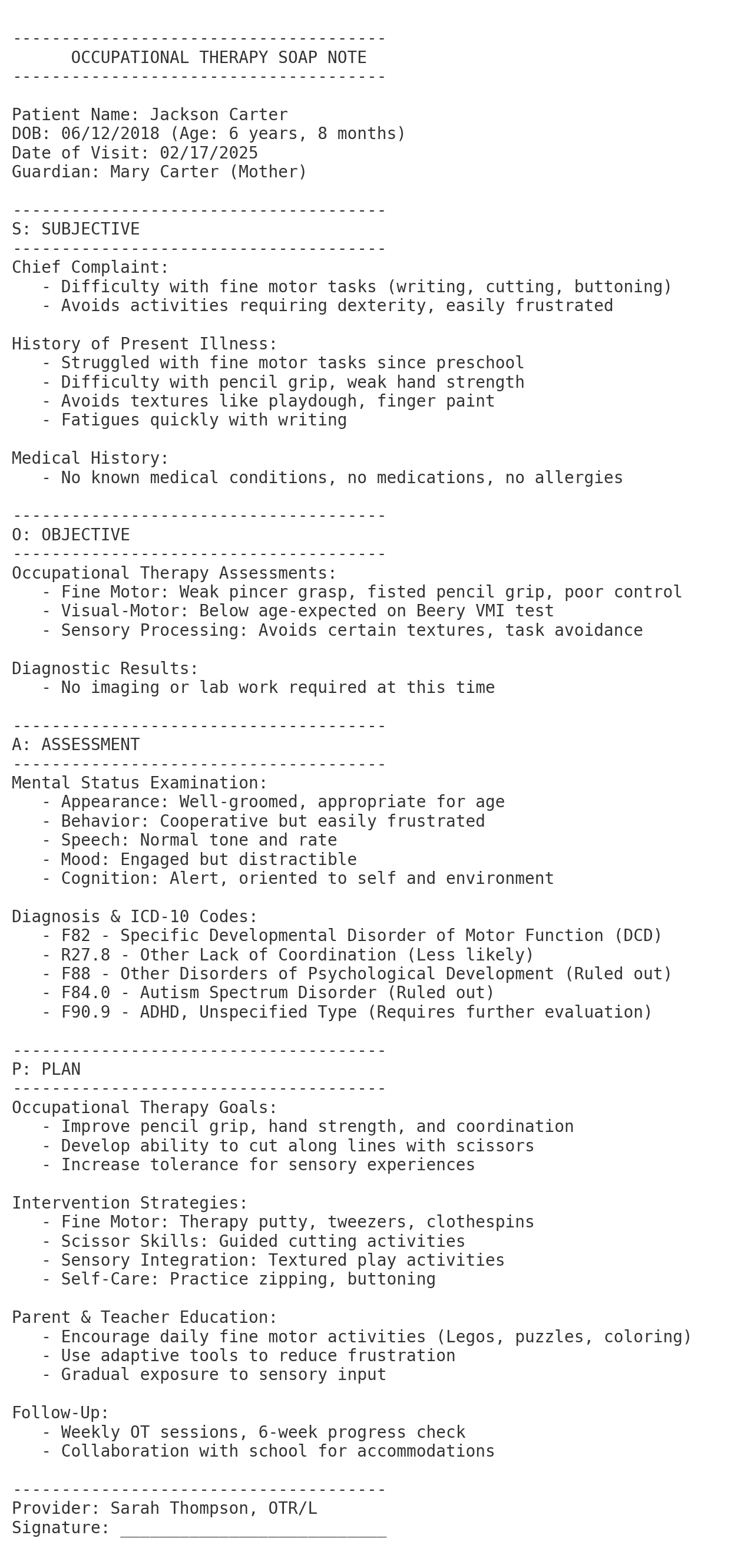
Chief Complaint (CC): Mother states: “Jackson has difficulty holding a pencil properly, struggles with cutting with scissors, and avoids activities that require fine motor skills.”
History of Present Illness (HPI):
Onset: Concerns noted since preschool, more pronounced in kindergarten.
Duration: Persistent for the past 2 years.
Character:
Difficulty with grip strength and finger coordination.
Tires quickly when writing or drawing.
Prefers gross motor activities over fine motor tasks.
Impact on Function:
Avoids coloring, writing, and buttoning clothing.
Frustrated with schoolwork requiring fine motor skills.
Previous Interventions:
None reported. Teacher suggested OT evaluation.
Medical History:
Born full-term, no complications.
No known medical conditions.
No surgeries or hospitalizations.
Medications:
None.
Allergies:
No known drug allergies.
Family/Social History:
Lives with parents and older sister.
Attends first grade.
No exposure to smoke.
Assessment
Diagnoses:
Primary Hypertension, Uncontrolled (ICD-10: I10)
Persistent elevation in BP (clinic: 158/94 mmHg, home logs: 150-160/90-100 mmHg) due to medication non-adherence (lisinopril 20 mg taken 3-4x/week), high sodium intake, and sedentary lifestyle.
Evidence of renal end-organ damage: eGFR 68 mL/min/1.73m² (CKD Stage G2), elevated urine albumin/creatinine ratio (45 mg/g). Correlates with long-standing HTN and LVH on ECG.
Rationale: This plan aligns with JNC 8 and KDIGO CKD guidelines, prioritizing RAS blockade, diuretic therapy, and aggressive lifestyle modification. By addressing adherence barriers, monitoring for end-organ damage, and setting incremental goals, the approach balances patient-centered care with evidence-based HTN management.
Occupational Therapy OT SOAP Note Example
Occupational Therapy OT SOAP Note Example
Subjective:
CC (Chief Complaint): 6-year-old Caucasian male referred for occupational therapy evaluation due to fine motor delays and difficulty with self-care tasks. Parents and teachers report concerns with handwriting, cutting with scissors, and buttoning clothing. The child avoids fine motor tasks, gets easily frustrated, and has difficulty sustaining attention during activities requiring dexterity.
HPI:
The child has struggled with fine motor coordination since preschool.
Difficulties are more noticeable now in kindergarten with increased academic demands.
Struggles with pencil grasp, scissor use, and manipulation of small objects.
Avoids coloring and writing activities and shows frustration when required to perform fine motor tasks.
Reports occasional hand fatigue and cramping when writing for extended periods.
Substance Current Use:
N/A
Medical History:
Current Medications: None
Allergies: No known drug allergies
Reproductive Hx: N/A
ROS:
GENERAL: No fevers, excessive fatigue, or recent weight changes
HEENT: No vision or hearing concerns reported
SKIN: No rashes or abnormal skin conditions
CARDIOVASCULAR: No known heart conditions or palpitations
RESPIRATORY: No history of asthma or breathing difficulties
GASTROINTESTINAL: Normal appetite, no nausea, vomiting, or abdominal pain
GENITOURINARY: No reported urinary concerns
NEUROLOGICAL: No history of seizures, normal gait and coordination for gross motor skills
MUSCULOSKELETAL: Reduced fine motor strength and dexterity; no joint pain or muscle weakness
HEMATOLOGIC: No abnormal bruising or prolonged bleeding
LYMPHATICS: No enlarged nodes reported
ENDOCRINOLOGIC: No excessive thirst, urination, or other metabolic concerns
Objective
Diagnostic Results:
No labs, X-rays, or other diagnostic tests are required at this time.
🩺 F82 – Specific Developmental Disorder of Motor Function (Developmental Coordination Disorder – DCD)
Rationale: The child exhibits fine motor coordination difficulties impacting handwriting, self-care, and academic tasks. No significant gross motor impairments are present, ruling out generalized motor disorders.
Differential Diagnoses & Rationale:
R27.8 – Other Lack of Coordination
Considered but ruled out because the child’s primary difficulties are fine motor-based, rather than generalized motor incoordination affecting ambulation or gross motor function.
F88 – Other Disorders of Psychological Development
Considered for a broader developmental issue but ruled out due to the specificity of fine motor deficits without global developmental delays.
F84.0 – Autism Spectrum Disorder (ASD)
Although some children with ASD exhibit fine motor delays, the child does not meet criteria for social communication deficits or repetitive behaviors characteristic of ASD.
F90.9 – Attention-Deficit Hyperactivity Disorder (ADHD), Unspecified Type
The child exhibits some distractibility and frustration with tasks but does not demonstrate pervasive inattention or hyperactivity across multiple environments. ADHD evaluation may be considered if symptoms persist.
Z72.820 – Sensory Processing Difficulties (Not Official ICD-10 Code but Commonly Used as a Descriptor)
The child demonstrates sensory avoidance behaviors, particularly with tactile input. Although sensory processing disorder (SPD) is not a formal ICD-10 diagnosis, it is a contributing factor to his difficulties.
Reflections
The child demonstrates fine motor developmental delays, impacting handwriting, self-care, and academic performance.
Sensory processing challenges may contribute to task avoidance and frustration.
Occupational therapy will focus on strengthening fine motor coordination, improving sensory processing, and enhancing functional independence.
1. Occupational Therapy Goals:
Short-Term Goals (4-6 weeks):
Improve pencil grip and sustain writing for 5 minutes without fatigue.
Strengthen hand muscles to improve manipulation of small objects.
Develop ability to use scissors to cut along lines independently.
Increase tolerance for sensory experiences (messy play, textured materials).
Long-Term Goals (3-6 months):
Achieve age-appropriate fine motor skills for writing, cutting, and dressing.
Improve coordination for independent dressing (zippers, buttons).
Increase engagement in fine motor tasks with reduced frustration.
2. Intervention Strategies:
Fine Motor Strength & Coordination:
Hand exercises with therapy putty and stress balls
Use of tweezers, clothespins, and small manipulatives
Adaptive pencil grips and weighted writing utensils
Scissor Skills Training:
Cutting along straight and curved lines with adapted scissors
Progressing from basic shapes to more complex cutting tasks
Visual-Motor & Sensory Integration:
Tracing and coloring activities to improve pencil control
Multi-sensory writing activities (writing in sand, shaving cream)
Exposure to various textures through structured play
Self-Care Skills:
Practice dressing skills (zipping, buttoning, opening lunch containers)
Encourage independence in daily routines
3. Parent & Teacher Education:
Provide daily fine motor activities at home (Lego, coloring, puzzles).
Encourage use of adaptive tools to reduce frustration.
Implement a structured approach with short, engaging tasks.
Gradual sensory exposure to improve tolerance for different textures.
4. Follow-Up & Progress Monitoring:
Frequency: Weekly OT sessions (45 minutes).
Reevaluation: 6-week progress check.
Collaboration with teachers to implement classroom accommodations if needed.
Frequently Asked Questions
What is the difference between daily notes and SOAP notes in occupational therapy documentation?
Daily notes are brief records of each therapy session, while SOAP notes provide a more structured and detailed method of documentation. In occupational therapy practice, daily notes might be used for quick updates, whereas SOAP notes offer comprehensive documentation that includes subjective information, objective measurements, professional assessment, and treatment planning. Both are important components of therapy documentation, but SOAP notes are generally considered more thorough.
How can OT practitioners improve their documentation skills for pediatric behavioral health care?
Occupational therapists can enhance their documentation skills for pediatric behavioral health by focusing on objective behavioral observations, using standardized assessments when applicable, clearly connecting behaviors to occupational performance, and detailing the reasoning behind intervention selections. Continuing education specifically addressing documentation in behavioral health settings can also improve note writing proficiency.
What are the most common mistakes in writing occupational therapy SOAP notes?
Common errors include mixing subjective and objective information, using vague language rather than specific measurements, failing to demonstrate clinical reasoning in the assessment section, and creating generic plans that don’t address individual patient needs. Another frequent mistake is omitting evidence of the need for skilled intervention, which can impact insurance reimbursement and justify the continuation of therapy services.
How should occupational therapists document collaborative care when multiple healthcare providers are involved with pediatric clients?
When documenting collaborative care, occupational therapists should clearly note consultations with other professionals, summarize relevant information shared by the team, describe how the OT treatment plan complements other interventions, and specify responsibilities for follow-up. This integrated approach to documentation ensures continuity of care and maximizes outcomes when children receive services from multiple healthcare providers across different settings.
J.D. is a 45-year-old Caucasian female presenting with constipation for the past 5 days. Using the LOCATES mnemonic:
Location: Abdominal discomfort, primarily in the lower abdomen
Onset: Gradual onset over the past week, with no bowel movement for 5 days
Character: Patient describes feeling “bloated” and “full”
Associated symptoms: Mild abdominal pain, decreased appetite, and occasional nausea
Timing: Constant, worse after meals
Exacerbating factors: Eating large meals, dairy products
Relieving factors: None identified; attempted over-the-counter laxatives without success
Severity: Patient rates discomfort as 6/10
The patient reports a recent increase in stress at work and a decrease in physical activity. She has also been traveling for business, which has disrupted her normal routine.
Current Medications:
Lisinopril 10 mg daily for hypertension
Occasional use of ibuprofen for headaches
Recently started calcium supplements 500 mg daily
Allergies:
No known drug allergies
PMHx (Past Medical History):
Hypertension, diagnosed 3 years ago, well-controlled with medication
No family history of colorectal cancer or inflammatory bowel disease
ROS (Review of Systems):
General: No fever, chills, or unexplained weight loss
HEENT: No headaches, vision changes, or oral lesions
Cardiovascular: No chest pain, palpitations, or edema
Respiratory: No shortness of breath or cough
Gastrointestinal: Constipation, bloating, mild abdominal pain, decreased appetite, occasional nausea. No vomiting, no blood in stool, no changes in stool caliber
Genitourinary: No dysuria, frequency, or urgency
Musculoskeletal: No joint pain or muscle weakness
Skin: No rashes or lesions
Neurological: No numbness, tingling, or weakness
Psychiatric: Reports feeling more anxious due to work stress
Endocrine: No polyuria, polydipsia, or heat/cold intolerance
Hematologic: No easy bruising or bleeding
Allergic/Immunologic: No recent infections or allergic reactions
O. (Objective)
Physical Examination:
General: Alert, oriented, in no acute distress. Well-nourished, well-hydrated.
Vital Signs:
BP: 128/78 mmHg
HR: 76 bpm
RR: 14 breaths/min
Temp: 37.0°C (98.6°F)
SpO2: 99% on room air
BMI: 27.5 kg/m²
HEENT: Normocephalic, atraumatic. Oral mucosa moist, no lesions.
Neck: Supple, no lymphadenopathy, no thyromegaly
Cardiovascular: Regular rate and rhythm, no murmurs, rubs, or gallops
Respiratory: Clear to auscultation bilaterally, no wheezes, rales, or rhonchi
Abdominal: Soft, distended, diffuse tenderness to palpation, especially in lower quadrants. No rebound tenderness or guarding. Bowel sounds hypoactive. No hepatosplenomegaly.
Musculoskeletal: Normal range of motion, no edema
Skin: Warm, dry, no rashes or lesions
Neurological: Alert and oriented x3, cranial nerves II-XII intact, normal strength and sensation in all extremities
Abdominal X-ray: Shows moderate amount of stool throughout the colon, no obstruction or free air
A. (Assessment)
Differential Diagnoses:
Functional Constipation (primary diagnosis)
Justification: Patient’s symptoms, recent lifestyle changes, and physical exam findings are consistent with functional constipation.
Evidence: According to the Rome IV criteria, functional constipation is diagnosed when two or more of the following are present for at least 3 months: straining, lumpy/hard stools, sensation of incomplete evacuation, sensation of anorectal obstruction, manual maneuvers to facilitate defecation, or fewer than 3 spontaneous bowel movements per week (Lacy et al., 2016).
Irritable Bowel Syndrome with Constipation (IBS-C)
Justification: The patient’s symptoms could be consistent with IBS-C, especially given the association with stress.
Evidence: The American College of Gastroenterology guidelines state that IBS is characterized by recurrent abdominal pain associated with defecation or a change in bowel habits (Lacy et al., 2021).
Medication-Induced Constipation
Justification: The patient’s recent start of calcium supplements could contribute to constipation.
Evidence: A review in the American Journal of Gastroenterology notes that calcium supplements can cause or exacerbate constipation (Bharucha et al., 2013).
Hypothyroidism
Justification: While the patient’s TSH is within normal limits, hypothyroidism can cause constipation and should be considered.
Evidence: The American Thyroid Association guidelines state that constipation is a common symptom of hypothyroidism (Garber et al., 2012).
Colorectal Cancer
Justification: While less likely given the patient’s age and lack of alarming symptoms, it should be considered as a possibility.
Evidence: The American Cancer Society recommends considering colorectal cancer in adults with persistent changes in bowel habits, especially those over 45 years old (Wolf et al., 2018).
Primary Diagnosis: Functional Constipation
P. (Plan)
Pharmacological Interventions:
Osmotic Laxative: Polyethylene glycol (MiraLAX) 17g dissolved in 8 oz of water daily for 7 days
Stimulant Laxative: Bisacodyl 5mg orally at bedtime as needed for no bowel movement in 2 days
Lacy, B. E., Mearin, F., Chang, L., Chey, W. D., Lembo, A. J., Simren, M., & Spiller, R. (2016). Bowel disorders. Gastroenterology, 150(6), 1393-1407.
Lacy, B. E., Pimentel, M., Brenner, D. M., Chey, W. D., Keefer, L. A., Long, M. D., & Moshiree, B. (2021). ACG clinical guideline: management of irritable bowel syndrome. American Journal of Gastroenterology, 116(1), 17-44.
Bharucha, A. E., Pemberton, J. H., & Locke III, G. R. (2013). American Gastroenterological Association technical review on constipation. Gastroenterology, 144(1), 218-238.
Garber, J. R., Cobin, R. H., Gharib, H., Hennessey, J. V., Klein, I., Mechanick, J. I., … & Woeber, K. A. (2012). Clinical practice guidelines for hypothyroidism in adults: cosponsored by the American Association of Clinical Endocrinologists and the American Thyroid Association. Thyroid, 22(12), 1200-1235.
Wolf, A. M., Fontham, E. T., Church, T. R., Flowers, C. R., Guerra, C. E., LaMonte, S. J., … & Smith, R. A. (2018). Colorectal cancer screening for average‐risk adults: 2018 guideline update from the American Cancer Society. CA: a cancer journal for clinicians, 68(4), 250-281.
Acute sinusitis, also known as acute rhinosinusitis, is an inflammation or swelling of the tissue lining the sinuses. In a healthy person, sinuses are filled with air, but when they become blocked and filled with fluid, pathogens can grow and cause an infection. This condition is considered acute when it lasts for less than 4 weeks.
Sinusitis affects millions of people each year and can significantly impact quality of life. It’s essential for healthcare providers to accurately diagnose and document cases of acute sinusitis to ensure proper treatment and follow-up care. This is where a well-written SOAP note on Comprehensive Acute Sinusitis Infection Soap Note comes into play.
Acute Sinusitis Infection Soap Note Example
Patient Information:
C, 32, Female, Race
Subjective
CC: “feeling tired” and “hair falling out”
HPI: Chantal is alert and oriented. She complains of feeling tired and hair falling out. She claims she has gained 30 pounds in the last one year despite having a decreased appetite. The client complains of nasal congestion, postnasal discharge, rhinorrhea, and sleep deprivation, as well as feeling cold all of the time. Itchy eyes, ears, and nose are among her complaints. She tried OTC Mucinex at HS to help her breathe but it didn’t work, and Lisinopril 10mg PO QDay for her HTN. Tonsils are normal and the throat is slightly erythematous.
Current Medications: Lisinopril 10mg PO QDay; Mucinex OTC QHS PRN.
Allergies: No known allergy
PMHx: Hypertension
Soc Hx: Heterosexual. Married, one child – living at home. Does not drink alcohol, smoke ofr abuse drugs.
Fam Hx: Father and mother are alive with history of HTN, controlled with medication. Children are alive and well.
Reviews of Systems:
GENERAL: Weight gain, obese, well-dressed, fatigued, alert and oriented x3.
HEENT: Wears glasses for reading. No hearing loss, congestion, oral abnormalities, sore throat, loss of balance. Reports lack of smell and taste. Tonsils normal.
Eyes: Her vision is intact. No hearing impairment and sneezing. Has a runny nose, experience nasal congestion, and sore throat.
SKIN: Non itchy, rough, dry, yellowing and dry skin.
CARDIOVASCULAR: No chest pain, palpitations, facial/ear pressure or edema.
RESPIRATORY: No dyspnea, cough or phlegm.
GASTROINTESTINAL: No nausea, anorexia, constipation, vomiting or diarrhea. No heartburn or abdominal pain.
GENITOURINARY: No dysuria. Not pregnant. LMP was 3/12/2021. No dysmenorrheal. IUD placed 3 months ago for birth control
NEUROLOGICAL: Use glasses to read. No changes in smell, hearing or taste. No headache, dizziness, ataxia, passing out, or paralysis. Bladder/bowel function intact.
MUSCULOSKELETAL: No abnormalities noted; No muscle/back/joint pain or stiffness. Denies muscle/back/joint pain, Denies tingling/muscle weakness.
HEMATOLOGIC: Denies anemia, easy bruising or bleeding. No anemia, bleeding or bruising.
LYMPHATICS: No splenectomy. Normal nodes.
PSYCHIATRIC: Denies depression or anxiety
ENDOCRINOLOGIC: Denies abnormal heat, sweat, cold intolerance. No frequent urination or polydipsia.
ALLERGIES: Reports urticarial, Denies rhinitis, or asthma.
General: Weight gain, obese, well-dressed, fatigued, alert and oriented x3.
HEENT: Wears glasses for reading. No hearing loss, congestion, oral abnormalities, sore throat, loss of balance. Reports lack of smell and taste. Tonsils normal.
Extremities: Joints symmetrical and non-tender, pulses are strong and regular, no irregular heartbeat or murmur, clubbing or edema.
Skin: Non itchy, no rashes, good turgor, rough, dry, and yellowing skin.
Neurological: MSR2+ symmetrical.
Diagnostic results:
HgbA1c – 145 mg/dL, fasting glucose – 126 mg/dL
Pulmonary: CTA bilaterally
Abdominal ultrasound: no abnormalities noted, hyperactive bowel sounds in all four quadrants.
CBC-WNL
Flu Swab-Negative
Rapid Strep-Negative
Assessment.
Differential Diagnoses):
Acute sinusitis: One or two paranasal sinuses are infected with bacteria (Ball et al., 2015). It is characterized by pus-filled nasal discharge and the inability of sinus to transilluminate. Other symptoms include impaired sense of smell, anterior discharge, nasal blockage, and post-nasal drip (Petersen, 2016). The sinus does not transilluminate (Petersen, 2016).
Chronic Sinusitis: Occurs from the swelling of the sinuses for at least three months or longer. It is characterized by breathing difficulties, fatigue, sore throat, and cough (Kwon & O’Rourke, 2020). Other symptoms include painful and swollen eyes often cause headaches (Petersen, 2016).
Common Cold/Rhinovirus: Rhinovirus is a viral infection of the upper respiratory tract. In is characterized by nasal dryness/discharge, sore throat, facial/ear pressure and impaired sense of smell/taste (Ball et al., 2015). Other symptoms include breathing difficulties, congestion, fatigue and loss of appetite.
Allergic rhinitis: Allergic rhinitis is caused by allergens leading to the inflammation reaction (Ball et al., 2015). It is characterised by nasal congestion, sneezing, itchy eyes and nose, fatigue and cough (Petersen, 2016). Other symptoms include breathing difficulty, headache and throat irritation.
Viral upper respiratory tract infection (URTIs): Caused by viral or bacterial invasion of the upper respiratory tract with (Ball et al., 2015). URTIs are characterized by sneezing, sore throat, nasal congestion and congestion.
Understanding Acute Sinusitis Symptoms
The symptoms of acute sinusitis can vary from person to person but generally include:
Nasal congestion
Thick, discolored nasal discharge (yellow or green)
Facial pain or pressure, particularly around the nose, eyes, and forehead
Reduced sense of smell
Cough, which may worsen at night
Fatigue
Headache
Ear pressure
Bad breath
These symptoms often mimic those of a common cold but tend to persist for a longer duration.
Causes of Acute Sinusitis
Acute sinusitis can be triggered by various factors:
Viral infections: Most cases of acute sinusitis begin with a viral infection, often stemming from an upper respiratory tract infection or common cold.
Bacterial infections: Sometimes, a viral infection can lead to a secondary bacterial infection, causing bacterial sinusitis.
Allergies: Allergic rhinitis can cause inflammation in the nasal passages and sinuses, leading to sinusitis.
Environmental irritants: Pollutants, cigarette smoke, and other irritants can inflame the sinus lining.
Structural issues: Nasal polyps, deviated septum, or other anatomical abnormalities can obstruct sinus drainage and lead to infection.
Difference Between Acute and Chronic Sinusitis
While acute and chronic sinusitis share many symptoms, the key difference lies in the duration of the condition:
Acute sinusitis: Symptoms last less than 4 weeks
Subacute sinusitis: Symptoms last 4 to 12 weeks
Chronic sinusitis: Symptoms persist for more than 12 weeks
Chronic sinusitis may also involve more persistent symptoms and can be more challenging to treat, often requiring long-term management strategies.
How to Write a SOAP Note for Acute Sinusitis?
A SOAP note is a structured method for documenting patient encounters in healthcare settings. When writing a SOAP note for acute sinusitis, it’s crucial to include all relevant information systematically.
Components of a SOAP Note
Subjective (S): This section includes the patient’s reported symptoms, history of present illness (HPI), and any relevant past medical history.
Objective (O): Here, you document your physical examination findings, vital signs, and any diagnostic test results.
Assessment (A): This is where you provide your diagnosis or differential diagnoses based on the subjective and objective information.
Plan (P): The plan outlines your treatment approach, including medications, follow-up instructions, and any referrals.
Importance of HPI in SOAP Notes
The History of Present Illness (HPI) is a crucial component of the Subjective section in a SOAP note for acute sinusitis. It should include:
Onset of symptoms
Duration of symptoms
Character of nasal discharge
Associated symptoms (e.g., facial pain, cough)
Aggravating or alleviating factors
Previous treatments attempted
Example HPI: “Patient reports 10-day history of nasal congestion and thick yellow nasal discharge. Symptoms began after an upper respiratory infection 2 weeks ago. Denies fever but complains of facial pressure and occasional headache. OTC decongestants provide minimal relief.”
Documenting Physical Examination Findings
In the Objective section, be sure to document your HEENT (Head, Eyes, Ears, Nose, Throat) examination thoroughly. Key elements to include:
Presence of nasal discharge and its characteristics
Facial tenderness over the sinuses
Oropharyngeal examination findings
Any signs of complications (e.g., periorbital edema)
Example: “Nasal mucosa erythematous and edematous bilaterally. Thick yellow discharge noted in both nasal passages. Tenderness to palpation over maxillary sinuses. Oropharynx without erythema or exudate. No periorbital edema observed.”.
How is Acute Sinusitis Diagnosed?
Role of Physical Examination in Diagnosis
A thorough physical examination is crucial in diagnosing acute sinusitis. Key elements include:
Anterior rhinoscopy: Examining the nasal passages with a speculum and light source.
Palpation of the sinuses: Checking for tenderness over the affected areas.
Transillumination: Although less commonly used, this can help assess sinus opacity.
Otoscopy: To rule out concurrent ear infections.
Example findings: “Anterior rhinoscopy reveals erythematous and edematous nasal mucosa with purulent discharge bilaterally. Tenderness noted over maxillary and frontal sinuses. Tympanic membranes clear bilaterally.”
Use of Imaging Studies like CT Scan
While not routinely necessary for uncomplicated acute sinusitis, imaging studies may be warranted in certain situations:
Suspected complications
Recurrent or chronic sinusitis
Failure to respond to initial treatment
CT scans are the gold standard for sinus imaging, providing detailed views of the sinus anatomy and any obstructions or abnormalities.
Identifying Bacterial vs. Viral Infections
Distinguishing between bacterial and viral sinusitis can be challenging but is crucial for appropriate treatment. Factors suggesting bacterial infection include:
Symptoms persisting for more than 10 days without improvement
Severe symptoms, including high fever (>39°C/102°F), purulent nasal discharge, or facial pain lasting for 3-4 consecutive days
Worsening symptoms after initial improvement (“double sickening”)
Viral sinusitis typically improves within 7-10 days, whereas bacterial sinusitis often persists or worsens beyond this timeframe.
What Are the Treatment Options for Acute Sinusitis?
Pharmacological Treatments
Antibiotics: Reserved for cases of suspected bacterial sinusitis. Common first-line options include:
Amoxicillin
Amoxicillin-clavulanate
Doxycycline (for penicillin-allergic patients)
Intranasal corticosteroids: Help reduce inflammation and congestion.
Examples: Fluticasone, Mometasone
Decongestants: Can provide short-term relief of nasal congestion.
Oral: Pseudoephedrine
Topical: Oxymetazoline (limited to 3 days use to avoid rebound congestion)
Pain relievers: For symptom relief
Acetaminophen (Tylenol)
Ibuprofen
Home Remedies and Saline Solutions
Non-pharmacological treatments can be very effective in managing acute sinusitis:
Saline nasal irrigation: Helps clear mucus and allergens from nasal passages.
Steam inhalation: Can help loosen mucus and soothe inflamed nasal passages.
Hydration: Drinking plenty of fluids helps thin mucus secretions.
Warm compresses: Applied to the face can help relieve pain and pressure.
When to Consider Surgery for Chronic Cases
While surgery is not typically considered for acute sinusitis, it may be an option for chronic cases that don’t respond to medical treatment. Surgical interventions may include:
Functional endoscopic sinus surgery (FESS)
Balloon sinuplasty
Septoplasty (for deviated septum)
These procedures aim to improve sinus drainage and correct anatomical issues contributing to chronic sinusitis.
Kwon, E., & O’Rourke, M. C. (2020). Chronic Sinusitis. In StatPearls. StatPearls Publishing. Petersen, S. W. (2016). Advanced health assessment and diagnostic reasoning. Jones & Bartlett Learning
FAQs on Comprehensive Acute Sinusitis Infection Soap Note
What is the first antibiotic for sinusitis? Amoxicillin is typically the first-line antibiotic for uncomplicated acute bacterial sinusitis in adults and children.
What are the top 3 antibiotics for sinusitis? The top 3 antibiotics commonly prescribed for sinusitis are:
Amoxicillin
Amoxicillin-clavulanate
Doxycycline (for penicillin-allergic patients)
What is the drug of choice for sinusitis? The drug of choice depends on the specific case, but amoxicillin is often considered the first-line treatment for bacterial sinusitis due to its effectiveness against common pathogens and relatively low cost.
What IV antibiotics are used for sinus infection? Intravenous antibiotics are rarely necessary for acute sinusitis but may be used in severe cases or complications. Options include:
A Diabetes SOAP Note is a structured method of documentation used by healthcare providers to record patient information, observations, and treatment plans specifically for patients with diabetes mellitus type 2. This standardized format ensures that all essential aspects of a patient’s diabetic condition are consistently captured and communicated among healthcare professionals.
SOAP stands for Subjective, Objective, Assessment, and Plan. In the context of diabetes management, a SOAP note helps healthcare providers track the progress of a patient’s condition, monitor treatment effectiveness, and make informed decisions about ongoing care.
Components of a SOAP Note
Subjective: This section includes the patient’s reported symptoms, concerns, and experiences related to their diabetes. It may cover aspects such as fatigue, increased thirst (polydipsia), frequent urination (polyuria), blurred vision, or any other symptoms associated with diabetes type 2.
Objective: This component documents measurable and observable data, including vital signs, physical examination findings, and laboratory results. For diabetes patients, this often includes blood glucose levels, hemoglobin A1C results, blood pressure readings, and weight.
Assessment: In this section, the healthcare provider evaluates the patient’s condition based on the subjective and objective information gathered. It may include the current status of diabetes management, potential complications, and any new or ongoing issues related to the patient’s diabetes.
Plan: The final section outlines the treatment plan, including any adjustments to medications, lifestyle modifications, follow-up appointments, and patient education needs.
Diabetes SOAP Note Example
SUBJECTIVE:
Chief Complaint: “My blood sugar has been really high for the past week, and I feel very thirsty”
History of Present Illness: 58-year-old male with Type 2 Diabetes Mellitus (diagnosed 5 years ago) presents with one week of elevated blood glucose readings (ranging 250-400 mg/dL), increased thirst, frequent urination, and fatigue. Patient reports poor medication adherence over the past month due to financial constraints. Denies fever, chest pain, or shortness of breath. Has been drinking more water but hasn’t modified diet. Denies recent illness or new medications.
Current Medications:
Metformin 1000mg BID (reports missing ~50% of doses in past month)
Glipizide 10mg daily (reports missing ~50% of doses in past month)
Lisinopril 10mg daily for hypertension
Allergies: NKDA
Review of Systems:
Positive:
Constitutional: Fatigue, polydipsia
Urinary: Polyuria
Endocrine: Polyphagia Negative:
No chest pain, shortness of breath, nausea, vomiting
No visual changes
No numbness/tingling in extremities
No wounds or infections
OBJECTIVE:
Vital Signs:
BP: 142/88 mmHg
HR: 88 bpm
RR: 16/min
Temp: 98.6°F
SpO2: 98% on room air
Weight: 92 kg (stable)
Physical Examination: General: Alert, oriented, no acute distress HEENT: Mucous membranes slightly dry Cardiovascular: Regular rate and rhythm, no murmurs Respiratory: Clear to auscultation bilaterally Abdominal: Soft, non-tender, non-distended Skin: No lesions or infections Neurological: Alert, oriented x3, intact sensation Extremities: No edema, no ulcers
Laboratory Results:
Point of care glucose: 342 mg/dL
HbA1c: 10.2% (previous was 7.8% three months ago)
Basic Metabolic Panel:
Sodium: 138 mEq/L
Potassium: 4.2 mEq/L
Chloride: 102 mEq/L
CO2: 24 mEq/L
BUN: 18 mg/dL
Creatinine: 1.1 mg/dL
Calculated osmolality: 295 mOsm/kg
Urinalysis: Glucose 3+, no ketones
Urine microalbumin: 45 mg/24h
ASSESSMENT:
Primary Diagnosis:
Type 2 Diabetes Mellitus with Hyperglycemia (E11.65) Rationale: Elevated blood glucose, increased HbA1c, symptoms of hyperglycemia, and known history of T2DM
Contributing Factors:
Medication non-adherence due to financial constraints
Poor dietary control
Possible medication resistance
Differential Diagnoses:
Diabetic Ketoacidosis (E11.10) Rationale: Ruled out by absence of ketones, normal pH, and mental status
Hyperosmolar Hyperglycemic State (E11.00) Rationale: Ruled out by normal osmolality and mental status
New-onset infection (R50.9) Rationale: Ruled out by normal temperature and absence of symptoms
Complications Assessment:
Early diabetic nephropathy (elevated urine microalbumin)
No current diabetic retinopathy or neuropathy
PLAN:
Medications:
Resume previous doses of Metformin and Glipizide
Add Empagliflozin 10mg daily (provided samples for 1 month)
Continue Lisinopril 10mg daily Rationale: Add SGLT2 inhibitor to improve glycemic control
Laboratory Monitoring:
Basic metabolic panel in 1 week
HbA1c repeat in 3 months
Comprehensive metabolic panel in 1 month Rationale: Monitor response to therapy and assess organ function
Diabetes Management:
Provided glucometer and testing supplies
Instructions for blood glucose monitoring 4x daily
Detailed dietary counseling with emphasis on carbohydrate counting
Referral to diabetes educator
Signs/symptoms of hyper/hypoglycemia reviewed Rationale: Improve self-management skills
Social Support:
Referral to social worker for medication assistance programs
Provided information about generic medication options Rationale: Address financial barriers to care
Follow-up:
Return visit in 1 week
Call office if blood glucose >400 mg/dL or symptoms worsen
Provided after-hours contact information
Patient Understanding: Patient verbalizes understanding of medication changes, glucose monitoring, and follow-up plan. Agrees to contact office if symptoms worsen.
Time Spent: 30 minutes
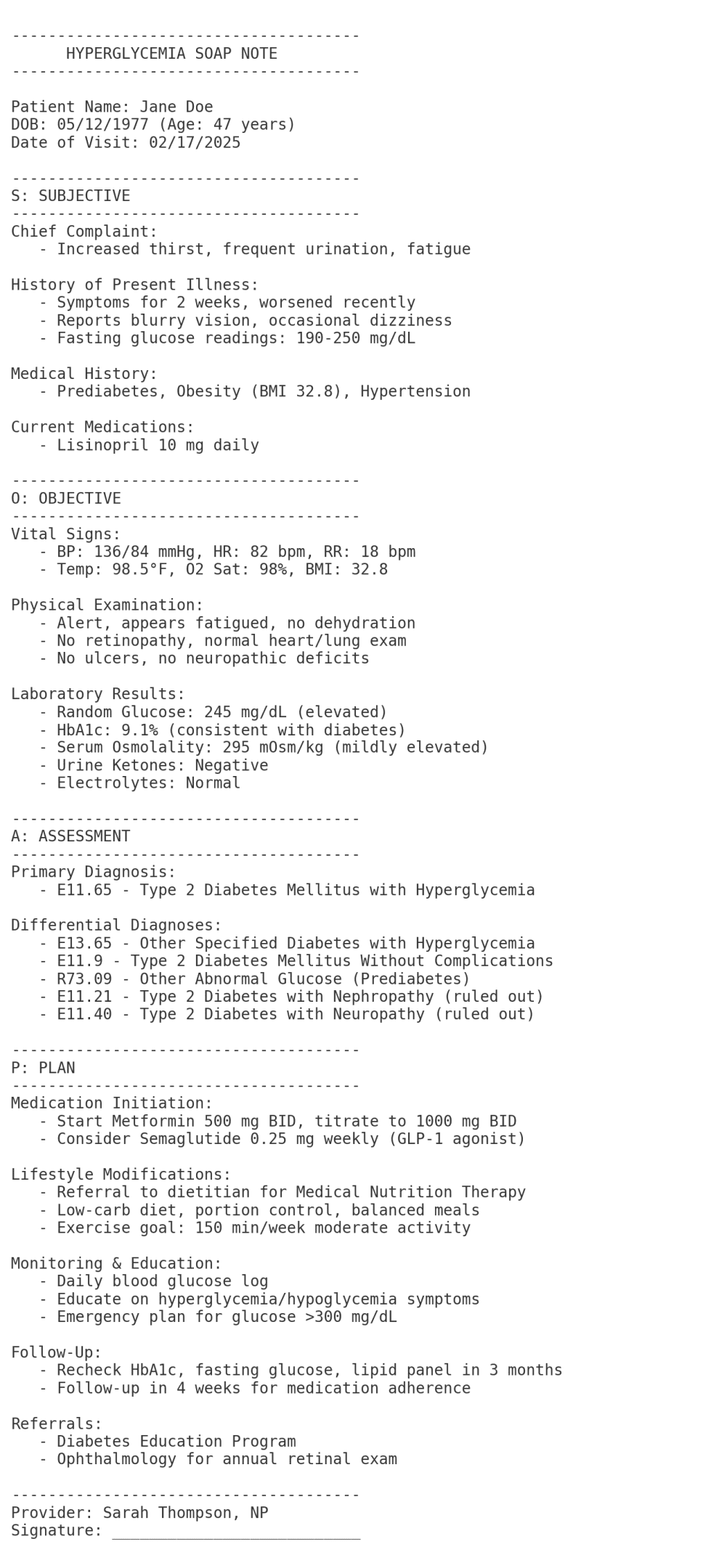
HyperglycemiaSOAP Note Example
S: Subjective
Chief Complaint: “I’ve been extremely thirsty, urinating a lot, and feeling tired for the past week.” HPI:
48-year-old female with 7-day history of polyuria, polydipsia, fatigue, and blurred vision.
Reports unintentional weight loss of 4 lbs over 2 weeks.
Denies nausea, vomiting, abdominal pain, or recent illness.
No history of diabetes. Family history: Mother with type 2 diabetes.
Diet: High in sugary snacks and fast food; minimal physical activity. PMH: Hypertension, obesity (BMI 32). Medications: Lisinopril 10 mg daily. Allergies: NKDA. Social: Smokes ½ pack/day; denies alcohol/drug use.
O: Objective
Vital Signs:
Temp: 98.6°F (oral)
HR: 88 bpm
RR: 16/min
BP: 142/88 mmHg
Weight: 88 kg
Blood Glucose (fingerstick): 298 mg/dL (fasting)
Physical Exam:
General: Alert, obese, fatigued appearance.
HEENT: Dry mucous membranes; no acanthosis nigricans.
Cardiac: Regular rate/rhythm, no murmurs.
Abdomen: Soft, non-tender, no hepatomegaly.
Skin: No lesions or infections; poor skin turgor.
Neurologic: Alert, oriented; no focal deficits.
Labs (if available):
HbA1c: 9.2% (elevated, indicative of chronic hyperglycemia)
Urinalysis: Glucose 3+, no ketones.
Basic Metabolic Panel: Serum glucose 310 mg/dL, normal anion gap.
A: Assessment
Primary Diagnosis:
Hyperglycemia, likely due to New-Onset Type 2 Diabetes Mellitus (ICD-10: R73.9 – Hyperglycemia, unspecified; E11.65 – Type 2 DM with hyperglycemia if confirmed)
PCP follow-up in 1 week for medication adherence and glucose logs.
Ophthalmology referral for blurred vision (rule out diabetic retinopathy).
Monitoring:
Renal function tests (BUN/Cr) before starting metformin.
Foot exam for neuropathy at next visit.
Rationale for ICD-10 Selection:
R73.9: Initial code for hyperglycemia without confirmed diabetes.
E11.65: Used if type 2 diabetes is confirmed (pending further evaluation).
Differentials excluded based on labs, exam, and history.
Clinical Decision-Making:
Hyperglycemia likely reflects undiagnosed type 2 diabetes given risk factors (obesity, family history). Immediate focus on glycemic control and lifestyle changes to prevent complications.
Mastering the diabetes SOAP note is an essential skill for nursing students entering clinical practice. A well-crafted diabetes SOAP note provides a comprehensive framework for documenting patient care, tracking progress, and ensuring proper diabetes management. As a nursing student, understanding how to properly document patient encounters related to diabetes mellitus can significantly impact patient outcomes and your professional development.
SOAP Note Structure
The SOAP note format has become the standard documentation method in healthcare settings. When applied to diabetes care, a diabetes SOAP note allows healthcare professionals to systematically record relevant information about patients with diabetes.
A SOAP note consists of four distinct components:
S (Subjective): Information reported by the patient
O (Objective): Measurable and observable data gathered during assessment
A (Assessment): Clinical conclusions based on subjective and objective information
P (Plan): Treatment strategies and next steps
For diabetes care, each component of the SOAP note addresses specific aspects of the condition, from symptoms to treatment plans. Let’s explore how to effectively document each section for patients with diabetes.
The Subjective Component of Diabetes SOAP Notes
The subjective section of a diabetes SOAP note captures the patient’s personal experience with their condition. This includes their chief complaints, symptoms, and how diabetes affects their daily life.
When documenting the subjective component for patients with diabetes, focus on:
Symptoms of hyperglycemia: Patients may report polyuria, increased thirst, blurred vision, or fatigue
Blood glucose monitoring: Patient-reported blood glucose levels and testing frequency
Medication adherence: Information about insulin administration or oral medications
Dietary habits: Food intake patterns and relationship to blood sugar levels
Physical activity: Exercise routines and their effect on glucose control
Recent changes: Any recent modifications to medication, diet, or lifestyle
A thorough subjective section might include statements such as: “Patient reports blood glucose readings ranging from 180-250 mg/dL over the past week. Denies fever, chest pain, or shortness of breath. Patient admits to dietary non-compliance during weekend family gathering. Denies dizziness or abdominal pain.”
The Objective Component in Diabetes SOAP Notes
The objective section of a diabetes SOAP note documents clinical findings and measurable data. This critical component provides concrete evidence of the patient’s current health status.
Key elements to include in the objective section for diabetes care:
Vital signs: Blood pressure (goal blood pressure for patients with diabetes is typically <140/90 mmHg), heart rate, respiratory rate, temperature
Weight and BMI: Important for tracking changes over time
Laboratory results: HbA1c (target is generally less than 7%), fasting plasma glucose, oral glucose tolerance test results if applicable
Blood glucose readings: Current readings and patterns from patient logs
Medication review: Current diabetes medications including insulin types and dosages
For example: “Vital signs: BP 138/84 mmHg, HR 78, RR 16, Temp 98.6°F. Weight 192 lbs (no change from last visit). Random blood glucose: 187 mg/dL. HbA1c: 7.8% (increased from 7.2% three months ago). Physical exam reveals no acute findings. No signs of peripheral neuropathy. Foot exam shows intact skin, normal sensation.”
Assessment in Diabetes SOAP Notes
The assessment section synthesizes the subjective and objective information to form clinical judgments about the patient’s diabetes management. This section identifies problems and evaluates the patient’s condition in the context of diabetes.
Important considerations for the assessment section:
Diabetes classification: Type 1 diabetes, type 2 diabetes, or gestational diabetes
Glycemic control: Whether blood glucose levels are well-managed
Complications: Presence of acute or chronic diabetes-related issues
Risk factors: Identification of factors affecting diabetes management
Comorbidities: Other conditions like hypertension or rheumatoid arthritis that may impact diabetes care
A comprehensive assessment might read: “58-year-old male with type 2 diabetes mellitus with suboptimal glycemic control evidenced by elevated blood glucose readings and increased HbA1c. Patient demonstrates adequate medication adherence but struggles with dietary compliance. No signs of acute complications. Hypertension is currently well-controlled.”
The Plan Component of Diabetes SOAP Notes
The plan section outlines the treatment strategy for managing the patient’s diabetes and related conditions. This section should be clear, specific, and actionable.
Elements to address in the plan section:
Medication adjustments: Changes to insulin doses or oral agents
Glucose monitoring: Recommendations for timing and frequency
Education: Topics for diabetes self-management education
Referrals: Consultations with specialists if needed
Follow-up: Timing for next appointment and monitoring parameters
An effective plan might include: “1. Continue Metformin 1000mg BID. 2. Increase Glipizide to twice daily dosing. 3. Monitor blood glucose levels before meals and at bedtime. 4. Referral to diabetes educator for dietary counseling, focusing on whole grains and portion control. 5. Encourage 30 minutes of physical activity 5 days per week. 6. Reduce sodium intake to 2 grams daily to manage hypertension. 7. Return for follow-up in 1 month with blood glucose log.”
Diabetes SOAP Note Example for Type 2 Diabetes
To illustrate the application of the SOAP format in the context of diabetes, here’s an example diabetes SOAP note for a patient with type 2 diabetes:
S: 50-year-old African American male with type 2 diabetes presents for a routine follow-up. Reports average morning blood glucose readings of 150-180 mg/dL. Denies hypoglycemic episodes. States he has been “mostly” taking medications as prescribed but occasionally misses evening dose. Denies chest pain, shortness of breath, or blurred vision. Reports maintaining a healthy diet during weekdays but admits to poor choices on weekends. Currently walking 15 minutes daily.
O: Vital signs: BP 142/88 mmHg, HR 76, RR 18, Temp 98.4°F. Weight 202 lbs (up 3 lbs from last visit). Random plasma glucose: 163 mg/dL. HbA1c: 7.9% (previous was 7.5%). Current medications were mentioned: Metformin 1000mg BID, Glipizide 5mg daily, Lisinopril 10mg daily. Physical exam reveals normal heart sounds, clear lungs. Foot exam shows no lesions or decreased sensation. No edema noted.
A: Type 2 diabetes mellitus with worsening glycemic control. Contributing factors include medication non-adherence and inconsistent dietary habits. Hypertension borderline controlled. Weight gain since last visit indicating need for therapy in order to lower cardiovascular risk. No evidence of diabetic neuropathy or other acute complications.
P:
Adjust Glipizide, increased to twice daily
Emphasize medication adherence, especially evening doses
Recommend drinking more water and limiting caloric beverages
Encourage increased physical activity to 30 minutes daily
SMART goal: Patient will track blood glucose levels 2 times daily for next 2 weeks
Avoid drinking alcohol as it has a negative interaction with current medications
Follow up in 4 weeks with blood glucose log
Lab work including lipid panel and kidney function in 2 weeks to reduce CVD risks by maintaining healthy cholesterol levels
Type 1 Diabetes SOAP Note Considerations
While many aspects of documentation are similar, a diabetes SOAP note for type 1 diabetes has some unique considerations. Type 1 diabetes management differs significantly from type 2 diabetes management, primarily due to the absolute insulin deficiency.
In a SOAP note for type 1 diabetes:
Subjective: Focus on insulin administration, carbohydrate counting, and hypoglycemic episodes
Objective: Include insulin-to-carbohydrate ratios and correction factors
Assessment: Address insulin management and technology use (pumps, continuous glucose monitors)
Plan: Often includes more detailed insulin adjustments and hypoglycemia prevention strategies
Best Practices for Effective Diabetes SOAP Notes
To improve your diabetes SOAP note documentation, consider these best practices:
Use specific, measurable terms: Instead of “high glucose,” document actual readings (e.g., “blood glucose 275 mg/dL”).
Maintain chronological order: Present information in a logical sequence.
Avoid subjective judgments: Focus on facts rather than assumptions about patient behavior.
Document patient understanding: Note the patient’s comprehension of their condition and management plan.
Address barriers to care: Identify factors affecting the patient’s ability to manage their diabetes.
Use appropriate terminology: Accurately describe diabetes-related concepts using proper medical terminology.
Diabetes SOAP Note Template for Student Practice
To help nursing students practice documentation, here’s a basic diabetes SOAP note template:
S:
Chief complaint
History of present illness
Diabetes history (type, duration, previous control)
When structuring a SOAP note for a patient with type 2 diabetes, it’s important to include specific information relevant to diabetes management. Here’s a general structure:
Foot examination (checking for ulcers, infections, or neuropathy)
Skin examination (looking for acanthosis nigricans, insulin injection sites)
Eye examination (if possible, or noting recent ophthalmology visits)
How to Assess Blood Sugar Levels in Diabetes Type 2?
Monitoring Blood Glucose: Tools and Techniques
Assessing blood sugar levels is a crucial aspect of diabetes management. Here are some common tools and techniques:
Glucometers: These portable devices allow patients to check their blood glucose levels at home using a small blood sample.
Continuous Glucose Monitoring (CGM) Systems: These devices provide real-time glucose readings throughout the day and night, offering a more comprehensive view of glucose patterns.
Fasting Plasma Glucose Test: This test measures blood sugar levels after an 8-hour fast, typically performed in a laboratory setting.
Oral Glucose Tolerance Test (OGTT): This test involves measuring blood glucose levels before and 2 hours after consuming a glucose-rich drink.
Random Plasma Glucose Test: This test can be done at any time of the day, regardless of when the patient last ate.
Understanding A1C Levels and Their Importance
Hemoglobin A1C (HbA1c) is a crucial marker for long-term blood glucose control:
What is A1C?: It’s a blood test that reflects average blood glucose levels over the past 2-3 months.
Target A1C: For most adults with diabetes, the target A1C is less than 7%. However, this may vary based on individual factors.
Frequency of Testing: A1C is typically measured every 3-6 months, depending on how well the patient’s diabetes is controlled.
Interpretation:
Below 5.7%: Normal
5.7% to 6.4%: Prediabetes
6.5% or above: Diabetes
Importance: Regular A1C testing helps healthcare providers assess the effectiveness of the current treatment plan and make necessary adjustments.
Identifying Symptoms of Hyperglycemia and Hypoglycemia
Recognizing the symptoms of high and low blood sugar is essential for both patients and healthcare providers:
Hyperglycemia (High Blood Sugar):
Increased thirst (polydipsia)
Frequent urination (polyuria)
Fatigue
Blurred vision
Slow-healing wounds
Recurrent infections
Hypoglycemia (Low Blood Sugar):
Shakiness
Sweating
Rapid heartbeat
Confusion
Irritability
Hunger
Weakness
In severe cases, loss of consciousness
What Lifestyle Modifications are Recommended for Patients with Diabetes?
Dietary Changes to Manage Diabetes Type 2
Carbohydrate Management: Encourage patients to monitor their carbohydrate intake and choose complex carbohydrates over simple sugars.
Portion Control: Teach patients about appropriate portion sizes to help manage calorie intake and blood sugar levels.
Increased Fiber Intake: Recommend a diet rich in fiber, including whole grains, legumes, fruits, and vegetables.
Limit Saturated and Trans Fats: Advise patients to reduce intake of saturated fats and eliminate trans fats to support heart health.
Consistent Meal Timing: Encourage regular meal times to help maintain stable blood glucose levels.
Hydration: Stress the importance of adequate water intake.
Importance of Physical Activity in Diabetes Management
Regular physical activity is crucial for managing diabetes type 2:
Weight Management: Physical activity aids in maintaining a healthy weight or achieving weight loss goals.
Cardiovascular Health: Regular exercise reduces the risk of heart disease and stroke, common complications in diabetes.
Stress Reduction: Physical activity can help manage stress, which can affect blood glucose levels.
Recommendations: Aim for at least 150 minutes of moderate-intensity aerobic activity per week, spread over at least 3 days, with no more than 2 consecutive days without exercise.
Managing Hypertension and Cholesterol Levels
Controlling blood pressure and cholesterol is essential in diabetes management:
Blood Pressure Goals: The target blood pressure for most patients with diabetes is below 140/90 mmHg.
Cholesterol Management:
LDL Cholesterol: Target is generally <100 mg/dL
HDL Cholesterol: Target is >40 mg/dL for men and >50 mg/dL for women
Triglycerides: Target is <150 mg/dL
Lifestyle Modifications:
Reduce sodium intake
Increase consumption of fruits, vegetables, and whole grains
Limit alcohol consumption
Quit smoking
Medication: If lifestyle changes are insufficient, medications may be prescribed to manage hypertension and hyperlipidemia.
How to Document a Patient’s History of Present Illness?
Key Questions to Ask During Patient Assessment
When documenting the history of present illness for a patient with diabetes type 2, consider asking the following key questions:
What brings you in today? Are you experiencing any new symptoms?
How well controlled do you feel your blood sugar has been recently?
Have you had any episodes of very high or very low blood sugar?
Are you experiencing any symptoms like increased thirst, frequent urination, or blurred vision?
Have you noticed any changes in your energy levels or weight?
Are you having any problems with your feet, such as numbness, tingling, or wounds that won’t heal?
Have you been able to follow your diet and exercise plan?
Are you taking your medications as prescribed? Any side effects?
Have you had any recent illnesses or stressors that might have affected your blood sugar?
When was your last eye exam?
Identifying Common Complaints in Type 2 Diabetes Patients
Common complaints that should be noted in the history of present illness include:
Type 2 diabetes is a chronic condition where your body either doesn’t produce enough insulin or has become resistant to its effects. This leads to high blood sugar levels, which can cause various health problems over time. It’s often related to lifestyle factors and can be managed through diet, exercise, and sometimes medication.
What is the best description of type 2 diabetes?
Type 2 diabetes is a metabolic disorder characterized by high blood sugar levels resulting from the body’s ineffective use of insulin. It’s the most common form of diabetes, often developing in adults and associated with obesity and sedentary lifestyle.
What is the clinical presentation of diabetes mellitus type 2?
The clinical presentation of type 2 diabetes can include increased thirst, frequent urination, unexplained weight loss, fatigue, blurred vision, slow-healing wounds, and recurrent infections. However, some patients may be asymptomatic and diagnosed through routine blood tests.
What is diabetes type 2 concept?
The diabetes type 2 concept refers to the understanding that this form of diabetes is primarily characterized by insulin resistance and relative insulin deficiency. Unlike type 1 diabetes, where the pancreas doesn’t produce insulin, in type 2 diabetes, the body becomes less responsive to insulin or doesn’t produce enough to maintain normal blood glucose levels.
Low back pain is a common condition that physical therapists encounter frequently in their practice. Proper documentation through SOAP notes is crucial for effective patient care and treatment planning.
This comprehensive guide on Back Pain SOAP Notes will explore the intricacies of writing SOAP notes for low back pain in physical therapy. It will provide examples and insights to help therapists improve their documentation skills.
Sleep Ergonomics SOAP note example
SUBJECTIVE
Chief Complaint (CC): “Chronic neck pain and stiffness in the morning for the past 3 months”
History of Present Illness (HPI):
Location: Posterior neck region bilaterally with predominance on right side, radiating to right shoulder
Onset: Gradual onset approximately 3 months ago, coinciding with new job position
Character: Deep, achy pain with associated stiffness
Associated Symptoms: Bilateral arm numbness during sleep, decreased sleep quality
Timing: Worst in morning (6/10), improves throughout day (3/10)
Exacerbating Factors: Prolonged sleep position, computer work, end of workday
Severity: 6/10 at worst (morning), 3/10 at best (evening)
Past Medical History:
Mild anxiety (diagnosed 2020)
Right shoulder impingement (2019, resolved with PT)
Stress Level: Moderate to high due to work demands
Tobacco: Denies
Alcohol: 1-2 drinks/week
Recreational Drugs: Denies
Current Medications:
Escitalopram 10mg PO daily
Ibuprofen 400mg PO PRN pain
Allergies:
NKDA (No Known Drug Allergies)
No known environmental allergies
Review of Systems: Constitutional: Reports fatigue, disrupted sleep patterns, denies fever/chills HEENT: Denies headaches, visual changes, jaw pain Cardiovascular: Denies chest pain, palpitations, edema Respiratory: Denies SOB, cough Gastrointestinal: Denies changes in appetite, nausea Musculoskeletal: Reports morning neck stiffness, upper back tension Neurological: Reports intermittent numbness in both arms during sleep Psychological: Reports mild anxiety about sleep quality Skin: Denies rashes, lesions All other systems reviewed and negative
OBJECTIVE
Vital Signs:
Blood Pressure: 122/78 mmHg
Heart Rate: 72 bpm, regular
Respiratory Rate: 16 breaths/min
Temperature: 98.6°F
Height: 5’10” (177.8 cm)
Weight: 175 lbs (79.4 kg)
BMI: 25.1 kg/m²
General Appearance:
35-year-old male in no acute distress
Well-groomed, appropriate affect
Forward head posture noted
Rounded shoulders observed
Increased thoracic kyphosis
Cervical Range of Motion (Measured with Goniometer): Flexion: 45° (Normal 50°) – limited by stiffness Extension: 40° (Normal 60°) – limited by pain Right Rotation: 60° (Normal 80°) – limited by pain Left Rotation: 70° (Normal 80°) Right Lateral Flexion: 35° (Normal 45°) – limited by stiffness Left Lateral Flexion: 40° (Normal 45°)
Palpation:
Increased muscle tone in upper trapezius bilaterally (R>L)
Tender to palpation over cervical paraspinals (R>L)
Psychiatric: Denies SI/HI All other systems reviewed and negative
OBJECTIVE
Vital Signs:
BP: 116/64 mmHg
HR: 68 bpm
RR: 18 breaths/min
O2 Sat: 97% on room air
Temp: 97°F
Height: 5’4″
Weight: 117 lbs
BMI: 20.0
General Appearance:
Well-developed
Calm and cooperative
Clear speech
Physical Examination: HEENT:
Head: Symmetric, normocephalic, no injury
Neck: Thyroid palpable, normal size
No lymphadenopathy
Carotids 2+ bilaterally, no bruits
Normal ROM
Skin:
Pink, warm, dry, intact
Uniform throughout
No pallor, cyanosis, jaundice, or lesions
Capillary refill <3 seconds
No abnormal hair or nails
Respiratory:
Lungs clear to auscultation bilaterally
No wheezing, rales, or rhonchi
Cardiovascular:
S1, S2 present
No murmur
Regular rate and rhythm
Peripheral Vascular:
No edema of bilateral lower extremities
Gastrointestinal:
Abdomen soft, non-tender
Positive bowel sounds in all four quadrants
No hepatomegaly or spleen enlargement
No CVA tenderness
Musculoskeletal:
Gait: Walking slowly due to lower midback pain
Strength: 5/5 bilateral upper and lower extremities
ROM: Full in all extremities
Neurological:
Alert and oriented x3
No focal deficits
Testing/Lab Results:
None performed
ASSESSMENT
Primary Diagnosis:
Acute lumbosacral strain – S39.012A
Differential Diagnoses:
Muscle spasm of back – M62.830
Wedge compression fracture of unspecified lumbar vertebra – S33.000
Herniation lumbar intervertebral disc – M51.87
PLAN
Diagnostic Studies:
Spine X-ray to rule out fracture
MRI lumbar spine without contrast
To evaluate for soft tissue, ligament problems, spinal problems, nerve issues, or inflammation
Medications:
Ibuprofen (Nurofen) 600 mg PO q6h PRN for 4 days
Treatment Plan:
Cold compress for inflammation and pain relief
Physical exercises as tolerated
Follow up in 1 week for:
Review test results
Assess patient progress
Evaluate response to treatment
Return sooner if symptoms worsen
Patient Education:
Instructed to contact healthcare provider if symptoms worsen
Patient verbalized understanding of plan and agrees with treatment
References:
Al Qaraghli, M. I., & De Jesus, O. (2020). Lumbar Disc Herniation. PubMed; StatPearls Publishing.
Seller, R. H., & Symons, A. B. (2017). Differential diagnosis of common complaints. Elsevier.
Urits, I., et al. (2019). Low back pain, a comprehensive review: Pathophysiology, diagnosis, and treatment. Current Pain and Headache Reports, 23(3).
A SOAP note for low back pain is a structured method of documentation used by physical therapists to record patient information, assessment findings, and treatment plans. SOAP stands for Subjective, Objective, Assessment, and Plan, which are the four main components of this documentation format.
To improve the quality of SOAP notes, avoid these common pitfalls:
Using vague or subjective language instead of specific, measurable terms
Omitting important details about the patient’s condition or treatment
Failing to update the assessment and plan based on new findings
Overusing abbreviations that may not be universally understood
A SOAP note for pain typically includes the patient’s description of pain (location, intensity, quality), objective measurements (e.g., range of motion, strength), the therapist’s assessment of the pain’s cause, and a plan for pain management and treatment.
How to write soap notes for physical therapy?
To write SOAP notes for physical therapy, follow the SOAP format: Subjective (patient’s reports), Objective (measurable findings), Assessment (therapist’s interpretation), and Plan (treatment strategy). Be concise, specific, and focus on relevant information for the patient’s condition and treatment.
What is a comprehensive SOAP note?
A comprehensive SOAP note includes detailed information in all four sections (Subjective, Objective, Assessment, Plan), providing a thorough picture of the patient’s condition, examination findings, clinical reasoning, and treatment approach. It should be detailed enough to guide ongoing care and communicate effectively with other healthcare providers.
What is the brief pain inventory for low back pain?
The Brief Pain Inventory (BPI) for low back pain is a standardized assessment tool that measures pain intensity and its impact on daily functions. It typically includes questions about pain severity, location, and how it affects activities such as work, sleep, and mood. This inventory helps track changes in pain over time and assess the effectiveness of interventions.
A hypothyroidism SOAP Note is a structured method of documentation used by healthcare providers to record patient information, assessment, and treatment plans specifically for individuals with thyroid hormone deficiency.
SOAP is an acronym that stands for Subjective, Objective, Assessment, and Plan. This format allows for a comprehensive and organized approach to patient care, ensuring that all relevant information is captured and easily accessible for future reference.
Hypothyroidism SOAP Note Example on Template
Data Needed
Data for this patient
Patient Initials
KS
Identifying Data
2/22/1959
Source and Reliability
Patient and reliable.
Age
63
Gender
Male
Occupation
Retired air force housing specialist.
Marital Status
Widowed
Subjective
Chief complaint or appropriate health screening visit: The one or more symptoms or concerns causing the patient to seek care. Need not be the patient’s complete statement – it may be a brief summary of the reason the patient wanted to be seen for this visit
“I cannot stop gaining weight although I am active. I have had swelling in hand and feet, feeling cold, muscle cramps, and constipation in the past two months.”
History of Present Illness: Allergies: medications, food, environmental or seasonalChildhood Illnesses: chicken pox, rheumatic fever, rubella, measles, and mumpsAdult Illnesses Injuries Surgeries Hospitalizations Obstetric/Gynecologic Psychiatric Health Maintenance Immunization status: DPT, MMR, influenza, hepatitis, polio, Pneumovax, herpes zoster Dental exams (frequency and treatment) Last eye exam (include results) SBE/Pap/GYN (include results) Testicular/rectal exam (include results)
KS is a 63-year-old African American male. This is his first time coming for a clinical examination in one year. He reports having a reasonably healthy life until the last two months when he started gaining weight uncontrollably. He reports remaining active and practicing yoga in vain. He also reports having constipation and fatigue most of the days. “At first, I thought constipation and fatigue would end, but they don’t.” The client also reports that I eat well. I am worried about my health.” The patient reports experiencing aggravating joint pains, usually around the knees and elbows, usually at night, but also affecting his movement. He relieves the pain by taking acetaminophen1300 mg PO q8hr PRN. However, the pain keeps coming back over and over again.
Past Medical History: Allergies: medications, food, environmental or seasonalChildhood Illnesses: Adult Illnesses Injuries Surgeries Hospitalizations Obstetric/Gynecologic Psychiatric Health Maintenance Immunization status: DPT, MMR, influenza, hepatitis, polio, Pneumovax, herpes zoster Dental exams (frequency and treatment) Last eye exam (include results) SBE/Pap/GYN (include results) Testicular/rectal exam (include results)
No known medication, environmental or food allergies Reports chicken pox – resolved on its own.Hypertension – Diagnosed in 2017. Well-controlled with medication.Type 2 Diabetes – Diagnosed in 2017. Well-controlled with medication. Last hemoglobin A1c was 6.9% 3 months ago. No history of injuries, surgeries, or hospitalization. Last dental exam – Every six months.Received all immunizations Eye exam – 2 weeks ago. MRD1 6mm. Exophthalmometer reading, 24. Current medication: Hydrochlorothiazide – 20 mg PO QD hypertension. No previous testicular/rectal exam. Lisinopril – 40 mg PO QD hypertension. Metformin – 1000 mg PO BID for diabetes.
Family History: Include the presence or absence of specific illnesses in the family such as hypertension, diabetes, or cancer
Parents deceased. Paternal and maternal grandparents deceased. Father died at age 80 from Covid-19 complications and had type 2 diabetes. Mother died at age 65 in a road accident. Mother had type 2 diabetes and hypertension. Has a living sister aged 45, diagnosed with hypothyroidism and hypertension. Paternal grandfather died aged 88 from old age. Paternal grandmother died aged 85 from a myocardial infarction. Maternal grandfather died aged 87 from diabetes complications. Maternal grandmother died, aged 65, from breast cancer.
Personal and Social History: Educational levelPersonal interestsLifestyle: exercise and dietOlder Adults: ADLs and iADLs
Bachelor’s DegreeDemocratic politics Practices yoga. Healthy diet. None – Care for by the house help.
Review of Systems: GeneralEyesEars/Nose/ThroatEndocrineCardiovascularRespiratoryGastrointestinalGenitourinaryHematology/LymphIntegumentaryNeckNeurologicalMusculoskeletalPsychological
15lbs weight gain. Reports fatigue and weakness. Denies fever. Reports eye pain. Wears reading glasses. Ears: No hearing loss or discharge. Nose: No epistaxis or nasal congestion. Throat: Dental exam six months ago. No throat pain. As per HPI and PMH. No chest discomfort or palpitations. No wheeze, cough, or sputum. No pain with breath. Report constipation, abdominal pain, and diarrhea. Urinary frequency and nocturia in the past three months, four times per night. No urination pain. No erection in the past year. No easy bruising or bleeding. No history of blood clots. Coarse, scale, and dry skin. Neck stiffness and pain. No swollen glands. No headaches or vertigo. Reports focal weakness and gait instability. As per HPI. Reports anxiety. No depression or suicide ideation.
Objective
Vital Signs and Measurements Blood pressureTemperaturePulseRespirationsHeightWeightBMI includes normal, overweight, obese, morbidly obese
Well-developed African American male of the stated age. Alert and oriented in all spheres. Vital signs as per the measurements. The Head is normocephalic. No scalp. Facial tenderness and pink conjunctivae. Present bilateral arcus senilis. Eyes: Eyelid appears retracted, pupils equal in size. Sharp disc margins. Present venous/arteriole nicking. No eye exudates or hemorrhages were seen. Ears: Hearing is grossly intact. Moderate cerumen. Intact tympanic membrane. No erythema. Nose: Minimal septal deviation. Throat: No lesions or exudates. Palpable thyroid. Midline trachea. Distention of the jugular venous present, 8.5cm. No meningismus. Strong carotid upstrokes. No bruits. Cold intolerance, polyuria, and polydipsia are observable. Intercostal space, 4.3cm laterally from the midclavicular line. Symmetric thoracic expansion, dullness of both assess and bases. Regular rhythm and rate. S1 and S2 are normal physiologically. S3 is present, S4 absent. There is no observable respiratory distress. Remarkable breath sounds. No, wheezes or stridor. No tactile fremitus or bronchophony. Abdomen is non distended. No tenderness. hyopactive bowel sounds. No palpable masses. No lesions in the genital area. No inguinal hernia. Moderately enlarged rectum, symmetric, no nodule, and nontender. Cervical or axillary lymph nodes absent. Palpable lymph nodes. Present inguinal nodes, small and mobile, about 4.5mm in size. Coarse, scaly, and dry skin. Focal weakness and gait instability. Joint pain. No hand or bilateral knee deformities. Normal figure curls and movement. Strong muscles. Reduced range of motion. Appears anxious and lethargic.
Assessment and Plan: based on current literature/guidelines. This should be organized and succinct.
Assessment Based on subjective and objective data, including constipation, lid extraction, lethargy, weight gain, coarse, scaly, dry skin, cold intolerance, and palpable goiter, the patient is likely to suffer from hypothyroidism. Also known as Hashimoto, autoimmune thyroid disease is coded as E06.3. Autoimmune thyroid disease is characterized by cold sensitivity, constipation, skin dryness and roughness, weight gain, fatigue, sexual dysfunction, and lid extraction (Arcangelo et al., 2017). The patient presents all these symptoms. The condition is caused by increased thyroid-stimulating hormone (TSH), free thyroxine (FT4), and reduced circulating free triiodothyronine (FT3) (Calsolaro et al., 2019). As a result, the fibrosis increases, and thyroid function decreases. Diagnostic Tests TSH (Thyroid-stimulating hormone) Test – Obtain a blood sample using a needle from the arm into a test tube. Normal TSH values are from 0.4 to 4.0 mIU/ Treatment Plan Start a partial replacement Levothyroxine Therapy with 0.8 mcg/kg of L-T4 with gradual increment using serum thyrotropin Levothyroxine is a standard therapy for hypothyroidism and is effective in resolving hypothyroidism symptoms (Jonklaas et al., 2014). Levothyroxine therapy is easily administered, has favourable side effects, long-term benefits, it is easily absorbed in the intestine, and has a long half-life. 2. Cardiac – Perform complete blood count and metabolic panel. Obtain chest radiograph. Start diuresis – Use furosemide, 40 mg IV at 12 hrs interval. Monitor weight. Liquid intake/urine output. 3. Ophthalmology: Begin eye drops to prevent glaucoma. 4. Maintain insulin for diabetes control and acetaminophen joint pain. 5. Health maintenance: Cancer screening up to date. Discuss appropriate dieting.
Differential diagnoses, including ICD – 10 and Rationale: List the other diagnoses that should be considered in light of the history and physical findings; articulate a rationale for the most likely diagnosis and each differential diagnosis. In this discussion, include pertinent positives and negatives, which help rule out or rule in each diagnosis.
Hypothyroidism – Hypothyroidism is characterized by cold sensitivity, constipation, skin dryness and roughness, weight gain, fatigue, sexual dysfunction, and lid extraction as presented by the patient (Arcangelo et al., 2017). This is the primary diagnosis.Congestive Heart Failure (CHF), ICD-10 Code 150.22. The essential diagnostic features of congestive heart failure presented by the patient include jugular venous distention, weight gain, and a history of hypertension (Ball et al., 2021). However, the client does not present other significant CHF diagnostic features including peripheral edema, pitting edema, ascites, or hepatomegaly. Therefore, this diagnosis is refuted. Unspecified Kidney Failure, ICD-10 Code N19. Kidney failure is a condition in which both kidneys fails to function temporarily and sometime can be chronic. The essential features of kidney failure presented by the patient include fatigue, polyuria, and dry/itchy skill (Chen et al., 2019). However, the client does not present swollen necks or ankles, muscle spasms, or poor appetite from considering the subjective and objective data obtained. Therefore, this diagnosis is refuted.
Most likely diagnosis: (if more than one diagnosis, number each in order of priority) Include: Pathophysiology of the problemExplanation of the diagnosisDiagnostic TestingLab testingRadiology testingCardiac or Neurologic testingEvaluations – Physical Therapy, Occupational Therapy, Speech Therapy, or Mental Health EvaluationsMedications and Treatments – pharmacological and non-pharmacological treatments. Should include at least two evidence-based referencesMotivational Interviewing
Hypothyroidism The probable etiology of the patient’s condition is autoimmune thyroid disease/disorder. Autoimmune disorders attack body tissues (Calsolaro et al., 2019). Lab testing – Obtain blood sample using a needle from the arm into a test tube. Normal TSH normal values are from 0.4 to 4.0 mIU/L. TSH values above the normal range justify the diagnosis. Ultrasound – I recommend thyroid ultrasound to observe nodules usually present among patients diagnosed with hypothyroidism. Refer to an endocrinologist – For monitoring and management of hypothyroidism.
References (APA 7th format)
Arcangelo, V. P., Peterson, A. M., Wilbur, V., Reinhold, J. A. (2016). Pharmacotherapeutics for Advanced Practice, 4th Edition, Wolters Kluwer Health. Ball, J. W., Dains, J. E., Flynn, J. A., Solomon, B. S., & Stewart, R. W. (2021). Seidel’s Guide to Physical Examination-E-Book: An Interprofessional Approach. Elsevier Health Sciences. Calsolaro, V., Niccolai, F., Pasqualetti, G., Tognini, S., Magno, S., Riccioni, T., … & Monzani, F. (2019). Hypothyroidism is the elderly: who should be treated and how?. Journal of the Endocrine Society, 3(1), 146-158. https://doi.org/10.1210/js.2018-00207 Mathew, P., & Rawla, P. (2022). Hyperthyroidism. StatPearls [Internet]. https://pubmed.ncbi.nlm.nih.gov/30725738/
Hypothyroidism soap note example
Hypothyroidism SOAP Note Structure
The SOAP note structure consists of four main sections:
Subjective: This section includes the patient’s reported symptoms, concerns, and any relevant information from their medical history. For hypothyroidism, this might include complaints of fatigue, weight gain, or cold intolerance.
Objective: Here, the healthcare provider records measurable and observable data, such as vital signs, physical examination findings, and laboratory results. In hypothyroidism, this would typically include TSH levels, thyroid hormone levels, and any visible signs of thyroid enlargement or goiter.
Assessment: This section contains the healthcare provider’s analysis of the patient’s condition based on the subjective and objective information. It includes the diagnosis, potential differential diagnoses, and any other relevant clinical impressions.
Plan: The final section outlines the treatment strategy, including medications, lifestyle modifications, follow-up appointments, and any additional tests or referrals needed.
Key Components of a Hypothyroidism SOAP Note
When creating a SOAP note for hypothyroidism, several key components should be included:
Detailed symptom description
Thyroid function test results (TSH, T3, T4)
Physical examination findings, including thyroid gland assessment
Medication history and current thyroid hormone replacement therapy
Comorbidities and their potential impact on thyroid function
Patient’s response to treatment and any side effects
Plan for dose adjustments and follow-up monitoring
How to Document Hypothyroidism in a SOAP Note?
Collecting Relevant Medical History
When documenting hypothyroidism in a SOAP note, it’s essential to gather a comprehensive medical history. This includes:
Duration and onset of symptoms
Family history of thyroid disorders
Previous thyroid function tests and treatments
Presence of autoimmune conditions (e.g., Hashimoto’s thyroiditis)
Medications that may affect thyroid function
Recent life changes or stressors that could impact thyroid health
Writing the Subjective and Objective Sections
Subjective Section: In this section, document the patient’s reported symptoms and concerns. For hypothyroidism, common complaints may include:
Fatigue and weakness
Weight gain or difficulty losing weight
Cold intolerance
Dry skin and hair
Constipation
Menstrual irregularities (in women)
Mood changes or depression
Example: “52-year-old white female presents with complaints of persistent fatigue, gradual weight gain (10 lbs over the past 6 months), and increased sensitivity to cold. Patient reports feeling tired throughout the day despite adequate sleep. She also notes dry skin and occasional constipation. Last menstrual period was 3 weeks ago, with cycles becoming irregular over the past year.”
Objective Section: Record measurable data and physical examination findings:
Vital signs (BP, heart rate, temperature)
Weight and BMI
Thyroid gland examination (size, consistency, presence of nodules)
Skin assessment (texture, moisture)
Reflexes (particularly deep tendon reflexes)
Recent laboratory results (TSH, free T4, T3)
Example: “Vital Signs: BP 128/82, HR 62, Temp 97.8°F Weight: 165 lbs, BMI 27.5 Physical Exam: Mild goiter with right side of thyroid gland slightly larger than the left. No palpable nodules. Skin appears dry. Deep tendon reflexes slightly delayed. Labs (drawn 2 days ago): TSH 8.5 mIU/L (elevated), Free T4 0.7 ng/dL (low normal)”
Assessing Signs and Symptoms of Hypothyroidism
When assessing signs and symptoms of hypothyroidism, it’s important to consider both the common and less frequent manifestations of the condition. This comprehensive approach helps in accurate diagnosis and appropriate management.
Common signs and symptoms to assess include:
Fatigue and decreased energy levels
Weight gain or difficulty losing weight
Cold intolerance
Dry, coarse skin
Hair thinning or loss
Constipation
Muscle weakness or cramps
Joint pain or stiffness
Depression or mood changes
Menstrual irregularities in women
Decreased libido
Slow heart rate (bradycardia)
Mild cognitive impairment or “brain fog”
Less common but significant signs to consider:
Goiter (enlarged thyroid gland)
Hoarseness of voice
Periorbital edema (puffy eyes)
Carpal tunnel syndrome
Sleep apnea
Myxedema (severe form of hypothyroidism)
What Should Be Included in the Assessment Section?
The assessment section of a SOAP note for hypothyroidism should provide a comprehensive analysis of the patient’s condition based on the subjective and objective information gathered. It should include:
Evaluating TSH Levels and Their Significance
TSH (Thyroid Stimulating Hormone) is the primary screening test for thyroid dysfunction. In the assessment section, interpret the TSH levels and their significance:
Normal TSH range: Generally between 0.4 to 4.0 mIU/L (may vary slightly by laboratory)
Highly elevated TSH (>10 mIU/L): Strong indication of overt hypothyroidism
Mildly elevated TSH (4.0-10 mIU/L): May indicate subclinical hypothyroidism
Example: “TSH level of 8.5 mIU/L indicates primary hypothyroidism. This, combined with the low-normal free T4 level and the patient’s symptoms, supports the diagnosis of overt hypothyroidism.”
Identifying Differential Diagnoses
While the clinical picture may strongly suggest hypothyroidism, it’s important to consider other conditions that may present with similar symptoms:
Anemia
Depression
Chronic fatigue syndrome
Fibromyalgia
Sleep disorders
Vitamin D deficiency
Adrenal insufficiency
Example: “While the clinical presentation and laboratory findings are consistent with primary hypothyroidism, other conditions such as anemia and depression have been considered and will be ruled out through additional testing if symptoms persist despite thyroid hormone replacement.”
Documenting Patient’s Vital Signs (e.g., BP)
Include an interpretation of the patient’s vital signs, particularly blood pressure, as hypothyroidism can affect cardiovascular function:
Normal or slightly elevated blood pressure is common in hypothyroidism
Bradycardia (slow heart rate) may be present
Body temperature may be slightly lower than normal
Example: “Patient’s BP of 128/82 is within normal range. Heart rate of 62 bpm is on the lower end of normal, which is consistent with hypothyroidism. Slightly low body temperature (97.8°F) also aligns with thyroid hormone deficiency.”
How to Create an Effective Plan Section?
The plan section of a SOAP note for hypothyroidism should outline a comprehensive strategy for managing the patient’s condition. It should include:
Strategies for Patient Care in Hypothyroidism
Thyroid Hormone Replacement Therapy:
Specify the type of medication (e.g., levothyroxine)
Indicate the starting dose and schedule for dose adjustments
Provide instructions for medication administration (e.g., take on an empty stomach)
Additional Testing:
Order follow-up thyroid function tests (TSH, free T4) to monitor treatment response
Consider testing for thyroid antibodies to determine if Hashimoto’s thyroiditis is the underlying cause
Recommend lipid panel and other relevant tests to assess comorbidities
Exercise guidelines to support weight management and overall health
Stress reduction techniques
Example: “1. Initiate levothyroxine 50 mcg daily, to be taken on an empty stomach 30-60 minutes before breakfast. 2. Repeat TSH and free T4 in 6-8 weeks to assess response to treatment. 3. Order thyroid peroxidase (TPO) antibodies to evaluate for Hashimoto’s thyroiditis. 4. Recommend a balanced diet rich in fruits, vegetables, and lean proteins. Encourage moderate exercise for 30 minutes, 5 days a week.”
Setting Goals for Weight Management and Relaxation
Incorporate specific, achievable goals related to weight management and stress reduction:
Weight Management:
Set a realistic weight loss target (e.g., 1-2 lbs per month)
Recommend keeping a food diary
Consider referral to a nutritionist if needed
Relaxation Techniques:
Suggest practicing mindfulness or meditation for 10-15 minutes daily
Recommend yoga or gentle stretching exercises
Encourage adequate sleep hygiene
Example: “Goals:
Aim for gradual weight loss of 1-2 lbs per month through diet and exercise.
Practice a relaxation technique of choice (e.g., deep breathing, meditation) for 10 minutes daily to manage stress.
Establish a consistent sleep schedule, aiming for 7-8 hours of sleep per night.”
Follow-Up and Monitoring Recommendations
Outline a clear follow-up plan to ensure proper monitoring of the patient’s condition:
Schedule a follow-up appointment in 6-8 weeks to review thyroid function tests and assess symptom improvement
Plan for regular TSH monitoring every 6-12 months once stable on replacement therapy
Recommend annual physical examinations to assess overall health and screen for potential complications
Example: “Follow-up:
Schedule appointment in 8 weeks with repeat TSH and free T4 tests 1 week prior.
If stable on current dose, plan for TSH monitoring every 6 months for the first year, then annually.
Encourage patient to report any new or worsening symptoms promptly.
Schedule annual physical examination to assess overall health status.”
What Are the Common Signs and Symptoms of Hypothyroidism?
Hypothyroidism can affect multiple body systems, leading to a wide range of signs and symptoms. Understanding these manifestations is crucial for accurate diagnosis and effective management.
Recognizing Physical Symptoms: Goiter and Weight Gain
Goiter: A goiter is an enlargement of the thyroid gland that can occur in hypothyroidism, often due to the body’s attempt to produce more thyroid hormone. Key points about goiter in hypothyroidism include:
May be visible or palpable in the neck
Can be diffuse or nodular
May cause discomfort or difficulty swallowing in some cases
Not always present in hypothyroidism, especially in iodine-sufficient areas
Weight Gain: Weight gain is a common and often distressing symptom of hypothyroidism. Important aspects include:
Typically gradual and persistent
Often resistant to diet and exercise efforts
May be accompanied by fluid retention and bloating
Can contribute to decreased self-esteem and body image issues
Other Physical Symptoms:
Dry, coarse skin
Hair thinning or loss
Brittle nails
Constipation
Muscle weakness and joint pain
Puffy face, especially around the eyes
Hoarseness of voice
Slow heart rate (bradycardia)
Elevated blood pressure (in some cases)
Understanding Mental Health Impacts
Hypothyroidism can significantly affect mental health and cognitive function. Common psychological and cognitive symptoms include:
Depression:
Persistent low mood
Loss of interest in activities
Feelings of worthlessness or guilt
Anxiety:
Increased worry or nervousness
Difficulty relaxing
Physical symptoms such as rapid heartbeat or sweating
Cognitive Issues:
Difficulty concentrating or “brain fog”
Memory problems
Slowed thinking and processing speed
Fatigue and Lethargy:
Persistent tiredness
Lack of energy
Increased need for sleep
Mood Swings:
Irritability
Emotional lability
It’s important to note that these mental health impacts can significantly affect a patient’s quality of life and may persist even after thyroid hormone levels are normalized with treatment.
Patient Demographics: Old White Female Considerations
When addressing hypothyroidism in older white female patients, several demographic-specific considerations should be taken into account:
Increased Prevalence:
Hypothyroidism is more common in women, especially those over 60 years old
The risk increases with age
Menopausal Symptoms:
Hypothyroidism symptoms may overlap with menopausal symptoms, complicating diagnosis
Important to differentiate between thyroid dysfunction and normal menopausal changes
Osteoporosis Risk:
Both age and hypothyroidism can increase the risk of osteoporosis
Careful monitoring of bone density may be necessary, especially if thyroid hormone replacement is required
Cardiovascular Considerations:
Older patients may have pre-existing cardiovascular conditions
Hypothyroidism can exacerbate cardiovascular risks
Medication Interactions:
Older patients are more likely to be on multiple medications
Careful consideration of potential drug interactions with thyroid hormone replacement is crucial
Cognitive Function:
Hypothyroidism can exacerbate age-related cognitive decline
Prompt treatment may help maintain cognitive function
Atypical Presentation:
Older patients may present with fewer classical symptoms of hypothyroidism
“Apathetic hyperthyroidism” may occur, where patients exhibit mainly fatigue and depression
Example: “72-year-old white female presenting with fatigue, mild weight gain, and cognitive complaints. Given her age and demographic, consider thyroid function testing to differentiate between normal aging, menopausal symptoms, and potential hypothyroidism. Assess cardiovascular risk factors and current medications for potential interactions with thyroid management.”
Case Studies and Examples
Case Study 1: Newly Diagnosed Hypothyroidism
Patient: 45-year-old white female presenting with fatigue, weight gain, and cold intolerance.
SOAP Note incorporating CIM:
S (Subjective):
Chief Complaint: Fatigue (SNOMED CT: 84229001)
Associated Symptoms:
Weight gain (SNOMED CT: 8943002)
Cold intolerance (SNOMED CT: 13791008)
Symptom Duration: 6 months
Review of Systems: Negative for palpitations, heat intolerance, or tremors
Evaluation of potential complications (cardiovascular, metabolic)
Consideration of underlying causes (e.g., Hashimoto’s thyroiditis)
How do you write soap format?
SOAP format is written as follows: S – Subjective: Patient’s symptoms, concerns, and history O – Objective: Physical examination findings and test results A – Assessment: Diagnosis, differential diagnoses, and clinical reasoning P – Plan: Treatment strategy, follow-up, and patient education
Which part of the SOAP note contains clinical evidence?
The Objective (O) section of the SOAP note primarily contains clinical evidence, including:
Vital signs
Physical examination findings
Laboratory and imaging results
Other measurable data relevant to the patient’s condition
However, clinical evidence can also be found in other sections:
Subjective (S): Patient-reported symptoms and history
Assessment (A): Interpretation of clinical findings
As a nurse practitioner (NP) or NP student, mastering the art of writing SOAP notes is crucial for providing excellent patient care. This comprehensive guide on how to write a nurse practitioner Soap Note example and template will walk you through everything you need to know about SOAP notes, from understanding their format to creating your own. We’ll also provide examples and templates to help you perfect your documentation skills.
What is a SOAP Note and Why is it Important for Nurse Practitioners?
A SOAP note is a standardized method of documentation used by healthcare providers to record patient encounters. SOAP is an acronym that stands for Subjective, Objective, Assessment, and Plan. This structured format helps organize patient information in a clear, concise manner, ensuring that all relevant details are captured and easily accessible to other healthcare professionals.
For nurse practitioners, SOAP notes are essential tools for:
Maintaining accurate and comprehensive patient records
Communicating effectively with other healthcare providers
Ensuring continuity of care
Supporting clinical reasoning and decision-making
Meeting legal and regulatory requirements
Understanding the SOAP Note Format
The SOAP note format consists of four main sections:
Subjective (S): This section includes the patient’s chief complaint, history of present illness, and other subjective information provided by the patient.
Objective (O): Here, you document objective data such as vital signs, physical exam findings, and results from diagnostic tests.
Assessment (A): In this section, you summarize your clinical reasoning, including differential diagnoses and your primary diagnosis.
Plan (P): The final section outlines your treatment plan, including medications, therapies, patient education, and follow-up instructions.
Benefits of Using SOAP Notes in Primary Care
SOAP notes offer several advantages for nurse practitioners working in primary care settings:
Standardization: The structured format ensures consistency across patient encounters and among different providers.
Efficiency: SOAP notes help organize information logically, making it easier to review and update patient records quickly.
Improved communication: The clear format facilitates better communication between healthcare professionals, leading to improved patient care.
Legal protection: Well-documented SOAP notes can serve as valuable evidence in case of legal disputes or audits.
Quality improvement: Consistently using SOAP notes allows for easier tracking of patient progress and identification of areas for improvement in care delivery.
Key Components of a SOAP Note
While the basic structure of a SOAP note remains consistent, the specific components may vary depending on the patient’s condition and the clinical setting. Here are some essential elements to include in each section:
Subjective:
Chief complaint
History of present illness
Review of systems
Past medical history
Social history
Family history
Objective:
Vital signs
Physical examination findings
Laboratory results
Imaging results
Other diagnostic test results
Assessment:
Primary diagnosis
Differential diagnoses
Clinical reasoning
Plan:
Treatment plan (medications, therapies, procedures)
Patient education
Referrals
Follow-up instructions
How to Write a SOAP Note: Step-by-Step Guide
Now that we understand the components of a SOAP note, let’s break down the process of writing one into manageable steps.
Gathering Subjective and Objective Information
Start with the patient’s chief complaint and history of present illness.
Conduct a thorough review of systems and document pertinent positives and negatives.
Record the patient’s past medical history, including current medications and allergies.
Note relevant social and family history.
Perform a physical examination and document your findings.
Record vital signs and any diagnostic test results.
Documenting the Assessment Section
Analyze the subjective and objective data you’ve gathered.
Formulate your primary diagnosis based on the available information.
List any differential diagnoses you’ve considered.
Briefly explain your clinical reasoning for arriving at your assessment.
Creating a Clear Treatment Plan
Outline your proposed treatment plan, including medications, therapies, or procedures.
Include patient education points and any lifestyle modifications recommended.
Note any referrals to specialists or other healthcare providers.
Specify follow-up instructions and timeline.
What Does a Nurse Practitioner SOAP Note Example Look Like?
Let’s examine a sample SOAP note for a hypothetical patient encounter:
S: Mrs. Johnson, a 45-year-old female, presents to the clinic with complaints of shortness of breath and chest pain for the past 3 days. She describes the pain as a “squeezing” sensation in the center of her chest, radiating to her left arm. The pain is exacerbated by exertion and relieved by rest. She denies fever, cough, or recent travel. Patient has a history of hypertension and type 2 diabetes.
O: Vital Signs: BP 150/90, HR 92, RR 20, Temp 98.6°F, SpO2 97% on room air Physical Exam:
General: Alert and oriented, in mild distress
HEENT: Normocephalic, atraumatic
Cardiovascular: Regular rate and rhythm, no murmurs, rubs, or gallops
Respiratory: Clear to auscultation bilaterally, no wheezes or crackles
Extremities: No edema, pulses 2+ bilaterally
ECG: Normal sinus rhythm, no ST-segment changes Troponin: Within normal limits
A:
Unstable angina
Differential diagnoses:
Acute coronary syndrome
Gastroesophageal reflux disease (GERD)
Anxiety
Assessment based on patient’s risk factors (hypertension, diabetes), presenting symptoms, and ECG findings. While initial troponin is normal, unstable angina cannot be ruled out at this time.
P:
Admit patient to telemetry unit for observation and serial troponin measurements
Start aspirin 325mg PO daily
Initiate nitroglycerin 0.4mg SL PRN for chest pain
Cardiology consult for further evaluation and management
Patient education on heart-healthy diet and lifestyle modifications
Follow-up appointment in 1 week after discharge
Analyzing a Sample SOAP Note
This sample SOAP note demonstrates several key features:
Concise yet comprehensive documentation of the patient’s presenting symptoms
Clear presentation of objective data, including vital signs and physical exam findings
A well-reasoned assessment with differential diagnoses
A detailed plan that addresses both immediate and long-term patient care needs
Common Mistakes to Avoid in Nurse Practitioner SOAP Notes
Omitting important details from the subjective or objective sections
Using unclear abbreviations or jargon
Failing to update the plan section in follow-up visits
Including irrelevant information that clutters the note
Not documenting patient education or follow-up instructions
How to Use SOAP Notes in Clinical Rotations
For med students and nurse practitioner students, clinical rotations are an excellent opportunity to practice writing SOAP notes. Here are some tips:
Familiarize yourself with the SOAP note format before starting rotations
Observe how experienced clinicians document patient encounters
Practice writing SOAP notes on every patient you see, even if they’re not submitted
Seek feedback from preceptors on your documentation skills
Use SOAP notes to present patient cases during rounds or case discussions
Tips for Med Students and Nurse Practitioner Students
Be concise but thorough in your documentation
Focus on relevant information for each patient encounter
Use appropriate medical terminology while avoiding excessive jargon
Practice writing SOAP notes regularly to improve your skills
Review your notes with experienced clinicians for feedback and improvement
Integrating Nursing SOAP Notes into Patient Care
SOAP notes are not just a documentation requirement but a valuable tool for improving patient care. Here’s how to effectively integrate them into your practice:
Use SOAP notes to track patient progress over time
Refer to previous SOAP notes to identify trends or changes in the patient’s condition
Use the assessment and plan sections to guide your clinical decision-making
Share relevant information from SOAP notes during handoffs or consultations
Use SOAP notes as a basis for patient education and care planning
What Should Be Included in a Nurse Practitioner SOAP Note?
Importance of Accurate Vital Signs Documentation: Vital signs provide crucial objective data that can influence your assessment and plan. Always include:
Blood pressure
Heart rate
Respiratory rate
Temperature
Oxygen saturation (if relevant)
Including Past Medical History in Your SOAP Notes: While you don’t need to list the entire medical history in every SOAP note, include relevant details that may impact the current presentation or treatment plan. This might include:
A focused SOAP note concentrates on a specific problem or concern. Include only relevant information related to the chief complaint, omit unrelated details, and keep your assessment and plan targeted to the primary issue.
What not to include in SOAP notes?
Avoid including irrelevant personal opinions, excessive medical jargon, unsubstantiated assumptions, or information not directly related to the patient’s care. Also, refrain from using judgmental language or making non-clinical observations about the patient.
How do I dictate a SOAP note?
When dictating a SOAP note, follow the SOAP format closely. Speak clearly, use appropriate medical terminology, and organize your thoughts before starting. Practice can help improve your dictation skills and efficiency.
How long should a SOAP note be?
The length of a SOAP note can vary depending on the complexity of the patient’s condition and the purpose of the encounter. Generally, aim for concise yet comprehensive documentation that covers all necessary information without unnecessary details. Most SOAP notes range from 1-3 paragraphs per section.
How to Write BIRP Notes: A Practical BIRP Note Template and BIRP Note Example for Mental Health Professionals
Clear, accurate, and clinically meaningful documentation is a fundamental component of quality mental health care. As treatment becomes increasingly interdisciplinary and data-driven, practitioners rely on structured note-writing methods to communicate clinical reasoning, monitor changes over time, and ensure continuity of care. Among the various approaches used across behavioral health settings, the BIRP framework has become one of the most widely adopted because it offers a systematic way to capture what occurred in a session, how the client responded, and what actions the provider took to support therapeutic progress.
Much like established clinical models in nursing and allied health professions, the BIRP structure provides a consistent method for organizing information so that it remains both clinically relevant and legally sound. This format encourages practitioners to document observable behavior, articulate their clinical impressions, outline the interventions used, and plan next steps—all within a coherent narrative that enhances communication between members of the care team. For students and emerging clinicians, learning to write within a standardized structure supports the development of strong clinical reasoning and reinforces the importance of linking assessment, intervention, and outcome.
Accurate and well-constructed session notes also play a critical role in treatment monitoring and collaborative care. They help clinicians identify patterns, evaluate the effectiveness of therapeutic strategies, and adjust plans according to a client’s evolving needs. In many clinical environments, clear documentation is essential not only for continuity of care but also for regulatory compliance, quality assurance, and risk management. Because mental health records may be reviewed by supervisors, auditors, or legal professionals, practitioners benefit from using a format that prompts clarity, completeness, and clinical justification.
This guide provides a comprehensive exploration of the BIRP structure, offering conceptual explanations, real-world examples, and practical templates to support learners and practicing clinicians alike. Each section is designed to help readers understand the purpose of the BIRP components, apply them effectively in diverse practice settings, and strengthen the quality of their documentation. Whether you are a nursing student encountering this format for the first time or a practicing clinician seeking to refine your documentation skills, the following sections will offer a step-by-step understanding of how structured note-writing enhances clinical communication and supports high-quality mental health care.
BIRP Notes Stepwise Workflow
What is a BIRP note and how does the BIRP format support clinical documentation?
A BIRP note is a concise, session-level clinical record organized into four discrete sections: Behavior, Intervention, Response, and Plan. Each section serves a distinct documentation purpose: describe observable client behavior; record the specific therapeutic actions taken by the clinician; note the client’s immediate reaction or change; and set the next steps or goals. The strength of the BIRP structure is that it forces clinicians to link their clinical actions directly to client outcomes, producing a clear, goal-oriented narrative that is easy for other members of the care team to scan and interpret. Because it emphasizes observable data and measurable interventions, the BIRP format supports defensible charting for clinical, administrative, and legal review.
Example (very short): Behavior: Client presented tearful, reported insomnia x3 nights and increased avoidance of social events. Intervention: Cognitive restructuring and a brief sleep hygiene review; practiced grounding exercise for 5 minutes. Response: Client engaged with grounding, reported immediate reduction in anxiety from 8/10 to 5/10; verbalized two reframed thoughts. Plan: Continue CBT interventions; assign sleep diary; review diary at next session.
What is a birp note and how does it differ from a progress note?
The term progress note is a broad category referring to any entry that documents client care over time. BIRP is one specific note format within that category. Where generic progress notes can vary widely in organization and length, the BIRP approach prescribes a standardized layout focused on behavior and intervention outcomes. This difference matters in practice: BIRP tends to be briefer and more intervention-focused than some progress-note styles, such as the narrative or problem-oriented formats, and is often preferred when the treatment emphasis is on measurable behavior change. In contrast, other structured progress-note systems (for example, SOAP or DAP) may place more weight on assessment language, diagnostic impressions, or goal formulation. Choosing BIRP versus another progress-note style depends on what you need the notes to emphasize—behavioral change and intervention effectiveness (BIRP) versus medical assessment and objective findings (SOAP), or progress toward goals (DAP).
How does birp format help track client progress in behavioral health settings?
Inbehavioral health settings, treatment often targets observable symptoms, coping skills, and measurable behaviors (e.g., frequency of panic attacks, sleep hours, engagement in social activity). The BIRP structure supports serial measurement by requiring clinicians to document both the intervention used and the client’s immediate response, making it straightforward to compare entries across sessions. Over successive notes, clinicians can chart whether targeted behaviors are changing in the intended direction, whether particular techniques produce reliable responses, and whether the treatment plan requires modification. This audit-friendly chain—Behavior → Intervention → Response → Plan—creates an evidence trail that promotes outcomes-driven care and simplifies supervision, utilization review, and outcomes reporting. For programs that require periodic progress summaries, the standardized BIRP entries make it far easier to extract trend information for progress reports and discharge decisions.
Why are birp notes a structured tool for mental health documentation and practice management?
BIRP notes serve practice-level needs as well as clinical ones. From a practice management perspective, their consistent layout speeds chart review, improves coding and billing clarity (since interventions and time-based activities are explicit), and reduces variability between clinicians—useful for agencies that must meet accreditation, payer, or regulatory standards. Clinically, the format reduces vague language by privileging observable behavior and concrete interventions, which increases the clinical utility of the record for team members, supervisors, or cross-disciplinary collaborators. Because BIRP entries are typically succinct, they also integrate well into electronic health record workflows, allowing clinicians to maintain thorough documentation without adding excess administrative burden. Finally, because the sections map directly onto treatment planning—what was done, how the client responded, and what comes next—BIRP notes help demonstrate clinical rationale and progress in a way that supports both quality care and risk management.
How do I write BIRP notes step-by-step using a BIRP note template?
Writing a clear BIRP entry is easiest when you follow a short, repeatable workflow. Treat the BIRP template as a scaffold that ensures every session produces a useful clinical record.
Step 1 — Start with the administrative header (point-of-service). Record date, time, session type (individual/family/group), location (telehealth/in-person), duration, and attendees. Doing this first anchors the note and makes chart reviews or audits faster.
Step 2 — Behavior (objective data). Write observable facts and client self-report relevant to treatment goals. Use short, concrete phrases and include direct quotes when clinically important. Ask: What did I observe or what did the client report today that matters to treatment? Example prompts in your template: appearance, mood/affect, reported symptoms, recent behaviors (e.g., substance use, safety concerns), and functional status.
Step 3 — Intervention (what you did). Document the specific technique(s) used, the duration or dose (e.g., “10-minute guided relaxation; 15 minutes CBT cognitive restructuring”), and any materials or worksheets assigned. Be precise — naming the modality (CBT, motivational interviewing, DBT skill, psychoeducation) clarifies clinical intent and supports billing justification.
Step 4 — Response (client reaction/outcome). Record observable evidence that the client changed, practiced a skill, endorsed insight, or did not respond. Use measurable language when possible (e.g., anxiety rating from 8/10 to 5/10; completed sleep diary 4/7 nights). If there was no change, document what you tried and why you think it didn’t produce the expected result.
Step 5 — Plan (next steps & treatment plan linkage). List homework, referrals, safety planning, changes to the treatment plan, and items to address in the next session. Tie plans to treatment goals and include timeframes (e.g., “review sleep diary at next session; consider medication consult if insomnia persists 2 more weeks”). This creates a clear continuity path across notes.
Step 6 — Quick review and sign. Skim your note for objective language, remove unnecessary jargon, ensure confidential details are limited to clinically relevant facts, and sign with credentials and time. Many EHRs require electronic signature and a timestamp.
How do I use a birp note template to document intervention and treatment plan?
A well-designed birp note template should separate free-text fields (for Behavior and Response) from structured or picklist fields (for Intervention and Plan). This hybrid approach preserves clinical nuance while making documentation consistent and searchable.
Structured Intervention fields: Include a dropdown for common modalities (CBT, motivational interviewing, psychoeducation) plus a short free-text box for specifics (e.g., “CBT cognitive restructuring—identified and reframed automatic thought: ‘I’m worthless’ → ‘I had a hard week, not a worthless person’”). Structured fields speed charting and support quality metrics reporting.
Link interventions to the treatment plan: In the Plan section, explicitly note which treatment goal or objective the intervention targets (e.g., “Intervention targets Goal 1: reduce panic attacks to ≤1/month”). That link shows clinical reasoning and demonstrates progress toward measurable goals for audits and care coordination.
Use templates to standardize “homework” and referrals: Pre-built options (sleep diary, safety plan, crisis contacts) can be inserted with one click, saving time and ensuring completeness.
Example (Intervention + Plan fields from a template):
Treatment plan link: “Targets: Reduce depressive symptoms (Goal 2).”
Plan: “Client to complete thought log 5 days; review in next session (7 days). Consider group CBT referral if minimal improvement after 4 sessions.”
How should each section of birp notes be formatted in the electronic health record?
When configuring the electronic health record for BIRP documentation, design the note screen to reflect the B→I→R→P order and reduce scrolling. Recommended layout:
Behavior field (free text, multi-line): Allow quick bullet points and quotations. Encourage clinicians to begin with a one-line summary that captures the session focus.
Intervention field (structured + free text): Dropdown for common interventions, checkbox for time-based elements (e.g., “30 minutes individual therapy”), and a short text box for specifics. This supports billing and internal reporting.
Response field (free text with numeric fields): Include optional numeric scales (mood/anxiety 0–10) and brief objective indicators (sleep hours, drug use days). Numeric fields make trend extraction simple.
Plan field (structured checklist + free text): Options for homework, referrals, safety plan status, next appointment date, and treatment plan goal linkage. Include a “timeframe” dropdown (e.g., review in 1 week, 2 weeks).
Signature & audit metadata (bottom): Clinician name, license, role, electronic signature, and last edited timestamp. EHRs should retain version history for legal/ QA needs.
Design tips for EHR templates: minimize required typing, use clinical macros or smart-phrases for frequently used phrases, and allow clinicians to save personalized templates for recurring interventions. But ensure macros don’t introduce copy-forward errors—always edit templated text to reflect the session’s specifics.
What are best practice tips to write birp notes faster while maintaining clinical notes quality?
Efficiency must never replace clinical accuracy. These evidence-backed strategies balance speed with quality:
Chart at point of service when possible. Documenting immediately after the session preserves details and reduces rework. If privacy or workflow prevents that, charting within the same workday is acceptable.
Use a hybrid template (structured + short free text). Picklists speed entry; free text preserves nuance. Prebuilt options for common treatment plan items and interventions reduce typing.
Adopt concise, objective language. Avoid long narratives. Use short bullets for Behavior and Response and a single line for the session summary—this lowers editing time while improving readability for other clinicians.
Leverage EHR features: macros, smart-phrases, templates, and copy-forward cautiously. Personalize macros for frequent interventions (e.g., “grounding exercise: 5 min”). Always edit to reflect the unique session to avoid stale or inaccurate entries.
Use brief numeric measures. Embedding 0–10 scales or checkboxes (sleep nights, substance use days) turns qualitative descriptions into searchable, trackable data and reduces prose length.
Prioritize clinically relevant content — cut the fluff. Document what affects safety, treatment decisions, billing, or progress; exclude tangential details. Many clinicians finish notes faster by asking: “Does this sentence change care?” If not, omit it.
Create a short “session checklist” inside your template. A 3–5 item checklist (safety, symptoms, intervention, homework, next appointment) ensures completeness without long prose.
Train and standardize across the team. Consistent use of the same note format and templates lowers variability and makes peer review faster and more useful.
Quick workflow example to finish notes quickly: use point-of-service bullets for Behavior and Intervention during the session (2–3 lines), complete Response and Plan immediately after, run a 30-second read-through to ensure clarity, then sign. Small habit changes like this let clinicians write birp notes faster while preserving clinical detail.
Short example: How that workflow looks in practice
Header: 2025-11-25 | 50 min | Individual telehealth | CPT 90834 Behavior: Reported 3 nights poor sleep; mood low; no SI; denied substance use. Intervention: CBT cognitive restructuring (15 min); behavioral activation planning (10 min). Response: Anxiety rating ↓ from 7→5; completed behavioral activation worksheet; engaged in role-play. Plan: Homework—activity log x7 days; review sleep diary next week; consider med referral if insomnia persists. Signed: Jane Doe, RN, MSc (therapist).
Elements of a BIRP Note
What should a BIRP note example include to show client progress and interventions?
This section explains exactly what to show in a BIRP note example so readers (students and clinicians) can see how clinical actions map to observable change. I’ll cover the essential elements to include, the kinds of behavioral change that belong in notes, and practical ways to record interventions and the next session plan in a template-ready format. Key claims below are supported by contemporary guidance and templates for mental health documentation.
What elements of client progress and behavioral change belong in a birp note example?
A high-quality birp note example should contain these minimally required components—each one contributes to a coherent clinical narrative and helps demonstrate client progress:
Administrative header — date, time, session length, modality (telehealth/in-person), and attendees (client, caregiver). This orients the reader and supports auditing.
Behavior (objective presentation) — concise, observable facts about the client’s presentation and recent functioning (appearance, affect, speech, sleep, substance use, safety). Use short bullets and direct quotes when relevant.
Intervention (what the clinician did) — name the specific technique(s) and dose (e.g., “10 min guided breathing; 15 min CBT restructuring”). Concrete labels (CBT, MI, DBT skill) clarify clinical intent and support billing.
Response (client reaction/outcome) — describe measurable change or lack of it (ratings, behavior counts, client statements). This is where you document client progress in response to the intervention.
Plan (next steps & linkage to treatment goals) — homework, referrals, safety planning, and the treatment plan objective this session targeted. Specify the next session focus and timeframe.
Clinician signature & credentials — name, role, and timestamp for legal/QA traceability.
Including all of the above ensures each note both stands alone and fits into the larger treatment record—so a supervisor, colleague, or payer can understand what was done, why, and with what result.
How do I record interventions and next session plans in a practical birp note template?
When documenting behavioral change, favor observable, measurable indicators over interpretations. Useful elements include:
Frequency or counts (e.g., “2 panic attacks in last 7 days” vs. vague “fewer attacks”).
Ratings (0–10 anxiety, mood, or sleep quality) taken in-session or via brief scales.
Skill use / homework adherence (e.g., “completed 5/7 sleep diary entries; used diaphragmatic breathing during panic onset”).
Functional changes (return to work/school, social engagement, medication adherence).
Client statements that indicate insight or intent (use brief quotes: “I recognized the automatic thought that started the panic”).
Safety indicators (presence/absence of SI/HI, access to means, crisis contacts) — document explicitly when relevant.
When comparing sessions, a BIRP note example should show how these elements change over time (e.g., frequency ↓, rating ↓, increased homework completion). Even small, concrete changes are clinically meaningful and should be captured so the chart documents a trajectory, not just episodic events.
When should therapists use BIRP notes vs SOAP or DAP notes in mental health practice?
Choosing a note format is a clinical and administrative decision: the right format makes documentation clearer, supports the treatment plan, improves communication, and meets payer or regulatory expectations. Below I compare the BIRP note format to SOAP and DAP notes, explain when each is most useful in mental health practice, and give concrete examples and decision rules to help you pick the best approach in common clinical situations.
Quick definitions
BIRP — organizes the session into Behavior, Intervention, Response, Plan; emphasizes observable change and links intervention to outcome.
SOAP — Subjective, Objective, Assessment, Plan; centers on symptom description and clinical assessment with medical-style organization.
DAP — Data, Assessment, Plan; similar to SOAP but with a compact structure that ties observed/ reported data directly to clinical impressions and the plan.
How does birp note format compare to soap note and dap notes for therapy note writing?
Focus and clinical emphasis
BIRP prioritizes what the client did or reported (Behavior), what you did (Intervention), how the client responded (Response), and next steps (Plan). This makes it ideal when the clinical emphasis is on behavioral change, skill acquisition, and short-term measurable outcomes.
SOAP begins with the client’s subjective report and pairs it with objective findings before moving to assessment and plan; it works well when documentation needs to reflect medical decision-making or to integrate diagnostic and medical-somatic information.
DAP offers a middle ground: concise data, a clinical assessment connecting that data to diagnosis or formulation, and a clear plan. It’s favored in settings that require direct linkage between presenting data and clinical reasoning but where less emphasis is placed on listing discrete interventions.
Utility for outcome tracking
BIRP makes tracking session-to-session behavioral change straightforward because the Response section requires an outcome-focused statement after each intervention.
SOAP can track outcomes but is more assessment-heavy; objective measures must be inserted intentionally to show progress.
DAP can be used for outcomes but often requires consistent use of quantitative data in the Data section to be as trackable as BIRP.
Clinical teams and handoffs
BIRP is highly readable for team members focused on behavioral interventions (case managers, therapists, group facilitators). Its succinct Intervention→Response link reduces ambiguity about what was tried and whether it worked.
SOAP is familiar in integrated medical settings (primary care, psychiatry) and maps well to medical records where labs, vitals, and medication changes are central.
DAP is efficient for supervisors and clinicians who want a quick data-to-plan summary without the more detailed intervention accounting found in BIRP.
Billing, legal defensibility, and audits
BIRP supports demonstrating that specific interventions were provided and that there was a measurable response, which is often useful in utilization review and demonstrating medical necessity in behavioral health programs.
SOAP aligns with medical necessity documentation in medical-psych settings because the Assessment section allows fuller clinical rationale and diagnostic language.
DAP is compact and can be audit-ready if clinicians consistently include objective measures and link them to the plan.
When is it better to use birp notes for behavioral health documentation and when to choose alternative formats?
Choose BIRP when:
The primary goal is documenting behavioral interventions and measurable responses (e.g., CBT sessions, DBT skills training).
You need clear evidence of intervention effectiveness across sessions for outcome reporting.
The setting is primarily behavioral health and the care team values concise, intervention-focused notes. Example: A therapist running weekly CBT for panic disorder wants to show session-level skill practice and changes in panic frequency.
Choose SOAP when:
The session requires integration with medical evaluations, medication management, or when objective findings (vitals, labs) are important.
The clinician needs to document a diagnostic assessment or medical decision-making process in detail. Example: A psychiatric nurse practitioner documenting a med-management visit where side effects, vitals, and assessment of medication response are central.
Choose DAP when:
You want a quick, clinically oriented note that links observed data to a succinct clinical assessment and plan — useful in high-volume clinics or community programs.
The setting values brevity but requires clear clinical reasoning. Example: A community behavioral health program completing brief contacts where each visit must show concise clinical judgment and next steps.
Hybrid approaches and practical tips
Be pragmatic: Many clinicians mix approaches—use BIRP for therapy sessions and SOAP for medication or integrated medical visits. Hybrid notes are acceptable as long as documentation remains clear and auditable.
Match audience and purpose: If a note must communicate with primary care, favor SOAP or include an “Assessment” line in your BIRP that summarises clinical formulation. If the audience is the psychotherapy team, BIRP’s intervention–response emphasis is usually more helpful.
Standardize across a program: For team cohesion and easier audits, choose one default format for similar visit types (e.g., all individual therapy = BIRP; all med checks = SOAP). Train staff and build EHR templates to enforce the standard.
Always link to the treatment plan: Regardless of format, explicitly connect session activities to treatment goals. That link is the single strongest element that shows clinical rationale and progress.
Use objective measures where possible: Embedding brief scales (0–10 ratings, counts of behaviors) in any format increases the note’s ability to demonstrate progress.
Therapy Notes Format Comparison
What are best practices for writing effective BIRP notes to meet legal and clinical standards?
1) Write with clinical clarity, objectivity, and minimal ambiguity
Document observable facts and behaviors, name the specific intervention used, record measurable client progress, and link each session entry to the active treatment plan. Avoid editorializing or diagnostic speculation in the session note; reserve broader clinical formulation for treatment-plan summaries. This linkage—intervention → response → plan—demonstrates clinical reasoning and helps justify treatment decisions to supervisors, payers, and auditors.
Response: “Anxiety rating decreased 8→5/10; practiced two reframes in session.”
Plan: “Assign sleep diary x7 days; review progress next session; consider med consult if insomnia continues 2 weeks.”
2) Use objective measures and brief scales whenever possible
Quantifiable indicators (0–10 ratings, counts of incidents, diary completion rates) make it straightforward to demonstrate improvement or nonresponse over time. Objective metrics reduce reliance on global adjectives (e.g., “better,” “worse”) that are legally and clinically weak.
3) Be timely, complete, and consistent
Complete progress-note entries within your organization’s required timeframe (common best practice: within 24–72 hours). Timeliness preserves accuracy, supports clinical continuity, and strengthens legal defensibility if records are reviewed. Maintain consistent structure and language across notes so records are interpretable by other clinicians and reviewers.
4) Include informed consent, risk/safety information, and decision rationale
When safety issues arise (SI/HI, access to means, imminent risk), document assessment, safety planning, who was informed, and follow-up steps. If a treatment decision deviates from standard practice (e.g., delaying medication referral), briefly document your clinical reasoning. These elements are crucial for risk management and for meeting ethical and legal expectations.
What are best practice strategies to write effective birp notes that support treatment plan and clinical documentation?
5) Use templates that force the link to the treatment plan
Design your BIRP template so the Plan field includes an explicit “Targets” line to reference the relevant treatment-goal ID or wording. This demonstrates how each session moves the plan forward (or documents why it does not). Most modern EHRs allow you to store the treatment plan as a discrete record and link session notes to specific objectives.
6) Combine structured fields with short free-text for nuance
Use dropdowns for common interventions (CBT, MI, DBT skills) and numeric fields for ratings, plus brief free-text boxes for session-specific details. This hybrid approach makes records searchable for quality metrics while keeping the clinical nuance that auditors and supervisors need.
7) Minimize copy-forward and always personalize templated text
EHR macros and smart-phrases speed documentation—but overuse creates errors and undermines credibility. Always edit template text to reflect what actually occurred in that session (time used, specific client statements, homework completion)
How can mental health professionals ensure birp notes provide clear evidence of intervention and client’s progress?
8) Make causality plausible (not overstated)
Rather than claiming “CBT cured anxiety,” document the observed effect tied to the intervention (e.g., “after cognitive restructuring, client rated anxiety 8→5/10 and could identify two alternative thoughts”). That pattern (intervention followed by measurable response) forms the evidentiary backbone reviewers expect.
9) Track and summarize trends at regular intervals
Use session-level BIRP entries to populate weekly or monthly progress summaries that show trajectories (e.g., average anxiety rating down from 7.2 to 5.1 over 6 sessions). Trend summaries link session detail to longer-term outcomes required for care reviews and discharge planning.
10) Document barriers, adherence, and context
If clients don’t do homework, note why (transportation issues, competing responsibilities). Recording barriers explains stalled progress and justifies modifications to the treatment plan—critical for clinicians and for external reviewers.
How should birp notes be stored and managed in the electronic health record for practice management?
11) Security, access, and auditability (technical safeguards)
Store notes in a secure, HIPAA-compliant EHR or encrypted repository with role-based access controls. Maintain audit logs that show who viewed or edited a note and when—these metadata are essential in privacy investigations and QA reviews. Backup regularly and verify restore procedures. For U.S.-based practices, follow HHS/HIPAA guidance on psychotherapy notes and PHI; in other jurisdictions, follow the applicable national/regional privacy law.
12) Retention policy and legal holds
Follow your organization’s record-retention schedule and local legal requirements for how long behavioral-health records must be stored. If legal action or a review is possible, ensure processes are in place to place records on legal hold so they are preserved intact. Document retention policies in your practice manual and train staff.
13) Audit readiness and quality-review workflows
Set routine medical-record audits (peer review) to check for completeness, timeliness, and links between sessions and goals. Use sample audits to identify training needs (overuse of generic phrases, missing safety documentation). Embedding quality checks in the EHR (required fields, reminders) improves compliance.
14) Patient access and Open Notes considerations
Be aware of policies that allow patients to view their notes. If your jurisdiction or agency participates in “open notes,” consider how you word clinical content, avoid gratuitous language, and prepare patients for access to sensitive material (e.g., safety planning notes). Provide clinicians with training on writing notes that are both clinically useful and appropriate for potential patient review.
Clear, structured clinical documentation is fundamental to safe, ethical, and effective mental-health care. The framework explored throughout this guide offers more than a method of recording sessions—it provides a systematic way to capture change over time, articulate therapeutic reasoning, and maintain continuity across episodes of care. When clinicians document consistently and thoughtfully, they create records that support client safety, strengthen interdisciplinary communication, and reflect the evolving nature of therapeutic work.
A well-organized note demonstrates how a client’s needs are understood, how the clinician responds, and how future sessions are shaped with intentionality. It also protects both the provider and the client by ensuring transparency, accountability, and alignment with professional expectations. As healthcare settings continue to rely on digital systems, concise and accurate documentation has become even more crucial, requiring clinicians to balance efficiency with clinical depth.
Whether you are a student learning foundational skills or a seasoned provider refining your approach, mastering structured documentation enhances both the quality of care and the clarity of treatment pathways. Ultimately, strong documentation is not just a record of what happened in the session; it is an integral part of the therapeutic process itself—supporting progress, guiding decision-making, and contributing to meaningful, measurable outcomes in mental-health practice.
Frequently Asked Questions
How to write a good BIRP note?
A strong BIRP note clearly documents four elements: the client’s observable presentation, the specific therapeutic actions used, the client’s direct response, and a concise plan for what will happen next. Use objective language, avoid assumptions, include measurable details, and ensure each part links back to the person’s goals.
How to write good mental health nursing notes?
Good mental health nursing notes describe behavior, mood, and safety indicators using factual, nonjudgmental wording. They should capture what the nurse observed, what was reported, any actions taken, and the immediate outcome. Notes must be timely, professional, accurate, and aligned with clinical and legal standards.
How do you write progress notes in mental health nursing?
Effective progress notes highlight changes over time—improvements, setbacks, or stability. Include the reason for the encounter, the interventions provided, the client’s response, and any risk considerations. Use measurable indicators when possible, and connect each session to the overall care plan.
How to write mental health case notes?
Case notes should summarize essential information about assessments, contacts, coordination with other providers, and significant events affecting care. They must be concise but thorough, focusing on relevant clinical details, decisions made, and follow-up steps. Always write in clear, objective language and ensure documentation supports continuity of care.
Therapy Progress Notes: A Step-by-Step Nursing Guide to Writing Progress Notes, Psychotherapy Notes, and Using Therapy Note Templates
Therapy progress notes play an essential role in modern clinical practice, serving as a structured record of a patient’s experiences, responses, and needs across the course of care. Within nursing education, understanding how these notes function—and how they are written—provides students with a foundation for accurate, ethical, and consistent communication in behavioral health and counseling environments. As mental health services continue to evolve, clear and organized documentation remains central to quality care, interdisciplinary collaboration, and continuity across different providers and settings.
Much like how nursing assessments offer a systematic way to evaluate a patient’s physical status, therapy progress notes provide a framework for capturing psychological, emotional, and behavioral changes over time. They are not simply administrative requirements; they are clinical tools that guide decision-making, support coordinated care, and help ensure that treatment remains aligned with patient needs and established standards. Effective documentation also strengthens communication between care teams, supports clinical reasoning, and enhances patient safety by providing a reliable record of observations, concerns, and clinical decisions.
For nursing students, learning how to read, interpret, and write these notes builds confidence in mental health settings and deepens understanding of therapeutic interactions. With growing emphasis on integrated care models, nurses are increasingly expected to participate in documentation that reflects both medical and psychosocial dimensions of health. This requires clarity, precision, and a solid grasp of the foundational concepts that shape professional note-writing across clinical disciplines.
This guide introduces the core principles that underpin therapy progress notes, including their purpose, structure, and use in clinical environments. It explores widely used documentation frameworks, describes how to capture essential behavioral and psychological information, and outlines step-by-step methods for translating observations into clear written records. Through practical explanations, evidence-based strategies, and educational examples, nursing students will gain the knowledge needed to navigate documentation expectations with confidence and competence.
By understanding the role these notes play in patient care and professional accountability, students can strengthen their clinical judgment, communicate more effectively within care teams, and contribute to high-quality, patient-centered mental health practice.
Therapy Progress Notes Components
Understanding Therapy Progress Notes
What Are Therapy Progress Notes in Mental Health Documentation?
Therapy progress notes are the clinical records clinicians use to document each encounter with a client. They serve as the primary repository of information about a client’s mental health status over time, capturing the client’s report, observable behavior and mental status, therapeutic interventions used during the session, the clinician’s assessment, and the agreed plan for ongoing care . Unlike privileged psychotherapy process notes—usually kept separate and more reflective of session process—progress notes are part of the treatment record that other members of the care team, auditors, and, in many cases, the client (or insurer) can access under the law. Clear progress documentation therefore balances clinical detail with professional language and legal appropriateness.
Key functions of these notes include:
Clinical continuity: letting the next clinician quickly understand prior interventions and client response.
Care coordination: communicating treatment goals and interventions for interdisciplinary teams (nurse, prescriber, social worker).
Quality, billing, and compliance: demonstrating medical necessity, tracking progress toward treatment goals, and supporting reimbursement audits.
Risk management and legal record: creating an auditable chain of clinical reasoning should questions arise.
Why Are Progress Notes Important in Nursing and Clinical Care?
Progress notes play a vital role in nursing and mental health care. They allow nurses and mental health professionals to document a client’s responses to interventions, track changes in mental status, and assess whether treatment goals are being met. By recording client care in a structured way, progress notes also help ensure that interventions are tailored to the client’s needs and that therapeutic approaches are documented consistently.
In addition to supporting clinical decisions, therapy progress notes provide a legal and professional record of care. Clear, accurate notes can protect both the client and the clinician by demonstrating that appropriate interventions were used and that the client received standard-of-care treatment. For nursing students, learning to write effective therapy progress notes fosters professionalism and enhances communication within multidisciplinary teams.
What Should Be Included in a Therapy Note or Progress Note?
A high-quality therapy note or progress note typically includes several essential components:
Client Information and Session Details: Include the client’s name, date, time, duration, and type of therapy session.
Client Reported Data: Summarize the client’s statements about symptoms, feelings, or experiences during the session. Using the client’s own words can enhance clarity.
Observed Mental Status: Record objective observations such as mood, affect, speech, behavior, and cognitive status. This helps track changes over time.
Assessment: Provide the clinician’s evaluation of the client’s condition, linking subjective and objective data. Include progress toward treatment goals and clinical impressions.
Interventions Used: Detail the therapeutic techniques or approaches employed during the session, including the client’s response.
Plan / Next Steps: Outline follow-up plans, homework, adjustments to the treatment plan, referrals, or continued interventions.
Signature and Credentials: Indicate who documented the session and their professional designation.
Key Components of Clinical Notes and Mental Health Progress Notes
Writing mental health progress notes involves integrating multiple components into a clear, concise document that captures the client session while reflecting professional standards. The key components include:
Context and Clinical Purpose: Begin each note by stating the reason for the session and the client’s current concerns. This contextualizes interventions and helps track client progress over time.
Client Report and Observed Behavior: Clearly differentiate between what the client reported and what the clinician observed. For example, the client may report feeling anxious, while the therapist observes fidgeting or pacing.
Mental Status Examination: Briefly document relevant elements such as appearance, behavior, mood, affect, speech, thought process, cognition, insight, and judgment. These observations provide objective data to support clinical assessment.
Interventions and Client Response: Specify which interventions were used during the session, such as cognitive restructuring, grounding exercises, or behavioral activation, and document how the client responded. Linking interventions to outcomes helps track progress toward treatment goals.
Progress Toward Treatment Goals: Note measurable improvements or setbacks. This could include symptom reduction, increased coping skills, or improvements in functional abilities.
Plan for Ongoing Care: Conclude with a clear plan, including follow-up sessions, assignments, or referrals. This ensures continuity of care and allows other clinicians to continue tracking client progress effectively.
Sample Therapy Progress Notes
Here are brief examples of how the same session might be documented in different formats:
SOAP Note Example
S (Subjective): Client reports feeling anxious before an upcoming exam. “I can’t stop worrying and my sleep is poor.”
O (Objective): Appeared fatigued, slowed speech, alert and oriented ×3.
A (Assessment): Anxiety related to academic stress; no safety concerns.
P (Plan): Taught diaphragmatic breathing; assign thought log; follow-up in one week.
DAP Note Example
D (Data): Client reported increased anxiety and difficulty sleeping; observed pacing and fidgeting.
A (Assessment): Anxiety impacting functioning and sleep; client demonstrates understanding of coping skills.
P (Plan): Practice breathing exercises and cognitive restructuring; monitor sleep patterns; review at next session.
BIRP Note Example
B (Behavior): Client appeared restless and tearful; reported intrusive thoughts about work stress.
I (Intervention): Psychoeducation on stress management; guided imagery exercise.
R (Response): Client engaged and reported decreased tension after exercise.
P (Plan): Continue imagery and relaxation exercises; track stress triggers; follow-up in 1 week.
Understanding SOAP Notes and Other Documentation Formats
Documentation is a cornerstone of mental health care, and nursing students must become proficient in writing clear, accurate, and professional therapy progress notes. Among the most widely used methods, the SOAP note format provides a structured framework for recording clinical encounters. However, alternative formats such as DAP notes and BIRP/PIE notes are also widely used, depending on the therapy session type, client needs, and clinical setting. Understanding these formats ensures that nursing students and mental health professionals can produce high-quality mental health documentation that tracks client progress and supports effective therapy.
What Is the SOAP Note Format and How Is It Structured?
The SOAP note format is a widely recognized note template that organizes session information into four key components:
S – Subjective: Client-reported experiences, feelings, and concerns during the therapy session.
O – Objective: Observed behavior, mental status, and measurable data collected by the therapist.
A – Assessment: Clinician’s interpretation of the client’s mental health status, response to interventions used, and progress toward treatment goals.
P – Plan: The strategy for ongoing care, including interventions used, homework assignments, adjustments to the treatment plan, and future therapy sessions.
Using a SOAP note template helps nursing students and therapists write therapy notes efficiently while maintaining consistency and clarity. SOAP notes are versatile, supporting documentation for both individual and group therapy sessions, behavioral health interventions, and interdisciplinary communication.
What Does “Subjective” Mean in SOAP Notes During a Therapy Session?
The subjective section is where therapists record client-reported information. This includes descriptions of mood, thoughts, symptoms, or experiences that the client shares during the session. Examples of subjective documentation include:
“Client reports persistent anxiety and difficulty sleeping for the past three nights.”
“Client stated, ‘I feel overwhelmed with my responsibilities and unable to cope with stress.’”
Capturing subjective data accurately is critical for mental health progress notes, as it provides context for observed behaviors, informs the assessment, and helps track the client’s progress toward treatment goals over time. Clear subjective entries also support writing effective progress notes by linking client statements to interventions used during therapy.
How to Document Objective Findings and Mental Status Data
The objective section contains clinician observations and measurable data. This includes physical appearance, behavior, speech, affect, cognition, and other elements of the mental status exam. Proper documentation of objective findings strengthens therapy documentation and ensures that progress notes for therapists accurately reflect the session.
Examples of objective documentation:
“Client appeared tearful, with slowed speech and tense posture.”
“Mood observed as anxious; affect constricted; oriented ×3; thought process coherent.”
“Vital signs within normal limits; PHQ-9 score = 12, indicating moderate depressive symptoms.”
Objective findings are essential for tracking client progress, evaluating interventions used, and supporting clinical decision-making in mental health care. Combining subjective and objective data creates a complete picture of the client session, providing a foundation for the assessment and plan.
How to Write Clinical Assessments and Document Interventions Used
The assessment section synthesizes the subjective and objective information into a clinical interpretation. This may include:
Clinical impressions of the client’s mental health status.
Progress toward treatment goals.
Observations about how interventions affected the client during the session.
Documenting interventions used in therapy notes demonstrates active therapeutic engagement and links interventions directly to outcomes. Examples include:
Guided cognitive restructuring to challenge negative thoughts.
Psychoeducation on stress management strategies.
Relaxation or mindfulness exercises to reduce anxiety symptoms.
An effective therapy note should also describe the client’s response to these interventions, for example: “Client practiced diaphragmatic breathing and reported feeling calmer, with anxiety rating reduced from 7/10 to 4/10.”
How to Formulate a Treatment Plan in SOAP Notes
The plan section outlines the next steps in therapy, detailing the interventions used, treatment goals, and follow-up actions. A comprehensive plan in a SOAP note might include:
Assigning homework or exercises for the client to practice between sessions.
Adjusting therapy approaches or intensity based on progress.
Planning the frequency and type of upcoming therapy sessions.
Coordinating care with other mental health professionals or the interdisciplinary team.
Documenting a clear treatment plan ensures that therapy progress notes remain actionable, allowing therapists and nursing students to track progress and maintain high-quality clinical documentation.
Are There Other Note Formats Besides SOAP for Therapy Documentation?
While SOAP is widely used, nursing students and clinicians should be familiar with other note types, including DAP notes and BIRP/PIE notes, which may better suit certain therapy settings.
DAP Note Format
The DAP note format organizes documentation into Data, Assessment, and Plan. The subjective and objective information are combined in the Data section, streamlining documentation for brief therapy sessions or behavioral health interventions.
Example of a DAP note:
D (Data): Client reports increased anxiety and restlessness; observed pacing and fidgeting during session.
A (Assessment): Anxiety interfering with sleep and daily functioning; client shows understanding of coping techniques.
P (Plan): Continue cognitive-behavioral interventions; assign daily grounding exercises; review at next session.
BIRP/PIE Note Format
The BIRP note (Behavior, Intervention, Response, Plan) emphasizes observed behavior, interventions used, and client response, making it particularly useful in behavioral health and inpatient mental health care. The PIE note (Problem, Intervention, Evaluation) follows a similar approach.
Example of a BIRP note:
B (Behavior): Client appeared tearful and reported intrusive thoughts.
I (Intervention): Psychoeducation on coping strategies; guided relaxation exercise.
R (Response): Client engaged fully and reported decreased tension.
P (Plan): Continue relaxation exercises; track anxiety triggers; follow-up in one week.
BIRP Vs PIE Vs SOAP Note Comparison
What Is the DAP Note Format and When Is It Used in Psychotherapy?
The DAP note format—standing for Data, Assessment, and Plan—is an alternative to SOAP that is widely used in psychotherapy and behavioral health settings. Unlike SOAP notes, which separate subjective and objective information, the DAP note combines all client-reported and observed data into a single Data section. This makes documentation concise while still capturing essential clinical information.
When is DAP used in psychotherapy? DAP notes are often used when therapists need a streamlined progress note template to document therapy sessions efficiently. They are particularly common in:
Behavioral health clinics where multiple clients are seen in a day.
Outpatient psychotherapy settings where focused session notes are sufficient for tracking progress.
Cases requiring frequent updates on interventions and client responses without extensive narrative documentation.
Structure of a DAP note:
Data (D): Combines subjective and objective observations. Document what the client says, how they appear, their mood, behavior, and any relevant mental status findings.
Example: “Client reported feeling anxious about upcoming exams and observed pacing. Affect constricted, speech slowed.”
Assessment (A): Clinician interprets the data, noting progress toward treatment goals, responses to interventions used, and clinical impressions.
Example: “Anxiety levels appear elevated but client demonstrates understanding of grounding techniques and is able to use coping strategies effectively.”
Plan (P): Outlines the next steps, including therapy interventions, homework, referrals, or adjustments to the treatment plan.
Example: “Continue cognitive behavioral interventions; assign daily journaling of anxious thoughts; review at next session.”
The DAP format is especially helpful for mental health progress notes that need to be concise yet comprehensive. It allows clinicians to track client progress, record interventions used, and maintain a clear plan for ongoing care.
How Does the BIRP/PIE Format Differ from SOAP Notes?
BIRP and PIE formats are alternative note types that differ from SOAP in focus and organization. Both are often used in behavioral health, inpatient, or intensive therapy settings where detailed documentation of client behavior and response to interventions is critical.
Behavior (B): Document observable client behaviors during the therapy session.
Example: “Client appeared tearful, fidgeted, and reported intrusive thoughts.”
Intervention (I): Record the therapeutic interventions used during the session.
Example: “Guided imagery exercise and psychoeducation on stress management provided.”
Response (R): Note the client’s reaction to the interventions used.
Example: “Client reported feeling calmer, anxiety rating decreased from 7/10 to 4/10.”
Plan (P): Detail follow-up interventions, homework, or the next steps in the treatment plan.
Example: “Continue relaxation exercises; track triggers; next session scheduled in one week.”
PIE Note (Problem, Intervention, Evaluation):
Problem (P): Identify the client’s primary issue or symptom being addressed.
Intervention (I): Document therapy techniques or interventions used to address the problem.
Evaluation (E): Assess the effectiveness of the intervention, linking it to client progress and treatment goals.
Key Differences from SOAP Notes:
SOAP separates subjective and objective information, while BIRP/PIE focuses more on observed behavior, interventions, and client response.
BIRP emphasizes behavioral tracking, which is critical for clients in behavioral health or inpatient programs.
PIE is simpler and more problem-focused, ideal for tracking specific clinical issues over time.
Both BIRP and PIE allow therapists to document client responses to interventions in real time, making them highly practical for mental health professionals working in fast-paced or structured care environments.
Step-by-Step Guide to Writing Effective Therapy Progress Notes
Writing effective therapy progress notes is an essential skill for nursing students, clinicians, and mental health professionals. Accurate, well-structured notes ensure continuity of care, track client progress, and support high-quality mental health documentation. This step-by-step guide outlines the best practices for creating clear, concise, and actionable therapy notes while incorporating templates and real-world examples.
What Steps Should You Follow to Write Effective Progress Notes?
Effective progress notes require a structured approach. Nursing students and clinicians should follow these steps:
Prepare Before the Session Review the client’s previous progress notes, treatment plan, and any relevant mental health documentation. This helps you understand progress toward treatment goals and anticipate which interventions used in prior sessions may need modification.
Document During or Immediately After the Session Writing notes in real-time or shortly after the session ensures accuracy. Include client-reported information, observed behaviors, mental status, and any interventions used. Delaying documentation can result in forgotten details or inaccurate session notes.
Organize Your Note Using a Structured Format Choose a note format such as SOAP, DAP, or BIRP depending on your setting. Structured formats make it easier to track client progress, ensure all essential elements are documented, and maintain consistency across clinical notes.
Include Key Elements Ensure that each note captures:
Client information and session details.
Subjective data: client-reported feelings, concerns, or experiences.
Objective observations: mental status, behavior, and appearance.
Assessment: interpretation of client progress, effectiveness of interventions, and current clinical documentation.
Plan: follow-up actions, therapy approaches, and adjustments to the treatment plan.
How to Gather Relevant Information Before Writing Notes
Gathering comprehensive information before writing therapy notes helps create accurate and meaningful documentation:
Review Prior Progress Notes: Examine past mental health progress notes to note trends, previous interventions used, and progress toward treatment goals.
Assess the Client Session: Take detailed observations during the session, focusing on the client’s mental status, behavior, and client reported experiences.
Include Relevant Health Information: Consider any changes in medications, therapy approaches, or external stressors that may affect the client’s mental health.
Collaborate with Other Clinicians: Coordinate with interdisciplinary team members when necessary to ensure your notes reflect comprehensive client care.
What Writing Style Works Best for Clinical Notes and Session Notes?
When writing therapy notes or psychotherapy progress notes, clarity, professionalism, and precision are essential:
Use Clear and Concise Language: Avoid jargon or vague descriptions. Instead of “client seemed off today,” write “Client appeared restless and fidgeted during the session.”
Be Objective and Specific: Document observable behaviors, specific statements, and measurable outcomes.
Maintain Professional Tone: Notes should reflect clinical reasoning and therapeutic focus rather than personal opinion.
Document Interventions and Response: Clearly record which interventions used and how the client responded to them.
Example:
Effective: “Client practiced cognitive restructuring and reported decreased anxiety from 7/10 to 4/10 after session.”
Ineffective: “Client seemed better today.”
How to Ensure Clarity and Conciseness When Writing Notes
Clarity and conciseness are critical for maintaining readable and actionable therapy documentation:
Use Bullet Points or Structured Templates: Break down notes into sections like SOAP, DAP, or BIRP for easy reading.
Avoid Redundancy: Document only relevant information; skip unrelated details that do not affect client progress or the treatment plan.
Focus on Outcomes: Highlight progress toward treatment goals and results of interventions used rather than lengthy narrative summaries.
Use Standard Terminology: Consistent language enhances understanding for other clinicians and protects protected health information.
How to Use Templates to Simplify Therapy Documentation
Using therapy note templates or progress note templates can greatly improve efficiency, especially for nursing students learning to write therapy notes:
Preformatted Sections: Templates provide placeholders for subjective and objective data, assessments, and plans.
Consistency Across Sessions: Templates help maintain uniformity in session notes, which is important for tracking client progress over time.
Time-Saving: Reduces the need to create new notes from scratch, allowing clinicians to focus on therapy delivery.
Example Template Use:
SOAP note template with sections for client session, mental status, interventions used, and treatment plan.
DAP template capturing data, assessment, and plan for brief sessions.
BIRP template for behavioral health tracking.
What Are the Best Therapy Note Templates and Progress Note Examples?
Some commonly used therapy note templates include:
SOAP Note Template: Sections for subjective data, objective observations, assessment, and plan. Ideal for outpatient or interdisciplinary care.
DAP Note Template: Combines subjective and objective information into “Data,” followed by assessment and plan. Streamlined for brief therapy sessions.
BIRP Note Template: Focuses on behavior, interventions used, client response, and plan. Useful for behavioral health, inpatient care, and intensive therapy.
Example of a Progress Note Template in Practice:
Session Date: 18/11/2025 Client: Jane Doe Therapist: RN Student / Clinician Session Type: Individual psychotherapy
S (Subjective): Client reported persistent anxiety before exams; stated, “I feel I can’t cope.”
O (Objective): Appeared restless, fidgeting; speech slowed; oriented ×3.
A (Assessment): Anxiety impacting sleep and daily functioning; client demonstrates understanding of grounding techniques.
P (Plan): Practice diaphragmatic breathing daily; journaling exercises; review at next session.
How to Customize a Note Template for Your Client Session Needs
Every client is unique, so templates should be adapted to meet specific session requirements:
Include Specific Interventions: Document interventions used tailored to the client’s needs and therapy approaches.
Track Progress Toward Treatment Goals: Adjust the template to include measurable goals for client progress and response to therapy.
Add Sections for Special Needs: Include mental status details, behavioral observations, or mental health documentation relevant to the client’s care setting.
Digital Notes: Use electronic templates to create digital notes, which can be shared securely among clinicians while protecting protected health information.
Customizing templates helps nursing students and clinicians write effective therapy notes, document session outcomes, and maintain comprehensive clinical documentation without sacrificing clarity or detail.
Steps to Write Effective Progress Notes
Common Challenges in Writing Progress Notes
Writing therapy progress notes is an essential skill for nursing students and mental health professionals, but it can be challenging. Accurate, clear, and thorough documentation requires attention to detail, critical thinking, and clinical judgment. Understanding common pitfalls and learning strategies to overcome them ensures that session notes, clinical notes, and mental health progress notes remain reliable tools for tracking client progress, guiding interventions used, and supporting effective treatment plans.
What Common Mistakes Do Nursing Students Make in Progress Notes?
Even nursing students with strong clinical knowledge can encounter difficulties when documenting therapy sessions. Some of the most frequent mistakes include:
Being Too Vague or Subjective Notes like “Client seemed fine” or “Patient improved” fail to capture specific client information, observed behaviors, or measurable outcomes. Effective therapy notes should clearly document what the client reported, what was observed during the therapy session, and the response to interventions used.
Example of ineffective documentation: “Client appeared anxious.”
Improved documentation: “Client reported feeling anxious about an upcoming exam, paced the room, and demonstrated shallow breathing; anxiety rated 7/10.”
Omitting Key Components Some nursing students forget to include elements such as mental status, interventions used, client progress, or a treatment plan. Missing these details reduces the usefulness of mental health progress notes for future clinical decision-making.
Overloading Notes with Irrelevant Details Including excessive background information or irrelevant anecdotes can obscure the most important aspects of the session. Effective note writing focuses on information that directly impacts client care and progress tracking.
Using Personal Opinions Instead of Clinical Observations Writing subjective judgments rather than objective, observable facts compromises the quality of clinical documentation. Notes should be based on measurable outcomes, mental status exam findings, and interventions used, not personal interpretations or assumptions.
Failing to Track Client Progress Over Time Progress notes should demonstrate movement toward treatment goals. Without longitudinal tracking, therapists cannot determine if therapy approaches are effective or if the client session outcomes are improving.
How to Overcome Writer’s Block When Writing Clinical Documentation
Writer’s block is common, especially for nursing students learning to write therapy notes. Here are strategies to overcome it:
Use a Structured Note Template Templates such as SOAP, DAP, BIRP, or progress note templates provide a framework for session notes, guiding the writer to capture all necessary components: subjective data, objective observations, assessment, and plan.
Break the Note into Sections Focus on one section at a time—document subjective client information, then objective findings, followed by assessment, and finally the treatment plan. This approach reduces overwhelm and ensures thorough documentation.
Document During or Immediately After the Session Writing therapy progress notes while details are fresh ensures accuracy and minimizes the stress of recalling session information later.
Use Short, Clear Sentences Concise, professional language helps maintain clarity. Avoid overcomplicating the note with unnecessary narrative.
Leverage Digital Tools or AI Assistants Many mental health professionals use digital notes or AI assistants to speed up therapy note-taking, organize information, and generate progress note examples for reference while maintaining protected health information standards.
What Should You Do When Unsure What to Document in a Therapy Note?
Uncertainty is common when documenting clinical notes, especially for nursing students. Effective strategies include:
Focus on Objective and Measurable Data Document observable behaviors, mental status, and client-reported statements rather than assumptions.
Example: “Client stated, ‘I feel stressed about exams,’ and fidgeted throughout the session” rather than “Client was nervous.”
Include Interventions and Client Response Even if unsure about the full clinical interpretation, document the interventions used and the client’s reaction. This allows future therapists or supervisors to evaluate progress toward treatment goals.
Consult Note Templates and Examples Using therapy note templates or progress note examples provides guidance on standard content, ensuring critical elements such as session notes, assessment, and plan are included.
Ask for Supervision or Feedback When uncertain, nursing students should seek guidance from a clinician, mental health professional, or supervisor. Reviewing mental health documentation together helps clarify expectations and improve future note writing.
Prioritize Accuracy and Confidentiality Always document protected health information accurately, even if unsure about interpretation. Avoid guessing or adding unverified information. Document what is observed and reported during the therapy session.
Best Practices for Confidential and Accurate Mental Health Documentation
Maintaining confidential and accurate therapy progress notes is a fundamental responsibility for nursing students, clinicians, and mental health professionals. High-quality mental health documentation supports effective client care, ensures compliance with legal and ethical standards, and provides a clear record of client progress and interventions used. Understanding legal considerations, protecting protected health information, and ensuring accuracy in session notes are essential for safe and professional practice.
What Are the Legal Considerations for Writing Progress Notes?
When writing therapy notes, nursing students and clinicians must follow strict legal guidelines to protect both the client and the healthcare provider. Legal considerations include:
Compliance with Healthcare Laws and Regulations
In the United States, the Health Insurance Portability and Accountability Act (HIPAA) requires that mental health progress notes are stored securely, shared only with authorized personnel, and maintained with confidentiality.
Other regions may have similar laws protecting mental health documentation and client information.
Accuracy and Completeness
Incomplete or inaccurate clinical notes can have legal ramifications if documentation is used in audits, insurance claims, or legal proceedings.
For example, failing to document interventions used or a client’s response during a therapy session could impact liability if a client’s condition worsens.
Use of Professional Judgment
Only mental health professionals or supervised nursing students should document therapy notes. Avoid including subjective opinions or unverified information.
Notes should reflect objective observations, client-reported experiences, mental status, and the outcome of interventions used.
Timely Documentation
Delayed progress notes for therapists can be problematic in legal or clinical contexts. Documenting client sessions promptly helps maintain accuracy and protects against potential disputes.
Example: A therapist documenting a cognitive-behavioral session immediately afterward records: “Client reported anxiety about an exam. Interventions used included diaphragmatic breathing and guided imagery. Client anxiety rating decreased from 8/10 to 5/10. Will continue therapy next session.” This note is concise, objective, and legally defensible.
How to Ensure Patient Privacy and Protect Mental Health Records
Protecting mental health documentation is essential to uphold ethical standards and client confidentiality. Best practices include:
Secure Storage of Notes
Keep therapy notes in locked cabinets or password-protected digital systems.
Use encrypted electronic health record (EHR) platforms for digital notes.
Limit Access to Authorized Personnel
Only individuals involved in the client’s care, such as the therapist, clinician, or supervising nursing staff, should access session notes.
Avoid sharing client information via unsecured emails or messaging platforms.
Minimize Identifiable Information
In shared documentation or case discussions, remove or anonymize client information to protect privacy while still providing useful mental health progress notes.
Educate Students and Staff
Nursing students should be trained on mental health documentation, confidentiality policies, and therapy note-taking best practices.
Regular audits and supervision help ensure compliance with protected health information standards.
Example: Using a therapy note template in an EHR, the clinician can track interventions used, client progress, and treatment goals while keeping identifiable information encrypted and secure.
What Happens When Progress Notes Are Incomplete or Inaccurate?
Incomplete or inaccurate therapy progress notes can have serious consequences for both client care and clinicians:
Compromised Client Care
Incomplete documentation may result in missed interventions or miscommunication between clinicians.
Example: If a therapist fails to record the client’s response to a stress management exercise, the next clinician may repeat ineffective strategies, impacting progress toward treatment goals.
Legal and Ethical Implications
Inaccurate notes can be used as evidence in malpractice claims.
Documentation errors may result in disciplinary action or loss of professional licensure.
Impact on Treatment Outcomes
Progress notes for therapists are essential for evaluating the effectiveness of therapy approaches and tracking client progress over time. Missing or inaccurate information hinders therapy planning and mental health care outcomes.
Professional Reputation and Accountability
Maintaining accurate session notes, clinical notes, and mental health documentation demonstrates professionalism and commitment to high-quality mental health care.
Errors can undermine trust with clients and other healthcare team members.
Example: A nursing student documents only “Client was anxious” without specifying severity, behavior, or interventions. The supervising clinician cannot accurately assess client progress or adjust the treatment plan, potentially compromising care and clinical evaluation.
Mastering therapy progress notes is a foundational skill for nursing students and mental health professionals, serving as the backbone of effective clinical documentation and mental health care. Well-written therapy notes not only capture the client’s progress and mental status, but also provide a clear record of interventions used, responses to therapy, and ongoing treatment plans. By understanding structured note formats such as SOAP, DAP, and BIRP, nursing students can ensure that their documentation is consistent, organized, and clinically meaningful.
Accurate session notes and progress note templates help track client progress over time, identify trends in mental health status, and support evidence-based decision-making. At the same time, maintaining confidentiality, protecting protected health information, and adhering to legal and ethical considerations safeguard both the client and the clinician, fostering trust and professionalism.
While challenges like vague documentation, writer’s block, or uncertainty about what to include are common, they can be overcome with structured therapy note templates, careful observation, and guidance from experienced clinicians or mental health professionals. Leveraging best practices in note writing, including clarity, conciseness, and accuracy, ensures that therapy progress notes serve as an effective tool for both therapeutic planning and interdisciplinary collaboration.
Ultimately, mastering the art of writing effective therapy notes empowers nursing students to contribute to high-quality mental health care, track progress toward treatment goals, and deliver effective therapy that is both accountable and client-centered. These skills not only enhance professional competence but also reinforce a commitment to ethical, evidence-based, and high-quality mental health documentation.
Frequently Asked Questions
How to write therapy progress notes?
Use a Structured Format – SOAP, DAP, or BIRP formats help organize session notes.
Document Subjective Data – Record what the client reports, including feelings, concerns, or symptoms.
Include Objective Observations – Note mental status, behavior, appearance, and measurable outcomes.
Write Assessment – Summarize client progress, response to interventions used, and clinical impressions.
Plan Next Steps – Outline follow-up actions, therapy adjustments, and treatment plan.
Be Clear and Concise – Avoid vague statements and use professional, observable language.
How to write progress notes as a nurse?
Prepare Before Documenting – Review prior progress notes and the patient’s treatment plan.
Follow a Consistent Format – SOAP or nursing-specific progress note templates ensure completeness.
Include Relevant Data – Document vital signs, patient-reported symptoms, clinical interventions, and outcomes.
Track Patient Progress – Highlight changes since the last note and effectiveness of nursing interventions.
Maintain Confidentiality – Ensure protected health information is secure.
How to write a progress note in simple practice?
Start with the Date and Patient/Client Info
Document Observations and Reports – What the client said and what you saw.
Note Interventions – Actions taken during the session or shift.
Summarize Progress – Indicate any improvement, setbacks, or continued concerns.
Plan – Include follow-up or next steps. Example: “Client reported mild anxiety. Engaged in breathing exercises; anxiety decreased. Continue current interventions and review next session.”
How to Write a Progress Note as a PSW (Personal Support Worker)
Focus on Daily Care and Observations – Record client mood, behavior, mobility, hygiene, and appetite.
Use Clear, Objective Language – Avoid opinions; describe what is seen or reported.
Track Changes – Note any improvements or deterioration in client progress.
Include Interventions – For example, assisted with mobility, encouraged meals, or facilitated exercises.
Sign and Date Notes – Maintain accountability and clarity in clinical documentation. Example: “Client appeared tired but cooperative. Assisted with walking 20 meters. Ate half of lunch. No adverse events. Continue support with mobility and hydration.”
How to Write DAP Notes: Templates, BIRP & GIRP Notes, SOAP Notes, and Tips to Keep Complete DAP Notes
In therapeutic and clinical environments, accurate and consistent documentation is indispensable. Whether you’re a counsellor, social worker, mental-health nurse or allied-health professional, the quality of your clinical notes affects client progress, inter-professional communication, and compliance with regulatory and reimbursement standards. The structured note you choose matters: by adopting the DAP note format, practitioners can streamline their process and improve clarity in documentation.
The DAP note format stands for three distinct but interconnected sections: the Data section, the Assessment section, and the Plan section. This structure offers a logical progression—starting from what was observed or reported, moving to its meaning, and then outlining how to proceed. Because it combines the “subjective and objective” data into a single “data” portion, it differs from the more widely known SOAP note approach (which splits subjective and objective) and can be especially effective for documenting therapy sessions where the boundary between client-report and clinician observation is less clear.
When you use DAP notes in your practice, you are not merely keeping progress notes or writing for compliance. Instead, you are structuring your clinical reasoning and treatment trajectory. A well-written DAP note provides both depth and brevity: it captures what the client and therapist did together, reflects on how that aligns with the treatment plan or therapy goals, and then lists next steps for the client’s journey.
In this guide you will learn how to write a DAP note from start to finish: what each section should include, how DAP notes differ from other formats (such as SOAP and BIRP notes), and how you can use note templates and note examples to support your documentation workflow. We will also examine common mistakes when writing DAP notes, strategies to review and improve your documentation, and tips for writing efficient and effective dap progress notes that serve both your client progress and your practice management needs.
By mastering how to write DAP notes and implementing consistent, clear, and complete documentation, you enhance not just your record-keeping—but the quality of care and continuity across sessions. Properly structured notes ensure that anyone reading the therapy note can quickly understand what occurred, how the client responded, and what comes next—thus supporting collaborative care and reducing risk of omissions or misinterpretation. From saving time to promoting clarity of the treatment plan, the benefits of DAP notes are substantial.
What are DAP Note Examples and Why are They Important?
DAP notes are a concise, clinician-friendly method for documenting client encounters used widely in counselling, behavioural health, social work, and allied-health settings. The structure is intentionally simple and focused: it organizes a clinical interaction into what happened, the clinician’s interpretation, and the next steps. Because DAP notes are both brief and purposeful, they help clinicians balance thorough documentation with the time pressures of busy caseloads.
What does DAP stand for?
DAP is an acronym that stands for:
D — Data: Factual, observable information gathered in the session. This includes relevant client statements, behaviours, direct quotes (when helpful), objective observations, and any measurable information (sleep, medication adherence, affect, suicidal ideation, etc.). The Data section commonly combines what some other note styles treat separately as “subjective and objective.”
A — Assessment: The clinician’s clinical interpretation of the data. This is where you synthesize what the data means relative to diagnosis, safety/risk, progress toward goals, and the client’s response to interventions. Assessment should make the clinician’s reasoning visible (concise clinical thinking, not a narrative).
P — Plan: Concrete next steps—interventions used during the session, homework or tasks for the client, changes to the treatment plan or safety plan, referrals, and follow-up arrangements. The Plan ties the note back to the treatment plan and documents what will be done to support client progress.
DAP Notes Format
How do DAP notes differ from other note-taking formats?
There are several common formats for clinical documentation; DAP is one of the simplest and most streamlined. The key differences are practical and conceptual:
Versus SOAP (Subjective, Objective, Assessment, Plan)
SOAP separates information into subjective (client report) and objective (clinician observation/measurements) sections. DAP consolidates both into a single Data section. That consolidation can speed documentation and reduce redundancy when subjective and objective information overlap (common in talk therapy). SOAP is often preferred in medical settings where objective vitals and exam findings are essential; DAP is preferred in psychotherapy and counselling where the narrative and clinician interpretation are central.
Versus BIRP (Behavior, Intervention, Response, Plan)
BIRP emphasizes observable behavior and the therapeutic intervention’s immediate effect (Response). DAP is broader: the Data section can include affect, quotes, and context, and the Assessment can address clinical reasoning beyond immediate behavioral response. BIRP is useful in settings that focus directly on measurable behavior change (e.g., behavioural interventions), while DAP works well when goals and clinical interpretation need to be captured succinctly.
Practical differences
Length & speed: DAP notes are typically shorter and faster to complete than SOAP notes, which can be helpful for high-volume outpatient practices.
Flexibility: Because DAP does not force a strict subjective/objective split, clinicians often find it easier to record integrated observations (e.g., a client’s labile affect while describing an event).
Use case: DAP is commonly used for psychotherapy progress notes and routine counselling sessions, while SOAP remains standard where objective clinical findings are necessary (medical clinics, some integrated care settings).
What are the key benefits of DAP notes in clinical practice?
Efficiency without losing clinical value DAP enables clinicians to document the essentials quickly—what happened, what it means, and what will happen next—making it easier to keep up with documentation demand while maintaining clinical clarity. Multiple guides and vendor resources note that DAP reduces documentation time and helps clinicians stay current with caseloads.
Improved continuity of care A clear Data → Assessment → Plan flow makes it simple for colleagues (or the same clinician at a later date) to understand client progress and the rationale for interventions. This continuity supports multidisciplinary teams and reduces the risk that important follow-up items will be missed.
Supports focused clinical reasoning The Assessment section requires clinicians to state what the observed or reported data imply for diagnosis, risk, or treatment response. Writing that interpretation into the chart demonstrates professional judgment and links observations to therapeutic decision-making.
Easier auditing and billing support Because DAP notes explicitly record what was addressed and planned, they frequently meet documentation standards required for auditing, third-party review, and many payer requirements for progress notes—especially when combined with measurable goals in the treatment plan. Using consistent DAP progress note templates can make compliance checks simpler.
Adaptable across settings DAP scales from brief crisis contacts to weekly therapy sessions. Clinicians can expand or contract the Data and Plan details depending on the visit’s purpose (telehealth check-ins vs. full psychotherapy), making the format practical across ambulatory, community, and telepractice environments.
Example
Data: Client reported sleeping 3–4 hours/night this week, denied suicidal ideation, appeared tearful and fidgety when discussing recent job loss; reported using relaxation exercises twice. Assessment: Increased insomnia and affective lability appear linked to acute stressors (job loss). Client remains without safety concerns but shows decreased coping capacity; moderate worsening of anxiety symptoms compared with last session. Plan: Teach additional sleep hygiene strategies; schedule a brief check-in call in 3 days to review sleep; add one weekly CBT skill for anxiety and assign between-session practice. Follow up next week to assess response and consider medication referral if symptoms do not improve.
What is the ‘D’ in DAP notes and what should it include?
The Data section of a DAP note is where the clinician records what occurred during the session without interpretation. In this part of the note format you gather client statements, observable behaviour, responses to interventions, and any measurable changes. For example: “Client reported sleeping 3–4 hours/night; appeared tearful when discussing job loss; attempted relaxation exercise twice.” That sentence captures both objective and subjective input—thus bridging what many documentation systems call subjective and objective information into one cohesive data entry.
Using a consistent dap note template can streamline the capture of key items: session date/time, client ID, reason for visit, appearance/affect, client quotes, and any direct interventions applied. These templates assist practitioners in writing clear and complete DAP notes, and they support practice management by promoting efficient documentation workflows.
When writing the Data section, avoid embedding your clinical judgments. For instance, instead of “client is depressed,” you might write: “Client expressed difficulty getting out of bed and stated, ‘I feel worthless’ for three mornings in a row.” That preserves objectivity and allows your Assessment section to handle interpretation.
How do you effectively write the ‘A’ section of DAP note Template?
The Assessment section is where the clinician synthesizes the data and links it to the client’s progress, treatment plan and clinical status. Here you should reflect on how the information in the Data section impacts the therapeutic context: is the client advancing toward goals, regressing, or stable? Are there emerging risk factors? For example: “Client’s increased insomnia and tearfulness suggest worsening anxiety and possible escalation of depressive symptoms; no current safety concerns identified.”
Writing effective Assessment involves connecting your observations to the treatment plan (or noting need to revise it), documenting client progress, and stating your clinical reasoning. When done well, the Assessment makes the rest of the note meaningful—it answers “Why does this matter?”
To maintain clarity and defensibility, phrase your assessment with qualifiers (e.g., “appears,” “suggests,” “consistent with”) and tie back to specific elements in the Data section. This avoids bias or unsubstantiated assumptions.
What should you consider when writing the ‘P’ part of DAP notes Assessment?
The Plan section outlines what you and the client will do next—it builds on the Assessment. When you write the Plan, consider:
Which interventions will you or the client implement (techniques, homework, referrals)?
How will you monitor change (e.g., symptom tracking, sleep diary)?
When is the next session or check-in scheduled?
Are there any modifications to the note templates or note format you use to capture this plan going forward? For example: “Assign nightly sleep diary and progressive muscle relaxation for 10 minutes; clinician to check in by phone in 72 hours regarding sleep; next therapy session scheduled one week out.” The Plan should be specific, measurable, time-bound and clearly linked to your assessment. Using a consistent dap note format (Data → Assessment → Plan) ensures the reader (another clinician, auditor, or supervisor) can follow your reasoning and your client’s trajectory. Over time, writing the Plan with clarity supports better continuity in multi-session care and reduces the risk of missing key next steps in a busy caseload.
DAP notes Vs Other Clinical Notes
How to Effectively Write a DAP Note Per Section Section
Writing clear and complete DAP notes is a skill that combines efficiency with accuracy. Clinicians often struggle with maintaining objectivity while including enough detail to ensure client progress is tracked and interventions are justified. Using the DAP framework correctly allows you to write effective DAP notes, produce complete DAP notes, and maintain documentation that meets clinical, legal, and administrative standards. This section breaks down practical strategies for each part of the note.
What are some tips for writing clear and concise DAP notes?
Follow the DAP note format strictly. Using a consistent dap note format ensures that all sessions are documented in a structured way. Each note should have a Data section, Assessment section, and Plan section. Templates and note templates are extremely helpful for new clinicians learning to write DAP notes quickly. For example, a DAP note template can include prompts such as: “Client’s report,” “Observed behavior,” “Clinical assessment,” and “Next steps/Plan.”
Be specific in your Data section. Include observable behavior, measurable items, and direct client statements. For instance: “Client reported sleeping 4 hours per night for the past 3 nights, appeared tearful while discussing job stress, and engaged in breathing exercises twice.” Notice how this Data section captures both subjective and objective details without interpretation. Using direct quotes and observable behavior ensures your clinical note is defensible and clear.
Avoid unnecessary jargon or narrative. DAP notes are meant to be concise. Long narratives can obscure essential information. Use short sentences that highlight the most relevant client progress, measurable changes, and intervention outcomes.
Use examples and templates to guide learning. Reviewing note examples, including DAP progress note examples, helps clinicians understand the level of detail expected. By studying multiple examples and templates, clinicians can learn to write DAP notes effectively and consistently.
Time your documentation. Completing notes promptly after a session ensures accuracy and prevents omission of key details. When combined with a practice management system, this helps maintain workflow efficiency.
How can you ensure objectivity in the ‘A’ section of a DARP Note?
The Assessment section is where many clinicians inadvertently introduce bias or unsupported opinion. Maintaining objectivity is critical for defensible documentation and clear communication.
Anchor the assessment in the Data section. Always link interpretations to observations or client statements. For example: “Assessment: Client’s limited sleep (Data) and tearfulness during discussion of work stress (Data) suggest moderate anxiety and depressive symptoms; partial response to behavioral activation noted.” By referencing the Data section, your Assessment demonstrates clinical reasoning rather than assumption.
Use neutral, measurable language. Terms such as “appears,” “suggests,” and “consistent with” help convey professional judgment without overstatement. Avoid terms like “lazy” or “unmotivated,” which are subjective and can undermine the credibility of your clinical note.
Document changes over time. Comparing current observations with previous sessions highlights client progress or regression. For example: “Compared to last session, client completed 3/7 behavioral activation tasks versus 1/7 previously, indicating modest improvement.”
Address risk explicitly. If there are safety concerns or emerging risk factors, document them clearly. For instance: “No suicidal ideation observed; safety plan reviewed and crisis resources provided.”
Link Assessment to the treatment plan. The Assessment should inform the Plan. This connection demonstrates why particular interventions are chosen, ensuring your notes include the rationale for care.
Tip: Using notes concise in phrasing while retaining all key interpretations ensures your effective DAP notes remain readable and defensible.
What are examples of effective ‘P’ plans in DAP notes?
The Plan section turns clinical interpretation into actionable next steps. A high-quality Plan includes who is responsible, specific interventions, timelines, and expected outcomes. Here are examples across different scenarios:
Outpatient therapy / skill practice: “Plan: Assign nightly 15-minute mindfulness exercise; complete sleep diary for 7 days; next session scheduled in 7 days; clinician to review diary and discuss progress.” This Plan demonstrates measurable tasks, timing, and accountability.
Safety monitoring / crisis management: “Plan: Safety plan reviewed; client to remove access to lethal means; clinician follow-up call in 48 hours; emergency resources provided; family collateral informed for risk escalation.” This emphasizes risk management and ensures DAP notes provide clear documentation for auditing.
Integrated care / referral coordination: “Plan: Referral to psychiatric provider for medication evaluation; faxed referral and session summary; continue weekly CBT focusing on thought restructuring; clinician to coordinate with PCP next visit.” Shows interprofessional coordination and links interventions to the treatment plan.
Brief telehealth check-in: “Plan: Continue behavioral activation; log sleep and stress events for 3 days; clinician to review logs via secure message; schedule 15-minute telehealth follow-up.” This Plan is tailored to shorter sessions while maintaining continuity.
Tips for writing an effective Plan section:
Keep the Plan actionable and concise. DAP notes are a simple structure; each Plan should clearly answer “What happens next?”
Tie interventions to observed or reported issues in the Assessment.
Use DAP notes must reflect measurable outcomes where possible (e.g., PHQ-9 score, homework completion).
Leverage examples and templates to help streamline repetitive tasks without losing individuality in your notes.
Common Mistakes When Writing DAP Notes
Accurate and professional DAP notes are critical for effective clinical documentation, continuity of care, and accountability. Despite the straightforward Data → Assessment → Plan structure, clinicians frequently make errors that reduce the quality of their clinical notes, obscure client progress, and compromise care. Understanding common pitfalls allows you to write effective DAP notes that are both clear and actionable. This section highlights typical mistakes and strategies for avoidance.
What are the pitfalls of overly vague language in DAP notes?
One of the most frequent errors in writing progress notes is the use of vague, ambiguous language that does not convey measurable or actionable information. Overly broad phrases such as:
“Client doing okay”
“Mood seemed better”
“Homework completed somewhat”
…fail to provide clinicians, supervisors, or auditors with useful information. Vague notes weaken the assessment and plan, making it difficult to track client progress or justify clinical decisions.
Example of vague note:
Data: Client seemed anxious. Assessment: Appears to be improving. Plan: Continue therapy.
Notice that no measurable behaviors, client statements, or interventions are included—making this entry insufficient for clinical documentation, practice management, or legal review.
Improved example using precise, measurable language:
Data: Client reported difficulty sleeping 3–4 hours/night for three nights; fidgeted during discussion of work stress; completed 2/3 assigned behavioral activation tasks. Assessment: Moderate anxiety and depressive symptoms persist; partial response to behavioral activation noted. Plan: Client to practice 15 minutes mindfulness nightly; complete sleep diary for 7 days; review next session.
Using note templates or dap note templates can help prevent overly vague language by prompting for specific observable behaviors, client statements, and measurable outcomes.
How can you avoid bias in your documentation?
Bias in DAP notes can appear as assumptions, judgmental language, or overgeneralizations. Common examples include:
Attributing intent without evidence (“Client is lazy because homework not done”)
Labeling behavior without context (“Client is unmotivated”)
Using selective reporting, where only certain observations are included
Bias reduces the objectivity of the assessment section and may compromise therapeutic integrity, ethical standards, and legal defensibility.
Strategies to avoid bias:
Anchor statements to observable data. Link your Assessment to specific client statements or behaviors from the Data section. “Client reported difficulty concentrating (Data) and fidgeting during session (Data); suggests persistent anxiety impacting task completion.”
Use neutral, professional language. Replace subjective labels with clinical descriptors. For example, use “partial completion of homework” instead of “lazy.”
Document only what is relevant and verifiable. Avoid speculation about motivations or internal states that cannot be directly observed or confirmed.
Cross-check with tools and scores. When possible, incorporate standardized scales or assessments to support your effective DAP notes. This ensures objectivity and provides a measurable foundation for interventions.
This note fails to document any objective observations, measurable outcomes, or planned interventions, making it insufficient for practice management, billing, or continuity of care.
Improved, complete DAP note:
Data: Client reported feeling “overwhelmed” at work; fidgeting observed; completed 3/5 relaxation exercises. Assessment: Moderate stress with partial engagement in interventions; increased risk of sleep disruption. Plan: Assign daily mindfulness exercises; track sleep for one week; review next session; provide resources for stress management.
Including these details ensures your DAP notes provide a clear picture of the client’s status, progress, and planned interventions.
DAP Notes Benefits
How to Review and Improve Your DAP Note Format
Even experienced clinicians benefit from regularly reviewing and refining theirDAP notes. Effective documentation not only reflects client progress but also supports clinical decision-making, continuity of care, and compliance with regulatory standards. This section explores strategies to assess the clarity of your DAP notes and establish a routine for ongoing evaluation.
What strategies can help you assess the clarity of your DAP notes?
Clarity in DAP notes ensures that anyone reading the note—other clinicians, supervisors, or auditors—can quickly understand the client’s status, clinical reasoning, and planned interventions. To improve clarity, consider these strategies:
Use a structured review checklist. Developing a checklist can help ensure your notes include all essential components. Key items to review for each note:
Is the Data section objective, including both subjective and objective information?
Does the Assessment section clearly link observations to the treatment plan?
Is the Plan section actionable, measurable, and time-bound?
Are interventions and follow-up tasks clearly specified?
Using this structured approach helps identify common mistakes when writing DAP notes, such as vague language or missing details. (SimplePractice, 2023)
Peer review and consultation. Sharing clinical notes with colleagues for feedback can highlight areas where your DAP note format or phrasing may be unclear. For example, colleagues may note that a Data section lacks measurable outcomes or that the Plan is too vague. Peer review promotes effective DAP notes and strengthens professional accountability.
Compare notes to examples and templates. Reviewing high-quality DAP note examples can help you gauge whether your documentation meets best-practice standards. Compare your section of a DAP note entries to sample notes in areas such as phrasing, clarity, and completeness. Identify sections where your notes are similar to high-quality templates and areas that require improvement.
Read notes aloud. Reading your notes aloud can highlight ambiguities, run-on sentences, or missing information. For instance, if you stumble while reading the Assessment section, it may indicate that the logic is unclear or that data linkage to the Plan section is weak.
Focus on measurable outcomes. Every DAP note should include observable or measurable indicators of client progress. If the note lacks scores, completed tasks, or observable behaviors, clarity and utility are diminished. A well-written note allows anyone to quickly assess client status without additional interpretation.
Evaluate conciseness and objectivity. Notes should be notes concise, yet complete. Avoid over-explaining, personal commentary, or subjective judgments not tied to the data section. Ensure that the Assessment section is evidence-based, clearly referencing the Data section and supporting the Plan.
Assess documentation flow. A clear note moves logically from Data → Assessment → Plan. Check that each section naturally supports the next. For example, the Plan should directly address issues identified in the Assessment, which in turn is supported by Data. Poor flow often signals unclear or incomplete documentation.
How often should you evaluate your note-taking practices?
Continuous improvement in documentation requires periodic review and reflection. Consider the following approaches:
Weekly self-audit. Set aside time at the end of the week to review your DAP notes for completeness, clarity, and consistency. This allows you to identify patterns in your mistakes when writing DAP notes and reinforce good habits.
Monthly peer review. Participate in structured peer review sessions where colleagues provide feedback on clinical notes, including DAP notes vs SOAP notes. This ensures your notes maintain clarity and consistency across multiple practitioners and clients.
Post-session review for new clinicians. For new clinicians or students learning to write DAP notes, reviewing each note immediately after a session can improve accuracy, reduce omissions, and strengthen your ability to write effective DAP notes.
Periodic alignment with templates and examples. At least quarterly, compare your notes against updated DAP note templates or newly published note examples. This ensures that your documentation aligns with evolving best practices and compliance requirements.
Incorporate feedback from supervision or audits. Regular supervisory feedback and audits of progress notes examples can reveal systemic gaps in documentation, allowing you to refine your approach and improve DAP note formatadherence.
Mastering how to write DAP notes is a critical skill for clinicians seeking to provide high-quality, evidence-based care while maintaining clear and defensible clinical documentation. When executed effectively, DAP notes provide a structured framework that captures client progress, guides clinical decision-making, and ensures continuity across care settings. By adhering to a consistent DAP note format, leveraging DAP note templates and examples and templates to help, clinicians can write effective DAP notes that are concise, measurable, and actionable.
Avoiding common mistakes when writing DAP notes, such as vague language, biased assessments, or missing critical details, ensures that documentation remains objective, clear, and useful for both care planning and professional accountability. Regular review, reflection, and peer feedback further strengthen note quality, allowing clinicians to refine their skills and produce complete DAP notes that accurately reflect interventions, observations, and outcomes.
Ultimately, DAP notes are a great tool not just for recording sessions, but for enhancing clinical reasoning, improving patient outcomes, and supporting interdisciplinary collaboration. Clinicians who master the sections of a DAP note, maintain clarity and objectivity, and continually evaluate their documentation practices will find that DAP notes are very similar to best-practice standards across care settings. In doing so, they reinforce professional competence, optimize treatment planning, and contribute to the overall effectiveness of mental health and therapeutic care.
Frequently Asked Questions
How do you write a good DAP note?
A good DAP note follows the structured Data → Assessment → Plan format. Include objective and subjective observations in the Data section, interpret these in the Assessment section without bias, and provide measurable, actionable steps in the Plan section. Use clear, concise language, document client progress, and link interventions to the treatment plan. Templates and note examples can guide consistency and quality.
How long should DAP notes be?
DAP notes are typically concise, usually ranging from 5–15 sentences per session. They should be long enough to capture critical observations, assessment, and planned interventions, but short enough to maintain clarity and avoid unnecessary detail. The focus should be on measurable client progress and actionable plans.
How to write a psychodynamic progress note?
Psychodynamic notes focus on insights, emotions, and unconscious patterns observed during therapy. In a DAP note format, the Data section records client statements and behaviors, the Assessment section interprets underlying dynamics or transference patterns, and the Plan section outlines therapeutic interventions, reflection exercises, or follow-up sessions. Emphasize relational themes and emotional responses while maintaining clarity and objectivity.
How to write NDIS case notes?
NDIS (National Disability Insurance Scheme) case notes should document supports provided, client goals, and outcomes. Using a structured approach like DAP notes can help: record Data about activities, participation, and observations; Assessment about progress toward goals; and Plan including next steps, referrals, or adjustments in supports. Notes should be factual, concise, and align with NDIS reporting requirements.