For nursing students navigating through clinical simulations, the Tina Jones respiratory Shadow Health assessment stands as a pivotal learning milestone. This comprehensive case study offers invaluable experience in conducting thorough respiratory assessments and developing critical thinking skills essential for real-world patient care. As an experienced nursing educator, I’ve guided thousands of students through this virtual patient encounter, and I’m sharing my insights to help you excel in this simulation.
Tina Jones Respiratory Case Scenario
Tina Jones is a 28-year-old African American woman who presented to the clinic with complaints of shortness of breath and wheezing following a near asthma attack that she had two days prior. This virtual patient in the Shadow Health digital clinical experience provides nursing students with the opportunity to practice respiratory assessment techniques, clinical reasoning, and therapeutic communication in a safe environment before applying these skills with real patients. During this simulation, students must gather subjective and objective data, interpret findings, and demonstrate competence in respiratory assessment techniques.
Tina Jones Respiratory Shadow Health Assessment Example
After conducting a respiratory assessment on Ms. Tina Jones, it is important to differentiate between expected/normal findings and her specific breathing pattern to determine the level of severity and develop appropriate interventions. Normal findings in a respiratory assessment include symmetrical chest expansion, no use of accessory muscles, clear and equal breath sounds bilaterally, and a respiratory rate within the normal range of 12-20 breaths per minute (Ernstmeyer & Christman, 2021).
Tina’s breathing pattern, however, may exhibit deviations from these norms based on her history and current symptoms. In Tina’s case, her history of asthma and allergic reactions to cats may lead to abnormal findings, including wheezing on auscultation, increased respiratory rate, use of accessory muscles, and decreased oxygen saturation if her asthma symptoms are not well-controlled.
Additionally, her past use of marijuana could have implications for her respiratory health, although it may not manifest as acute symptoms in this assessment.
Based on these findings, a care plan for Tina could be developed. A NANDA nursing diagnosis for Tina could be an Ineffective Breathing Pattern related to asthma exacerbation as evidenced by wheezing and chest tightness (Prado et al., 2019). Several nursing interventions (NICs) can be implemented to address Ms. Tina Jones’s asthma exacerbation and ineffective breathing pattern.
The first intervention is administering prescribed bronchodilators, such as albuterol, to relax the airway muscles, reduce bronchospasm, and improve airflow (Almadhoun & Sharma, 2023). Proper dosage and delivery methods, such as using a metered-dose inhaler with a spacer, should be ensured to optimize medication effectiveness.
The second nursing intervention is educating Tina on proper inhaler technique. Correct inhaler use ensures optimal drug delivery to the lungs (Gerald & Dhand, 2022). Nurses should demonstrate and teach Tina the correct technique, including proper inhalation and coordination of actuation with breath intake. Providing written instructions for future reference can further enhance Tina’s understanding and adherence to the regimen.
Another vital intervention is to closely monitor Tina’s respiratory status. Regular monitoring helps assess treatment effectiveness and identify any worsening of symptoms (Nicolò et al., 2020). Nurses should monitor Tina’s respiratory rate and effort, and auscultate breath sounds regularly. Using pulse oximetry to monitor oxygen saturation is essential to ensure it remains within the normal range (>95%). Documenting findings and reporting any abnormalities to the healthcare provider promptly is crucial for timely intervention.
These interventions aim to manage Tina’s asthma symptoms effectively, enhance her understanding of self-management strategies, and ensure she receives appropriate follow-up care for long-term asthma control.
In developing nursing outcomes (NOCs) for Ms. Tina Jones, the focus is on improving her asthma management and respiratory function. One important NOC is for Tina to demonstrate effective inhaler use. This outcome includes correctly using her inhaler, demonstrating proper inhalation technique, and coordinating actuation with breath intake.
This outcome indicates Tina’s understanding and ability to self-administer medication effectively, which is crucial for managing her asthma symptoms. This outcome should be achievable by the end of the next nursing visit or within 24 hours of education.
Another critical NOC is for Tina to report a decrease in asthma symptoms. This outcome is vital for assessing the effectiveness of the interventions and treatment plan. Tina should report a reduction in the frequency and severity of asthma symptoms, such as wheezing and chest tightness, indicating improved respiratory function and symptom management. This outcome should be achievable within one week of initiating treatment. Lastly, maintaining oxygen saturation within the normal range (>95%) is a crucial NOC for Tina.
Consistent monitoring of her oxygen saturation levels ensures adequate respiratory function and oxygenation. This outcome should be maintained throughout her hospitalization or home care. Achieving this NOC indicates effective management of Tina’s asthma symptoms and overall respiratory health. Regular assessment and monitoring of Tina’s oxygen saturation levels are essential to track progress toward this outcome and make any necessary adjustments to her care plan.
References
Almadhoun, K., & Sharma, S. (2023). Bronchodilators. In StatPearls [Internet]. StatPearls Publishing. https://www.ncbi.nlm.nih.gov/books/NBK519028/
Ernstmeyer, K., & Christman, E. (2021). Respiratory Assessment. In Nursing Skills [Internet]. Chippewa Valley Technical College.
Gerald, L. B., & Dhand, R. (2022, December 7). Patient education: Inhaler techniques in adults (Beyond the Basics). UpToDate. https://www.uptodate.com/contents/inhaler-techniques-in-adults-beyond-the-basics/print
Nicolò, A., Massaroni, C., Schena, E., & Sacchetti, M. (2020). The Importance of Respiratory Rate Monitoring: From Healthcare to Sport and Exercise. Sensors (Basel, Switzerland), 20(21), 6396. https://doi.org/10.3390/s20216396
Prado, P. R. D., Bettencourt, A. R. C., & Lopes, J. L. (2019). Related factors of the nursing diagnosis ineffective breathing pattern in an intensive care unit. Revista latino-americana de enfermagem, 27, e3153. https://doi.org/10.1590/1518-8345.2902.3153
Tina Jones Respiratory Shadow Health Assessment Example
Tina Jones Respiratory Assessment Guide
Before diving into the assessment itself, successful students typically review key respiratory concepts and assessment techniques. This preparation enhances your ability to conduct a thorough evaluation and interpret the findings accurately.
Conducting the Interview: Subjective Data Collection
The initial phase of the Tina Jones respiratory assessment involves collecting subjective data through a patient interview. Tina Jones is a pleasant patient who maintains eye contact throughout the interview, making this process relatively straightforward.
Chief Complaint
Tina’s primary concern involves shortness of breath and wheezing following a near asthma attack. During the interview, she reveals that she was recently exposed to cats which triggered her asthma symptoms. This exposure occurred at a friend’s house, resulting in respiratory distress that has lingered for several days.
History of Present Illness
When exploring Tina’s current symptoms, focus on gathering detailed information about:
When her breathing problems began
The severity of her symptoms (worse at night)
Factors that worsen or alleviate her symptoms
Associated symptoms such as cough or sputum production
The effectiveness of her albuterol inhaler in managing symptoms
Tina will explain that her last full attack was two days ago, but she continues to experience intermittent wheezing and difficulty breathing. She’ll mention that her breathing is normal at times but deteriorates with certain triggers.
Past Medical History
During this portion of the interview, you’ll confirm that Tina was diagnosed with asthma at age 2. Explore her:
History of asthma attacks
Previous hospitalizations
Current medications
Allergic triggers
Tina will share information about her asthma management regimen and how her recent encounter with cats triggered her current exacerbation.
Social History
Gathering social history is crucial for understanding potential environmental factors affecting Tina’s respiratory status. Ask about:
Smoking status (personal and second-hand exposure)
Occupational hazards
Home environment
Exercise habits
Review of Systems
When completing the review of systems related to Tina Jones respiratory concerns, pay special attention to:
Respiratory patterns
Sleep disturbances due to asthma
Activity limitations
Recent infections or illnesses
Performing the Physical Assessment: Objective Data
After collecting subjective information, you’ll proceed to the physical examination portion of the Tina Jones respiratory assessment. This section focuses on gathering objective data through observation, auscultation, percussion, and palpation.
You’ll observe that Tina’s respiration appears slightly labored but not severely compromised. Her chest expansion is symmetric bilaterally, but you may notice subtle signs of increased work of breathing.
Possible areas of hyperresonance associated with air trapping
No significant areas of dullness
Auscultation
Perhaps the most critical component of the Tina Jones respiratory assessment involves careful auscultation of all lung fields. Focus on:
Breath sounds in all lobes, including posterior lower lobes
Presence of adventitious sounds
Comparison of findings between sides
In Tina’s case, you’ll detect bilateral muffled breath sounds with expiratory wheezing, particularly in the lower lobes, consistent with her asthma exacerbation.
Interpreting Key Findings in the Shadow Health Assessment
The Shadow Health system evaluates your ability to identify and interpret significant findings. For the Tina Jones respiratory case, key objective data includes:
SpO2 measurements
Respiratory rate and pattern
Breath sound characteristics
Forced vital capacity (FVC) if measured
Response to bronchodilators
Students should recognize patterns consistent with asthma exacerbation, including wheezing, diminished breath sounds, and potential air trapping.
Tina Jones Respiratory Case Documentation
Proper documentation represents a critical component of the Tina Jones respiratory Shadow Health assessment. The platform evaluates not only your assessment skills but also your ability to document findings accurately and comprehensively.
Documentation Tips:
Use precise terminology when describing breath sounds
Document both normal and abnormal findings
Note specific locations of abnormalities
Include relevant subjective data alongside objective findings
Maintain clear, concise language throughout
Educational Objectives of the Tina Jones Respiratory Module
Understanding the learning goals behind this Shadow Health simulation can help focus your approach:
Practice therapeutic communication with a patient experiencing respiratory distress
Document assessment findings accurately and completely
Analyzing Your Results and Transcript
After completing the Tina Jones respiratory Shadow Health assessment, review your results and transcript carefully. The system provides detailed feedback on your performance, highlighting both strengths and areas for improvement.
Pay particular attention to:
Questions you may have missed
Assessment techniques you performed incorrectly
Incomplete documentation elements
Therapeutic communication opportunities
The respiratory completed Shadow Health feedback offers invaluable insights that can strengthen your clinical skills beyond this simulation.
Applying Lessons from the Tina Jones Case to Clinical Practice
The ultimate value of the Tina Jones respiratory assessment lies in how well you transfer these skills to actual patient care. Consider how this virtual experience prepares you for:
Assessing patients with various respiratory conditions
Recognizing early signs of deterioration
Communicating effectively with patients experiencing breathing difficulties
Tips for Excelling in the Tina Jones Respiratory Shadow Health Assessment
For students aiming to achieve exceptional performance in this simulation, consider these expert strategies:
Tip 1: Practice Systematic Assessment
Develop a consistent, methodical approach to respiratory assessment that ensures no elements are missed. This systematic process should become second nature, allowing you to focus on interpreting findings rather than remembering what to assess next.
Tip 2: Master Therapeutic Communication
The Tina Jones respiratory case evaluates not just technical skills but also communication abilities. Practice:
Open-ended questions
Empathetic responses
Clear explanations
Active listening
Tip 3: Connect Assessment to Pathophysiology
Understanding the underlying mechanisms of asthma will help you anticipate findings and interpret results more accurately during the Tina Jones respiratory assessment. Review how bronchoconstriction, inflammation, and mucus production create the characteristic findings you’ll encounter.
Frequently Asked Questions
What should I focus on when documenting Tina Jones’s respiratory results?
Focus on accurately recording both normal and abnormal findings, including breath sounds, respiratory patterns, and SpO2 measurements. Be specific about the location of any adventitious sounds and connect your objective findings with Tina’s subjective complaints of shortness of breath and wheezing.
How should I approach the social history section of the Tina Jones health assessment?
When collecting social history, explore environmental factors that might impact Tina’s asthma, including potential allergens at home or work, smoking status, and activity patterns. Document how these factors relate to her current symptoms, especially noting her recent allergic reaction to cats.
What are the most important objective data points to gather during the Tina Jones respiratory assessment?
Critical objective data includes respiratory rate and pattern, chest expansion, breath sounds in all lung fields, any adventitious sounds (particularly wheezing), SpO2 levels, and response to her albuterol inhaler. Be thorough in your assessment of the posterior lower lobes where abnormalities are often detected.
How can I best prepare for the Tina Jones respiratory Shadow Health transcript and evaluation?
Prepare by reviewing normal respiratory assessment techniques, asthma pathophysiology, and common respiratory findings. Practice a systematic approach to assessment, ensuring you cover all aspects from inspection through auscultation. Review proper documentation standards and familiarize yourself with the specific requirements of the Shadow Health platform.
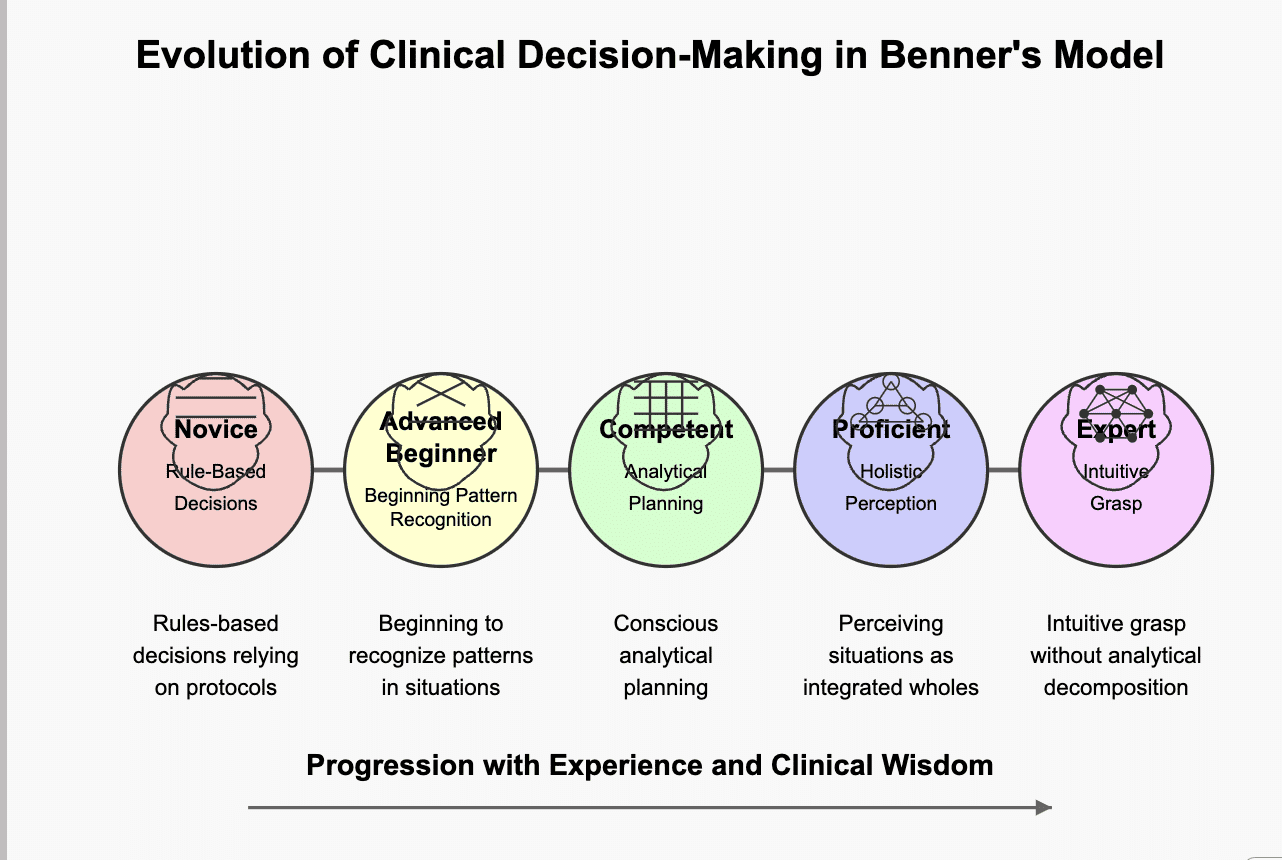
Benner’s Novice to Expert Theory presents a systematic way of understanding how a learner, whether a student, new or seasoned nurse, develops skills. Patricia Benner’s nursing theory, articulated in her seminal work “From Novice to Expert: Excellence and Power in Clinical Nursing Practice,” has significantly shaped the understanding of clinical competency within the nursing profession. First published in 1982, this influential nursing theory categorizes nursing practice into five distinct stages of clinical competence: novice, advanced beginner, competent, proficient, and expert. Each of these stages reflects the gradual progression of a nurse’s skills and knowledge, emphasizing the importance of experiential learning and skill acquisition in the transition from novice to expert.
The Five Stages of Clinical Competence per Benner Nursing Theory
Understanding the five stages of clinical competence is essential for nursing students as they progress through their education and early careers. Dr. Patricia Benner nursing theory identifies five clear pathways from the novice stage through to proficiency, establishing a framework for nursing competency development and achieving skills through experience. Each stage of development is characterized by distinct qualities and experiences, guiding nursing students in their journey.
Stage 1: Novice
The novice stage represents the entry point for new graduate nurses or experienced nurses entering an unfamiliar care unit. At this developmental stage:
Key Characteristics:
Novice nurses have minimal or no experience in the clinical situations they face
They must simply follow rules and protocols rigidly
Their understanding of patient care is limited and fragmented
Decision-making relies on abstract principles rather than experiential knowledge
They focus primarily on completing tasks rather than understanding the holistic clinical picture
A nurse may be considered a novice when first entering nursing school or when transitioning to a new specialty such as critical care or pediatrics. For example, when checking a patient’s oxygen saturation, a novice focuses solely on the numerical value without necessarily connecting it to the patient’s overall respiratory status or clinical presentation.
Educational Foundation: Pasadena College and many other nursing programs structure their curricula to support novices by providing:
Clear guidelines and procedures
Extensive supervision
Basic nursing skills practice in controlled environments
Concrete learning objectives
Step-by-step instructions for nursing care
During this stage, the goal of nursing education is to build foundational knowledge while providing enough structure to ensure patient safety.
Stage 2: Advanced Beginner
As nurses complete more clinical experiences and encounter similar situations repeatedly, they advance to the next developmental stage. Advanced beginners demonstrate marginally acceptable performance and begin recognizing recurring meaningful aspects of clinical situations.
Key Characteristics:
Advanced beginners can identify patterns in patient care scenarios
They require supportive cues from mentors or more experienced colleagues
Their clinical judgment is developing but still limited
They begin connecting theoretical knowledge with practical applications
Advanced beginners still struggle with prioritization and seeing the comprehensive clinical picture
For instance, a postoperative nurse at this stage might recognize common patterns of pain in surgical patients but may not yet fully appreciate how factors like anxiety, positioning, and medication timing interact to affect the patient’s overall comfort level.
Professional Development Needs:
Exposure to diverse clinical scenarios
Mentorship from experienced nurses
Support in setting appropriate short-term and long-term goals
Guidance in recognizing clinical priorities
Feedback that connects specific actions to patient outcomes
IntelyCare and similar nursing staffing platforms often provide specialized orientation programs for nurses at this stage, recognizing that while they have basic skills, they still need considerable guidance when entering new clinical environments.
Stage 3: Competent
After approximately two to three years of experience in similar clinical situations, nurses typically reach the competent stage. This represents a significant milestone in professional development.
Key Characteristics:
Competent nurses develop organizational skills and can prioritize effectively
They demonstrate increased confidence in their nursing skills
Their understanding of patient care becomes more comprehensive
They can establish and work toward long-term goals for patient care
Competent nurses can manage complex clinical situations independently
They begin developing a more holistic understanding of patient needs
A competent charge nurse on a medical-surgical unit can effectively manage the care of multiple patients, delegate tasks appropriately, anticipate potential complications, and adjust care plans as conditions change. They can identify when a patient’s subtle changes in mental status might indicate an early sign of sepsis, rather than simply noting the change without understanding its significance.
Clinical Application: At this stage, nurses learn to:
Coordinate complex care for multiple patients
Develop care plans that address both immediate concerns and discharge planning
Navigate unexpected changes in patient status
Communicate effectively with interdisciplinary teams
Teach patients and families about disease processes and self-care
This stage marks a pivotal point where nurses begin to truly internalize professional standards and develop their own approach to nursing care. Many healthcare organizations recognize this transition by offering increased responsibilities such as preceptor roles or committee participation.
Stage 4: Proficient
With substantial experience and clinical knowledge, proficient nurses develop an intuitive grasp of clinical situations. They see the “big picture” and can modify plans in response to changing events.
Key Characteristics:
Proficient nurses perceive situations holistically rather than as fragmented tasks
They recognize subtle changes in patient conditions before objective measures show deterioration
Their clinical decision-making becomes more fluid and less labored
They understand nuances in patient care that go beyond textbook presentations
Their experience and clinical wisdom guide their practice
They can anticipate likely events and prepare accordingly
For example, a proficient ICU nurse might notice subtle changes in a patient’s responsiveness or breathing pattern that precede any alarming changes in vital signs or oxygen saturation. This early recognition allows for proactive intervention rather than reactive management.
Professional Growth: At this stage, nurses:
Begin mentoring less experienced colleagues
Contribute to quality improvement initiatives
Participate in developing evidence-based protocols
Demonstrate leadership in complex clinical situations
Navigate ethical dilemmas with increasing confidence
Many proficient nurses take on leadership roles such as charge nurse positions or specialized clinical roles that capitalize on their developed clinical expertise and judgment.
Stage 5: Expert Stage
Expert nurses represent the highest level of clinical practice. They no longer rely on analytical principles to connect understanding to appropriate action. Instead, they operate from a deep, intuitive grasp of total situations.
Key Characteristics:
Expert nurses have an extraordinary ability to recognize patterns and anticipate patient trajectories
They demonstrate fluid performance that seems intuitive rather than calculated
They possess extensive clinical wisdom that guides decision-making
Their nurse-patient interactions reflect deep understanding of individual needs
They can recognize when standard approaches should be modified
They navigate complex ethical situations with nuanced understanding
They focus on what is possible rather than limiting themselves to standard protocols
An expert nurse in oncology might walk into a room and immediately sense that a patient’s condition has changed subtly, initiating appropriate interventions before measurable signs appear. They might also recognize when standard protocols need modification to meet these needs in patients with unique presentations.
Contributions to Nursing: Expert nurses:
Advance the profession through practice and research to develop skills
Develop innovative approaches to complex clinical problems
Mentor other nurses across different developmental stages
The latest nursing research suggests that developing expertise requires not just time but intentional reflection on practice. Many who use Benner’s framework emphasize that reaching the expert stage requires both extensive experience and deliberate attention to learning from that experience.
Stage
Years of Experience
Key Characteristics
Clinical Thinking
Decision-Making
Focus
Support Needs
Novice
0-1
• No prior experience • Rule-governed behavior • Limited flexibility • Task-oriented approach • Needs specific instructions
• Analytical • Context-free • Rule-based • Black and white thinking
• Relies heavily on guidelines • Cannot prioritize • Treats all tasks with equal importance
This table summarizes Benner’s progression from novice to expert, showing how nursing practice transforms qualitatively through clinical experience. Each stage represents a distinct way of perceiving and responding to patient care scenarios, emphasizing that expertise develops through engagement with real clinical situations rather than simply accumulating over time.
Application of Benner’s Theory in Nursing Practice
Patricia Benner’s nursing theory provides a robust framework for enhancing nursing practice through its focus on the progression from novice to expert levels. The application of this theory in clinical settings results in significant improvements in patient care, facilitating the transition for new nurses as they gain essential competencies. By understanding and implementing Benner’s five stages of nursing expertise, healthcare institutions have the opportunity to foster nursing excellence.
Novice to Expert Essay Example
Reasons and Qualities of a Preceptor
Preceptors are seasoned nurses who work with new graduates in the workplace and undergraduate nurses in the school to educate and support them (Phuma-Ngaiyaye et al., 2017). They often work one-on-one with preceptees while working full-time, part-time, or volunteering, acting as a mentor. Preceptors take on various new responsibilities after setting expectations and being introduced in an orientation, including incorporating a nurse into the practice or particular specialties, monitoring and providing feedback on a nurse’s performance, interacting with the graduate and responding to inquiries, and promoting time management and decision-making competences and skills.
To be a competent preceptor, one must have leadership skills, long-term relationship development and maintenance, communication, analysis skills, and effective role modeling. Preceptors should also demonstrate extensive knowledge and ability to explain the reasons for actions and decisions, provide feedback clearly and precisely, explain and manage conflicting ideas and communicate clear goals and expectations. Additionally, they should attract learners’ attention, accurately evaluate the learner’s knowledge, attitude, and skills, conduct fair and thoughtful assessments, demonstrate expert interactions with patients, and organize information (Girotto et al., 2019). Moreover, preceptors should generate interest in the subject, control the learning experience, assign appropriate responsibility to the student, guide problem-solving, motivate the learner, actively engage in the learning process, and establish supportive relationships with the learner.
Everyone’s reasons and a path toward becoming a nurse preceptor differs. In my case, I started working in an organization ten years ago. The organization emphasizes the need for continuing education and facilitates career growth and development by offering staff opportunities to continue their education. The organization has contributed to my educational advancement by sending me to school, and I feel it is time to give back by helping precept others. I appreciate the kindness and the care for staff the organization demonstrated, and I would like to contribute to the good practice. Also, most nurses in practice want to advance their education to elevate their careers, open ways for more opportunities, including promotion and better pay, and reach higher levels in the nursing profession, like being nurse managers or administrators.
According to Patricia Benner, nurses gain clinical practice and patient care knowledge and skills over time by combining strong educational foundations and personal experiences (Nyikuri et al., 2020). Nurses move from novice to expert through beginner, competent, and proficient stages. I can help novice nurses gain competence and proficiency to become experts by passing on the knowledge and experience I have gained in this organization by being a preceptor. I can also help new nurses, graduates, and undergraduates integrate knowledge into practice and learn hands-on skills as they prepare to be future nurses and gain the necessary competencies and experience to succeed in their careers. While preceptors are educators, I think it is the responsibility of any experienced nurse to contribute to knowledge development by sharing their earned experience.
I have what it takes to be a great preceptor and a positive influence on the students I will supervise and guide through their clinical and practicum. Through my education and practice, I have developed the skills, competencies, and attitudes necessary to succeed as a preceptor and contribute to a learner’s academic and professional development. I have excellent communication and strong interpersonal skills that will enable me to engage with learners, understand their education and professional needs, and guide them to achieve their academic and professional objectives. I am a great team player, experienced in nursing, and strongly desire to help others grow and develop their careers. I am also open, conscious, and have emotional stability. I believe these qualities are integral to successful preceptors. I also seek to continue building on these skills to grow with the learners and change as the healthcare environment changes.
References
Girotto, L. C., Enns, S. C., de Oliveira, M. S., Mayer, F. B., Perotta, B., Santos, I. S., & Tempski, P. (2019). Preceptors’ perception of their role as educators and professionals in a health system. BMC medical education, 19(1), 203. https://doi.org/10.1186/s12909-019-1642-7
Nyikuri, M., Kumar, P., English, M., & Jones, C. (2020). “I train and mentor, they take them”: A qualitative study of nurses’ perspectives of neonatal nursing expertise and its development in Kenyan hospitals. Nursing open, 7(3), 711–719. https://doi.org/10.1002/nop2.442
Phuma-Ngaiyaye, E., Bvumbwe, T., & Chipeta, M. C. (2017). Using preceptors to improve nursing students’ clinical learning outcomes: A Malawian students’ perspective. International journal of nursing sciences, 4(2), 164–168. https://doi.org/10.1016/j.ijnss.2017.03.001
Critiques of Benner’s Nursing Theory
Patricia Benner’s nursing theory, which has greatly influenced nursing education and practice since its introduction in 1982, is not without its critiques. While many recognize the value of the five stages of clinical competence—novice, advanced beginner, competent, proficient, and expert—some experts argue that the model oversimplifies the complexities of skill acquisition in nursing. Critics contend that the theory does not sufficiently account for individual variations in learning styles and experiences, which can significantly impact a nurse’s development.
Additionally, there are concerns regarding the applicability of Benner’s nursing theory across diverse specialties and care settings. Studies have suggested that more nuanced models may be necessary to complement Benner’s framework, particularly as nursing practices continue to evolve in response to contemporary healthcare challenges. For instance, discussions have emerged around the concept of intuition within expert nursing practice, pointing to the need for further examination of intuitive responses in clinical environments.
Despite these critiques, the enduring legacy of Benner’s model remains evident in its integration into nursing curricula and its influence on evidence-based practices. While the lack of quantitative data supporting transitions between the five stages emphasizes a critical gap, the ongoing discourse surrounding the theory contributes to its robust relevance in understanding the intricate landscape of nursing expertise.
FAQs
What is Patricia Benner’s nursing theory?
Patricia Benner’s nursing theory, articulated in her book “From Novice to Expert,” outlines the progression of nursing competence through five stages: Novice, Advanced Beginner, Competent, Proficient, and Expert. This model emphasizes the importance of experiential learning and skill acquisition in nursing practice.
How does Benner’s theory apply to nursing education?
Benner’s theory informs nursing education by advocating for curricula that integrate theoretical knowledge with practical experiences. This approach allows nursing students to develop their skills in real-world settings, enhancing their overall learning and competency.
What are the five stages of clinical competence according to Benner?
The five stages of clinical competence in Benner’s theory include: – Novice: Beginners with no prior experience requiring supervision. – Advanced Beginner: Nurses with some practical experience who rely on rules for understanding patient care. – Competent: Nurses with two to three years of experience who can set goals and prioritize tasks. – Proficient: Nurses who view care holistically, adapting interventions based on their experiences. – Expert: Highly skilled nurses with an intuitive grasp of clinical situations, demonstrating advanced decision-making capabilities.
What role does experiential learning play in Benner’s framework?
Experiential learning is crucial in Benner’s framework as it allows nurses to gain knowledge and skills through direct interaction with real-world clinical situations. This hands-on experience fosters the development of competence and enhances the ethical judgment of nurses over time.
How can Benner’s theory improve patient care?
By progressing through the stages defined by Benner, nurses develop enhanced clinical judgment and deeper insights into patient care. This increased competence contributes to better patient safety, satisfaction, and overall health outcomes.
What are some critiques of Benner’s nursing theory?
Critiques of Benner’s nursing theory include claims that it oversimplifies the complexity of skill acquisition and may not account for individual variations in learning styles. Additionally, some suggest that the model’s applicability may vary across different nursing specialties and care settings.
Virginia Henderson: Pioneer of Nursing Need Theory
Virginia Avenel Henderson stands as one of the most influential figures in the history of modern nursing, often referred to as the “First Lady of Nursing.” Born on November 30, 1897, in Kansas City, Missouri, Virginia Henderson transformed the nursing profession through her groundbreaking work on the Need Theory. As a nurse theorist whose ideas continue to shape nursing practice worldwide, her contributions to nursing remain foundational to contemporary healthcare approaches.
Early Life and Education of Virginia Henderson
Virginia Henderson was born into a family that valued education, as the fifth of eight children. During her childhood, she spent time at home in Virginia with her aunts, where she developed her early interest in helping others. Her formal journey in healthcare began when Virginia Henderson graduated from the Army School of Nursing in 1921. After working at the Henry Street Visiting Nurse Service for two years, she pursued higher education at Columbia University, earning her Bachelor’s Degree in 1932 and her Master’s Degree in 1934.
Before her time at Columbia University, Henderson started her career in public health nursing, which shaped her understanding of community health needs. The early experiences of Virginia Henderson, particularly during her time at the Army School of Nursing at Walter Reed Hospital in Washington, influenced her perception of patient needs and the critical role nurses play in recovery. After completing her education, she worked at Norfolk Protestant Hospital in Virginia, where she became the first full-time nursing instructor at the institution.
Virginia Henderson’s Definition of Nursing
Virginia Henderson developed what has become one of the most cited definitions of nursing in history. According to Henderson, nursing is primarily concerned with “assisting the individual, sick or well, in the performance of those activities contributing to health or its recovery that they would perform unaided if they had the necessary strength, will, or knowledge.” This concept of nursing emphasizes patient independence as the ultimate goal of nursing care.
Her description of nursing revolutionized nursing practice by shifting focus from illness management to promoting patient autonomy. Miss Henderson was asked numerous times to clarify and expand on her defined nursing role, which she did through various publications and lectures. This perspective transformed the nature of nursing from a task-oriented profession to one centered on comprehensive patient well-being. Henderson’s theory has been applied to nursing education and practice globally, emphasizing the nurse’s role as a facilitator rather than merely a caregiver.
The Importance of Patient Independence in Nursing Care
A cornerstone of Henderson’s theory is the emphasis on patient independence. She believed that effective nursing care empowers patients to manage their own health when possible. This philosophy continues to influence nursing practice by encouraging nurses to develop interventions that promote self-care and autonomy.
Virginia Henderson maintained that the nurse’s primary function was to help patients gain independence as quickly as possible. According to Henderson, this approach recognizes the dignity and agency of patients, establishing a therapeutic relationship that respects their autonomy while providing necessary support. The focus of nursing, in Henderson’s view, should always be centered on the patient’s needs and their journey toward self-sufficiency.
The Need Theory Developed by Virginia Henderson
Virginia Henderson’s most significant contribution to nursing theories is her Need Theory, which provides a comprehensive framework for understanding patient requirements and guiding nursing interventions. Virginia Henderson’s nursing theory identifies 14 fundamental human needs that form the core of nursing practice. She is known for her Need Theory, which has become a theoretical basis for nursing worldwide.
Overview of the Need Theory
The Need Theory developed by Virginia Henderson emphasizes that optimal health is influenced by various factors including age, cultural background, and emotional balance. The theory proposes that nursing care should be tailored to assist patients in meeting these needs to achieve independence after hospitalization or during chronic illness management. Henderson also believes that basic health needs and require assistance from nurses when patients cannot meet these needs independently.
The Need Theory became instrumental in transforming nursing practice from a series of isolated tasks to a holistic approach centered on patient well-being. By articulating these needs, Virginia Henderson provided a systematic framework for nursing assessment and intervention that continues to guide modern nursing care plans. Nursing theories guide practitioners in their daily work, and Henderson’s theory has proven particularly valuable in this regard.
Key Components of Henderson’s Theory
The core components of Henderson’s theory include four main elements: the individual, environment, health, and nursing. She categorized the 14 needs into physiological, psychological, spiritual, and sociological components, reflecting a structured and comprehensive approach to nursing care.
The theory emphasizes the interconnection between these components, recognizing that effective nursing practice must address all aspects of human experience. This holistic vision continues to influence nursing education and practice globally. Henderson’s contributions to nursing theory are studied in nursing theories study guide materials across nursing schools worldwide.
Virginia Henderson’s 14 Basic Needs
The 14 basic needs identified by Virginia Henderson form the foundation of her Need Theory and have become central to nursing practice worldwide. Each need addresses a fundamental aspect of human well-being and serves as a guide for nursing assessment and intervention.
Breathing normally – Ensuring patients maintain adequate respiratory function
Eating and drinking adequately – Supporting proper nutrition and hydration
Eliminating body wastes – Assisting with appropriate waste elimination
Moving and maintaining desirable positions – Enabling mobility and proper positioning
Sleeping and resting – Promoting adequate rest and sleep patterns
Maintaining body temperature – Supporting normal temperature regulation
Keeping the body clean and well-groomed – Assisting with hygiene needs
Avoiding dangers in the environment – Ensuring patient safety
Communicating with others – Facilitating expression and social interaction
Worshiping according to one’s faith – Supporting spiritual practices
Working for a sense of accomplishment – Encouraging meaningful activities
Playing or participating in recreation – Promoting leisure and enjoyment
Learning and discovering – Supporting education and curiosity
Virginia Henderson’s articulation of these 14 basic needs has provided generations of nurses with a framework for comprehensive patient assessment. The application of these 14 basic needs in nursing practice ensures that care addresses the whole person rather than merely treating symptoms.
Applications of the Need Theory in Nursing Practice
The Need Theory finds application across various nursing contexts, from acute care settings to community health. By recognizing and addressing the fundamental needs of patients, nurses can develop interventions that promote recovery and well-being.
Need
Clinical Application
Nursing Interventions
Breathing normally
Post-operative recovery, respiratory conditions
Positioning, breathing exercises, oxygen therapy
Eating and drinking adequately
Malnutrition, dysphagia, post-surgical care
Nutritional assessment, assistance with feeding, dietary education
Eliminating body wastes
Urinary/bowel disorders, mobility issues
Continence management, catheter care, constipation prevention
The theory has been particularly valuable in developing nursing care plans for post-operative patients and those with chronic conditions. The emphasis on patient-centered care in this approach has influenced nursing practice by reinforcing the importance of individualized attention and respect for patient autonomy. Knowledge according to his needs is central to Henderson’s approach to patient care.
Impact on Nursing Education and Leadership
Virginia Henderson’s contributions to nursing education and nursing leadership have been profound and far-reaching. Her work has shaped nursing curriculum development and established standards for teaching nursing globally. Her emphasis on critical thinking as a core nursing skill continues to influence how nursing students are prepared for professional practice at every school of nursing.
Contributions to Nursing Curriculum Development
Virginia Henderson contributed significantly to nursing education through her comprehensive texts, particularly the fifth edition of “Principles and Practice of Nursing.” This work served as a primary resource for nursing students for decades, guiding educators in structuring nursing courses internationally. The Virginia Henderson Reader, a collection of her most significant writings, continues to be a valuable resource for nursing education.
Her commitment to curriculum standards underlines her belief in the necessity of a well-rounded education that prepares nurses for real-world challenges. Her influence on nursing extends beyond her time, continuing to shape how programs develop their curricula. The science of nursing, as Henderson saw it, required rigorous educational preparation and ongoing professional development.
Importance of Critical Thinking in Nursing
Critical thinking was championed by Virginia Henderson as a vital skill for nursing professionals. By promoting analytical skills, she empowered nurses to assess patient needs effectively and make informed decisions that enhance care outcomes. This emphasis on critical thinking has become a cornerstone of nursing education and leadership development.
The Need Theory not only highlights the importance of meeting basic human needs but also fosters a framework for nurses to engage in self-care and holistic patient management. The ongoing relevance of her emphasis on critical thinking ensures that current nursing curricula continue to prepare students for complex patient care scenarios.
Evolution of Nursing Research Inspired by Virginia Henderson
Her contributions to nursing theory have inspired numerous research studies focusing on patient care and independence. Recent studies utilizing her frameworks have demonstrated improvements in patient-focused care across various clinical settings. The Virginia Henderson Center for Nursing Research supports ongoing investigation into nursing practice based on her principles.
Virginia Henderson’s Influence on International Nursing
Virginia Henderson’s impact extends well beyond the United States, influencing nursing practice and education globally. Her work with the International Council of Nurses helped disseminate her ideas worldwide, establishing her as a truly international figure in nursing. The Royal College of Nursing has recognized her significant contributions to the profession internationally.
Work with the International Council of Nurses
Virginia Henderson collaborated extensively with the International Council of Nurses, contributing to the development of global nursing standards. Her international influence was recognized when she received the Christiane Reimann Prize in 1985, the organization’s highest honor. The International Nursing Council has repeatedly acknowledged her enduring influence on nursing practice worldwide.
Through her international work, she advocated for universal healthcare principles that transcended national boundaries. Her vision of nursing care focused on meeting human needs regardless of geographical or cultural context, making her theories applicable across diverse healthcare systems. She was honored by the Virginia Nurses Association for her global contributions to the profession.
Global Adoption of Virginia Henderson’s Theories
Her theories have been adopted in nursing curricula in over 100 countries, demonstrating their universal relevance and applicability. The Virginia Henderson International Nursing Library serves as a global resource for nursing knowledge, supporting research and education worldwide.
The principles established by Virginia Henderson continue to guide nursing practice internationally, with the 14 basic needs being integrated into nursing assessment tools and care plans worldwide. This global influence underscores her lasting impact on nursing across cultural and national boundaries. The Virginia Nurses Association recognized Henderson as one of the most influential figures in modern nursing history.
Recognition and Legacy of Virginia Henderson
Virginia Henderson received numerous accolades throughout her career, including honorary doctorates from distinguished universities such as Yale University and the University of Rochester. In 1985, she was awarded the first Christiane Reimann Prize, recognizing her exceptional contributions to nursing. The Virginia Historical Nurse Leadership Award was established in her honor to recognize excellence in nursing leadership.
Continued Relevance in Modern Nursing Practice
The theories developed by Virginia Henderson continue to influence contemporary nursing practice, with the 14 basic needs being integrated into modern frameworks. The emphasis on patient independence advocated by her remains central to person-centered care approaches in today’s healthcare settings. Pioneer nurses in Virginia continue to build upon her theoretical foundations.
Her legacy is evident in the continuing application of her principles in nursing care planning and delivery. The holistic approach to patient care championed by Virginia Henderson aligns with current healthcare trends emphasizing patient autonomy and comprehensive well-being. The Henderson Center for Nursing Research carries forward her commitment to evidence-based practice.
Impact on Nursing Process and Diagnosis
Virginia Henderson’s work has significantly influenced the development of the nursing process, providing a systematic approach to patient care that includes assessment, diagnosis, planning, implementation, and evaluation. Her emphasis on identifying and addressing patient needs has shaped nursing diagnosis procedures, contributing to standardized terminology and approaches.
The nursing process, informed by her theories, serves as a problem-solving approach that guides professional practice. By emphasizing patient needs assessment as the foundation for nursing interventions, her work continues to influence how nurses develop and implement care plans. The nursing diagnosis guide created based on her work remains a valuable clinical tool.
Comparison with Other Nursing Theories
Virginia Henderson’s Need Theory can be compared with other influential frameworks such as the Adaptation Model of Nursing developed by Sister Callista Roy and the Self-Care Deficit Theory by Dorothea Orem. While each theory offers unique perspectives, her approach is distinguished by its clear articulation of specific patient needs and emphasis on independence.
Relationship to the 21 Nursing Problems Theory
The Need Theory shares similarities with the 21 Nursing Problems Theory developed by Faye Abdellah, as both focus on patient problems requiring nursing intervention. However, Virginia Henderson’s framework emphasizes patient independence as the ultimate goal, while Abdellah’s approach centers more on problem resolution.
The influence of Virginia Henderson can be seen in subsequent nursing theories, including Abdellah’s work, demonstrating how her ideas served as a foundation for later theoretical developments in nursing. This theoretical lineage underscores her enduring impact on nursing thought. Nursing theories guide practitioners in their approaches to patient care, with Henderson’s framework being particularly influential.
Comparison with the Self-Care Deficit Theory
While Dorothea Orem’s Self-Care Deficit Theory focuses specifically on self-care abilities and limitations, the Need Theory provides a more comprehensive framework addressing all aspects of human needs. Both theories emphasize patient independence, but Virginia Henderson’s approach offers a more detailed assessment framework through the 14 basic needs.
Her theory has influenced the development of subsequent nursing frameworks, including Orem’s work, highlighting the interconnectedness of nursing theoretical development. The emphasis on patient autonomy advocated by Virginia Henderson can be seen as a precursor to later self-care theories.
Challenges and Criticisms of Nursing Need Theory
While the Need Theory has been widely adopted, it has faced criticism for potentially oversimplifying complex patient needs and not adequately addressing cultural variations. Some critics suggest that the emphasis on independence may not fully account for interdependence and community support in health maintenance.
Despite these challenges, the framework remains valuable as a foundation for nursing assessment and intervention. The adaptability of Henderson’s theory has allowed it to remain relevant despite changing healthcare contexts and evolving understanding of patient needs. As Virginia Henderson worked throughout her career to refine her ideas, she remained open to constructive criticism and the evolution of nursing knowledge.
Research Inspired by Henderson
Virginia Henderson’s contributions to nursing theory have inspired a multitude of research studies that focus on patient care and independence. These inspired studies reveal significant advancements in applying her 14 basic needs across various clinical settings.
Recent Studies Utilizing Virginia Henderson Nursing Theory
Recent nursing research highlights improvements in patient-focused care when utilizing Henderson’s frameworks. One investigation examined the completion rates for patient needs before and after training nurses in her theories. For instance, the completion of the initial patient assessment utilizing the needs of Virginia Henderson increased from 94.2% to 100% (p = 0.014). Another study noted an increase in the completion of the “hygiene/skin” need from 83.3% to 95.8% (p = 0.002). Furthermore, the completion rates on the Norton scale surged from 63.13% to 92.5% (p 1. These results signify the importance of education in enhancing nursing practices related to Henderson’s theories.
The studies involved 197 nurses working in both medical and surgical inpatient units, reflecting a comprehensive sample of contemporary nursing practice. The data indicate that Henderson’s theories not only provided a structured approach to patient needs but also enhanced overall patient outcomes significantly. The findings reinforce the value of training sessions, guiding nurses to achieve greater proficiency in meeting the basic human needs identified by Henderson.
FAQs about Virginia Henderson Theory
How can nurses incorporate Henderson’s theory into daily bedside care?
Nurses can implement Henderson’s theory by structuring assessment and handover reports around the 14 basic needs, systematically addressing each need during patient interactions. This organized approach ensures comprehensive care while helping to prioritize interventions based on patients’ most critical unmet needs.
How does Henderson’s theory differ from task-oriented nursing approaches?
Unlike task-oriented approaches that focus on completing procedures, Henderson’s theory emphasizes patient outcomes and independence as the measure of success. The theory reframes nursing interventions as temporary assistance rather than permanent care, shifting the focus to patient capability development.
How can Henderson’s theory be applied in community health nursing?
Community health nurses can use Henderson’s framework to develop population health assessments and intervention programs targeting commonly unmet needs. The theory works particularly well for home health planning, where promoting patient and family independence is a primary goal.
What specialized assessment tools have been developed based on Henderson’s 14 needs?
Several specialized tools include the Henderson Assessment Tool (HAT), the Basic Needs Satisfaction Inventory (BNSI), and the Independence Rating Scale for Henderson’s Components (IRSHC). These instruments help measure patient progress toward independence in each need category using standardized metrics.
What supervision approaches work best when teaching students to apply Henderson’s theory?
Clinical instructors find success using guided reflective practice, asking students to analyze which needs they addressed during patient care and which they may have overlooked. Post-clinical conferences organized around the 14 needs help students develop a systematic approach to comprehensive care.
SBARis a structured communication framework that can help teams share information about the condition of a patient or team member or about another issue your team needs to address. For nurses working in today’s complex healthcare environments, effective communication is not just a skill—it’s a necessity. The SBAR nursing communication tool has revolutionized how healthcare professionals share critical patient information. As an RN, mastering this structured communication technique can dramatically improve patient outcomes and enhance interprofessional relationships.
What is SBAR in Nursing?
SBAR stands for Situation, Background, Assessment, and Recommendation. This structured communication tool was originally developed by the U.S. Navy for nuclear submarine operations but has since become a cornerstone of nursing practice. SBAR in nursing provides a clear framework for healthcare professionals to communicate vital patient information concisely and effectively.
The SBAR method offers a systematic approach to patient handoff, ensuring that all relevant information is communicated during shift handover or when reporting to physicians. By using the SBAR tool, nurses can organize their thoughts coherently, reducing communication errors that might otherwise compromise patient safety.
Essence of SBAR Nursing Communication
In any healthcare setting, from general medical floors to the intensive care unit, clear communication is essential. A systematic review of communication failures in healthcare revealed that poor handoff communication contributes significantly to adverse patient events. The implementation of the SBAR communication technique has been shown to reduce these incidents substantially.
Nursing students are now taught the SBAR method early in nursing school, emphasizing its importance in developing professional communication skills. Using the SBAR tool consistently throughout a nursing career helps establish good habits that improve patient care and professional relationships.
How to Use the SBAR Method Effectively
SBAR Component
Purpose
Key Elements
Example
Situation
Identify yourself and briefly describe the current issue
Your name and role Patient name/location Concise problem statement
“This is Nurse Garcia from Med-Surg. I’m calling about Mrs. Smith in room 423, who’s experiencing acute chest pain.”
Background
Provide relevant contextual information
Brief admission History Diagnosis Recent relevant events
“She was admitted yesterday with pneumonia. History of MI 2 years ago. Pain started 20 minutes ago.”
Assessment
Share your professional evaluation
Vital signs Clinical observations Recent changes Your concerns
“BP elevated at 162/94, pulse 112. Pain is 8/10, radiating to left arm. ECG shows ST elevation.”
Recommendation
Clearly state what you need
Specific request Timeframe Questions
“I recommend you come assess her now. Should I call the rapid response team and prepare aspirin?”
Situation
The first component of SBAR nursing communication involves clearly stating the current situation. When you use SBAR to communicate with other healthcare providers, begin by identifying yourself, your unit, and your patient. Then briefly describe what is happening that prompted your communication.
For example: “This is Sarah, RN from the medical care unit. I’m calling about Mr. Johnson in room 215, who is experiencing sudden shortness of breath and dropping oxygen levels.”
Background
Next, provide concise background information about the patient that relates to the current situation. This helps establish context for the healthcare team.
An SBAR report might continue: “Mr. Johnson is a 67-year-old patient admitted yesterday with pneumonia. He has a history of COPD and was stable on 2L oxygen until about 30 minutes ago.”
Assessment
In this section of the SBAR nursing framework, share your professional assessment of the situation. This is where your clinical communication skills and nursing practice expertise become evident.
“His oxygen saturation has dropped from 95% to 88% despite increasing oxygen to 4L. He’s using accessory muscles to breathe, has a respiratory rate of 28, and is becoming anxious. I suspect his pneumonia may be worsening or he could be developing a pneumothorax.”
Recommendation
Finally, state your recommendation or what you need from the other healthcare professional. Being clear about what you’re requesting helps avoid communication errors.
“I recommend coming to assess him now and possibly ordering a stat chest X-ray. Also, should I prepare for possible intubation equipment?”
SBAR in Nursing Example
Situation The CDC provides that 12 million Americans have COPD, but more than 12 million others have lung function impairment and may be undiagnosed (CDC, 2020). COPD is the third leading cause of death in the US and affects almost 26 million people. Tobacco use contributes to about 75% of COPD cases. Preventing COPD in the US requires implementing healthcare policies that address risk factors such as smoking.
The Family Smoking Prevention and Tobacco Control Act (Tobacco Control Act) was signed into law on June 22, 2009, to protect the American people and create a healthier future. The policy or law gives the FDA authority to regulate tobacco products’ manufacture, distribution, and marketing. The policy led to a $0.62 increase in tobacco products taxation. However, no increase in taxes has occurred since then. If this policy is not enacted adequately, tobacco will continue to contribute to the majority of COPD cases (75%) and associated deaths (40.5 deaths per 100,000 among US men and 34.3 per 100,000 among US women) (CDC, 2020). COPD will continue to be the third contributor to deaths in the US.
Background
Individuals and organizations, including The American Cancer Society Cancer Action Network, BeTobaccoFree.gov, UCSF Center for Tobacco Control Research and Education, National Networks for Tobacco Control and Prevention, American Lung Association, World Lung Foundation, The Legacy Foundation, Americans For Nonsmoker’s Rights have a special interest in the issue. Their primary interest is to reduce tobacco use and minimize the risks of tobacco-related illnesses like COPD and associated death and promote healthier lifestyles. The policymaker is interested in promoting healthier America, and also in protecting tobacco manufacturers, distributors, and retailers, who are also a part of the economy. However, the burden of COPD is more significant, with a cost of about $49 billion annually. Therefore, policymakers should consider the policy and how it can help reduce tobacco use.
As nurses, we are equipped with a responsibility to promote healthier lifestyles. We are also responsible for advocating for health issues like COPD and tobacco use and the patients. Nurses have the necessary skills and knowledge to help patients quit smoking by educating them. Nurses deal with COPD patients every day, and they understand their struggle, including the lack of a cure. Preventative measures become necessary; a reason nurses are advocating for policies to reduce tobacco use. I have had family members and friends who developed COPD, and some have died from its effects in the long run. It is sad to see people die from a disease that can be prevented or minimized in the first place.
Assessment
COPD contributes significantly to mortality rates in the US. Over 6% of the population has been diagnosed with COPD, and nearly the same percentage has lung function impairment and may not be diagnosed (CDC, 2020). This information indicates that the COPD disease burden is greater than reported. As a nurse, I have encountered many patients suffering from COPD, and many have died from its effects. Having a disease as the third contributor to deaths in the country is saddening and shows that relevant stakeholders are not doing enough to enable preventative care.
Many stakeholders are involved in efforts to reduce tobacco use consumption to promote healthier communities and reduce the disease burden. Adequate utilization of the policy to minimize tobacco consumption would help stakeholders like National Networks for Tobacco Control and Prevention, American Lung Association, World Lung Foundation, and policymakers achieve positive results in their efforts. The 2009 law has helped prevent over 350,000 teens from smoking and saved about $31 billion in tobacco use-related costs (Truth Initiative, 2019). This information shows that the policy can be more effective if utilized adequately.
The policy is supported by the American Cancer Society Cancer Action Network, BeTobaccoFree.gov, UCSF Center for Tobacco Control Research and Education, National Networks for Tobacco Control and Prevention, American Lung Association, World Lung Foundation, The Legacy Foundation, Americans for Nonsmoker’s Rights.
Recommendation/Request
The involved organizations and policymakers need to consider implementing an annual tobacco product tax increase at a consistent rate to discourage tobacco use further. The $0.62 tax increase in 2009 had a significant impact. However, people need to feel the impact of tax increases each year to quit or reduce tobacco products consumption. We hope as the healthcare community that the involved stakeholders will consider this proposal with the attention it deserves to save American lives. Thank you for the time and attention you have invested in this matter. As a nurse, I will continue to offer my assistance and expertise based on my knowledge and understanding of the situation to ensure the policy helps promote healthier communities and save lives.
References
American Lung Association (2021). 2021 federal action plan: tobacco priorities. https://www.lung.org/policy-advocacy/federal-action-plan/tobacco-priorities
CDC. (2020). Public health strategic framework for COPD prevention. https://www.cdc.gov/copd/pdfs/framework_for_copd_prevention.pdf
CDC. (2018, February 21). COPD costs. https://www.cdc.gov/copd/infographics/copd-costs.html
Truth Initiative. (2019, June). A decade of the tobacco control act: Where are we now? https://truthinitiative.org/research-resources/tobacco-prevention-efforts/decade-tobacco-control-act-where-are-we-now
SBAR Nursing Template (PDF and Printable)
Hospitals and nursing schools often use SBAR report templates to standardize communication. Below is a general format:
SBAR Report Template
Section
Details to Include
Situation
Patient’s name, current condition, immediate concern
Downloadable SBAR Report Sheet (PDF) Many organizations provide nursing SBAR templates in PDF format for documentation. These templates ensure consistency in reporting.
Benefits of SBAR in Nursing Practice
Research demonstrates that SBAR improves numerous aspects of healthcare delivery. A quasi-experimental study showed that the implementation of the SBAR communication tool led to:
Better communication between nurses and physicians
Reduced communication failures
More efficient handoff report processes
Greater confidence among nursing staff when communicating in clinical settings
The Institute for Healthcare Improvement recognizes SBAR as an essential communication strategy that promotes interprofessional communication and ultimately improves patient outcomes.
SBAR Nursing Applications Across Healthcare Settings
The SBAR framework is versatile and can be adapted for various clinical settings:
Shift Handover
Using the SBAR tool for shift handover ensures continuity of care. When one RN transfers care to another, the handoff communication follows a consistent structure, reducing the risk of overlooking important patient information.
Nurse-to-Physician Communication
When a nurse needs to report to a physician about a change in patient status, SBAR nursing communication provides a professional and efficient format. This structured communication tool helps nurses organize their thoughts and deliver concise, relevant information that physicians need for decision-making.
Emergency Situations
In the intensive care unit or emergency department, SBAR helps streamline communication during critical situations. When every second counts, this standardized communication approach ensures that all healthcare professionals receive the necessary information quickly.
Nursing Education
Nursing students learn the SBAR method as part of their professional communication training. By incorporating this tool early in nursing school, students develop strong communication skills that serve them throughout their nursing profession.
Implementing SBAR in Your Nursing Practice
To effectively incorporate the SBAR communication technique into your daily routine:
Practice using the SBAR template regularly
Keep SBAR tool reference cards handy until it becomes second nature
Encourage fellow nursing staff to adopt this structured communication approach
Participate in department of nursing initiatives to standardize SBAR use
Provide feedback on how SBAR helps improve your clinical communication
Frequently Asked Questions
What is an example of a SBAR situation?
A SBAR situation example in nursing typically involves a scenario where a nurse needs to communicate critical patient information concisely to a physician, another nurse, or a healthcare team member. Here is a practical SBAR example in a clinical setting:
Scenario: A post-operative patient is experiencing a sudden drop in blood pressure.
Situation: “Dr. Carter, this is Nurse Emily from the surgical unit. I am calling about Mr. James, a 65-year-old patient who underwent a total knee replacement yesterday. His blood pressure has suddenly dropped to 88/55 mmHg.”
Background: “He was stable earlier with a BP of 120/80 mmHg, HR 78, and SpO2 98% on room air. He has a history of hypertension and Type 2 diabetes. He received IV fluids and pain medications during the shift, but no significant changes were noted until now.”
Assessment: “Currently, he appears pale and slightly diaphoretic. His BP remains low despite elevating his legs, and his heart rate has increased to 105 bpm. Urine output is also reduced in the last two hours.”
Recommendation: “I recommend assessing him for possible hypovolemia or bleeding. Should I increase his IV fluids, order a stat hemoglobin check, or prepare for further intervention?”
This structured approach ensures clear, efficient, and timely communication between healthcare providers, leading to quicker decision-making and better patient outcomes.
How is SBAR different from traditional nursing reports?
Traditional nursing reports often vary in structure and content depending on the nurse giving the report. SBAR nursing communication, however, provides a consistent framework that ensures all critical information is included every time. This standardized communication tool focuses specifically on relevant information needed for clinical decision-making, eliminating extraneous details that can distract from the key issues.
When should nurses use the SBAR method?
Nurses should use SBAR to communicate in various situations, including:
Shift handover reports
Calling physicians about changes in patient status
Transferring patients between units
Communicating with other healthcare professionals during emergencies
Documenting significant changes in patient condition
Training nursing students in professional communication
The SBAR tool is particularly valuable during high-stress situations when clear communication is essential.
How can nursing students practice using SBAR?
Nursing school programs typically incorporate SBAR training through:
Video recording practice sessions for self-evaluation
Regular practice using the SBAR tool helps nursing students develop the communication skills necessary for their future nursing practice.
Does SBAR in nursing replace other forms of documentation?
No, SBAR doesn’t replace comprehensive nursing documentation. Instead, it complements existing documentation by providing a structured communication technique for verbal exchanges. Many healthcare settings incorporate SBAR format into their electronic health records for consistency between verbal and written communication.
How has SBAR improved nursing practice?
According to multiple systematic reviews, implementation of the SBAR communication tool has led to:
65% reduction in adverse events related to communication failures
Improved satisfaction among nurses and physicians
Enhanced confidence among nursing staff when communicating with physicians
More efficient handoff processes, saving an average of 7 minutes per shift change
Better identification of deteriorating patients through consistent assessment reporting
These improvements demonstrate why SBAR nursing communication has become standard practice in healthcare settings worldwide.
Bed alarms for fall prevention are innovative devices designed to enhance patient safety and reduce the risk of falls, particularly among elderly individuals and those with mobility issues. These systems are an essential component of fall prevention strategies in various care settings, including hospitals, nursing homes, and private residences.
A bed alarm system typically consists of three main components:
Sensor: This can be a pressure-sensitive pad placed under the mattress or a motion sensor attached to the bed frame.
Alarm unit: The central device that processes signals from the sensor and triggers the alert.
Alert mechanism: This can be an audible alarm, a visual indicator, or a wireless notification sent to a caregiver’s pager or smartphone.
When a patient attempts to leave the bed or shifts their weight significantly, the sensor detects this movement and sends a signal to the alarm unit. The unit then activates the alert mechanism, notifying caregivers that the patient may be at risk of falling.
Types of Bed Alarms for Elderly Care
There are several types of bed alarms available for elderly care, each with its unique features and benefits:
Pressure-sensitive pad alarms: These use a thin mat placed under the patient’s mattress or sheet. When the patient’s weight is removed from the pad, it triggers the alarm.
Infrared beam alarms: These systems use invisible beams of light across the bed. When the patient breaks the beam by sitting up or attempting to leave the bed, the alarm is activated.
Clip-on alarms: These small devices clip onto the patient’s clothing and are connected to the alarm unit. If the patient moves enough to separate the clip from the unit, the alarm sounds.
Chair alarms: Similar to bed alarms, these devices are designed for use with chairs or wheelchairs to prevent falls when patients attempt to stand up unassisted.
Wireless bed alarms: These advanced systems use wireless technology to send alerts directly to caregivers’ devices, allowing for more discreet and efficient monitoring.
How Sensor Pads Enhance Patient Safety
Sensor pads play a crucial role in enhancing patient safety by providing an early alert system for potential fall risks. These pads are typically placed under the mattress or directly under the patient’s sheet, making them unobtrusive and comfortable.
When a patient shifts their weight or attempts to leave the bed, the sensor pad detects this change in pressure distribution. This triggers an immediate alert, allowing caregivers to respond quickly and assist the patient before a fall occurs.
The effectiveness of sensor pads in fall prevention is significant. For example, a study conducted in an acute care hospital found that the implementation of bed sensor pads resulted in a 50% reduction in fall rates among high-risk patients.
Why are Bed Alarms Important for Fall Prevention?
Statistics on Patient Falls in Elderly Care
Falls among elderly patients are a serious concern in healthcare settings. Consider these alarming statistics:
According to the Centers for Disease Control and Prevention (CDC), one in four Americans aged 65 and older falls each year.
Falls are the leading cause of fatal and non-fatal injuries among older adults.
In nursing homes, approximately 50-75% of residents fall annually, with many experiencing multiple falls.
Hospital falls account for 85% of all inpatient accidents, with an average of 6.27 falls per 1,000 patient days.
These statistics highlight the critical need for effective fall prevention strategies, including the use of bed alarms.
How Bed Alarms Reduce Fall Rates
Bed alarms contribute significantly to reducing fall rates in various care settings. They achieve this through several mechanisms:
Early warning: By alerting caregivers as soon as a patient attempts to leave the bed, bed alarms allow for timely intervention before a fall occurs.
Increased awareness: The use of bed alarms heightens caregiver awareness of patients’ movements and potential fall risks.
Targeted assistance: With bed alarms in place, caregivers can provide targeted assistance to patients who are most likely to fall, optimizing resource allocation.
Behavior modification: Over time, patients may become more conscious of their limitations and more likely to call for assistance when needed.
A systematic review and meta-analysis of fall prevention strategies found that bed alarms, when used as part of a comprehensive fall prevention program, can reduce fall rates by up to 20-30% in hospital settings.
The Role of Caregivers in Fall Prevention
While bed alarms are valuable tools, they are most effective when used in conjunction with attentive caregiving. Caregivers play a crucial role in fall prevention by:
Implementing individualized fall prevention strategies
Educating patients and families about fall risks and prevention
Caregivers should view bed alarms as supportive tools rather than substitutes for vigilant care. By combining technology with compassionate, person-centered care, the risk of falls can be significantly reduced.
What Features to Look for in a Fall Prevention Alarm?
Key Features of Wireless Bed Alarms
When selecting a wireless bed alarm for fall prevention, consider the following key features:
Range: Ensure the alarm has sufficient range to cover the entire care area.
Battery life: Look for alarms with long-lasting batteries to minimize maintenance.
Multiple alert options: Choose alarms that offer various alert types (e.g., audible, visual, pager notifications) to suit different care environments.
Ease of use: Opt for user-friendly systems that are easy to set up and operate.
Durability: Select alarms designed to withstand frequent use and cleaning.
Integration capabilities: Consider alarms that can integrate with existing nurse call systems or electronic health records.
Choosing Between Bed and Chair Alarms
When deciding between bed and chair alarms, consider the patient’s specific needs and mobility patterns:
Bed alarms are ideal for:
Patients who spend most of their time in bed
Nighttime monitoring
Preventing falls during sleep or when waking up
Chair alarms are suitable for:
Patients who frequently transition between sitting and standing
Daytime monitoring in common areas
Preventing falls from wheelchairs or regular chairs
In many cases, a combination of both bed and chair alarms provides the most comprehensive fall prevention strategy.
Understanding Sensor Alarm Technology
Modern sensor alarm technology has advanced significantly, offering improved accuracy and functionality:
Pressure-sensitive technology: Detects changes in weight distribution with high precision.
Infrared sensors: Use invisible light beams to detect movement without direct patient contact.
Accelerometer-based sensors: Measure changes in position and acceleration to detect potential fall risks.
Smart algorithms: Advanced systems use machine learning to analyze movement patterns and predict fall risks.
Multi-sensor integration: Combines data from various sensors for more accurate detection and fewer false alarms.
Understanding these technologies can help caregivers and healthcare providers choose the most appropriate alarm systems for their specific needs.
How to Implement Bed Alarms in Patient Care?
Best Practices for Using Bed Alarms
To maximize the effectiveness of bed alarms in fall prevention, follow these best practices:
Conduct thorough fall risk assessments for each patient.
Use bed alarms as part of a comprehensive fall prevention strategy, not as a standalone solution.
Regularly check and maintain alarm equipment to ensure proper functioning.
Customize alarm settings based on individual patient needs and behaviors.
Educate patients and families about the purpose and use of bed alarms.
Monitor and evaluate the effectiveness of bed alarms regularly, adjusting strategies as needed.
Address any concerns about alarm fatigue among staff members.
Setting Up Alarm Systems for Optimal Monitoring
Proper setup of bed alarm systems is crucial for effective monitoring:
Position sensors correctly: Ensure pressure pads are placed in the optimal position under the mattress or sheet.
Adjust sensitivity: Set the alarm sensitivity to detect patient movement without triggering false alarms.
Test the system: Regularly test the alarm to ensure it’s functioning correctly.
Integrate with nurse call systems: When possible, connect bed alarms to the facility’s nurse call system for streamlined monitoring.
Establish clear response protocols: Define and communicate clear procedures for responding to bed alarm alerts.
Consider room layout: Position the bed and alarm components to facilitate easy patient access and caregiver response.
Training Caregivers on Alarm Use
Effective caregiver training is essential for the successful implementation of bed alarm systems:
Provide hands-on training: Offer practical demonstrations and allow caregivers to practice using the alarm systems.
Explain the technology: Ensure caregivers understand how the alarms work and their role in fall prevention.
Teach troubleshooting: Train staff to identify and address common issues with bed alarms.
Emphasize the importance of timely response: Stress the critical nature of responding promptly to alarm alerts.
Address privacy concerns: Discuss how to balance patient monitoring with respect for privacy and dignity.
Ongoing education: Provide regular refresher training and updates on new alarm technologies.
What Are the Benefits of Wireless Bed Alarms?
Advantages of Wireless Technology in Patient Safety
Wireless bed alarms offer several advantages over traditional wired systems:
Increased mobility: Wireless systems allow for greater flexibility in bed placement and patient movement.
Reduced tripping hazards: Elimination of cords and wires decreases the risk of staff or patient falls.
Easier cleaning and maintenance: Wireless components are often easier to clean and maintain, supporting infection control efforts.
Scalability: Wireless systems can be easily expanded or reconfigured as needed.
Remote monitoring: Caregivers can receive alerts on mobile devices, enabling more efficient patient monitoring.
Integration with other systems: Wireless alarms can often integrate with other healthcare technologies for comprehensive patient management.
Reducing False Alarms with Smart Sensors
Smart sensors in wireless bed alarms help reduce false alarms through:
Advanced algorithms: These analyze movement patterns to distinguish between normal patient movements and potential fall risks.
Adjustable sensitivity: Caregivers can fine-tune alarm settings based on individual patient behaviors.
Multi-sensor integration: Combining data from multiple sensors provides a more accurate picture of patient activity.
Learning capabilities: Some systems can learn patient behaviors over time, improving accuracy in fall risk detection.
Customizable alert thresholds: Alarms can be set to trigger based on specific criteria, reducing unnecessary alerts.
By minimizing false alarms, these smart systems help prevent alarm fatigue among caregivers and ensure that alerts are taken seriously.
Comparing Wireless vs. Wired Bed Alarm Systems
When choosing between wireless and wired bed alarm systems, consider the following factors:
Wireless Systems:
Pros: Flexibility, ease of installation, reduced tripping hazards, potential for remote monitoring
Cons: May require battery changes, potential for signal interference
Wired Systems:
Pros: Consistent power source, no signal interference, often lower initial cost
Cons: Limited mobility, potential tripping hazards, more challenging installation
Ultimately, the choice between wireless and wired systems depends on the specific needs of the care environment, patient population, and available resources.
How to Choose the Best Bed Alarm for Elderly Patients?
Top Recommendations for Fall Prevention Alarms
When selecting a bed alarm for elderly patients, consider these top recommendations:
Smart Caregiver Wireless Bed Alarm: Offers wireless connectivity and adjustable sensitivity.
Lunderg Bed Alarm: Features a thin, comfortable sensor pad and multiple alert options.
Secure Cordless Bed Alarm: Provides a long wireless range and tamper-resistant design.
Drive Medical Bed Alarm: Offers both bed and chair alarm capabilities with adjustable volume.
Vive Bed Alarm: Features a large, easy-to-use control panel and multiple sensor options.
Remember to evaluate each option based on your specific needs and patient requirements.
Cost Considerations for Bed Alarm Systems
When budgeting for bed alarm systems, consider the following factors:
Initial equipment costs: Prices can range from $50 to $500+ per unit, depending on features and quality.
Installation expenses: Factor in any costs associated with setting up the system, especially for facility-wide implementations.
Ongoing maintenance: Consider the cost of battery replacements, sensor pad replacements, and potential repairs.
Training costs: Budget for staff training on proper use and maintenance of the alarm systems.
Potential savings: While there is an upfront investment, consider the long-term savings from reduced fall-related injuries and associated healthcare costs.
Evaluating User Reviews and Feedback
When choosing a bed alarm system, user reviews and feedback can provide valuable insights:
Look for reviews from healthcare professionals and caregivers in similar care settings.
Pay attention to comments about ease of use, reliability, and customer support.
Consider both positive and negative feedback to get a balanced view of each product.
Look for patterns in user experiences rather than focusing on isolated incidents.
Check for reviews that mention long-term use, as this can indicate durability and sustained effectiveness.
Remember that while user reviews are helpful, they should be considered alongside professional recommendations and your specific care requirements.
Q: What is the use of bed alarms in preventing falls? A: Bed alarms alert caregivers when a patient attempts to leave the bed, allowing for timely intervention to prevent falls.
Q: What are the disadvantages of bed alarms? A: Potential disadvantages include false alarms, alarm fatigue among staff, and privacy concerns for patients.
Q: When to use a bed alarm? A: Bed alarms are typically used for patients at high risk of falling, such as elderly individuals or those with mobility issues.
Q: What type of restraint is a bed alarm? A: A bed alarm is not a physical restraint but a monitoring device that promotes patient safety without limiting movement.
Childhood obesity is a significant health problem that has reached epidemic proportions worldwide. The prevalence of overweight and obesity among children has been steadily increasing, leading to various health risks and long-term consequences.
To address this growing concern, healthcare professionals, researchers, and policymakers have developed and implemented various childhood obesity management strategies aimed at preventing and managing childhood obesity.
Understanding the Role of Primary Care in Childhood Obesity
Primary care plays a crucial role in the prevention, early detection, and management of childhood obesity. Healthcare providers in primary care settings are often the first point of contact for families seeking medical advice and support. They are uniquely positioned to:
Regularly monitor children’s growth and development
Identify children at risk of becoming overweight or obese
Provide early intervention and counseling to families
Coordinate care with specialists and other healthcare professionals
Primary care physicians, pediatricians, and nurse practitioners can implement several strategies to address childhood obesity:
Routine BMI screening and tracking
Nutritional counseling and education
Promotion of physical activity and reduced screen time
Behavioral interventions for both children and families
Referrals to specialists when necessary (e.g., endocrinologists, dietitians)
Key Components of a Successful Obesity Programme
Effective childhood obesity intervention programmes typically incorporate multiple components to address the complex nature of the condition. Some key elements include:
Family-based approach: Involving parents and caregivers in the intervention process is crucial for long-term success. Family-based programmes focus on creating a supportive home environment and improving family dynamics around food and physical activity.
Behavioral modification: Teaching children and families strategies for behavior change, such as goal-setting, self-monitoring, and problem-solving skills.
Nutritional education: Providing information on healthy eating habits, portion control, and balanced meal planning.
Physical activity promotion: Encouraging regular exercise and active play while reducing sedentary behaviors.
Psychological support: Addressing emotional and mental health aspects of obesity, including body image concerns and self-esteem issues.
Long-term follow-up: Implementing strategies for maintaining weight loss and healthy behaviors over time.
Multidisciplinary approach: Involving various healthcare professionals, including physicians, dietitians, psychologists, and exercise specialists.
How to Measure Success: BMI and Other Metrics
While Body Mass Index (BMI) remains the most widely used metric for assessing obesity in children, it’s important to consider other measures when evaluating the success of intervention strategies:
BMI percentile: For children, BMI is interpreted using age- and sex-specific percentiles rather than the fixed categories used for adults.
Waist circumference: This measure can provide insights into abdominal fat distribution, which is associated with increased health risks.
Body composition analysis: Techniques such as bioelectrical impedance or DEXA scans can provide more detailed information about fat mass and lean body mass.
Cardiovascular risk factors: Monitoring blood pressure, lipid profiles, and blood glucose levels can help assess overall health improvements.
Fitness measures: Evaluating physical fitness through tests like the shuttle run or step test can indicate improvements in cardiovascular health.
Quality of life assessments: Using validated questionnaires to measure changes in physical, emotional, and social well-being.
Behavioral changes: Tracking improvements in dietary habits, physical activity levels, and sedentary behaviors.
It’s important to note that success in childhood obesity interventions should not solely focus on weight loss but also consider overall health improvements and the adoption of healthy lifestyle behaviors.
How Does Childhood Obesity Relate to Type 2 Diabetes?
Exploring the Link Between Obesity and Type 2 Diabetes
The relationship between childhood obesity and Type 2 diabetes is a growing concern in the field of pediatric health. Historically, Type 2 diabetes was considered an adult-onset disease, but its prevalence among children and adolescents has increased dramatically in recent years, paralleling the rise in childhood obesity rates.
Obesity is a significant risk factor for the development of Type 2 diabetes. The excess body fat associated with obesity can lead to insulin resistance, a condition where the body’s cells become less responsive to insulin. As a result, the pancreas must produce more insulin to maintain normal blood glucose levels. Over time, this can lead to pancreatic beta-cell dysfunction and the development of Type 2 diabetes.
Risk Factors for Diabetes in Obese Children
Several factors increase the risk of Type 2 diabetes in obese children:
Severity of obesity: Children with severe obesity (BMI ≥ 99th percentile for age and sex) are at higher risk.
Family history: Having a first-degree relative with Type 2 diabetes increases the risk.
Ethnicity: Certain ethnic groups, including African American, Hispanic, Native American, and Asian/Pacific Islander children, have a higher risk.
Puberty: Hormonal changes during puberty can increase insulin resistance.
Sedentary lifestyle: Lack of physical activity contributes to both obesity and insulin resistance.
Poor diet: Consumption of high-calorie, nutrient-poor foods can exacerbate weight gain and metabolic disturbances.
Presence of acanthosis nigricans: This skin condition, characterized by dark, velvety patches, is associated with insulin resistance.
Preventing Diabetes Through Early Intervention
Early intervention in childhood obesity is crucial for preventing the development of Type 2 diabetes. Some effective strategies include:
Regular screening: Monitoring BMI and other risk factors during routine check-ups.
Lifestyle modifications: Encouraging healthy eating habits and increased physical activity.
Family-based interventions: Involving the entire family in lifestyle changes to create a supportive environment.
Medication: In some cases, metformin may be prescribed to improve insulin sensitivity.
Bariatric surgery: For severely obese adolescents who have not responded to other interventions, bariatric surgery may be considered.
Education: Providing children and families with information about the risks of obesity and diabetes, and strategies for prevention.
Community-based programmes: Implementing school and community initiatives to promote healthy lifestyles.
By addressing childhood obesity early and effectively, we can significantly reduce the risk of Type 2 diabetes and other obesity-related health complications in young people.
What Are the Findings from Case Studies on Childhood Obesity?
Recent case reports have highlighted several key findings:
Individualized approaches: Successful interventions often tailor strategies to the specific needs and circumstances of each child and family.
Importance of family engagement: Cases where parents and siblings actively participate in lifestyle changes tend to show better outcomes.
Long-term follow-up: Studies emphasize the need for ongoing support and monitoring to maintain weight loss and healthy behaviors.
Addressing psychological factors: Case reports often highlight the importance of addressing mental health issues, such as depression or anxiety, alongside physical health concerns.
Multidisciplinary care: Successful management often involves collaboration between various healthcare professionals, including pediatricians, dietitians, psychologists, and exercise specialists.
Successful Intervention Strategies Highlighted in Case Studies
Technology-based interventions: The use of mobile apps and wearable devices to track diet and physical activity has been effective in engaging children and adolescents.
Peer-support programmes: Initiatives that connect obese children with peers facing similar challenges have shown positive results in improving self-efficacy and adherence to healthy behaviors.
School-based interventions: Case studies of comprehensive school programmes that include nutrition education, increased physical activity, and changes to school food environments have demonstrated success in reducing obesity rates.
Community-wide approaches: Studies of community-based interventions that involve multiple sectors (e.g., healthcare, education, local government) have shown promise in creating supportive environments for healthy living.
Motivational interviewing: This counseling technique has been effective in helping children and families set and achieve health-related goals.
Lessons Learned from Controlled Trials in Childhood Obesity
Early intervention is key: Studies show that interventions started at a younger age tend to be more successful in preventing and managing obesity.
Intensity matters: More intensive interventions, with frequent contact and support, generally yield better results than less intensive approaches.
Combination approaches work best: Trials that combine dietary changes, increased physical activity, and behavioral modifications show greater effectiveness than single-component interventions.
Parental involvement is crucial: Studies consistently demonstrate that interventions involving parents or caregivers are more effective than those focusing solely on the child.
Sustainability is challenging: Many trials show initial success in weight loss, but maintaining these results over the long term remains a significant challenge.
Cultural sensitivity is important: Interventions tailored to specific cultural contexts and beliefs tend to be more effective and have better adherence rates.
Environmental factors play a role: Trials that address broader environmental factors, such as access to healthy foods and safe spaces for physical activity, show promising results.
These findings from case studies and controlled trials provide valuable guidance for developing and implementing effective childhood obesity interventions.
What Is the Prevalence of Childhood Obesity and Its Implications?
Current Statistics on Childhood Obesity Rates
The prevalence of childhood obesity has reached alarming levels globally, with significant variations across countries and regions. According to the World Health Organization (WHO):
Worldwide, the number of overweight or obese children under the age of 5 increased from 32 million in 1990 to 41 million in 2016.
In 2019, an estimated 38.2 million children under the age of 5 were overweight or obese.
The prevalence of overweight and obesity among children and adolescents aged 5-19 has risen dramatically from 4% in 1975 to over 18% in 2016.
In the United States, the National Health and Nutrition Examination Survey (NHANES) provides detailed data on childhood obesity:
For children and adolescents aged 2-19 years, the prevalence of obesity was 19.3% in 2017-2018.
The prevalence of severe obesity was 6.1% among children and adolescents.
There are significant disparities in obesity rates based on race and ethnicity, with higher rates among Hispanic and non-Hispanic Black children.
Understanding the Impact of Overweight and Obesity
The impact of childhood overweight and obesity extends beyond physical health and can affect various aspects of a child’s life:
Physical health: Obese children are at higher risk for numerous health problems, including Type 2 diabetes, cardiovascular disease, and sleep apnea.
Mental health: Obesity can lead to low self-esteem, depression, and anxiety in children and adolescents.
Social functioning: Obese children may face stigmatization, bullying, and social isolation.
Academic performance: Some studies suggest that obesity may negatively impact cognitive function and academic achievement.
Quality of life: Childhood obesity can significantly reduce overall quality of life and well-being.
Economic impact: The healthcare costs associated with childhood obesity place a significant burden on families and healthcare systems.
Long-Term Health Consequences of Childhood Obesity
The effects of childhood obesity often persist into adulthood, leading to various long-term health consequences:
Increased risk of adult obesity: Obese children are more likely to become obese adults, perpetuating the cycle of obesity-related health problems.
Cardiovascular disease: Childhood obesity is associated with an increased risk of hypertension, dyslipidemia, and atherosclerosis in adulthood.
Type 2 diabetes: The early onset of obesity increases the lifetime risk of developing Type 2 diabetes.
Metabolic syndrome: Obese children are at higher risk of developing metabolic syndrome, a cluster of conditions that increase the risk of heart disease, stroke, and diabetes.
Certain cancers: Some studies suggest that childhood obesity may increase the risk of certain cancers in adulthood.
Musculoskeletal disorders: Obesity can lead to orthopedic problems and increase the risk of osteoarthritis in adulthood.
Reproductive health issues: Obesity can affect fertility and increase the risk of complications during pregnancy.
Psychological impact: The mental health effects of childhood obesity can persist into adulthood, affecting self-esteem and overall well-being.
Understanding the prevalence and implications of childhood obesity underscores the urgent need for effective prevention and intervention strategies.
How Can We Prevent Childhood Obesity in the First Place?
Effective Childhood Obesity Prevention Programmes
Preventing childhood obesity is crucial for promoting long-term health and well-being. Several evidence-based prevention programmes have shown promise:
Early life interventions: Programmes focusing on prenatal care, breastfeeding promotion, and early feeding practices can help establish healthy habits from the start.
School-based programmes: Comprehensive school interventions that include nutrition education, increased physical activity, and improvements to school food environments have shown effectiveness in preventing obesity.
Community-wide initiatives: Programmes that engage multiple sectors of the community, such as healthcare providers, schools, and local government, can create supportive environments for healthy living.
Policy interventions: Implementing policies that promote healthy eating and physical activity, such as regulations on food marketing to children or urban planning that encourages active transportation, can have a broad impact.
Healthcare-based prevention: Regular BMI screening and early counseling in primary care settings can help identify and address weight concerns before they become more severe.
Strategies for Parents to Combat Obesity at Home
Parents play a crucial role in preventing childhood obesity. Here are some effective strategies:
Model healthy behaviors: Children often mimic their parents’ eating and activity habits.
Create a healthy food environment: Stock the home with nutritious foods and limit access to high-calorie, low-nutrient options.
Encourage regular physical activity: Make physical activity a fun, regular part of family life.
Limit screen time: Set reasonable limits on TV, computer, and smartphone use.
Ensure adequate sleep: Establish consistent bedtime routines to promote sufficient sleep, which is associated with lower obesity risk.
Practice mindful eating: Encourage eating without distractions and paying attention to hunger and fullness cues.
Cook meals at home: Involve children in meal planning and preparation to teach them about nutrition and cooking skills.
The Importance of Community Involvement in Prevention
Community involvement is essential for creating an environment that supports healthy lifestyles:
School partnerships: Collaborations between schools, parents, and local organizations can reinforce healthy messages and provide resources for obesity prevention.
Community gardens: These initiatives can increase access to fresh produce and provide opportunities for physical activity and nutrition education.
Safe spaces for physical activity: Communities can work to create and maintain parks, playgrounds, and safe walking/biking routes.
Local policy changes: Community advocacy can lead to policies that support healthy eating and active living, such as zoning laws that limit fast food outlets near schools.
Public awareness campaigns: Community-wide education efforts can raise awareness about childhood obesity and promote healthy lifestyles.
Healthcare collaborations: Partnerships between healthcare providers and community organizations can extend the reach of obesity prevention efforts.
Youth engagement: Involving young people in the design and implementation of prevention programmes can increase their effectiveness and relevance.
By implementing comprehensive prevention strategies at multiple levels – individual, family, school, and community – we can work towards reducing the prevalence of childhood obesity and promoting healthier futures for our children.
What Role Does Body Composition Play in Childhood Obesity?
Assessing Body Composition in Obese Children
Body composition assessment is crucial in understanding and managing childhood obesity. While BMI is widely used as a screening tool, it doesn’t provide information about fat distribution or distinguish between fat mass and lean body mass. More sophisticated methods of assessing body composition include:
Dual-energy X-ray absorptiometry (DEXA): This method provides accurate measurements of fat mass, lean mass, and bone density.
Bioelectrical impedance analysis (BIA): A quick and non-invasive method that estimates body fat percentage based on electrical conductivity.
Skinfold thickness measurements: This technique uses calipers to measure subcutaneous fat at specific body sites.
Air displacement plethysmography (e.g., Bod Pod): This method measures body density to estimate fat and fat-free mass.
Magnetic resonance imaging (MRI) and computed tomography (CT): These imaging techniques can provide detailed information about fat distribution, including visceral fat.
Understanding the Implications of Severe Obesity
Severe obesity in children, typically defined as a BMI at or above the 99th percentile for age and sex, carries significant health implications:
Increased cardiometabolic risk: Severely obese children are at higher risk for hypertension, dyslipidemia, and insulin resistance.
Nonalcoholic fatty liver disease (NAFLD): The prevalence of NAFLD is higher in severely obese children, potentially leading to liver damage.
Obstructive sleep apnea: Severe obesity increases the risk of sleep-disordered breathing, which can affect cognitive function and quality of life.
Orthopedic complications: Excess weight can lead to joint problems, slipped capital femoral epiphysis, and Blount’s disease.
Psychosocial consequences: Severely obese children may experience more severe bullying, social isolation, and depression.
Reduced life expectancy: Studies suggest that severe obesity in childhood may significantly reduce life expectancy if it persists into adulthood.
How Body Composition Affects Health Outcomes
Understanding body composition is crucial for assessing health risks and tailoring interventions in obese children:
Fat distribution: The location of fat in the body plays a significant role in health outcomes. Visceral fat, which accumulates around organs in the abdominal area, is associated with higher cardiometabolic risk compared to subcutaneous fat.
Muscle mass: Higher muscle mass is associated with better metabolic health, even in obese individuals. Preserving and increasing muscle mass through physical activity is an important aspect of obesity management.
Bone density: Obesity can affect bone development in children. While some studies suggest that excess weight may increase bone density, severe obesity can also lead to vitamin D deficiency and impaired bone health.
Body fat percentage: Children with a high body fat percentage, regardless of their BMI, may be at increased risk for metabolic complications.
Metabolic health: Some obese individuals may have a healthier metabolic profile despite excess weight, a phenomenon known as “metabolically healthy obesity.” However, this state may not persist long-term, especially in severe obesity.
Growth and development: Body composition changes throughout childhood and adolescence can affect growth patterns and pubertal development.
Response to interventions: Understanding an individual’s body composition can help tailor weight management strategies and monitor progress beyond simple weight or BMI changes.
By considering body composition alongside BMI, healthcare providers can better assess health risks, design personalized interventions, and monitor progress in managing childhood obesity.
What are the intervention strategies for obesity prevention?
Intervention strategies for obesity prevention include promoting healthy eating habits, increasing physical activity, reducing sedentary behaviors, implementing school-based health education programs, creating supportive community environments, and enacting policies that support healthy lifestyles.
Q: What are the interventions for childhood obesity?
A: Interventions for childhood obesity typically include family-based lifestyle modifications, dietary changes, increased physical activity, behavioral therapy, and in some cases, medication or bariatric surgery for severe obesity in adolescents.
What five strategies can be used to reduce childhood obesity?
Five key strategies to reduce childhood obesity are:
Promoting healthy eating habits and nutrition education
Increasing physical activity and reducing screen time
Implementing comprehensive school-based programs
Engaging families and communities in obesity prevention efforts
Creating supportive environments through policy changes
Which intervention for treating childhood obesity is regarded as the most effective?
Family-based lifestyle interventions that combine dietary changes, increased physical activity, and behavioral modifications are generally regarded as the most effective approach for treating childhood obesity. These comprehensive programs address multiple factors contributing to obesity and involve the entire family in creating sustainable lifestyle changes.
The Larry Purnell Model for Cultural Competence is a model for teaching and learning about intercultural competence, which is a range of cognitive, affective, and behavioral skills that allow for effective and appropriate communication between people of different cultures. For nursing students preparing to enter the field, understanding frameworks like the Purnell model for cultural competence can significantly enhance their ability to deliver patient-centered care. This comprehensive guide explores how the Larry Purnell Model for Cultural Competence can transform your nursing practice and help you address cultural diversity with confidence and sensitivity.
What is the Purnell Model for Cultural Competence?
Developed by Dr. Larry Purnell in the 1990s, the Purnell model offers a structured approach to assessing cultural factors that influence healthcare outcomes. Unlike other cultural competence models in transcultural nursing, the Purnell model provides a holistic framework that examines 12 domains of culture, making it particularly valuable for nursing students and practicing nurses alike.
What is the Purnell Model for Cultural Competence
Overview of the Purnell Model for Cultural Competence
The Purnell Model for Cultural Competence, developed by Dr. Larry Purnell, is a comprehensive, systematic approach to understanding and addressing cultural diversity in healthcare settings. This model is based on the premise that healthcare providers must develop cultural awareness, knowledge, and skills to provide effective care to patients from diverse cultural backgrounds.
Key Components of the Purnell Model
The Purnell Model consists of several key components that form its organizing framework:
The Metaparadigm: This includes person, family, community, and global society.
The Primary and Secondary Characteristics of Culture: These encompass factors such as nationality, race, gender, age, and educational background.
The 12 Domains: These form the core of the model and provide a structured approach to assessing cultural factors.
The Unconsciously Incompetent to Consciously Competent Care Continuum: This represents the process of developing cultural competence.
Key Components of the Purnell Model for Cultural Competence
Importance of Cultural Competence in Healthcare
Cultural competence in healthcare is crucial for several reasons:
Improved patient outcomes: Culturally competent care leads to better health outcomes by addressing cultural factors that may impact treatment adherence and effectiveness.
Enhanced patient satisfaction: Patients who feel their cultural beliefs and practices are respected are more likely to be satisfied with their care.
Reduced healthcare disparities: Cultural competence helps bridge gaps in care that may arise due to cultural differences.
Increased trust in the healthcare system: When patients feel understood and respected, they are more likely to trust their healthcare providers and the system as a whole.
Cultural Diversity in Nursing Practice
The Purnell Model recognizes that cultural diversity extends beyond race and ethnicity. It encompasses a wide range of factors, including religion, sexual orientation, socioeconomic status, and educational background. By acknowledging this complexity, the model helps nurses develop a more nuanced understanding of their patients’ cultural backgrounds.
12 Domains of the Purnell Model
The 12 domains comprising the organizing framework of the Purnell Model provide a structured approach to assessing and addressing cultural factors in patient care. These domains include:
Overview/Heritage
Communication
Family Roles and Organization
Workforce Issues
Biocultural Ecology
High-Risk Behaviors
Nutrition
Pregnancy and Childbearing Practices
Death Rituals
Spirituality
Healthcare Practices
Healthcare Practitioners
Larry purnell model for cultural competence 12 domains Infographic
Larry purnell model for cultural competence 12 domains
Each domain offers a specific lens through which nurses can examine cultural influences on health beliefs and behaviors. For example, when assessing the “Nutrition” domain, a nurse might consider how a patient’s cultural background influences their dietary preferences and restrictions, which could impact their treatment plan or medication regimen.
Impact on Nursing Students and Healthcare Providers
The Purnell Model has a significant impact on nursing education and practice. It provides a framework for nursing students to develop cultural competence throughout their education and career. By integrating the model into nursing curricula, educators can help future healthcare professionals build the skills necessary to provide culturally sensitive care.
For practicing nurses and other healthcare providers, the model offers a tool for continuous improvement in cultural competence. It encourages ongoing self-reflection and learning about diverse cultural practices and beliefs, which can enhance the quality of care provided to patients from various cultural backgrounds.
Why is Cultural Competence Essential for Nurses?
Benefits of Culturally Competent Care
Culturally competent care offers numerous benefits for both patients and healthcare providers:
Improved communication: Understanding cultural nuances in communication can help prevent misunderstandings and ensure that patients fully comprehend their care plans.
Increased patient engagement: When patients feel their cultural beliefs are respected, they are more likely to actively participate in their care.
Enhanced trust: Cultural competence fosters trust between patients and healthcare providers, leading to more open and honest interactions.
Better health outcomes: By addressing cultural factors that may impact health behaviors, culturally competent care can lead to improved health outcomes.
Challenges in Achieving Culturally Sensitive Healthcare
Despite its importance, achieving cultural competence in healthcare faces several challenges:
Lack of awareness: Some healthcare providers may not fully recognize the impact of cultural factors on health and healthcare delivery.
Limited resources: Healthcare organizations may lack the resources needed to provide comprehensive cultural competence training.
Unconscious bias: Healthcare providers may have unconscious biases that affect their interactions with patients from different cultural backgrounds.
Rapidly changing demographics: As patient populations become increasingly diverse, healthcare providers must continually update their cultural knowledge and skills.
Training and Education for Culturally Competent Nurses
To address these challenges and develop cultural competence, nursing education and ongoing professional development should focus on:
Cultural awareness: Helping nurses recognize their own cultural biases and assumptions.
Cultural knowledge: Providing information about various cultural practices, beliefs, and health behaviors.
Cultural skills: Teaching practical skills for cross-cultural communication and assessment.
Cultural encounters: Offering opportunities for nurses to interact with individuals from diverse cultural backgrounds.
What are the Applications of the Purnell Model in Nursing Care?
Using the Purnell Model in Patient Assessment
The Purnell Model can be applied as a cultural assessment tool in nursing practice. By systematically addressing each of the 12 domains, nurses can gather comprehensive cultural information about their patients. This assessment helps identify potential cultural barriers to care and informs the development of culturally appropriate interventions.
For example, when assessing a patient using the “Spirituality” domain, a nurse might inquire about religious practices that could impact treatment schedules or dietary restrictions. This information can then be used to tailor the care plan to accommodate the patient’s spiritual needs.
Interventions Based on Cultural Needs
Once cultural factors have been assessed, nurses can develop interventions that are culturally sensitive and appropriate. These interventions might include:
Adapting communication styles to match cultural preferences
Incorporating traditional healing practices into the care plan when appropriate
Accommodating dietary restrictions or preferences
Respecting cultural beliefs about modesty or gender roles in care delivery
By basing interventions on cultural needs, nurses can improve patient compliance and satisfaction with care.
Evaluating Health Outcomes through Cultural Competence
The Purnell Model also provides a framework for evaluating the effectiveness of culturally competent care. By considering cultural factors in outcome measures, healthcare providers can assess whether their interventions are truly meeting the needs of diverse patient populations. This evaluation process can lead to continuous improvement in the delivery of culturally competent care.
How Does the Purnell Model Compare to Other Cultural Competence Models?
Feature
Purnell Model
Leininger’s Sunrise Model
Campinha-Bacote’s Process
Giger & Davidhizar’s Transcultural Model
Developer
Larry Purnell
Madeleine Leininger
Josepha Campinha-Bacote
Joyce Newman Giger & Ruth Elaine Davidhizar
Year Developed
1995
1950s
1991
1988
Core Structure
12 domains within a circle surrounded by global society, community, family, and person
Sunrise imagery with cultural care worldview at top, gradually moving to nursing care decisions and actions
Five intersecting constructs (awareness, knowledge, skill, encounters, desire)
Six cultural phenomena assessed through nursing process
Organizing Framework
• Overview/Heritage• Communication• Family Roles and Organization • Workforce Issues • Biocultural Ecology<br>• High-Risk Behaviors<br>• Nutrition<br>• Pregnancy and Childbearing Practices<br>• Death Rituals<br>• Spirituality<br>• Healthcare Practices<br>• Healthcare Practitioners
• Technological factors<br>• Religious & philosophical factors<br>• Kinship & social factors<br>• Cultural values & lifeways<br>• Political & legal factors<br>• Economic factors<br>• Educational factors
• Cultural awareness<br>• Cultural knowledge<br>• Cultural skill<br>• Cultural encounters<br>• Cultural desire
• Communication<br>• Space<br>• Social organization<br>• Time<br>• Environmental control<br>• Biological variations
Primary Focus
Comprehensive assessment across multiple settings and disciplines
Theory of transcultural nursing and culturally congruent care
Process-oriented approach to developing cultural competence
Assessment of cultural variables through nursing process
Scope of Application
All healthcare disciplines and settings
Primarily nursing
Healthcare providers with direct patient contact
Primarily nursing
Theoretical Approach
Practical and clinically oriented
Highly theoretical with anthropological basis
Process-focused and developmental
Assessment-focused clinical tool
View of Culture
Complex, multifaceted phenomenon with primary and secondary characteristics
Universal and diverse care patterns influenced by social structure
Process requiring awareness, knowledge, skill, encounters and desire
Variables that differ among cultural groups
Development Process
Linear continuum from unconsciously incompetent to unconsciously competent
Integration of cultural care into nursing decisions and actions
Continuous process with five interdependent constructs
Application of nursing process to six cultural phenomena
Educational Use
Structured framework for assessing diverse cultural factors
Teaching transcultural nursing concepts
Teaching the process of becoming culturally competent
Teaching cultural assessment in clinical practice
Research Applications
Identifying variations in health practices and beliefs
Ethnonursing research method
Measuring cultural competence development
Identifying cultural variables in health and illness
Key Strength
Comprehensive and systematic approach with practical applications
Strong theoretical foundation for nursing practice
Focus on ongoing process and motivation (desire)
Straightforward assessment framework
Key Limitation
May be overwhelming with 12 domains to assess
Complex theoretical framework that can be difficult to apply
Focuses more on provider development than patient assessment
May oversimplify complex cultural phenomena
Distinguishing Feature
Organizes assessment into 12 concrete domains with developmental continuum
Emphasizes discovering culturally congruent care practices
Includes “desire” as motivational component
Focuses on six specific cultural phenomena
Key Differences Between Models
Purnell vs. Leininger
Structure: Purnell uses 12 domains vs. Leininger’s 7 cultural and social dimensions
Focus: Purnell emphasizes practical application while Leininger is more theoretical
Scope: Purnell designed for all healthcare disciplines while Leininger focuses on nursing specifically
Approach: Purnell uses a developmental continuum while Leininger emphasizes decisions and actions
Purnell vs. Campinha-Bacote
Framework: Purnell organizes by domains while Campinha-Bacote focuses on process components
Emphasis: Purnell emphasizes comprehensive assessment while Campinha-Bacote emphasizes provider development
Structure: Purnell has a linear developmental continuum while Campinha-Bacote has interdependent constructs
Unique element: Campinha-Bacote includes “cultural desire” as a motivational component
Purnell vs. Giger & Davidhizar
Complexity: Purnell has 12 domains vs. 6 cultural phenomena in Giger & Davidhizar
Application: Purnell is broader in scope while Giger & Davidhizar is more focused on assessment
Integration: Purnell integrates multiple levels (person to global society) while Giger & Davidhizar focuses on individual assessment
Approach: Purnell has developmental continuum while Giger & Davidhizar applies nursing process
Integration in Nursing Education
Many nursing education programs integrate multiple cultural competence models to provide comprehensive understanding:
Theoretical Foundation: Often begins with Leininger’s theoretical perspectives
Process Understanding: Incorporates Campinha-Bacote’s process of developing competence
Assessment Framework: Uses Purnell or Giger & Davidhizar for structured assessment
Practical Application: Combines elements from multiple models based on clinical context
This integrated approach helps nursing students develop a nuanced understanding of cultural competence that can be applied across diverse healthcare settings.
What Role Do Healthcare Providers Play in Cultural Competence?
Responsibilities of Nurses in Culturally Competent Care
Nurses play a crucial role in delivering culturally competent care. Their responsibilities include:
Conducting cultural assessments
Developing and implementing culturally appropriate care plans
Advocating for patients’ cultural needs within the healthcare system
Continuously improving their own cultural competence through education and reflection
Collaboration with Diverse Cultural Groups
To enhance cultural competence, healthcare providers should actively collaborate with diverse cultural groups in their communities. This collaboration can involve:
Partnering with community organizations to understand local cultural needs
Involving cultural leaders in healthcare planning and decision-making
Seeking feedback from patients and families about their cultural experiences in healthcare settings
Workforce Issues Related to Cultural Competence
Achieving cultural competence also involves addressing workforce issues, such as:
Recruiting and retaining a diverse healthcare workforce
Providing ongoing cultural competence training for all staff members
Creating a workplace culture that values and promotes cultural diversity
Developing policies and procedures that support culturally competent care
Related Article:The Purnell Model for Cultural Competence
Larry Purnell Model for Cultural Competence Example
Cultural sensitivity of health care is a concept that emphasizes health practitioners’ and hospitals’ ability to effectively respond to various attitudes, beliefs, and feelings of individuals from common and distinctive races, religions, and cultural heritage (Sekerci & Bicer, 2019). Culturally sensitive care aims to create a caring environment that accommodates every patient’s needs and expectations. It includes maintaining equitability and efficiency and improving the quality of care against detrimental factors like social constructs, norms, and cultural prejudices. Generally, Sekerci and Bicer (2019) observe that cultural sensitivity applies to various aspects of health care to ensure efficiency and equitability. Health care providers who understand and embrace cultural sensitivity facilitate the development of personalized relationships between their patients and themselves by being compassionate and dignified in providing health care. Moreover, cultural sensitivity is ideal for promoting and ensuring the effectiveness of health promotion interventions (Purnell & Fenkl, 2019). It makes it easy for health providers to understand patients, build trust, and reduce cultural complexities across hospitals.
Purnell Model and Transactional Healthcare
Larry Purnell developed the Purnell model framework by incorporating observations made by undergraduate students during their interaction with patients from diverse backgrounds. Marilyn (2016) observes that Purnell bases the model’s concepts on meta-paradigm like micro and macro characteristics and assumptions, such as all cultures are equally important and share fundamental similarities. Health providers require the same cultural understanding to ensure cultural sensitivity. Moreover, Purnell and Fenkl (2019) illustrate that it incorporates ideas from fields like ecology, economics, and anthropology to conceptualize the significance of communication, family, and social support. Consequently, the model’s organizational framework is circular in structure, with the outer rim indicating the global society, followed by the worldwide community on the second rim, the family on their rim, and the inner rim representing a person (Purnell & Fenkl, 2019). The inner rim consists of 12 structures describing cultural domains and their aspects. It evaluates culture by dividing it into primary and secondary features, whereby the primary components consist of races, country of origin, and religion. On the other hand, the secondary features include gender, residence, and immigration status.
Notably, the model is essential to transcultural health care since it provides the basis through which health care providers can understand the significance of culture in care provision (Marilyn, 2016). Such knowledge determines the type of care provided due to the differences in health care provision attributed mainly to factors like individual’s attitudes, beliefs, and feelings.
Purnell’s 12 Domains of Healthcare
There are 12 domains in the Purnell model (Purnell & Fenkl, 2019). First, the communication domain incorporates verbal aspects like language and non-verbal aspects like eye contact. It makes it easy to accommodate the needs and feelings of patients speaking different languages. Second, family roles and organization entail household factors like social status and facilitate diversity by determining how families interact when caring for their sick in hospitals. Third, workforce issues include factors like language barriers that promote diversity. Health care providers familiar with the model can effectively understand patient needs by incorporating many elements like non-verbal cues to identify patient’s needs. Fourth, Purnell and Fenkl (2019) observe that biocultural ecology consists of differences in racial and ethnic origins like heredity and enables health care providers to understand and appreciate the biological variation of a patient. Fifth, high-risk behaviors comprise the consumption of harmful substances like tobacco and facilitate diversity by enabling nurses to understand its degree of use and fluctuation across different cultures. Sixth, Nutrition consists of factors like food choices and promotes nurses’ understanding of the food intake levels and value of food types across different cultures.
Seventh, pregnancy and childbearing practices comprise perceptions about pregnancy and facilitate understanding of the beliefs and practices about pregnancy that must be respected when caring for pregnant patients. Eighth, death rituals comprise perceptions about death and enable health care providers to understand an individual’s customs and traditions about death, including burial ceremonies that must be performed across different cultures (Purnell & Fenkl, 2019). Ninth, spirituality comprises religious practices and facilitates nurses’ assessment of patients from different cultures, such as their prayer habits which hospitals should honor by giving those patients time to pray. Tenth, health care practices comprise patients’ responses to pain or surgery procedures and facilitate diversity by enabling nurses to comprehend the patient’s culture and condition before channeling treatment. Eleventh, health care practitioner’s factors comprise views about traditional and western medical care, which must be considered during healthcare provision since the practitioners have different cultural perspectives. Lastly, heritage comprises an individual’s origins and education which are significant during a patient’s assessment, like determining the need to introduce translators due to language barriers between the patient and provider.
Application of the Purnell Model in Different Cultures
The model increases nurses’ awareness of patients’ cultures and cultural environments, which is vital in identifying suitable delivery models for patients from different cultural backgrounds (Purnell & Fenkl, 2019). Additionally, health providers can apply the model to explain circumstances affecting patients’ perspectives. This involves personalizing health care interventions based on patients’ needs, such as family or cultural orientations. Moreover, the model links central domains within a culture (Brottman et al., 2020). This facilitates the interrelation of various cultural features in promoting congruency and facilitating the delivery of conscious and competent health care.
Also, it enables nurses to overcome language barriers by utilizing verbal and non-verbal cues. Improved communication increases patients’ willingness to share their problems or concerns about the type of care provided, enabling the providers to make necessary adjustments. Lastly, Brottman et al. (2020) explain that it improves health care providers’ competencies by increasing collaboration during care provision, such as medical practices requiring informed consent like heart surgery. In such as case, the providers will incorporate aspects of the model, such as health care practitioner’s aspects and heritage, to appropriately channel the type of care provided, including blending new care practices with cultural traditions to aid maintenance of the patient’s health.
References
Brottman, M. R., Char, D. M., Hattori, R. A., Heeb, R., & Taff, S. D. (2020). Toward cultural competency in health care: a scoping review of the diversity and inclusion education literature. Academic Medicine, 95(5), 803-813. https://doi.org/10.1097/ACM.0000000000002995
Marilyn, A. R. (2016). Transcultural caring dynamics in nursing and health care (2nd ed.). Philadelphia, PA: F.A. Davis Company. ISBN-13: 9780803677548
Purnell, L. D., & Fenkl, E. A. (2019). Handbook for culturally competent care. Springer International Publishing. https://link.springer.com/book/10.1007/978-3-030-21946-8?noAccess=true
Sekerci, Y. G., & Bicer, E. K. (2019). Cultural Sensitivity in Immigrant Patients’ Healthcare: How is it Perceived by Interning Medical and Nursing Students? International Journal of Caring Sciences, 12(1). https://www.internationaljournalofcaringsciences.org/docs/6_gumus_12_1.pdf
How to Apply the Purnell Model in Clinical Practice
Understanding the theory behind the Purnell model is important, but knowing how to apply the model in real-world settings is what truly matters. Here’s a step-by-step approach:
Step 1: Self-Assessment
Before you can effectively address cultural diversity in your patients, you must examine your own cultural beliefs and biases. The Purnell model emphasizes that cultural competence begins with self-awareness.
A social worker might use an ecomap to understand their own cultural positioning, and similarly, a nursing student can use the Purnell model to reflect on personal cultural influences. This self-assessment helps identify areas where you might unintentionally impose your values on patients.
Step 2: Patient Assessment
When working with a patient, systematically explore the 12 domains of the Purnell model. Remember that not all domains will be equally relevant for every patient—it’s helpful to prioritize based on the clinical situation.
Some questions you might ask include:
“Can you tell me about traditional health practices in your culture?”
“How does your family typically make healthcare decisions?”
Like genograms provide insight into family structure, the Purnell model offers a framework to understand the cultural factors shaping your patient’s health beliefs.
Step 3: Intervention Development
Based on your assessment, develop interventions that respect and incorporate the patient’s cultural beliefs and practices. This might involve:
Modifying communication strategies
Including family members in care planning
Incorporating traditional healing practices when safe and appropriate
A therapist might use various tools to address internal dynamics; similarly, nurses can use the Purnell model to develop culturally appropriate interventions.
Step 4: Evaluation and Adjustment
Cultural competence is an ongoing process. Regularly evaluate the effectiveness of your interventions and be willing to adjust your approach. The Purnell model emphasizes that developing cultural competence is a journey, not a destination.
The Purnell Model’s Domains Applications: Case Studies
To illustrate how the Purnell model can be applied, let’s consider some examples:
Mrs. Patel’s Nutritional Challenge
Aanya, a second-year nursing student, was assigned to care for Mrs. Patel, a 67-year-old woman recovering from gallbladder surgery. Despite being three days post-op, Mrs. Patel had barely touched her meals, causing her primary nurse to worry about delayed healing.
During morning care, Aanya noticed Mrs. Patel pushing food around her plate rather than eating. Instead of immediately documenting “poor appetite” or requesting a nutrition consult, Aanya remembered the nutrition domain of the Purnell model.
“Mrs. Patel, I’ve noticed you haven’t been eating much. Is there something about the food that doesn’t appeal to you?” she asked gently.
After some hesitation, Mrs. Patel explained that as a devout Hindu, she was vegetarian and couldn’t eat the meat-based protein options provided. Additionally, certain spices integral to her daily diet were missing, making the hospital food taste bland and unappetizing.
Aanya took action. She consulted with the dietary department, arranged for vegetarian meals with appropriate spices, and even spoke with Mrs. Patel’s daughter about bringing some homemade dal and roti that complied with post-surgical dietary restrictions.
Within two days, Mrs. Patel’s intake improved dramatically. By applying the nutrition domain of the Purnell model, Aanya addressed not just the physical need for calories but respected the deep cultural and spiritual significance food held for her patient.
The Rodriguez Family and End-of-Life Care
Miguel Rodriguez, 78, was admitted to the ICU with end-stage heart failure. His prognosis was poor, and the medical team recommended transitioning to comfort care. But when nurse Jamal tried to discuss end-of-life decisions with the family, he encountered unexpected resistance.
Drawing on the death rituals and family roles domains of the Purnell model, Jamal took a step back to understand the family dynamics at play. He learned that in the Rodriguez family’s Mexican Catholic tradition, discussing death was considered disrespectful and potentially harmful to the patient’s spirit. Additionally, major healthcare decisions weren’t made individually but required family consensus, with particular deference to the eldest son.
Rather than pushing the hospital’s standard approach to end-of-life discussions, Jamal adapted his strategy. He arranged for a family meeting that included extended family members, provided a private space where they could discuss among themselves, and brought in a Spanish-speaking chaplain familiar with Catholic traditions.
Jamal also recognized that the family’s desire to have someone at the bedside constantly wasn’t “excessive family presence” but an expression of cultural values around not leaving a loved one alone during illness. He arranged for flexible visitation hours and a larger room that could accommodate family members.
By applying multiple domains of the Purnell model, Jamal helped facilitate a culturally appropriate transition to comfort care that honored both the patient’s medical needs and the family’s cultural practices around death and dying.
Sarah’s Pregnancy Journey
Midwifery student Taylor was assigned to work with Sarah, a 22-year-old Indigenous woman expecting her first child. During prenatal visits, Taylor noticed Sarah seemed reluctant to commit to the standard hospital birth plan and hesitated when discussing pain management options.
Remembering the pregnancy and childbearing practices domain of the Purnell model, Taylor created space for Sarah to share her cultural perspectives on childbirth.
“I’m curious about how women in your family or community traditionally experience pregnancy and birth,” Taylor offered. “Would you be comfortable sharing any practices that are important to you?”
Sarah explained that in her tribal tradition, birth was a sacred ceremony led by women, typically occurring at home with specific rituals to welcome the baby to the community. She feared these important cultural elements would be lost in a hospital setting but was equally concerned about safety.
Taylor didn’t dismiss Sarah’s cultural practices as superstitions or impractical traditions. Instead, she worked with Sarah to create a birth plan that incorporated cultural elements while maintaining medical safety. This included:
Arranging for female providers when possible
Creating space for a tribal elder to perform a blessing ceremony in the hospital room
Preserving the placenta for a traditional burial ceremony
Using a birthing position from her cultural tradition rather than the standard lithotomy position
Incorporating traditional songs and prayers during labor
When Sarah delivered a healthy baby girl three months later, the birth honored both her cultural traditions and modern medical safety practices. Taylor’s application of the Purnell model created a birth experience that respected Sarah’s cultural identity while providing excellent clinical care.
Mr. Chen and Pain Management
Fifth-year nursing student Devon was completing a clinical rotation on a surgical floor when he was assigned to Mr. Chen, a 56-year-old Chinese man recovering from spinal surgery. The night nurse reported that Mr. Chen rarely requested pain medication despite wincing when moving, leading to concerns about inadequate pain control affecting his recovery.
Rather than immediately encouraging Mr. Chen to “speak up” about his pain, Devon applied the healthcare practices domain of the Purnell model. Through thoughtful conversation, Devon learned that in Mr. Chen’s cultural background, stoicism during physical suffering was highly valued. Additionally, Mr. Chen harbored concerns about becoming addicted to pain medications and believed that pain was necessary for proper healing.
Devon adjusted his approach. He explained how controlled pain actually promotes faster healing by allowing deeper breathing and earlier mobility. Rather than waiting for Mr. Chen to request pain medication, Devon implemented scheduled dosing and framed it as “medicine to help with healing” rather than simply “pain relief.”
Devon also incorporated aspects of traditional Chinese medicine that Mr. Chen valued, working with the healthcare team to allow acupressure from Mr. Chen’s wife and adjusting the room’s feng shui as much as hospital constraints permitted.
By the third day, Mr. Chen was participating more actively in physical therapy, sleeping better, and healing more quickly—all because Devon used the Purnell model to understand and address cultural influences on pain perception and management.
Integrating the Purnell Model with Other Nursing Frameworks
The Purnell model doesn’t exist in isolation—it can be integrated with other nursing theories and frameworks. For example:
Nursing Process: The Purnell model can enhance each step of the nursing process, from assessment to evaluation
Patient-Centered Care: Cultural competence supports the broader goal of patient-centered care
Evidence-Based Practice: Cultural considerations should inform the application of evidence-based interventions
Like how a counselor might combine different therapeutic approaches, nurses can integrate the Purnell model with other frameworks to provide comprehensive care.
FAQs on Larry Purnell Model for Cultural Competence
How does the Purnell model differ from other cultural competence frameworks?
The Purnell model stands out with its comprehensive 12-domain structure that systematically addresses all aspects of cultural influence on healthcare. Unlike models that focus primarily on communication or beliefs, Purnell’s framework examines everything from biocultural ecology to workforce issues, providing nurses with a complete roadmap for cultural assessment.
Can the Purnell model be used for cultures not specifically mentioned in Purnell’s original research?
Absolutely! While Purnell initially developed the model studying specific cultural groups, the 12 domains are universally applicable across all cultures and ethnic backgrounds. The framework’s strength lies in its flexibility as a structured approach to cultural assessment rather than a collection of culture-specific information.
Can the Purnell model help address healthcare disparities in underserved communities?
The Purnell model is an excellent tool for addressing healthcare disparities as it helps nurses identify cultural barriers that may prevent patients from accessing or adhering to care. By systematically exploring domains like healthcare practices and communication, nurses can develop interventions that bridge cultural gaps contributing to disparities in health outcomes.
What is the Purnell Model for Cultural Competence in nursing?
The Purnell Model is a comprehensive framework that helps nurses understand and address cultural factors in patient care. It consists of 12 domains that cover various aspects of culture and provides a systematic approach to developing cultural competence.
Which four components are included in the culturally competent model of care?
The four main components of a culturally competent model of care are:
Cultural awareness
Cultural knowledge
Cultural skill
Cultural encounters
What are the 4 steps of the cultural competency model?
The four steps of the cultural competency model are:
Cultural awareness
Cultural knowledge
Cultural sensitivity
Cultural competence
What are the six stages of cultural competence nursing?
The six stages of cultural competence in nursing are:
The Krista Hampton iHuman Case Study is a comprehensive virtual patient simulation designed for nursing education. This case study focuses on a young woman named Krista Hampton who presents with a distinctive rash on her upper thighs.
The case is part of the iHuman patient simulation platform, which provides realistic, interactive learning experiences for nursing students.
Understanding the iHuman Case
iHuman is an innovative educational tool that allows nursing students to engage with virtual patients in a safe, controlled environment. These simulations mimic real-life clinical scenarios, enabling students to practice their assessment, diagnostic, and decision-making skills without risking patient safety.
Overview of the Krista Hampton Case Study
In this particular case, Krista Hampton, a 28-year-old female, presents with an itchy, ugly-looking rash on her upper thighs. The case challenges students to gather relevant information, analyze symptoms, and develop a treatment plan. As students progress through the case, they must consider various factors, including Krista’s medical history, recent activities, and potential triggers for her condition.
Importance of Study Documents in Nursing Education
Study documents related to the Krista Hampton iHuman Case Study play a crucial role in nursing education. These materials help students prepare for simulations, reinforce key concepts, and serve as valuable references for future clinical practice. By utilizing these study documents, nursing students can enhance their understanding of complex medical scenarios and improve their clinical reasoning skills.
What are the Symptoms Presented in the Case?
The Krista Hampton case presents a unique set of symptoms that nursing students must carefully analyze and interpret. Understanding these symptoms is crucial for developing an accurate diagnosis and appropriate treatment plan.
Description of the Rash on the Upper Thighs
The primary symptom in this case is an “ugly looking rash” located bilaterally on Krista’s inner thighs. The patient describes the rash as itchy and tender, indicating potential inflammation or allergic reaction. The rash’s appearance and location are critical factors that students must consider when formulating their assessment.
Timeline of Rash Development
According to the case history, the rash started about 36 hours ago after Krista went hiking in Napa with her boyfriend. This timeline is significant as it helps establish a potential correlation between the onset of symptoms and recent activities. Students should note that the rapid development of the rash might indicate an acute condition rather than a chronic issue.
Potential Triggers for the Rash
Several potential triggers for the rash are mentioned in the case:
Hiking: The outdoor activity could have exposed Krista to environmental irritants or allergens.
Hot tub use: Spending time in a hot tub might have irritated her skin or exposed her to bacteria or chemicals.
New foods: Krista mentions trying new foods such as scallops and a new drink, which could potentially trigger an allergic reaction.
Environmental factors: The change in environment during her trip to Napa could have introduced new allergens or irritants.
It’s important to note that Krista’s boyfriend, who shared these experiences, does not have similar symptoms. This information helps students narrow down potential causes and consider individual susceptibility factors.
How Can Students Access Study Documents?
Accessing appropriate study documents is essential for students to fully benefit from the Krista Hampton iHuman Case Study. There are several ways students can obtain these valuable resources.
Where to Find Summaries and Other Study Documents
Learning Management Systems: Many educational institutions provide case study materials through their online learning platforms.
iHuman Platform: The iHuman software itself often includes supplementary materials and resources related to each case study.
Library Resources: University libraries frequently offer access to nursing databases and e-journals that may contain relevant case study information.
Peer Study Groups: Collaborating with classmates to create and share study summaries can be an effective way to access diverse perspectives on the case.
Offer Study Services Related to iHuman Cases
Some platforms and services offer study materials specifically tailored to iHuman cases, including the Krista Hampton scenario. These may include:
Detailed case breakdowns
Sample care plans
Quiz questions and answers
Video tutorials on navigating the iHuman platform
While these resources can be helpful, it’s crucial for students to verify the credibility of any third-party study services and ensure they comply with their institution’s academic integrity policies.
Benefits of Using Study Summaries in Nursing Courses
Utilizing study summaries and other documents related to the Krista Hampton iHuman Case Study can provide numerous benefits:
Enhanced Understanding: Summaries can help clarify complex aspects of the case and highlight key learning points.
Efficient Review: Well-organized study materials allow for quick revision before exams or clinical practice.
Different Perspectives: Accessing various study documents exposes students to multiple approaches to the case, broadening their clinical reasoning skills.
Preparation for Real-world Scenarios: Comprehensive study of the case prepares students for similar situations they may encounter in their nursing careers.
What are the Latest Updates on the Krista Hampton Case?
As with many educational tools, the Krista Hampton iHuman Case Study is periodically updated to reflect current best practices in nursing and healthcare. Staying informed about these updates is crucial for both educators and students.
Recent Findings in the iHuman Case Study
Recent updates to the Krista Hampton case may include:
Refined diagnostic criteria for skin conditions similar to Krista’s symptoms
Updated treatment protocols based on the latest clinical guidelines
Additional patient history elements that provide more context for the case
New interactive features within the iHuman platform to enhance the learning experience
Updates on Krista Hampton’s Condition
While Krista Hampton is a virtual patient, updates to her case might involve:
Extended follow-up scenarios to show the progression of her condition
Alternative outcome pathways based on different treatment decisions
Complications or additional symptoms that develop over time, challenging students to adapt their care plans
Implications for Nursing Practices and Education
The ongoing updates to the Krista Hampton case have several implications:
Curriculum Alignment: Nursing programs must ensure their curriculum aligns with the latest version of the case study.
Continuing Education: Practicing nurses may use updated versions of the case for ongoing professional development.
Evidence-Based Practice: Updates often reflect the latest evidence-based practices, helping students and educators stay current with medical advancements.
Technology Integration: As the iHuman platform evolves, it may incorporate new technologies that mirror those used in clinical settings, better preparing students for their future careers.
How is the Krista Hampton Case Used in NURS 5308?
The Krista Hampton iHuman Case Study is a valuable component of NURS 5308, an advanced nursing course that focuses on complex patient care scenarios. This case study serves as a practical application of theoretical knowledge, allowing students to develop critical thinking and clinical decision-making skills.
Integration of the Case Study in Curriculum
In NURS 5308, the Krista Hampton case is typically integrated into the curriculum in several ways:
Pre-class Preparation: Students may be required to review the case details and relevant study materials before class discussions.
In-class Simulations: The case might be used for live simulations where students take on various roles in Krista’s care.
Group Discussions: Students often engage in small group discussions to analyze the case and propose care strategies.
Assessment Tools: Quizzes or assignments based on the case help evaluate students’ understanding and clinical reasoning skills.
Learning Objectives for NURS 5308 Students
The Krista Hampton case helps achieve several key learning objectives for NURS 5308 students:
Develop proficiency in conducting comprehensive patient assessments
Enhance skills in recognizing and interpreting clinical symptoms
Improve ability to formulate evidence-based care plans
Practice effective communication with patients and healthcare team members
Understand the importance of considering a patient’s full history and recent activities in diagnosis
Case Studies as a Teaching Tool in Nursing
The use of case studies like Krista Hampton’s in nursing education offers numerous benefits:
Real-world Application: Students can apply theoretical knowledge to realistic scenarios.
Safe Learning Environment: Case studies allow students to make decisions and see outcomes without risking patient safety.
Critical Thinking Development: Analyzing complex cases enhances students’ ability to think critically and make informed decisions.
Interdisciplinary Collaboration: Case studies often involve multiple healthcare disciplines, preparing students for team-based care.
Ethical Considerations: Students can explore ethical dilemmas and patient rights in a controlled setting.
Illustrative Case Studies: These describe an event or situation to familiarize readers with a topic.
Exploratory Case Studies: Used to investigate a situation or problem where the outcome is not clear.
Cumulative Case Studies: Aggregate information from several sites collected at different times.
Critical Instance Case Studies: Examine one or more sites to investigate a situation of unique interest or to challenge a universal or generalized belief.
What is an example of a case study study?
An example of a case study is the Krista Hampton iHuman Case Study we’ve been discussing. It presents a specific patient scenario (Krista Hampton with a rash on her upper thighs) and challenges students to assess, diagnose, and develop a treatment plan based on the provided information.
How does iHuman work?
iHuman is a virtual patient simulation platform that allows nursing students to interact with realistic patient scenarios. Students can:
Take patient histories
Conduct virtual physical examinations
Order and interpret diagnostic tests
Develop care plans
Receive feedback on their decisions
The platform adapts to student choices, providing a dynamic learning experience that mimics real-world clinical scenarios.
What is the Harvard case study?
The Harvard case study method is a teaching approach developed by the Harvard Business School. While originally used in business education, it has been adapted for use in various fields, including healthcare. Key features include:
Presentation of a real-world scenario
Analysis of the situation by students
Class discussion and debate
Reflection on potential solutions and their implications
While the Krista Hampton case is not specifically a Harvard case study, it employs similar principles of active learning and real-world application.
The Nancy Campbell iHuman case study focusing on dysuria is an excellent example of how these educational tools can provide valuable insights into real-world medical scenarios. This comprehensive exploration will delve into the intricacies of Nancy Campbell’s case, examining her symptoms, medical history, diagnostic procedures, and treatment options.
By analyzing this case study, we can gain a deeper understanding of dysuria, its causes, and the importance of thorough patient assessment in women’s health.
Nancy Campbell’s Symptoms: What Does Dysuria Indicate?
Dysuria, the medical term for painful urination, is a common complaint among patients seeking medical attention. In the case of Nancy Campbell, a 25-year-old woman presenting with a 3-day history of dysuria, we are confronted with a scenario that requires careful consideration and analysis.
Dysuria can be a symptom of various underlying conditions, ranging from simple urinary tract infections (UTIs) to more complex issues such as sexually transmitted infections (STIs) or inflammatory disorders. In Nancy’s case, her primary complaint of “burning when I pee” is a classic description of dysuria, indicating potential inflammation or irritation somewhere along the urinary tract.
What are the common causes of dysuria in a 25-year-old?
For a 25-year-old woman like Nancy Campbell, several potential causes of dysuria should be considered:
Urinary Tract Infections (UTIs): These are among the most common causes of dysuria in young women.
Sexually Transmitted Infections (STIs): Particularly chlamydia and gonorrhea can cause dysuria.
Cervicitis: Inflammation of the cervix can lead to pain during urination.
Vaginitis: Infections or irritation of the vagina can cause discomfort that may be perceived as painful urination.
Interstitial Cystitis: A chronic condition causing bladder pressure and pain.
Urethritis: Inflammation of the urethra, which can be caused by infection or irritation.
Kidney Stones: While less common in young women, they can cause pain during urination.
How does pain with urination relate to cervicitis?
Cervicitis, or inflammation of the cervix, can indeed cause pain with urination. This relationship exists because of the proximity of the cervix to the urinary system. When the cervix is inflamed, it can lead to irritation of the nearby urethra or cause referred pain that is felt during urination. Additionally, the act of urination can cause urine to come into contact with the inflamed cervical tissue, resulting in a burning sensation.
In Nancy Campbell’s case, the presence of cervicitis could explain her dysuria symptoms. The inflammation associated with cervicitis can make the surrounding tissues more sensitive, leading to discomfort when urine passes through the urethra or comes into contact with the external genitalia.
What role do sexually transmitted infections play in dysuria?
Sexually transmitted infections (STIs) play a significant role in cases of dysuria, especially in sexually active young adults like Nancy Campbell. STIs such as chlamydia and gonorrhea are known to cause inflammation of the urogenital tract, which can result in painful urination.
These infections can affect various parts of the urogenital system:
Urethritis: STIs can cause inflammation of the urethra, leading to a burning sensation during urination.
Cervicitis: As mentioned earlier, STI-induced cervicitis can contribute to dysuria.
Vaginitis: Some STIs can cause vaginal inflammation, which may be perceived as pain during urination.
In Nancy’s case, her history of multiple sexual partners increases her risk of STIs, making them a crucial consideration in the differential diagnosis of her dysuria.
Understanding Nancy Campbell’s Medical History
A thorough understanding of Nancy Campbell’s medical history is essential for accurate diagnosis and appropriate treatment. Let’s examine some key aspects of her history and their significance in this case study.
What is the significance of multiple sexual partners in Nancy’s case?
Nancy Campbell’s history of multiple sexual partners is a critical piece of information in this case study. This factor significantly increases her risk of sexually transmitted infections (STIs), which are common causes of dysuria in young women. The presence of multiple partners suggests:
Increased exposure risk: Each new sexual partner represents a potential source of STIs.
Higher likelihood of asymptomatic infections: Some STIs can be present without obvious symptoms, making regular screening crucial.
Potential for co-infections: Multiple partners increase the risk of contracting more than one STI simultaneously.
Need for comprehensive STI screening: Given this history, a full panel of STI tests would be appropriate.
How does her age affect the diagnosis of urination issues?
Nancy Campbell’s age of 25 years is an important factor in considering the diagnosis of her urination issues:
Peak reproductive age: At 25, Nancy is in her reproductive prime, which can influence hormonal factors and susceptibility to certain infections.
Higher risk of STIs: Young adults aged 15-24 have the highest rates of STIs, and at 25, Nancy falls just outside this high-risk group but remains at elevated risk.
Lower risk of age-related urinary issues: Conditions like overactive bladder or stress incontinence are less common at this age.
Increased likelihood of sexual activity: This age group tends to be more sexually active, increasing the risk of STIs and urinary tract infections.
What tests are typically conducted for dysuria in young women?
For a 25-year-old woman like Nancy Campbell presenting with dysuria, several tests are typically conducted to determine the underlying cause:
Urinalysis: This basic test can detect signs of infection, inflammation, or other abnormalities in the urine.
Urine Culture: To identify specific bacteria causing a urinary tract infection and determine antibiotic sensitivity.
STI Screening: Tests for chlamydia, gonorrhea, and other STIs are crucial, especially given Nancy’s history of multiple sexual partners.
Vaginal pH Test: A vaginal pH of 4.0, as noted in Nancy’s case, can provide insights into the vaginal environment and potential infections.
Pelvic Examination: To assess for signs of inflammation, discharge, or other abnormalities of the cervix and vagina.
Cervical Cultures: To specifically test for infections of the cervix.
Nucleic Acid Amplification Tests (NAATs): Highly sensitive tests for detecting STIs like chlamydia and gonorrhea.
iHuman Case 2: Analyzing the Findings
The iHuman case study provides valuable insights into Nancy Campbell’s condition through the physical examination findings. Let’s analyze these findings and their implications for diagnosis and treatment.
What were the key findings from the physical exam in the iHuman case?
The physical examination in Nancy Campbell’s case revealed several significant findings:
Mucopurulent discharge: The presence of a mucopurulent discharge from the cervical os is a critical finding.
Friable cervix: The cervix was noted to be friable, indicating inflammation and easy bleeding upon contact.
Cervical motion tenderness: This finding suggests inflammation of the cervix or surrounding tissues.
Normal vital signs: Despite her symptoms, Nancy’s vital signs were within normal limits, with no fever or chills reported.
These findings, particularly the mucopurulent discharge and friable cervix, strongly suggest an infectious process, likely involving sexually transmitted pathogens.
How does the presence of mucopurulent discharge influence the diagnosis?
The presence of mucopurulent discharge from the cervical os is a significant finding that heavily influences the diagnosis:
Indicator of infection: Mucopurulent discharge is typically associated with bacterial infections, particularly STIs like chlamydia and gonorrhea.
Differentiation from normal discharge: The mucopurulent nature distinguishes it from normal cervical mucus, indicating an inflammatory process.
Support for STI diagnosis: Combined with Nancy’s history and symptoms, this discharge strongly suggests an STI as the underlying cause of her dysuria.
Guide for treatment: The presence of this discharge often prompts empiric treatment for common STIs while awaiting confirmatory test results.
What are the implications of a friable cervix in this case?
A friable cervix, as observed in Nancy Campbell’s case, has several important implications:
Indication of inflammation: Friability suggests active inflammation of the cervical tissue.
Increased susceptibility to infection: An inflamed, friable cervix is more vulnerable to ascending infections.
Potential for bleeding: The ease of bleeding can lead to post-coital spotting or irregular vaginal bleeding.
Support for cervicitis diagnosis: Friability is a classic sign of cervicitis, often associated with STIs.
Need for gentle examination: A friable cervix requires careful handling during examination to prevent further irritation or bleeding.
The combination of a friable cervix and mucopurulent discharge strongly supports the diagnosis of cervicitis, likely due to an STI, in Nancy Campbell’s case.
Treatment Options for Nancy Campbell
Based on the findings from the iHuman case study, let’s explore the treatment options for Nancy Campbell’s condition, focusing on the most likely diagnosis of an STI-induced cervicitis.
What antibiotics are typically prescribed for gonorrhea and chlamydia?
Given the high suspicion of an STI, particularly gonorrhea and chlamydia, the recommended treatment typically involves a combination of antibiotics:
For Chlamydia:
Azithromycin: A single 1-gram oral dose is often the first-line treatment.
Alternative: Doxycycline 100 mg orally twice daily for 7 days.
For Gonorrhea:
Ceftriaxone: A single 250 mg intramuscular injection is the preferred treatment.
Alternative: Cefixime 400 mg orally as a single dose (if ceftriaxone is not available).
In many cases, due to the high rate of co-infection and the difficulty in distinguishing between these two STIs based on symptoms alone, treatment for both infections is often prescribed simultaneously.
How effective is azithromycin and ceftriaxone in treating STIs?
The combination of azithromycin and ceftriaxone is highly effective in treating the most common bacterial STIs:
Azithromycin:
Effective against chlamydia with cure rates >95% when used as recommended.
Also provides coverage against some other STIs like mycoplasma genitalium.
Single-dose treatment improves compliance.
Ceftriaxone:
Highly effective against gonorrhea, with cure rates >99% for urogenital and rectal infections.
Maintains effectiveness despite growing antibiotic resistance in some gonorrhea strains.
The combination of these two antibiotics provides broad coverage against the most likely pathogens in Nancy’s case, ensuring a high probability of successful treatment.
What are the follow-up steps after initial treatment?
After initiating treatment for Nancy Campbell, several follow-up steps are crucial:
Partner notification and treatment: All recent sexual partners should be notified and treated to prevent reinfection.
Abstinence period: Nancy should be advised to abstain from sexual activity for at least 7 days after completing treatment.
Follow-up testing: A test-of-cure should be performed 3-4 weeks after treatment completion, especially for gonorrhea.
Symptom monitoring: Nancy should report any persistent or recurrent symptoms promptly.
Comprehensive STI screening: If not done initially, testing for other STIs like HIV and syphilis should be considered.
Patient education: Provide information on safe sex practices and the importance of regular STI screening.
Consider re-screening: For young women like Nancy, re-screening for chlamydia and gonorrhea 3 months after treatment is often recommended due to high reinfection rates.
Preventive Measures for Dysuria and STIs
While treating Nancy Campbell’s current condition is crucial, it’s equally important to discuss preventive measures to reduce the risk of future episodes of dysuria and STIs.
What lifestyle changes can help prevent dysuria?
Several lifestyle modifications can help reduce the risk of dysuria:
Proper hygiene: Encourage wiping from front to back after using the toilet to prevent bacterial spread.
Hydration: Drinking plenty of water helps flush out the urinary system.
Urination habits: Urinating before and after sexual activity can help prevent UTIs.
Clothing choices: Wearing breathable, cotton underwear and avoiding tight-fitting pants can reduce moisture buildup.
Diet modifications: Limiting irritants like caffeine, alcohol, and spicy foods can help some individuals.
Safe sex practices: Consistent use of condoms can reduce the risk of STIs that cause dysuria.
Probiotics: Some studies suggest probiotics may help maintain urinary tract health.
How can regular screenings for STIs benefit sexually active individuals?
Regular STI screenings are crucial for sexually active individuals like Nancy Campbell:
Early detection: Many STIs can be asymptomatic, and regular screening allows for early diagnosis and treatment.
Prevention of complications: Early treatment can prevent long-term complications like pelvic inflammatory disease or infertility.
Reduced transmission: Identifying and treating STIs helps prevent their spread to sexual partners.
Opportunity for education: Regular screenings provide chances for healthcare providers to educate patients about safe sex practices.
Tailored frequency: The CDC recommends annual chlamydia and gonorrhea screening for all sexually active women under 25, with more frequent testing for those with multiple partners.
What education is important for young women regarding sexual health?
Education plays a vital role in promoting sexual health among young women:
STI awareness: Information about common STIs, their symptoms, and how they spread.
Safe sex practices: Proper use of condoms and dental dams, and the importance of consistent use.
Regular screening: Encouraging routine STI testing and annual gynecological exams.
Partner communication: Promoting open discussions about sexual health with partners.
Symptom recognition: Teaching women to recognize potential signs of STIs or other gynecological issues.
Contraception options: Information about various birth control methods and their effectiveness.
HPV vaccination: Education about the importance of HPV vaccines in preventing certain types of cancer.
Consent and boundaries: Understanding the importance of sexual consent and setting personal boundaries.
Dysuria refers to painful or uncomfortable urination. It’s a symptom rather than a specific condition and can be caused by various factors, including infections, inflammation, or irritation of the urinary tract.
What is the main cause of dysuria?
The main causes of dysuria vary, but common ones include urinary tract infections (UTIs), sexually transmitted infections (STIs), and inflammation of the urethra or bladder.
What tests will be asked for a patient with dysuria?
Common tests for dysuria include urinalysis, urine culture, STI screening (particularly for chlamydia and gonorrhea), and sometimes a pelvic examination. In some cases, additional tests like ultrasound or cystoscopy may be recommended.
What is dysuria review of symptoms?
A dysuria review of symptoms typically includes questions about:
In the world of personal and professional development, the CliftonStrengths assessment has become a powerful tool for identifying and leveraging individual talents. Among the 34 CliftonStrengths themes, Empathy stands out as a unique and valuable attribute.
This article on Cliftonstrengths Empathy Talent Theme : Gallup delves deep into the Empathy talent theme, exploring its definition, importance, and practical applications in various aspects of life and work.
What is the Definition of Empathy in CliftonStrengths?
How Does Gallup Define Empathy?
Gallup, the organization behind the CliftonStrengths assessment, defines Empathy as the ability to sense other people’s feelings by imagining themselves in others’ lives or situations. People with the Empathy talent theme are exceptionally talented in understanding and sharing the feelings of others. They have an innate ability to perceive and comprehend emotional states, often before the person experiencing them can fully articulate their feelings.
What Are the Key Elements of the Empathy Theme?
The Empathy theme in CliftonStrengths is characterized by several key elements:
Emotional Sensitivity: Those with strong Empathy can easily pick up on emotional cues and undercurrents in various situations.
Perspective-Taking: They have a natural inclination to see things from others’ points of view.
Emotional Resonance: Empathy allows individuals to feel what others are feeling, creating a deep connection.
Intuitive Understanding: People with this theme often understand others’ needs without explicit communication.
Supportive Presence: They provide emotional support and create a safe space for others to express themselves.
Why is Empathy Important in Emotional Intelligence?
Empathy is a cornerstone of emotional intelligence. It enables individuals to navigate social interactions with greater awareness and sensitivity. In the context of emotional intelligence, Empathy helps in:
Building stronger relationships
Enhancing communication effectiveness
Resolving conflicts more efficiently
Creating a more inclusive and supportive environment
Developing leadership skills
By understanding and responding to others’ emotions, those high in Empathy contribute significantly to emotional intelligence in personal and professional settings.
How Does the Empathy Talent Affect Wellbeing?
Can High Empathy Contribute to Overall Wellbeing?
High Empathy can have a profound impact on overall wellbeing, both for the individual possessing this talent and those around them. People with strong Empathy often report:
Deeper and more meaningful relationships
A greater sense of connection to their community
Increased job satisfaction, especially in roles involving interpersonal interactions
A sense of purpose derived from helping and understanding others
However, it’s important to note that high Empathy can also present challenges to personal wellbeing. Those with this talent may sometimes feel overwhelmed by others’ emotions or struggle to maintain boundaries.
How to Leverage Empathy for Personal Growth?
To leverage Empathy for personal growth:
Practice self-awareness to distinguish between your emotions and those of others
Set healthy boundaries to prevent emotional exhaustion
Use your empathic insights to improve your relationships and communication skills
Seek roles or projects that allow you to use your Empathy to make a positive impact
Develop complementary skills like active listening and conflict resolution
What Role Does Empathy Play in Strengths-Based Development?
In the strengths-based approach to development, Empathy plays a crucial role. It enables individuals to:
Connect more deeply with team members and understand their strengths
Create a supportive environment where others feel valued and understood
Facilitate more effective collaboration by anticipating and addressing emotional needs
Provide insightful feedback that considers both performance and emotional factors
Contribute to a positive organizational culture that values emotional intelligence
By incorporating Empathy into strengths-based development, individuals and organizations can create more harmonious and productive environments.
How to Identify the Empathy Talent in Your CliftonStrengths?
What Are the Indicators of a Strong Empathy Theme?
Indicators of a strong Empathy theme include:
An ability to sense others’ emotions, even when unspoken
Finding the right words and tone to resonate with others’ feelings
Anticipating how others will react in various situations
Being drawn to roles that involve supporting or counseling others
Feeling drained after extended periods of intense emotional interactions
How Can You Determine if Empathy is in Your Top 5 Strengths?
To determine if Empathy is in your top 5 CliftonStrengths:
Take the CliftonStrengths assessment
Review your full 34 theme report, paying special attention to your top themes
Reflect on how well the description of Empathy aligns with your experiences and tendencies
Consider feedback from others about your empathic abilities
Observe how naturally and frequently you engage in empathic behaviors
What is the CliftonStrengths Assessment Process?
The CliftonStrengths assessment process involves:
Completing an online questionnaire with paired statements
Responding based on your natural inclinations, not what you think is “right”
Receiving a report that ranks all 34 themes based on your responses
Focusing primarily on your top 5 or top 10 themes
Exploring how your unique combination of strengths influences your behavior and potential
How Does Empathy Influence Relationships and Team Dynamics?
In What Ways Can Empathy Improve Communication?
Empathy can significantly enhance communication by:
Helping you tune into the emotional context of conversations
Enabling you to choose words and tones that resonate with others
Facilitating active listening and deeper understanding
Allowing you to address unspoken concerns or hesitations
Creating a safe space for open and honest dialogue
How Does High Empathy Affect Team Collaboration?
High Empathy in team settings can:
Foster a supportive and inclusive team environment
Enhance conflict resolution by considering all perspectives
Improve project planning by anticipating team members’ needs and concerns
Facilitate more effective feedback and performance discussions
Contribute to higher team morale and engagement
What Are the Challenges of Having a High Empathy Talent?
While Empathy is a valuable strength, it can present challenges:
Emotional overwhelm from absorbing others’ feelings
Difficulty in making decisions that might negatively impact others
Tendency to prioritize others’ needs over your own
Potential for burnout in emotionally demanding situations
Struggle to maintain objectivity in conflicts or negotiations
Awareness of these challenges can help individuals with high Empathy develop strategies to manage them effectively.
What Are Some Related Topics to the Empathy Talent Theme?
How Does the Empathy Theme Relate to Other CliftonStrengths?
Empathy often complements and interacts with other CliftonStrengths themes:
Developer: Empathy enhances the ability to see and nurture potential in others
Individualization: Both themes involve understanding unique qualities in people
Harmony: Empathy can contribute to creating harmonious environments
Relator: Both themes facilitate deep, meaningful relationships
Connectedness: Empathy can strengthen the sense of interconnectedness
What Are the 34 CliftonStrengths and Where Does Empathy Fit?
The 34 CliftonStrengths are divided into four domains:
Executing
Influencing
Relationship Building
Strategic Thinking
Empathy falls under the Relationship Building domain, emphasizing its role in creating and maintaining strong interpersonal connections.
How Does the Empathy Theme Compare to Other Talent Themes?
Compared to other themes:
Empathy is more focused on emotional understanding than Analytical or Strategic
It’s more about sensing feelings than the action-oriented Activator or Achiever
Empathy is more intuitive about emotions than the logical Deliberative
It’s more about emotional connection than the idea-focused Ideation
Each theme has its unique strengths, and Empathy’s particular value lies in its ability to create emotional bridges between people.
How Can You Develop Your Empathy Talent?
What Strategies Can Enhance Your Empathy Skills?
To develop your Empathy talent:
Practice active listening without interrupting or judging
FAQs on Cliftonstrengths Empathy Talent Theme : Gallup
What is empathy in CliftonStrengths? Empathy in CliftonStrengths is the talent to sense and understand the emotions of others, often by imagining themselves in others’ situations.
What are the 5 most common CliftonStrengths? The 5 most common CliftonStrengths can vary, but often include Achiever, Responsibility, Learner, Relator, and Positivity.
How do you describe empathy as a strength? Empathy as a strength is the ability to intuitively understand others’ emotional states, create emotional connections, and respond appropriately to others’ feelings.
What is empathy in leadership strengths? In leadership, empathy allows leaders to understand team members’ perspectives, create supportive environments, and make decisions that consider emotional impacts