

RN pediatric nursing online practice 2023 a
Here is the comprehensive study guide for the RN Pediatric Nursing Online Practice 2023 A exam.
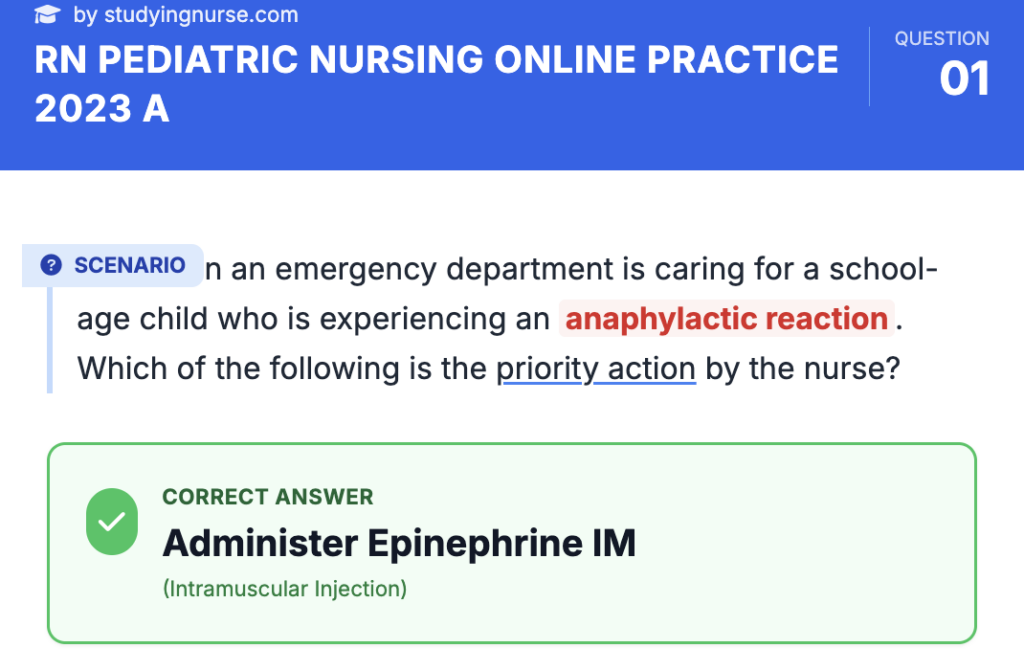
This table includes the full text of every question, the complete answer(s), and a detailed rationale for each, derived directly from the source material to assist with your revision.
| # | Question / Scenario | Correct Answer / Action | Detailed Rationale & Study Notes |
| 1 | A nurse in an emergency department is caring for a school-age child who is experiencing an anaphylactic reaction. Which of the following is the priority action by the nurse? | Administer epinephrine IM | Urgent vs. Non-Urgent Priority Setting: When using the urgent vs. non-urgent approach to client care, the nurse should determine that the priority action is administering epinephrine IM to the child. Pathophysiology: During an anaphylactic reaction, massive histamine release causes bronchoconstriction (closing of airways) and systemic vasodilation (widening of blood vessels). This is a medical emergency because ultimately it causes decreased blood return to the heart and respiratory collapse. Epinephrine acts quickly to reverse these specific life-threatening mechanisms. 1 |
| 2 | A nurse in a pediatric emergency department is planning care for an adolescent. Based on the information in the adolescent’s medical record, which of the following actions should the nurse plan to take? (Select all that apply) | 1. Apply supplemental oxygen 2. Prepare for chest tube insertion 3. Monitor the child’s oxygen saturation | 1. Supplemental Oxygen: According to the medical record and chest x-ray report, the adolescent could potentially have a pneumothorax. The adolescent’s oxygen saturation level is decreasing, indicating hypoxia. The nurse must administer oxygen to correct this. 2. Chest Tube: A pneumothorax is the presence of air in the pleural cavity, resulting in decreased lung expansion. Symptoms include dyspnea, tachypnea, tachycardia, hypoxia, and pain. This requires prompt intervention, such as placing a chest tube to remove air/fluid and allow the lung to re-expand. 3. Monitor Saturation: Because the child is in acute respiratory distress, continuous monitoring is necessary to determine if the child is responding to treatment. 2 |
| 3 | A nurse in an emergency department is caring for a school-age child who has epiglottitis. Which of the following actions should the nurse take? | Monitor the child’s oxygen saturation | Safety & Monitoring: Epiglottitis is a medical emergency involving inflammation of the epiglottis that can block the airway. The nurse should monitor the child’s oxygen saturation level because the child is experiencing acute respiratory distress. Continuous monitoring is necessary to determine if the child is maintaining oxygenation and responding to treatment. 3 |
| 4 | A nurse is providing teaching about play activities for social development to the guardians of a preschooler. Which of the following play activities should the nurse recommend for the child? | Playing dress-up | Developmental Milestones (Preschool): The nurse should instruct the guardians that at the preschool age, play should focus on social, mental, and physical development. “Dramatic play” or playing dress-up is a recommended activity that fosters imagination and social role-playing, which are critical for this age group. 4 |
| 5 | A nurse is receiving change-of-shift report for four children. Which of the following children should the nurse see first? | A school-age child who has sickle cell anemia and reports decreased vision in the left eye | Urgent vs. Non-Urgent Priority Setting: The priority finding is a report of decreased vision in the left eye in a patient with sickle cell anemia. This finding indicates a vaso-occlusive crisis occurring in the eye (retinopathy), which threatens permanent vision loss. This must be reported to the provider immediately to preserve sight. 5 |
| 6 | A nurse is providing teaching to the parents of a preschooler who has heart failure and a new prescription for digoxin twice daily. Which of the following instructions should the nurse include in the teaching? | “Brush the child’s teeth after giving the medication.” | Medication Administration Safety: Digoxin elixir for pediatric patients often comes as a sweetened liquid to enhance palatability. The nurse should instruct parents to brush the child’s teeth after administration to prevent tooth decay caused by the high sugar content of the medication. 6 |
| 7 | A nurse is providing teaching to the parent of an infant who has diaper dermatitis. The nurse should instruct the parent to apply which of the following to the affected area? | Zinc oxide | Skin Integrity: Diaper dermatitis is an inflammatory skin disorder caused by contact with irritants such as urine, feces, soap, or friction. It presents as scaling, blisters, or papules with erythema. Zinc oxide provides a protective barrier against these irritants, allowing the skin to heal. 7 |
| 8 | A nurse is caring for a client who has been receiving IV fluids via a peripheral IV catheter. When preparing to discontinue the IV fluids and catheter, which of the following actions should the nurse plan to take? (Order the steps) | 1. Turn off the IV pump 2. Occlude the IV tubing 3. Remove the tape securing the catheter 4. Apply pressure over the catheter insertion site | Procedural Safety: 1. Turn off pump: Stops the flow of fluid. 2. Occlude tubing: Prevents backflow or fluid mess while manipulating the line. 3. Remove tape: Frees the catheter for removal. 4. Apply pressure: Immediately upon removal to prevent bleeding or hematoma formation. 8 |
| 9 | A nurse is assessing a school-age child who has an acute spinal cord injury following a sports injury 1 week ago. Identify the area the nurse should tap to elicit the biceps reflex. | [Hot Spot Selection: The Antecubital Fossa] | Neurological Assessment: To elicit the biceps reflex, the nurse should tap the biceps tendon, which is located in the antecubital fossa (the inner aspect of the elbow). This tests the integrity of the C5 and C6 nerve roots. 9 |
| 10 | A nurse is caring for a school-age child who is receiving chemotherapy and is severely immunocompromised. Which of the following actions should the nurse take? | Screen the child’s visitors for indications of infection | Infection Control: A child who is severely immunocompromised is unable to adequately respond to infectious organisms, resulting in the potential for overwhelming and life-threatening infection. Screening visitors prevents the introduction of pathogens into the child’s environment. 10 |
| 11 | A nurse is providing teaching to the parent of a school-age child who has a new prescription for oral nystatin for the treatment of oral candidiasis. Which of the following instructions should the nurse include? | “Shake the medication prior to administration.” | Medication Administration: Nystatin acts as a suspension. The nurse should instruct the parent to shake the bottle vigorously prior to administration to ensure the medication particles are dispersed evenly throughout the liquid, ensuring the child receives the correct dosage. 11 |
| 12 | A nurse is teaching a group of parents about infectious mononucleosis. Which of the following statements by a parent indicates an understanding of the teaching? | “Mononucleosis is caused by an infection with the Epstein-Barr virus.” | Disease Pathophysiology: Infectious mononucleosis is a mildly contagious illness that occurs sporadically or in groups. The primary causative agent is the Epstein-Barr virus (EBV). 12121212 |
| 13 | A nurse is creating a plan of care for a school-age child who has heart disease and has developed heart failure. Which of the following interventions should the nurse include in the plan? | Provide small, frequent meals for the child | Nutritional Support in Heart Failure: Children with heart failure have a high metabolic rate due to poor cardiac function and increased work of breathing. Providing small, frequent meals helps conserve energy (eating large meals is tiring) while ensuring the child meets their high caloric needs. 1314 |
| 1415 | A nurse is providing anticipatory guidance to the guardian of a toddler. Which of the following expected beh16avior characteristics of toddlers should the nurse include? | Expresses likes and dislikes | Developmental Theory: Toddlerhood is the time when a child develops autonomy and self-concept. They will try to assert themselves and frequently refuse to comply. Expressing strong likes/dislikes is expected. Guardians should allow some control but set limits so the child learns to control their actions. 17 |
| 15 | A charge nurse is preparing to make a room assignment for a newly admitted school-age child. Which of the following considerations is the nurse’s priority? | Disease process | Safety & Infection Control: The transmission of infectious diseases is the greatest risk to this child and other children on the unit. Therefore, determining the child’s disease process (is it contagious? does the child need protective isolation?) is the priority consideration for room assignment. 18 |
| 16 | A nurse is caring for a preschooler who is scheduled for hydrotherapy treatment for wound debridement following a burn injury. Which of the following actions should the nurse take prior to the procedure? | Administer an analgesic to the child | Pain Management: Hydrotherapy for wound debridement is an extremely painful procedure. It requires analgesia and/or sedation. Controlling pain reduces physiological stress demands on the body and decreases the likelihood of the child developing depression or PTSD. 19 |
| 17 | A nurse is teaching the parent of a preschooler about ways to prevent acute asthma attacks. Which of the following statements by the parent indicates an understanding of the teaching? | “I should keep my child indoors when I mow the yard.” | Trigger Avoidance: The nurse should instruct the parent to keep the preschooler indoors during lawn maintenance or when pollen counts are high. Guarding against exposure to known allergens found outdoors (grass, tree, weed pollen, dust) decreases the frequency of asthma attacks. 20 |
| 18 | A nurse is reviewing the dietary choices of an adolescent who has iron deficiency anemia. The nurse should identify that which of the following menu items has the highest amount of non-heme iron? | 1/2 cup raisins | Nutritional Management: Raisins are a rich source of non-heme iron. The nurse should encourage the adolescent to eat raisins to help replenish iron stores and treat the anemia. 21 |
| 19 | A nurse is providing teaching to the family of a school-age child who has juvenile idiopathic arthritis (JIA). Which of the following instructions should the nurse include in the teaching? | “Encourage the child to perform independent self-care.” | Promotion of Independence & Mobility: Encouraging independent self-care minimizes the child’s pain while maximizing mobility and joint function. Praising efforts for independence also increases the child’s self-esteem, which can be impacted by chronic illness. 22 |
| 20 | A nurse is preparing an adolescent for a lumbar puncture. Which of the following actions should the nurse take? | Apply topical analgesic cream to the site 1 hr prior to the procedure | Procedural Pain Management: Applying a topical analgesic (like EMLA cream) to the lumbar site 1 hour prior to the procedure decreases the adolescent’s pain when the lumbar needle is inserted, facilitating better coping and cooperation. 23 |
| 21 | Case Study (Lead Poisoning): A nurse in the outpatient pediatric clinic is caring for a 2-year-old child. Highlight the findings that require follow-up.24 | 1. Pale pink mucous membranes25 2. Living in an older urban house that is being renovated26 3. Parent’s report that toddler seems less active and gets tired more quick27ly | Recognizing Cues: These findings are associated with lead poisoning. * Pale pink membranes/Fatigue: Manifestations of anemia, which is a direct result of lead interfering with heme synthesis. * Renovation: Older urban homes are a common source of lead paint; renovation aerosolizes the lead particles, creating a high inhalation/ingestion risk. 28 |
| 22 | Case Study (Lead Poisoning): When analyzing cues, the nurse should identify that the child is at risk for developing which conditions due to elevated blood lead level? | 1. Intellectual deficits 2. Decreased kidney function | Analyzing Cues: * Intellectual deficits: Lead increases membrane permeability in brain tissue, leading to increased intracranial pressure, tissue ischemia, and atrophy. This results in decreased IQ and cognitive impairment. * Kidney function: Lead damages the proximal tubules of the kidneys, causing reversible or irreversible dysfunction. 29 |
| 23 | Case Study (Lead Poisoning): Complete the sentence: The nurse should first address the child’s ______, followed by the child’s ______. | First: Elevated Blood Lead Level (BLL) Followed by: Hemoglobin | Prioritizing Hypotheses: Using the framework of safety/risk reduction, the elevated BLL is the root cause. It presents an immediate risk for long-term cognitive impairment and must be addressed first. Lead interferes with heme synthesis, causing the anemia (low hemoglobin); therefore, addressing the lead level first will cause the hemoglobin to improve. 30 |
| 24 | Case Study (Lead Poisoning): For each potential provider prescription, specify if it is Anticipated or Contraindicated. | 1. Succimer: Anticipated 2. Ferrous Sulfate: Anticipated 3. Consult Dietitian: Anticipated 4. Consult Social Services: Anticipated | Generating Solutions: * Succimer: A chelating agent used for BLL >45 mcg/dL. * Ferrous Sulfate: Treats the anemia caused by lead. * Social Services: Assists with finding safe housing away from renovations. * Dietitian: Assists in providing meals high in iron/calcium and low in fat (which reduces lead absorption). 31 |
| 25 | Case Study (Lead Poisoning): The nurse is providing discharge teaching. Which of the following information should the nurse include? (Select all that apply) | 1. Open the succimer capsule and sprinkle on 1 tsp of applesauce. 2. Use a wet cloth to dust. 3. Give ferrous sulfate elixir using a straw. 4. Offer orange juice when administering ferrous sulfate. 5. Monitor number of wet diapers. 6. Prevent playing in soil. | Taking Action: * Administration: 2-year-olds cannot swallow pills; sprinkling on food aids adherence. * Dusting: Wet cloths prevent spreading lead dust into the air. * Straw: Iron stains teeth; a straw bypasses them. * Orange Juice: Vitamin C (ascorbic acid) increases iron absorption. * Hydration: Hydration prevents renal toxicity from the chelating agent (monitor wet diapers). * Soil: Soil near old homes is likely contaminated. 32 |
| 26 | Case Study (Lead Poisoning): Which of the following conditions are improving since the child’s visit 1 month ago? (Select 4) | 1. Blood Lead Level (BLL) 2. Amount of glucose in urine 3. Exposure to lead 4. Nutritional status | Evaluating Outcomes: * BLL: Has decreased, indicating chelation is working. * Urine Glucose: Decreased glycosuria shows the proximal kidney tubules are healing. * Exposure: The family moved out of the renovation zone. * Nutrition: Child is eating better and gaining weight. 33 |
| 27 | A nurse is reviewing the laboratory report of a school-age child who is experiencing fatigue. Which of the following findings should the nurse recognize as an indication of anemia? | Hematocrit 28% | Diagnostic Interpretation: The expected reference range for hematocrit in a school-age child is 32% to 44%. A level of 28% is low, indicating anemia. This reduced oxygen-carrying capacity explains the child’s symptoms of fatigue, lightheadedness, tachycardia, dyspnea, and pallor. 34 |
| 28 | A nurse in a provider’s office is preparing to administer immunizations to a toddler during a well-child visit. Which of the following actions should the nurse plan to take? | Withhold the measles, mumps, and rubella (MMR) vaccine | Contraindications: The nurse should recognize that a severe allergy to neomycin (indicated in the “Exhibit” tab in the actual exam, implied here by rationale) with an anaphylactic reaction is a contraindication for the MMR vaccine. Severe allergies to eggs or gelatin are also contraindications. 35 |
| 29 | A nurse is assessing an 8-year-old child who has early indications of shock. After establishing an airway and stabilizing the child’s respirations, which of the following actions should the nurse take next? | Initiate IV access | ABC Priority Framework: Using the Airway, Breathing, Circulation approach: 1. Airway/Breathing: Already stabilized in the prompt. 2. Circulation: The next priority is to establish IV access to maintain/restore the child’s circulatory volume (fluid resuscitation). 36 |
| 30 | A nurse is caring for an adolescent who received a kidney transplant. Which of the following findings should the nurse identify as an indication the adolescent is rejecting the kidney? | Serum creatinine 3.0 mg/dL | Organ Rejection Indicators: Creatinine is a byproduct of protein metabolism excreted by the kidneys. An elevated level indicates the kidney is not filtering properly. The expected range for an adolescent is 0.4 to 1.0 mg/dL. A level of 3.0 mg/dL is significantly elevated and suggests rejection/failure. 37 |
| 31 | A nurse is planning care for a toddler who has a serum lead level of 4 mcg/dL. Which of the following actions should the nurse plan to take? | Schedule the toddler for a yearly re-screening | Lead Protocols: While any lead exposure is concerning, a level of 4 mcg/dL does not typically require chelation (used for >45). The standard of care is to educate the family on prevention and schedule a re-screening in 1 year to monitor the level. 38 |
| 32 | A nurse in an emergency department is caring for an adolescent who has severe abdominal pain due to appendicitis. Which of the following locations should the nurse identify as McBurney’s point? | [Hot Spot Selection: Right Lower Quadrant] | Anatomical Landmarks: McBurney’s point is located in the Right Lower Quadrant (RLQ), about two-thirds of the way between the umbilicus and the anterosuperior iliac spine. This is the classic area of tenderness for appendicitis. 39 |
| 33 | A nurse is assessing a 6-month-old infant during a well-child visit. Which of the following findings should the nurse report to the provider? | Presence of strabismus | Visual Development: Strabismus (crossing of the eyes) is normal in newborns but typically disappears by 3 to 4 months of age. If it persists at 6 months, it can lead to amblyopia (blindness) if not corrected. It requires a referral. 40 |
| 34 | A nurse is caring for a preschooler who has neutropenia. Which of the following statements should the nurse make to the child’s guardians? | “Avoid using your child’s daycare center.” | Neutropenic Precautions: Neutropenia involves a low count of neutrophils (white blood cells), making the child immunocompromised and highly susceptible to infection. Guardians must avoid places where large groups gather, such as daycare centers, to reduce exposure to pathogens. 41 |
| 35 | A nurse is assessing an adolescent who received a sodium polystyrene sulfonate (Kayexalate) enema. Which of the following findings indicates effectiveness of the medication? | Serum potassium level 4.1 mEq/L | Medication Outcomes: Sodium polystyrene sulfonate is used to treat hyperkalemia (high potassium) by exchanging sodium ions for potassium ions in the intestine, which are then excreted. A potassium level within the normal range (3.4 to 4.7 mEq/L) proves the medication was effective. |
| 36 | A nurse is admitting a school-age child who has pertussis. Which of the following actions should the nurse take? | Initiate droplet precautions for the child | Infection Control: Pertussis (Whooping Cough) is transmitted through contact with infected large-droplet nuclei suspended in the air when the child coughs/sneezes. Droplet precautions (mask, private room) are required to prevent transmission. |
| 37 | A nurse is providing discharge teaching to the parent of an 18-month-old toddler who has dehydration due to acute diarrhea. Which of the following statements by the parent indicates an understanding of the teaching? | “I will monitor my child’s number of wet diapers.” | Home Monitoring of Hydration: Monitoring the number of wet diapers per day is the most effective and practical way for a parent to assess if the child is producing adequate urine output and maintaining hydration status at home. 42 |
| 38 | A nurse is caring for a 10-year-old child following a head injury. Which of the following findings should the nurse identify as an indication that the child is developing diabetes insipidus (DI)?43 | Sodium 155 mEq/L44 | Pathophysiology of DI:45 Head injury can cause pituitary hypofunction, leading to a deficiency of ADH (Antidiuretic Hormone).46 Without ADH, the child excretes massive amounts of dilute urine (polyuria). This loss of free water leads to dehydration and hypernatremia (Sodium >145 mEq/L). 47 |
| 39 | A nurse is caring for a school-age child who is in Buck’s traction following a leg fracture 24 hr ago. Which of the following actions should the nurse take? | Assess peripheral pulses once every 4 hr | Traction Care: Buck’s traction immobilizes the limb but can compromise circulation. The nurse must provide frequent neurovascular checks (at least every 4 hours) to monitor for signs of impairment: cyanosis, edema, pain, absent pulses, or tingling. 48 |
| 40 | A charge nurse is preparing an in-service about the manifestations of child maltreatment. Which of the following manifestations should the charge nurse include as a potential indication of physical abuse? | Symmetric burns of the lower extremities | Signs of Abuse: Symmetric burns (e.g., “stocking” burns from dipping feet in hot water) are characteristic of intentional injury. Accidental burns are usually asymmetrical (splash patterns). Patterned burns (cigarettes, iron shapes) are also indicators. 49 |
| 41 | A nurse is planning an educational program for school-age children and their parents about bicycle safety. Which of the following information should the nurse plan to include? | The child should be able to stand on the balls of their feet when sitting on the bike. | Injury Prevention: To ensure the bike is the correct size: When seated, the child should touch the ground with the balls of their feet. When straddling the center bar, feet should be flat on the ground. Improper sizing increases the risk of falls and injury. 50 |
| 42 | A nurse is assessing a 4-year-old child at a well-child visit. Which of the following developmental milestones should the nurse expect to observe? | Cuts an outlined shape using scissors | Fine Motor Skills: Using scissors to cut out a shape is an expected milestone for a 4-year-old preschooler. 51 |
| 43 | A nurse is assessing a school-age child immediately following a perforated appendix repair. Which of the following findings should the nurse expect? | Absence of peristalsis | Post-Operative Assessment: Immediately following abdominal surgery, especially for a perforation, the bowel is temporarily paralyzed (paralytic ileus). Absence of bowel sounds (peristalsis) is an expected finding until bowel function resumes. 52 |
| 44 | A nurse in a health department is caring for an emancipated adolescent who has an STI and is unaccompanied by a guardian. Which of the following actions should the nurse take? | Have the adolescent sign a consent form for treatment | Legal/Ethical Practice: An emancipated minor has the legal status of an adult and can sign consent forms for their own medical treatment, including STI treatment, without parental involvement. 53 |
| 45 | A nurse is admitting a 4-month-old infant who has heart failure. Which of the following findings is the nurse’s priority? | 3 episodes of vomiting5455 | Safety/Toxicity:5657 While heart failure has many symptoms, vomiting is a hallmark sign of Digoxin toxicity (a common heart failure med). 5859Using the urgent vs. non-urgent approach, this indicates a potenti60al ove61rdose/toxicity that requires immediate intervention to prevent cardiac arrest. 62 |
| 46 | A nurse is caring for a 1-month-old infant who is breastfeeding and requires a heel stick. Which of the following actions should the nurse take to minimize the infant’s pain? | Allow the mother to breastfeed while the sample is being obtained | Non-Pharmacological Pain Relief: Evidence-based practice indicates that breastfeeding (or non-nutritive sucking with a pacifier/sucrose) releases endorphins and provides significant pain relief and comfort to infants during painful procedures. 63 |
| 47 | A nurse is creating a plan of care for a preschooler who has Wilms’ tumor and is scheduled for surgery. Which of the following interventions should the nurse include? | Avoid palpating the abdomen when bathing the child before surgery | Safety Precaution: Wilms’ tumor is an encapsulated kidney tumor. Palpating the abdomen can rupture the capsule, causing cancer cells to disseminate (spread) to adjacent and distant sites. Signs warning “Do Not Palpate Abdomen” are usually placed at the bedside. 64 |
| 48 | A nurse is creating a plan of care for an infant who has an epidural hematoma from a head injury. Which of the following interventions should the nurse include in the plan? | Implement seizure precautions for the infant | Neurological Safety: An epidural hematoma (bleeding between the skull and dura) irritates the brain tissue, placing the infant at high risk for seizure activity. Precautions (padded rails, suction/O2 available) are essential. 65 |
| 49 | A nurse is discussing organ donation with the parents of a school-age child who has sustained brain death due to a bicycle crash. Which of the following actions should the nurse take first?66 | Explore the parents’ feelings and wishes regarding organ donation67 | Nursing Process (Assessment):68 The first step is always assessment. 69The nurse must explore the parents’ emotional state and wishes to determine if 70donation is consistent with their values before proceeding with any logistical steps. 71 |
| 50 | A nurse in an urgent care clinic is assessing an adolescent who has an upper respiratory tract infection. Which of the following findings should the nurse identify as a manifestation of pertussis? | Dry, hacking cough | Clinical Manifestations: Pertussis usually begins with mild URI symptoms but progresses to a severe, dry, hacking cough (often worse at night). This cough is the hallmark “whooping cough” presentation. 72 |
| 51 | A nurse is caring for a preschooler whose guardian is going home for a few hours. Which of the following statements should the nurse make to explain to the child when their guardian will return? | “Your guardian will be back after you eat.” | Cognitive Development: Preschoolers lack a concept of abstract time (hours/minutes). They make sense of time best when it is associated with concrete, expected daily routines like meals, naps, or bedtime. 73 |
| 52 | A nurse is reviewing the laboratory results of a school-age child who is 1 week postoperative following an open fracture repair. Which of the following findings should the nurse identify as an indication of a potential complication? | Erythrocyte sedimentation rate 18 mm/hr | Infection Indicators: The expected ESR for a child is up to 10 mm/hr. An elevated ESR (18 mm/hr) indicates inflammation. In a post-op fracture patient, this is a strong indicator of osteomyelitis (bone infection), a serious complication. 74 |
| 53 | Case Study (Sickle Cell): The nurse should first address the child’s ______, followed by the child’s ______. | First: Oxygen Saturation Followed by: Pain | Prioritization: 1. Oxygen: The child’s saturation is below range (Hypoxia). Hypoxia causes the red blood cells to sickle, obstructing blood flow. Correcting hypoxia stops the sickling process (physiological safety). 2. Pain: The pain is severe (8/10), but it is a symptom of the ischemia caused by sickling. You must treat the cause (hypoxia) first, then manage the pain. 75 |
| 54 | Case Study (Appendectomy): Select the 3 findings that the nurse should identify as indications of a potential complication. | 1. WBC count (High) 2. Abdomen assessment (Rigid/Distended) 3. Temperature (High) | Post-Op Infection/Peritonitis: * WBC: Increased significantly (12,000+), indicating infection.76 * Abdomen: Rigid/distended abdomen suggests peritonitis (inflammation of the abdominal lining).77 * Temp: Fever indicates systemic infection. 7879 |
| 5580 | A community health81 nurse is assessing an 18-month-old toddler in a community day care. Which of the following findings should the nurse identify as a potential indication of physical neglect? | Poor personal hygiene | Signs of Neglect: Toddlers are dependent on caregivers for hygiene. Consistent poor personal hygiene (dirty clothes, unwashed body, severe diaper rash) indicates a lack of supervision and failure to meet the child’s basic needs. 8283 |
| 5684 | Case Study (Renal): For each EMR fi85nding, specify if it is consistent with Nephrotic Syndrome, Acute Poststreptococcal Glomerulonephritis, or Hemolytic Uremic Syndrome (HUS). | Temperature: Glomerulonephritis & HUS BUN Level: Glomerulonephritis & HUS Platelet Count: HUS | Differentiation:8687 * Glomerulonephritis: Follows strep infection; causes fever and renal impairment (High BUN).8889 * HUS: Causes fever (sometimes hallucinations), renal failure (High BUN), and specifically thrombocytopenia 90(low platelets91) due to intravascular coagulation. 92 |
| 57 | Case Study (Hemophilia): For each potential provider’s prescription, click to specify if it is Anticipated or Contraindicated. | 1. Administer factor VIII: Anticipated 2. Apply ice packs: Anticipated 3. Administer morphine: Anticipated | Hemophilia Management: * Factor VIII: Replaces the missing clotting factor to control bleeding. * Ice Packs: Vasoconstriction helps stop bleeding and reduces swelling in the joint (hemarthrosis). * Morphine: Severe joint bleeding is incredibly painful; opioids are appropriate. (Note: Aspirin/NSAIDs are contraindicated as they inhibit platelets). 93 |
| 58 | Case Study (Croup/LTB): Upon evaluation of the infant’s status at 0630, the nurse should identify which of the following as signs of improvement? | 1. Infant is sleeping in parent’s arms 2. SpO2 is 96% with cool mist 3. Breath sounds present/equal 4. Infant voided 34 mL | Evaluation of Care: * Sleeping: Indicates restlessness (a sign of hypoxia) has resolved. * SpO2: Improved from 89% to 96% (Hypoxia resolved). * Breath Sounds: Better air entry indicates reduced airway swelling.9495 * Voiding: Indicates hydration is improving (previously had not voided in 12hr). 969798 |
| 5999100 | A nurse is caring for a 15-year-old cli101ent following a head injury. Which of the following findi102ngs should the nurse identify as an indication that the child is developing syndrome of inappropriate antidiuretic hormone secretion (SIADH)? | Mental confusion | Pathophysiology of SIADH: Head injury can cause over-secretion of ADH. This causes the body to retain too much water, diluting the blood (hemodilution). This results in hyponatremia (low sodium). Severe hyponatremia causes cerebral edema (brain swelling), leading to mental confusion and seizures. 103 |
| 60 | A nurse is providing discharge teaching to the parents of a 3-month-old infant following a cheiloplasty. Which of the following instructions should the nurse include? | “Apply a thin layer of antibiotic ointment on your baby’s suture line daily for the next 3 days.” | Post-Op Wound Care: Cheiloplasty is a cleft lip repair. To promote healing and prevent infection, the suture line must be kept clean and lubricated. Antibiotic ointment is used initially, followed by petroleum jelly. 104 |
Struggling with Nursing Assignments or ATI/NCLEX Practice?
Get 100% original, expertly written nursing papers, care plans, case studies, and exam reviews – delivered on time!
Get Nursing Assignment Help NowTrusted by 10,000+ nursing students • 24/7 support • Plagiarism-free guarantee
RN Pediatric Nursing Online Practice 2023 A – Comprehensive Study Guide
Question 1: Emergency Management of Anaphylactic Reaction
Question: A nurse in an emergency department is caring for a school-age child who is experiencing an anaphylactic reaction. Which of the following is the priority action by the nurse?
Answer: Administer epinephrine intramuscularly (IM)
Detailed Rationale: When utilizing the urgent versus non-urgent approach to client care in pediatric emergencies, the nurse must recognize that administering epinephrine IM is the absolute priority intervention for anaphylactic reactions. During anaphylaxis, massive histamine release causes severe bronchoconstriction and widespread vasodilation, leading to:
- Airway obstruction from bronchospasm and laryngeal edema
- Cardiovascular collapse from vasodilation and increased capillary permeability
- Decreased venous return to the heart
- Potential for rapid progression to cardiac arrest
Epinephrine works by:
- Reversing bronchospasm through beta-2 adrenergic stimulation
- Causing vasoconstriction through alpha-adrenergic effects
- Stabilizing mast cells to prevent further histamine release
- Improving cardiac contractility through beta-1 stimulation
The intramuscular route (preferably in the anterolateral thigh) provides rapid absorption and is the recommended route for emergency treatment. Delay in epinephrine administration is associated with increased mortality in anaphylaxis.
Question 2: Pneumothorax Management in Adolescents
Question: A nurse in a pediatric emergency department is planning care for an adolescent. Based on the information in the adolescent’s medical record, which of the following actions should the nurse plan to take? Select all that apply.
Answer:
- Apply supplemental oxygen
- Prepare for chest tube insertion
Detailed Rationale:
Apply Supplemental Oxygen: According to the medical record and chest x-ray findings indicating potential pneumothorax, the adolescent’s oxygen saturation levels are decreasing, indicating hypoxia. Supplemental oxygen is essential to:
- Maintain adequate tissue oxygenation
- Compensate for decreased lung expansion
- Support respiratory function while definitive treatment is initiated
- Potentially accelerate reabsorption of pneumothorax through nitrogen washout
Prepare for Chest Tube Insertion: A pneumothorax represents air accumulation in the pleural space, causing lung collapse and respiratory compromise. The adolescent may experience:
- Dyspnea and tachypnea
- Tachycardia
- Progressive hypoxia
- Pleuritic chest pain
- Potential for tension pneumothorax development
Chest tube insertion (thoracostomy) is indicated to:
- Remove air from the pleural cavity
- Re-establish negative pressure
- Allow lung re-expansion
- Prevent cardiovascular compromise
- Monitor for ongoing air leak
The nurse should prepare sterile equipment, positioning supplies, and ensure appropriate sedation/analgesia orders are available.
Question 3: Epiglottitis Emergency Care
Question: A nurse in an emergency department is caring for a school-age child who has epiglottitis. Which of the following actions should the nurse take?
Answer: Monitor the child’s oxygen saturation continuously
Detailed Rationale: Continuous oxygen saturation monitoring is critical for a child with epiglottitis because:
Pathophysiology Considerations:
- Epiglottitis causes rapid inflammation and edema of the epiglottis and supraglottic structures
- Can progress to complete airway obstruction within hours
- The child is experiencing acute respiratory distress requiring constant assessment
Monitoring Rationale:
- Oxygen saturation provides real-time assessment of respiratory status
- Early detection of deterioration allows for timely intervention
- Helps evaluate response to treatment (antibiotics, steroids)
- Guides need for emergency airway management
Additional Nursing Considerations:
- Keep child calm and in position of comfort (usually sitting upright, leaning forward)
- Avoid throat examination or procedures that could precipitate complete obstruction
- Have emergency intubation equipment immediately available
- Prepare for possible emergency tracheostomy if intubation fails
- Administer humidified oxygen as tolerated
- Monitor for signs of impending obstruction (stridor, retractions, cyanosis)
Question 4: Preschooler Play Activities for Development
Question: A nurse is providing teaching about play activities for social development to the guardians of a preschooler. Which of the following play activities should the nurse recommend for the child?
Answer: Playing dress-up
Detailed Rationale: Playing dress-up is an ideal activity for preschool-age children (ages 3-5 years) because it supports multiple developmental domains:
Social Development:
- Encourages role-playing and understanding different social roles
- Promotes sharing and turn-taking when playing with others
- Develops empathy through pretending to be different characters
- Facilitates cooperative play with peers
Cognitive Development:
- Stimulates imagination and creative thinking
- Develops symbolic thinking and representation
- Enhances problem-solving skills
- Supports language development through storytelling
Emotional Development:
- Allows expression of feelings through play
- Helps process experiences and emotions
- Builds self-confidence
- Provides safe exploration of different identities
Physical Development:
- Fine motor skills through manipulating clothing fasteners
- Gross motor coordination while changing clothes
- Body awareness and self-care skills
The nurse should emphasize that preschoolers learn best through play that integrates social interaction, mental stimulation, and physical activity.
Question 5: Prioritizing Care for Multiple Patients
Question: A nurse is receiving change-of-shift report for four children. Which of the following children should the nurse see first?
Answer: A school-age child who has sickle cell anemia and reports decreased vision in the left eye
Detailed Rationale: Using the urgent versus non-urgent approach to client prioritization, the nurse must recognize that decreased vision in a child with sickle cell disease represents a medical emergency:
Pathophysiology of Ocular Crisis:
- Vaso-occlusive crisis can affect retinal vessels
- Sickled cells obstruct blood flow to the retina
- Can cause retinal detachment or proliferative retinopathy
- Risk of permanent vision loss without immediate treatment
Why This is the Priority:
- Represents acute vaso-occlusive crisis requiring immediate intervention
- Time-sensitive condition where delays can result in permanent disability
- Requires immediate provider notification
- May need emergency treatment including:
- Exchange transfusion
- High-dose oxygen therapy
- IV hydration
- Pain management
- Possible ophthalmologic intervention
Complications to Prevent:
- Permanent vision loss
- Retinal hemorrhage
- Vitreous hemorrhage
- Retinal detachment
- Complete blindness
The nurse should immediately assess visual acuity, notify the provider, and prepare for emergency interventions.
Question 6: Digoxin Administration Teaching
Question: A nurse is providing teaching to the parents of a preschooler who has heart failure and a new prescription for digoxin twice daily. Which of the following instructions should the nurse include in the teaching?
Answer: “Brush the child’s teeth after giving the medication.”
Detailed Rationale: This instruction is crucial for pediatric digoxin administration:
Medication Formulation:
- Pediatric digoxin comes as a sweetened liquid elixir
- The high sugar content is added to enhance palatability
- Makes the medication more acceptable to young children
Dental Health Concerns:
- Frequent exposure to sweetened medications increases cavity risk
- Preschoolers are particularly vulnerable to dental caries
- Sugar residue can adhere to teeth and promote bacterial growth
- Twice-daily administration means repeated sugar exposure
Additional Digoxin Teaching Points:
- Check apical pulse for full minute before administration
- Hold if heart rate below age-appropriate parameters
- Use accurate measuring device (not household spoon)
- Give at consistent times daily
- Never double doses if one is missed
- Watch for signs of toxicity (nausea, vomiting, vision changes)
- Keep medication out of reach of children
- Regular blood level monitoring required
Oral Hygiene Protocol:
- Brush teeth immediately after medication
- If brushing not possible, rinse mouth with water
- Consider fluoride supplements if recommended
- Regular dental check-ups important
Question 7: Diaper Dermatitis Treatment
Question: A nurse is providing teaching to the parent of an infant who has diaper dermatitis. The nurse should instruct the parent to apply which of the following to the affected area?
Answer: Zinc oxide
Detailed Rationale: Zinc oxide is the gold standard treatment for diaper dermatitis:
Mechanism of Action:
- Creates a physical barrier protecting skin from irritants
- Prevents contact with urine, feces, and moisture
- Has mild antiseptic and astringent properties
- Promotes healing of damaged skin
- Reduces friction between diaper and skin
Pathophysiology of Diaper Dermatitis:
- Common inflammatory skin disorder in infants
- Caused by prolonged contact with irritants (urine, feces, soap)
- Friction from diaper movement exacerbates condition
- Presents as erythema, scaling, blisters, or papules
- Can progress to secondary infection if untreated
Application Instructions:
- Clean area gently with warm water
- Pat dry completely (don’t rub)
- Apply thick layer of zinc oxide with each diaper change
- No need to remove all previous application
- Continue until rash resolves
Additional Management Strategies:
- Frequent diaper changes (every 2-3 hours)
- Use super-absorbent disposable diapers
- Allow diaper-free time for air exposure
- Avoid harsh wipes containing alcohol or fragrance
- Consider probiotic use if antibiotic-related
- Seek medical attention if no improvement in 3 days
Question 8: IV Discontinuation Procedure
Question: A nurse is caring for a client who has been receiving IV fluids via a peripheral IV catheter. When preparing to discontinue the IV fluids and catheter, which of the following actions should the nurse plan to take? (Move the steps into the box on the right, placing them in the order of performance. Use all the steps.)
Answer: Correct sequence:
- Turn off the IV pump
- Occlude the IV tubing
- Remove the tape securing the catheter
- Apply pressure over the catheter insertion site
Detailed Rationale:
Step 1 – Turn off the IV pump:
- Prevents continued fluid infusion during removal
- Eliminates pressure in the line
- Ensures accurate intake documentation
- Prevents fluid spillage
Step 2 – Occlude the IV tubing:
- Prevents backflow of blood
- Minimizes bleeding risk
- Prevents air entry into catheter
- Maintains closed system until removal
Step 3 – Remove tape securing the catheter:
- Gentle removal prevents skin trauma
- Remove in direction of hair growth
- Use adhesive remover if needed for sensitive skin
- Stabilize catheter during tape removal
Step 4 – Apply pressure over the catheter insertion site:
- Apply immediately after catheter removal
- Maintain pressure for 2-3 minutes minimum
- Longer if patient on anticoagulants
- Promotes hemostasis and prevents hematoma
- Apply sterile dressing after bleeding stops
Documentation Requirements:
- Time of discontinuation
- Catheter condition and length
- Site appearance
- Patient tolerance
- Any complications
Question 9: Biceps Reflex Assessment
Question: A nurse is assessing a school-age child who has an acute spinal cord injury following a sports injury 1 week ago. Identify the area the nurse should tap to elicit the biceps reflex.
Answer: The antecubital fossa area (inner elbow)
Detailed Rationale: The biceps reflex assessment is crucial in evaluating spinal cord function:
Anatomical Location:
- Tap the biceps tendon in the antecubital fossa
- Located at the bend of the elbow
- Tendon lies over the radius bone
- C5-C6 nerve root levels tested
Assessment Technique:
- Position arm at 45-degree angle
- Support the elbow with examiner’s hand
- Place thumb over biceps tendon
- Strike thumb with reflex hammer
- Observe for elbow flexion
Clinical Significance in Spinal Cord Injury:
- Tests integrity of C5-C6 reflex arc
- Hyperreflexia indicates upper motor neuron damage
- Absent reflex suggests lower motor neuron involvement
- Helps localize level of spinal cord injury
- Monitors recovery progress
Expected Findings:
- Normal: 2+ (brisk response)
- Hyperreflexia: 3+ to 4+ (may indicate spinal cord compression above C5-C6)
- Hyporeflexia: 0 to 1+ (may indicate injury at C5-C6 level)
Additional Assessment:
- Compare bilateral responses
- Assess other deep tendon reflexes
- Evaluate motor strength
- Check sensation levels
Question 10: Immunocompromised Child Care
Question: A nurse is caring for a school-age child who is receiving chemotherapy and is severely immunocompromised. Which of the following actions should the nurse take?
Answer: Screen the child’s visitors for indications of infection
Detailed Rationale: Protecting severely immunocompromised children from infection is paramount:
Immunocompromised State:
- Chemotherapy destroys rapidly dividing cells including WBCs
- Neutropenia (ANC <500) creates severe infection risk
- Unable to mount adequate immune response
- Minor infections can become life-threatening
- Risk of opportunistic infections
Visitor Screening Protocol:
- Assess for signs/symptoms of infection:
- Fever or feeling unwell
- Cough, runny nose, sore throat
- Rash or skin infections
- Gastrointestinal symptoms
- Recent exposure to communicable diseases
- Restrict visitors with active infections
- Limit number of visitors
- Ensure proper hand hygiene
- Provide masks if indicated
Additional Protective Measures:
- Private room placement
- Neutropenic precautions
- No fresh flowers or plants
- Cooked food only (no raw fruits/vegetables)
- Daily assessment for infection signs
- Prompt antibiotic therapy for fever
- Avoid invasive procedures when possible
- Meticulous central line care
Education Points:
- Importance of infection prevention
- Signs requiring immediate medical attention
- Home environment preparation
- Avoiding crowds and sick contacts
Question 11: Oral Nystatin Administration
Question: A nurse is providing teaching to the parent of a school-age child who has a new prescription for oral nystatin for the treatment of oral candidiasis. Which of the following instructions should the nurse include?
Answer: “Shake the medication prior to administration.”
Detailed Rationale: Proper administration of nystatin suspension is essential for effectiveness:
Medication Preparation:
- Nystatin oral suspension requires thorough shaking
- Medication particles settle when stored
- Shaking ensures uniform drug distribution
- Provides consistent dosing
- Maximizes therapeutic effect
Administration Technique:
- Shake bottle vigorously for 10 seconds
- Use calibrated measuring device
- Have child swish medication in mouth
- Hold in mouth as long as possible (ideally 2 minutes)
- Swallow after swishing
- Avoid eating/drinking for 30 minutes after
Mechanism of Action:
- Direct contact with fungal organisms required
- Binds to fungal cell membrane
- Creates pores causing cell death
- Limited systemic absorption
- Local action in oral cavity
Treatment Considerations:
- Continue full course even if symptoms improve
- Usually prescribed QID (four times daily)
- Treatment duration typically 7-14 days
- May cause temporary taste alteration
- Watch for signs of treatment failure
Storage Instructions:
- Store at room temperature
- Keep bottle tightly closed
- Protect from light
- Check expiration date
- Discard after treatment course
Question 12: Infectious Mononucleosis Education
Question: A nurse is teaching a group of parents about infectious mononucleosis. Which of the following statements by a parent indicates an understanding of the teaching?
Answer: “Mononucleosis is caused by an infection with the Epstein-Barr virus.”
Detailed Rationale: Understanding the etiology of mononucleosis is important for parent education:
Causative Agent:
- Epstein-Barr virus (EBV) causes 90% of cases
- Member of herpesvirus family
- Other causes include CMV, toxoplasmosis
- Virus remains dormant after initial infection
Transmission:
- Spread through saliva (“kissing disease”)
- Sharing drinks, utensils, toothbrushes
- Not highly contagious despite reputation
- Incubation period 4-6 weeks
Clinical Presentation:
- Classic triad: fever, pharyngitis, lymphadenopathy
- Extreme fatigue lasting weeks to months
- Splenomegaly in 50% of cases
- Hepatomegaly possible
- Characteristic atypical lymphocytes on CBC
Management:
- Supportive care (rest, fluids, antipyretics)
- Avoid contact sports due to splenic rupture risk
- No antibiotics unless secondary infection
- Avoid amoxicillin (causes characteristic rash)
- Corticosteroids for severe complications only
Complications to Monitor:
- Splenic rupture
- Airway obstruction
- Hepatitis
- Thrombocytopenia
- Neurologic complications
Return to Activities:
- Gradual return as tolerated
- No contact sports for minimum 3 weeks
- May need modified school schedule
- Full recovery typically 2-3 months
Question 13: Heart Failure Nutritional Management
Question: A nurse is creating a plan of care for a school-age child who has heart disease and has developed heart failure. Which of the following interventions should the nurse include in the plan?
Answer: Provide small, frequent meals for the child
Detailed Rationale: Nutritional management is crucial in pediatric heart failure:
Metabolic Demands:
- Increased metabolic rate due to poor cardiac function
- Higher caloric needs (120-150% of normal)
- Increased work of breathing burns calories
- Poor growth common in heart failure
Benefits of Small, Frequent Meals:
- Reduces energy expenditure during feeding
- Prevents stomach distension affecting breathing
- Decreases cardiac workload
- Improves overall caloric intake
- Reduces nausea and early satiety
Feeding Strategies:
- Offer 5-6 small meals daily
- High-calorie, nutrient-dense foods
- Limit fluids during meals
- Position upright for feeding
- Allow rest periods during meals
- Consider caloric supplements
Additional Interventions:
- Daily weights to monitor fluid status
- Sodium restriction as ordered
- Monitor intake and output
- Assess for signs of fatigue during feeding
- Consider nasogastric feeds if oral intake inadequate
Signs of Feeding Intolerance:
- Tachypnea during feeding
- Diaphoresis
- Cyanosis
- Poor weight gain
- Prolonged feeding times (>30 minutes)
Question 14: Toddler Behavioral Development
Question: A nurse is providing anticipatory guidance to the guardian of a toddler. Which of the following expected behavior characteristics of toddlers should the nurse include?
Answer: Expresses likes and dislikes
Detailed Rationale: Understanding toddler development helps guardians manage challenging behaviors:
Developmental Milestone:
- Expressing preferences is normal for toddlers (1-3 years)
- Demonstrates developing autonomy
- Key feature of Erikson’s “Autonomy vs. Shame and Doubt” stage
- Essential for self-concept formation
Autonomy Development:
- Toddlers assert independence through choices
- “No” becomes favorite word
- Tests boundaries and limits
- Develops sense of self as separate individual
Behavioral Manifestations:
- Strong food preferences
- Clothing choices (wanting to dress self)
- Toy preferences
- Routine preferences
- Selective about caregivers
Guidance for Parents:
- Offer limited choices (2-3 options)
- Set consistent, reasonable limits
- Avoid power struggles
- Redirect negative behavior
- Praise positive choices
- Maintain routines for security
Managing Challenging Behaviors:
- Tantrums are normal when frustrated
- Use distraction techniques
- Stay calm during outbursts
- Time-outs for 1-2 minutes per year of age
- Consistent consequences
Safety Considerations:
- Childproof environment for exploration
- Supervise constantly
- Teach “no” for dangerous situations
- Balance freedom with safety
Question 15: Room Assignment Priorities
Question: A charge nurse is preparing to make a room assignment for a newly admitted school-age child. Which of the following considerations is the nurse’s priority?
Answer: Disease process
Detailed Rationale: Infection control and disease transmission prevention are paramount in room assignments:
Priority Rationale:
- Disease process determines isolation requirements
- Prevents cross-contamination between patients
- Protects immunocompromised patients
- Ensures appropriate precautions implemented
Infection Control Considerations:
- Airborne precautions need negative pressure rooms
- Droplet/contact precautions may need private rooms
- Immunocompromised patients need protective environment
- Cohort patients with same organisms when necessary
Room Assignment Factors:
- Disease Process (Priority):
- Infectious vs. non-infectious
- Type of organism
- Transmission route
- Isolation requirements
- Secondary Considerations:
- Age and developmental needs
- Gender (for older children)
- Acuity level
- Family preferences
- Special equipment needs
Examples of Room Assignments:
- RSV patients can room together
- Varicella requires airborne isolation
- MRSA needs contact precautions
- Chemotherapy patients need protective isolation
- Post-operative patients away from infections
Documentation:
- Reason for room selection
- Precautions initiated
- Family education provided
- Any special accommodations
Question 16: Burn Wound Hydrotherapy
Question: A nurse is caring for a preschooler who is scheduled for hydrotherapy treatment for wound debridement following a burn injury. Which of the following actions should the nurse take prior to the procedure?
Answer: Administer an analgesic to the child
Detailed Rationale: Pain management is critical before burn wound hydrotherapy:
Procedure Pain Level:
- Hydrotherapy is extremely painful
- Water pressure and debridement cause severe pain
- Nerve endings exposed in partial-thickness burns
- Movement and manipulation increase discomfort
Premedication Timing:
- Administer analgesics 30-60 minutes before
- Allows peak effect during procedure
- Consider both opioid and non-opioid options
- May require sedation for young children
Pain Management Benefits:
- Reduces physiological stress response
- Decreases risk of shock
- Improves cooperation during procedure
- Prevents psychological trauma
- Reduces risk of PTSD development
Medication Options:
- Morphine or fentanyl IV
- Oral opioids for less severe burns
- Anxiolytics (midazolam) for anxiety
- Consider ketamine for procedural sedation
- Topical anesthetics where appropriate
Additional Comfort Measures:
- Explain procedure age-appropriately
- Allow parent presence if possible
- Use distraction techniques
- Maintain warm environment
- Gentle handling
- Stop periodically if tolerated
Post-Procedure Care:
- Continue pain assessment
- Provide comfort positioning
- Monitor for signs of distress
- Document pain scores
- Adjust ongoing pain management
Question 17: Asthma Trigger Prevention
Question: A nurse is teaching the parent of a preschooler about ways to prevent acute asthma attacks. Which of the following statements by the parent indicates an understanding of the teaching?
Answer: “I should keep my child indoors when I mow the yard.”
Detailed Rationale: Environmental control is essential in asthma management:
Outdoor Allergen Exposure:
- Grass clippings are major asthma triggers
- Lawn mowing releases grass pollen
- Creates airborne particles
- Mold spores from cut grass
- Chemical emissions from mower
Common Outdoor Triggers:
- Tree, grass, and weed pollens
- High pollen count days
- Air pollution/ozone
- Temperature extremes
- High humidity
- Strong winds carrying allergens
Prevention Strategies:
- Monitor daily pollen counts
- Keep windows closed during high pollen days
- Use air conditioning with HEPA filters
- Shower and change clothes after outdoor play
- Avoid outdoor activities during peak pollen hours (early morning)
- Pre-medicate before unavoidable exposure
Indoor Trigger Control:
- Dust mite covers on bedding
- Remove carpeting if possible
- Control humidity (<50%)
- No pets in bedroom
- Avoid smoking in home
- Regular HVAC filter changes
- Minimize stuffed animals
Action Plan Education:
- Green zone: Good control
- Yellow zone: Caution, use quick-relief medication
- Red zone: Medical emergency
- When to call provider
- Proper inhaler technique
Question 18: Iron Deficiency Anemia Nutrition
Question: A nurse is reviewing the dietary choices of an adolescent who has iron deficiency anemia. The nurse should identify that which of the following menu items has the highest amount of nonheme iron?
Answer: ½ cup raisins
Detailed Rationale: Understanding iron sources helps manage nutritional anemia:
Iron Content Comparison:
- Raisins: Highest nonheme iron among common foods
- ½ cup provides approximately 1.5-2mg iron
- Concentrated source due to dehydration
- Also provides energy for anemic patients
Types of Dietary Iron:
- Heme Iron (15-35% absorption):
- Found in animal products
- Red meat, poultry, fish
- Better absorbed than nonheme
- Nonheme Iron (2-20% absorption):
- Plant sources
- Fortified cereals
- Beans and lentils
- Dark leafy greens
- Dried fruits
Absorption Enhancement:
- Vitamin C increases nonheme absorption
- Combine with citrus fruits
- Avoid tea/coffee with meals (tannins inhibit)
- Cast iron cookware adds iron
- Separate calcium supplements from iron-rich meals
Adolescent Iron Needs:
- Boys: 11mg/day
- Girls: 15mg/day (higher due to menses)
- Athletes need more
- Vegetarians need 1.8x more
Additional Dietary Sources:
- Fortified breakfast cereals
- Spinach and dark greens
- Beans and lentils
- Quinoa
- Dark chocolate
- Pumpkin seeds
Question 19: Juvenile Idiopathic Arthritis Care
Question: A nurse is providing teaching to the family of a school-age child who has juvenile idiopathic arthritis. Which of the following instructions should the nurse include in the teaching?
Answer: “Encourage the child to perform independent self-care.”
Detailed Rationale: Promoting independence is crucial in managing juvenile idiopathic arthritis:
Benefits of Independent Self-Care:
- Maintains joint mobility and function
- Prevents muscle atrophy
- Preserves range of motion
- Builds self-esteem and confidence
- Promotes normal development
- Reduces learned helplessness
Pain and Mobility Balance:
- Movement may cause initial discomfort
- Gentle activity reduces stiffness
- “Motion is lotion” for joints
- Inactivity worsens symptoms
- Finding balance is key
Age-Appropriate Self-Care:
- Dressing with adaptive equipment
- Modified grooming tools
- Velcro instead of buttons
- Lever-style door handles
- Built-up handles on utensils
Exercise Program:
- Daily range-of-motion exercises
- Swimming for low-impact activity
- Physical therapy involvement
- Avoid high-impact sports during flares
- Warm-up importance
Family Teaching Points:
- Praise efforts, not just success
- Allow extra time for tasks
- Provide assistance only when needed
- Encourage participation in school
- Maintain normal expectations when possible
Medication Compliance:
- Importance of anti-inflammatory medications
- Disease-modifying drugs (DMARDs)
- Biologic agents if indicated
- Regular monitoring required
Question 20: Lumbar Puncture Preparation
Question: A nurse is preparing an adolescent for a lumbar puncture. Which of the following actions should the nurse take?
Answer: Apply topical analgesic cream to the site 1 hour prior to the procedure
Detailed Rationale: Proper preparation minimizes discomfort during lumbar puncture:
Topical Anesthetic Application:
- EMLA or LMX cream commonly used
- Apply 60 minutes before procedure
- Covers 2-3 interspaces (usually L3-L4, L4-L5)
- Cover with occlusive dressing
- Penetrates 3-5mm depth
Benefits of Topical Anesthesia:
- Reduces needle insertion pain
- Decreases anxiety
- Improves cooperation
- Allows better positioning
- Reduces need for restraint
Positioning for Procedure:
- Side-lying fetal position most common
- Knees to chest, chin tucked
- Or sitting position leaning forward
- Maintain airway alignment
- Assistant helps maintain position
Adolescent-Specific Considerations:
- Explain procedure honestly
- Address specific fears
- Allow questions
- Respect modesty/privacy
- Consider parent presence preference
- Offer coping strategies
Pre-Procedure Preparation:
- NPO status usually not required
- Empty bladder for comfort
- Baseline vital signs
- Remove jewelry from area
- Consent verification
During Procedure Support:
- Coaching breathing techniques
- Distraction methods
- Continuous monitoring
- Reassurance and praise
- Monitor for vagal response
Question 21-26: Lead Poisoning Case Study
Question 21: Recognizing Lead Poisoning Risk Factors
Question: A nurse in the outpatient pediatric clinic is caring for a 2-year-old child. Click to highlight the findings that require follow-up.
Findings Requiring Follow-up:
- Pale pink mucous membranes
- Living in an older urban house being renovated
- Parent reports toddler seems less active and gets tired more quickly
Detailed Rationale: These findings create a constellation of lead poisoning risk factors and symptoms:
Environmental Risk – Older Urban House Under Renovation:
- Houses built before 1978 likely contain lead paint
- Renovation disturbs lead paint creating dust/chips
- Aerosolized lead particles during sanding/scraping
- Toddlers at high risk due to hand-to-mouth behavior
- Crawling on contaminated floors
- Lead dust on toys and surfaces
Clinical Manifestations – Pale Mucous Membranes:
- Lead interferes with heme synthesis
- Causes microcytic, hypochromic anemia
- Results in pallor and fatigue
- May see basophilic stippling on blood smear
Behavioral Changes – Decreased Activity/Fatigue:
- Early signs of lead toxicity
- Related to anemia
- May progress to irritability
- Developmental regression possible
- Cognitive impacts if untreated
Question 22: Lead Poisoning Complications
Question: Drag words from the choices below to fill in each blank in the following sentence regarding the child at risk for lead poisoning.
Answer: The child is at risk for developing intellectual deficits due to the increase in membrane permeability of the brain tissue resulting in increased intracranial pressure, tissue ischemia, and atrophy. The nurse should also identify that the child is at risk for decreased kidney function due to the damage of the proximal tubules caused by the elevated blood lead level.
Detailed Rationale:
Neurological Complications:
- Lead crosses blood-brain barrier easily
- Increases membrane permeability
- Causes cerebral edema and increased ICP
- Results in tissue ischemia and atrophy
- Permanent cognitive deficits possible:
- Decreased IQ (loses 2-3 points per 10 mcg/dL increase)
- Learning disabilities
- Behavioral problems
- ADHD symptoms
- Speech delays
Renal Complications:
- Lead damages proximal tubules
- Causes Fanconi syndrome
- Results in:
- Glycosuria
- Proteinuria
- Ketonuria
- Phosphate wasting
- Can progress to chronic kidney disease
- Usually reversible if treated early
Question 23: Prioritizing Lead Poisoning Interventions
Question: Complete the following sentence by using the lists of options. The nurse should first address the child’s __________, followed by the child’s __________.
Answer: The nurse should first address the child’s elevated BLL (blood lead level), followed by the child’s hemoglobin.
Detailed Rationale:
Priority – Elevated Blood Lead Level:
- Source of all complications
- Must stop ongoing exposure
- Initiate chelation if indicated
- Environmental investigation needed
- Time-sensitive to prevent permanent damage
Secondary Priority – Hemoglobin:
- Anemia is consequence of lead toxicity
- Will improve with lead treatment
- Iron supplementation may be needed
- Monitor response to treatment
Rationale for Prioritization:
- Lead is the causative agent
- Removing lead allows heme synthesis recovery
- Anemia will not resolve without addressing lead
- Cognitive effects worsen with continued exposure
- Early intervention prevents permanent damage
Question 24: Anticipated Interventions for Lead Poisoning
Question: For each potential provider prescription, click to specify if the prescription is anticipated or contraindicated for the client with lead poisoning.
Anticipated Prescriptions:
- Succimer (chelation therapy)
- Ferrous sulfate (iron supplementation)
- Dietitian consult
- Social Services consult
Detailed Rationale:
Succimer (DMSA) – Anticipated:
- Chelating agent for BLL >45 mcg/dL
- Binds lead for urinary excretion
- Oral administration (outpatient option)
- Given for 19-day course
- Requires adequate hydration
- Monitor renal function
Ferrous Sulfate – Anticipated:
- Treats concurrent iron deficiency anemia
- Given between chelation rounds
- Not during active chelation (competes for binding)
- Enhances erythropoiesis
- Monitor for constipation
Dietitian Consult – Anticipated:
- High calcium diet (competes with lead absorption)
- High iron foods
- Low fat diet (fat increases lead absorption)
- Vitamin C to enhance iron absorption
- Adequate nutrition for growth
Social Services Consult – Anticipated:
- Housing assessment and remediation
- Temporary housing during renovation
- Financial assistance resources
- Lead-safe housing identification
- Family support services
- Follow-up coordination
Question 25: Discharge Teaching for Lead Poisoning
Question: The nurse is providing discharge teaching to the parent. Which of the following information should the nurse include? Select all that apply.
Answer: All of the following should be included:
- Open succimer capsule and sprinkle on 1 teaspoon of applesauce
- Use wet cloth for dusting
- Give ferrous sulfate with straw
- Offer orange juice with iron medication
- Monitor wet diapers
- Prevent playing in soil near house
Detailed Rationale:
Medication Administration:
- Succimer on applesauce: 2-year-olds cannot swallow capsules; mixing with small amount ensures full dose consumed
- Ferrous sulfate with straw: Prevents teeth staining from liquid iron
- Orange juice with iron: Vitamin C enhances iron absorption significantly
Environmental Controls:
- Wet dusting: Prevents lead dust from becoming airborne; dry dusting spreads contamination
- Avoid soil near house: Likely contaminated with lead from paint chips and dust
Monitoring:
- Wet diapers: Ensures adequate hydration during chelation; prevents renal toxicity from succimer
Question 26: Evaluating Lead Poisoning Treatment Outcomes
Question: Which of the following conditions are improving since the child’s visit 1 month ago? Select 4.
Answer:
- Lead poisoning (decreased BLL)
- Kidney function (decreased glycosuria)
- Exposure to lead (moved from house)
- Nutritional status (weight gain, eating calcium-rich foods)
Detailed Rationale:
Lead Poisoning Improvement:
- BLL decreased from initial elevated level
- Indicates chelation therapy effective
- Reduced body burden of lead
- Continued monitoring needed
Kidney Function Improvement:
- Decreased glucose in urine
- Proximal tubule function recovering
- Reversible damage with treatment
- May need continued monitoring
Environmental Exposure Reduced:
- Family moved from contaminated house
- Primary source of exposure removed
- Critical for preventing reexposure
- Allows treatment to be effective
Nutritional Status Improved:
- Weight gain indicates better intake
- Calcium-rich diet implemented
- Competing with lead absorption
- Supporting overall growth and development
Question 27: Recognizing Anemia in Children
Question: A nurse is reviewing the laboratory report of a school-age child who is experiencing fatigue. Which of the following findings should the nurse recognize as an indication of anemia?
Answer: Hematocrit 28%
Detailed Rationale: Understanding normal pediatric lab values is essential:
Normal Hematocrit Ranges:
- School-age children (6-12 years): 32-44%
- Patient’s result: 28% (significantly below normal)
- Indicates decreased RBC mass
- Confirms anemia diagnosis
Clinical Correlation with Fatigue:
- Decreased oxygen-carrying capacity
- Tissue hypoxia
- Compensatory mechanisms:
- Tachycardia
- Tachypnea
- Fatigue/weakness
Additional Manifestations:
- Pallor (skin, conjunctiva, nail beds)
- Lightheadedness/dizziness
- Decreased exercise tolerance
- Poor concentration
- Headaches
- Cold intolerance
Diagnostic Workup:
- Complete blood count with differential
- Reticulocyte count
- Iron studies
- B12/folate levels
- Hemoglobin electrophoresis if indicated
Common Causes in School-Age Children:
- Iron deficiency (most common)
- Chronic disease
- Blood loss
- Hemolytic disorders
- Nutritional deficiencies
Question 28: Immunization Contraindications
Question: A nurse in a provider’s office is preparing to administer immunizations to a toddler during a well-child visit. The child has a history of anaphylaxis to neomycin. Which of the following actions should the nurse plan to take?
Answer: Withhold the measles, mumps, and rubella (MMR) vaccine
Detailed Rationale: Recognizing vaccine contraindications prevents severe adverse reactions:
MMR Vaccine Components:
- Contains trace amounts of neomycin
- Used as preservative/stabilizer
- Present in final vaccine product
Anaphylaxis to Neomycin:
- Absolute contraindication to MMR
- Life-threatening allergic reaction risk
- IgE-mediated hypersensitivity
- Previous anaphylaxis predicts future risk
Other Vaccines Containing Neomycin:
- Varicella vaccine
- Some IPV formulations
- Some influenza vaccines
- Always check package inserts
Alternative Management:
- Document allergy clearly
- Consult with allergist/immunologist
- Consider component vaccines if available
- Ensure herd immunity through family vaccination
- Medical exemption documentation
Other MMR Contraindications:
- Severe egg allergy (manufactured in chick embryo)
- Gelatin allergy
- Immunodeficiency
- Pregnancy
- Recent blood product receipt
Safe to Administer:
- DTaP vaccine (no neomycin)
- Hepatitis B vaccine
- Pneumococcal vaccine
- Rotavirus vaccine
Question 29: Shock Management Priority
Question: A nurse is assessing an 8-year-old child who has early indications of shock. After establishing an airway and stabilizing the child’s respirations, which of the following actions should the nurse take next?
Answer: Initiate IV access
Detailed Rationale: Following the ABC (Airway, Breathing, Circulation) approach:
Circulation Priority After Airway/Breathing:
- IV access essential for circulatory support
- Enables fluid resuscitation
- Allows medication administration
- Restores intravascular volume
- Maintains organ perfusion
Pediatric Shock Considerations:
- Children compensate longer than adults
- Hypotension is late sign
- Early intervention crucial
- Rapid decompensation possible
IV Access Strategies:
- Two large-bore IVs preferred
- Antecubital sites ideal
- Intraosseous if IV fails (after 2 attempts or 90 seconds)
- Central line for vasopressors
Fluid Resuscitation:
- Initial bolus: 20 mL/kg isotonic crystalloid
- Reassess after each bolus
- May need 60-80 mL/kg in first hour
- Monitor for fluid overload
- Consider blood products if hemorrhagic
Concurrent Actions:
- Continuous monitoring
- Frequent vital signs
- Urine output monitoring
- Laboratory studies
- Identify underlying cause
Question 30: Kidney Transplant Rejection
Question: A nurse is caring for an adolescent who received a kidney transplant. Which of the following findings should the nurse identify as an indication the adolescent is rejecting the kidney?
Answer: Serum creatinine 3.0 mg/dL
Detailed Rationale: Monitoring for transplant rejection requires understanding of renal function markers:
Creatinine Significance:
- Normal adolescent range: 0.4-1.0 mg/dL
- Patient’s level: 3.0 mg/dL (significantly elevated)
- Indicates decreased kidney filtration
- Byproduct of muscle metabolism
- Not reabsorbed or secreted significantly
Acute Rejection Signs:
- Rising creatinine (earliest indicator)
- Decreased urine output
- Fluid retention/edema
- Hypertension
- Graft tenderness
- Fever
- Malaise
Types of Rejection:
- Hyperacute: Minutes to hours (rare with crossmatching)
- Acute: Days to months (most common)
- Chronic: Months to years (progressive)
Additional Monitoring:
- BUN elevation
- Proteinuria
- Electrolyte imbalances
- Decreased GFR
- Biopsy for definitive diagnosis
Management:
- High-dose corticosteroids
- Adjustment of immunosuppressants
- Anti-rejection antibodies
- Plasmapheresis if severe
- Close monitoring
Question 31: Lead Screening Guidelines
Question: A nurse is planning care for a toddler who has a serum lead level of 4 mcg/dL. Which of the following actions should the nurse plan to take?
Answer: Schedule the toddler for a yearly re-screening
Detailed Rationale: Current CDC lead screening guidelines:
Lead Level Interpretation:
- <3.5 mcg/dL: No elevated blood lead level
- 3.5-5 mcg/dL: Review in 6-12 months
- Patient’s level: 4 mcg/dL (mild elevation)
Yearly Screening Rationale:
- Level not immediately dangerous
- Monitor for increase
- Risk factors may persist
- Developmental vulnerability continues
- Early detection prevents toxicity
Education Focus:
- Nutrition optimization
- Environmental assessment
- Hand hygiene
- Cleaning practices
- Water testing
- Toy safety
Risk Factor Assessment:
- Housing age and condition
- Renovation/remodeling
- Parent occupations
- Cultural practices
- Imported items
- Previous elevated levels
When to Increase Frequency:
- Level rises above 5 mcg/dL
- High-risk environment
- Symptoms develop
- Sibling with elevated level
- Ongoing exposure suspected
Question 32: McBurney’s Point Assessment
Question: A nurse in an emergency department is caring for an adolescent who has severe abdominal pain due to appendicitis. Which of the following locations should the nurse identify as McBurney’s point?
Answer: The point located in the right lower quadrant, approximately two-thirds of the distance from the umbilicus to the anterior superior iliac spine
Detailed Rationale: McBurney’s point is a crucial landmark for appendicitis assessment:
Anatomical Location:
- Right lower quadrant (RLQ)
- 2/3 distance from umbilicus to right ASIS
- Overlies base of appendix typically
- Most common site of maximum tenderness
Clinical Significance:
- Point tenderness highly suggestive of appendicitis
- Rebound tenderness indicates peritoneal irritation
- Guarding indicates inflammation
- Rovsing’s sign: LLQ palpation causes RLQ pain
Additional Assessment Findings:
- Psoas sign: Pain with right hip extension
- Obturator sign: Pain with internal rotation of flexed hip
- Fever (usually low-grade initially)
- Anorexia, nausea, vomiting
- Migration of pain from periumbilical to RLQ
Complications to Prevent:
- Perforation (increased risk after 24-48 hours)
- Abscess formation
- Peritonitis
- Sepsis
Nursing Interventions:
- NPO status
- IV access and fluids
- Pain assessment (avoid masking)
- Antibiotic administration
- Surgical preparation
Question 33: Infant Vision Assessment
Question: A nurse is assessing a 6-month-old infant during a well-child visit. Which of the following findings should the nurse report to the provider?
Answer: Presence of strabismus
Detailed Rationale: Strabismus at 6 months requires immediate intervention:
Normal Vision Development:
- Strabismus normal until 3-4 months
- Binocular vision develops by 4 months
- Persistence beyond 4 months abnormal
- 6-month-old should have aligned eyes
Risks of Untreated Strabismus:
- Amblyopia (lazy eye)
- Loss of depth perception
- Permanent vision loss in affected eye
- Suppression of image from deviating eye
- Social/developmental impacts
Assessment Techniques:
- Corneal light reflex test
- Cover-uncover test
- Tracking assessment
- Red reflex examination
- Observation during play
Treatment Options:
- Corrective lenses
- Patching therapy (good eye)
- Eye exercises
- Surgery if severe
- Early intervention critical
Time-Sensitive Nature:
- Visual pathways developing rapidly
- Critical period for binocular vision
- Better outcomes with early treatment
- Prevention of permanent deficits
Question 34: Neutropenia Precautions
Question: A nurse is caring for a preschooler who has neutropenia. Which of the following statements should the nurse make to the child’s guardians?
Answer: “Avoid using your child’s daycare center.”
Detailed Rationale: Protecting neutropenic children from infection requires environmental modifications:
Neutropenia Definition:
- Absolute neutrophil count (ANC) <1500
- Severe: ANC <500
- Inability to fight bacterial/fungal infections
- Common with chemotherapy
Daycare Avoidance Rationale:
- High concentration of infectious agents
- Young children have poor hygiene
- Frequent respiratory and GI infections
- Close contact promotes transmission
- Unable to control environment
Other Places to Avoid:
- Shopping malls/stores
- Movie theaters
- Public transportation
- Indoor play areas
- Swimming pools
- Crowds in general
Home Precautions:
- Limit visitors
- Screen for illness
- Hand hygiene critical
- No fresh flowers/plants
- Cooked foods only
- Daily baths
- Oral care QID
When to Seek Medical Care:
- Fever >38°C (100.4°F)
- Chills or sweating
- Cough or breathing problems
- Redness, swelling, drainage
- Diarrhea or vomiting
- Exposure to communicable disease
Question 35: Hyperkalemia Treatment Monitoring
Question: A nurse is assessing an adolescent who received a sodium polystyrene sulfonate enema. Which of the following findings indicates effectiveness of the medication?
Answer: Serum potassium level 4.1 mEq/L
Detailed Rationale: Monitoring electrolyte response to treatment:
Normal Potassium Range:
- Adolescents: 3.4-4.7 mEq/L
- Patient’s level: 4.1 mEq/L (within normal limits)
- Indicates successful treatment
Sodium Polystyrene Sulfonate (Kayexalate) Mechanism:
- Cation exchange resin
- Exchanges sodium for potassium in intestine
- Potassium bound to resin and excreted
- Works in colon primarily
- Takes 2-24 hours for effect
Administration Considerations:
- Retention enema held 30-60 minutes
- Can be given orally with sorbitol
- Multiple doses may be needed
- Monitor for sodium overload
- Assess for constipation
Hyperkalemia Dangers:
- Cardiac arrhythmias
- Peaked T waves
- Widened QRS
- Ventricular fibrillation
- Cardiac arrest
Additional Treatments:
- Calcium gluconate (cardiac protection)
- Insulin with glucose
- Sodium bicarbonate
- Albuterol nebulization
- Dialysis if severe
Question 36: Droplet Precautions for Pertussis
Question: A nurse is admitting a school-age child who has pertussis. Which of the following actions should the nurse take?
Answer: Initiate droplet precautions for the child
Detailed Rationale: Proper isolation prevents pertussis transmission:
Transmission Route:
- Large respiratory droplets
- Coughing, sneezing, talking
- Travel 3-6 feet
- Highly contagious (80-90% household transmission)
- Most contagious in catarrhal stage
Droplet Precautions Components:
- Private room (or cohort with same organism)
- Surgical mask within 3 feet
- Standard precautions plus droplet
- Door may remain open
- Special air handling not required
Clinical Stages:
- Catarrhal (1-2 weeks): Most contagious, mild URI symptoms
- Paroxysmal (2-8 weeks): Severe coughing fits, whooping
- Convalescent (weeks-months): Gradual improvement
Isolation Duration:
- 5 days after starting antibiotics
- 21 days if untreated
- Until 3 weeks after cough onset
Treatment:
- Azithromycin or erythromycin
- Supportive care
- Oxygen as needed
- Suctioning for thick secretions
- Small frequent meals
Complications:
- Pneumonia
- Seizures
- Encephalopathy
- Apnea in infants
- Death in young infants
Question 37: Dehydration Monitoring
Question: A nurse is providing discharge teaching to the parent of an 18-month-old toddler who has dehydration due to acute diarrhea. Which of the following statements by the parent indicates an understanding of the teaching?
Answer: “I will monitor my child’s number of wet diapers.”
Detailed Rationale: Monitoring hydration status at home:
Wet Diaper Significance:
- Direct measure of urine output
- Indicates kidney perfusion
- Reflects hydration status
- Easy for parents to track
- Objective measurement
Expected Output:
- Minimum: 4-6 wet diapers/24 hours
- Normal: 6-8 wet diapers/24 hours
- Decreased output indicates ongoing dehydration
- No output in 8 hours requires immediate care
Additional Monitoring:
- Weight daily (same scale, time)
- Tear production
- Moist mucous membranes
- Skin turgor
- Activity level
- Capillary refill
Rehydration Guidelines:
- Oral rehydration solution (ORS)
- Small frequent amounts
- 50-100 mL/kg over 4 hours for mild
- Continue breastfeeding
- BRAT diet when tolerated
- Avoid sugary drinks
When to Return:
- Decreased urine output
- Lethargy/irritability
- Dry mucous membranes
- Sunken eyes/fontanel
- Blood in stool
- Persistent vomiting
Question 38: Diabetes Insipidus After Head Injury
Question: A nurse is caring for a 10-year-old child following a head injury. Which of the following findings should the nurse identify as an indication that the child is developing diabetes insipidus?
Answer: Sodium 155 mEq/L
Detailed Rationale: Understanding DI pathophysiology after head trauma:
Sodium Level Interpretation:
- Normal range: 136-145 mEq/L
- Patient’s level: 155 mEq/L (hypernatremia)
- Results from excessive water loss
- Concentration of serum sodium
Diabetes Insipidus Mechanism:
- Pituitary damage from head injury
- Decreased ADH production/release
- Inability to concentrate urine
- Massive water loss
- Dehydration and hypernatremia
Clinical Manifestations:
- Polyuria (>2 mL/kg/hr)
- Polydipsia (if conscious)
- Dilute urine (specific gravity <1.005)
- Dehydration signs
- Altered mental status
Diagnostic Criteria:
- Urine output >4 mL/kg/hr
- Urine specific gravity <1.005
- Urine osmolality <200 mOsm/kg
- Serum osmolality >300 mOsm/kg
- Hypernatremia
Management:
- Fluid replacement (calculate deficit)
- DDAVP (desmopressin)
- Monitor I&O strictly
- Frequent sodium levels
- Daily weights
- Neurological assessments
Question 39: Buck’s Traction Care
Question: A nurse is caring for a school-age child who is in Buck’s traction following a leg fracture 24 hours ago. Which of the following actions should the nurse take?
Answer: Assess peripheral pulses once every 4 hours
Detailed Rationale: Neurovascular monitoring in traction patients:
Assessment Frequency:
- Every 1 hour for first 24 hours
- Every 4 hours after 24 hours
- More frequent if concerns
- Document findings
5 P’s of Neurovascular Assessment:
- Pain: Increasing pain may indicate compartment syndrome
- Pallor: Color changes indicate circulation issues
- Pulselessness: Absent pulses require immediate intervention
- Paresthesia: Tingling/numbness indicates nerve involvement
- Paralysis: Late sign of neurovascular compromise
Buck’s Traction Specifics:
- Skin traction type
- Used for femur fractures pre-operatively
- Weight limit: 5-7 pounds
- Maintains alignment
- Reduces muscle spasms
Additional Assessments:
- Skin integrity under traction
- Proper body alignment
- Weight hanging freely
- Ropes in pulley tracks
- Pin sites if skeletal traction
Complications to Monitor:
- Compartment syndrome
- Nerve damage
- Skin breakdown
- DVT formation
- Infection (skeletal)
Question 40: Physical Abuse Indicators
Question: A charge nurse in an emergency department is preparing an in-service for a group of newly licensed nurses about the manifestations of child maltreatment. Which of the following manifestations should the charge nurse include as a potential indication of physical abuse?
Answer: Symmetric burns of the lower extremities
Detailed Rationale: Recognizing patterns indicative of abuse:
Symmetric Burn Patterns:
- Suggests intentional immersion
- “Stocking” or “glove” distribution
- Clear demarcation lines
- Absence of splash marks
- Protected areas (held position)
Other Suspicious Burn Patterns:
- Cigarette burns (circular, uniform depth)
- Iron/curling iron shapes
- Grid patterns (heating grates)
- Rope burns (restraint)
- Multiple burns in various healing stages
Additional Physical Abuse Indicators:
- Bruises in various stages
- Bruises in protected areas
- Pattern injuries (belt, cord)
- Bite marks
- Fractures inconsistent with development
- Retinal hemorrhages (shaking)
Behavioral Indicators:
- Fear of specific person
- Withdrawal or aggression
- Delayed seeking medical care
- Inconsistent history
- Child’s story differs from parents’
- Inappropriate knowledge of abuse
Nursing Responsibilities:
- Mandatory reporting
- Objective documentation
- Photography if permitted
- Body diagram documentation
- Exact quotes from child/parent
- Non-judgmental approach
Question 41: Bicycle Safety Education
Question: A nurse is planning an educational program for school-age children and their parents about bicycle safety. Which of the following information should the nurse plan to include?
Answer: The child should be able to stand on the balls of their feet when sitting on the bike
Detailed Rationale: Proper bike fit is essential for safety:
Correct Bike Sizing:
- Seated: balls of feet touch ground
- Standing over center bar: both feet flat
- Prevents injury if sudden stop needed
- Allows proper control
- Reduces fall risk
Additional Bike Safety Education:
Helmet Requirements:
- Properly fitted (2 fingers above eyebrows)
- Snug but comfortable
- Straps form “V” under ears
- Replace after any crash
- CPSC approved
Road Safety Rules:
- Ride with traffic
- Use hand signals
- Obey traffic signs
- Use bike lanes when available
- Bright clothing/reflectors
- No riding at dusk/dark
Bike Maintenance:
- Check brakes before riding
- Proper tire inflation
- Chain lubrication
- Reflectors intact
- No loose parts
Developmental Considerations:
- Under 10: sidewalk riding
- Traffic education before street riding
- Supervision based on maturity
- No passengers on single bikes
- No headphones while riding
Question 42: Preschool Developmental Milestones
Question: A nurse is assessing a 4-year-old child at a well-child visit. Which of the following developmental milestones should the nurse expect to observe?
Answer: Cuts an outlined shape using scissors
Detailed Rationale: Fine motor development at 4 years:
Expected Fine Motor Skills:
- Uses scissors to cut out shapes
- Copies circles and squares
- Draws person with 2-4 body parts
- Uses fork and spoon well
- Dresses/undresses independently
Other 4-Year Milestones:
Gross Motor:
- Hops on one foot
- Catches bounced ball
- Stands on one foot >2 seconds
- Climbs well
Language:
- Tells stories
- Uses future tense
- Says name and address
- Uses 5-6 word sentences
Cognitive:
- Counts to 10
- Names 4 colors
- Understands same/different
- Follows 3-part commands
Social:
- Cooperative play
- Shares with prompting
- Shows affection to friends
- Prefers playing with others
Red Flags:
- Cannot jump in place
- No interactive play
- Ignores other children
- Doesn’t use “me” and “you” correctly
- Cannot retell favorite story
Questions 43-45: Additional Clinical Scenarios
Question 43: Post-Operative Appendectomy
Question: A nurse is assessing a school-age child immediately following a perforated appendix repair. Which of the following findings should the nurse expect?
Answer: Absence of peristalsis
Detailed Rationale:
Expected Finding:
- Paralytic ileus common post-operatively
- Normal response to abdominal surgery
- Bowel manipulation during surgery
- Anesthesia effects
- Inflammatory response
Duration:
- Usually resolves in 24-72 hours
- Gradual return of function
- Bowel sounds return first
- Then passing gas
- Finally bowel movement
Assessment:
- Auscultate all 4 quadrants
- Document absence/presence
- Monitor for distension
- Assess for nausea
- NPO until bowel sounds return
Interventions:
- NG decompression if needed
- Early ambulation
- Advance diet slowly
- Monitor for complications
Question 44: Emancipated Minor Rights
Question: A nurse in a health department is caring for an emancipated adolescent who has an STI and is unaccompanied by a guardian. Which of the following actions should the nurse take?
Answer: Have the adolescent sign a consent form for treatment
Detailed Rationale:
Emancipated Minor Status:
- Legal adult for medical decisions
- Can consent to all treatments
- No parental involvement required
- Same rights as adults
Criteria for Emancipation:
- Marriage
- Military service
- Court decree
- Living independently
- Teenage parent
STI Treatment Rights:
- Most states allow minors to consent
- Even without emancipation
- Confidential treatment
- Partner notification services
Documentation:
- Verify emancipation status
- Document in medical record
- Standard consent forms
- Maintain confidentiality
Question 45: Digoxin Toxicity Recognition
Question: A nurse is admitting a 4-month-old infant who has heart failure. Which of the following findings is the nurse’s priority?
Answer: Episodes of vomiting (3 episodes noted in nurses’ notes)
Detailed Rationale:
Priority Assessment:
- Vomiting is early sign of digoxin toxicity
- Life-threatening arrhythmias possible
- Requires immediate intervention
- Check digoxin level stat
Digoxin Toxicity Signs in Infants:
- GI: Vomiting, poor feeding
- Cardiac: Bradycardia, arrhythmias
- Neuro: Lethargy, irritability
- Visual: Not reported in infants
Risk Factors:
- Narrow therapeutic range
- Dehydration
- Hypokalemia
- Renal dysfunction
- Drug interactions
Immediate Actions:
- Hold next digoxin dose
- Notify provider
- Obtain digoxin level
- Check electrolytes
- Continuous cardiac monitoring
- Prepare for possible Digibind
Question 46: Breastfeeding Pain Management
Question: A nurse is caring for a 1-month-old infant who is breastfeeding and requires a heel stick. Which of the following actions should the nurse take to minimize the infant’s pain?
Answer: Allow the mother to breastfeed while the sample is being obtained
Detailed Rationale:
Non-Pharmacological Pain Management:
- Breastfeeding provides multiple pain-relieving mechanisms
- Sweet taste of breast milk activates endogenous opioids
- Sucking provides distraction and comfort
- Maternal contact reduces stress response
- Skin-to-skin contact releases oxytocin
Evidence-Based Practice:
- Studies show 30-50% reduction in pain scores
- Decreased crying time
- Faster return to baseline heart rate
- Lower cortisol levels
- Better than sucrose water alone
Procedure Technique:
- Position infant comfortably at breast
- Allow good latch before procedure
- Perform heel stick while actively nursing
- Continue breastfeeding after procedure
- Monitor for adequate sample collection
Alternative Pain Management:
- Pacifier with sucrose solution
- Skin-to-skin contact
- Swaddling
- Gentle restraint
- Combination approaches most effective
Benefits Beyond Pain Relief:
- Maintains breastfeeding relationship
- Reduces maternal anxiety
- Promotes bonding
- Decreases procedure time
- Improves parent satisfaction
Question 47: Wilms’ Tumor Precautions
Question: A nurse is creating a plan of care for a preschooler who has Wilms’ tumor and is scheduled for surgery. Which of the following interventions should the nurse include?
Answer: Avoid palpating the abdomen when bathing the child before surgery
Detailed Rationale:
Critical Safety Measure:
- Palpation can cause tumor rupture
- Risk of cancer cell dissemination
- Seeding to other organs
- Converts localized to metastatic disease
- Significantly worsens prognosis
Wilms’ Tumor Characteristics:
- Most common renal malignancy in children
- Peak age 3-4 years
- Encapsulated but friable
- Usually unilateral
- Good prognosis if contained
“No Palpation” Protocol:
- Post “Do Not Palpate Abdomen” signs
- Inform all healthcare providers
- Gentle handling during care
- Minimize abdominal procedures
- Careful during transport
Pre-Operative Care:
- Measure abdominal girth daily (tape measure at same level)
- Monitor for increasing size
- Assess for hematuria
- Blood pressure monitoring (renin production)
- Emotional support for surgery
Post-Operative Considerations:
- Monitor for bleeding
- Assess remaining kidney function
- Radiation/chemotherapy per staging
- Long-term follow-up needed
- Monitor for late effects
Question 48: Epidural Hematoma Management
Question: A nurse is creating a plan of care for an infant who has an epidural hematoma from a head injury. Which of the following interventions should the nurse include in the plan?
Answer: Implement seizure precautions for the infant
Detailed Rationale:
Seizure Risk with Epidural Hematoma:
- Blood accumulation increases intracranial pressure
- Brain tissue compression and irritation
- Seizures common complication
- Can occur at any time
- May be first sign of deterioration
Seizure Precautions Implementation:
- Padded side rails
- Suction equipment at bedside
- Oxygen ready
- Airway management equipment
- IV access maintained
- Anti-epileptic drugs available
Epidural Hematoma Pathophysiology:
- Arterial bleeding (usually middle meningeal)
- Rapid accumulation of blood
- Classic “lucid interval”
- Rapid deterioration possible
- Surgical emergency
Additional Interventions:
- Neurological checks q15-30 minutes
- HOB elevated 30 degrees
- Maintain midline head position
- Avoid hip flexion
- Limit stimulation
- Monitor ICP if device placed
Emergency Preparedness:
- Rapid response team awareness
- OR notification
- Type and crossmatch
- Family support
- Documentation of changes
Question 49: Organ Donation Discussion
Question: A nurse is discussing organ donation with the parents of a school-age child who has sustained brain death due to a bicycle crash. Which of the following actions should the nurse take first?
Answer: Explore the parents’ feelings and wishes regarding organ donation
Detailed Rationale:
Assessment First (Nursing Process):
- Understanding parents’ perspectives essential
- Cultural/religious beliefs impact decision
- Emotional readiness varies
- Previous discussions with child relevant
- Family dynamics important
Therapeutic Communication:
- Open-ended questions
- Active listening
- Acknowledge grief
- Provide emotional support
- Allow time for processing
- Respect their decision
Timing Considerations:
- After brain death confirmation
- Separate from end-of-life discussion
- Trained coordinator involvement
- No pressure or coercion
- Family-centered approach
Information to Provide (After Assessment):
- Donation process
- Which organs/tissues viable
- No cost to family
- No disfigurement for viewing
- Can specify organ recipients
- Follow-up support available
Support Resources:
- Organ procurement organization
- Chaplain services
- Social work
- Grief counseling
- Support groups
- Memorial options
Question 50: Pertussis Manifestations
Question: A nurse in an urgent care clinic is assessing an adolescent who has an upper respiratory tract infection. Which of the following findings should the nurse identify as a manifestation of pertussis?
Answer: Dry, hacking cough
Detailed Rationale:
Characteristic Cough:
- Starts as dry, hacking cough
- Progresses to paroxysmal stage
- Worse at night initially
- “Whooping” sound after cough fits
- Post-tussive vomiting common
Three Stages of Pertussis:
1. Catarrhal Stage (1-2 weeks):
- Mild URI symptoms
- Low-grade fever
- Dry, hacking cough begins
- Most contagious period
2. Paroxysmal Stage (2-8 weeks):
- Severe coughing paroxysms
- Inspiratory “whoop”
- Cyanosis during coughing
- Exhaustion after fits
- Between fits, patient appears well
3. Convalescent Stage (weeks-months):
- Gradual decrease in coughing
- Susceptible to respiratory infections
- “100-day cough”
Adolescent Presentation:
- May lack classic “whoop”
- Persistent cough main symptom
- Often misdiagnosed as bronchitis
- Source of infant infections
Diagnostic Confirmation:
- PCR testing preferred
- Culture (gold standard but slow)
- Serology in later stages
Question 51: Time Concepts for Preschoolers
Question: A nurse is caring for a preschooler whose guardian is going home for a few hours while another relative stays with the child. Which of the following statements should the nurse make to explain to the child when their guardian will return?
Answer: “Your guardian will be back after you eat.”
Detailed Rationale:
Preschooler Time Understanding:
- Abstract time concepts not developed
- Cannot understand clock time
- Hours/minutes meaningless
- Need concrete references
- Daily routines provide framework
Effective Time References:
- Meals (breakfast, lunch, dinner)
- Sleep times (nap, bedtime)
- Activities (playtime, bath time)
- TV shows they know
- Routine events
Developmental Considerations:
- Concrete operational thinking
- Egocentric perspective
- Immediate experience focus
- Routine provides security
- Predictability reduces anxiety
Separation Anxiety Management:
- Acknowledge feelings
- Provide comfort object
- Maintain routines
- Distraction activities
- Positive reunion planning
Communication Strategies:
- Simple, concrete language
- Visual aids helpful
- Repeat as needed
- Calm, reassuring tone
- Consistency important
Question 52: Osteomyelitis Detection
Question: A nurse is reviewing the laboratory results of a school-age child who is 1 week postoperative following an open fracture repair. Which of the following findings should the nurse identify as an indication of a potential complication?
Answer: Erythrocyte sedimentation rate 18 mm/hr
Detailed Rationale:
ESR Interpretation:
- Normal school-age: up to 10 mm/hr
- Patient’s result: 18 mm/hr (elevated)
- Non-specific inflammation marker
- Suggests possible osteomyelitis
Osteomyelitis Risk Factors:
- Open fracture (direct contamination)
- Surgical hardware placement
- Compromised blood flow
- Delayed treatment
- Inadequate debridement
Clinical Presentation:
- Fever (may be low-grade)
- Localized pain increasing
- Erythema at surgical site
- Limited range of motion
- Possible drainage
Laboratory Findings:
- Elevated ESR (early indicator)
- Elevated CRP
- Leukocytosis
- Blood cultures (often negative)
- Bone culture definitive
Management:
- Long-term IV antibiotics (4-6 weeks)
- Possible surgical debridement
- Hardware removal consideration
- Serial ESR/CRP monitoring
- MRI for diagnosis
Complications if Untreated:
- Chronic osteomyelitis
- Growth disturbances
- Pathological fractures
- Sepsis
- Joint destruction
Question 53: Sickle Cell Crisis Prioritization
Question: A nurse on a pediatric unit is caring for a school-age child. After reviewing the information in the child’s medical record, which of the following findings should the nurse address first? Complete the following sentence by using the list of options.
Answer: The nurse should first address the child’s oxygen saturation followed by the child’s pain.
Detailed Rationale:
Priority 1 – Oxygen Saturation:
- Below 95% indicates hypoxia
- Hypoxia worsens sickling
- Creates vicious cycle
- Can lead to acute chest syndrome
- Life-threatening complication
Hypoxia Management:
- Supplemental oxygen immediately
- Continuous pulse oximetry
- Incentive spirometry
- Position for optimal expansion
- Hydration to decrease viscosity
Priority 2 – Pain Management:
- Pain score 8/10 indicates severe pain
- Vaso-occlusive crisis causes ischemia
- Undertreated pain causes stress
- Stress worsens sickling
- Multimodal approach needed
Pain Interventions:
- Opioids (morphine, hydromorphone)
- Around-the-clock dosing
- PCA pump if appropriate
- NSAIDs as adjunct
- Non-pharmacological methods
- Warm compresses (never cold)
Why This Order:
- Airway/Breathing before comfort
- Hypoxia immediately life-threatening
- Pain severe but not immediately fatal
- Both require urgent intervention
- Treating hypoxia may reduce pain
Question 54: Post-Appendectomy Complications
Question: A nurse is caring for a school-age child following an appendectomy. After reviewing the information in the child’s medical record, which of the following findings should the nurse identify as a potential complication? Select the 3 findings from the child’s medical record that the nurse should identify as indications of a potential complication.
Answer:
- WBC count (significantly elevated from baseline)
- Abdomen assessment (rigid and distended)
- Temperature (elevated above normal range)
Detailed Rationale:
Postoperative Infection Indicators:
WBC Count Elevation:
- Significant increase from pre-op
- Suggests ongoing infection
- May indicate abscess formation
- Peritonitis development possible
- Requires immediate intervention
Abdominal Assessment:
- Rigid, distended abdomen
- Board-like rigidity suggests peritonitis
- Increased pain concerning
- May indicate:
- Abscess formation
- Bowel obstruction
- Peritonitis
- Wound dehiscence
Temperature Elevation:
- Fever after first 24 hours abnormal
- Low-grade expected initially (surgical stress)
- Persistent/increasing fever concerning
- Indicates infection process
Additional Assessment Needed:
- Wound assessment for drainage
- Character of any drainage
- Bowel sounds presence
- Nausea/vomiting
- Pain characteristics
Interventions:
- Notify surgeon immediately
- Blood cultures
- Broad-spectrum antibiotics
- Possible CT scan
- NPO status
- Surgical consultation
Question 55: Physical Neglect Indicators
Question: A community health nurse is assessing an 18-month-old toddler in a community day care. Which of the following findings should the nurse identify as a potential indication of physical neglect?
Answer: Poor personal hygiene
Detailed Rationale:
Physical Neglect Manifestations:
- Poor hygiene (unchanged diapers, dirty clothing)
- Inappropriate dress for weather
- Consistent hunger
- Unmet medical needs
- Lack of supervision
- Unsafe living conditions
Why Hygiene Indicates Neglect:
- Toddlers dependent on caregivers
- Cannot maintain own hygiene
- Reflects lack of basic care
- May indicate other neglect areas
- Pattern more significant than isolated incident
Assessment Considerations:
- Chronic vs. acute findings
- Pattern of neglect
- Developmental delays
- Growth parameters
- Behavioral indicators
- Parent-child interaction
Other Neglect Types:
- Medical (untreated conditions)
- Educational (chronic absences)
- Emotional (lack of affection)
- Supervisory (left alone)
Nursing Actions:
- Document objectively
- Mandatory reporting
- Collaborate with social services
- Family assessment
- Resource referrals
- Follow-up care
Differential Considerations:
- Poverty vs. neglect
- Cultural practices
- Parent capability
- Support systems
- Access to resources
Question 56: Glomerulonephritis vs HUS Assessment
Question: A nurse is caring for a preschooler who was recently admitted to a pediatric unit. The nurse is reviewing the information in the child’s electronic medical record (EMR). For each EMR finding, click to specify if the finding is consistent with nephrotic syndrome, acute poststreptococcal glomerulonephritis, or hemolytic uremic syndrome.
Answer:
- Temperature: Consistent with acute poststreptococcal glomerulonephritis and hemolytic uremic syndrome
- BUN level: Consistent with acute poststreptococcal glomerulonephritis and hemolytic uremic syndrome
- Platelet count: Consistent with hemolytic uremic syndrome
Detailed Rationale:
Temperature Elevation:
- Glomerulonephritis: Low-grade fever common from streptococcal infection
- HUS: High fever possible, may cause hallucinations and lethargy
- Nephrotic Syndrome: Typically afebrile unless secondary infection
BUN Elevation:
- Both conditions: Indicate impaired kidney function
- Glomerulonephritis: Glomerular inflammation affects filtration
- HUS: Intravascular coagulation damages glomeruli
- Reflects decreased GFR in both
Platelet Count:
- HUS specific: Thrombocytopenia hallmark finding
- Consumed in microthrombi formation
- Part of classic triad (hemolytic anemia, thrombocytopenia, renal failure)
- Not typically affected in glomerulonephritis
Disease Differentiation:
- HUS: Preceded by diarrheal illness (E. coli O157:H7)
- Glomerulonephritis: Follows streptococcal infection by 1-2 weeks
- Nephrotic Syndrome: Massive proteinuria, edema, hypoalbuminemia
Question 57: Hemophilia Management
Question: A nurse on a pediatric unit is caring for a toddler with hemophilia A who fell at home. Which of the following potential provider prescriptions should the nurse identify as anticipated or contraindicated?
Answer – Anticipated:
- Administer factor VIII
- Apply ice packs to affected joints
- Administer morphine PRN pain
Answer – Contraindicated:
- Perform passive range-of-motion exercises
Detailed Rationale:
Factor VIII – Anticipated:
- Essential for hemophilia A treatment
- Replaces deficient clotting factor
- Controls active bleeding
- Prevents bleeding progression
- Dosing based on severity and site
Ice Application – Anticipated:
- Vasoconstriction reduces bleeding
- Decreases swelling and pain
- Apply 15-20 minutes at a time
- Use barrier to protect skin
- Part of RICE protocol (without compression)
Morphine – Anticipated:
- Severe pain expected with hemarthrosis
- Opioids appropriate for acute episodes
- Avoid NSAIDs (affect platelet function)
- Acetaminophen for mild pain
- Pain control improves mobility
Passive ROM – Contraindicated:
- Can worsen bleeding
- Traumatic to inflamed joint
- Wait until bleeding controlled
- Active ROM when ready
- Physical therapy after acute phase
Additional Management:
- Elevate affected limb
- Immobilize during acute phase
- Monitor for compartment syndrome
- Prophylactic factor for severe hemophilia
- Genetic counseling for family
Question 58: Laryngotracheobronchitis Improvement
Question: A nurse is caring for an 8-month-old infant with moderate acute laryngotracheobronchitis (LTB). Upon evaluation of the infant’s status at 0630, the nurse should identify which of the following as signs of improvement?
Answer:
- Infant is sleeping in parent’s arms
- SpO2 is 96% with 100% cool mist oxygen via blow-by
- Breath sounds are present and equal bilaterally in the bases
- Infant voided 34 mL
Detailed Rationale:
Sleeping in Parent’s Arms:
- Previously restless and irritable despite holding
- Now calm and sleeping
- Indicates decreased respiratory distress
- Improved comfort level
- Reduced anxiety and hypoxia
Improved Oxygen Saturation:
- Rose from 89% to 96%
- Within normal range
- Indicates better gas exchange
- Reduced airway obstruction
- Effective treatment response
Improved Breath Sounds:
- Previously diminished
- Now present bilaterally
- Indicates improved air movement
- Reduced airway edema
- Better ventilation
Urine Output:
- No void in >12 hours on admission
- 34 mL output shows hydration improving
- Indicates adequate perfusion
- Reduced insensible losses
- Overall improvement
LTB Management Success Indicators:
- Decreased stridor
- Improved color
- Reduced retractions
- Calmer demeanor
- Tolerating oral fluids
Question 59: SIADH Recognition
Question: A nurse is caring for a 15-year-old client following a head injury. Which of the following findings should the nurse identify as an indication that the child is developing syndrome of inappropriate antidiuretic hormone secretion (SIADH)?
Answer: Mental confusion
Detailed Rationale:
SIADH Pathophysiology:
- Head injury affects pituitary/hypothalamus
- Excessive ADH secretion
- Water retention without sodium
- Dilutional hyponatremia
- Cerebral edema development
Mental Confusion Mechanism:
- Hyponatremia primary cause
- Sodium <135 mEq/L
- Brain cells swell
- Neurological symptoms appear
- Progressive deterioration possible
SIADH Clinical Features:
- Decreased urine output
- Concentrated urine (high specific gravity)
- Weight gain without edema
- Hyponatremia
- Low serum osmolality
- High urine osmolality
Neurological Progression:
- Headache
- Confusion
- Irritability
- Seizures
- Coma
Management:
- Fluid restriction (primary treatment)
- 3% saline if severe
- Slow correction essential
- Monitor sodium q2-4h
- Daily weights
- Strict I&O
Complications:
- Central pontine myelinolysis (rapid correction)
- Seizures
- Permanent neurological damage
- Death if untreated
Question 60: Cheiloplasty Post-Operative Care
Question: A nurse is providing discharge teaching to the parents of a 3-month-old infant following a cheiloplasty. Which of the following instructions should the nurse include?
Answer: “Apply a thin layer of antibiotic ointment on your baby’s suture line daily for the next 3 days.”
Detailed Rationale:
Wound Care Protocol:
- Antibiotic ointment x 3 days prevents infection
- Then petroleum jelly for several weeks
- Keeps suture line moist
- Promotes healing
- Reduces scar formation
Cheiloplasty (Cleft Lip Repair) Care:
Suture Line Management:
- Gentle cleaning with saline after feeds
- Pat dry (don’t rub)
- Apply ointment as directed
- Monitor for signs of infection
- Avoid disrupting sutures
Feeding Modifications:
- Special bottles or syringes
- Avoid regular nipples/pacifiers
- Breastfeeding may be allowed
- Upright positioning
- Frequent burping
Arm Restraints:
- Elbow restraints prevent touching
- Remove periodically for ROM
- One at a time with supervision
- Continue until sutures removed
- Usually 5-7 days
Pain Management:
- Acetaminophen as prescribed
- Comfort measures
- Minimize crying (stress on sutures)
- Gentle handling
Follow-up Care:
- Suture removal timing
- Scar management
- Speech therapy referral
- Future surgical planning
- Dental follow-up
Complications to Monitor:
- Dehiscence
- Infection
- Bleeding
- Poor feeding
- Excessive scar formation
